
EV Hybrid Service/Services
Checking a hybrid or electric car before you buy it
A good price on a hybrid or an electric car can hide a tired battery, a repaired inverter or fault codes cleared the day before the viewing. We check the car with proper equipment rather than taking the listing at its word, and we tell you honestly whether it is worth buying.
When a check makes sense
It is worth bringing the car to us before you buy it, whether it comes from a private listing, a dealer or an import. It does not replace a standard roadworthiness inspection, but it covers exactly the expensive part many garages skip: the battery and the high-voltage electronics.
The listing says “new battery” or “recently replaced”
Without a test, that claim is worth little. On a Nissan Leaf, for example, resetting the battery controller can show full capacity for a few weeks until the system relearns the real figure. We check what state the battery is actually in and whether the work done on it looks sound.
High mileage, low price
On a Prius, Auris, Corolla, Kuga or Leaf, the battery and electronics are the most expensive components. A low price can mean a costly repair soon after you buy. On a Ford Kuga PHEV we also check whether the 2020 and 2025 battery recalls have been carried out.
Warning lights cleared, or “it passed the scanner”
No fault codes on a quick read does not mean the system is healthy. When codes are cleared, the car’s self-tests start again from zero and show as not yet completed, and we check for that. We also look at how the battery behaves under load.
Imported car or no service history
Without a service book there are plenty of open questions: the battery, the cooling, the software, repairs left half done. The check answers them and puts them in the report.
Why it pays to check first
On a conventional car, a good check catches engine, brake or bodywork problems. On a hybrid or an electric car, the big money sits in the battery, inverter, cooling and electronic modules, and you cannot judge their condition by eye.
The battery is the most expensive unknown
A worn traction battery can cost more than the price difference between two listings. The test shows you whether to negotiate or look for another car.
Codes can be cleared, wear cannot
Dashboard warnings can be switched off before a viewing. Voltages, temperatures and the way the car drives are much harder to hide.
A report you can negotiate with
You get a clear verdict: buy, buy with reservations, or avoid. You go into the conversation with the seller with concrete arguments, not just a hunch.
How the check works
Everything is designed to help you decide: we read the fault codes, test the battery, take the car on the road and hand you a report you can use straight away.
1. You tell us about the car
Make, model, year, mileage and what the seller told you about the battery or past repairs. From that we decide what to check first.
2. We read the codes and look the car over
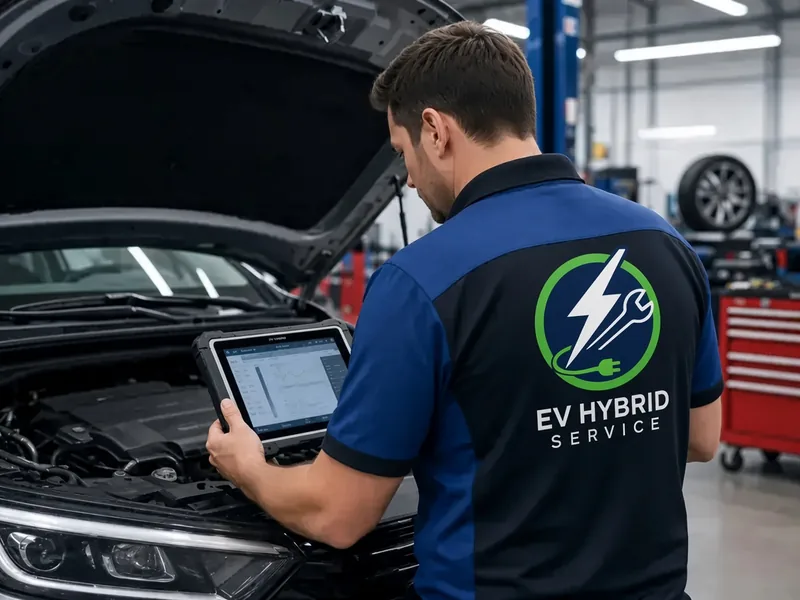
We read the fault memory of the hybrid and electric systems, check the visible wiring, the battery cooling where it can be reached, and any signs of earlier work.
3. We test the battery
We measure how the high-voltage battery behaves directly on the car. On a Toyota or Lexus, for example, we watch the voltage of each module block while the battery charges and discharges, and a weak block stands out straight away. Any problems are in the report before you buy.
4. We take the car on the road
We watch how it switches between the petrol engine and the electric motor, how it recovers energy under braking, and whether there are odd noises or signs that the inverter or transmission need attention.
5. You get the report and our recommendation
We explain what is fine, what is risky and roughly what it could cost you after the purchase. The decision is still yours, but you make it with the full picture.

What the check includes
We focus on the problems that cost the most on a hybrid or an electric car. What we can measure varies from one model to another; we tell you exactly when you book.
- Reading fault codes from the hybrid and electric systems
- Testing the high-voltage battery directly on the car
- Visual check of wiring, connectors and vulnerable areas
- Checking the battery cooling, where it is accessible
- Road test, paying attention to how the hybrid system works
- Noting warning lights, fault codes and recently cleared codes
- Written report with a verdict: buy, buy with reservations, or avoid
- A full explanation at the end, without unnecessary jargon
Which makes we check
We check the hybrids and electric cars you are most likely to find on the used market. If the model you are interested in is not listed, ask us and we will tell you whether we can take it on.
What we often find
We will publish documented jobs one by one. Until then, these are the problems we come across most often on cars put up for sale:
Toyota / Lexus
The battery looks fine on a scan but struggles on the road
No active fault codes, but unbalanced modules and little electric range. Code P0A80 (“replace hybrid battery”) only appears once the imbalance is already large, so its absence does not guarantee a healthy battery.
Plug-in hybrid / electric
Charging and cooling with an unclear history
The charge port, on-board charger or cooling show signs of strain. What matters is not just how long the battery will last, but whether the systems around it protect it properly.
What the check covers and what it doesn’t
The check shows the car’s condition on the day we tested it. It is not a warranty on the car and does not replace your contract with the seller, but it gives you a solid technical basis for your decision.
We report what we were able to check
The report describes what we saw and measured during the check. Faults that only appear now and then, or only show up after dismantling, may not be caught.
We tell you up front what we can’t check
If a model needs parts removed for a complete check, we tell you from the start. We don’t give firm verdicts where we have no access.
If you buy it, we already know the car
If you need repairs, a more detailed test or maintenance after buying, we start from what we found during the check.
Frequently asked questions about the pre-purchase check
How long does the check take?+
It varies from case to case, depending on the model and how clear the car’s history is. We tell you how long it will take when you book.
Do I have to bring the car or can the seller bring it?+
Either is fine, as long as we have access to the car and the owner’s consent for the tests and the road test.
Is the battery removed for testing?+
No. The standard check is done on the car, without removing the battery. If the results call for a closer investigation, we tell you separately what it involves.
Do I get a report I can show the seller?+
Yes. You get a complete, easy-to-read report on the car’s condition, showing clearly what is fine, what problems it has now and what could come up later. You can use it to negotiate or as a reason to walk away.
Does it replace a check at a general garage?+
Not entirely. We focus on the hybrid and electric side and on the expensive risks around the battery and electronics. For the bodywork or the petrol engine, we recommend a general check as well.
What if the car isn’t worth buying?+
We explain why and roughly what costs would be waiting for you. The decision is yours; we simply make sure you aren’t taken for a ride and that you buy knowing exactly what you are getting.
Check the car before you pay for it
Book a pre-purchase check. We tell you what we found and whether the car is worth buying, worth buying with reservations or best avoided, before you sign anything.
Book a check