
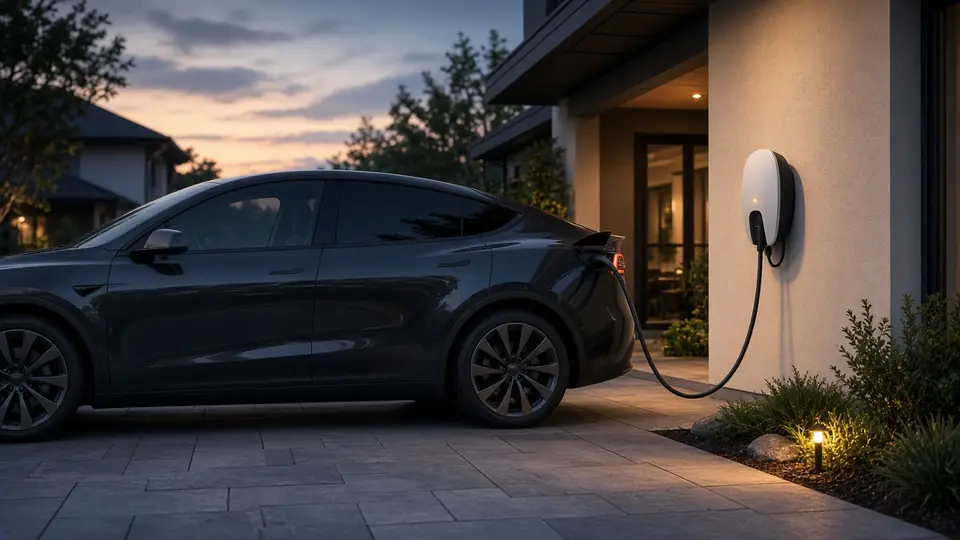
EV Hybrid Service/Services
Charging system repair
When the car won’t charge, charges slowly or stops charging, the cause can be the port, the cable, the on-board charger, your home charging station or the communication between them. We check each link in turn rather than replacing parts one after another until something works.
When charging needs diagnosing
It makes sense for plug-in hybrids and electric cars when charging at home or at a station fails, is slow or keeps stopping, and restarting doesn’t help. We work out whether the problem is the car or the station, and the port or the on-board charger, before suggesting a repair.
Charging won’t start or stops straight away
The cable is connected but charging doesn’t begin or stops after a few minutes. We check the communication between car and station, the mechanism that locks the cable in the port and the on-board charger’s fault codes.
It charges more slowly than it should
Power can be limited by the car, the station, the cable or a sensor. We measure what the on-board charger requests, what the station offers and what maximum current the cable announces.
Port, cable or communication errors
A quick code read doesn’t tell you whether it is a wet contact, a damaged pin or a faulty unit. Inspection and testing make it clear.
It works at a public station but not at home, or the other way round
That is an important clue. We compare the two situations and work out whether the problem is the car or the home installation.
Why we check the whole charging chain
Charging is a system: port, cable, on-board charger, battery control unit, software and station. If you replace a single part without measurements, you move the cost, not necessarily the fault.
The port is often underestimated
Water, corrosion, a stuck locking mechanism or a bent pin will stop charging. We check the port mechanically and electrically before concluding that the charger is faulty.
The car and station talk to each other
Through the Type 2 cable, the station tells the car how much current it can offer, and the cable announces through a resistor how much current it can carry. If that signal is wrong, the station refuses to start charging, and it all looks like a fault in the car.
The station can be to blame too
A wrongly set station, a damaged cable, a weak socket or unsuitable residual-current protection can all look like car faults. We tell you when we suspect the home installation, not just the car’s parts.
How we work, step by step
We reproduce the problem, read the codes, check the port, test the communication and fix the confirmed cause.
1. You tell us where and how it won’t charge
At home or at a station, with which cable, what messages appear and whether the problem is constant or only happens sometimes. From that we decide what to test first.
2. We read the charging system codes
We read the codes from the on-board charger, the battery control unit and the port, plus recent history. The code is the starting point, not the verdict.
3. We check the port and connections
We check the locking mechanism, pins, sealing, visible cables and any signs of water or corrosion. Many failed charges are explained right here.
4. We test communication and charging
We start a charge under controlled conditions and watch the signals between car and station and the power received. As far as possible in the workshop, we separate the car’s problems from the station’s.
5. We repair, retest and hand the car back
We repair or replace what we have confirmed as faulty, repeat the charging test and explain what we measured and what remains to be checked, including at your home station.
What charging diagnostics include
The check focuses on the car’s side: the port, the on-board charger and the communication. What we can test varies from model to model; we tell you when you book.
- Reading codes from the on-board charger, battery control unit and port
- Inspecting the port: locking mechanism, pins and sealing
- Checking accessible connections and wiring
- Checking the charging cable, including the signal that announces its maximum current
- A charging and communication test with the station, as far as possible in the workshop
- Working out whether the problem is the car or the station and cable
- Fixing the confirmed cause and retesting
- An explanation on handover and a warranty on the work
What we often find with charging
We will publish real, documented jobs one by one. Until then, here are situations we come across often:
Plug-in hybrids and electric cars
Charging fails, the port has water or corrosion
A poor contact in the port breaks the communication with the station. Often, cleaning, resealing and checking the locking mechanism solves the problem without replacing the on-board charger.
Home charging
It works at a public station, but not at home
The problem lies in the communication or the settings of the home installation. We confirm on the car that the on-board charger works, then tell you what needs checking at the station and its protection.
What the work covers and what it doesn’t
The warranty covers work on the port, the on-board charger or the confirmed cause on the car. It doesn’t cover the charging station, your cable or the electrical installation in your home.
A warranty on what we repaired on the car
You get in writing what we replaced or repaired, what we measured and for how long we guarantee it.
Limits for the station and cable
If the fault is outside the car, we record it as a limit. We make no promises about an installation we don’t maintain.
If the converter or battery is to blame
Sometimes a charging problem comes from the DC-DC converter or the high-voltage battery. We tell you and suggest the right step.
Frequently asked questions about the charging system
What do you check when the car won’t charge?+
The fault codes from the on-board charger, battery control unit and port, the state of the port, the communication with the station and the clues showing whether the problem is the car, the station or the cable. Then we fix the confirmed cause.
Do I need to bring the charging station?+
No. We work on the car. If the signals point to the station, we tell you what to check at home or what to ask the electrician who installed it.
Why does my breaker trip when I charge at home?+
It may be a fault in the car, but also an unsuitable installation. A charging station must be protected by a Type B residual-current device, or a Type A device combined with DC fault detection in the station. If the protection isn’t suitable or the socket is weak, tripping can occur. We check the car first and tell you whether the installation needs checking.
Do you also check DC rapid charging?+
We focus on AC charging: the port, the on-board charger and the communication. Problems at rapid chargers can have other causes; when you book, we tell you what we can check on your model.
How long does it take?+
It varies from case to case: it depends on the symptom, the part and the dismantling. We give you an estimate after the measurements.
Could it just be the cable?+
Yes. A damaged or unsuitable cable, or one with a faulty identification resistor, will stop charging. If you have a second cable, bring it; it helps us compare.
Find out why your car won’t charge
Book a diagnostic check. We tell you whether the problem is the port, the on-board charger, the communication or the station, before you replace the wrong part.
Book a diagnostic check