
About us · Equipment
The equipment we use to diagnose and repair hybrid batteries
We work on systems of several hundred volts, so we don’t rely on guesswork. We test, measure and repair with professional equipment built for hybrid and electric cars.
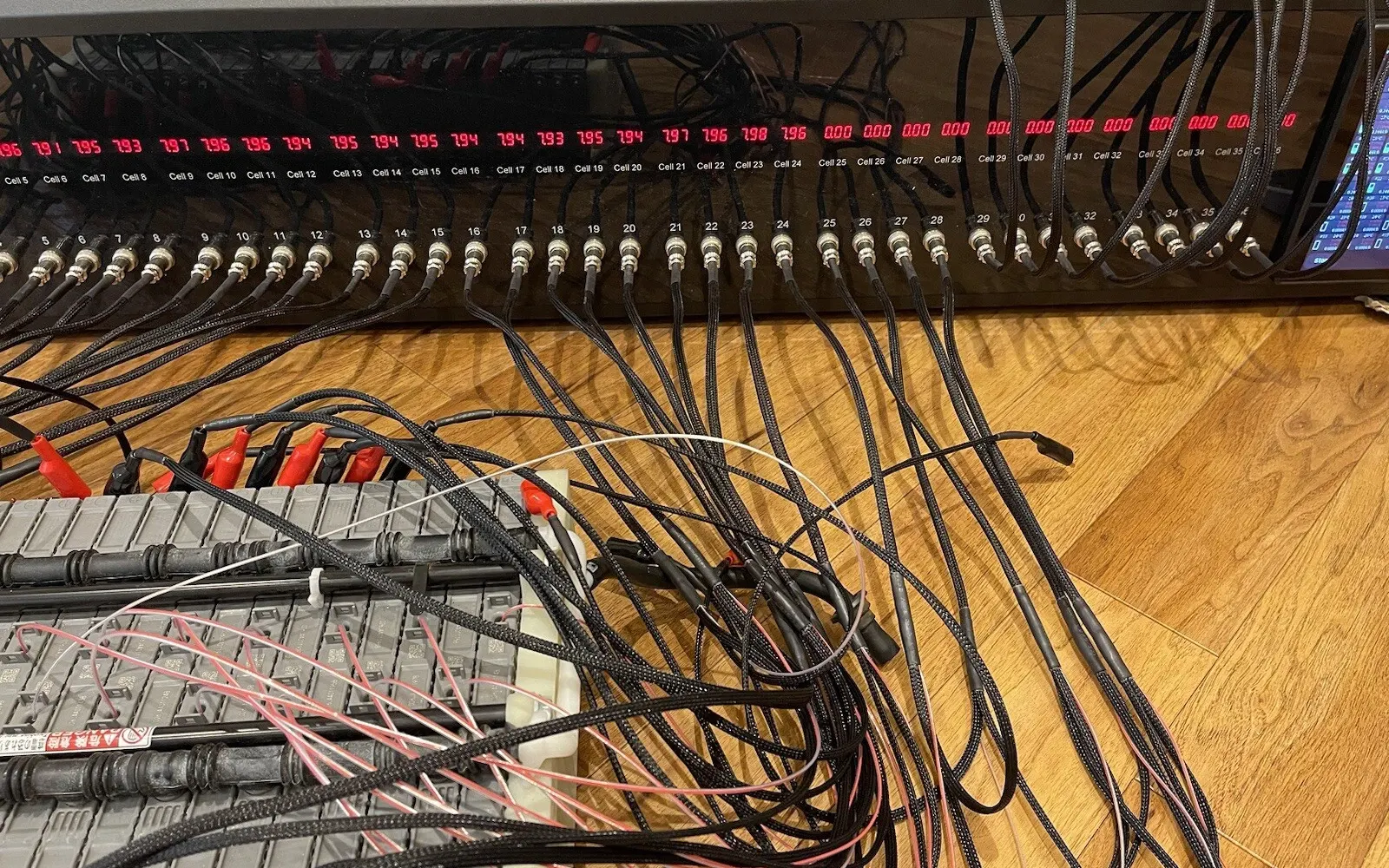
36
modules tested at once
Every battery module, measured on its own
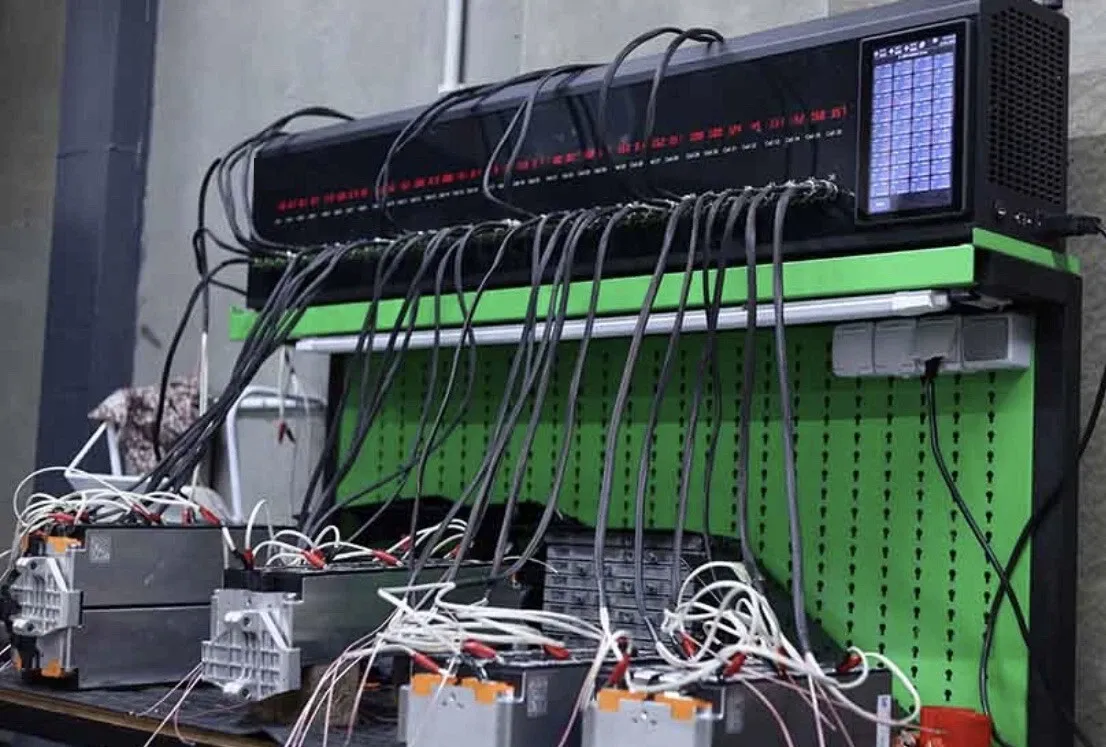
High-voltage battery test and balancing bench
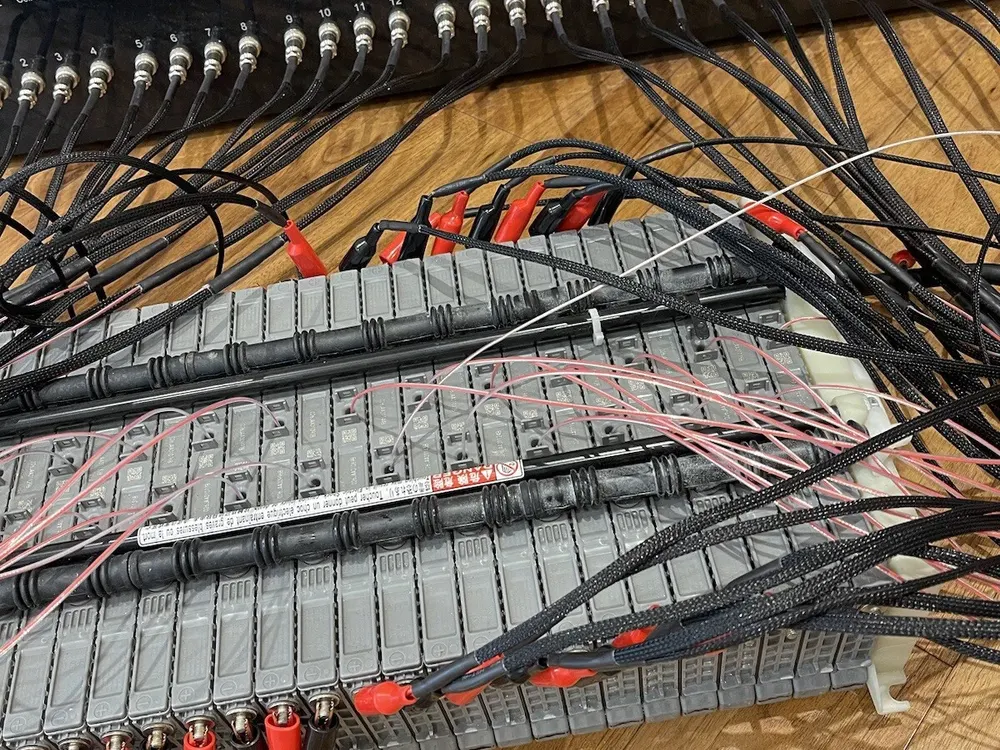
The battery comes out of the car and is split into modules, and each module connects to its own channel on the bench. The bench charges, discharges and balances the modules automatically and shows exactly which ones have lost capacity. It is what makes the difference between “the battery is dead” and “three modules are weak”.
What it can do
- 36 independent channels: up to 36 modules tested at the same time
- NiMH batteries (Toyota, Lexus and Honda hybrids) and lithium-ion, with modules of 3 to 12 cells
- Charging from 0.1 to 4.5 A per channel
- Discharging from 0.1 to 5 A, up to 50 W per channel
- Four working modes: charge, discharge, cycling and balancing
- Voltage readout for every channel
- Protection against reverse polarity, short circuits and overheating: it stops charging any module that runs too hot
- Results are stored and analysed on a computer, module by module
How it helps you
- We replace only the weak modules, not the whole battery, when the rest are in good condition
- We match modules by capacity so the rebuilt battery works evenly
- We balance the battery before refitting it, so the fault doesn’t come back a few weeks later
- We show you the capacity of every module, in black and white
Services where we use it
4 in 1
oscilloscope, multimeter, insulation tester and current clamp
Battery, inverter and charging, read from the inside
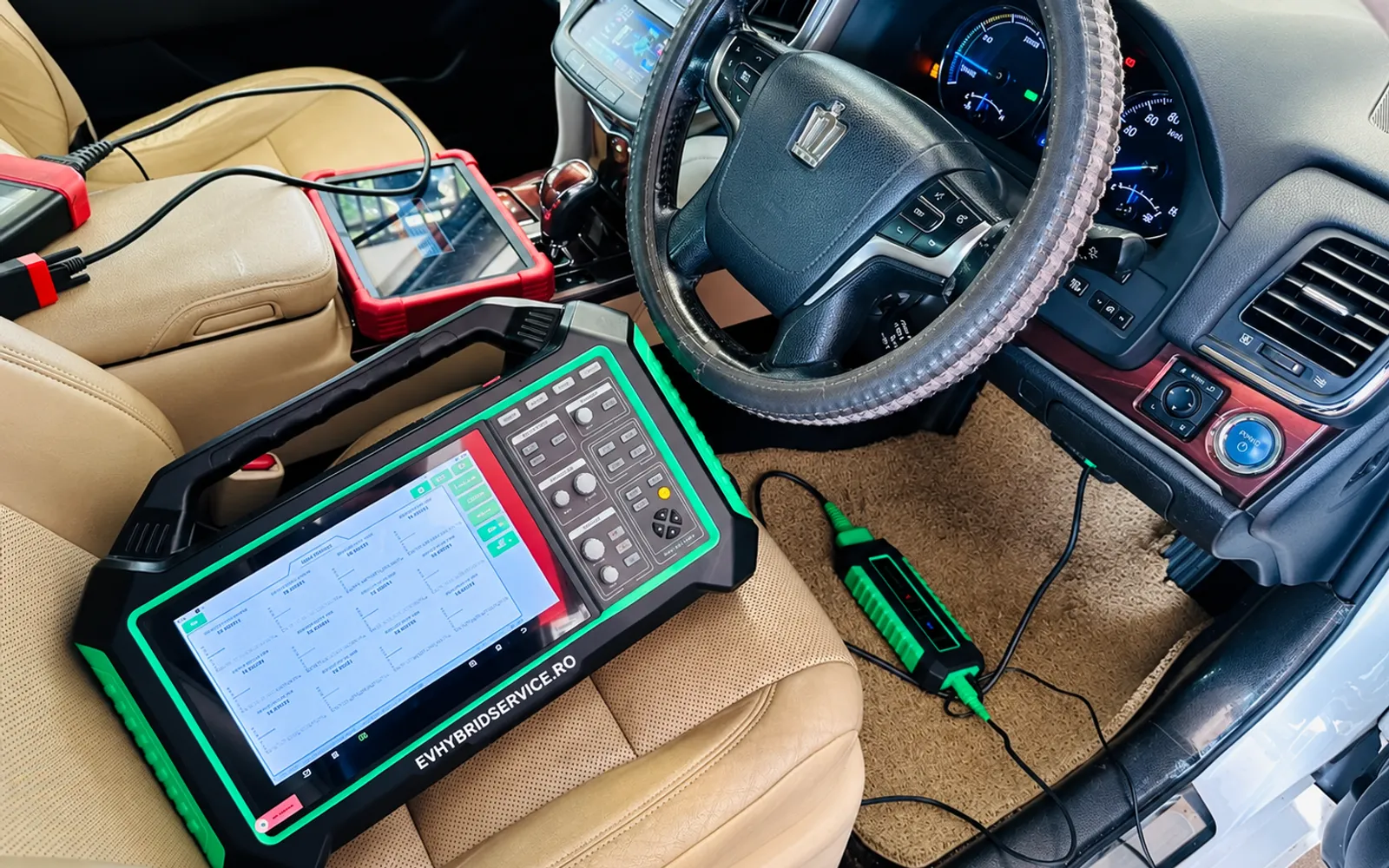
Hybrid and EV diagnostic tester
A diagnostic tester built specifically for electrified cars. It talks to every control unit in the car and reads the high-voltage battery cell by cell, while its built-in measuring instruments let us check on the spot what the control unit is telling us.
What it can do
- Tablet with a 10.1-inch screen and 8-core processor, with a wireless interface to the car
- Full-system diagnostics: fault codes, live data, component tests and special functions
- Reads battery condition: state of charge (SOC), state of health (SOH), and the voltage and temperature of every cell or module
- Works out the differences between cells automatically and flags abnormal values
- Connects through the diagnostic socket, directly to the battery with dedicated connectors, or through the fast-charging port
- Built-in oscilloscope, multimeter, insulation tester and current clamp
- Tests for the DC-DC converter, on-board charger, electric A/C compressor, high-voltage distribution box and 48 V mild-hybrid components
- Wiring diagrams, a map of how the control units communicate, and guided troubleshooting
How it helps you
- We find the real cause of a fault, not just the code on the dashboard
- We see the battery’s condition before taking it out of the car
- We measure the high-voltage system’s insulation, which matters after accidents or water ingress
- In a pre-purchase inspection, we show you the real state of the battery in the car you want to buy
Services where we use it
CV / CC
constant voltage and current, precisely set
Exact, stable, adjustable voltage and current
High-power DC power supply
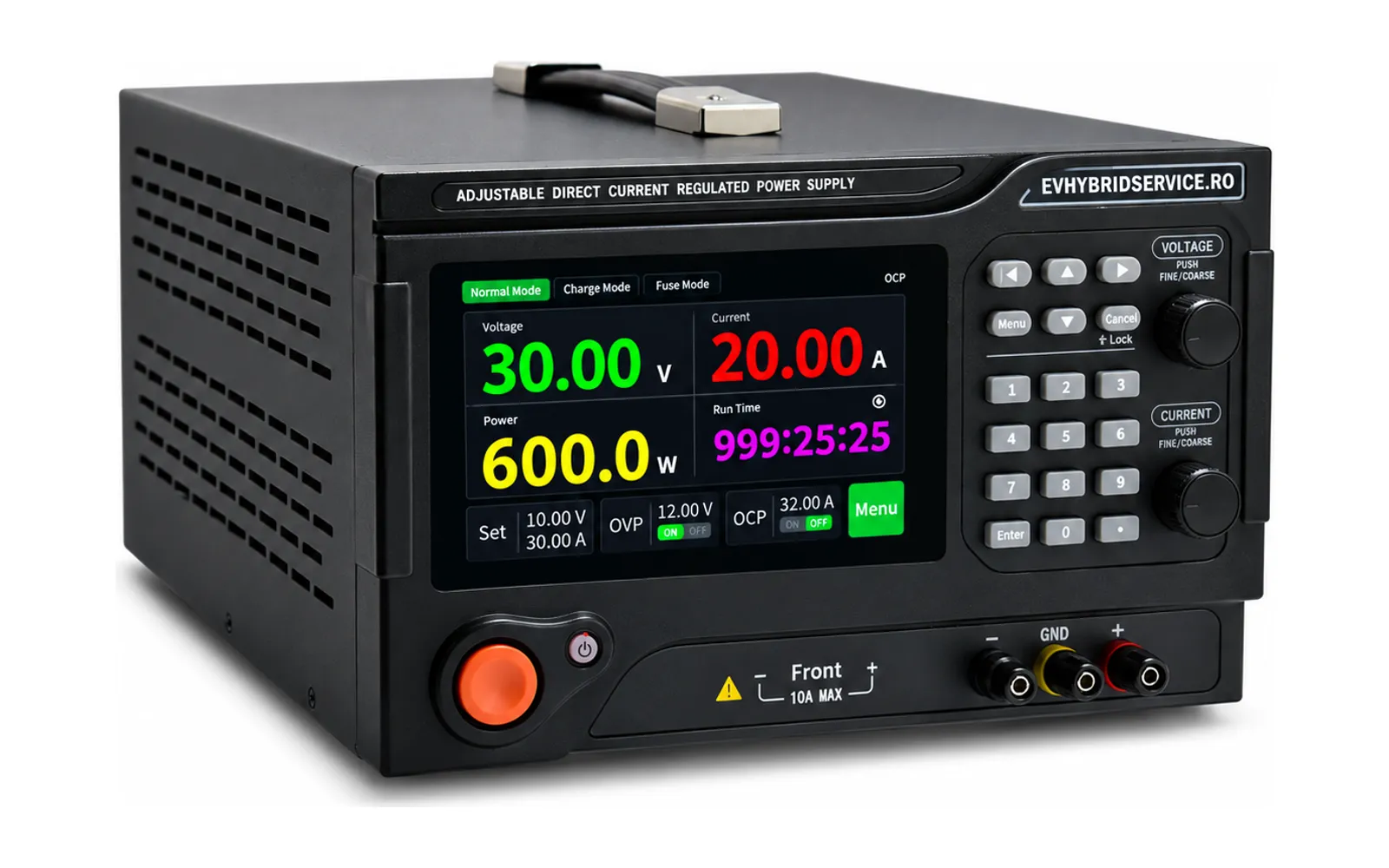
A high-power laboratory supply that gives us exactly the voltage and current we need and holds them steady. It looks like a simple device, but without it many jobs on a modern car’s electrical system would be a gamble.
What it can do
- Adjustable voltage and current, with constant-voltage (CV) and constant-current (CC) modes
- Colour screen showing live voltage, current, power and run time
- A dedicated battery-charging mode and an electronic fuse mode that cuts the output when current goes over the limit
- Adjustable over-voltage (OVP) and over-current (OCP) limits, plus over-temperature protection
- Numeric keypad and fine/coarse dials for exact values
- Front terminals for bench work, up to 10 A
How it helps you
- Keeps the voltage steady during programming and software updates, when a voltage dip can brick a control unit
- Charges modules and batteries in a controlled way, with limited current
- Powers components such as the DC-DC converter or on-board charger on the bench, so we can test them outside the car
Services where we use it
We measure before we repair
You know exactly what you pay for
Before any repair we show you the measured values: what is faulty, what is fine and what is worth doing.
We repair only what is faulty
With every module and component tested separately, we don’t replace a whole assembly when only one part is to blame.
Work that lasts
A battery that has been balanced and checked under load doesn’t come back to the workshop a few weeks later.