
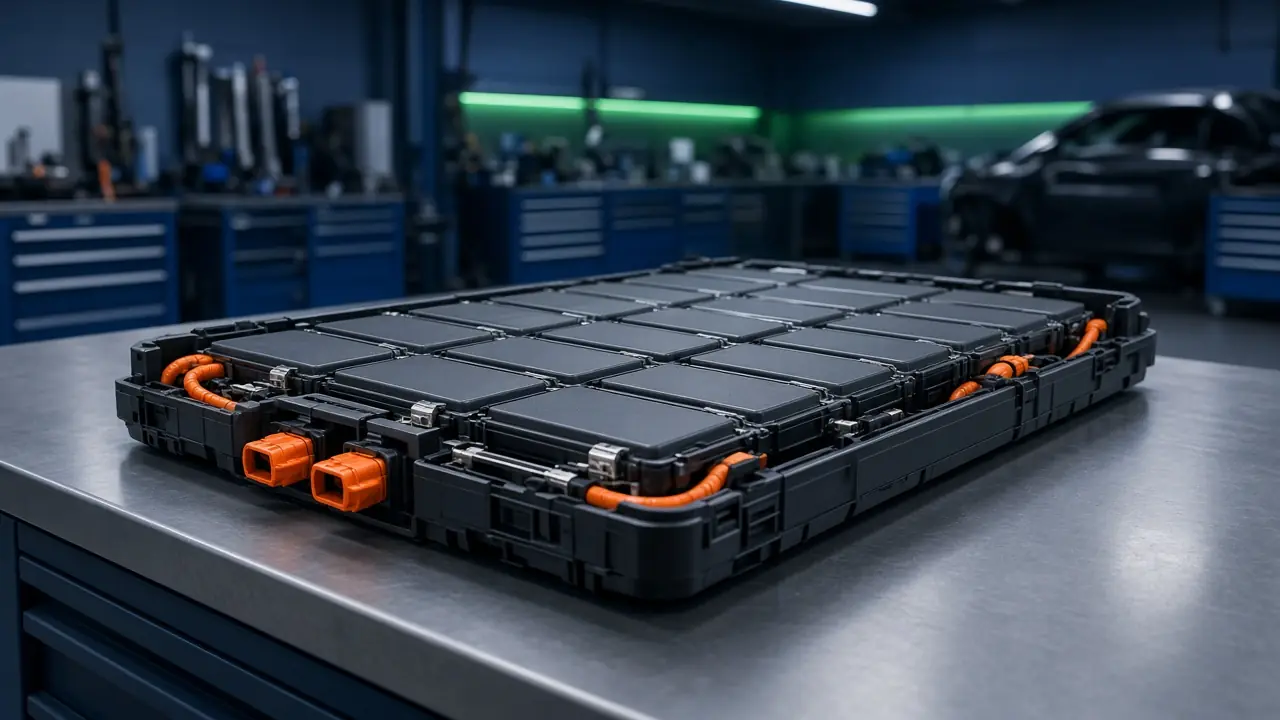
EV Hybrid Service/Services
Battery replacement for hybrid and electric cars
When too many modules are weak or the battery is too worn, a repair is no longer worth it. That is when we replace it, but only once the test confirms it, with fitting done by the book and a check on the car, not on a “swap it and see” basis.
When it is time for a new battery
Replacement makes sense when the test shows a battery that is too worn, when the casing is damaged, or when the cost of a repair reaches the price of a good battery. It is not the first option we think of, but it is the right one when the numbers say so.
The test found too many weak modules
When wear is spread across the whole battery, replacing a few modules won’t last long. Replacing the battery is then the better solution, both technically and financially.
Leaks, heavy corrosion or a damaged casing
Advanced corrosion, water ingress or a deformed casing make a repair risky. A battery in good condition is safer than a patched-up one.
The car stays in limp mode or barely drives on electric power
When the battery can no longer deliver the energy needed, a replacement brings the car back to normal operation. We still decide based on the test, not on what the dashboard shows.
You already have a test saying a repair isn’t worth it
If a recent test shows the battery needs replacing, we start from that. If you don’t have one, we begin with testing.
When a repair is no longer enough
Module repair is preferable when the fault is localised. When the whole battery is worn, a properly done replacement is more honest than a repair that won’t last.
We decide after testing, not by reflex
We don’t suggest a new battery as the first response to a warning light. If a repair is worthwhile, we tell you. If not, we explain why replacement is the right way.
The right battery for your car
We choose the option based on the model, generation and what is available. Compatibility and the battery’s condition matter more than the lowest price in a listing.
Fitting and checking on the car
Replacement isn’t just bolting in a battery. The connections, cooling, code clearing, calibrations and final test all matter; otherwise you change the part and keep the problem.
How we replace the battery
The steps are designed to confirm that replacement is needed, fit the battery correctly and check the car before handing it back.
1. We confirm a replacement is needed
We start from the battery test or a recent one. If it isn’t clear the battery needs replacing, we measure it again. We don’t remove anything on a hunch.
2. We choose the battery together
We present the options for your model: new, remanufactured or a tested used unit. For each one we tell you what warranty we offer and what its limits are.
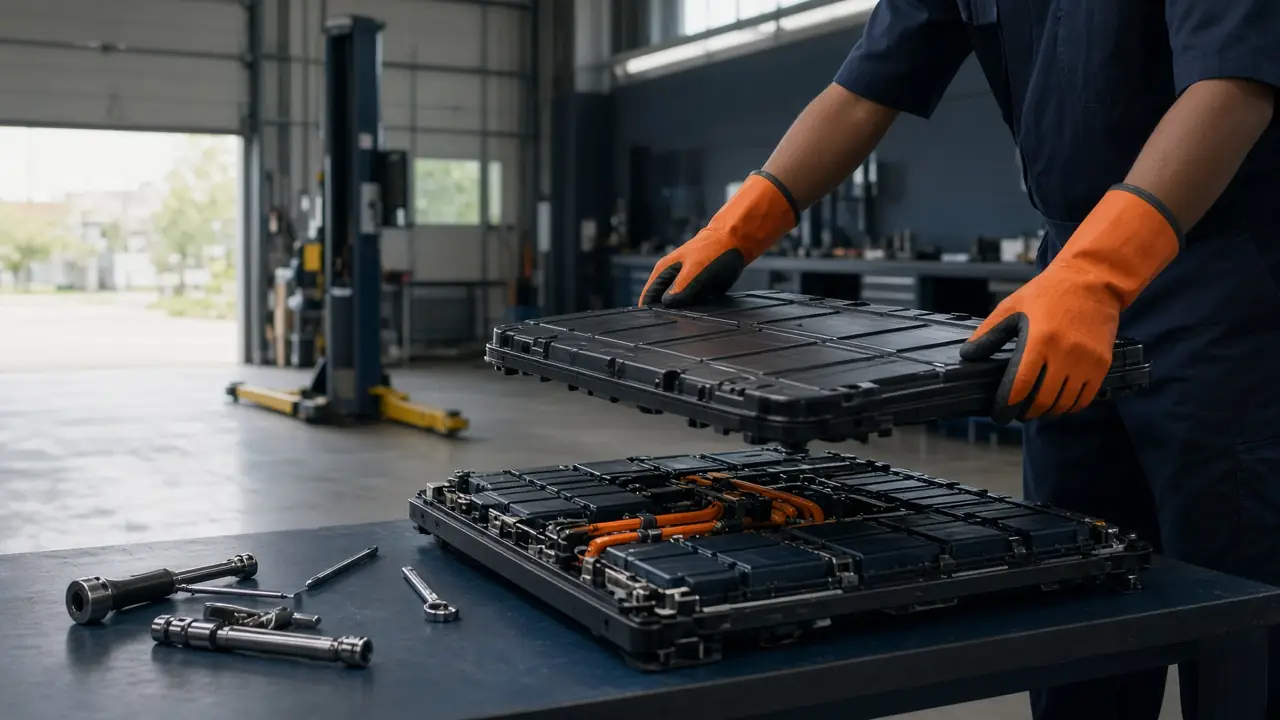
3. We remove the old battery
We take the battery out and check the wiring, sensors and cooling. Some problems only appear on removal; we note them and discuss them with you before fitting.
4. We fit the new battery
We fit the battery, redo the connections, connect the cooling and check the seals and mountings. We follow high-voltage procedures throughout.
5. We clear the codes, test and hand the car back
We clear the codes, redo calibrations where needed, road-test the car and explain what we fitted and what values we measured.
What battery replacement includes
The final quote depends on the model and the battery chosen. As a rule, the job includes:
- Confirming by test that a replacement is needed
- Removing and fitting the high-voltage battery
- Checking the wiring and connectors during fitting
- Checking and correctly connecting the battery cooling
- Clearing codes and the calibrations the model requires
- Testing the car after fitting
- An explanation on handover of what we fitted and measured
- A written warranty for the work and the battery fitted
Which makes we replace batteries for
We replace both the nickel-based (NiMH) batteries of hybrids and the lithium batteries of plug-in hybrids and electric cars. If your model is not listed, ask us and we will tell you whether we can help.
When we end up replacing
We will publish real, documented jobs one by one. Until then, here are the situations where replacement is usually the right choice:
Toyota / Lexus
The battery is too unbalanced for a repair
The test shows weak modules in many blocks. When the cost of a repair approaches the price of a good battery, replacement is the right choice.
Plug-in hybrid / electric
The remaining capacity is too low
Real-world range has dropped a lot and balancing no longer recovers it. After replacement we also check the cooling, so the new battery doesn’t end up the same way.
A warranty for what we fitted
The warranty covers the replacement work and the battery fitted, under the conditions written on the handover sheet. It is not a warranty on the whole car.
A written warranty
You get in writing what we fitted, what we measured on handover and for how long we guarantee it.
Clear conditions
The warranty covers faults related to the work and the battery fitted. It doesn’t cover accidents, water ingress, faulty work done later by others or problems in other systems.
Cooling matters
A new battery fitted with clogged cooling wears quickly. If we find cooling problems during removal, we discuss them with you before handover.
Frequently asked questions about battery replacement
Why don’t you replace the battery straight away?+
Because many cars can be fixed by replacing a few modules or by sorting out the cooling. Replacement comes when the test shows a repair is no longer worth it.
What battery options are there?+
Generally three: new original, remanufactured or used. A new battery has the longest life and the best warranty, but costs the most. A good-quality remanufactured one is often the best balance between price and lifespan. A used one only makes sense on older cars, when you accept a higher risk. We tell you what is available for your model and the warranty we offer for each.
Is my car’s battery still under the manufacturer’s warranty?+
It is worth checking before anything else. Toyota, for example, offers an extended hybrid battery warranty of up to 15 years in some countries, provided the car has an annual hybrid check at a Toyota dealer. The terms differ from country to country. If the battery is still under warranty, we tell you.
How much does it cost?+
It depends on the model, the generation and the battery chosen. We give you the exact price after the assessment, not from a general price list.
How long does it take?+
It varies from case to case: it depends on how quickly we can source the battery and how complicated the removal is. We give you an estimate once the part is confirmed.
What happens to the old battery?+
It doesn’t end up as rubbish. European battery legislation requires producers to take back used traction batteries for recycling, and we hand it over through those collection channels. We tell you on handover what happened to it.
Find out whether replacement is the right step
Book an assessment. If a repair is still worthwhile, we tell you. If the battery is too worn, we discuss replacement based on the test.
Book an assessment