
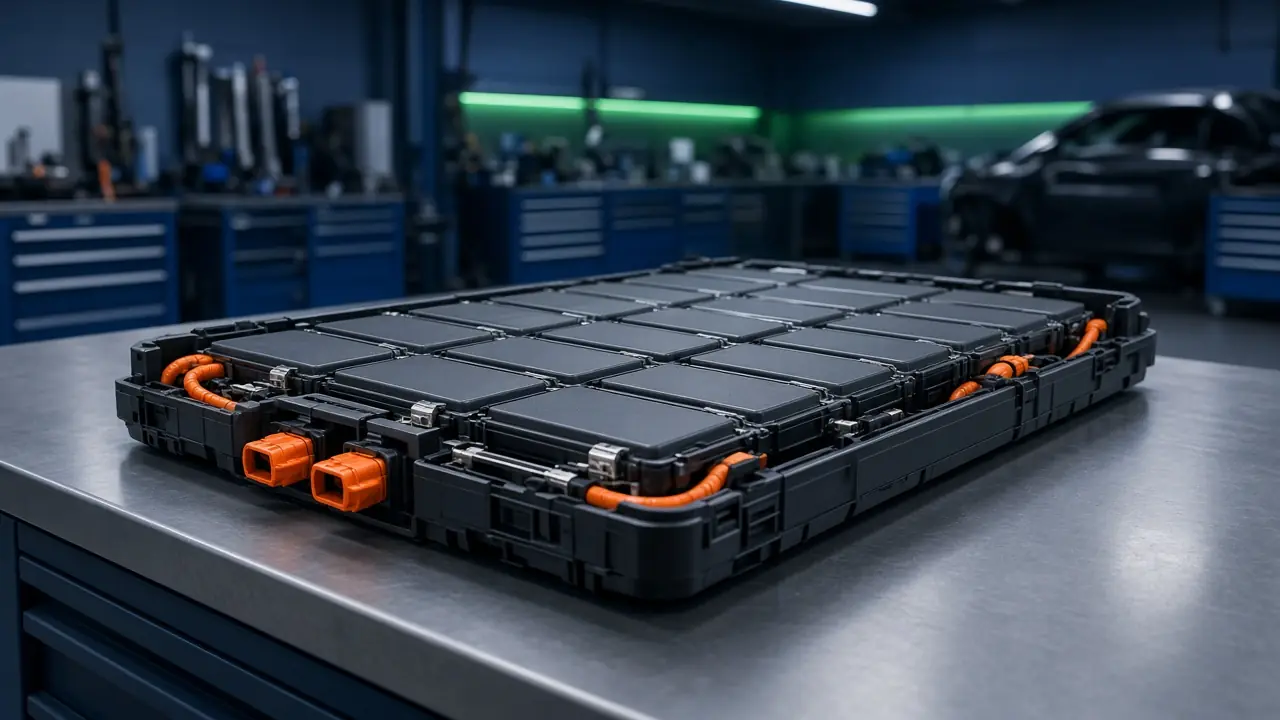
EV Hybrid Service/Services
Hybrid and electric car battery repair
When a traction battery loses strength, a new one isn’t automatically the answer. We test every module, find out which ones can no longer cope and repair the battery where it makes sense. And when it doesn’t, we tell you honestly.
When battery repair makes sense
A repair makes sense when the battery has a few weak or unbalanced modules but the casing, wiring and cooling are still in good condition. That is why we always start with a test, not with promises.
Higher fuel consumption and less electric driving
The engine starts more and more often, electric mode doesn’t last long, and consumption rises with no cause in the engine, brakes or tyres.
Hybrid system warning light or code P0A80
The dashboard is telling you the hybrid system needs attention. The code is only the starting point; before suggesting a repair, we find out which modules are out of spec.
Reduced power or limp mode
The car cuts power to protect the battery. Sometimes a module is to blame, other times the cooling or a sensor. Measurements show us the difference.
The battery fan runs often and loudly
When the modules no longer work evenly, the battery heats up unevenly. The fan comes on often, you can hear it, and wear speeds up.
Why repair rather than going straight to a new battery
A traction battery is made up of several modules. When only a few are weak, the rest may still be good. Sometimes a new battery is the right choice, but it shouldn’t be the first assumption.
You pay for what is faulty
We replace the modules that no longer hold their capacity or have too much internal resistance. If the problem is in one area, the repair should be there too.
Matched modules, not just replaced ones
A new module fitted among old ones doesn’t share their characteristics, and the difference can unbalance the battery again. That is why we use tested modules sorted by capacity and internal resistance, then balance the whole battery.
Less waste, more years of use
You extend the life of the battery you have and pay less than for a new one. On Toyota, Lexus or Honda hybrids with nickel-based batteries, module repair is a widely used solution.
How we repair the battery
The steps are easy to follow: we test on the car, remove the battery only when there is a reason, replace what is faulty, balance the battery and check it under load.
1. Diagnosis and test on the car
We read the codes, check temperatures and voltages, then test the battery on the car. If a repair doesn’t make sense, we tell you before removing anything.
2. We remove and inspect the battery
We take the battery out, clean the bus bars and connectors, and check the wiring, sensors and any signs of corrosion or leaks. Sometimes the fault is in the connections, not the modules.
3. We test every module
We check the capacity, voltage and internal resistance of each module. We separate the good modules from those dragging the whole battery down.
4. We replace the weak modules and balance the battery
We fit modules of the same type, matched in their values to the ones that remain, redo the connections and balance the battery until all the modules work alike.
5. Refitting, clearing codes and final test
We refit the battery, clear the codes, redo calibrations where needed and run the final test. When you collect the car, we show you what we replaced and the values we measured.
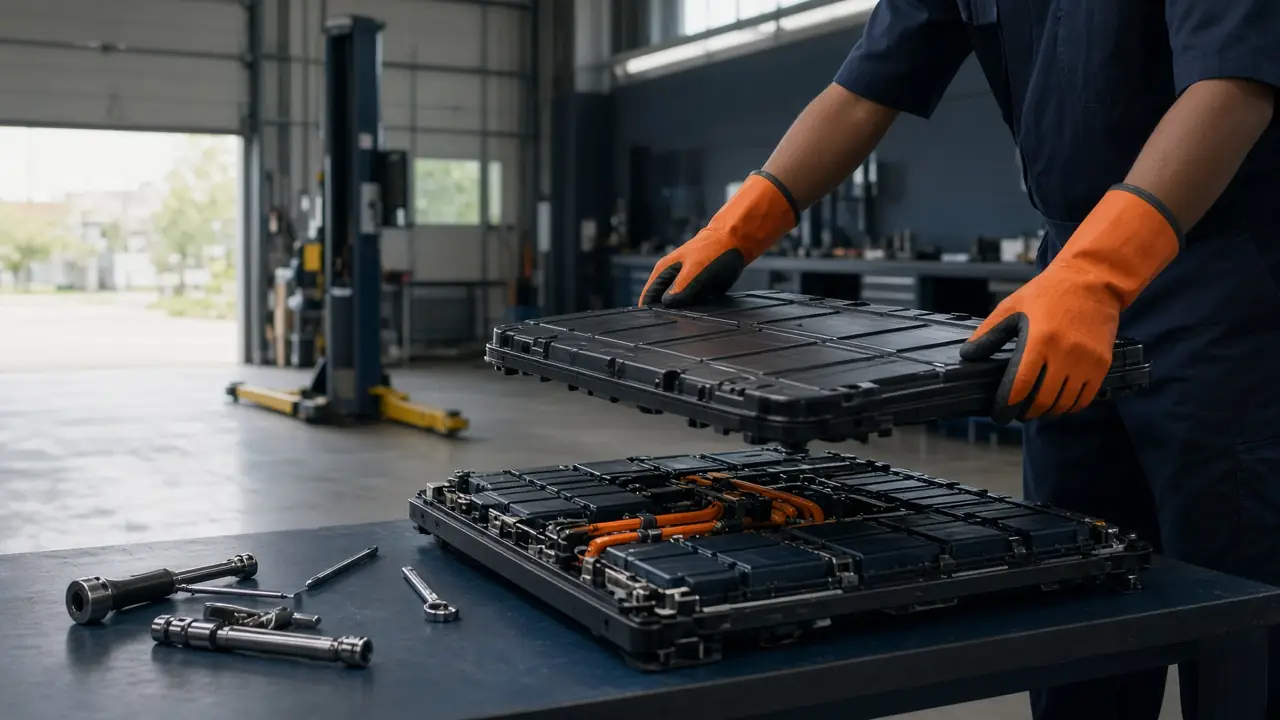
What battery repair includes
The final quote comes after the test, because the number of weak modules differs from car to car. As a rule, the job includes:
- Hybrid system diagnosis and a test of every module
- Removing and refitting the high-voltage battery
- Cleaning the bus bars and connectors, checking the wiring
- Replacing weak or faulty modules, based on the test
- Balancing the battery after replacement
- Checking the battery cooling
- Clearing codes, a final test and an explanation on handover
- A written warranty for the work carried out
Which makes we repair
We regularly repair the nickel-based (NiMH) batteries used in hybrids. For the lithium batteries in plug-in hybrids and electric cars, module repair depends on the model and on which parts are available. If your model is not listed, ask us and we will tell you whether we can help.
Situations we see often
We will publish real, documented jobs one by one. Until then, here are the situations customers come to us with most often:
Toyota Prius / Auris
Code P0A80 and higher fuel consumption
Most often, a few modules have failed before the rest and unbalanced the battery. If the remaining modules are in good condition, replacing the weak ones and balancing the battery brings it back to normal operation.
Toyota and Lexus hybrids
The fan runs a lot, electric range is short
Sometimes the battery isn’t the only problem: a clogged cooling filter or fan keeps it hot and, over time, damages good modules too. We sort out the cooling first, then talk about modules.
A warranty for what we did
The warranty covers the work carried out: the replaced modules, the balancing and the fitting, under the conditions written on the handover sheet.
A written warranty
You get in writing what we replaced, what we measured and for how long we guarantee the work.
Clear conditions
The warranty covers faults related to the repair. It doesn’t cover accidents, water ingress, faulty work done later by others or problems unrelated to our work.
When a repair isn’t worth it
If the battery is too worn, we recommend a replacement. If the main problem is the cooling, we fix that before talking about modules.
Frequently asked questions about battery repair
What does repairing a hybrid or electric car battery actually involve?+
It means testing every module, replacing the weak or faulty ones with matched modules, cleaning the connections, balancing the battery and a final test on the car. It is not just a battery charge.
How much does a repair cost compared with a new battery?+
It depends on the model and how many modules are weak. On many hybrids, a repair costs much less than a new original battery. We give you the exact price after the test.
How long does a repaired battery last?+
It depends on the condition of the remaining modules. A properly repaired battery can work well for years, but a new battery naturally has the least wear. After the test we tell you honestly which option makes more sense for your car and budget.
How long does it take?+
It varies from case to case: it depends on how many modules need replacing, which parts are available and the removal. We give you an estimate after the diagnosis.
Do you also repair lithium batteries, for example on a Nissan Leaf?+
On some models, yes. Lithium batteries can be repaired at module level when the design allows it and we can source matching modules. The Nissan Leaf is one of the models where module repair is possible. On other models, the manufacturer only provides for replacing the whole assembly. After the test we tell you what can be done on your car.
Can I bring just the battery, without the car?+
Yes, in some cases. However, testing on the car catches cooling, wiring or inverter problems that the battery alone won’t show. If you bring just the battery, we explain what we can’t check.
Find out whether your battery is worth repairing
Book a test. We tell you whether a repair, a replacement or something else is worthwhile, before you spend money on the wrong part.
Book a battery test