
EV Hybrid Service/Services
Electrical diagnostics and repair for hybrid and electric cars
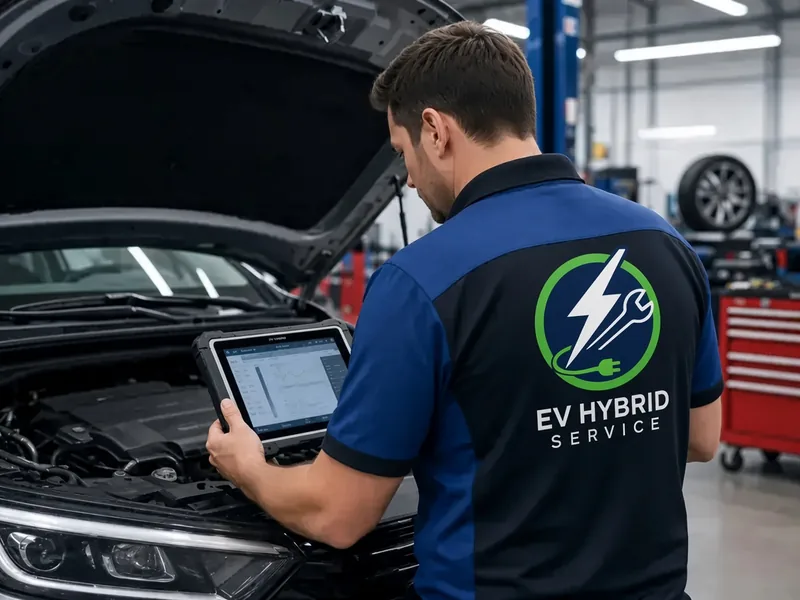
A fault code tells you where to start looking, not which part has failed. On a hybrid or an electric car we trace the wiring, sensors, relays and modules until we find the cause, and then we repair only what we have confirmed.
When you need electrical diagnostics
It is worth coming in when the hybrid system warning light is on, the car feels down on power, charging keeps stopping, or another garage read a code without telling you what caused it. Diagnostics do not replace a detailed battery test, but they find the electrical faults around the battery.
Hybrid system warning light or “Check Hybrid System”
The dashboard is warning you, but sometimes the car still drives. The code is only the starting point; before suggesting any part, we check the sensors, wiring and modules involved.
Reduced power, limp mode or the car won’t start
The system cuts power to protect itself. The cause can be a current sensor, a main relay that no longer closes properly, an imbalance between cells or a cooling problem, not necessarily the battery.
Fault codes that come back after clearing
If the codes are only cleared, the warning light comes back within a few days. We look for the intermittent fault in the wiring, connectors and real sensor signals.
Charging stops or won’t start at all
On plug-in hybrids and electric cars, the charge port, the on-board charger or the communication between modules can block charging. We work out whether it is a software or a hardware problem before you replace anything expensive.
Why diagnostics, not just a code read
A quick read gives you a list of codes. Proper diagnostics follow the voltages, temperatures, currents and wiring until the cause is clear. Without that, you end up replacing parts by guesswork.
The code is not the diagnosis
On a Toyota, code P0AFA seems to blame the battery, but the cause is often in the circuit that measures its voltage: corroded bus bars, connectors or the battery control unit. That is why we measure before suggesting a part.
High voltage needs a method
We work on circuits where a mistake is expensive and can be dangerous. We make the system safe following the correct procedure, measure the insulation and check every suspect component.
We test the battery only when it makes sense
If the diagnosis points to the battery, the next step is a detailed battery test. We don’t pretend a simple code read can tell you what state the battery is in.
How we work, step by step
Everything is designed to separate the cause from the symptom: we read the codes, measure, repair what we have confirmed and road-test the car before handing it back.
1. You tell us what is happening
When the warning appears, what has already been tried and whether the problem is constant or only happens now and then. From that we decide what to check first.
2. We read the codes from every system
We read the fault memory of the control units involved, their history and live values. We separate active codes from old or recently cleared ones.
3. We measure the wiring, sensors and modules
We check voltages, continuity, insulation resistance and sensor signals. We look for the cause, not just confirmation that a fault exists.
4. We repair only what we have confirmed
We replace or repair the faulty part: a sensor, cable, connector, relay or module. If the battery is suspect, we suggest a detailed battery test.
5. We test the car and hand it back
We clear the codes only after the repair, road-test the car and explain what we found, what we repaired and whether anything still needs watching.

What diagnostics and electrical repair include
The aim is to find the cause of the fault in the hybrid or electric system. What we can check varies from one model to another; we tell you exactly when you book.
- Reading fault codes from every control unit involved
- Live values: voltages, temperatures, currents
- Checking wiring, connectors and exposed areas
- Measuring suspect sensors and modules
- Insulation test of the high-voltage circuit
- Repairing or replacing the confirmed components
- Clearing codes after the repair, plus a road test
- An explanation at the end, including anything to keep an eye on
Which makes we diagnose
We regularly work on the hybrids and electric cars most common on Romanian roads. If your model is not listed, ask us and we will tell you whether we can take it on.
What we often find
We will publish documented jobs one by one. Until then, here are two situations we come across often:
Toyota / Lexus
The code points to the battery, the cause is in the wiring
The code blames the battery, but measurements find corroded bus bars or a connector with poor contact in the voltage-sensing circuit. Without proper diagnostics, you would have replaced modules for nothing.
Toyota / Lexus
An insulation fault caused by the air-conditioning compressor
Code P0AA6 indicates a loss of insulation in the high-voltage circuit. The sub-code shows the area: the air-conditioning compressor, the battery, the motor or the inverter. At the compressor, the cause can be the wrong oil added during an air-conditioning service.
What diagnostics cover and what they don’t
Diagnostics show the state of the system at the time of the check. Repairs to the confirmed components come with a warranty; new symptoms in other systems are not automatically included.
We report what we were able to check
We tell you the cause we found and how we confirmed it. A fault that only appears now and then and does not show up during testing may still need watching.
We tell you up front what we can’t check
If the model needs major dismantling or special equipment, we tell you from the start. We don’t give firm verdicts where we have no access.
If the problem is the battery
When the diagnosis points to the battery, we suggest a detailed battery test as a separate step, so you know exactly which modules are affected.
Frequently asked questions about electrical diagnostics
Does diagnostics just mean reading the fault codes?+
No. Reading the codes is the first step. Then come the measurements on signals, wiring and components, until the cause is clear or we know which test is still needed.
How long does it take?+
It varies from case to case: it depends on how often the fault appears and how easy the components are to reach. We give you an estimate once we have talked through the symptoms.
Does it include a battery test?+
No, the detailed battery test is a separate service. If the diagnosis points to the battery, we suggest it as the next step.
Another garage cleared the codes and the warning came back. Is it worth coming in?+
Yes. If the codes are only cleared and the cause isn’t repaired, the symptom comes back. We start our checks from scratch and look for the real fault.
Do you also work on the inverter, on-board charger or current sensors?+
Yes, on the electrical components of hybrids and electric cars, when we can confirm the fault by measurement. If a part needs equipment we don’t have, we tell you straight away.
Will someone explain what was found, not just hand me a list of codes?+
Yes. We tell you what we found, what we repaired and what risks remain, in plain language. The codes are there only for reference.
Find out what is really wrong with your car
Book a diagnostic check. We tell you the cause of the fault and whether the next step is an electrical repair or a battery test.
Book a diagnostic check