
Battery Repair Kia Niro I (facelift 2019) EV (electric car) e-Niro 67 kWh (204 hp)
The Kia Niro I (facelift 2019) e-Niro 67 kWh (204 hp) is an electric car built 2018–2022, with 204 hp. Its battery holds 67 kWh (64 kWh usable), with NCM 622 cells at 356 V. It covers 455 km on electricity.
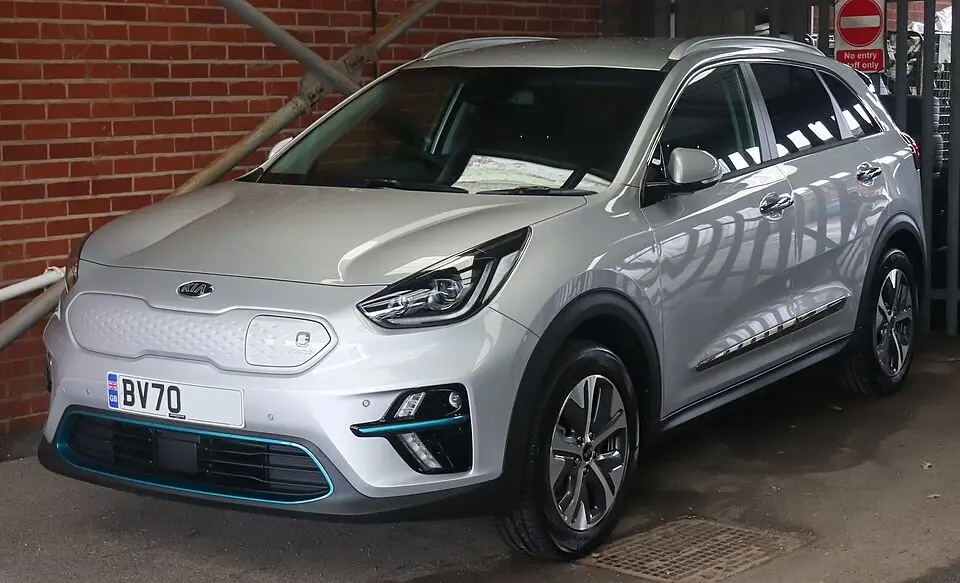
What we repair
We repair the battery and replace it only when we have to
Most hybrid batteries reach us with a few weak modules, not all of them. And for many of them, the real cause lies in the cooling or the connections.
Module and cell replacement
When only a few modules have weakened, we replace just those, with modules of the same type, tested and matched for capacity and internal resistance. You pay for what has failed, not for a whole battery.
- Every module tested, before and after
- Modules matched to the ones that remain
- Written guarantee on the work
Balancing and reconditioning
An unbalanced battery loses range even when its modules are still sound. We bring every module and cell to the same level, whether the battery is NiMH or Li-ion. On NiMH we run controlled charge and discharge cycles that can recover part of the lost capacity, and on Li-ion we balance the cells one by one, within the safe limits of their chemistry.
- Balancing of the whole battery, NiMH or Li-ion
- NiMH reconditioning, Li-ion cell balancing
- Capacity test at the end
Cooling, BMS and connections
Not every battery fault comes from the modules. A clogged fan, a temperature sensor, a contactor or a corroded bus bar can stop the car just as surely. We check and repair them before we touch the modules.
- Cooling cleaned and repaired
- Sensors, contactors, wiring
- Bus bars and connectors
Battery catalogue
Which battery your car has
215 makes · 1241 models · 5928 versions
Choose the make, model, generation and version. For each version you will find the battery, charging, range and powertrain and, where we have them, the cell chemistry, voltage, European warranty and recalls.
From the workshop
Battery Repair at EV Hybrid Service, See the repairs on our Blog
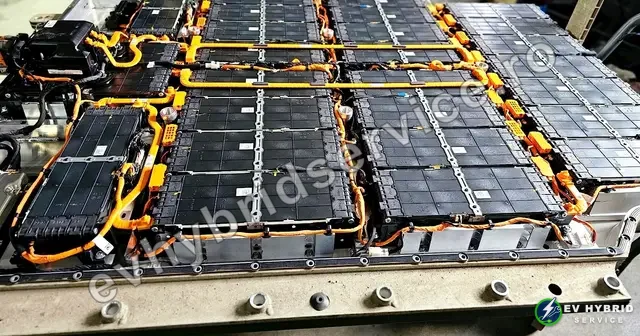 Hyundai Kona Electric losing coolant with no error on the dashboard: how we repaired the cooling circuit of the high-voltage batteryA 2024 Hyundai Kona Electric was losing a lot of fluid from the battery cooling circuit, though the dashboard showed nothing. After a hard impact, a pipe had cracked. We replaced it, sealed the small cracks, and the battery stayed on the car.
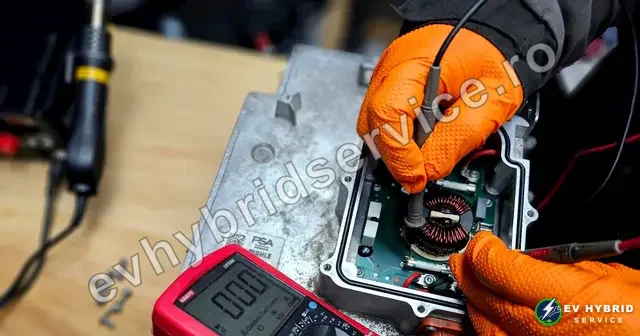 Opel Combo Electric that would no longer charge from a socket: how we repaired the on-board charger without replacing itA 2024 Opel Combo Electric would no longer charge its battery from a socket. The culprit was the on-board charger, where one of the low-voltage electronic supplies had stopped working properly. We repaired it, and the original charger stayed on the car.
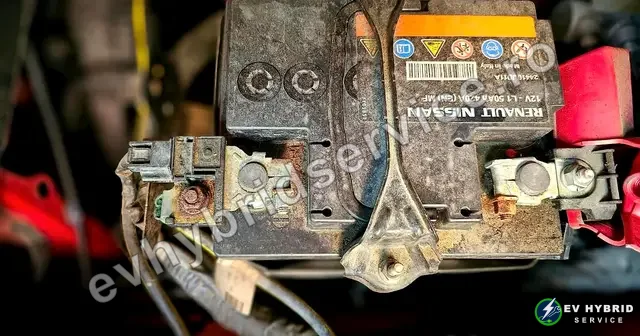 Nissan Leaf 40 kWh with communication errors and insulation faults: how we restored the 12 V supply and repaired the high-voltage insulationA Nissan Leaf 40 kWh had errors in a chain and no longer talked to its climate system. Where it all started: the oxidised terminals of the 12 V battery. Once we restored the supply, diagnosis also turned up high-voltage insulation faults, which we fixed.
Specifications
Kia Niro I (facelift 2019) e-Niro 67 kWh (204 hp)
EV (electric car) · 2018–2022 · NCM 622
Battery
67kWh
64 kWh usable
Electric range
455km
DC fast charging
100kW
20–80% · 42 min
Battery
- Total capacity
- 67 kWh
- Usable capacity
- 64 kWh
- Cell chemistry
- NCM 622
- Cell supplier
- LG Chem on the Kona Electric; SK Innovation on the Niro EV
- Cell format
- pouch
- Nominal voltage
- 356 V
- Cells
- 294
- Cooling
- Liquid
- Construction
- 356 V (3P98S), liquid-cooled
Charging
- AC single-phase
- 4.6 kW · 0–100% in 15 h; 7.2 kW · 0–100% in 9 h 35 min
- AC three-phase
- 10.5 kW · 0–100% in 7 h
- DC (fast)
- 50 kW · 0–80% in 1 h 15 min; 80 kW · 0–80% in 54 min; 50 kW · 20–80% in 59 min; 100 kW · 20–80% in 42 min
- Sockets and where they are
- Type 2 AC (Mennekes) (Front central); CCS2 DC (Front central); Type 1 AC (J1772) (Front central); CCS1 DC (Front central)
Powertrain
- Type
- Electric
- Electric motor
- 204 hp, 395 Nm, Front axle, Transverse
- Total power
- 204 hp
- Total torque
- 395 Nm
Range and consumption · Production
- Electric range
- 455 km
- Energy consumption
- 15.9 kWh/100 km
- Years built
- 2018–2022
EV Hybrid Service
How we repair this battery
On an electric car the battery is the largest and most expensive part, and a fault does not mean it has to be replaced whole.
We read the BMS data, compare the modules with one another and check the insulation, contactors and cooling. Where the model allows it and compatible modules are available, we replace only the faulty one; otherwise we tell you plainly what your options are.
Battery warranty in Europe
7 years or 150,000 km, whichever comes first · ≥ 70%
Kia's general 7-year warranty also covers the battery.
Official source:kia.com
Battery-related recalls (NHTSA, USA)
The recalls below concern the high-voltage battery, charging, electric propulsion or overheating on cars that use this battery. They were issued in the USA through NHTSA (the US road safety authority); for cars sold in Europe, manufacturers run their own campaigns, and a dealer can tell you from the chassis number (VIN) whether your car is included. Each recall names the model it was filed against; the description gives the model years covered.
24V358000SHOCK PROTECTION
Kia America, Inc. (Kia) is recalling certain 2022 Niro EV vehicles. The high voltage battery safety plug may overheat and melt, which can cause a loss of drive power or fire.
Risk: A loss of drive power increases the risk of a crash, and a fire increases the risk of injury.
Filed against: Kia Niro 2019–2022
22V941000TRACTION BATTERY · THERMAL MANAGEMENT · FLUID/COOLANT
Hyundai Motor America (Hyundai) is recalling certain 2021 Kona EV vehicles. The Electric Power Control Unit (EPCU) may have been improperly sealed and may leak coolant internally.
Risk: Coolant contacting the EPCU circuit board may cause a loss of drive power, increasing the risk of a crash.
Filed against: Hyundai Kona 2019–2023
22V899000TRACTION BATTERY · THERMAL MANAGEMENT · FLUID/COOLANT
Kia America, Inc. (Kia) is recalling certain 2020 Niro EV vehicles. The Electric Power Control Unit (EPCU) may have been improperly sealed and may leak coolant internally.
Risk: Coolant contacting the EPCU circuit board may cause a loss of drive power, increasing the risk of a crash.
Filed against: Kia Niro 2019–2022
21V127000TRACTION BATTERY
Hyundai Motor America (Hyundai) is recalling certain 2019-2020 Kona Electric and 2020 Ioniq Electric vehicles. The lithium-ion (Li-ion) battery may short-circuit.
Risk: An electrical short in the Li-ion battery increases the risk of a fire.
Filed against: Hyundai Kona 2019–2023
Other versions of the Kia Niro I (facelift 2019)
Other cars with the same battery
Photos: Kia Niro I (facelift 2019)
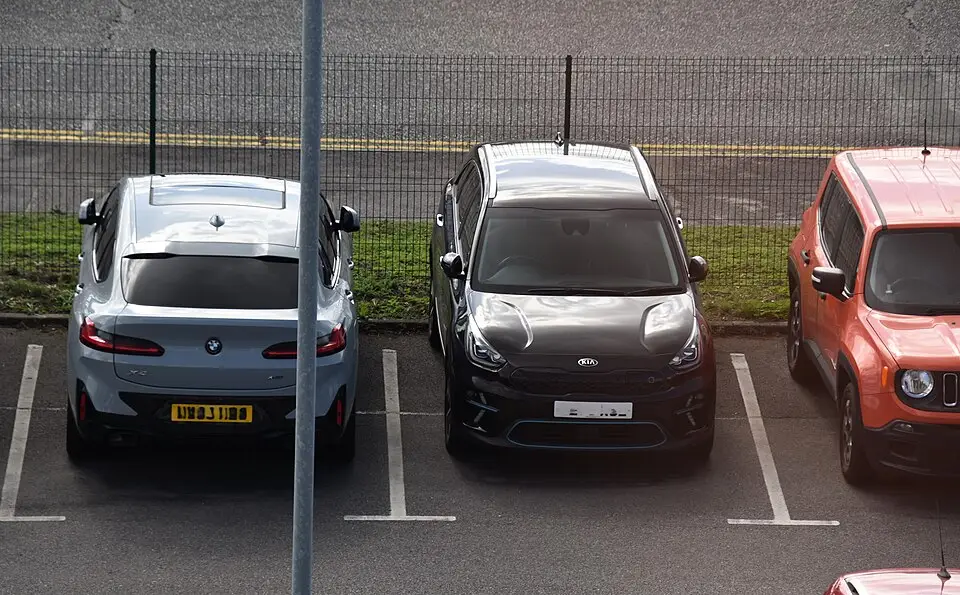
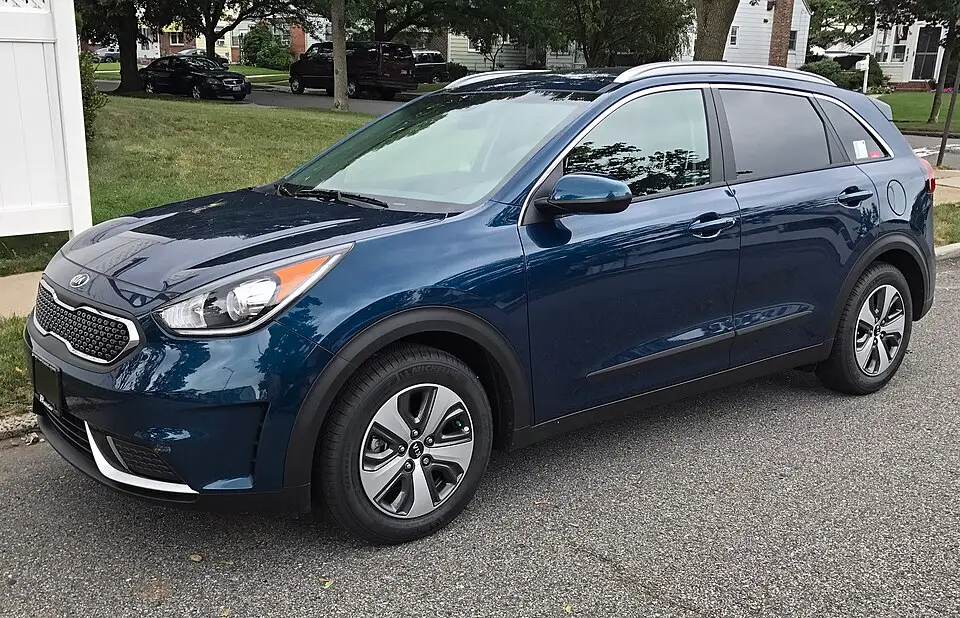
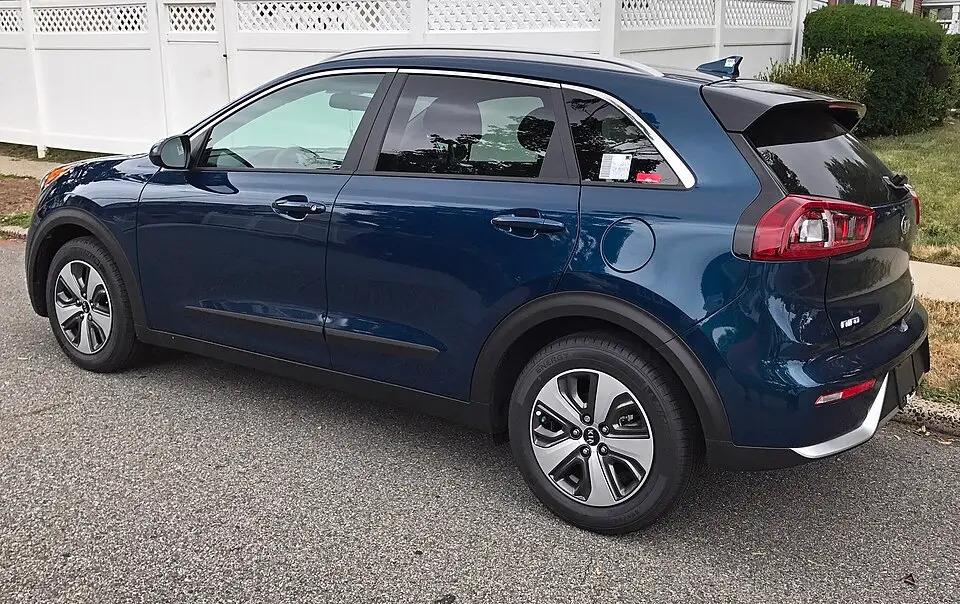
Freely licensed photos from Wikimedia Commons; the author and licence are given for each image.
- 1. Kia Niro 2017–2022 · Photo: Vauxford, CC BY-SA 4.0
- 2. Kia Niro 2017–2022 · Photo: Charles from Port Chester, New York, CC0
- 3. Kia Niro 2016–2022 · Photo: Mr.choppers, CC BY-SA 3.0
- 4. Kia Niro 2016–2022 · Photo: Mr.choppers, CC BY-SA 3.0
Questions about the Kia Niro I (facelift 2019) battery
How big is the battery of the Kia Niro I (facelift 2019) e-Niro 67 kWh (204 hp)?
The battery holds 67 kWh, of which 64 kWh is usable. It uses NCM 622 cells, 294 in all, at 356 V nominal. How much of that capacity is left on a used car can only be known by testing it.
How fast does the Kia Niro I (facelift 2019) e-Niro 67 kWh (204 hp) charge?
It accepts DC fast charging at up to 100 kW (20–80% in about 42 minutes); AC charging at up to 10.5 kW (0–100% in about 420 minutes). Actual times depend on the charger, the battery temperature and its state of health.
How far does the Kia Niro I (facelift 2019) e-Niro 67 kWh (204 hp) go on electricity?
It covers 455 km on electricity. Real range is lower in winter and on the motorway and drops as the battery ages; if yours has dropped noticeably, a battery test shows why.
Can the battery of the Kia Niro I (facelift 2019) e-Niro 67 kWh (204 hp) be repaired?
Often, yes: a battery rarely fails all at once; usually a few modules or cells weaken first, or the fault is in the cooling, sensors or contactors. We test it first and tell you whether a repair makes sense, before anything is taken apart.
What warranty does the battery have in Europe?
The warranty depends on the make of the car. Hyundai: 8 years or 160,000 km, whichever comes first; the maker guarantees the battery keeps at least 70% of its capacity. It covers the high-voltage batteries of Hyundai's electric, plug-in hybrid and hybrid cars, and the terms may vary by country. Kia: 7 years or 150,000 km, whichever comes first; the maker guarantees the battery keeps at least 70% of its capacity. Kia's general 7-year warranty also covers the battery. The exact terms are the ones in your car's warranty booklet.
Find out whether your battery is worth repairing
Book a test. We will tell you whether a repair, a replacement or something else is the right call, before you spend money on the wrong part.