
Workshop job ·
Opel Combo Electric that would no longer charge from a socket: how we repaired the on-board charger without replacing it
A 2024 Opel Combo Electric would no longer charge its battery from a socket. The culprit was the on-board charger, where one of the low-voltage electronic supplies had stopped working properly. We repaired it, and the original charger stayed on the car.
- year of manufacture
- 2024year of manufacture
- charging from a socket had stopped working
- ACcharging from a socket had stopped working
- the faulty supplies inside the charger
- Low voltagethe faulty supplies inside the charger
- on-board charger repaired, not replaced
- 1on-board charger repaired, not replaced
The problem
A 2024 Opel Combo Electric would no longer charge its traction battery from a socket or an AC charging station.
The diagnosis
The fault was in the on-board charger (OBC): one of its low-voltage electronic supplies was no longer working properly. It was not a communication problem.
The fix
We repaired the faulty supply circuits in the original charger and checked it worked after the repair.
The result
AC charging was back, and the original charger stayed on the car, with no need for a new one.
An electric van that would not take power from the socket
The Opel Combo Electric, built in 2024, came in with a simple complaint: the traction battery would no longer charge from a socket or from alternating-current (AC) stations. For a work van, that means it practically stays parked.
When AC charging fails, many people think of the battery straight away. Most of the time, though, the problem lies on the way between the socket and the battery, and here that way runs through the on-board charger.
What we found inside the charger
We focused on the OBC’s electronics. Inside are processors, control circuits and sensors, and each needs stable low-voltage supplies. If one of them is missing or unstable, the charger stops, even if the rest of the electronics is fine.
That is exactly what we found: one of the charger’s low-voltage electronic supplies was not working properly. It was not a communication problem between modules, but a supply problem inside the OBC.
The job, step by step
Step 1
Diagnosing AC charging
We checked the AC charging system and established that the fault came from the on-board charger.
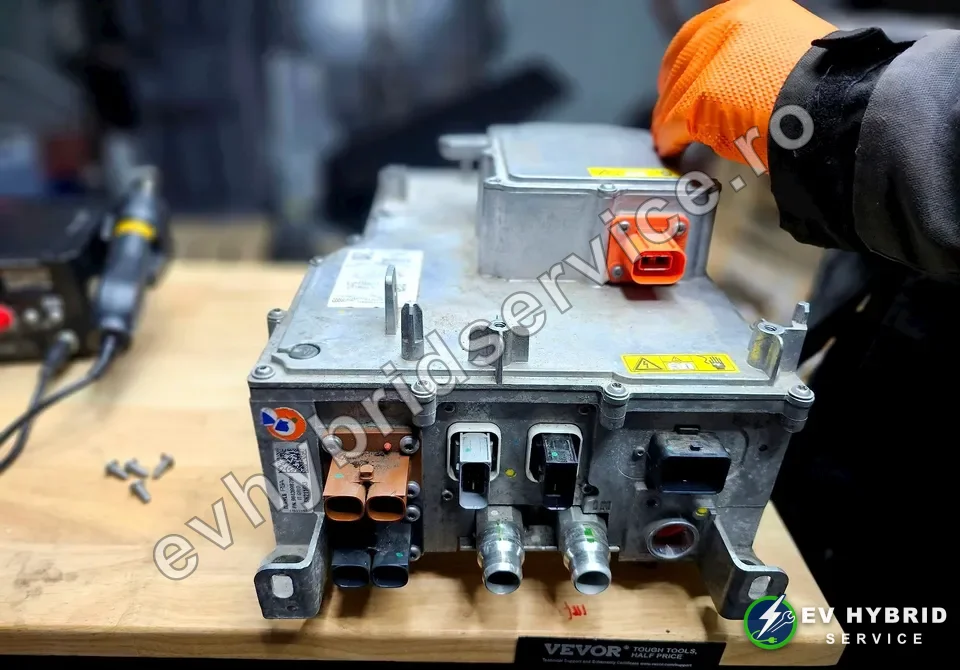
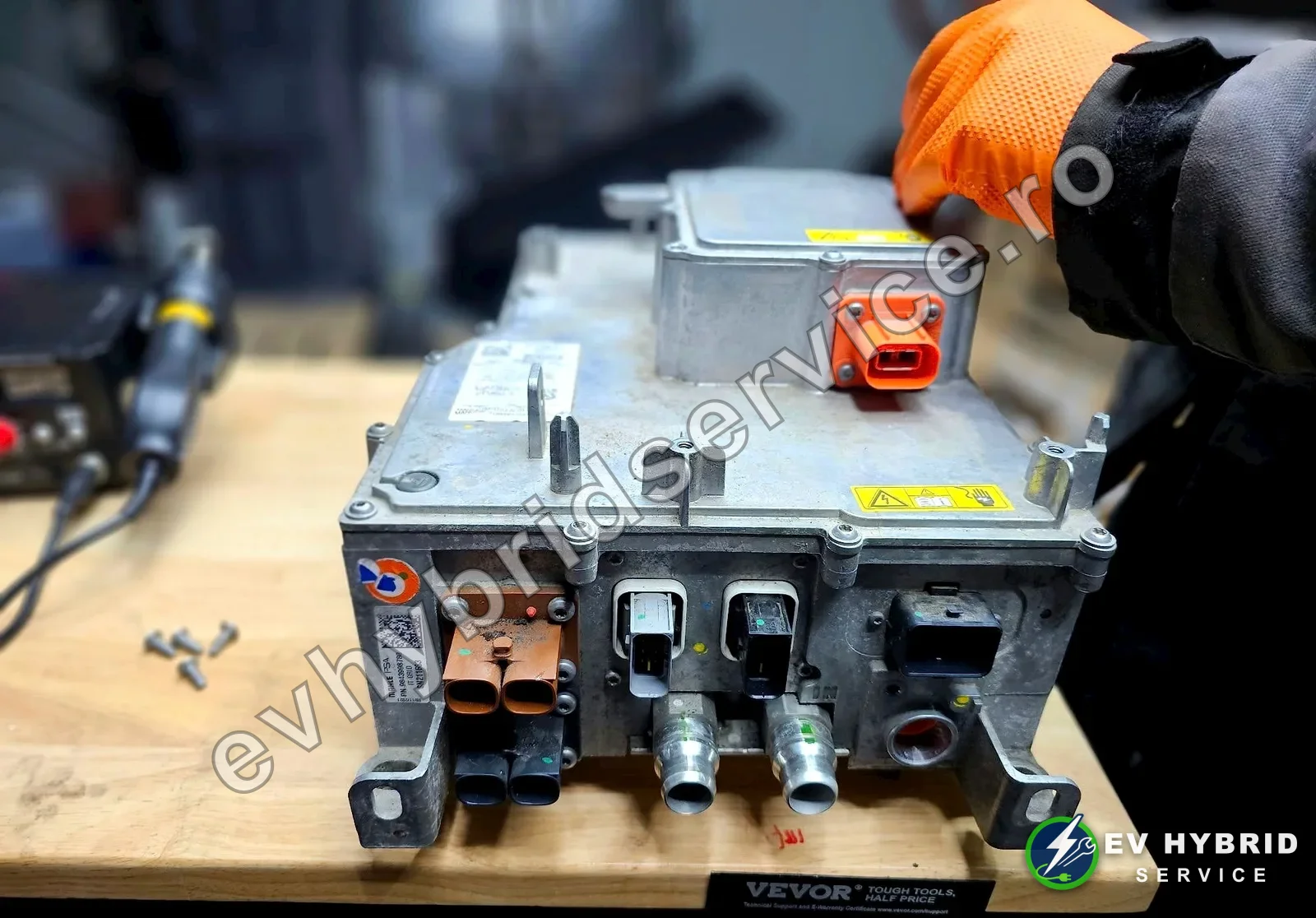
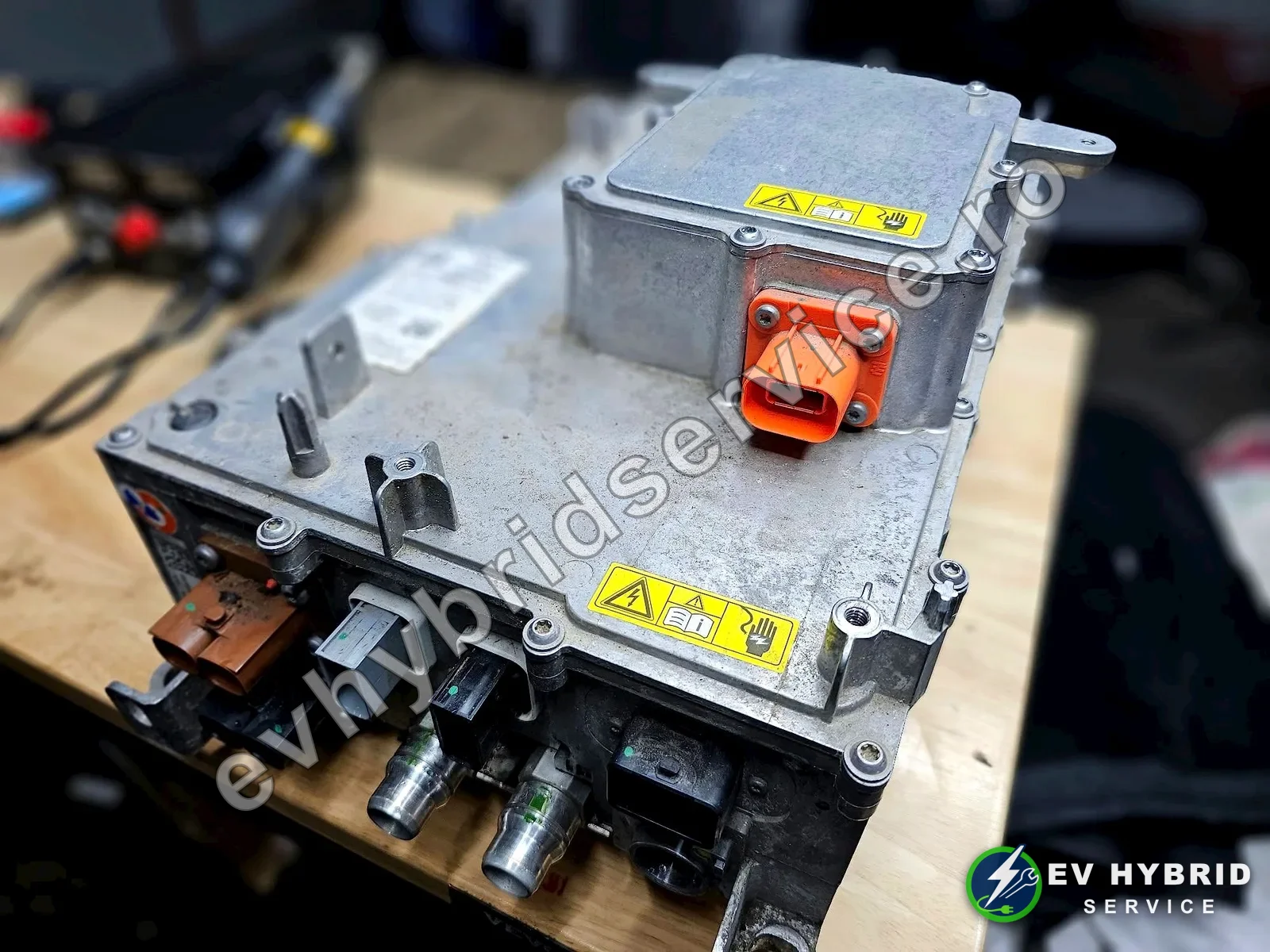
The charger on the workbench. 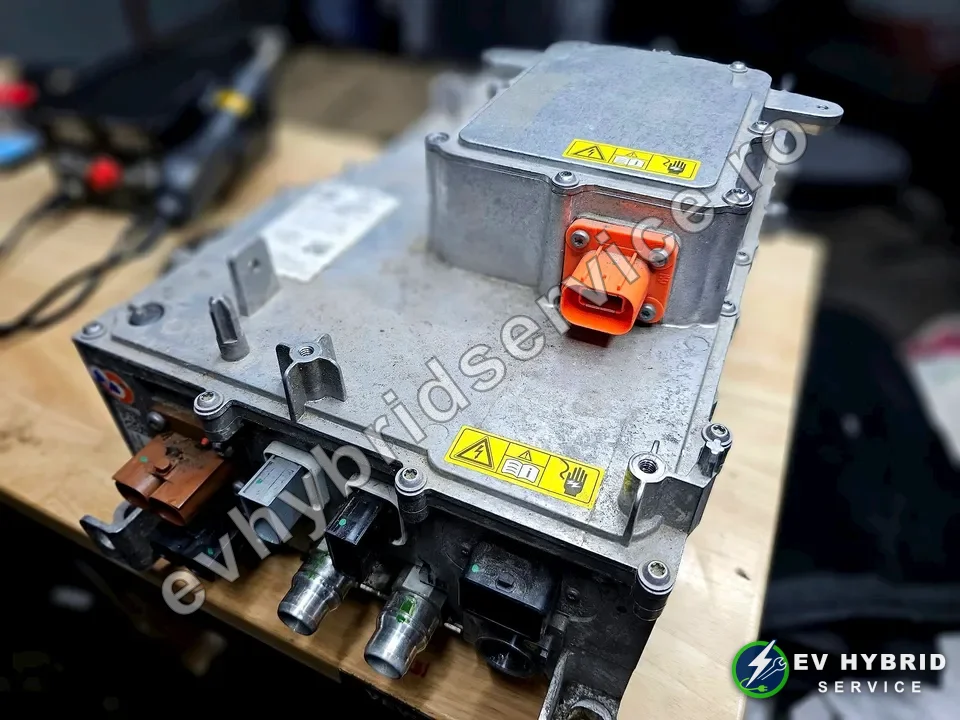
The charger out of the car, with its connectors and ports. Step 2
Opening the charger
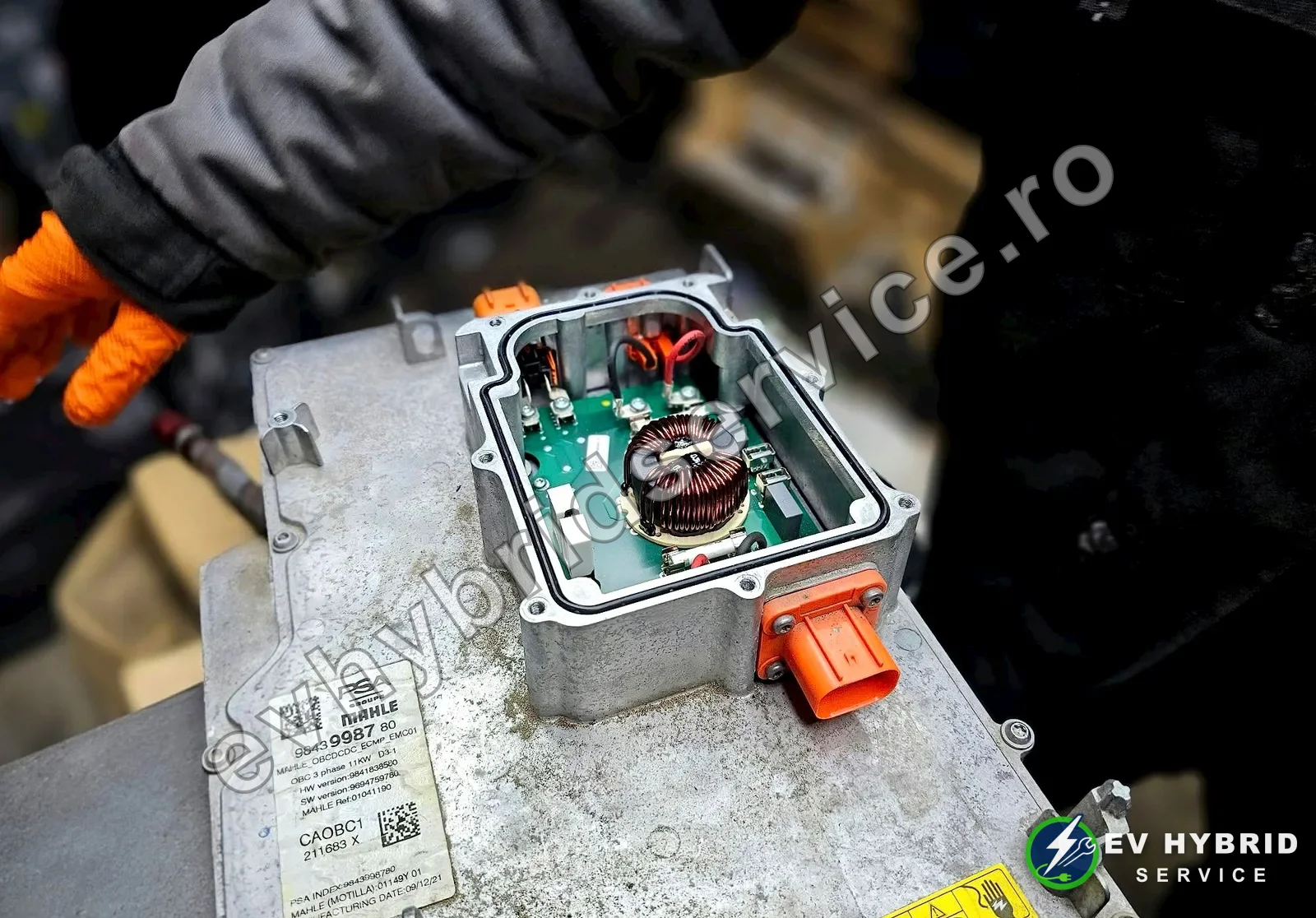
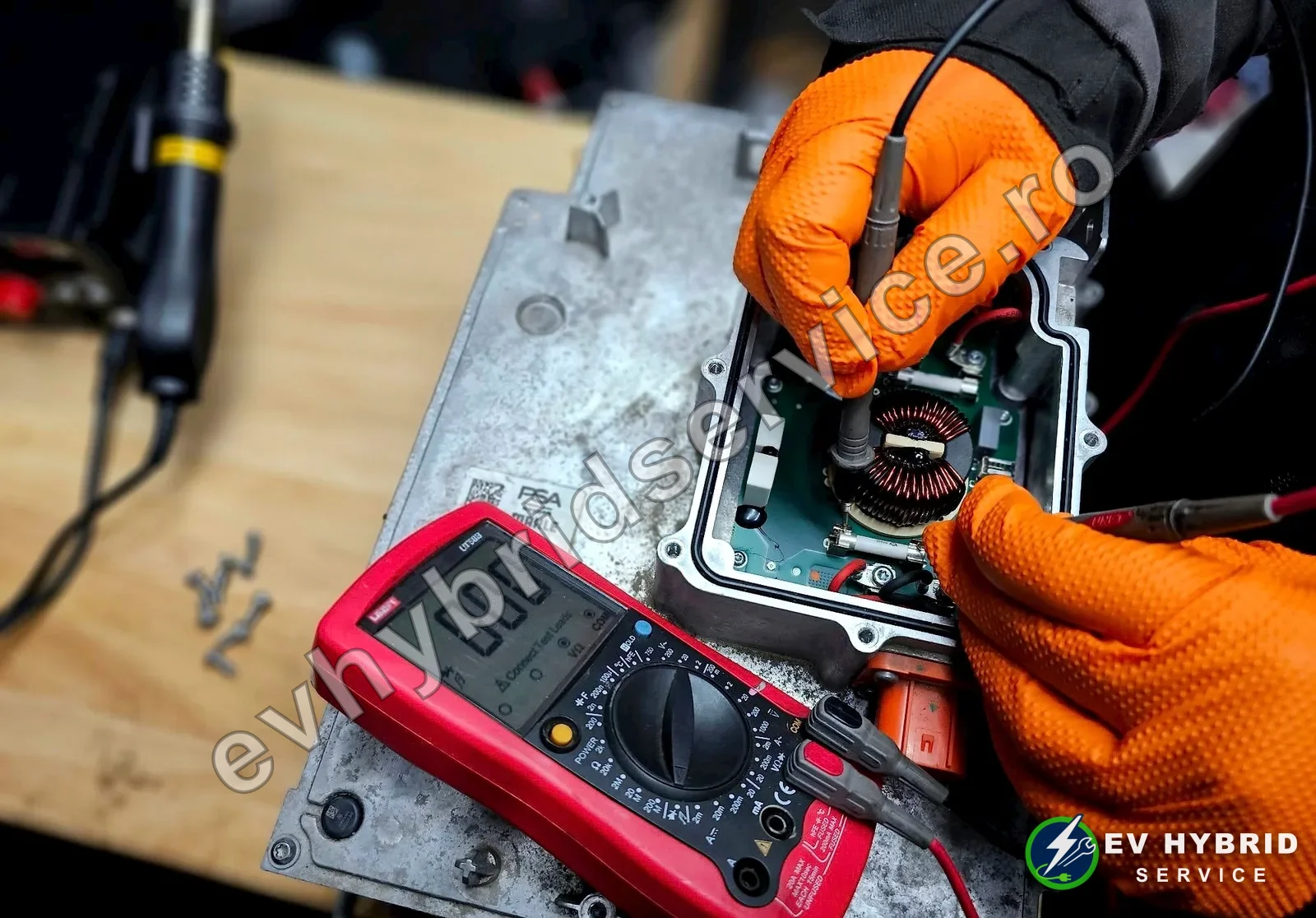
We opened the OBC on the workbench to reach its electronic board.
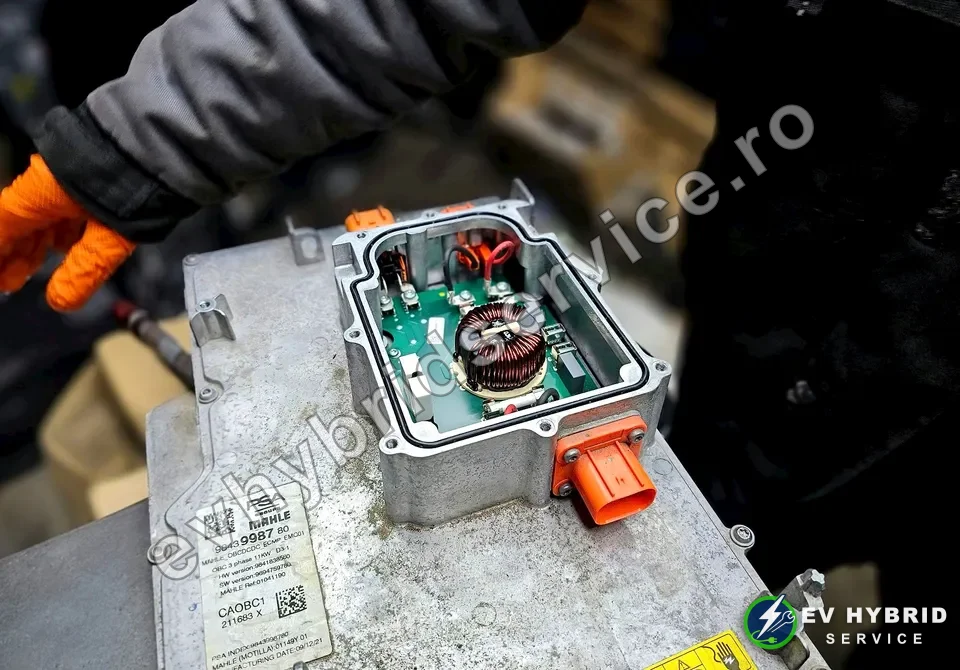
The on-board charger opened; the label reads PSA and Mahle. 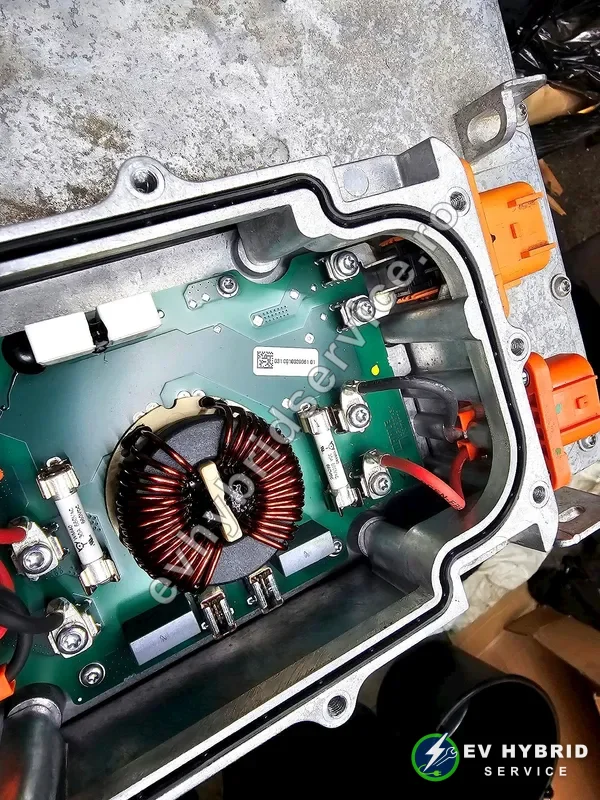
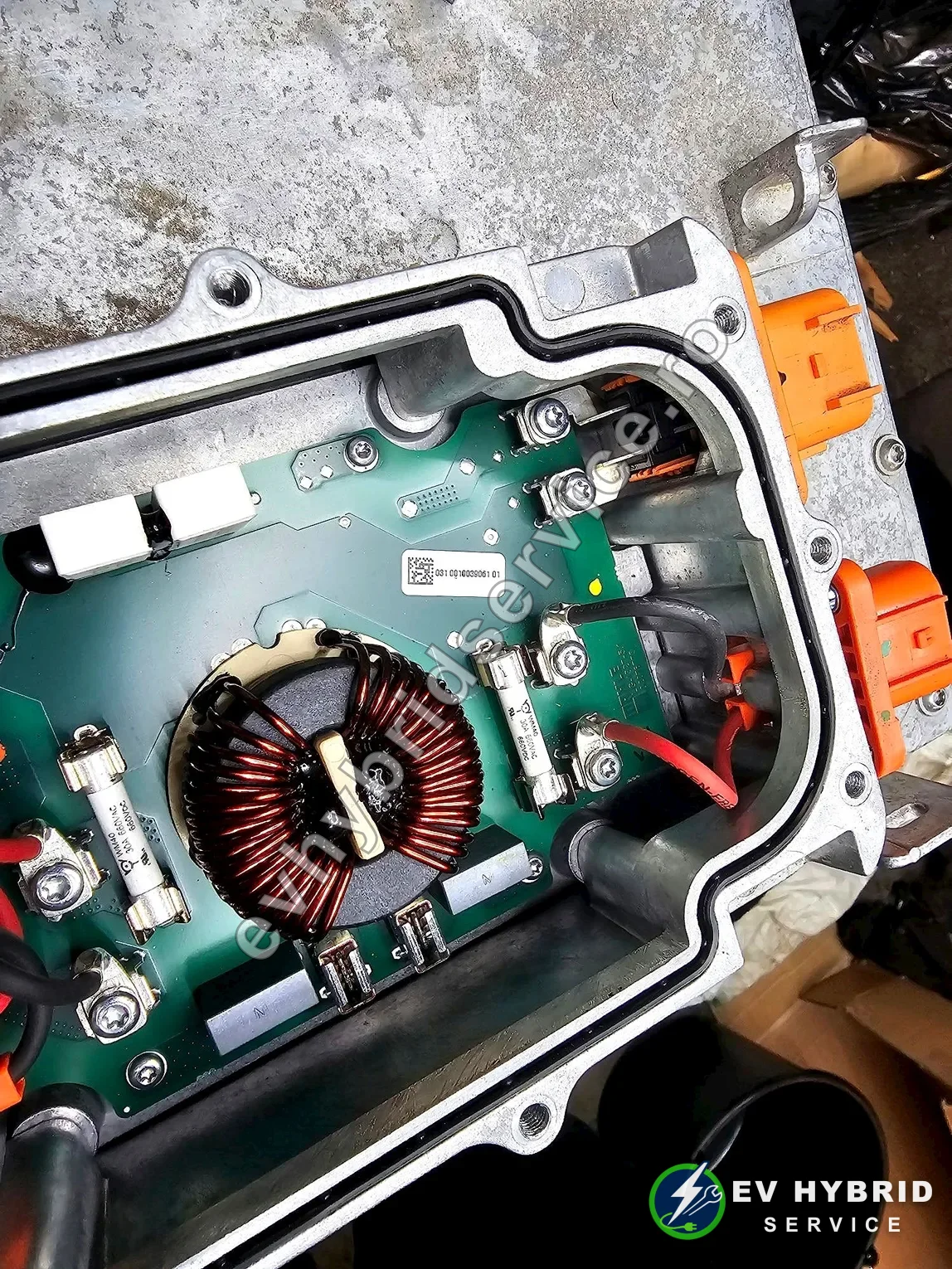
Inside the compartment: the toroidal coil and the electronic board. 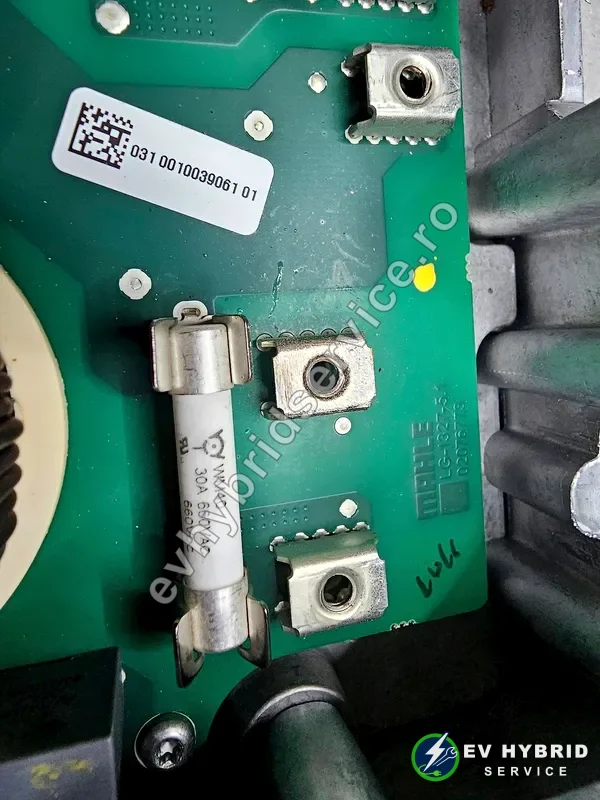
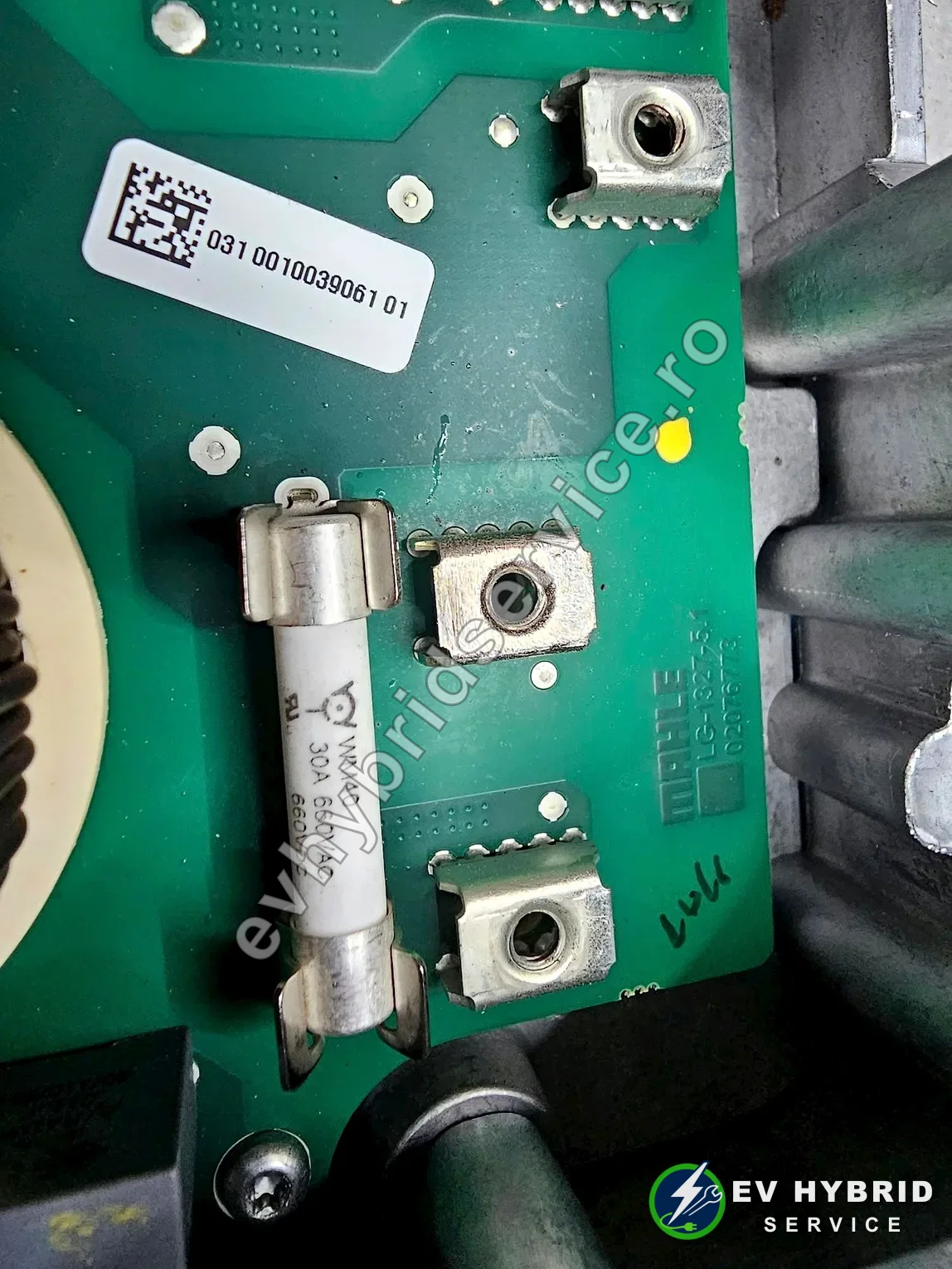
A 30 A fuse on the charger board. Step 3
Measuring the low-voltage supplies
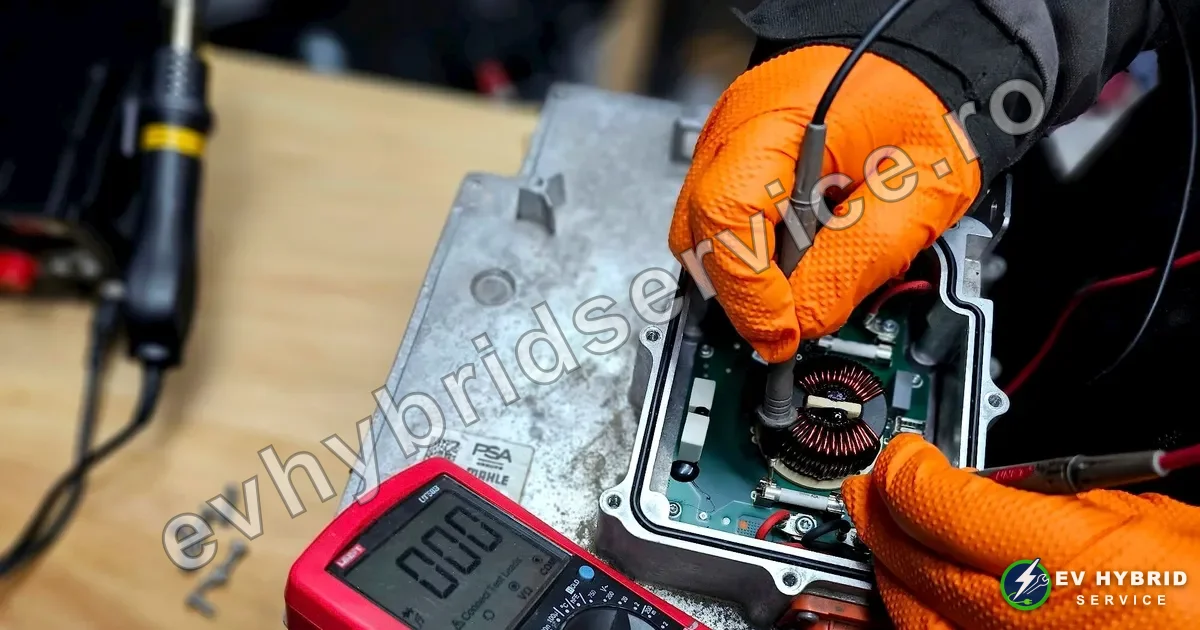
We measured the board’s electronic supplies one by one and located the circuits that were not giving the right voltage.
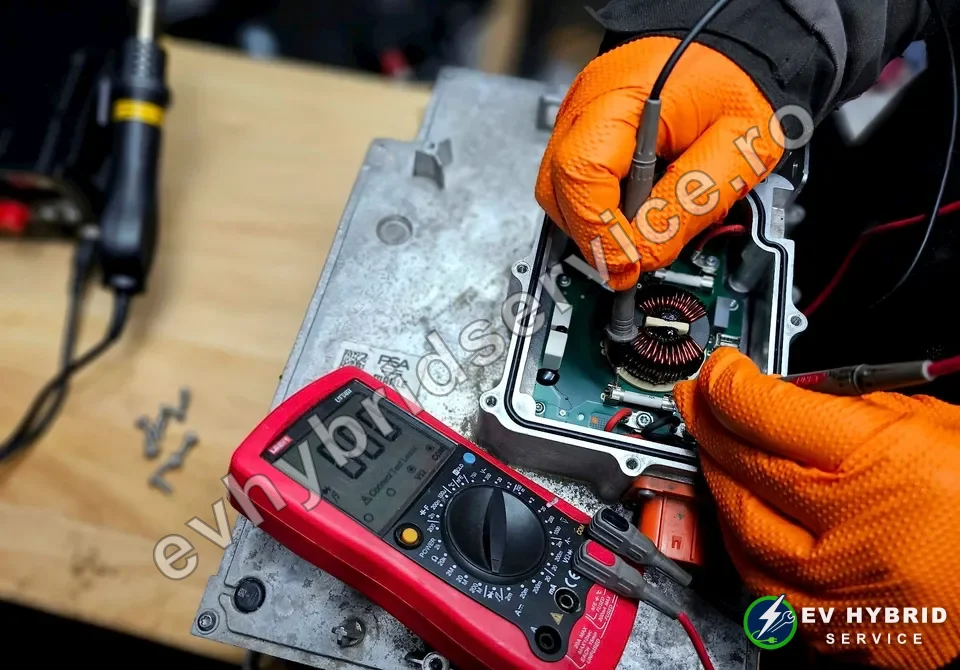
Measuring on the on-board charger board. Step 4
Repairing the faulty circuits
We repaired the affected supply circuits without replacing the whole electronic assembly.
Step 5
Checking the charging
We checked the charger worked after the repair, and charging the battery from an AC source was back.
Before and after
When it came in
- The battery would not charge from a socket
- Faulty low-voltage supplies inside the OBC
- The prospect of a new charger
At handover
- The supply circuits repaired
- AC charging working again
- The original charger kept
Fault codes help, but they do not make the diagnosis on their own. The same code can have different causes depending on the charger maker, the hardware version and the software. That is why we measure rather than guess from the code.
Signs that the on-board charger has a problem
- Charging does not start when you plug in the cable
- AC charging starts but stops before it finishes
- The station recognises the car, but no energy flows
- DC fast charging works, charging from a socket does not
- Charging system errors on diagnosis
Does your Opel Combo Electric, or another electric car, no longer charge from a socket? We check whether the on-board charger is to blame and whether it can be repaired.
Book a diagnosis →Frequently asked questions
Why would an Opel Combo Electric stop charging from a socket?
The cause can be the socket or the cable, the station, the on-board charger or, more rarely, the battery. On this van it was the on-board charger: one of its low-voltage electronic supplies had stopped working.
Can the on-board charger be repaired, or must it be replaced?
Often it can be repaired. Here we repaired the faulty supply circuits, and the original charger stayed on the car, at a far lower cost than a new unit.
What is the difference between the on-board charger and the inverter?
The on-board charger turns the alternating current from the socket into direct current for the battery. The inverter powers and controls the electric motor from the battery’s energy. One can fail without the other.
If DC fast charging works, is the on-board charger fine?
Not necessarily. On DC charging the station does the conversion and the OBC is not involved. If DC works and AC does not, the on-board charger is the first suspect.
Photos from the job
Tap a photo to see it full size; use the arrows to browse.
Measuring on the on-board charger board.
The on-board charger opened; the label reads PSA and Mahle.
Inside the compartment: the toroidal coil and the electronic board.
A 30 A fuse on the charger board.
The charger out of the car, with its connectors and ports.
The charger on the workbench.
Read next
Battery repairs
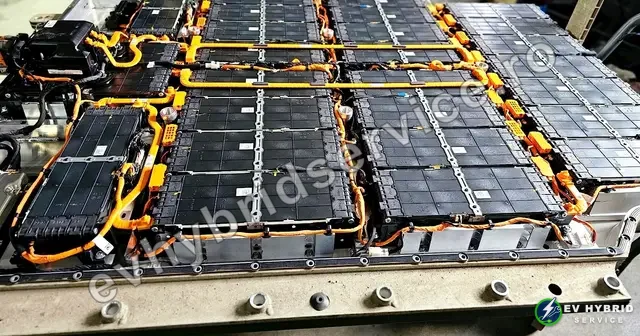
Hyundai Kona Electric losing coolant with no error on the dashboard: how we repaired the cooling circuit of the high-voltage battery
A 2024 Hyundai Kona Electric was losing a lot of fluid from the battery cooling circuit, though the dashboard showed nothing. After a hard impact, a pipe had cracked. We replaced it, sealed the small cracks, and the battery stayed on the car.
3 min read
Battery repairs
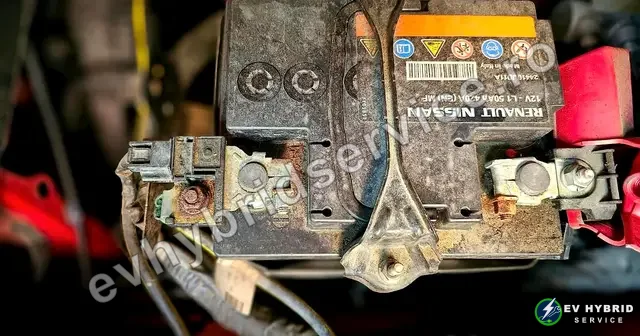
Nissan Leaf 40 kWh with communication errors and insulation faults: how we restored the 12 V supply and repaired the high-voltage insulation
A Nissan Leaf 40 kWh had errors in a chain and no longer talked to its climate system. Where it all started: the oxidised terminals of the 12 V battery. Once we restored the supply, diagnosis also turned up high-voltage insulation faults, which we fixed.
2 min read
Battery repairs
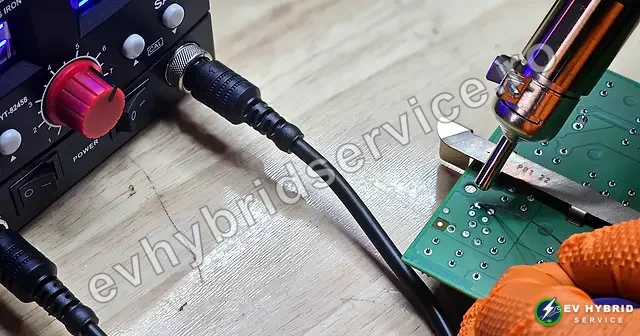
Volvo S90 T8 Plug-in Hybrid with communication faults: how we repaired the CEM and the chafed wiring, without a new module
A 2021 Volvo S90 T8 Plug-in Hybrid had a chain of faults and modules that no longer talked to each other reliably. We found wiring chafed by the body in two places and failed solder joints on the CEM board. We repaired the original module and removed the cause.
3 min read