
Workshop job ·
Hyundai Kona Electric losing coolant with no error on the dashboard: how we repaired the cooling circuit of the high-voltage battery
A 2024 Hyundai Kona Electric was losing a lot of fluid from the battery cooling circuit, though the dashboard showed nothing. After a hard impact, a pipe had cracked. We replaced it, sealed the small cracks, and the battery stayed on the car.
- year of manufacture
- 2024year of manufacture
- traction battery
- 65.4 kWhtraction battery
- errors or warning lights on the dashboard
- 0errors or warning lights on the dashboard
- cracked coolant pipe, replaced
- 1cracked coolant pipe, replaced
The problem
A 2024 Hyundai Kona Electric was losing a lot of fluid from the battery cooling circuit, with no warning light or message on the dashboard.
The diagnosis
After a hard impact, a coolant pipe had cracked and a few small cracks had appeared elsewhere in the circuit. The battery itself had no electronic fault.
The fix
We replaced the cracked pipe and sealed the small cracks with a cold-weld epoxy compound.
The result
The cooling circuit is sealed again, and the traction battery stayed on the car, with no need for a new one.
Coolant gone, dashboard quiet
The Hyundai Kona Electric, built in 2024 with a 65.4 kWh lithium-ion battery, reached us with heavy fluid loss from the cooling circuit of the traction battery. The level was visibly dropping, yet no warning light came on and no message appeared on the dashboard.
That is what makes this case worth telling: no error does not mean the battery cooling is fine. The electronics only react once the temperature goes out of range, and until then the coolant can leak away without you knowing.
Where the coolant was going
First we looked for where the fluid was escaping. Under the car, the battery casing had coolant traces and streaks, and the car showed the signs of a hard mechanical impact. To reach the cooling lines, we removed the parts in the way.
We found a cracked coolant pipe, the main source of the leak, and a few other small cracks caused by the same impact. So the cause was mechanical, not an electronic fault in the battery, which let us work on exactly the damaged parts.
The job, step by step
Step 1
Tracing the leak
We checked the cooling circuit from under the car and followed the coolant traces on the battery casing to the places it was leaking from.
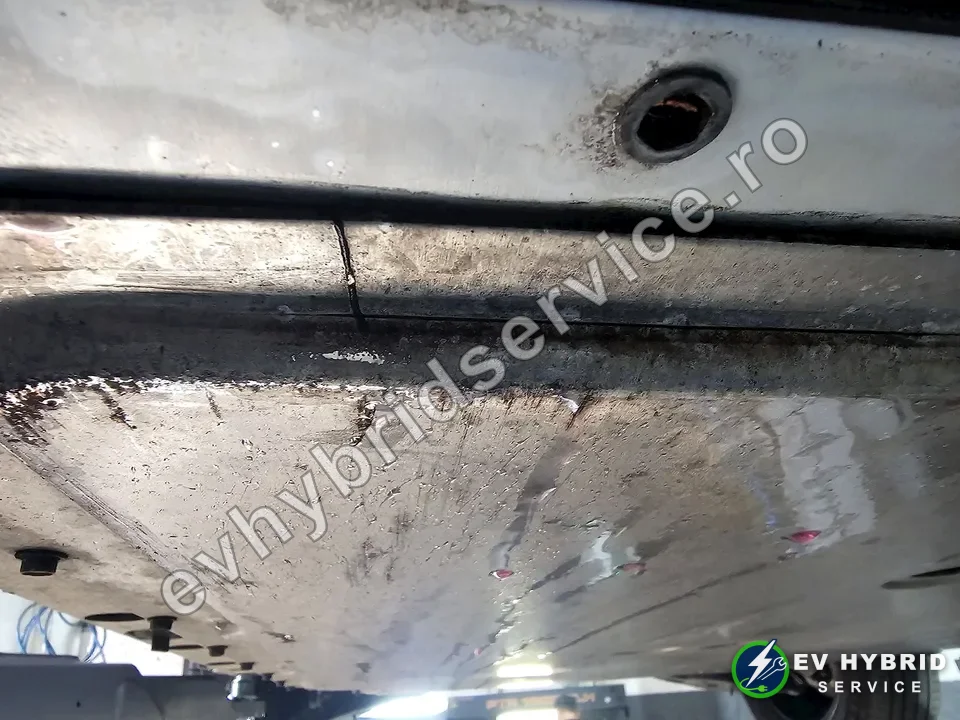
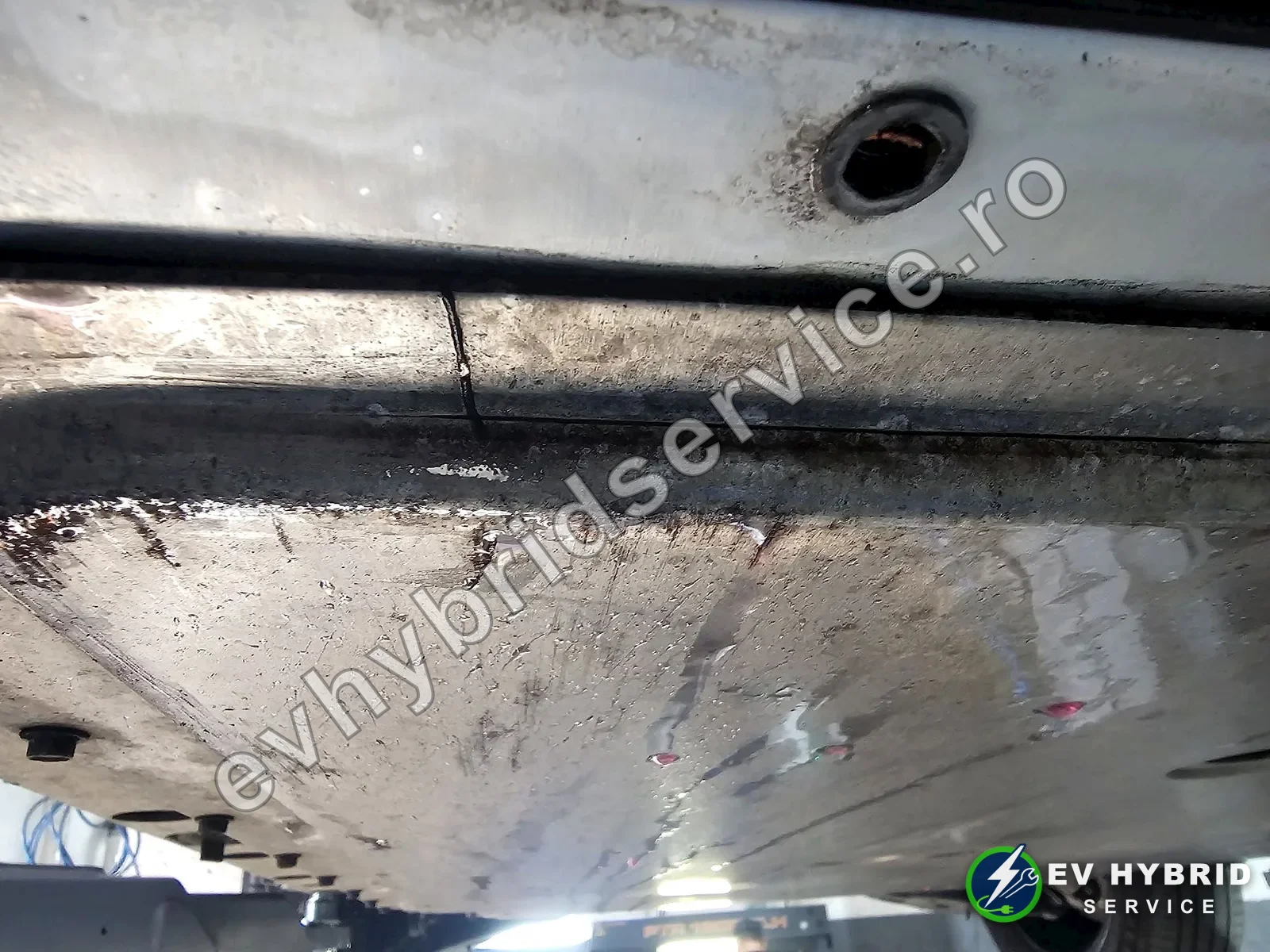
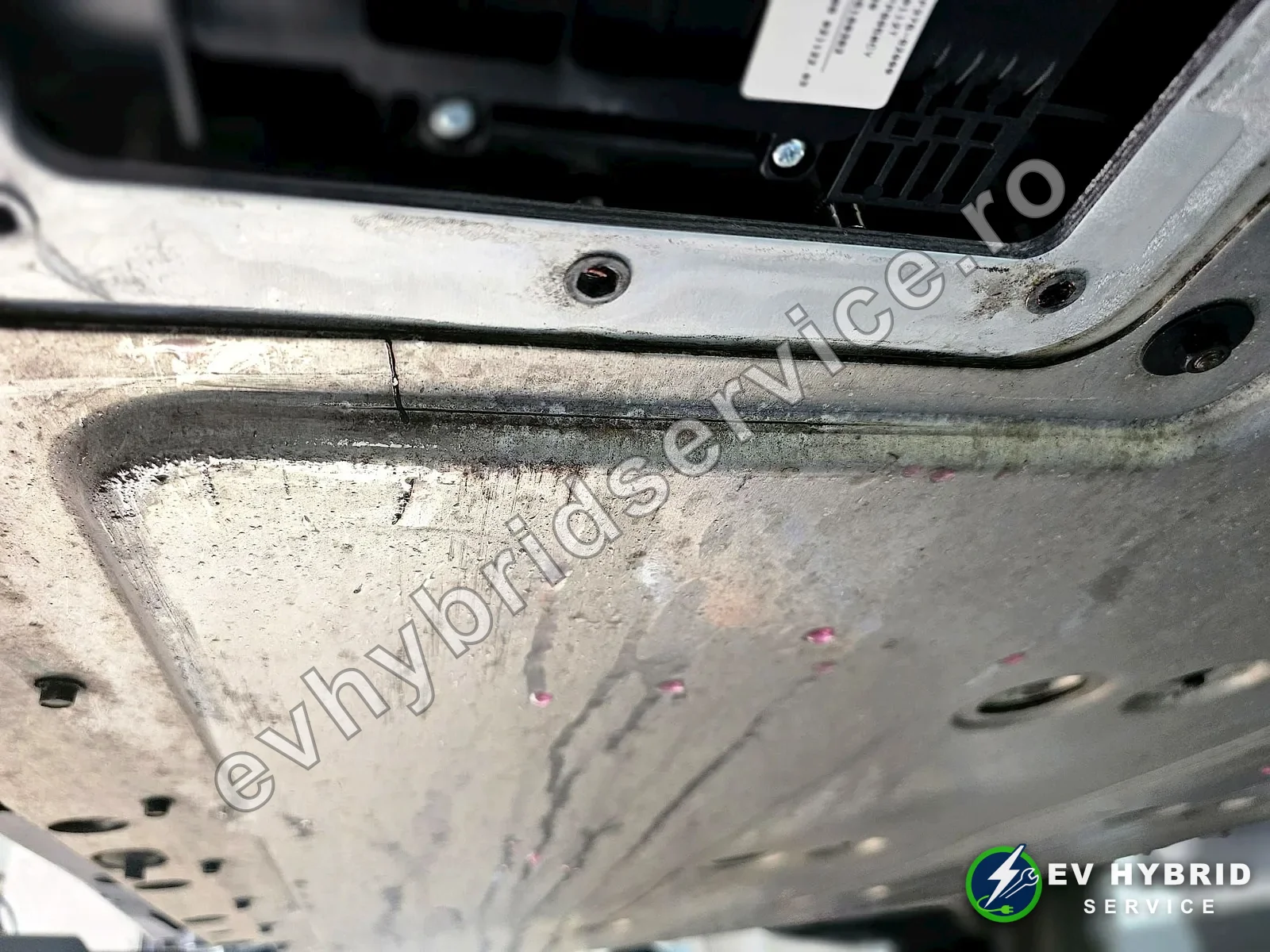
Coolant traces under the battery, right next to a casing joint. 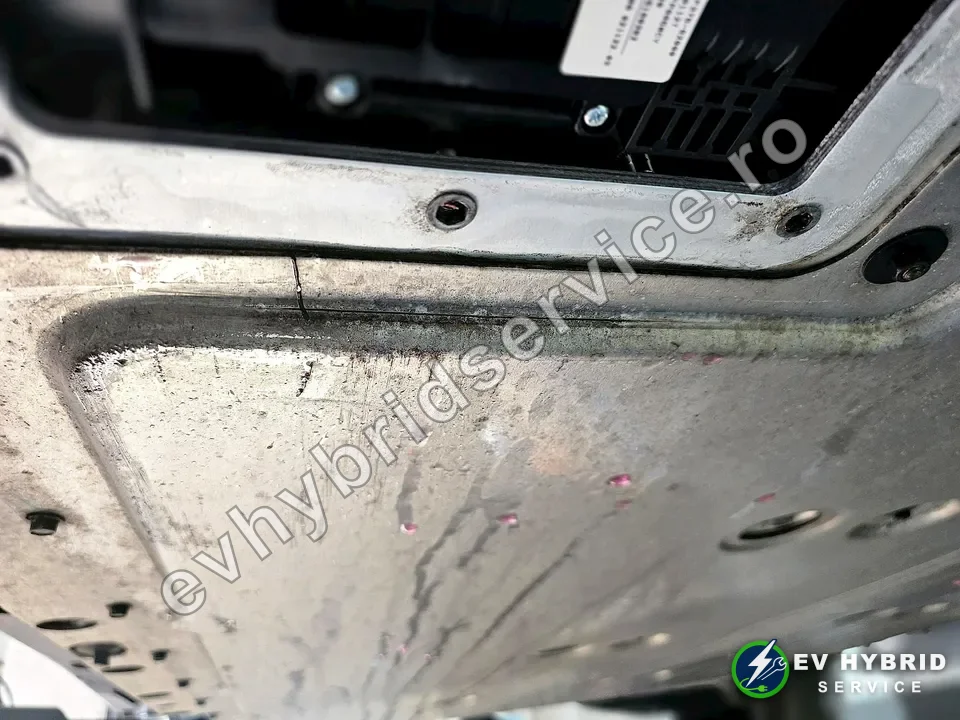
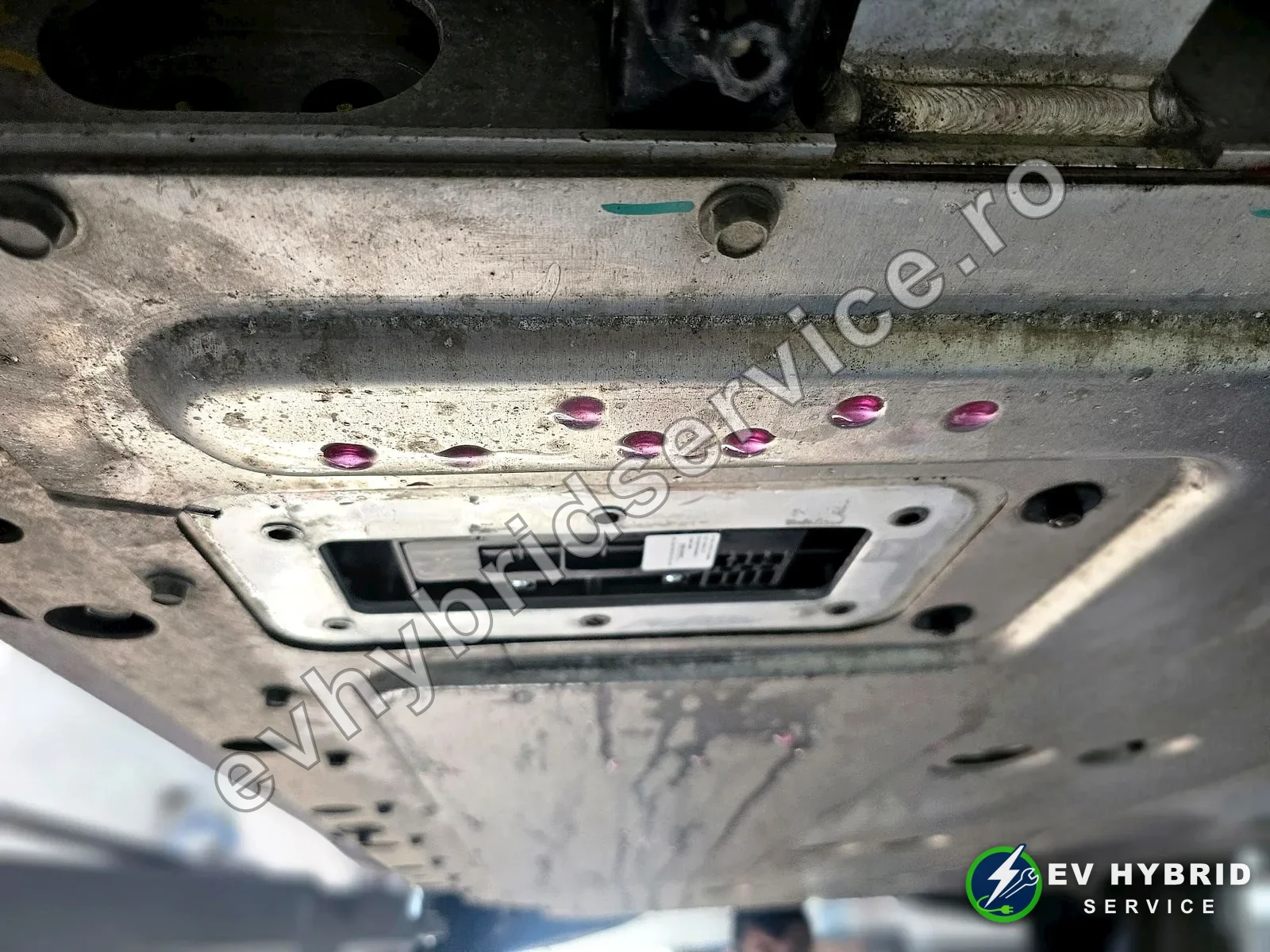
The streaks left by the coolant on the battery casing. 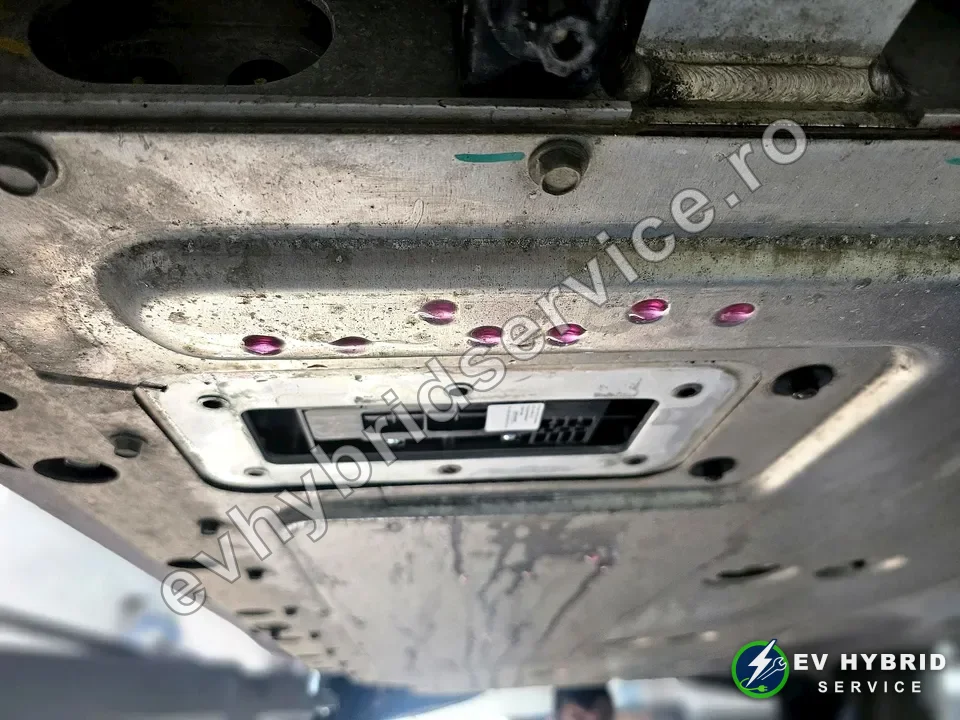
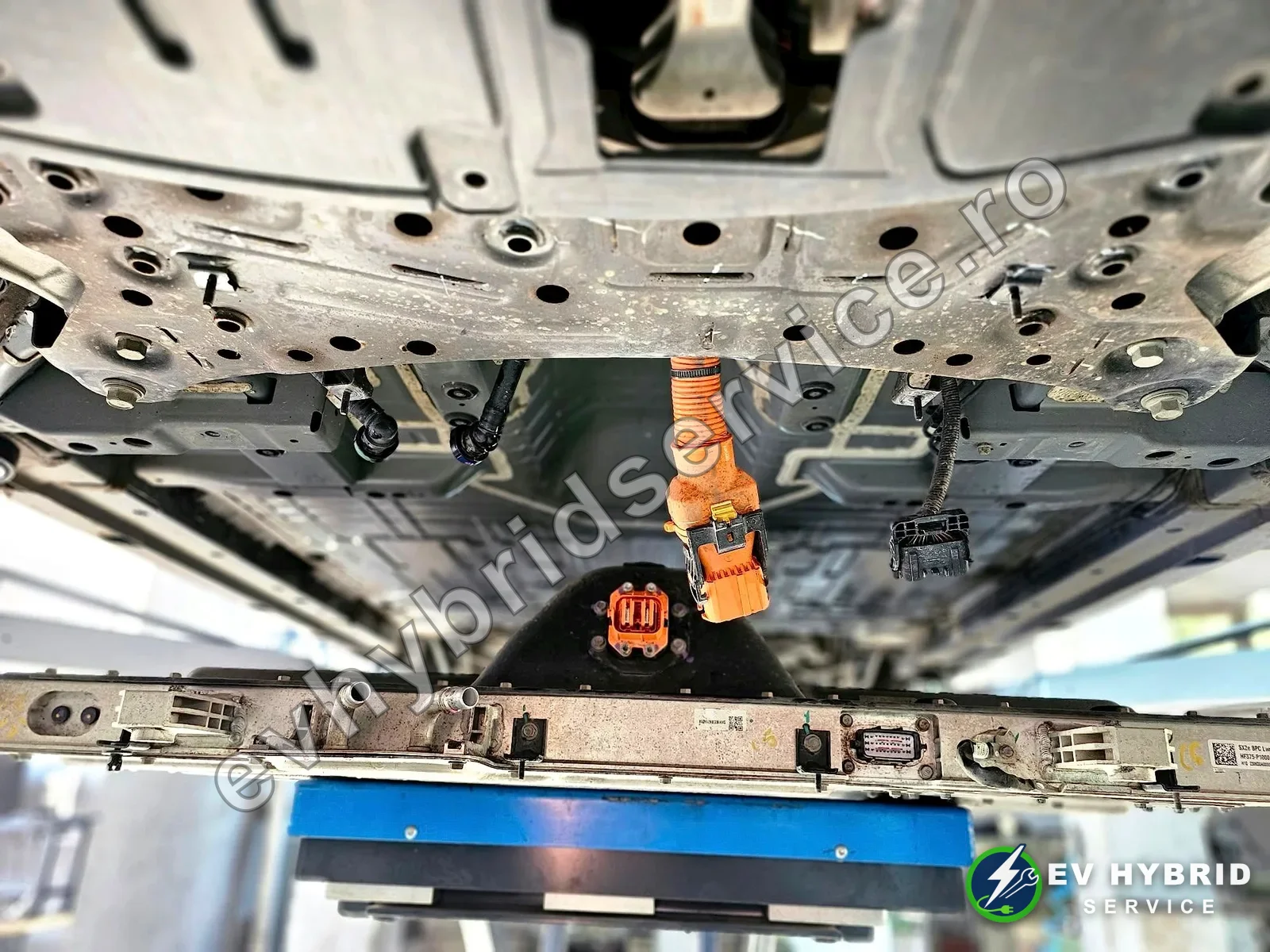
The battery seen from under the car, before removal. Step 2
Lowering the battery
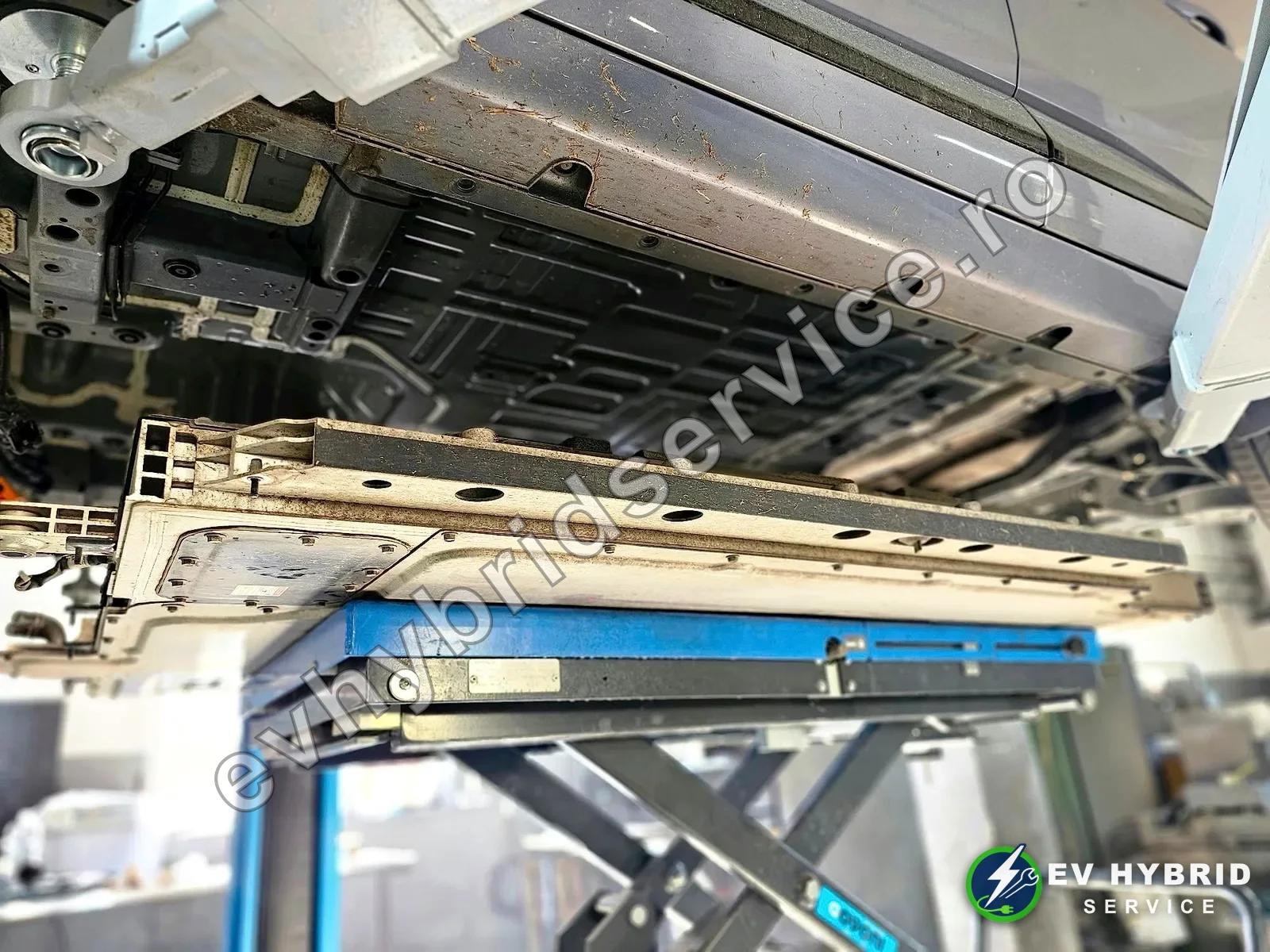
To reach the cooling lines, we lowered the battery onto the lift table.
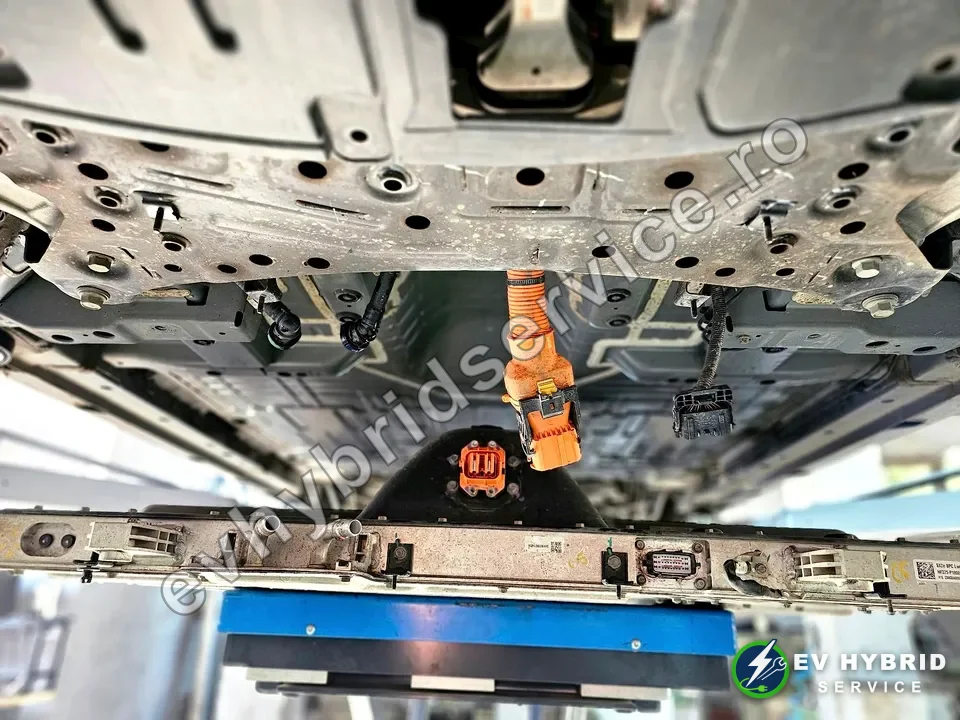
Lowering the battery onto the lift table; in the middle, the orange high-voltage cable. 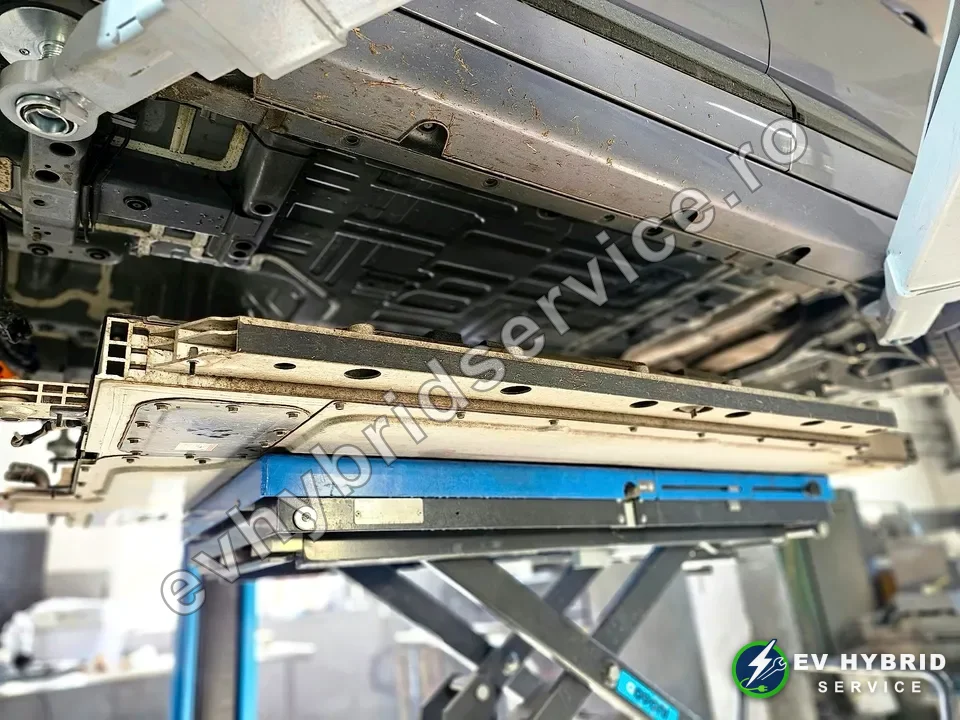
The battery resting on the lift table. Step 3
Reaching the cooling lines
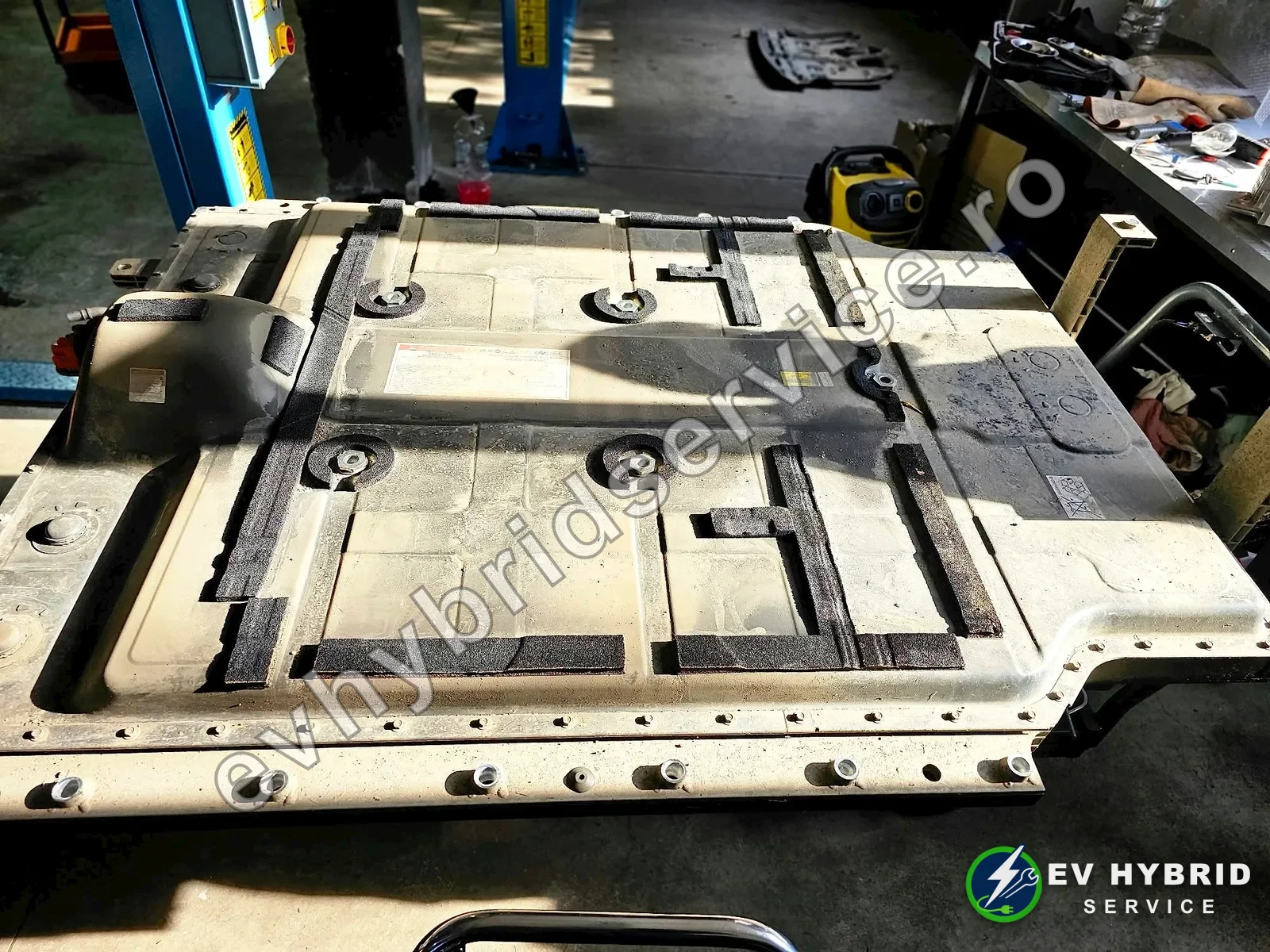
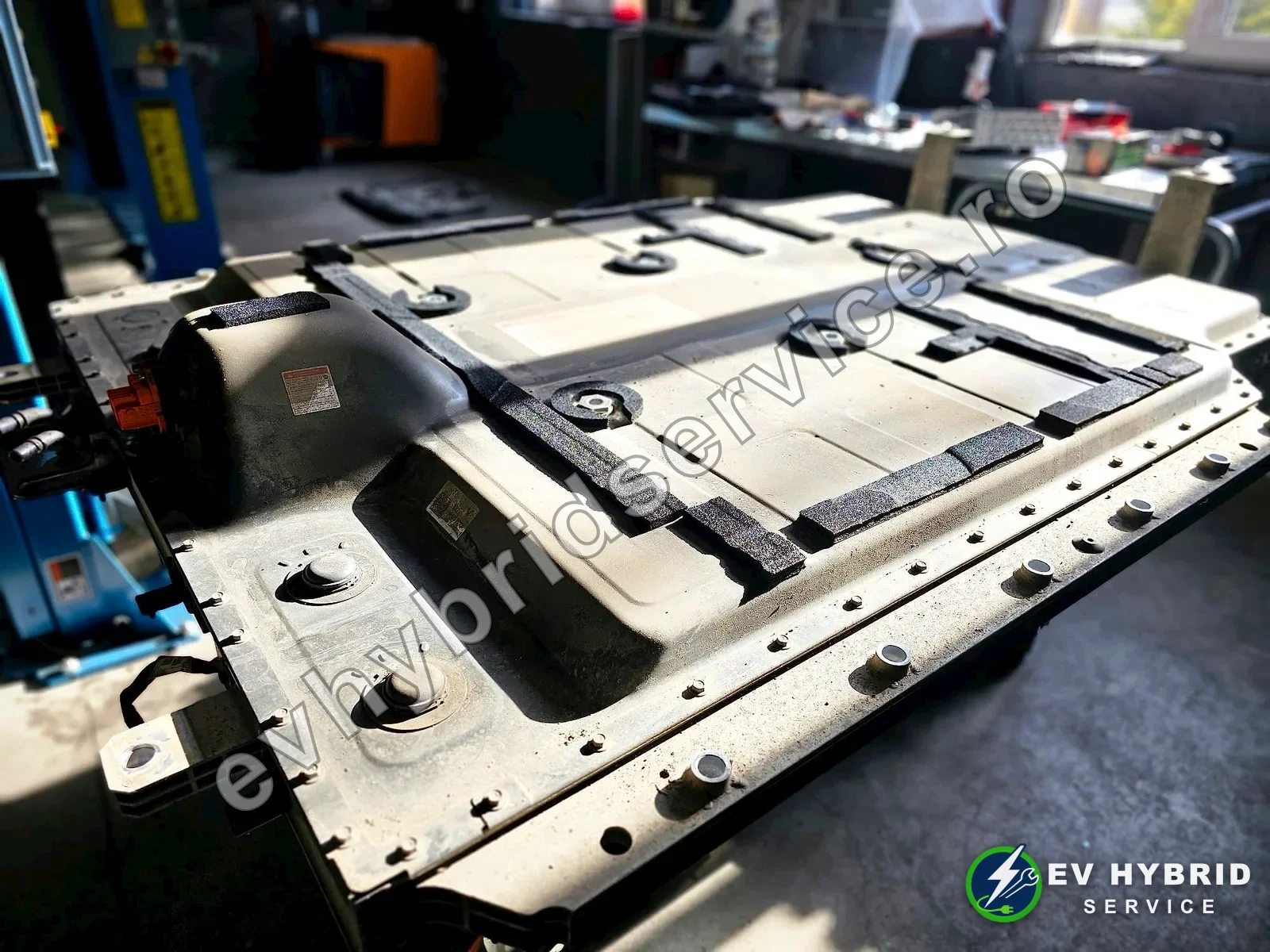
With the battery in the workshop, we removed what was needed to see the pipe and the cracked areas.
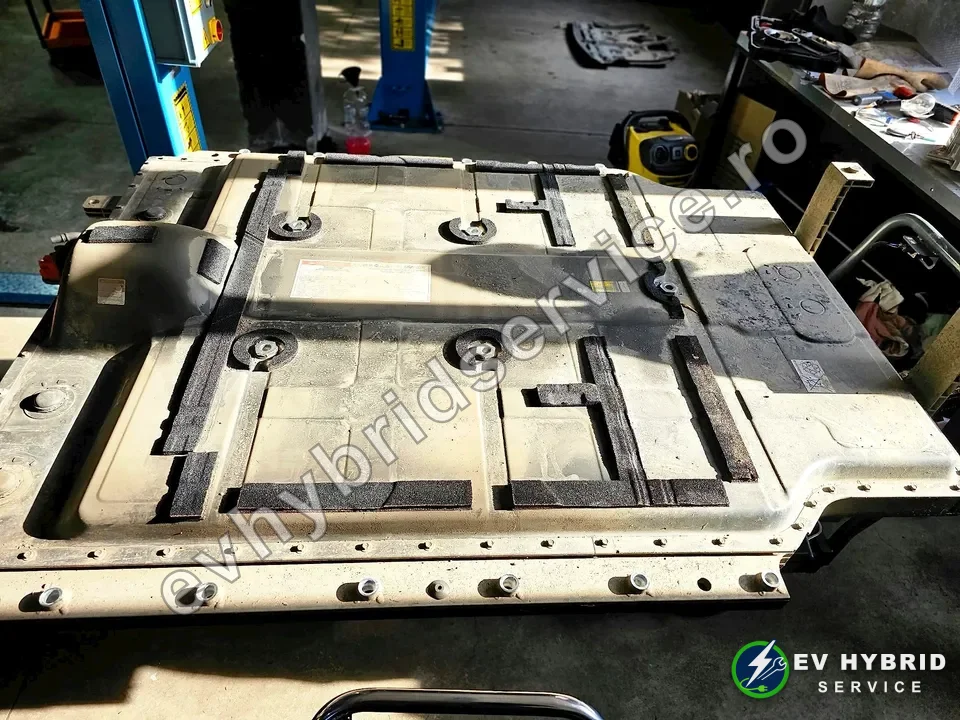
The battery out of the car, with its cover still on. 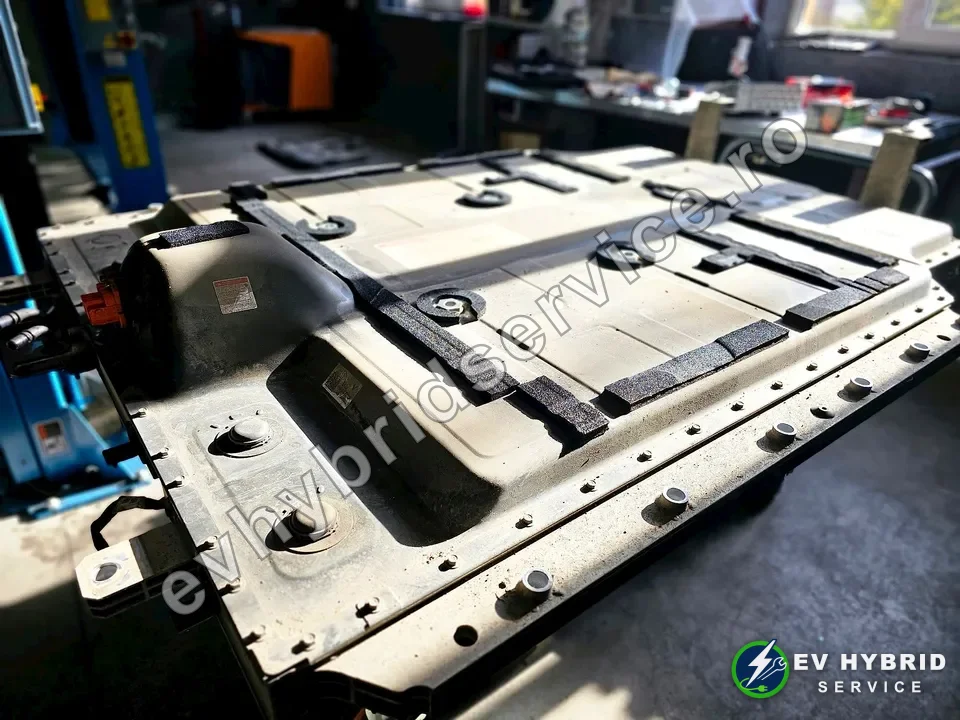
The battery cover from another angle. 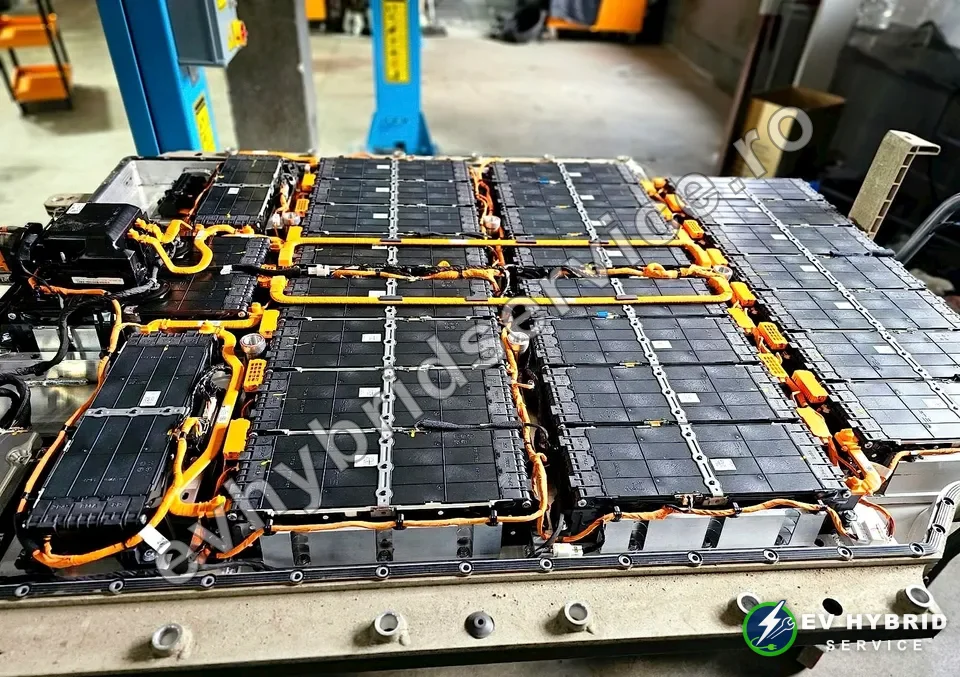
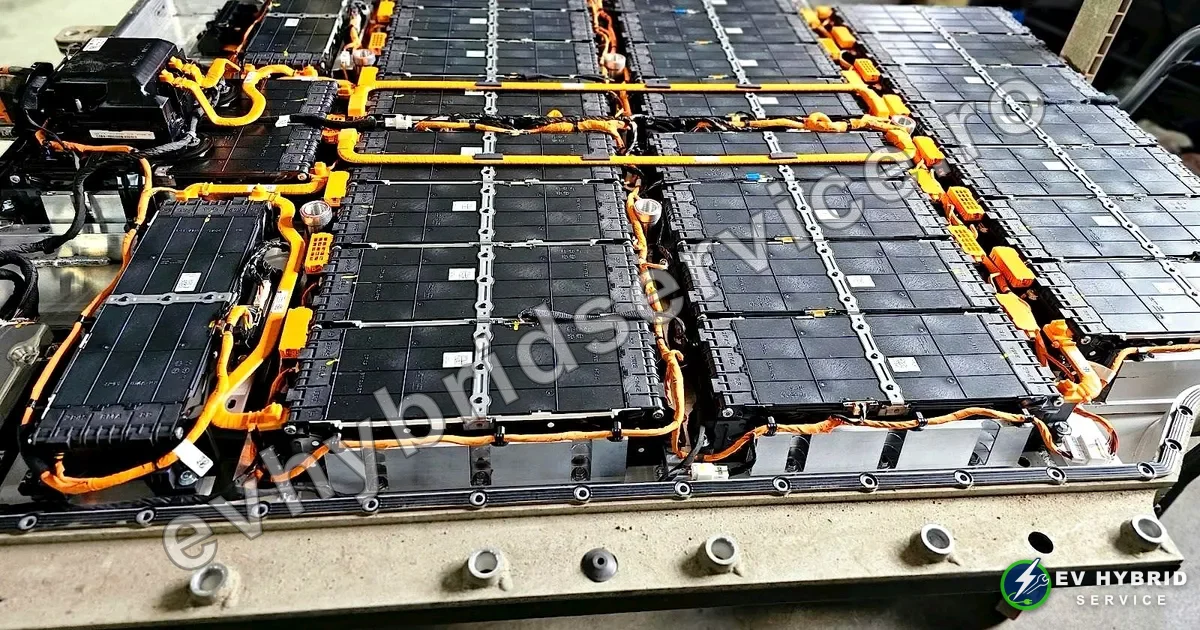
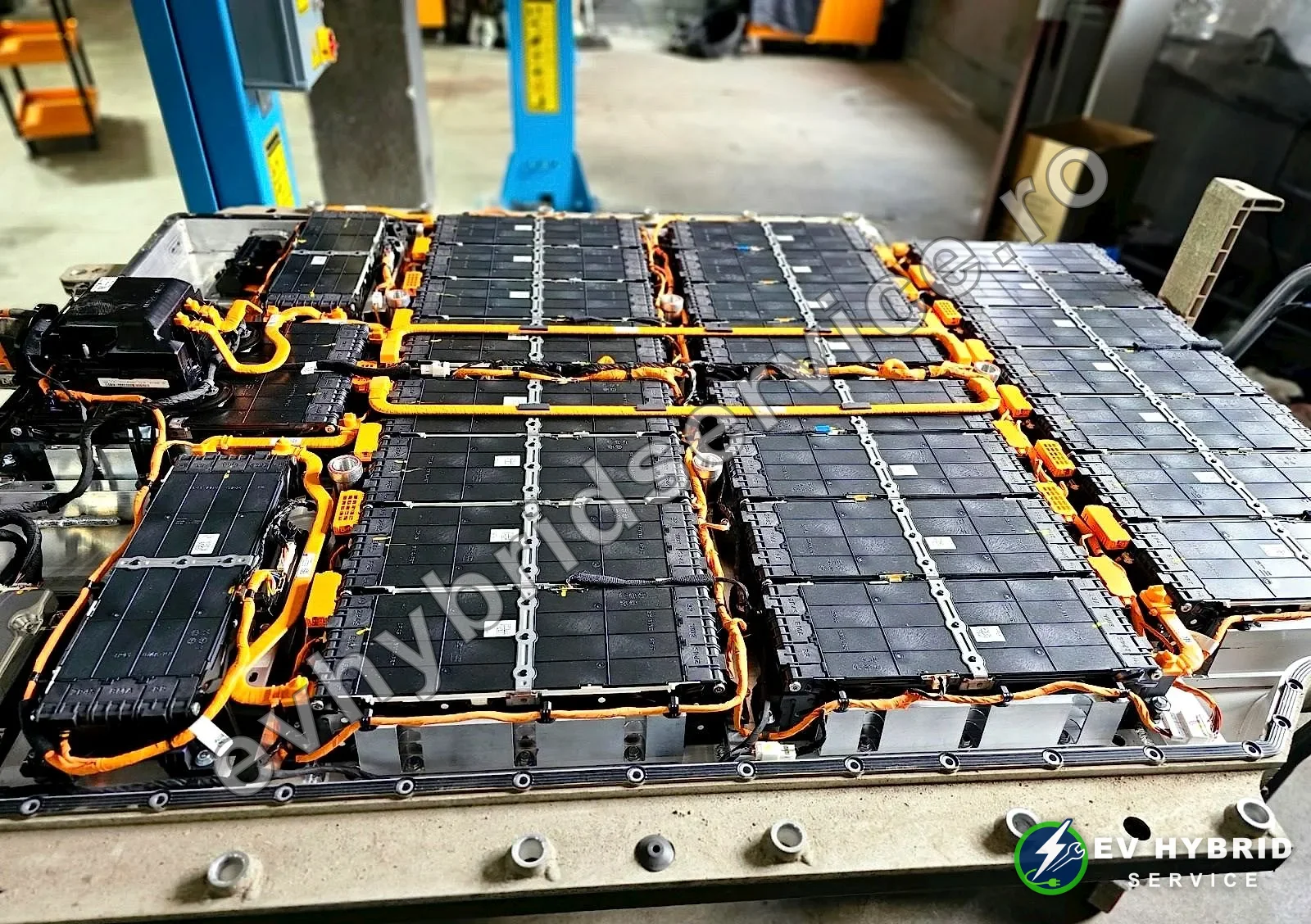
The battery with its cover off: the modules and the high-voltage wiring. Step 4
Replacing the cracked pipe
We took out the cracked pipe and fitted a new one, removing the main source of the leak.
Step 5
Sealing the small cracks
Where the cracks allowed a local repair, we applied a cold-weld epoxy sealing compound. It seals the cooling circuit; it is not a structural weld of the battery casing.
Before and after
When it came in
- Heavy coolant loss
- No warning light and no error on the dashboard
- A cracked pipe and small cracks after an impact
At handover
- The cracked pipe replaced
- The small cracks sealed
- The original traction battery kept
Had the coolant kept leaking, at some point the battery would have overheated. The generic code for that is P0A7E (hybrid/EV battery pack over temperature). It had not shown up on this car, and when it does, the problem has usually gone a long way.
Signs that an electric car’s battery cooling has a problem
- The coolant level drops, even if the dashboard shows nothing
- Fluid traces or puddles under the car, around the battery
- Fast charging is slower than usual
- Power is limited or battery temperature warnings appear
- The car has taken a hard knock underneath
Is your Hyundai Kona Electric losing coolant, or has it taken a knock underneath? We check the battery cooling circuit and find the source of the leak.
Book a check →Frequently asked questions
Can a Hyundai Kona Electric lose coolant without showing any error?
Yes, that is exactly what happened here. The sensors watch the battery temperature, not the fluid level in every pipe. Until the temperature goes out of range, the dashboard may show nothing.
Is it dangerous to drive with a battery coolant leak?
It is not something to put off. Without coolant the battery runs hotter, the car cuts power and charging speed, and the cells age faster. The sooner it is checked, the smaller the repair.
Does the battery need replacing if its cooling circuit is cracked?
Not necessarily. Here the cause was mechanical: a cracked pipe and a few small cracks. We replaced the pipe, sealed the cracks, and the original battery stayed on the car.
What does cold weld mean in this case?
An epoxy sealing compound applied to the small cracks in the cooling circuit. It stops the leaks there, but it is not a structural weld of the battery casing.
Photos from the job
Tap a photo to see it full size; use the arrows to browse.
The battery with its cover off: the modules and the high-voltage wiring.
Coolant traces under the battery, right next to a casing joint.
The streaks left by the coolant on the battery casing.
The battery seen from under the car, before removal.
Lowering the battery onto the lift table; in the middle, the orange high-voltage cable.
The battery resting on the lift table.
The battery out of the car, with its cover still on.
The battery cover from another angle.
Read next
Battery repairs
Opel Combo Electric that would no longer charge from a socket: how we repaired the on-board charger without replacing it
A 2024 Opel Combo Electric would no longer charge its battery from a socket. The culprit was the on-board charger, where one of the low-voltage electronic supplies had stopped working properly. We repaired it, and the original charger stayed on the car.
2 min read
Battery repairs
Nissan Leaf 40 kWh with communication errors and insulation faults: how we restored the 12 V supply and repaired the high-voltage insulation
A Nissan Leaf 40 kWh had errors in a chain and no longer talked to its climate system. Where it all started: the oxidised terminals of the 12 V battery. Once we restored the supply, diagnosis also turned up high-voltage insulation faults, which we fixed.
2 min read
Battery repairs
Volvo S90 T8 Plug-in Hybrid with communication faults: how we repaired the CEM and the chafed wiring, without a new module
A 2021 Volvo S90 T8 Plug-in Hybrid had a chain of faults and modules that no longer talked to each other reliably. We found wiring chafed by the body in two places and failed solder joints on the CEM board. We repaired the original module and removed the cause.
3 min read