
Workshop job ·
Nissan Leaf 40 kWh with communication errors and insulation faults: how we restored the 12 V supply and repaired the high-voltage insulation
A Nissan Leaf 40 kWh had errors in a chain and no longer talked to its climate system. Where it all started: the oxidised terminals of the 12 V battery. Once we restored the supply, diagnosis also turned up high-voltage insulation faults, which we fixed.
- traction battery
- 40 kWhtraction battery
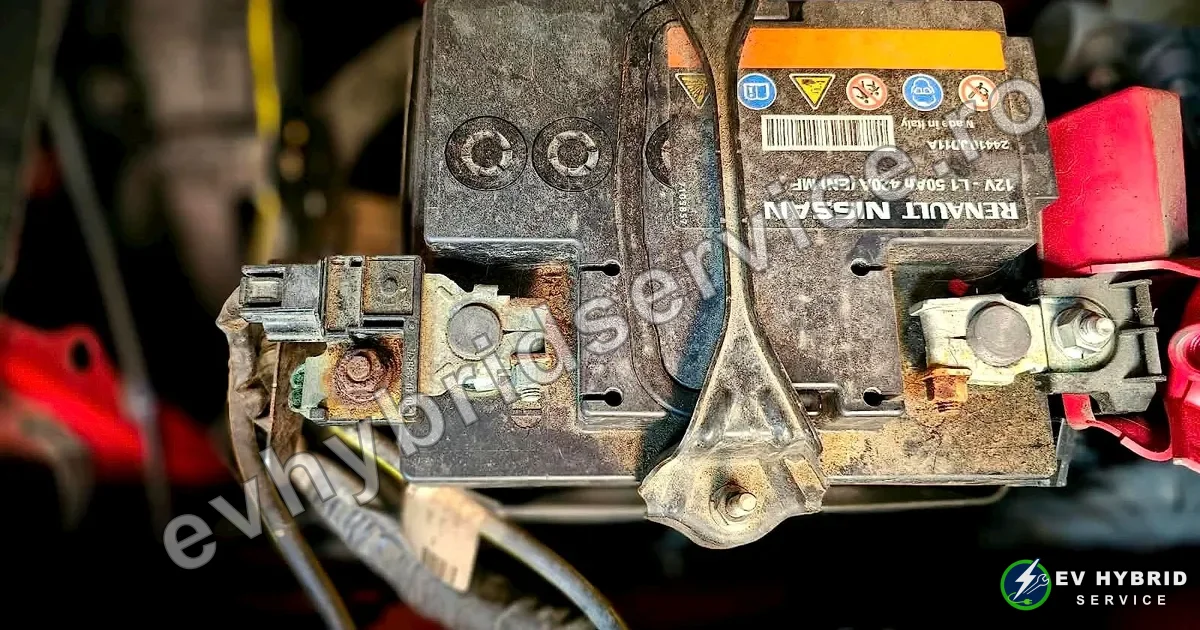
- auxiliary battery terminals, oxidised
- 12 Vauxiliary battery terminals, oxidised
- the system with communication errors
- HVACthe system with communication errors
- stages: supply, insulation, final check
- 3stages: supply, insulation, final check
The problem
A Nissan Leaf 40 kWh had several electronic faults, including communication errors with the climate system (HVAC), and some modules would not answer on diagnosis.
The diagnosis
The 12 V battery terminals were oxidised, and the unstable supply to the control units set off errors in a chain. Once communication was back, we also found insulation faults in the high-voltage system.
The fix
We restored the 12 V supply, then traced and fixed the insulation faults, and finally checked every system affected.
The result
The car left with its faults diagnosed and fixed, not just with the errors cleared.
An electric car with a 12 V problem
The fully electric Nissan Leaf, with a 40 kWh traction battery, came in with several electronic faults, including communication errors with the climate system (HVAC). Some modules would not even answer on diagnosis, so we could not see everything that was wrong.
The main problem was not a faulty control unit but the low-voltage supply. The 12 V battery terminals were oxidised, the contact was poor and the voltage fluctuated.
The job, in three stages
Step 1
Stage 1: restoring the 12 V supply
We worked on the oxidised 12 V battery connections and checked the supply to the control units. With good contact again, the modules started communicating, the climate module included.
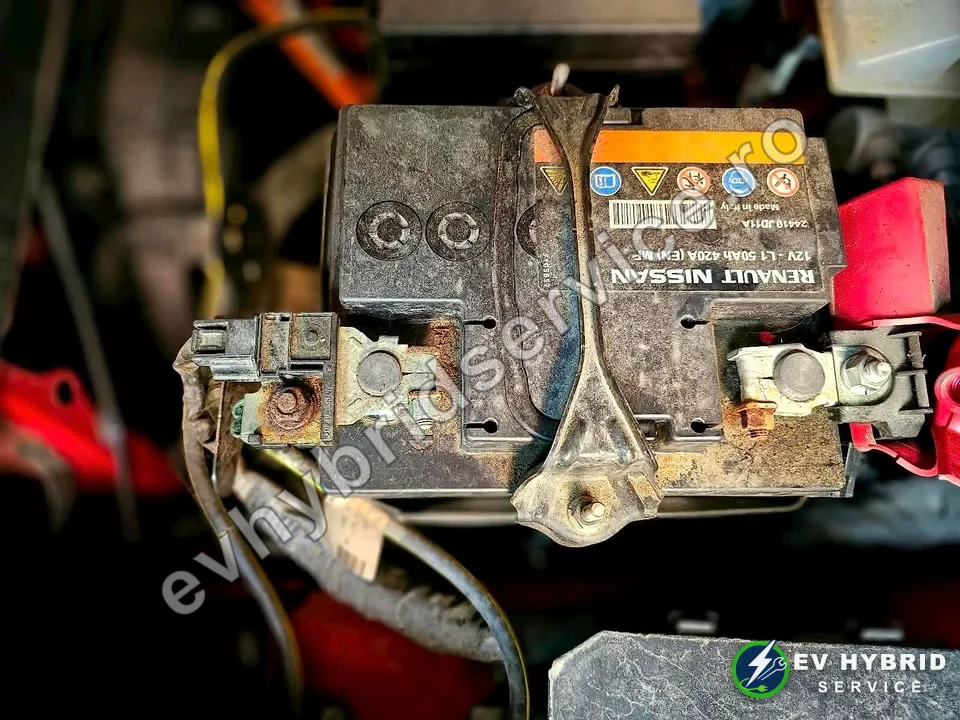
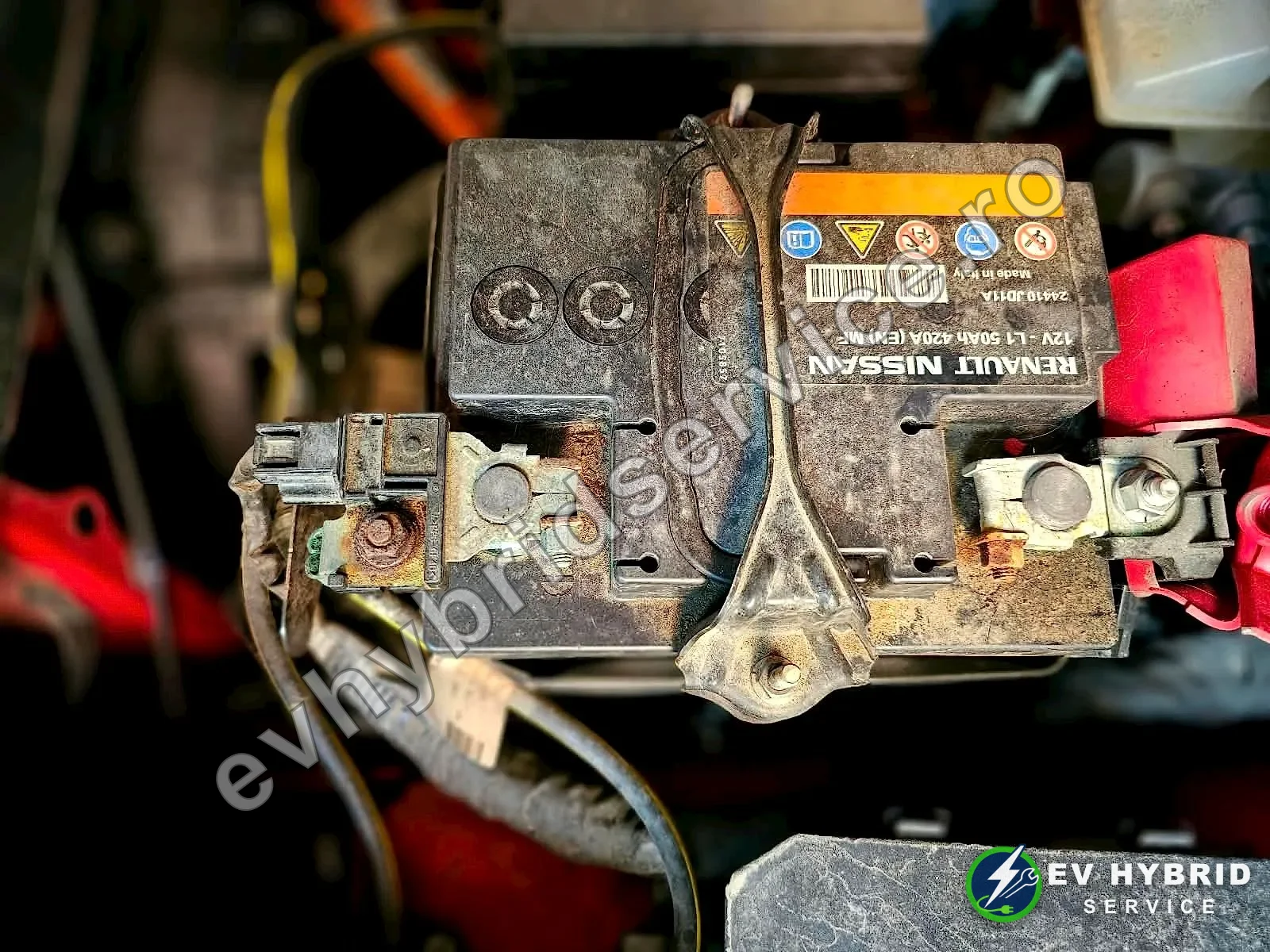
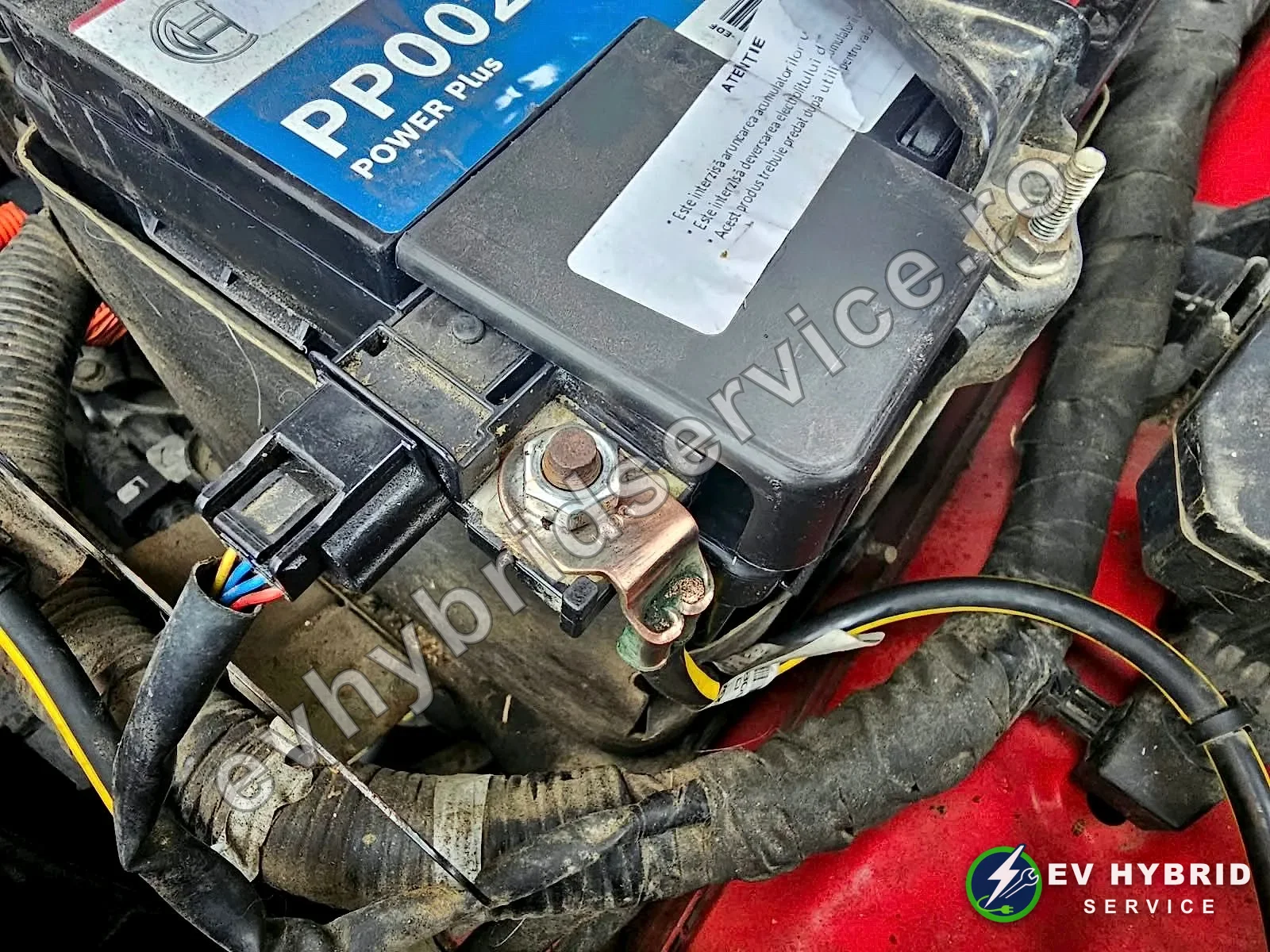
The 12 V battery, with oxidised terminals. 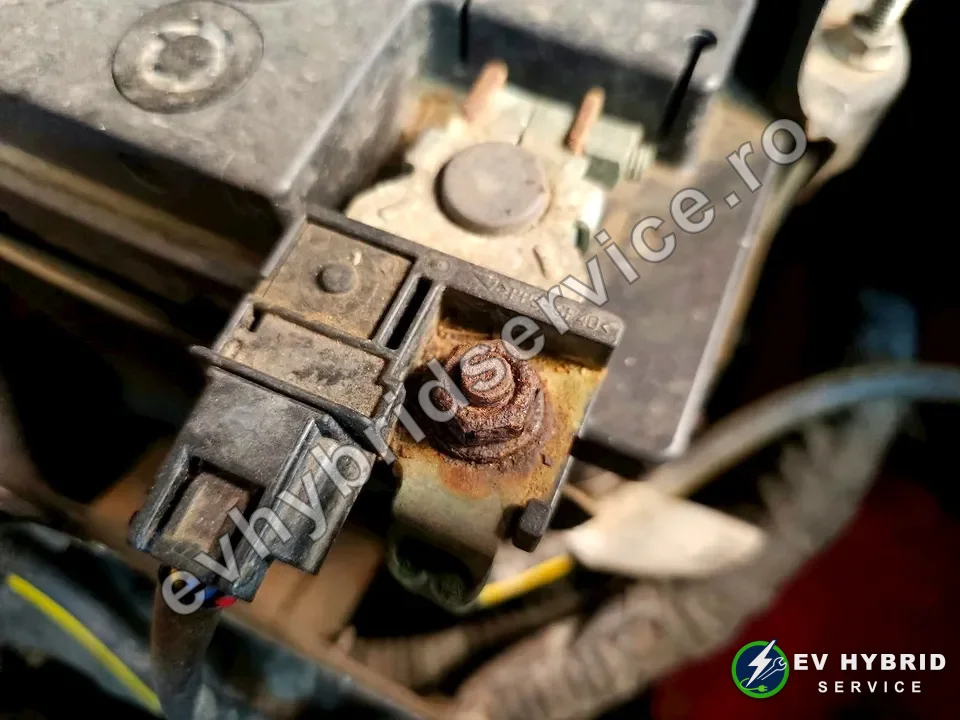
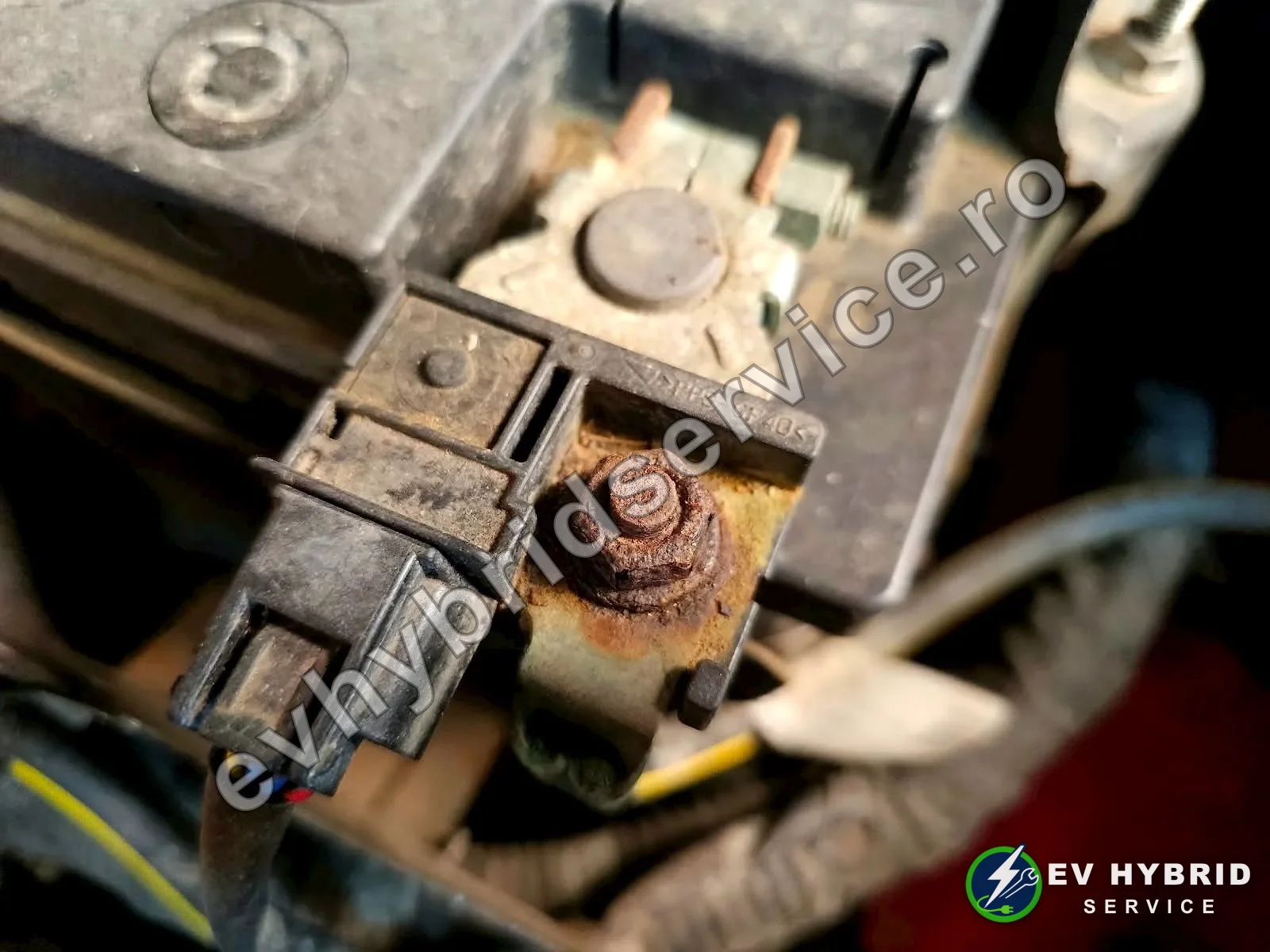
The oxide on the terminal, up close. 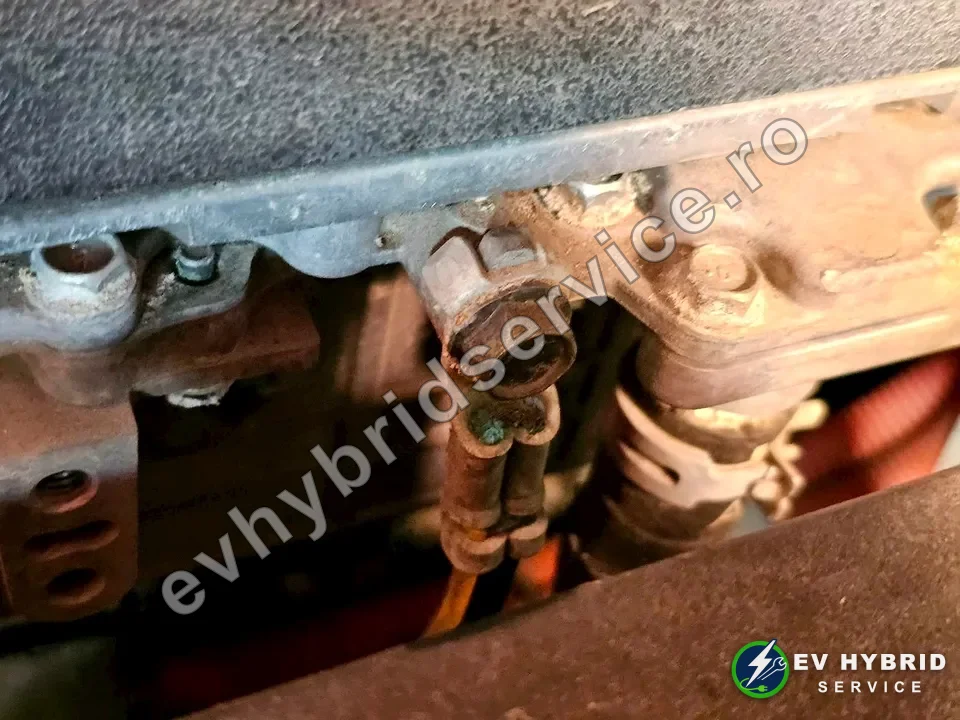
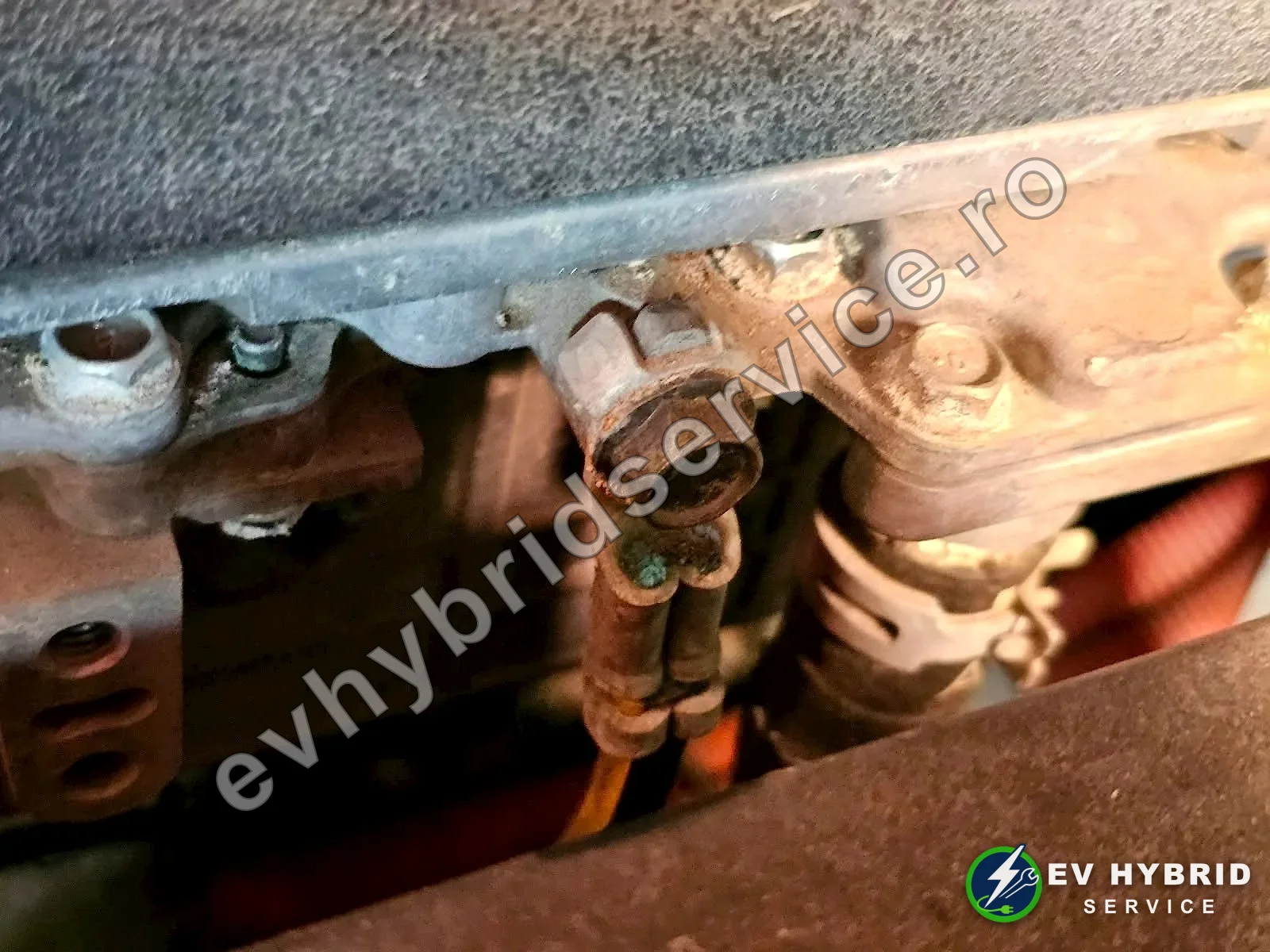
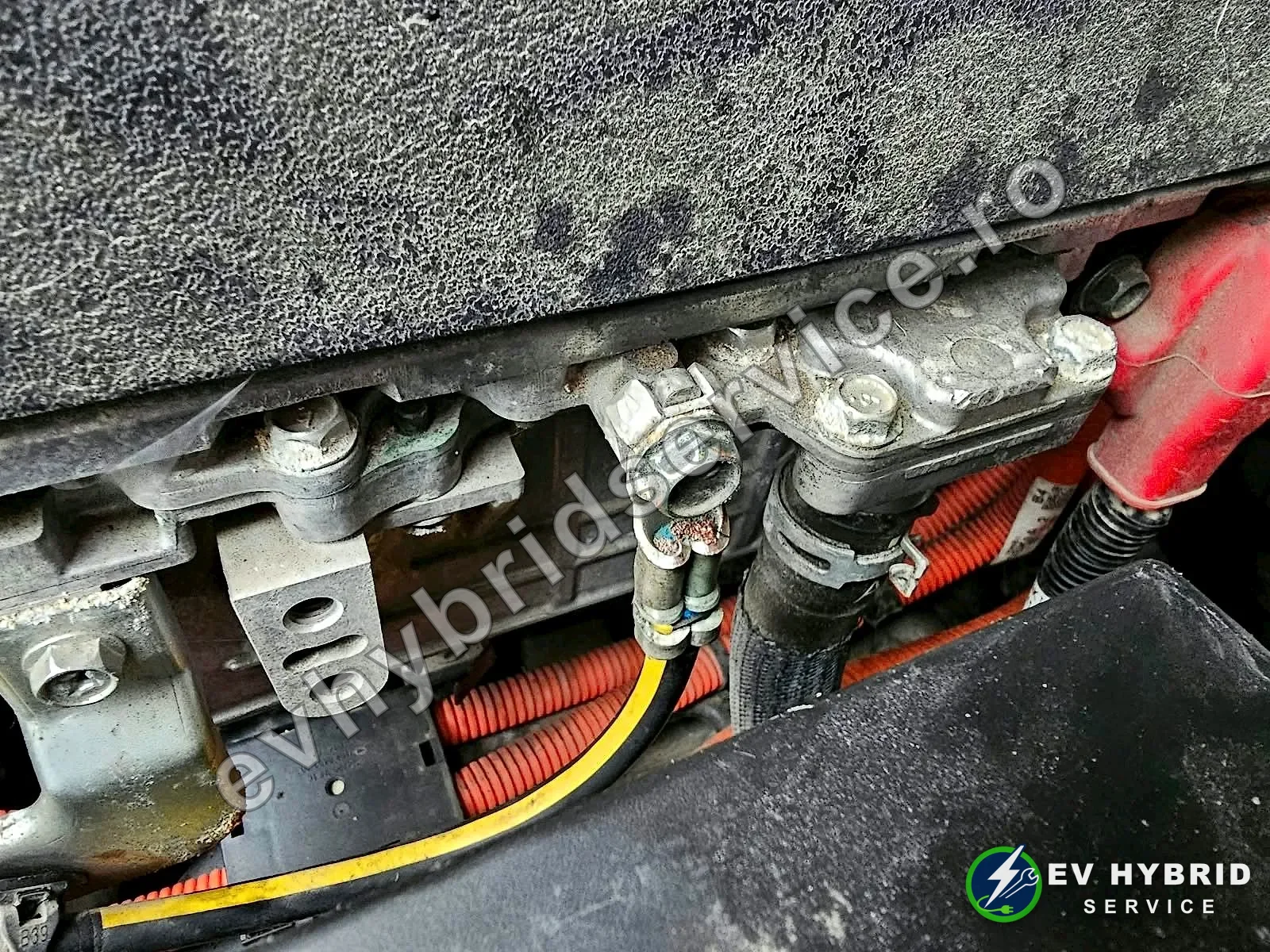
A ground connection with green oxide. Step 2
Stage 2: finding the insulation faults
With communication restored, diagnosis could go further, into the high-voltage system. There we found insulation faults that could not be assessed properly before. We kept working until they were fixed.
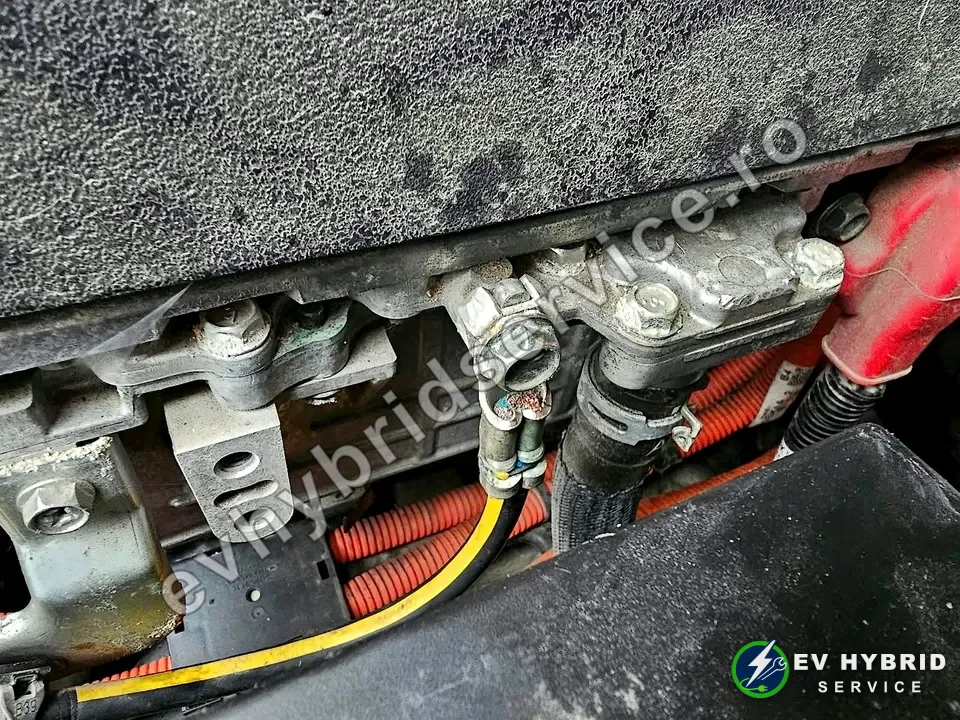
The ground connections next to the high-voltage cables. Step 3
Stage 3: the final check
We checked the stability of the 12 V supply, communication between control units, access to the HVAC system, the high-voltage insulation and whether the errors came back. That is how you tell old stored errors from faults that are still active.
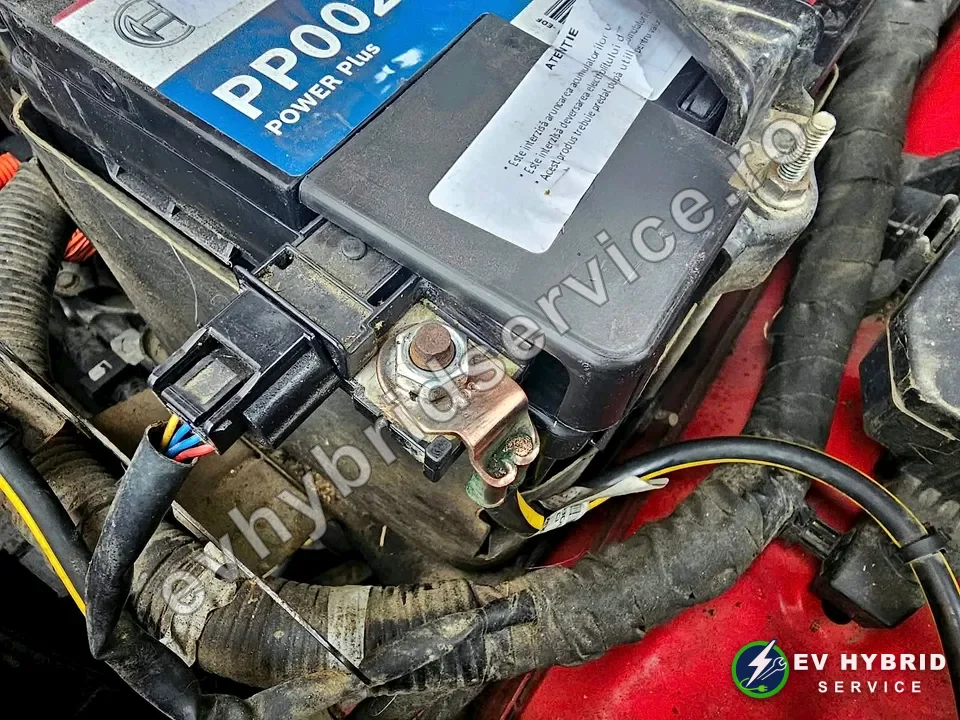
At the end: the 12 V supply, with clean connections.
Before and after
When it came in
- Errors in several control units
- No communication with the HVAC system
- Oxidised 12 V battery terminals
- Insulation faults not yet found
At handover
- A stable 12 V supply
- Modules communicating normally
- Insulation faults fixed
- Systems checked after the repair
Clearing the errors would have been quicker, but they would have come back. Our aim was to find and fix the real faults, so no expensive parts were replaced for nothing.
Signs that a Nissan Leaf has supply or insulation problems
- Errors in several control units at once
- The climate control works on and off, or not at all
- The scan tool cannot talk to some modules
- Electrical system warning messages
- The car sometimes refuses to start
Does your Nissan Leaf show communication, climate or insulation errors? We diagnose it from the supply up to the high voltage and repair the real cause.
Book a diagnosis →Frequently asked questions
Can a 12 V battery cause errors on an electric Nissan Leaf?
Yes, and plenty of them. The car’s control units run on 12 V. Oxidised terminals or a weak battery cause voltage fluctuations, and the modules start losing communication and storing secondary errors.
Does a communication error mean a control unit is faulty?
Not automatically. We check the supply and connections first. Here, once the 12 V supply was restored, the modules talked again without any control unit being replaced.
Does an insulation error mean the traction battery is faulty?
Not necessarily. Insulation can drop in the cables, the A/C compressor, the heater, the motor, the charger or the battery. The part to blame is found only by measuring each circuit.
Why not just clear the errors?
Because they would have come back. Errors show where to look, but a repair means removing the cause and then checking they do not return.
Photos from the job
Tap a photo to see it full size; use the arrows to browse.
The 12 V battery, with oxidised terminals.
The oxide on the terminal, up close.
A ground connection with green oxide.
The ground connections next to the high-voltage cables.
At the end: the 12 V supply, with clean connections.
Read next
Battery repairs
Hyundai Kona Electric losing coolant with no error on the dashboard: how we repaired the cooling circuit of the high-voltage battery
A 2024 Hyundai Kona Electric was losing a lot of fluid from the battery cooling circuit, though the dashboard showed nothing. After a hard impact, a pipe had cracked. We replaced it, sealed the small cracks, and the battery stayed on the car.
3 min read
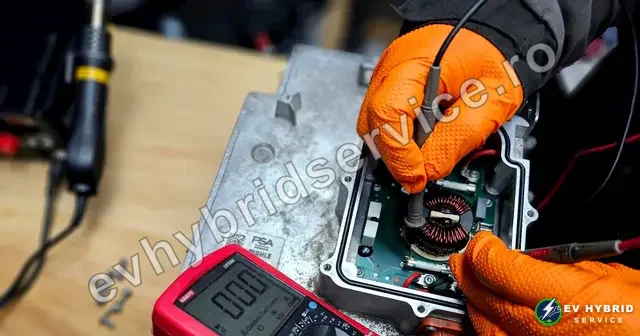
Battery repairs
Opel Combo Electric that would no longer charge from a socket: how we repaired the on-board charger without replacing it
A 2024 Opel Combo Electric would no longer charge its battery from a socket. The culprit was the on-board charger, where one of the low-voltage electronic supplies had stopped working properly. We repaired it, and the original charger stayed on the car.
2 min read
Battery repairs
Volvo S90 T8 Plug-in Hybrid with communication faults: how we repaired the CEM and the chafed wiring, without a new module
A 2021 Volvo S90 T8 Plug-in Hybrid had a chain of faults and modules that no longer talked to each other reliably. We found wiring chafed by the body in two places and failed solder joints on the CEM board. We repaired the original module and removed the cause.
3 min read