
Workshop job ·
Toyota RAV4 Hybrid that would not start: how we saved its deeply discharged lithium-ion battery with controlled charging
A 2025 Toyota RAV4 Hybrid arrived on a tow truck because the hybrid system would no longer start the car. Its lithium-ion traction battery had dropped below starting voltage. We took it out, charged it in a controlled way, refitted it and ran the software procedures, and the car left on its own wheels.
- year of manufacture
- 2025year of manufacture
- how it arrived, unable to start
- Tow truckhow it arrived, unable to start
- the lithium-ion battery, below starting voltage
- Deep dischargethe lithium-ion battery, below starting voltage
- new batteries: we saved the original
- 0new batteries: we saved the original
The problem
A 2025 Toyota RAV4 Hybrid arrived on a tow truck: the hybrid system would no longer let the car start.
The diagnosis
The lithium-ion traction battery had gone into deep discharge, its voltage below the level the hybrid system needs to start.
The fix
We removed the battery, charged it in a controlled way with equipment made for high-voltage batteries, refitted it and ran the resets and software procedures.
The result
The battery came back into the voltage range it needs, the hybrid system started, and the car left on its own wheels.
An almost new RAV4, brought in on a tow truck
The Toyota RAV4 Hybrid, built in 2025 with a lithium-ion traction battery, reached us on a tow truck: the hybrid system would no longer let the car start.
Our checks showed that the high-voltage battery had gone into deep discharge, its voltage below the level the hybrid system needs to work normally. It simply no longer had the energy to initialise and start the drive.
What deep discharge means for a lithium-ion battery
Deep discharge means the battery’s energy and voltage have fallen below normal operating limits. The consequences can be: the car will not enter READY, there is not enough voltage for the drive, traction battery and hybrid system warnings appear, and the BMS restricts operation. In severe cases the lithium-ion cells can degrade for good.
On a RAV4 Hybrid with a lithium-ion battery, a situation like this can set codes such as P3000-16 (battery control system voltage below threshold), P31AB-16 and P1A61-16 (voltage too low in a cell group of the first or second stack) or P3000-00 (battery discharge control malfunction). They are examples of faults seen in similar conditions, not codes confirmed on this car; what each car has logged only shows on diagnosis.
The job, step by step
Step 1
Removing the traction battery
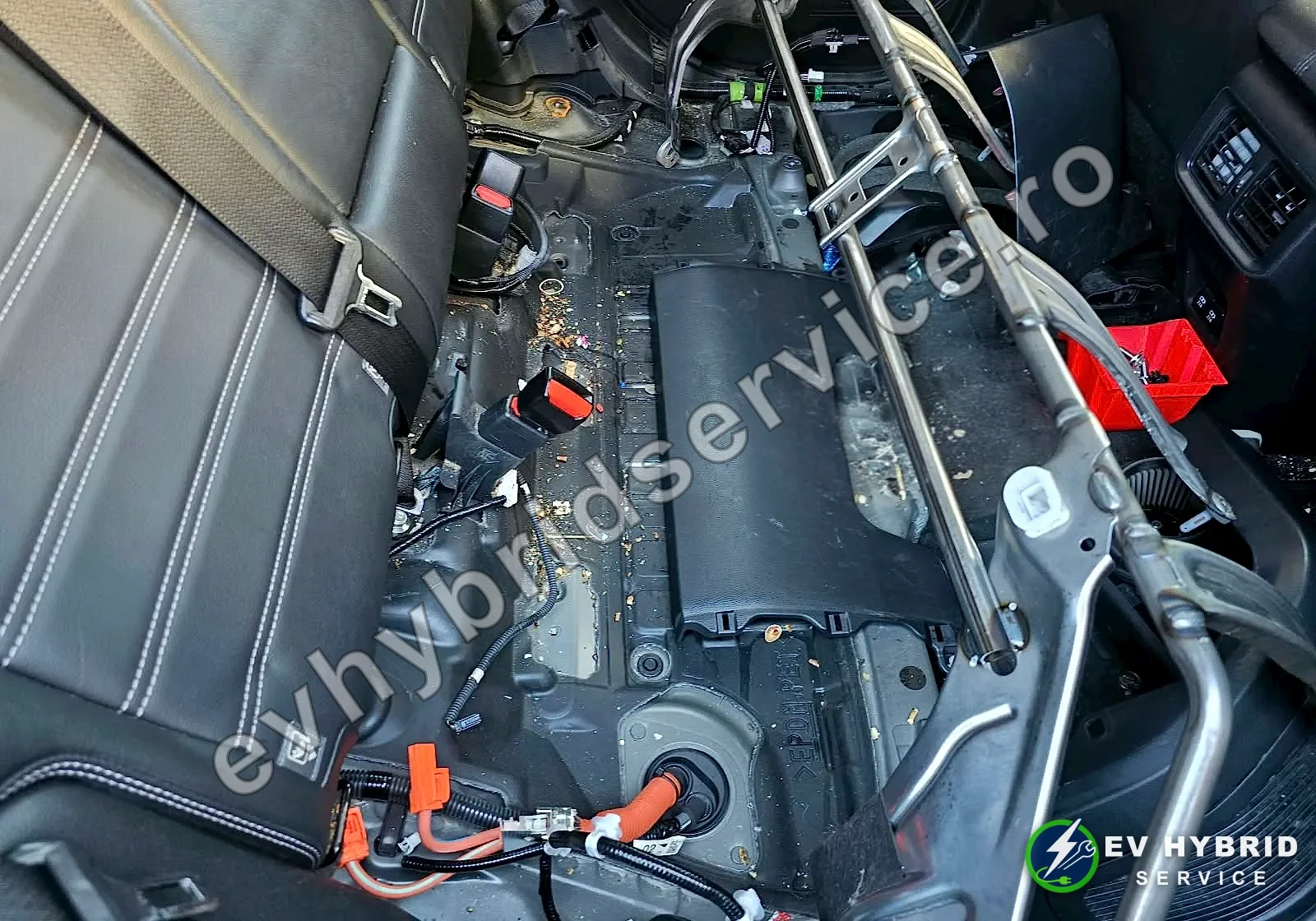
We took the lithium-ion battery out of the car, following the high-voltage safety procedures, so we could work on it under controlled conditions.
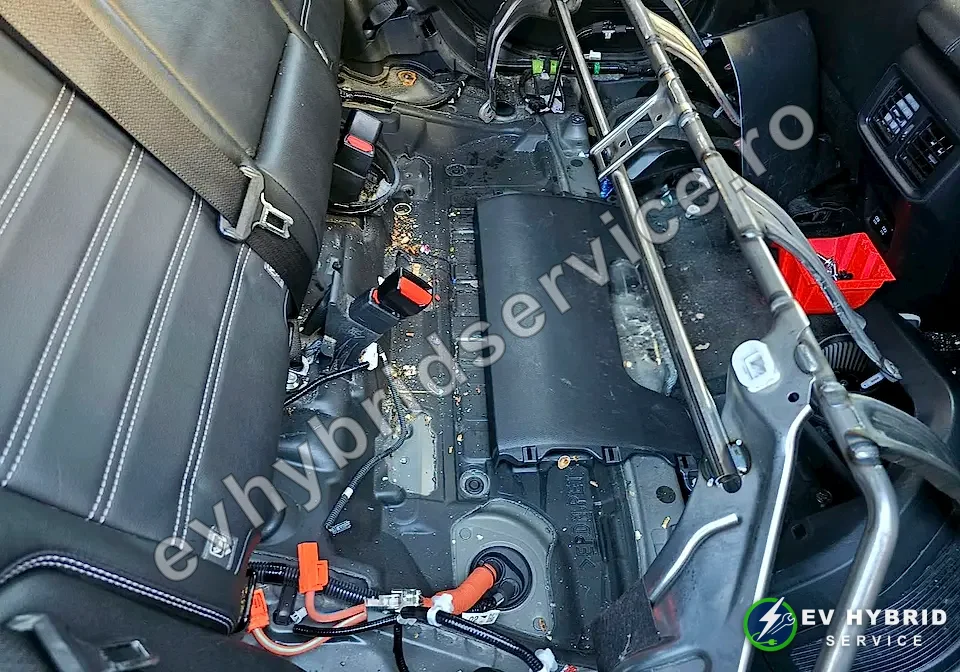
The rear seat lifted: this is where the battery came out. 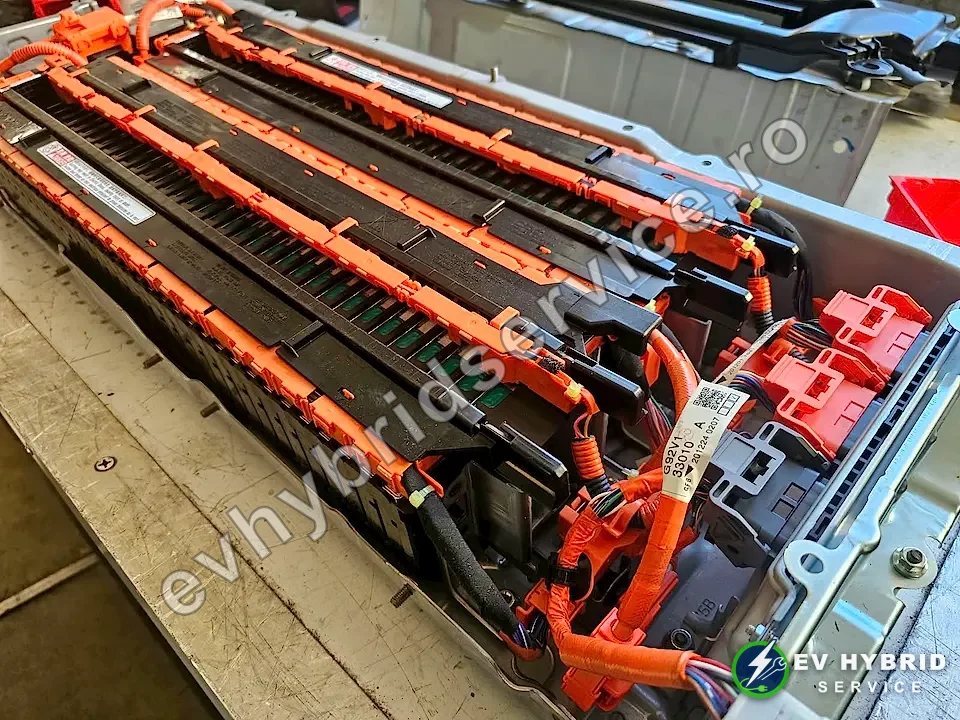
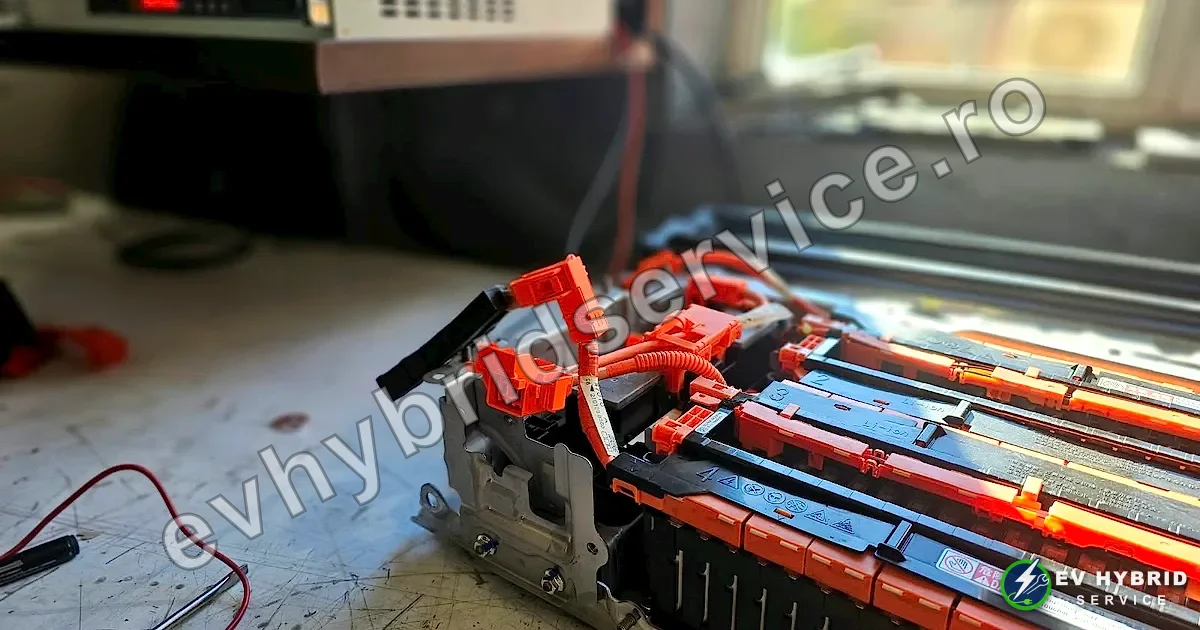
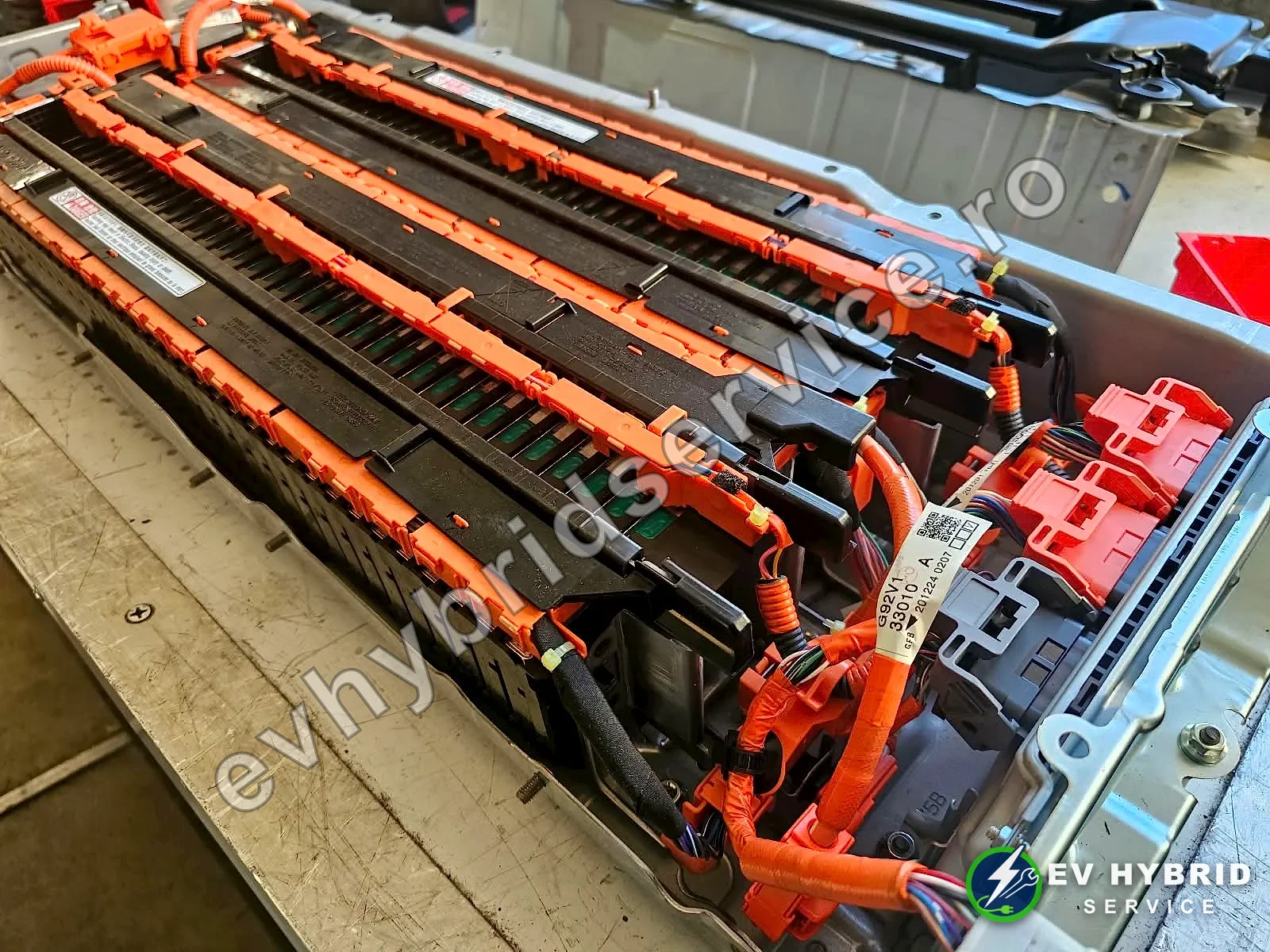
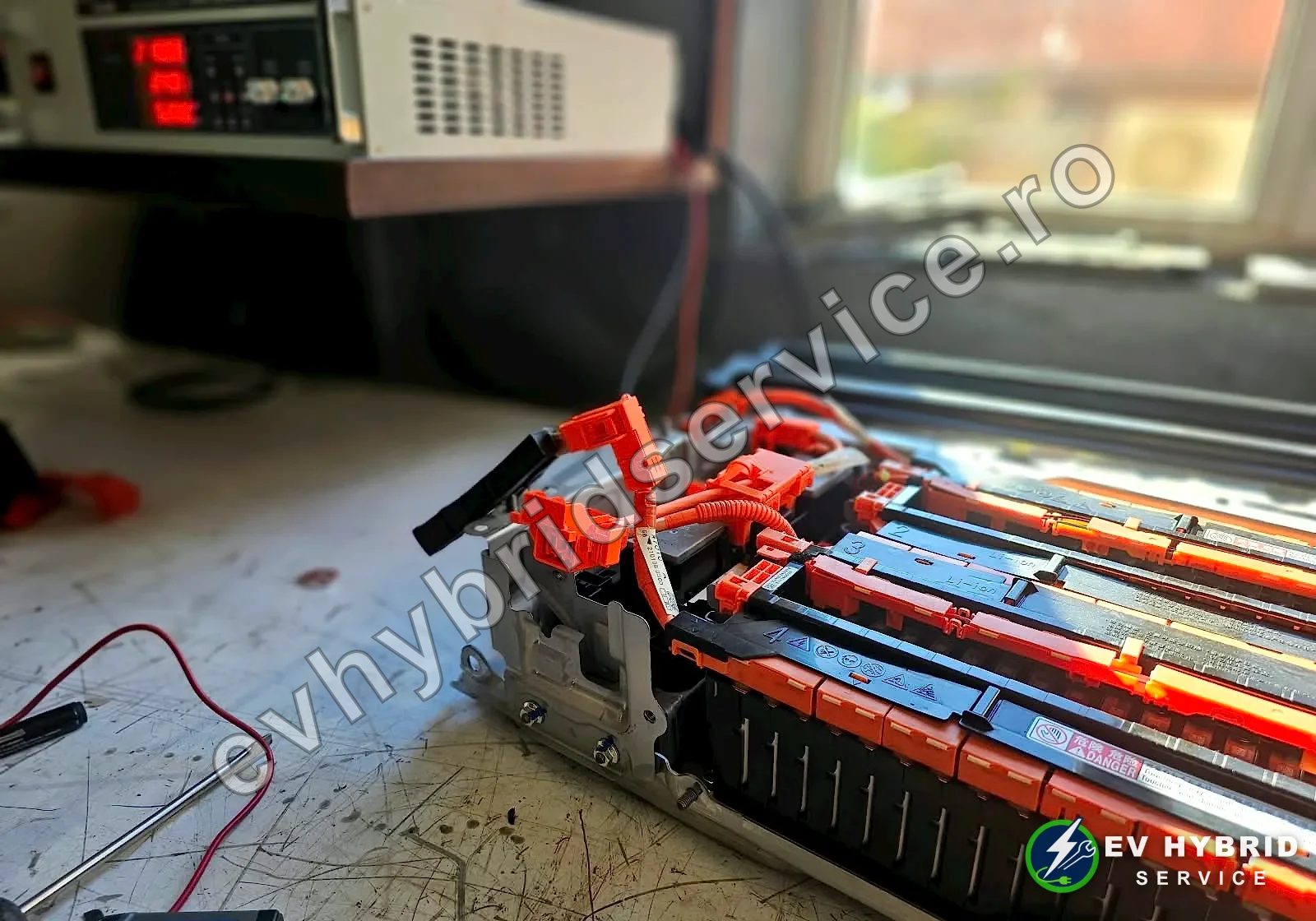
The lithium-ion battery, out of the car, on the workbench. 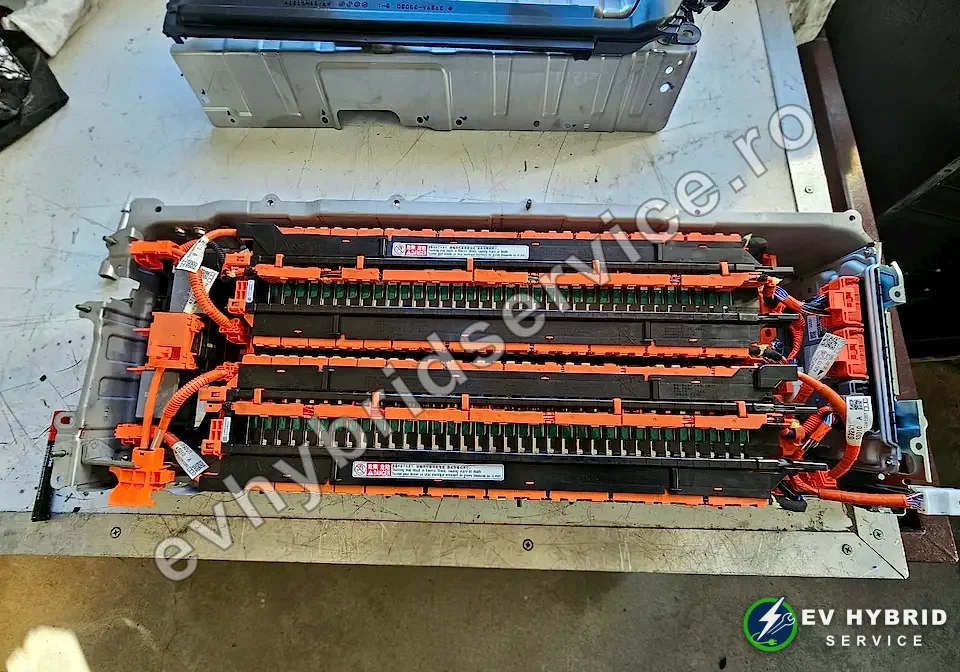
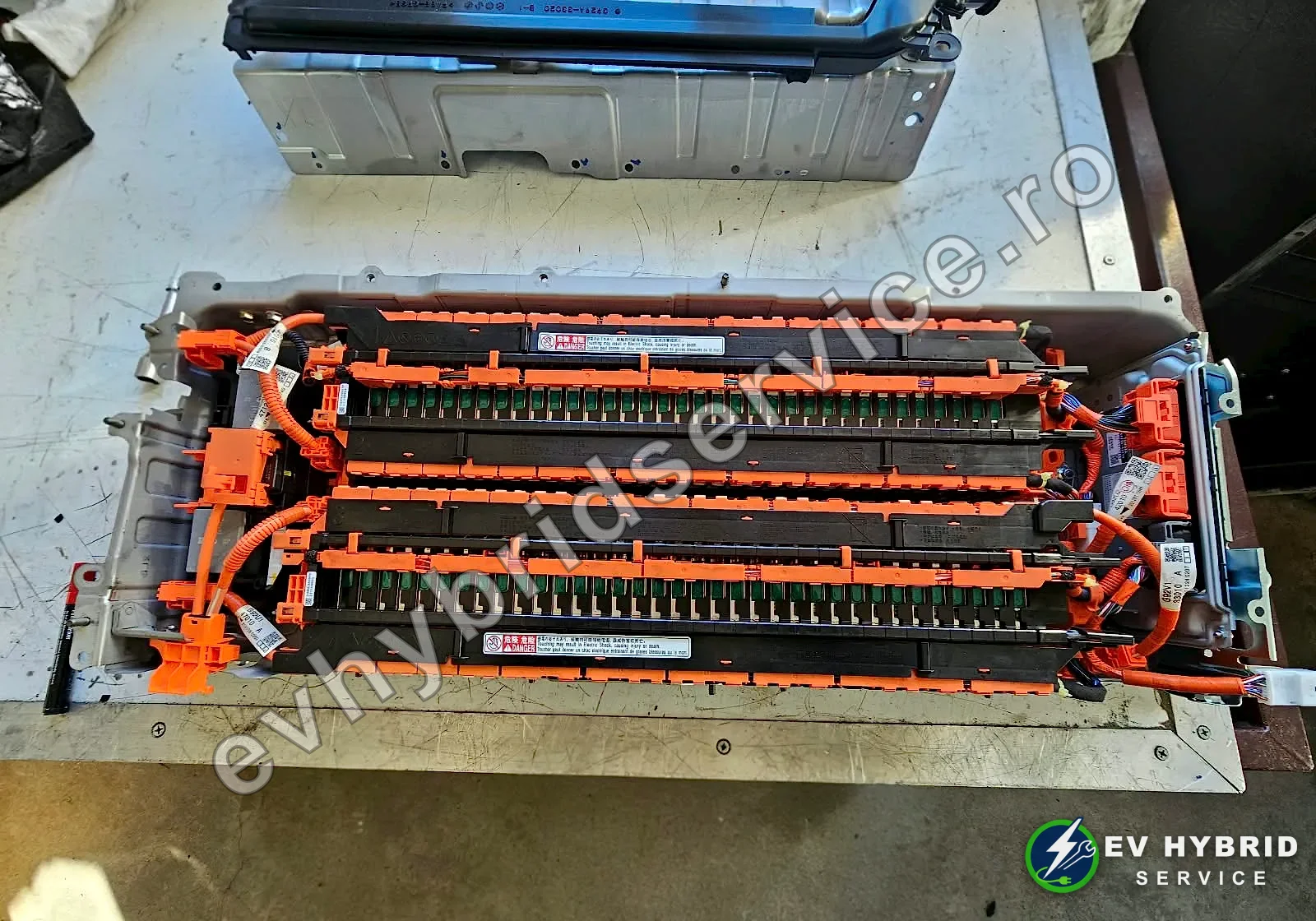
The battery from above, cover off. Step 2
Charging it in a controlled way
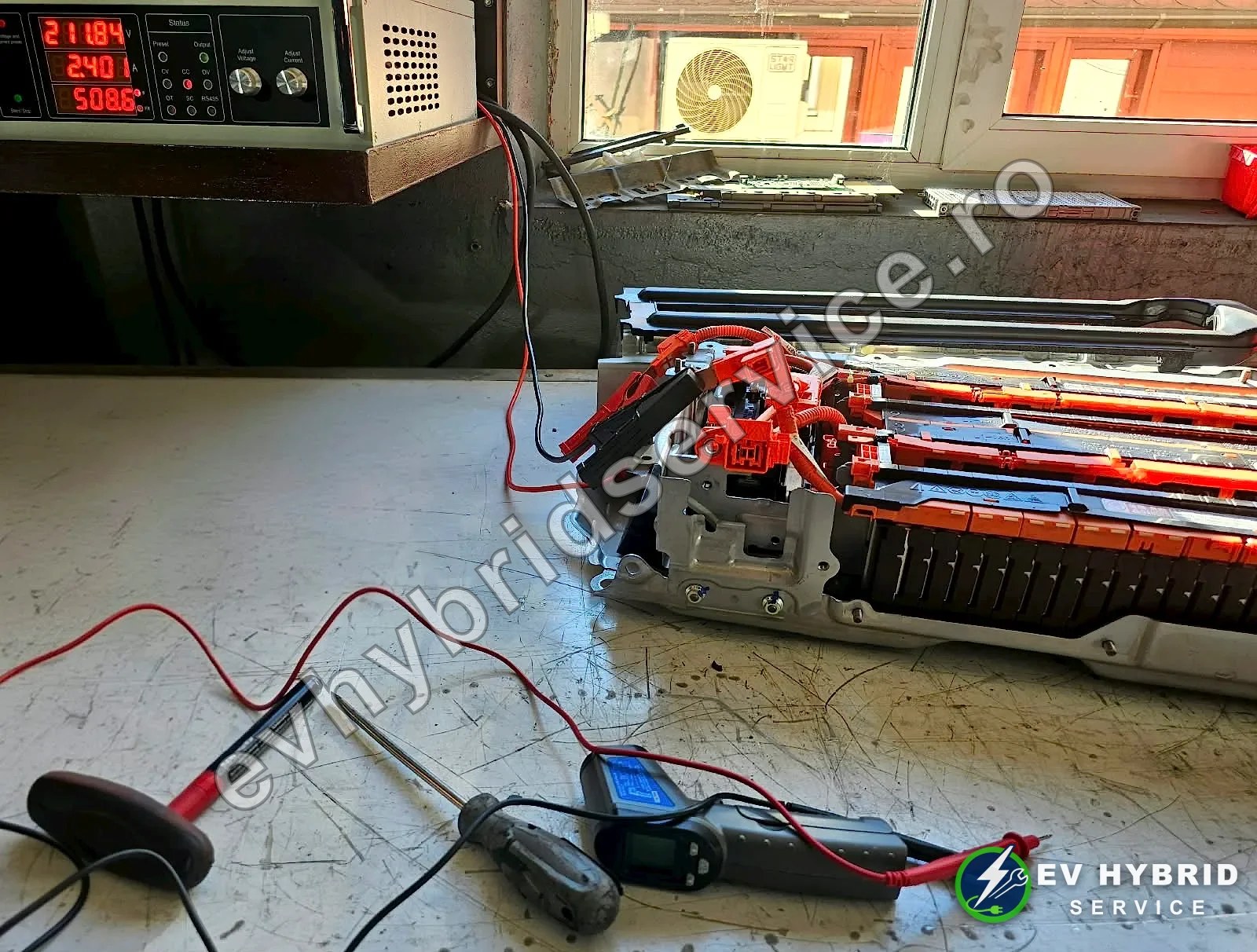
We connected the battery to professional traction battery charging equipment and brought it back, gradually, to a voltage within the range the hybrid system needs to restart. Unlike ordinary charging, the equipment has to suit the battery’s technology and keep the electrical parameters under control throughout.
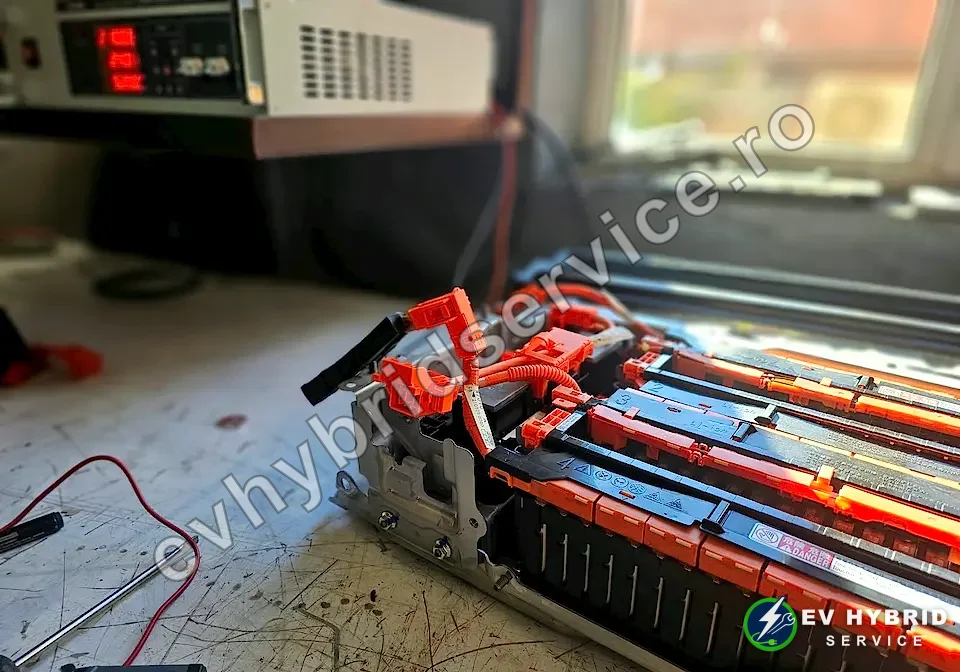
The battery, connected to the controlled charging equipment. 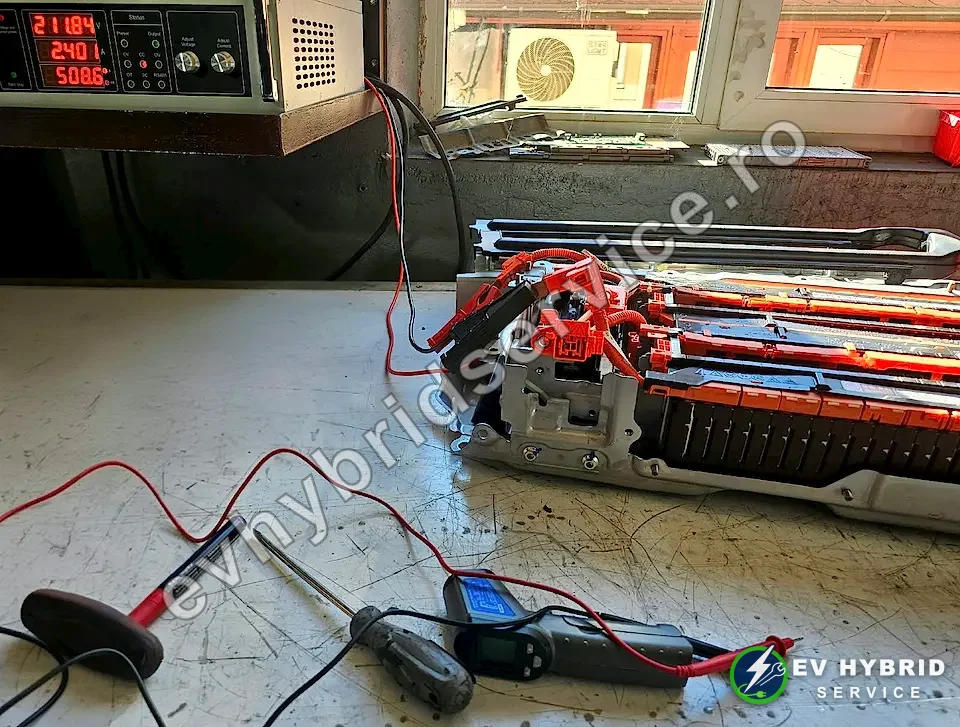
The charging equipment tracks voltage and current all the way. Step 3
Refitting the battery
After charging, we fitted the battery back and remade the electrical connections and related systems.
Step 4
Resets, software procedures and start-up
We cleared the faults and protection states left by the discharge, ran the reinitialisation and configuration procedures and the software work needed, then checked communication between the battery, the BMS and the hybrid control system, and the drive starting up.
Before and after
When it came in
- Brought in on a tow truck, would not start
- Lithium-ion battery in deep discharge
- Hybrid system locked by its protections
At handover
- The battery within its starting voltage range
- Faults and protections reset, software procedures done
- The car starts and left on its own wheels
A deeply discharged battery that starts the car again does not by itself tell you how much capacity it has left or whether the cells have degraded. That takes further checks and watching how the battery behaves over the following weeks of use.
Signs a hybrid’s HV battery has discharged too far
- The car will not enter READY mode
- Traction battery or hybrid system warnings on the dashboard
- The 12 V battery is fine, yet the car still will not start
- The car stood unused for a long time before the problem appeared
Does your hybrid refuse to start even though the 12 V battery is fine? We check the high-voltage battery and see whether it can be saved.
Book a diagnosis →Frequently asked questions
Can a deeply discharged hybrid lithium-ion battery be saved?
Often yes, if the cells have not degraded. The battery is removed and charged in a controlled way with dedicated equipment, then the resets and software procedures are done. If the cells are damaged, saving it is no longer a safe option.
Why is charging the 12 V battery not enough?
Because on a Toyota hybrid the engine is started from the high-voltage battery, not the 12 V one. The energy missing from the HV battery does not come back just because the small battery is full.
Will the saved battery last as before?
Starting the car again does not confirm the remaining capacity on its own. That needs further checks and watching the battery in use, and we tell you what we found.
How does a hybrid battery end up deeply discharged?
Most often after standing unused for a long time, or after a fault that drained the battery with the car switched off. The exact cause is found on diagnosis, so the problem does not come back.
Photos from the job
Tap a photo to see it full size; use the arrows to browse.
The rear seat lifted: this is where the battery came out.
The lithium-ion battery, out of the car, on the workbench.
The battery from above, cover off.
The battery, connected to the controlled charging equipment.
The charging equipment tracks voltage and current all the way.
Read next
Battery repairs
Hyundai Kona Electric losing coolant with no error on the dashboard: how we repaired the cooling circuit of the high-voltage battery
A 2024 Hyundai Kona Electric was losing a lot of fluid from the battery cooling circuit, though the dashboard showed nothing. After a hard impact, a pipe had cracked. We replaced it, sealed the small cracks, and the battery stayed on the car.
3 min read
Battery repairs
Opel Combo Electric that would no longer charge from a socket: how we repaired the on-board charger without replacing it
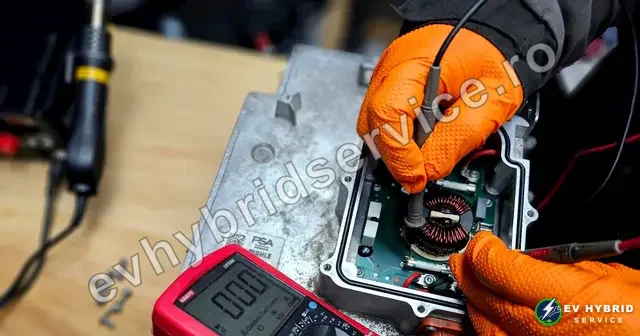
A 2024 Opel Combo Electric would no longer charge its battery from a socket. The culprit was the on-board charger, where one of the low-voltage electronic supplies had stopped working properly. We repaired it, and the original charger stayed on the car.
2 min read
Battery repairs
Nissan Leaf 40 kWh with communication errors and insulation faults: how we restored the 12 V supply and repaired the high-voltage insulation
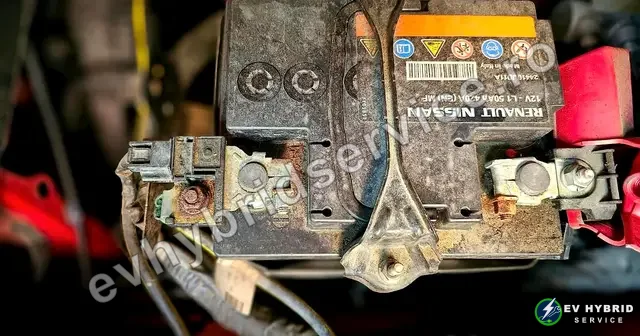
A Nissan Leaf 40 kWh had errors in a chain and no longer talked to its climate system. Where it all started: the oxidised terminals of the 12 V battery. Once we restored the supply, diagnosis also turned up high-voltage insulation faults, which we fixed.
2 min read