
Workshop job ·
Toyota RAV4 Hybrid with no faults at all: how we maintained the high-voltage battery, testing every module and cleaning the cooling
A 2021 RAV4 Hybrid came in with no faults at all, simply because its owner wanted to look after the battery early. We tested every module, cleaned the fans and connections, and handed over a report on the condition of each module.
- year of manufacture
- 2021year of manufacture
- NiMH modules, per Toyota
- 34NiMH modules, per Toyota
- condition of the weakest module
- ~80%condition of the weakest module
- modules needing replacement
- 0modules needing replacement
The problem
A 2021 Toyota RAV4 Hybrid with no faults and no symptoms. The owner wanted preventive maintenance of the high-voltage battery, to help it last longer.
The diagnosis
We checked every module of the battery, the spread between them, the connections and the cooling. The weakest module stood at about 80%, so nothing needed replacing.
The fix
We cleaned the cooling fans and the electrical connections, rechecked the modules and the cooling system, then carried out a general service of the car.
The result
The battery kept its own modules, cleaned and checked, and the owner received a report on the condition of each one, to compare against at the next service.
A healthy battery, brought in on time
The RAV4, a Hybrid built in 2021, had nothing wrong with it: no faults, no rise in fuel use, no warning lights. The owner brought it in for preventive maintenance of the high-voltage battery and the hybrid system, to lower the risk of a failure and help the battery last longer. It is the kind of visit we see rarely and would like to see more often.
We started with the battery: the condition and readings of every module, the differences between modules, the electrical connections and contacts, plus the ventilation and cooling. Dust, heat and contacts that no longer connect well are the three things that age a hybrid battery before its time.
What we did, step by step
Step 1
Getting to the battery
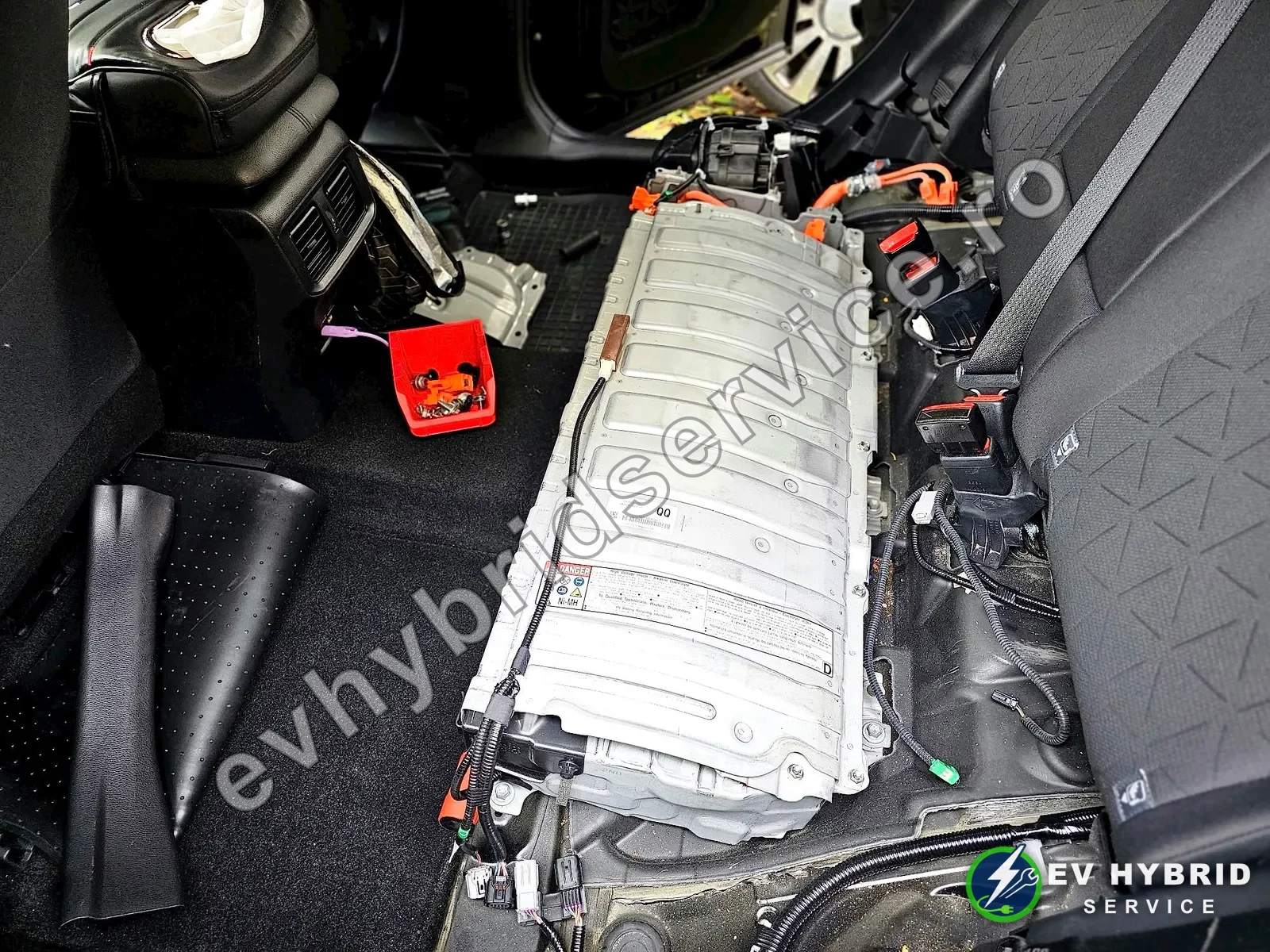
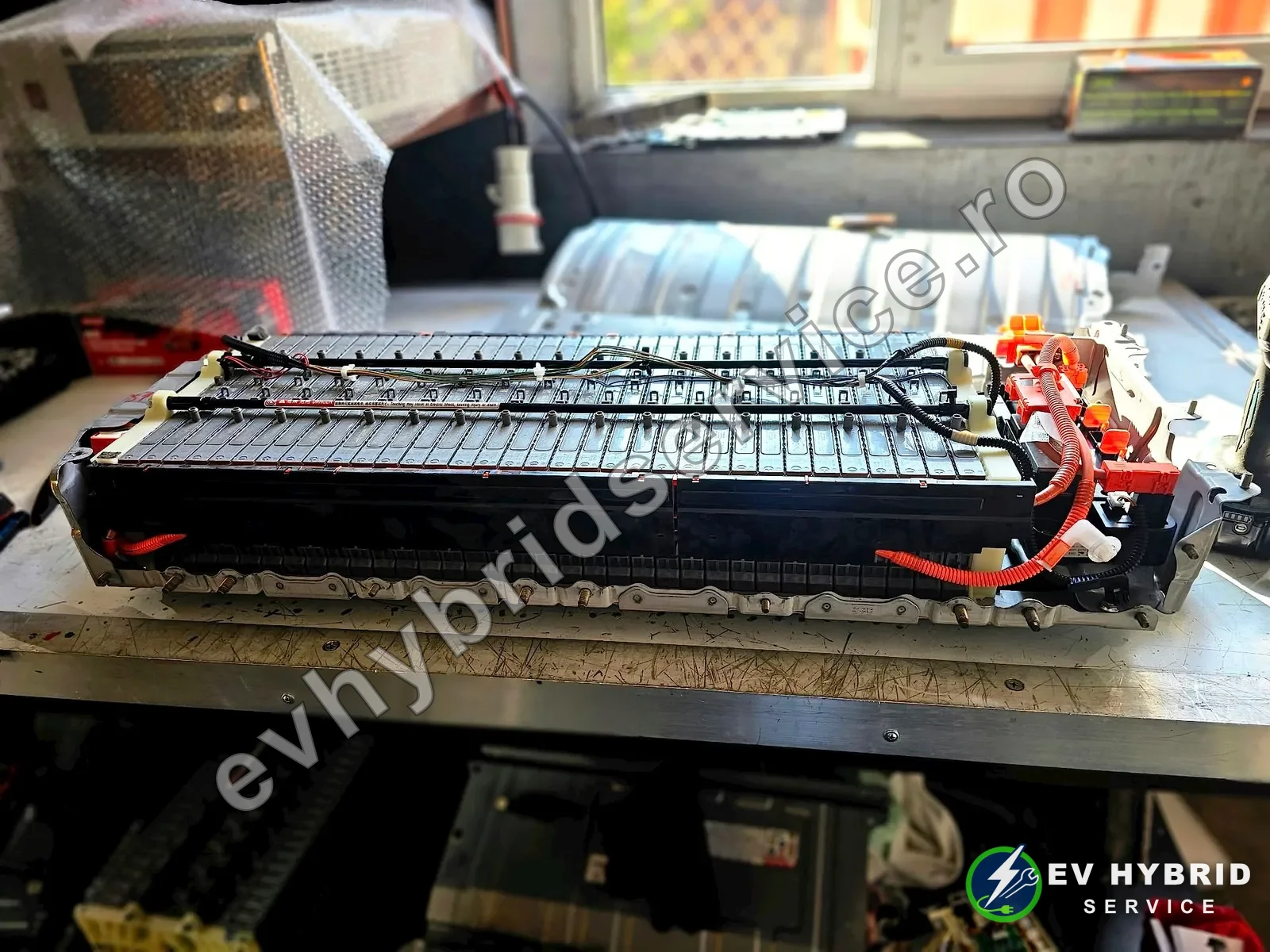
On the RAV4 Hybrid the high-voltage battery sits under the rear seat. We removed it so we could check it on the bench, module by module.
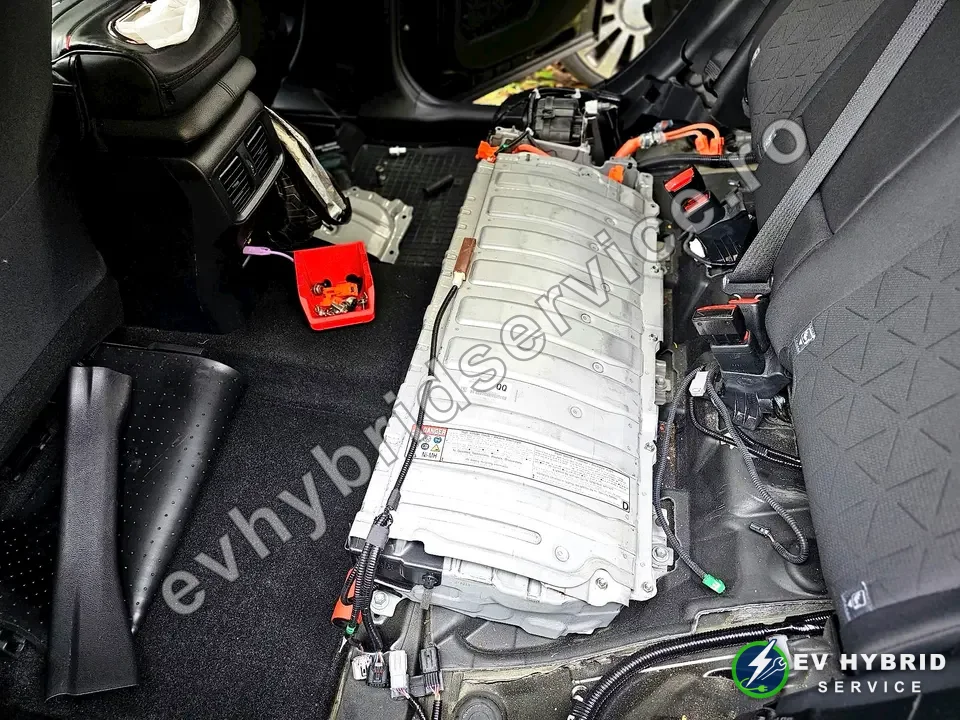
The high-voltage battery sits under the rear seat. 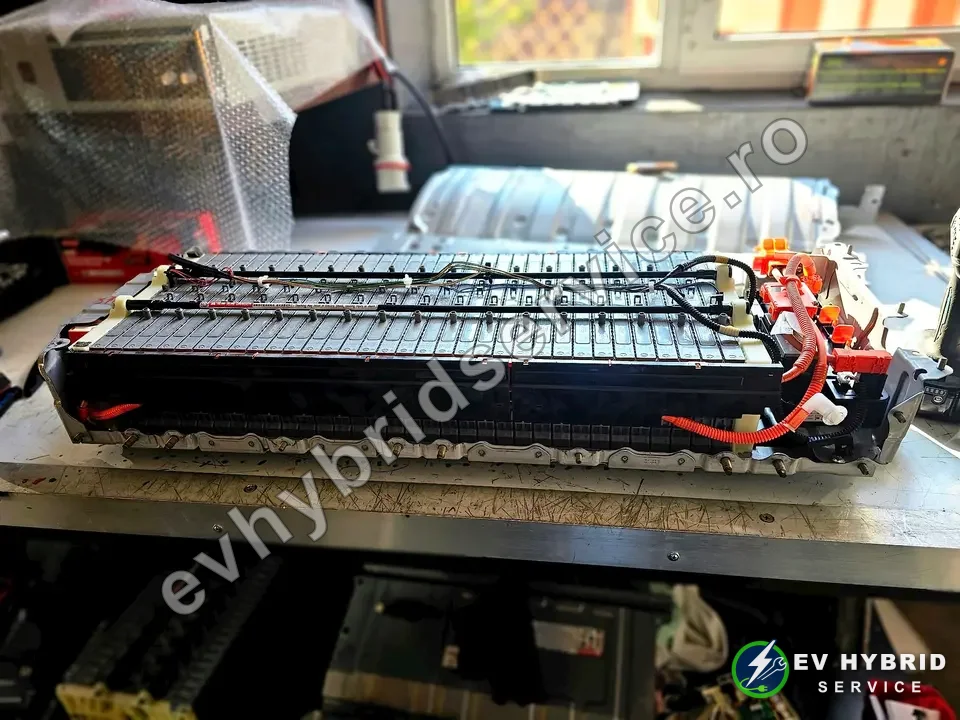
The battery on the workbench, cover off. Step 2
Testing every module
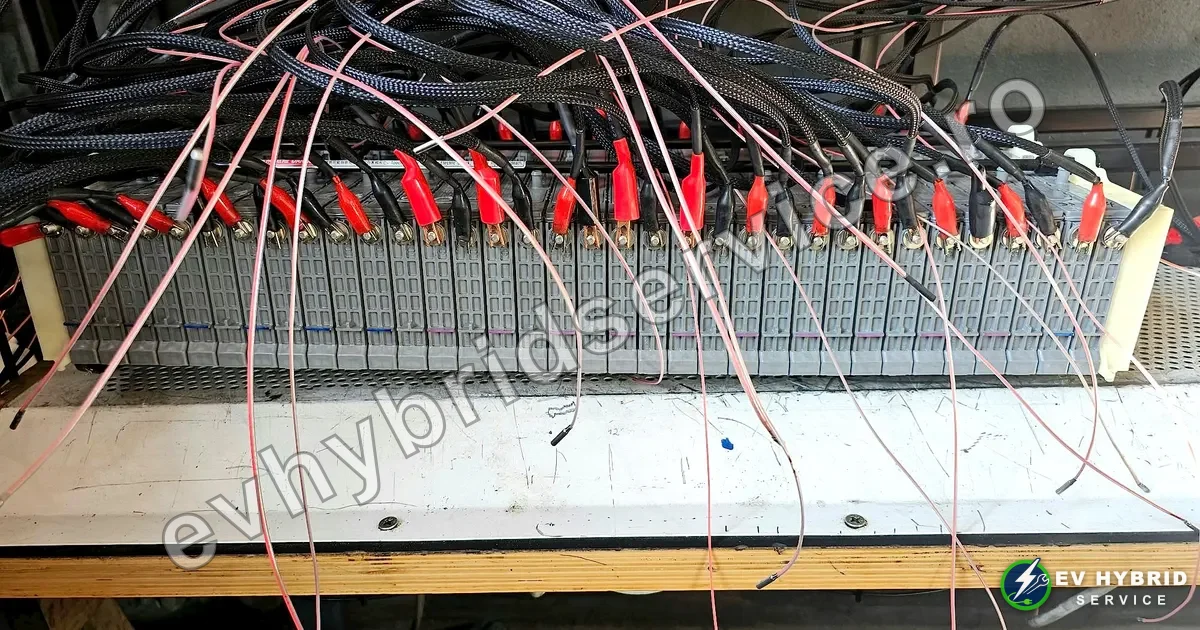
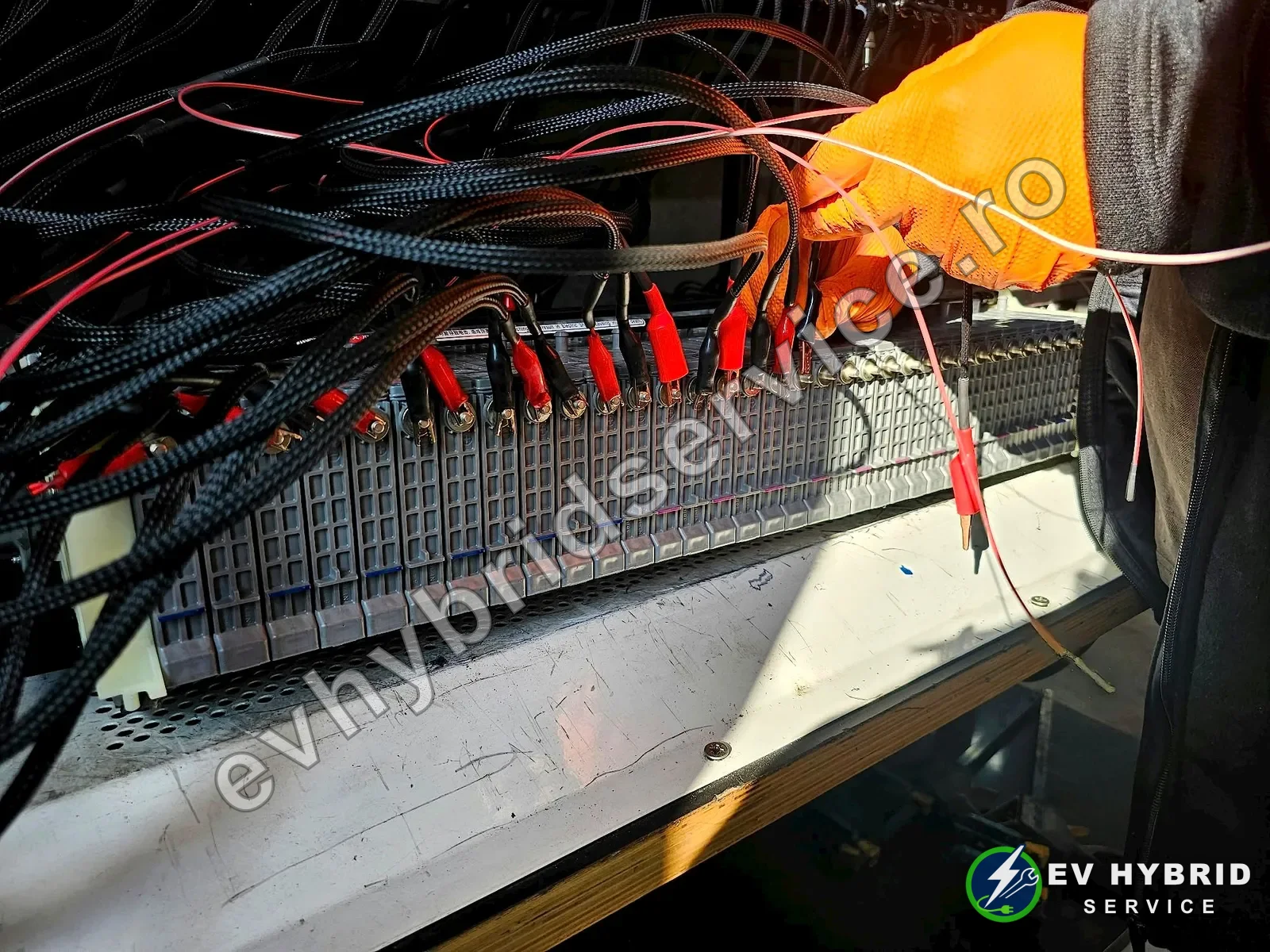
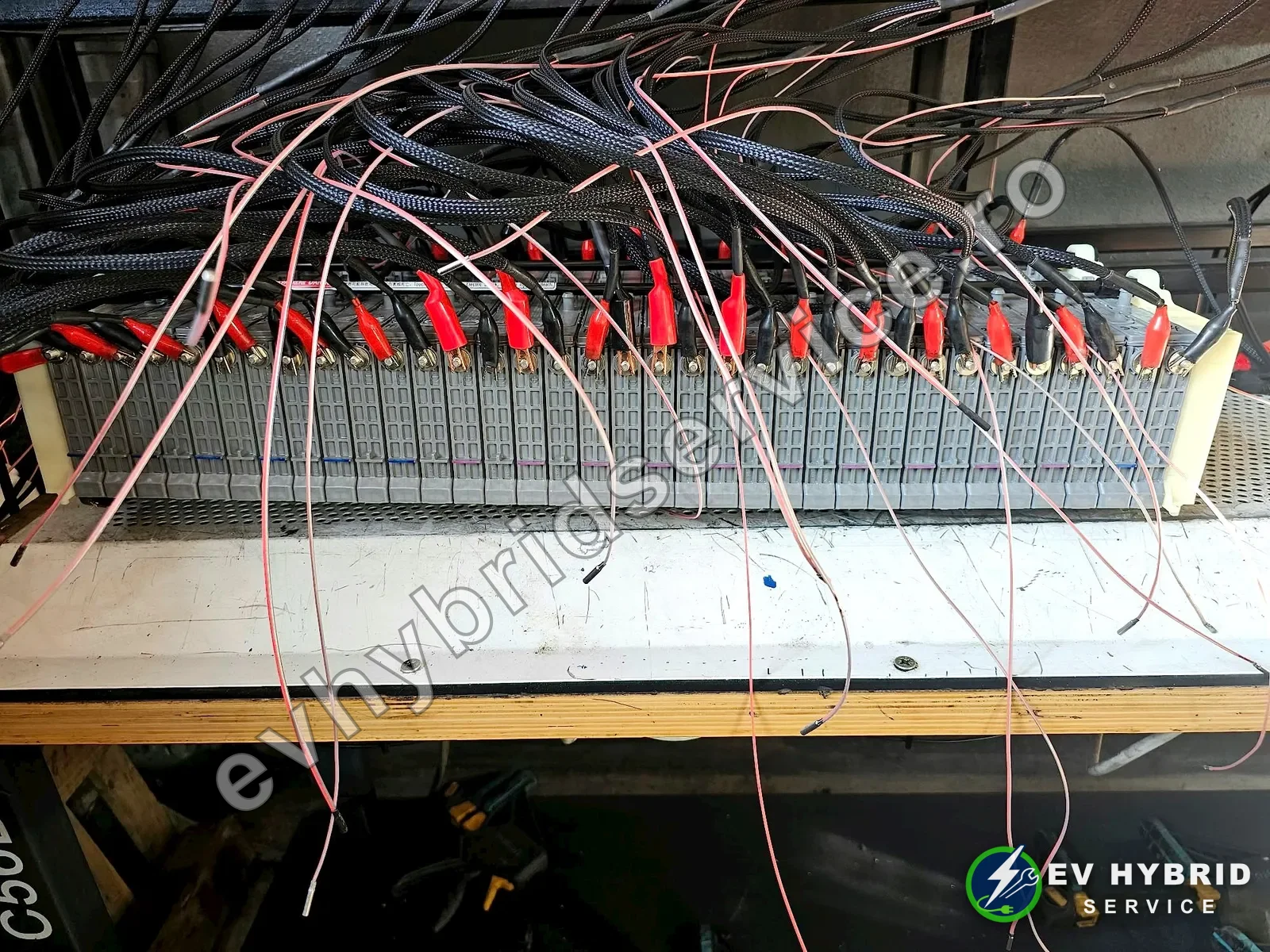
We connected every module to the test bench and assessed its condition, then compared the modules with each other. The weakest stood at about 80%, and the differences did not call for replacing any of them.
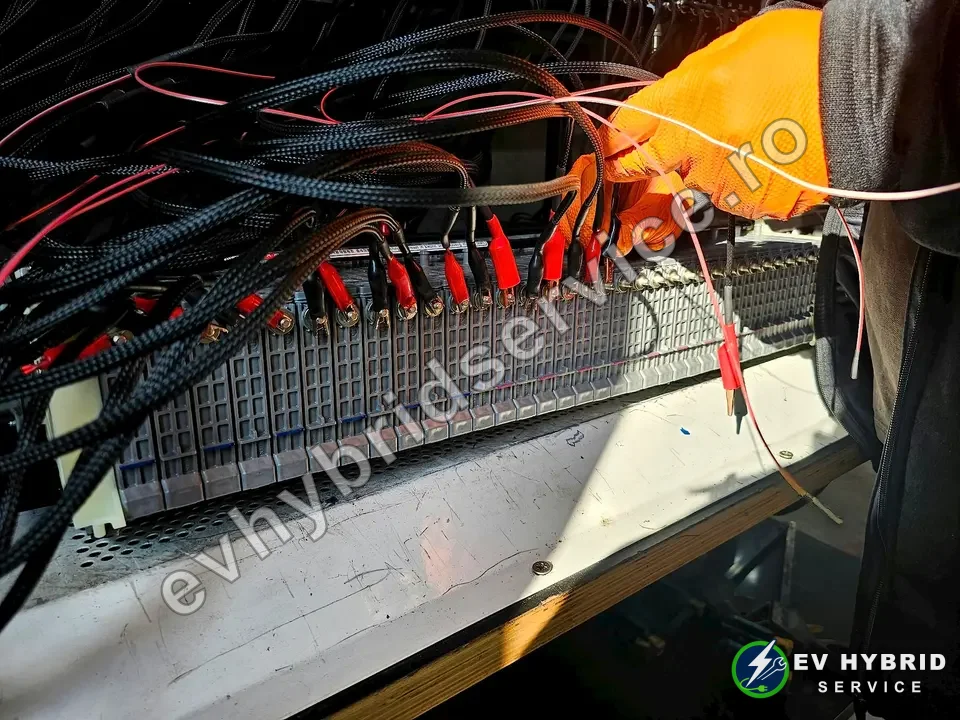
Connecting every module to the bench, so each can be measured on its own. 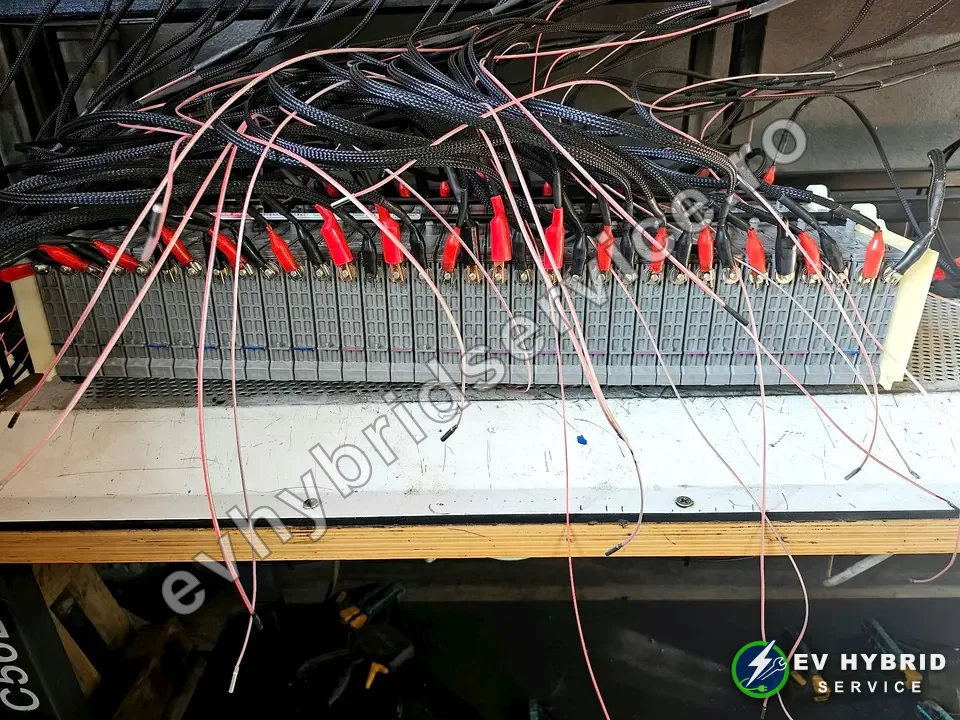
The battery’s modules, each connected to the test bench. Step 3
Cleaning the cooling
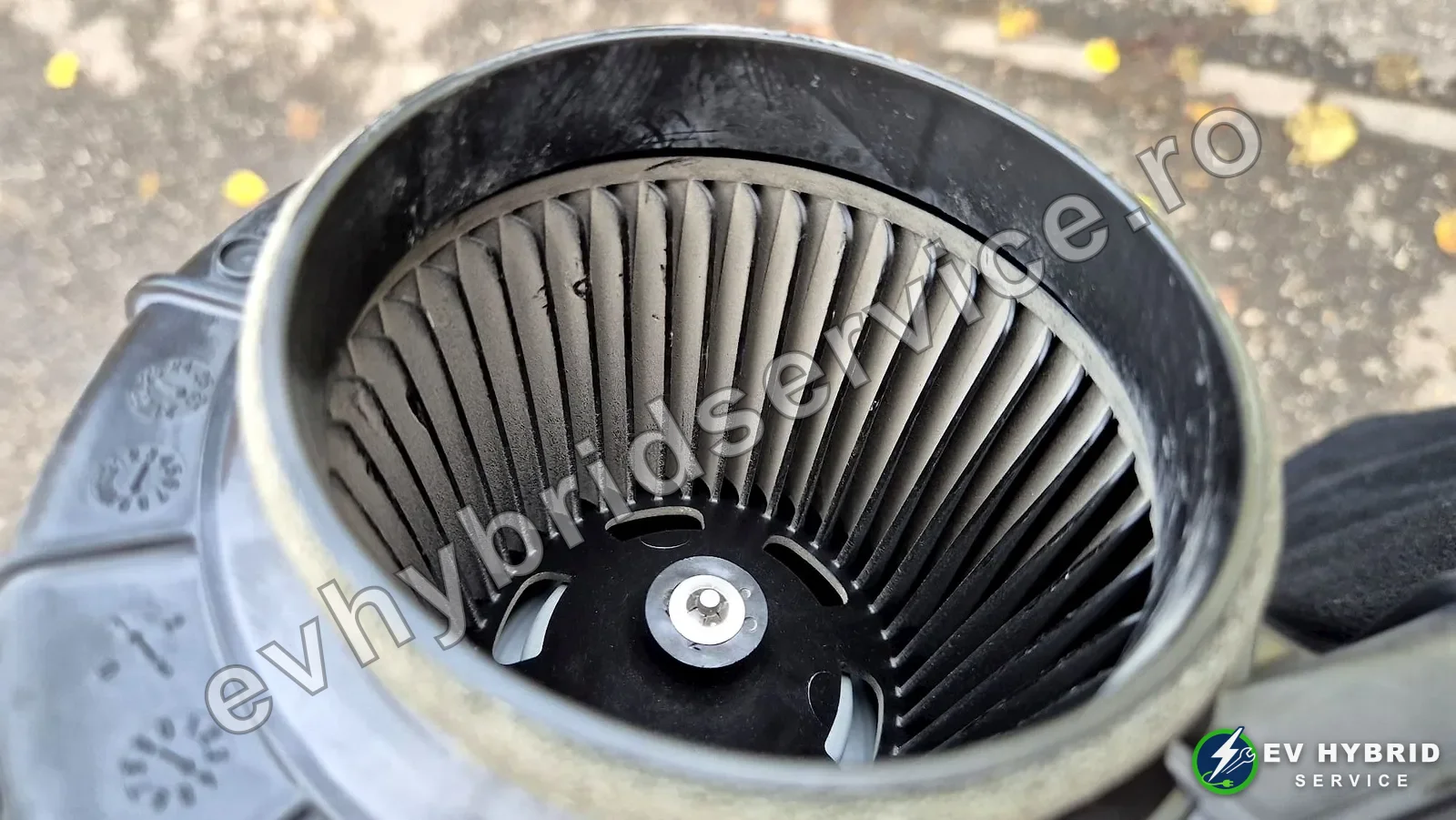
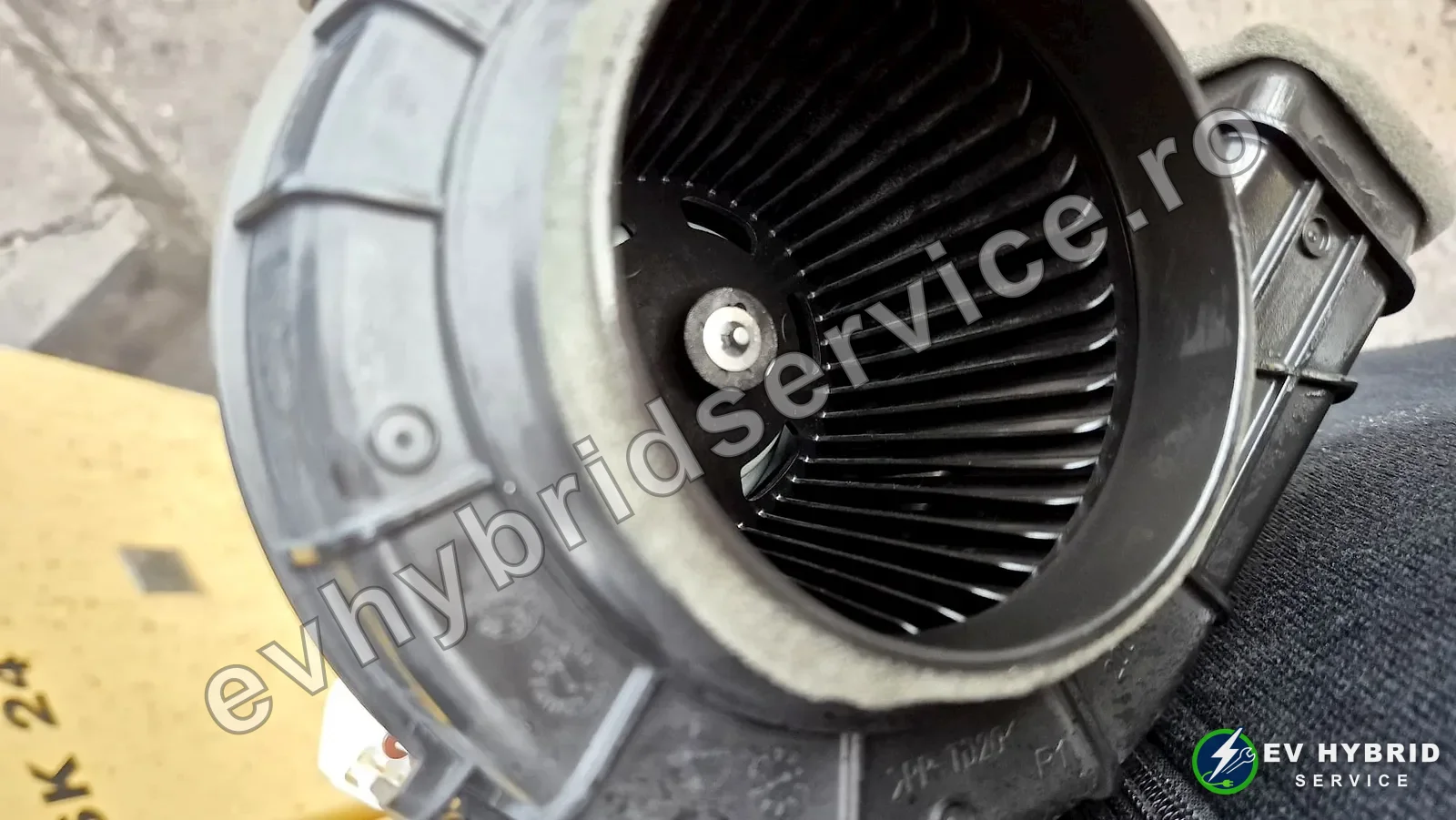
We cleaned the cooling fans of the dust and dirt that build up over time and cut the airflow. A battery that runs cooler ages more slowly.
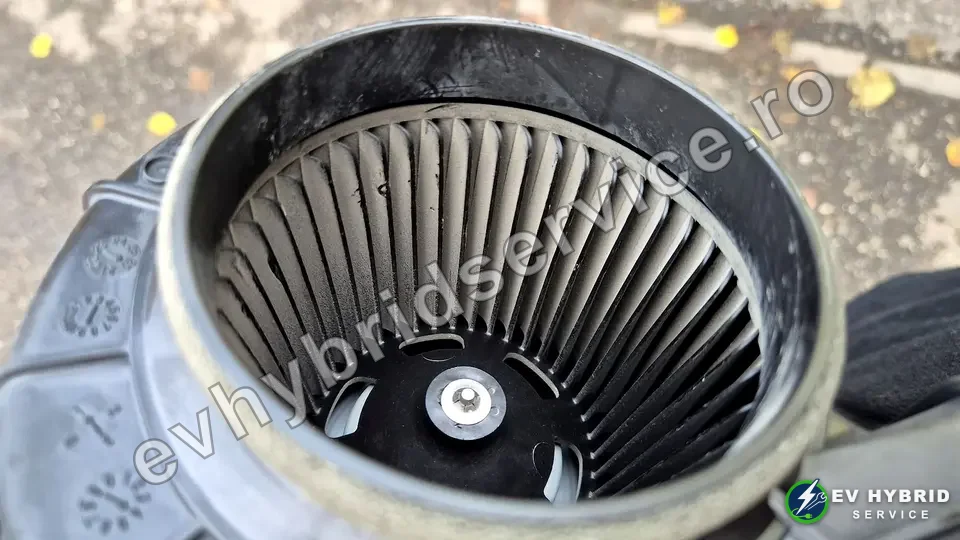
The battery cooling fan, before: the blades grey with dust. 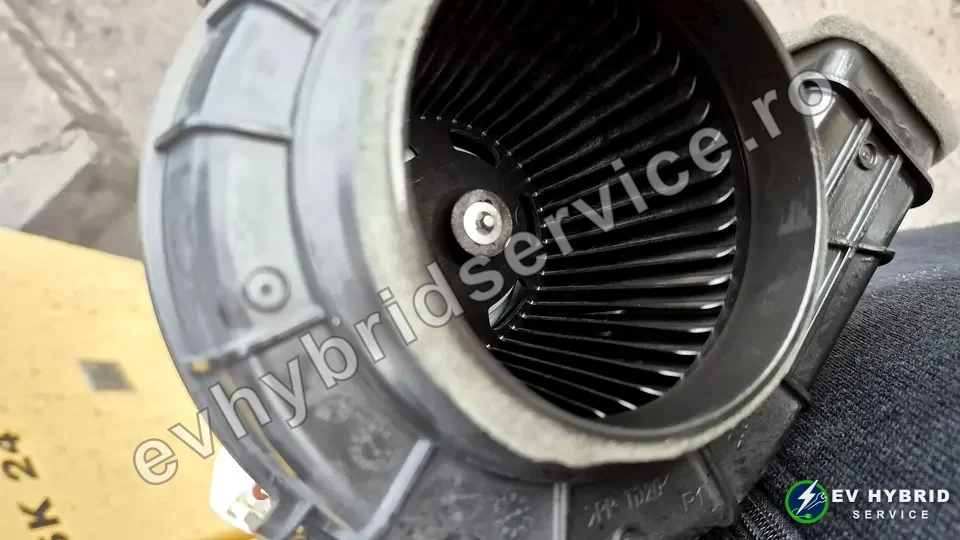
The same fan, cleaned. Step 4
Connections, modules and cooling, rechecked
We cleaned and checked the electrical connections so no poor contacts were left, rechecked how evenly the modules performed and checked the cooling system, so the battery’s temperature stays within its limits.
Step 5
A general service of the car
Alongside the battery, we carried out a general service: we checked the level and condition of the fluids, the brake fluid included, to catch early anything that could affect how the car runs and how safe it is.
Step 6
The owner’s report
At the end, the owner received a report on the condition of every battery module and the differences between them. We do not just say the battery is fine; we show how good each part of it is. The report is the reference we compare against at the next service.
Before and after
When it came in
- No faults, no symptoms
- Cooling fan full of dust
- Module condition unknown
- No reference for future services
At handover
- Fans and connections cleaned
- Every module tested, the weakest at ~80%
- No module replaced
- A report on every module
Signs that a Toyota hybrid’s battery needs a check
- The fan by the rear seat sounds louder than usual
- The petrol engine starts more often and runs for longer
- The battery charge gauge rises and falls very quickly
- Fuel use has gone up for no clear reason
Drive a Toyota hybrid and want to know how its battery is doing before it gives you any sign? We test it module by module and you get a report on each one.
Book a battery test →Frequently asked questions
Is it worth checking the battery of a hybrid that shows no faults?
Yes. A hybrid battery ages gradually, and dust in the cooling or weak contacts speed up the wear without lighting any warning. An early check catches problems while a clean-up fixes them, not new modules.
What does it mean that the weakest module is at about 80%?
That it is the most worn module in the battery, but still in a condition that does not call for replacing it. What matters most is how it changes: the report lets us see, at the next service, whether it drops and how fast.
Why does the battery fan clog up?
Because it keeps drawing air to cool the battery, and dust and lint come in with the air. Over time the blades and ducts load up, the airflow drops and the battery runs warmer.
What do I get at the end?
A report on the condition of every battery module and the differences between them, plus what we cleaned and checked. You keep it as a reference for future checks.
Photos from the job
Tap a photo to see it full size; use the arrows to browse.
The high-voltage battery sits under the rear seat.
The battery cooling fan, before: the blades grey with dust.
The same fan, cleaned.
The battery’s modules, each connected to the test bench.
Connecting every module to the bench, so each can be measured on its own.
The battery on the workbench, cover off.
Read next
Battery repairs
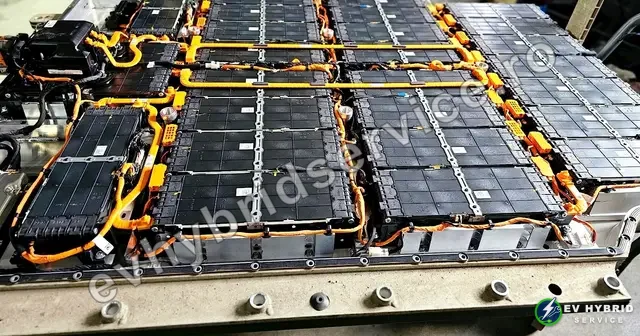
Hyundai Kona Electric losing coolant with no error on the dashboard: how we repaired the cooling circuit of the high-voltage battery
A 2024 Hyundai Kona Electric was losing a lot of fluid from the battery cooling circuit, though the dashboard showed nothing. After a hard impact, a pipe had cracked. We replaced it, sealed the small cracks, and the battery stayed on the car.
3 min read
Battery repairs
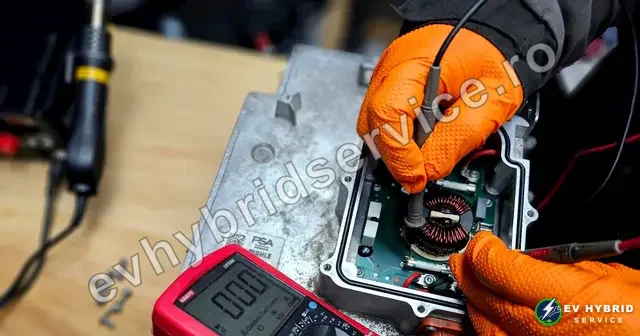
Opel Combo Electric that would no longer charge from a socket: how we repaired the on-board charger without replacing it
A 2024 Opel Combo Electric would no longer charge its battery from a socket. The culprit was the on-board charger, where one of the low-voltage electronic supplies had stopped working properly. We repaired it, and the original charger stayed on the car.
2 min read
Battery repairs
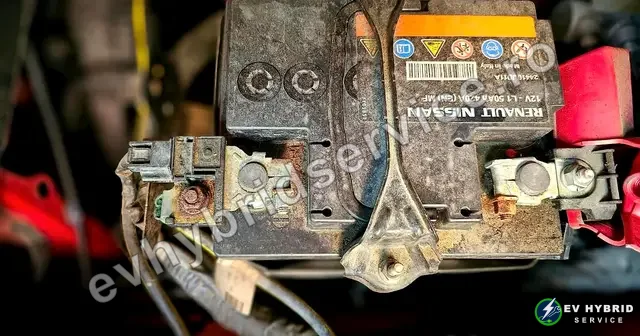
Nissan Leaf 40 kWh with communication errors and insulation faults: how we restored the 12 V supply and repaired the high-voltage insulation
A Nissan Leaf 40 kWh had errors in a chain and no longer talked to its climate system. Where it all started: the oxidised terminals of the 12 V battery. Once we restored the supply, diagnosis also turned up high-voltage insulation faults, which we fixed.
2 min read