
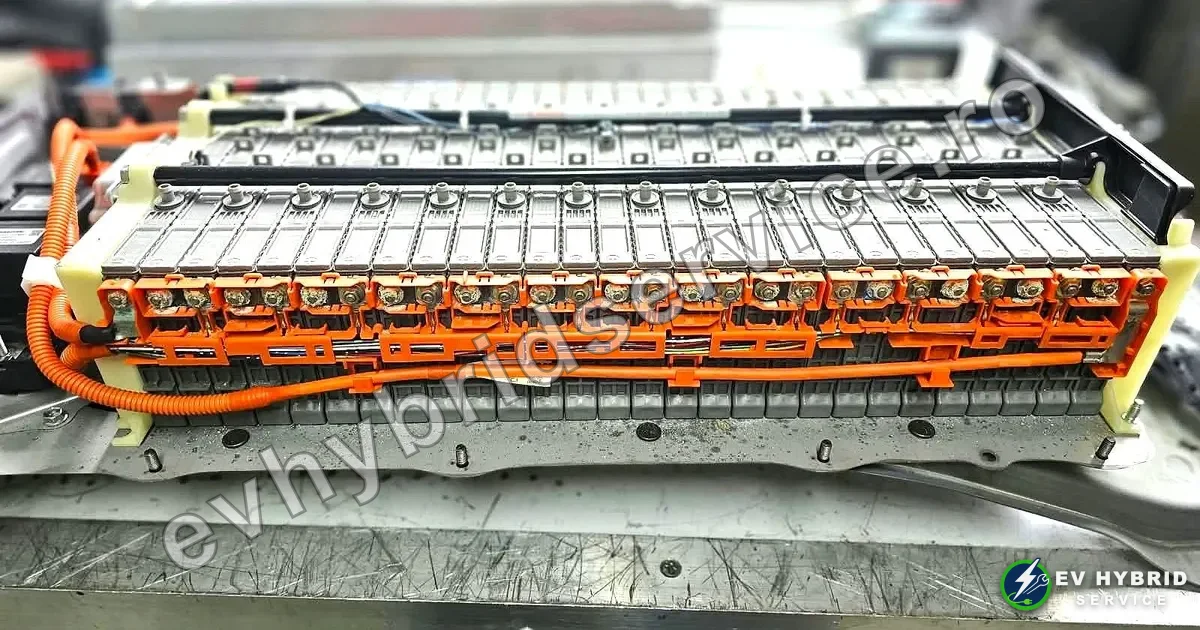
Workshop job ·
Toyota C-HR Hybrid with its battery worn to 40–60%: how we serviced the high-voltage battery without replacing the modules
A 2017 Toyota C-HR Hybrid came in for preventive maintenance of a battery that had already been replaced once. The modules were at 40–60% state of health. The owner chose maintenance: we cleaned the fans and the connections, without changing modules.
- year of manufacture
- 2017year of manufacture
- state of health (SOH) of the modules
- 40–60%state of health (SOH) of the modules
- measured module capacity
- 2.6–4 Ahmeasured module capacity
- modules replaced, the owner’s choice
- 0modules replaced, the owner’s choice
The problem
A 2017 Toyota C-HR Hybrid, whose traction battery had already been replaced once, came in for preventive battery maintenance.
The diagnosis
We measured every module: state of health was between 40% and 60%, capacity between 2.6 and 4 Ah, with clear differences between modules.
The fix
The owner chose maintenance over replacing modules: we cleaned the cooling fans, the connections between modules and the interconnecting parts.
The result
The battery now has its cooling and contacts in order. Lost capacity does not come back, so we recommend checking the modules regularly.
A service, not a repair
The 2017 Toyota C-HR Hybrid did not come in with a fault. Its owner brought it for preventive maintenance of the traction battery, one that had already been replaced once. They asked us to see what state the modules were in and do what we could to make the battery last, without changing parts.
What the measurements showed
We connected every module to the test bench and measured them one by one. Even though the battery had been replaced, wear was fairly advanced: the state of health (SOH) of the modules tested was between 40% and 60%, and measured capacity between 2.6 and 4 Ah.
Just as important, the modules were not worn evenly. Capacity differences between them can unbalance the battery over time, push some modules harder and, eventually, bring hybrid system faults.
We showed the owner the results and the options. Our recommendation for a full reconditioning was to replace the degraded modules with ones of suitable, closely matched capacities. The owner chose maintenance, knowing the battery already carries significant wear.
The job, step by step
Step 1
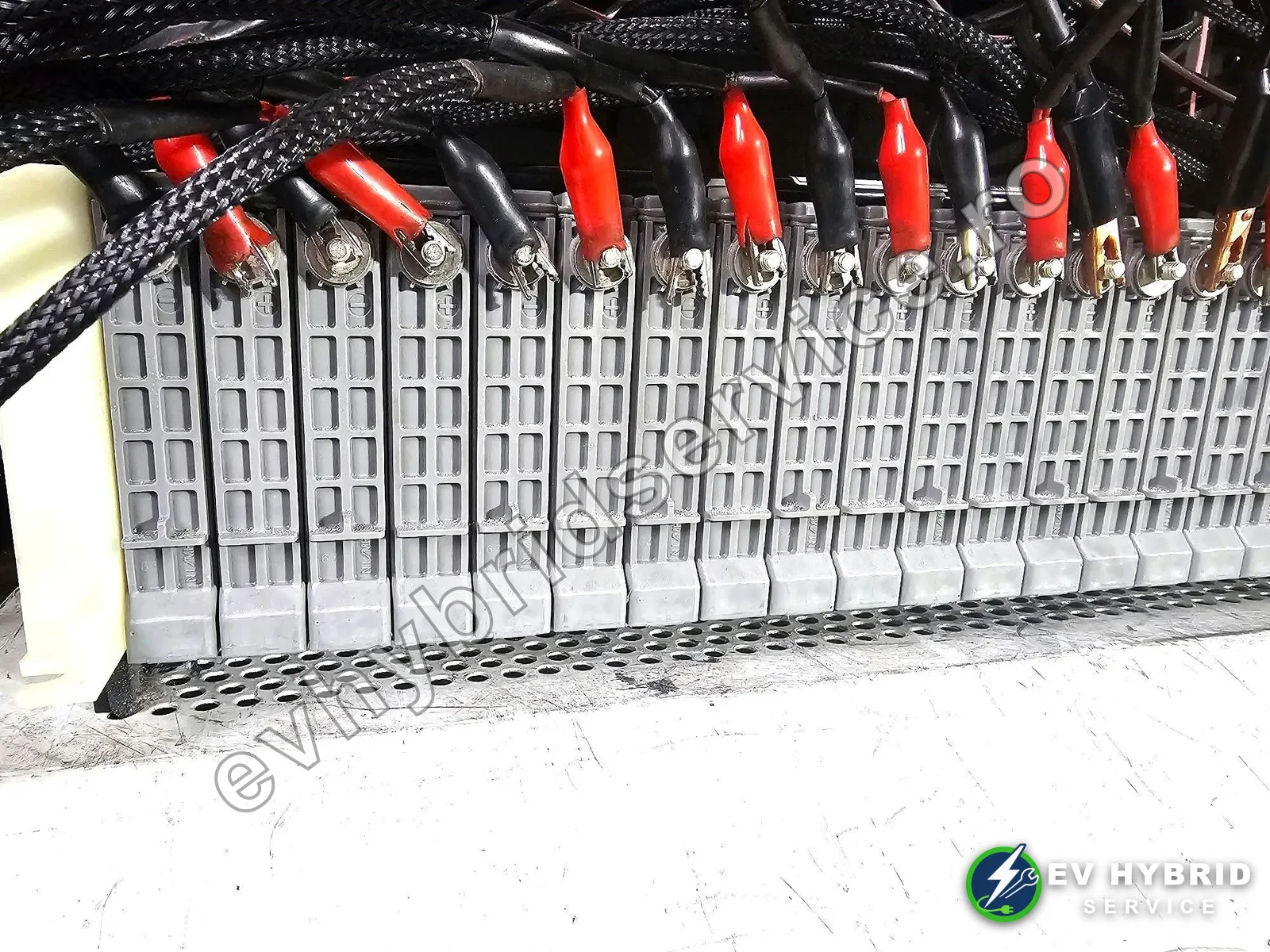
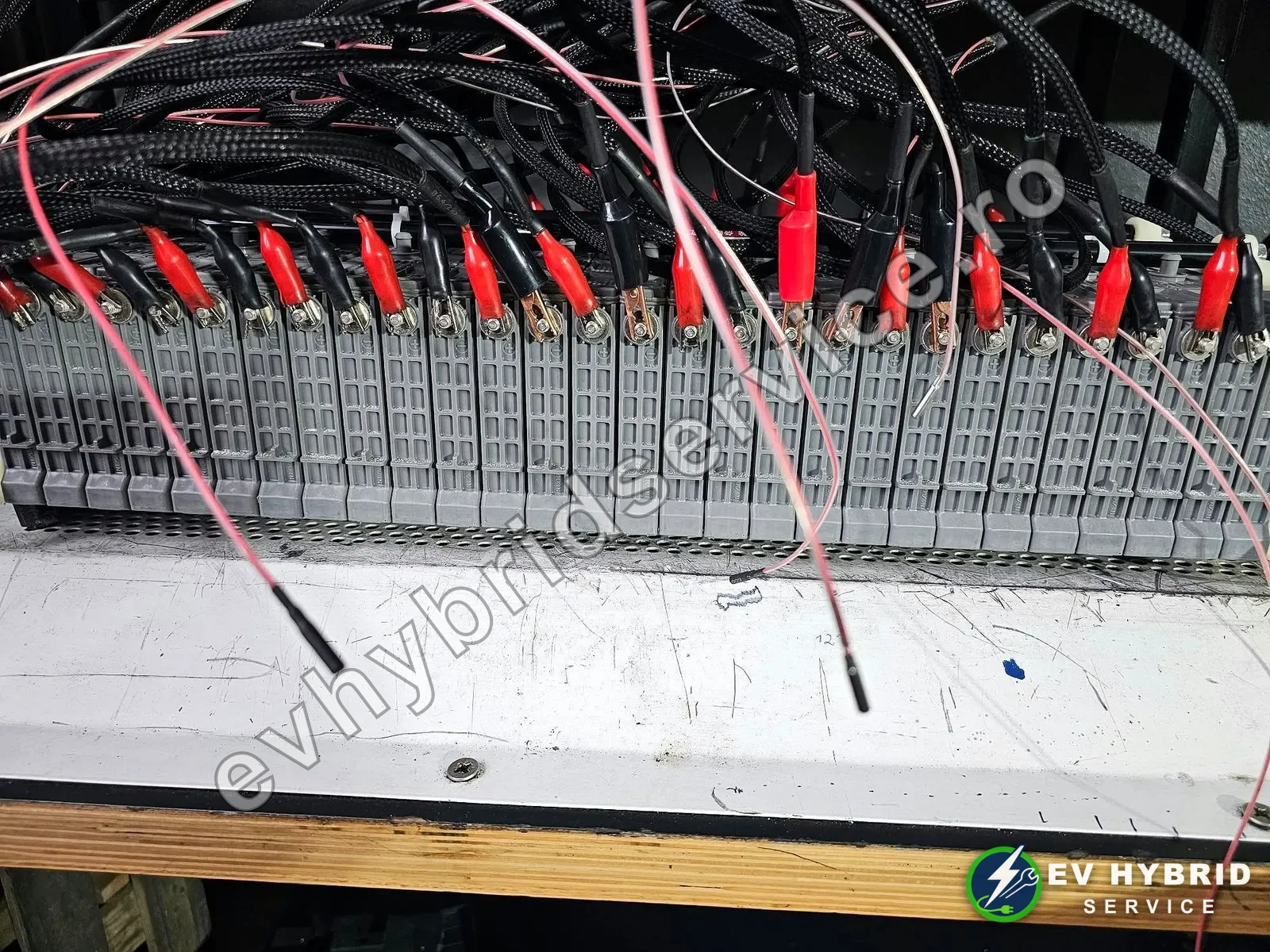
Measuring every module
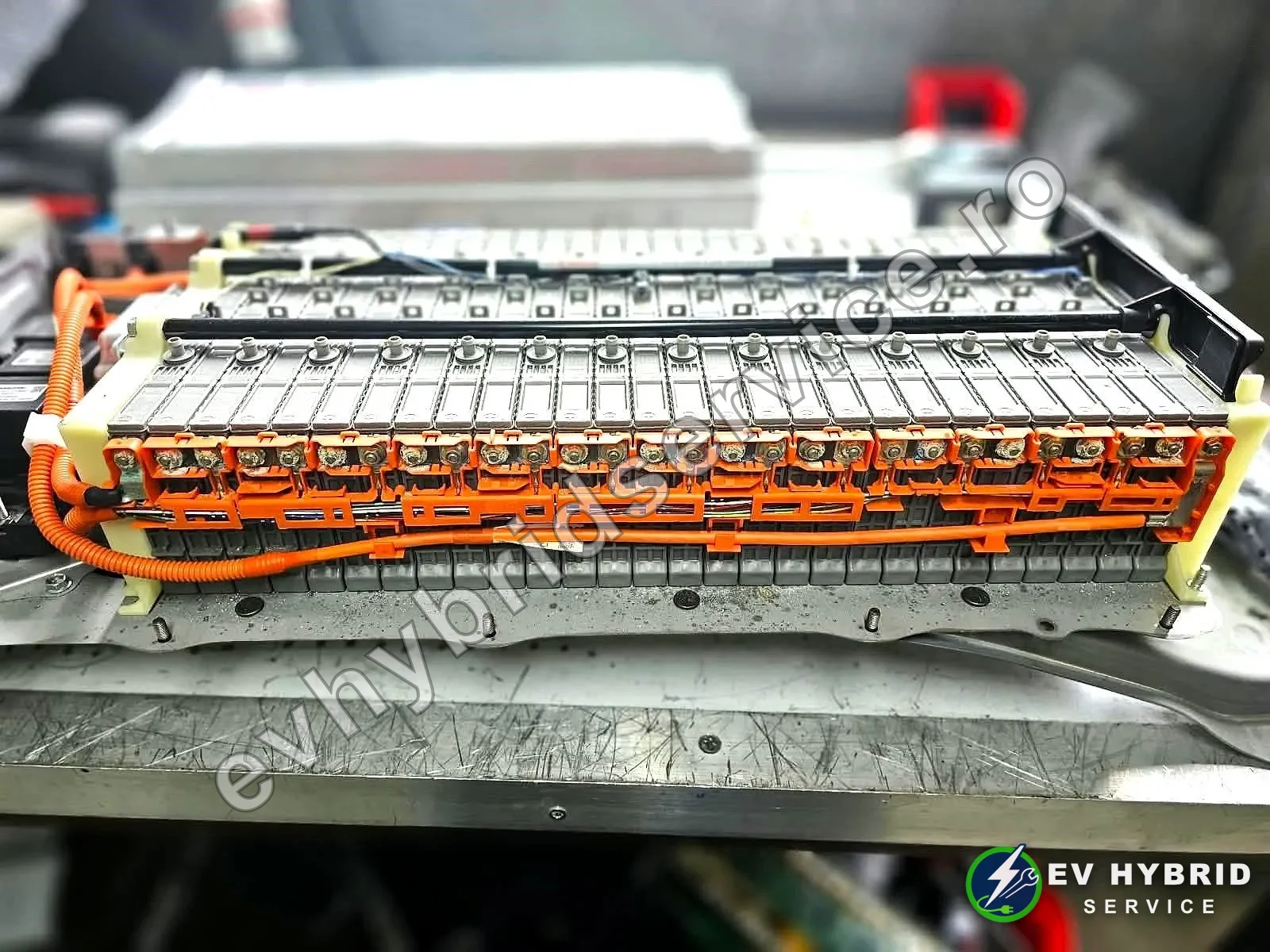
We took the battery out, connected every module to the bench and measured its state of health and capacity.
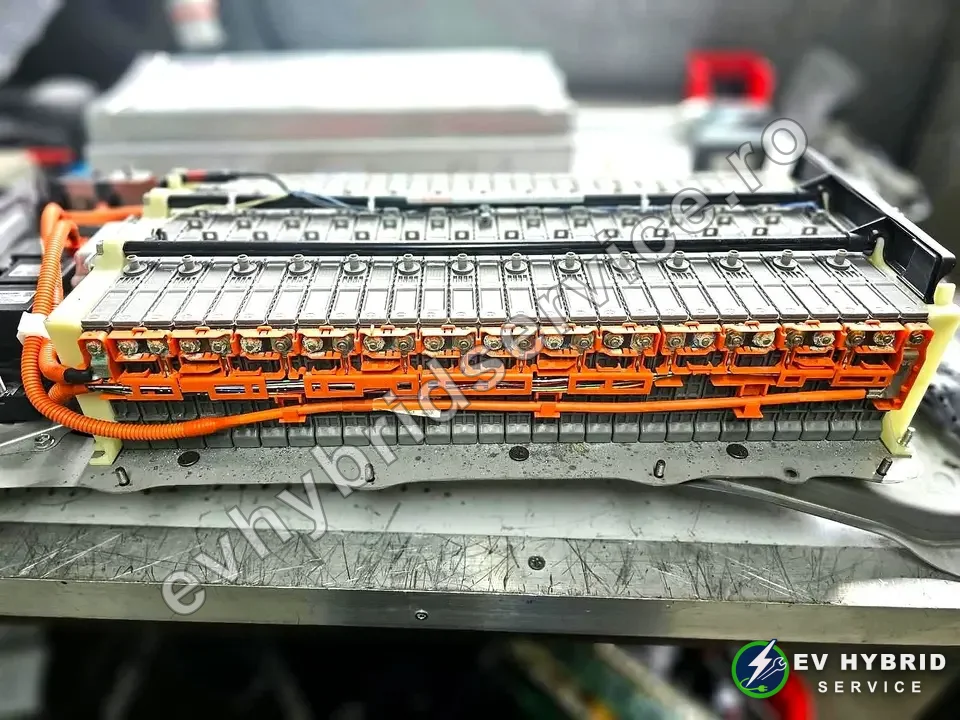
The battery out of the car, on the workbench. 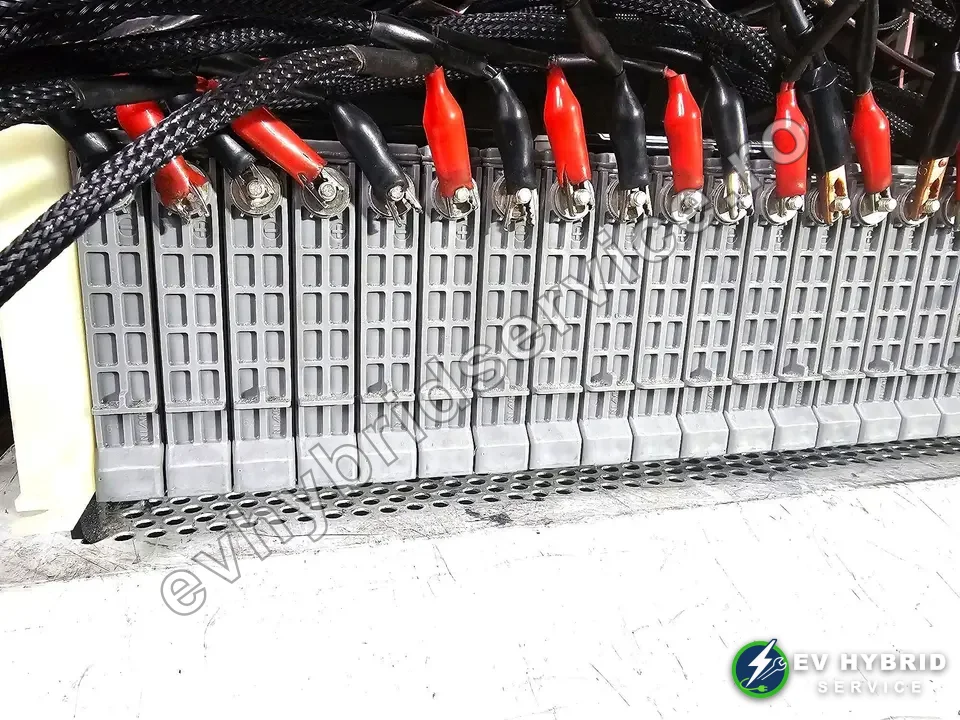
Every module, clipped separately to the test bench. 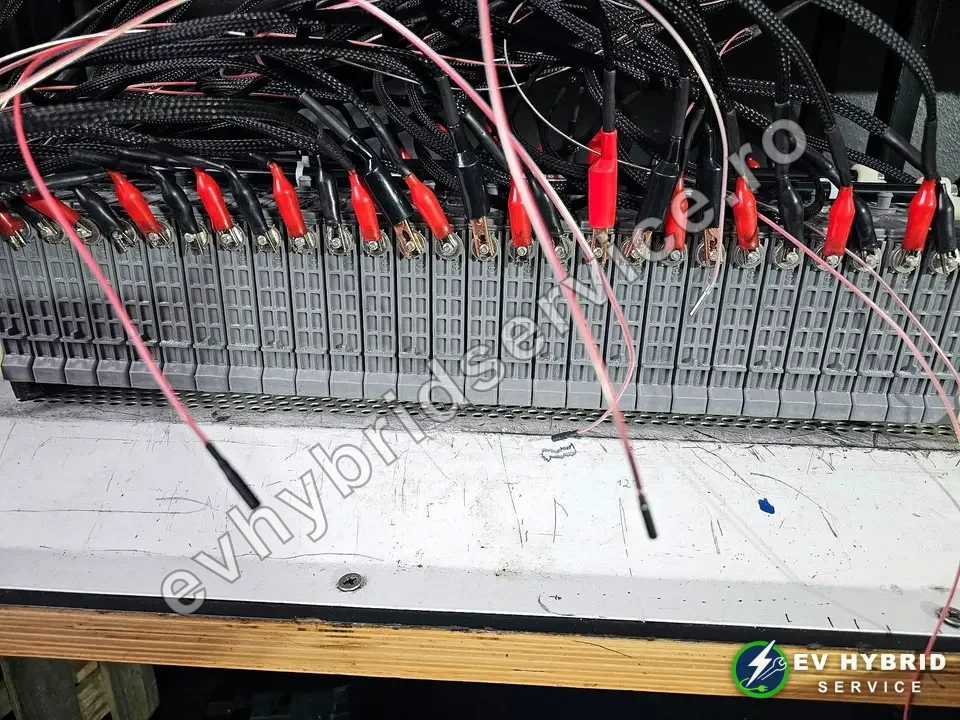
The bench leads, connected to the modules for measuring. Step 2
Cleaning the connections between modules
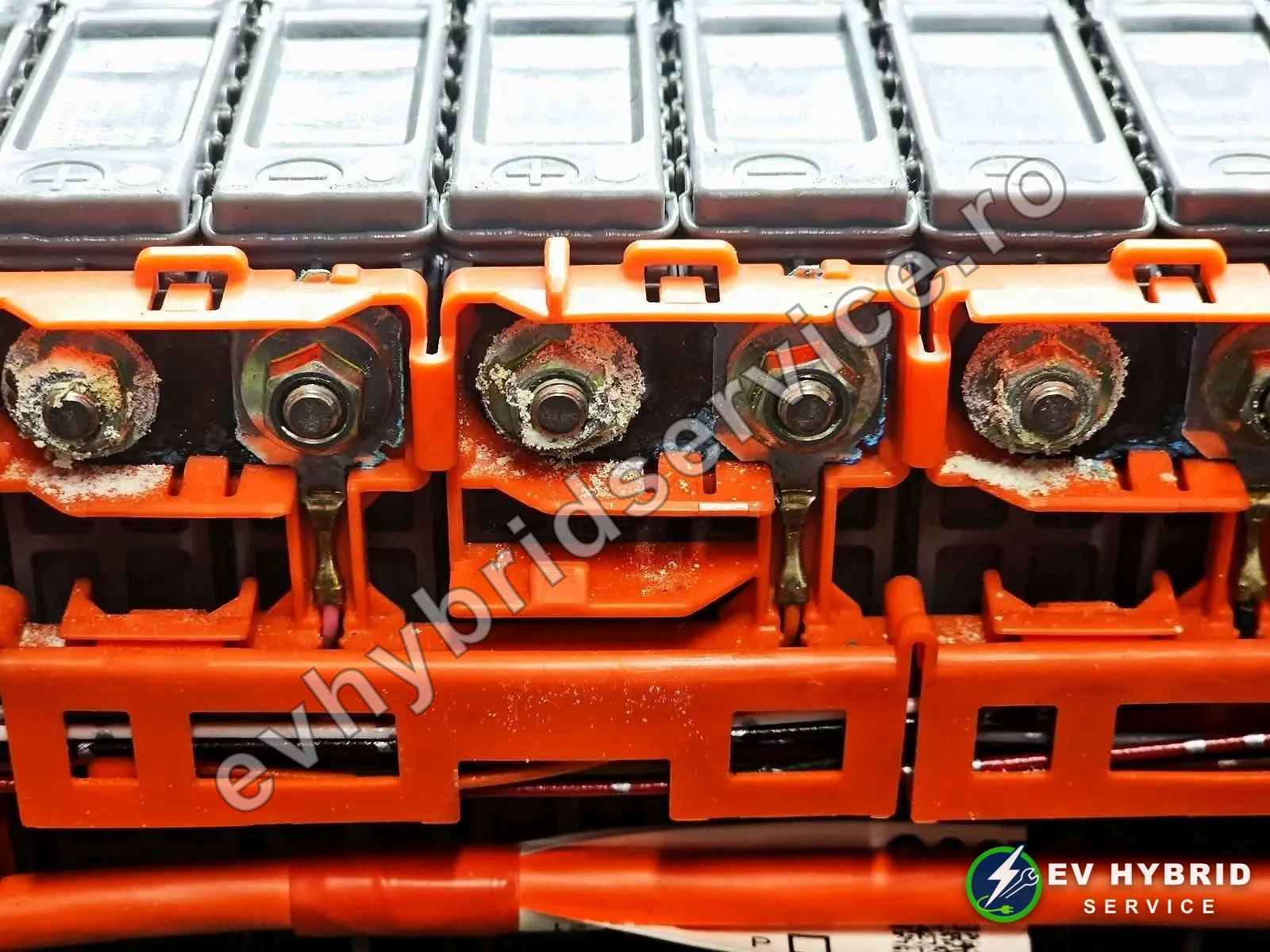
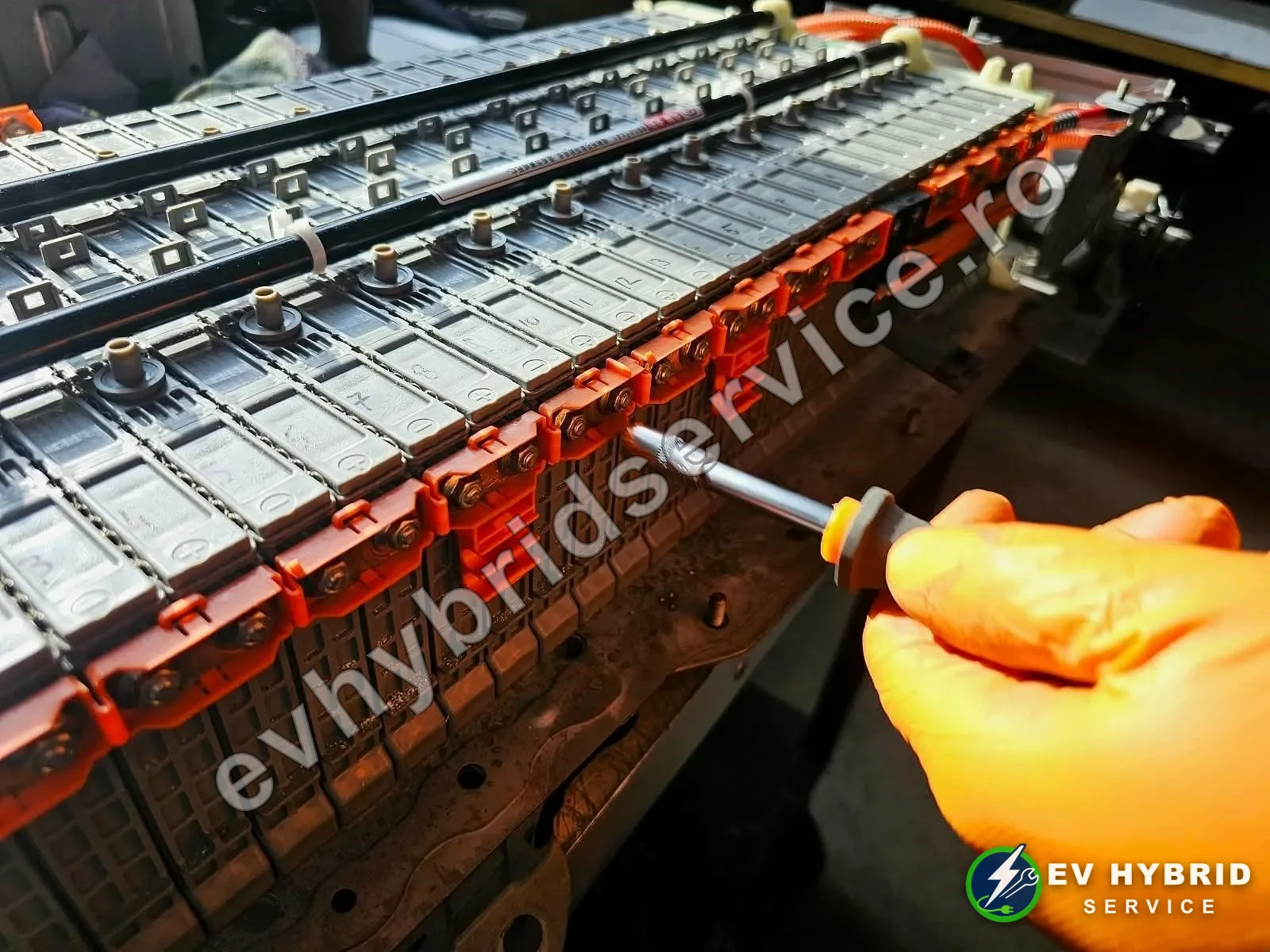
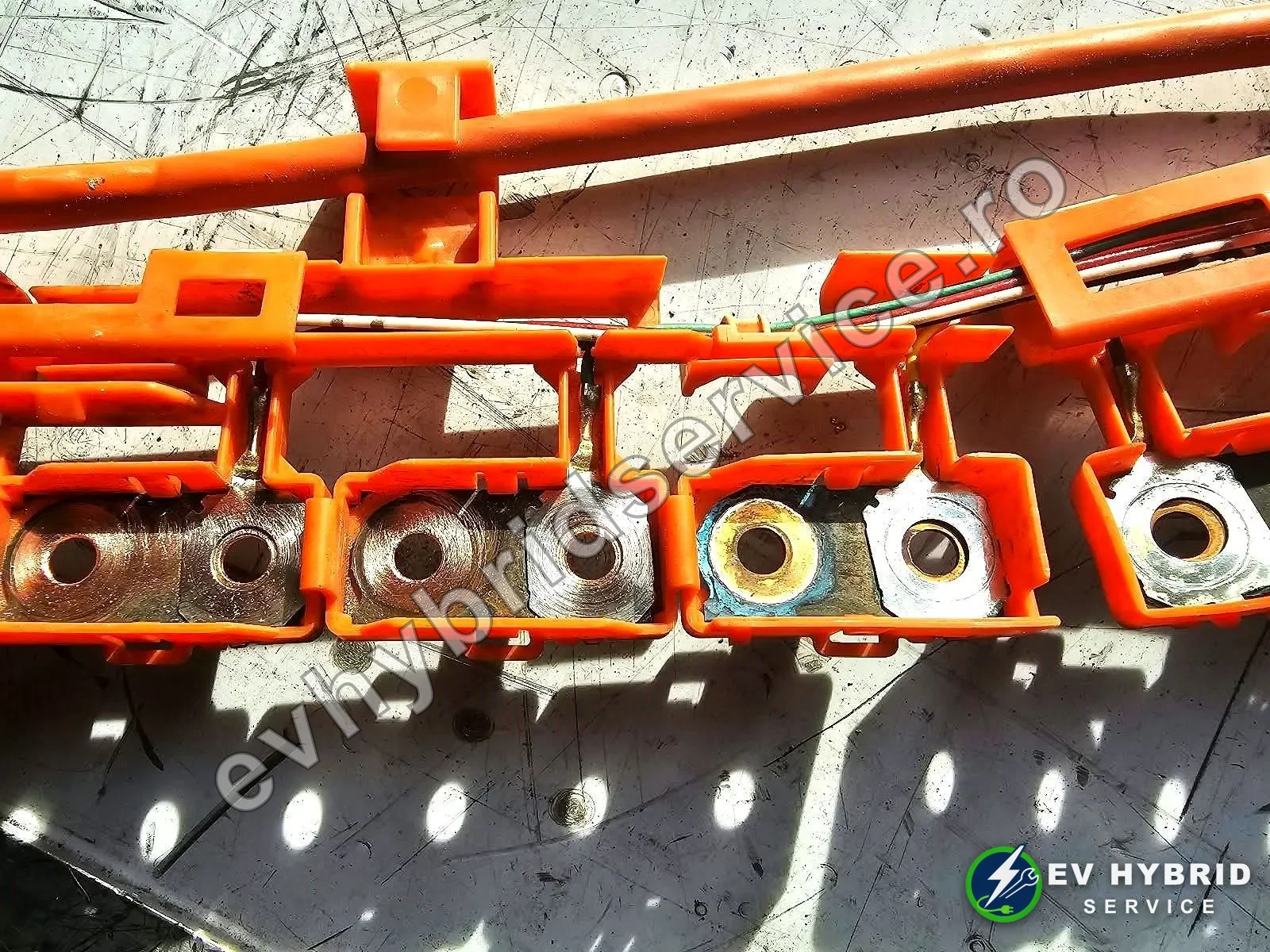
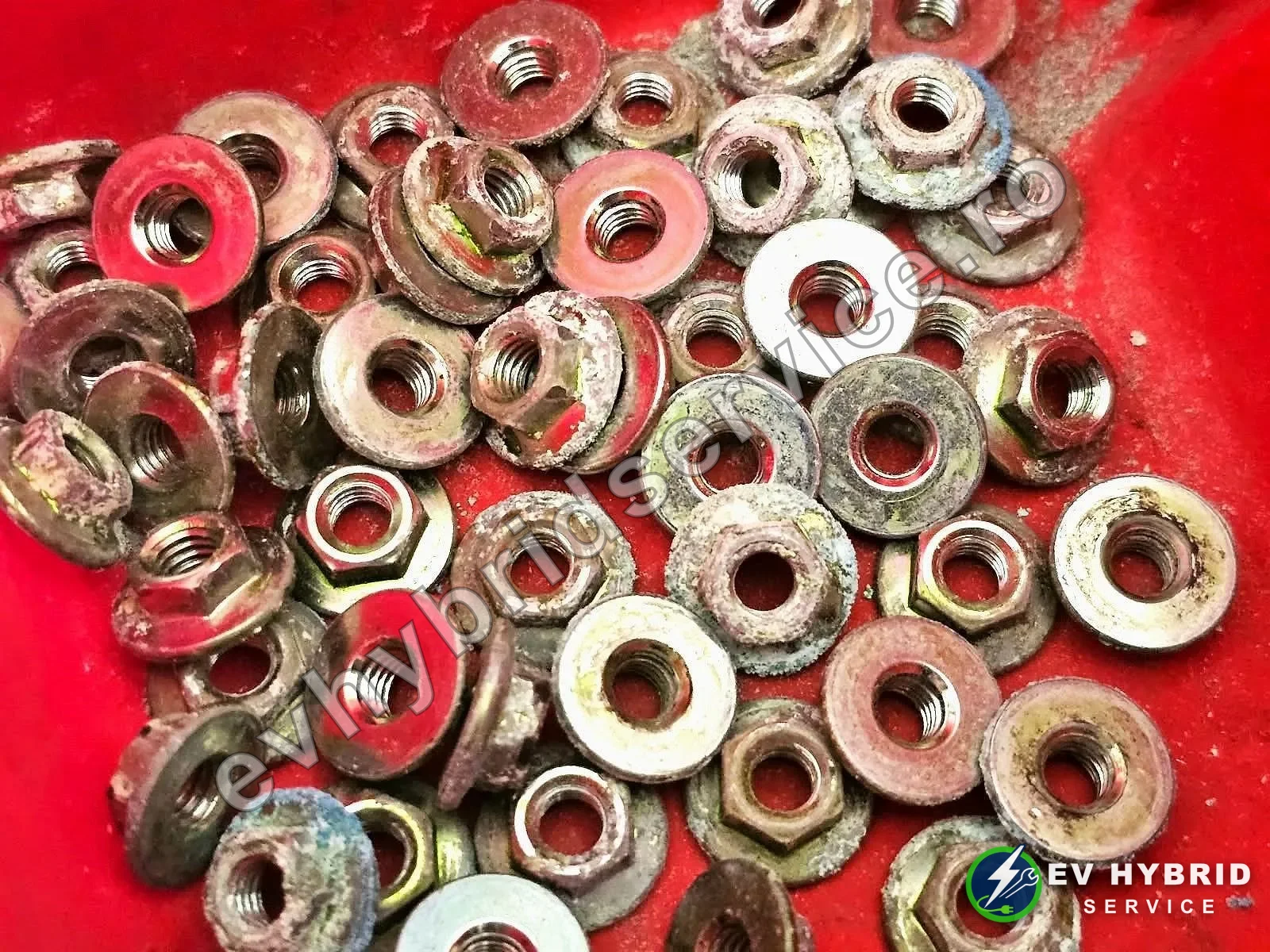
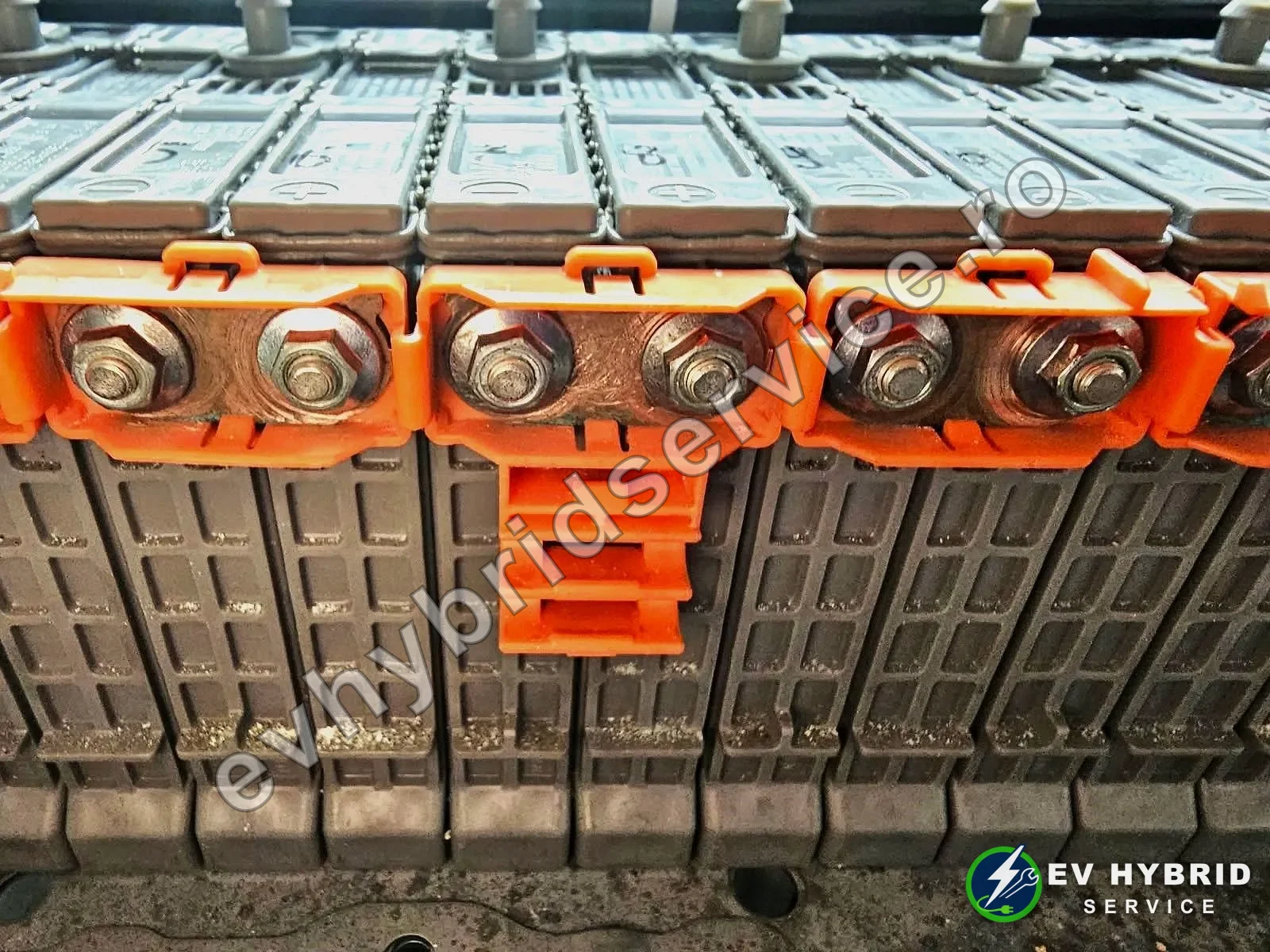
We removed the bus bars and cleaned the deposits and traces of oxidation off the contacts, nuts and interconnecting parts.
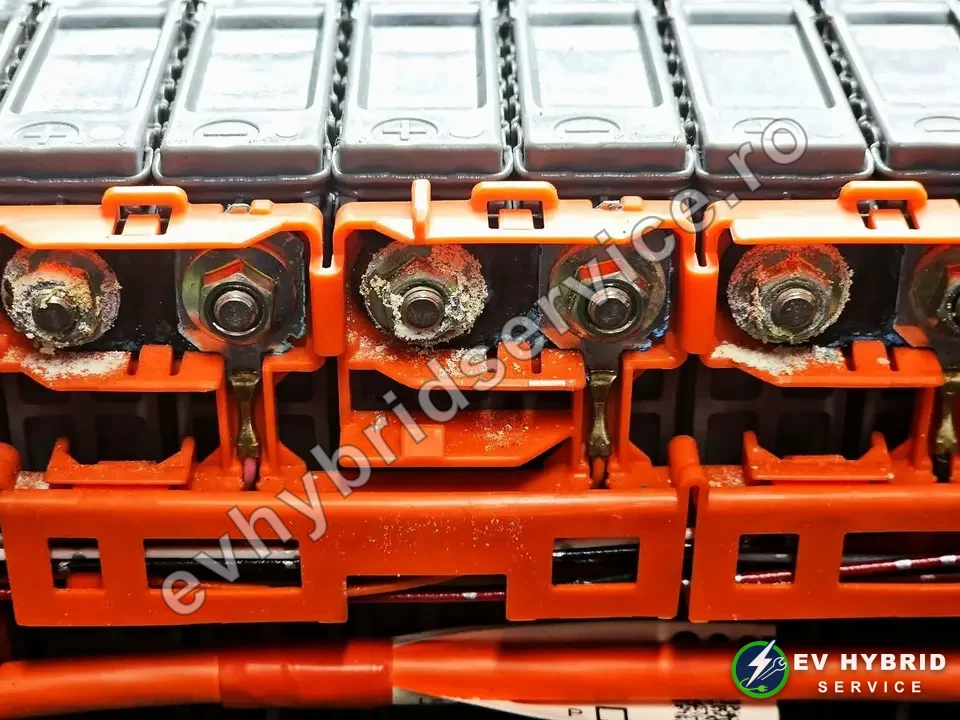
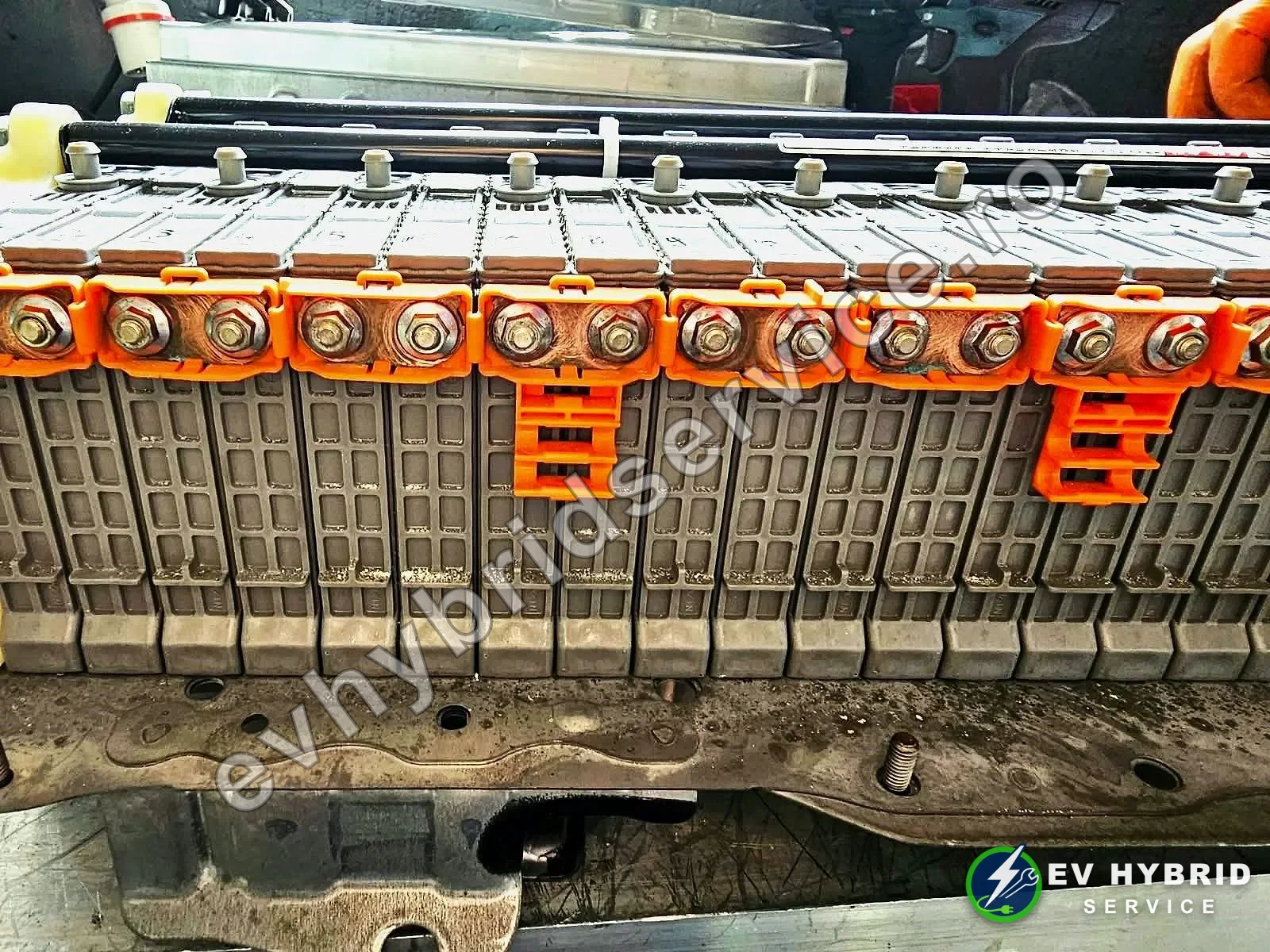
The connections between modules, with deposits and traces of oxidation. 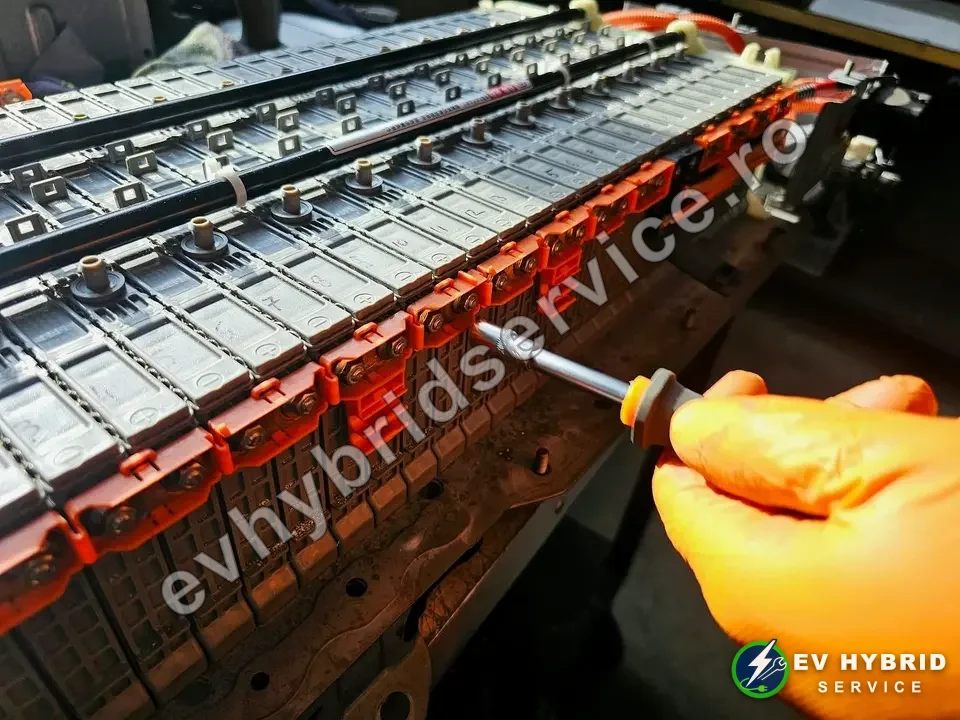
Removing the bus bars to get at the contacts. 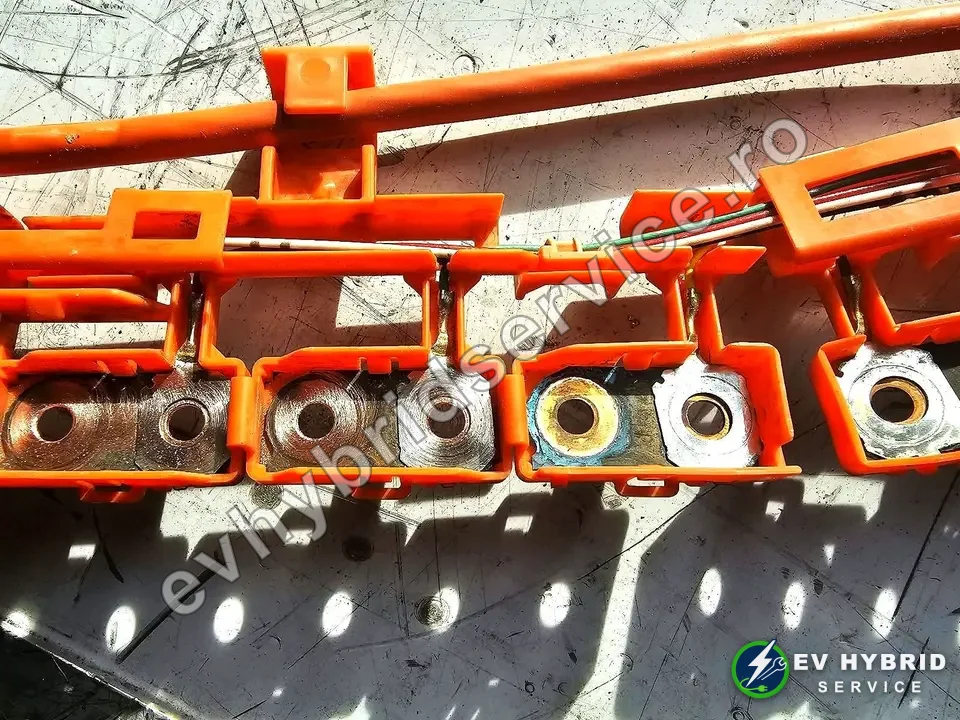
The bus bar plate, removed: deposits on the nut seats. 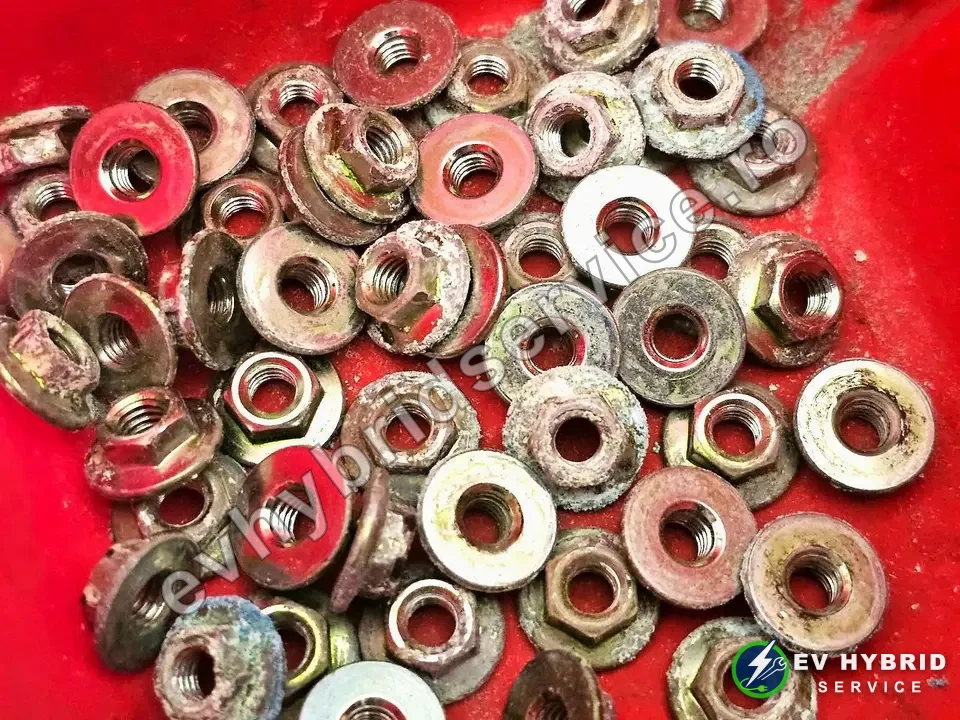
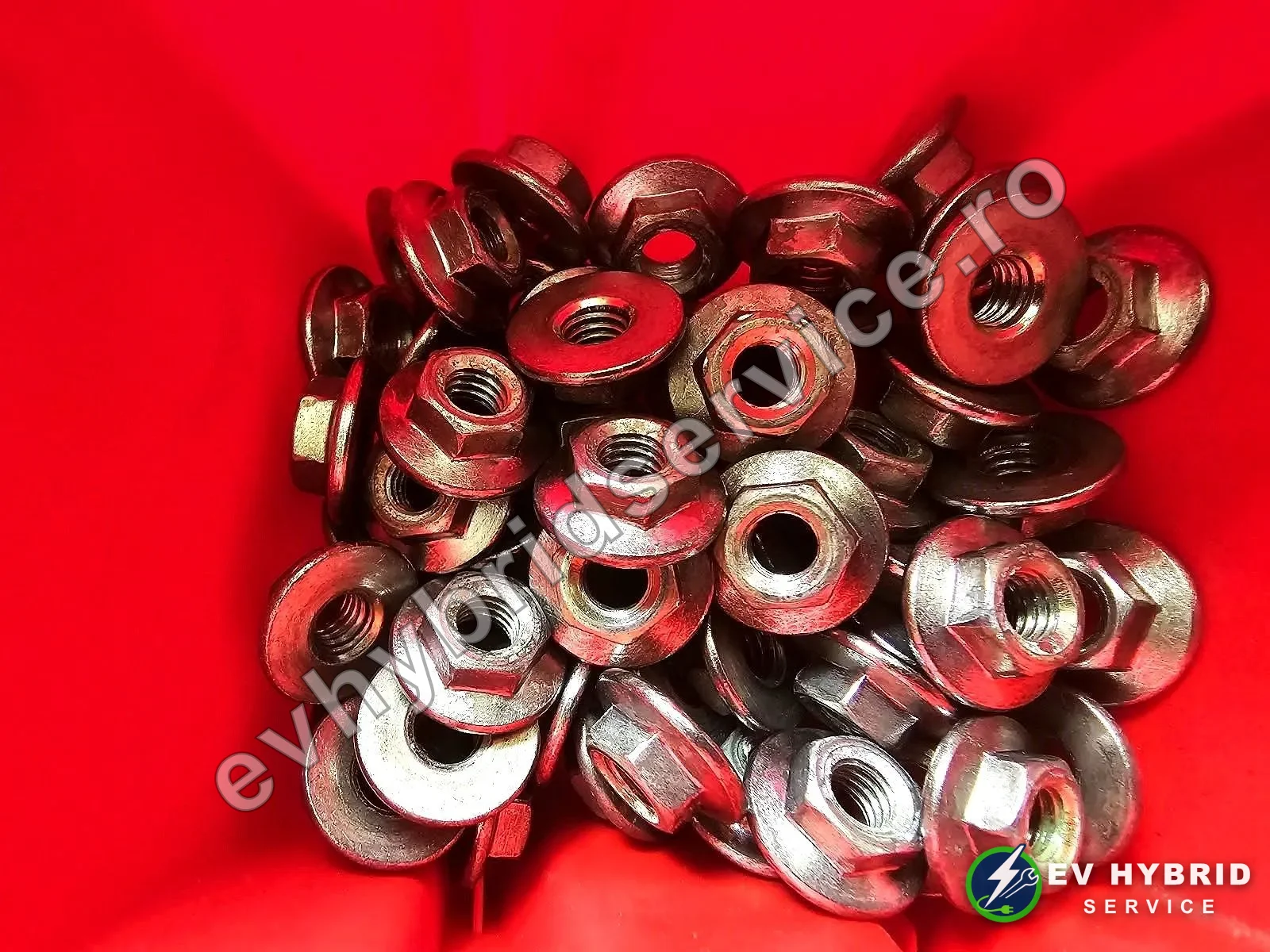
The connection nuts, before cleaning. 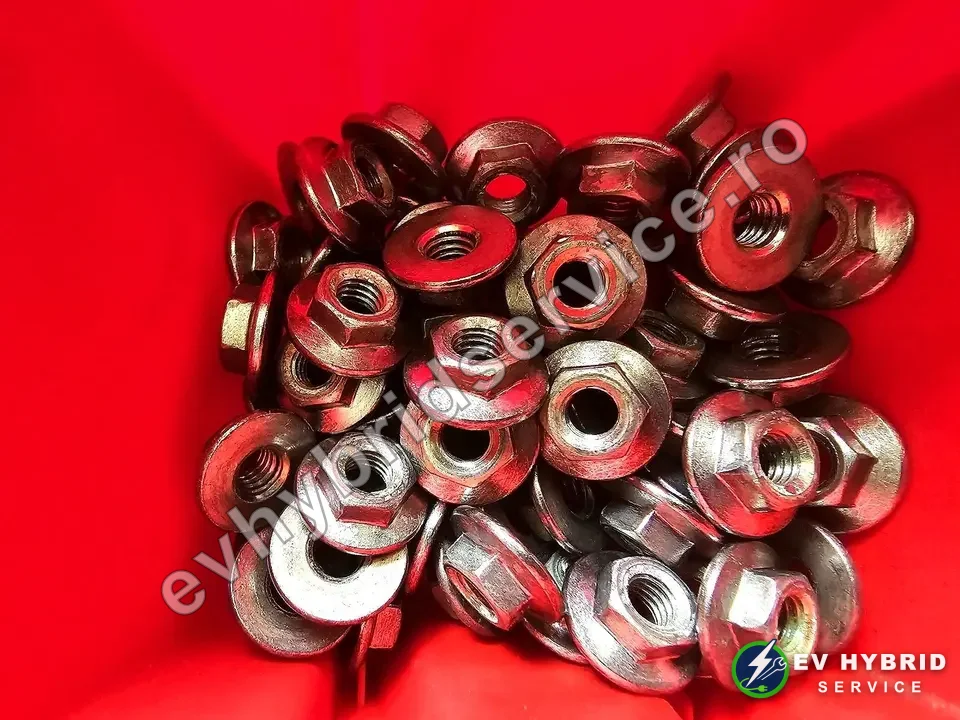
The same nuts, cleaned. Step 3
Checking and refitting the connections
We refitted the bus bars and checked the connections, to avoid high contact resistance that heats and wears the battery.
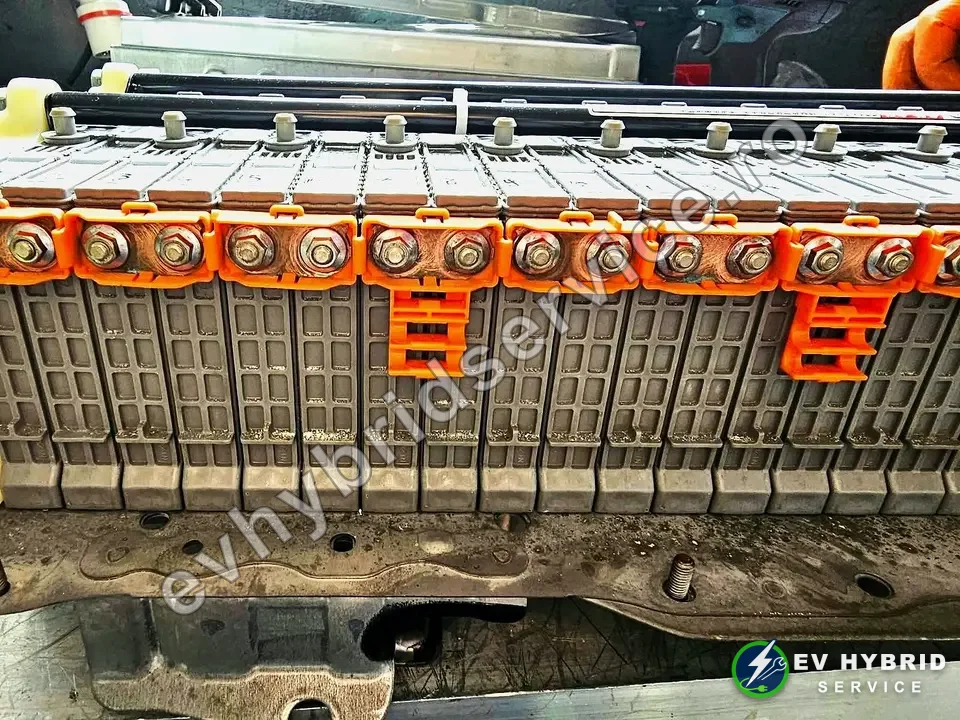
The row of modules, with the bus bars. 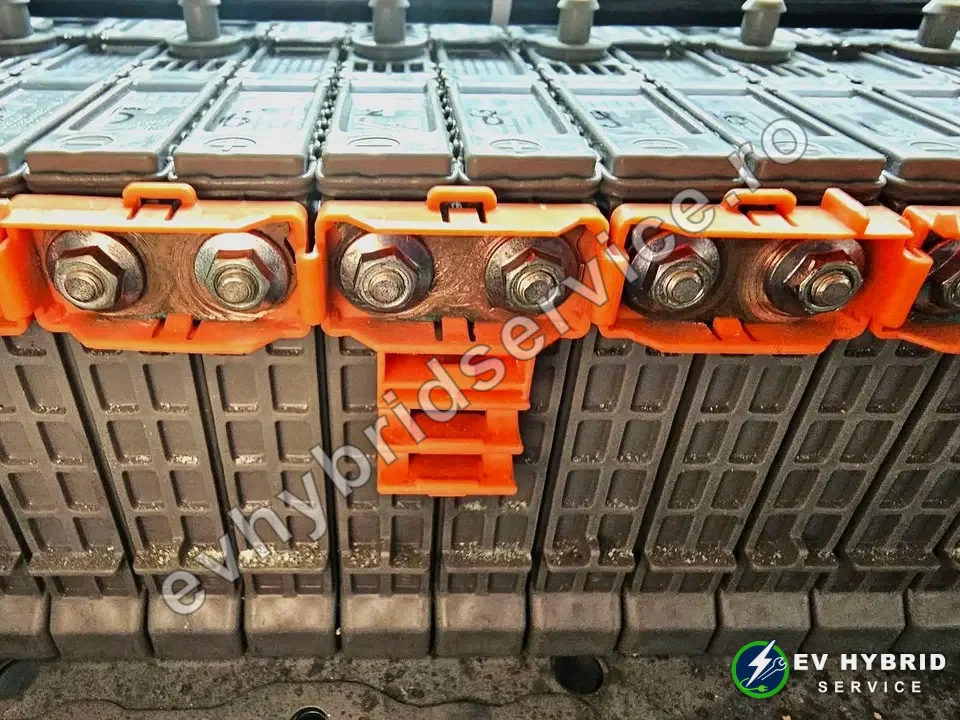
The bus bars, fitted on the modules. Step 4
Cleaning the cooling fans
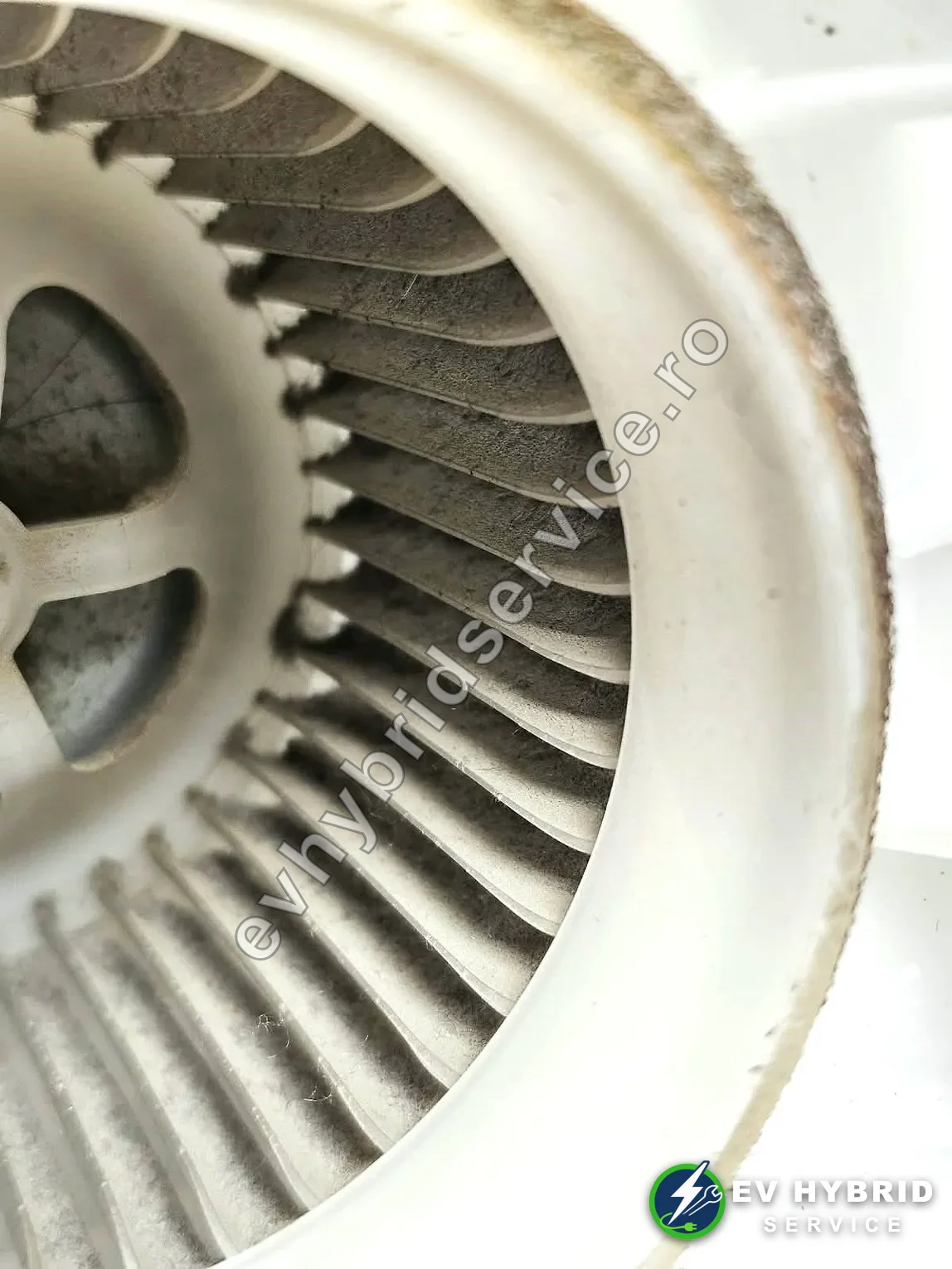
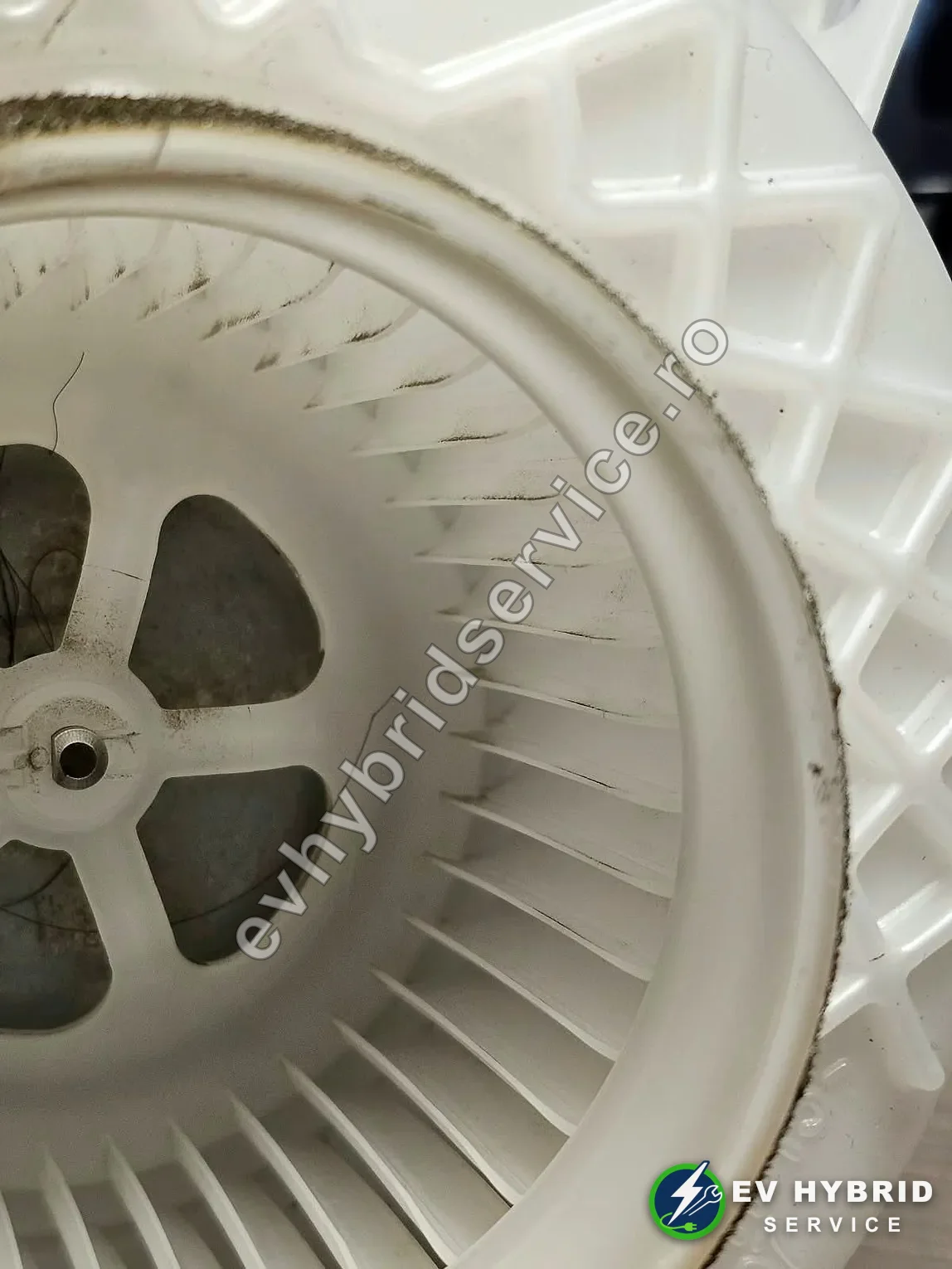
We cleared the dust and dirt off the battery fans, so air flows freely and the cooling does its job.
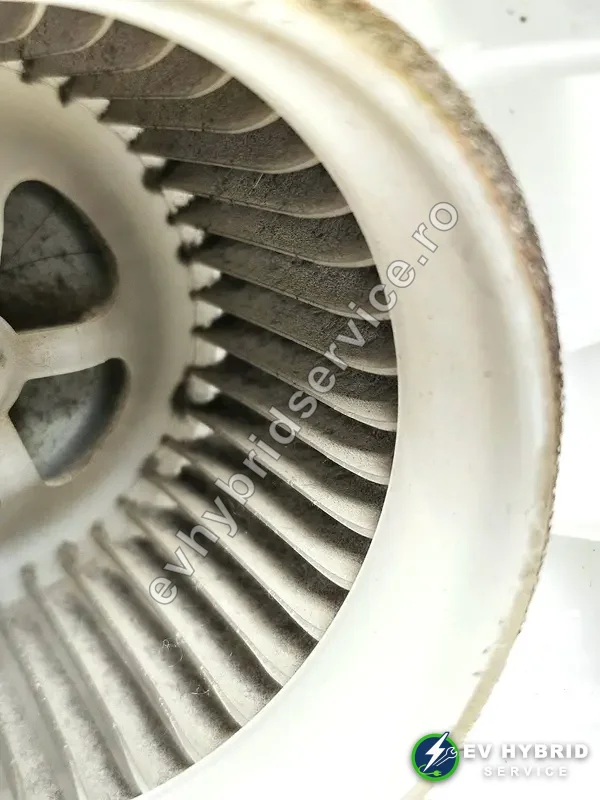
The battery cooling fan, before: dust on the blades. 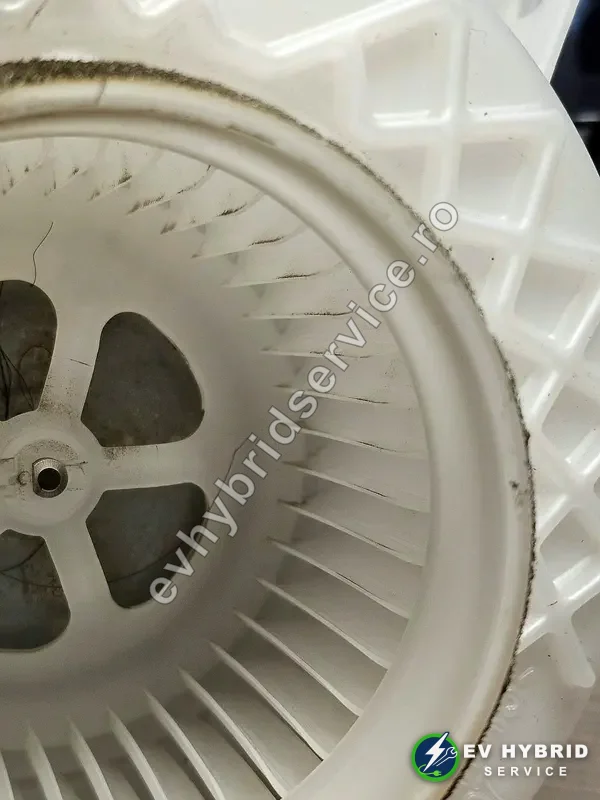
The fan, after cleaning.
Before and after
When it came in
- Modules at 40–60% SOH, worn unevenly
- Deposits and oxidation on the connections
- Dust on the cooling fans
At handover
- Connections cleaned and checked
- Clean fans, free airflow to the battery
- Modules kept, regular monitoring recommended
When a hybrid battery service is worth it
- The battery fan runs more often or louder than before
- The engine starts more often and the battery empties faster
- The car has many years or many kilometres, even with no faults
- The battery has been replaced before and you want to know its state now
Do you have a Toyota hybrid and want to know how long the battery will last? We measure every module and tell you exactly where you stand.
Book a battery test →Frequently asked questions
What does a 40–60% state of health (SOH) mean on a C-HR battery?
That the modules can store only about half the energy of a module in good condition. The car drives, but the battery is well worn and replacing modules may become necessary.
Does cleaning the battery bring its capacity back?
No. Maintenance does not restore the cells’ lost capacity, but it reduces the heat and contact resistance that speed up wear, so the battery can be used for longer in its current state.
Why do differences between modules matter?
Because the modules work in series. A weaker one discharges and heats up faster, unbalances the battery and, over time, can trigger hybrid system faults.
How often should a worn hybrid battery be checked?
When the modules are already at 40–60%, we recommend regular checks, to see early whether the differences between them grow and when replacement becomes necessary.
Photos from the job
Tap a photo to see it full size; use the arrows to browse.
The battery out of the car, on the workbench.
Every module, clipped separately to the test bench.
The bench leads, connected to the modules for measuring.
The connections between modules, with deposits and traces of oxidation.
The row of modules, with the bus bars.
Removing the bus bars to get at the contacts.
The bus bar plate, removed: deposits on the nut seats.
The connection nuts, before cleaning.
The same nuts, cleaned.
The bus bars, fitted on the modules.
The battery cooling fan, before: dust on the blades.
The fan, after cleaning.
Read next
Battery repairs
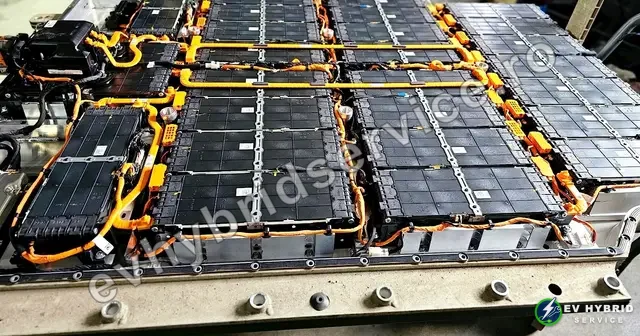
Hyundai Kona Electric losing coolant with no error on the dashboard: how we repaired the cooling circuit of the high-voltage battery
A 2024 Hyundai Kona Electric was losing a lot of fluid from the battery cooling circuit, though the dashboard showed nothing. After a hard impact, a pipe had cracked. We replaced it, sealed the small cracks, and the battery stayed on the car.
3 min read
Battery repairs
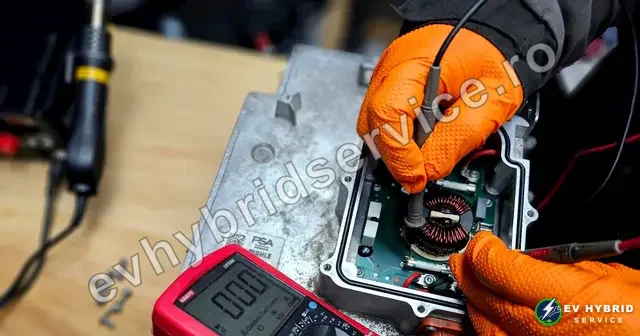
Opel Combo Electric that would no longer charge from a socket: how we repaired the on-board charger without replacing it
A 2024 Opel Combo Electric would no longer charge its battery from a socket. The culprit was the on-board charger, where one of the low-voltage electronic supplies had stopped working properly. We repaired it, and the original charger stayed on the car.
2 min read
Battery repairs
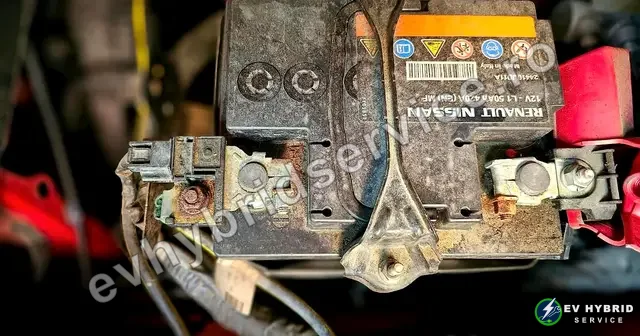
Nissan Leaf 40 kWh with communication errors and insulation faults: how we restored the 12 V supply and repaired the high-voltage insulation
A Nissan Leaf 40 kWh had errors in a chain and no longer talked to its climate system. Where it all started: the oxidised terminals of the 12 V battery. Once we restored the supply, diagnosis also turned up high-voltage insulation faults, which we fixed.
2 min read