
Workshop job ·
Toyota Auris II Hybrid with code P0A80 that would not start: how we repaired the high-voltage battery by replacing every worn module
A 2014 Auris II Hybrid came in on a recovery truck, its dash full of warning lights and code P0A80. Unlike other cases, the fault was real: every module in the battery was far below its capacity. We replaced them with bench-checked modules, in 24 hours.
- this time, a very real fault
- P0A80this time, a very real fault
- modules replaced with bench-checked modules
- Allmodules replaced with bench-checked modules
- from diagnosis to handover
- 24 hfrom diagnosis to handover
- the car starts at once again
- READYthe car starts at once again
The problem
A 2014 Toyota Auris II came in on a recovery truck: it had stalled, would not start and its dash was full of warning lights. The tester found code P0A80, “Replace Hybrid Battery Pack”.
The diagnosis
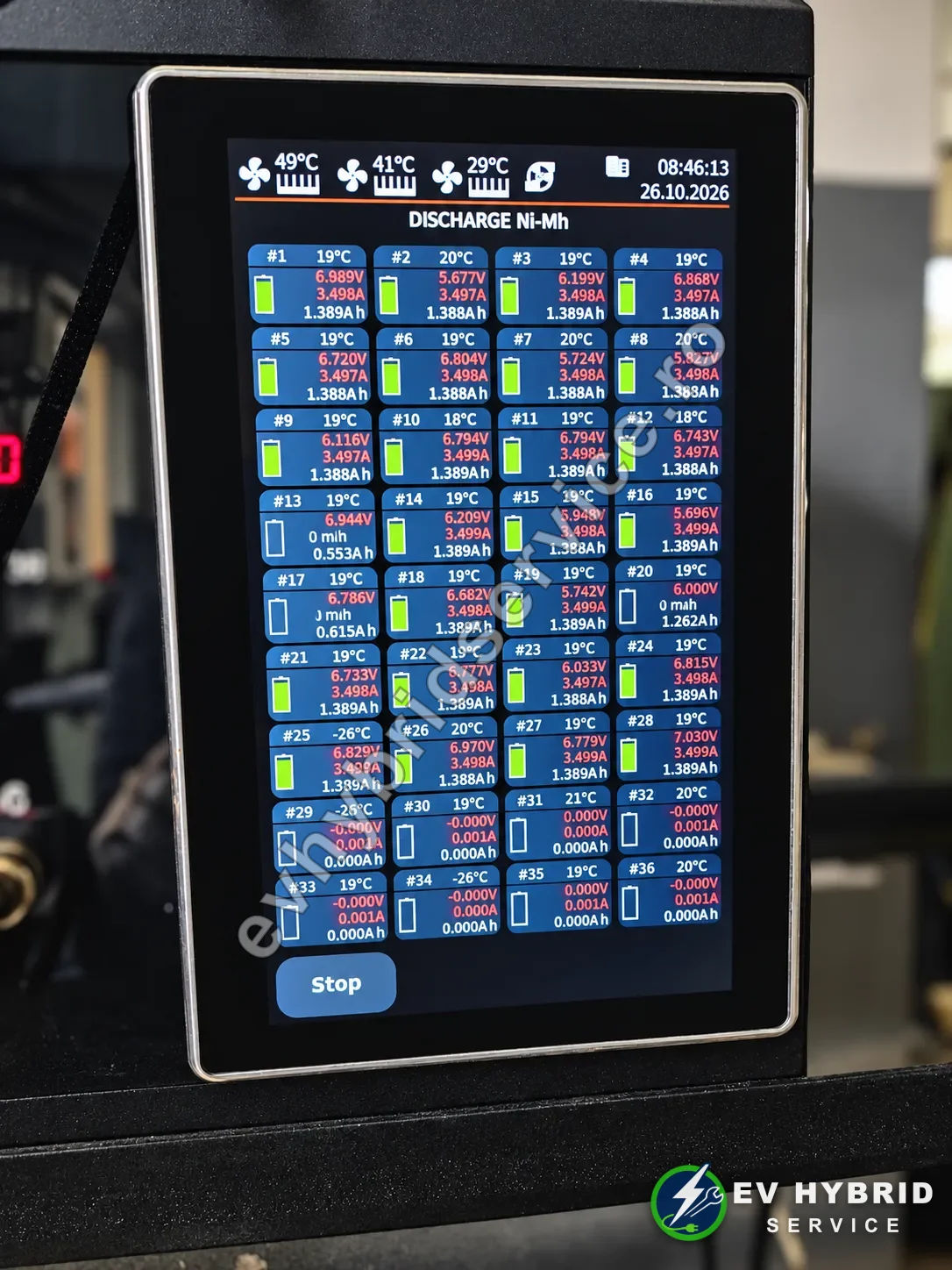
The capacity test on the bench showed that this time the fault was real: every module in the battery was far below its rated capacity, and high internal resistance across the whole pack had led the computer to block the start.
The fix
The owner chose reconditioning over a new battery from the dealer. We replaced every worn module with bench-checked modules, cleaned the bus bars and the fan, then balanced the battery in software.
The result
P0A80 is gone, the car goes READY at once and the energy management works perfectly. 24 hours.
This time, the code was telling the truth
The Auris, a 2014 second generation, reached us on a recovery truck. It had stalled and would not start, its dash was full of warning lights, and a serious message sat in its memory. At the first scan with the dedicated tester we found code P0A80 (Replace Hybrid Battery Pack).
This code can be false, so we did not take it as a verdict. We took the traction battery out of the car and put it through a full, controlled charge and discharge cycle on the bench. The result was severe: unlike the cases where one or two modules give out, here every module was badly worn and working far below its rated capacity. High internal resistance, added up across the whole pack, was confusing the battery electronics, and the car’s computer was blocking the hybrid system from starting to protect it.
The job, step by step
Step 1
Take out the battery
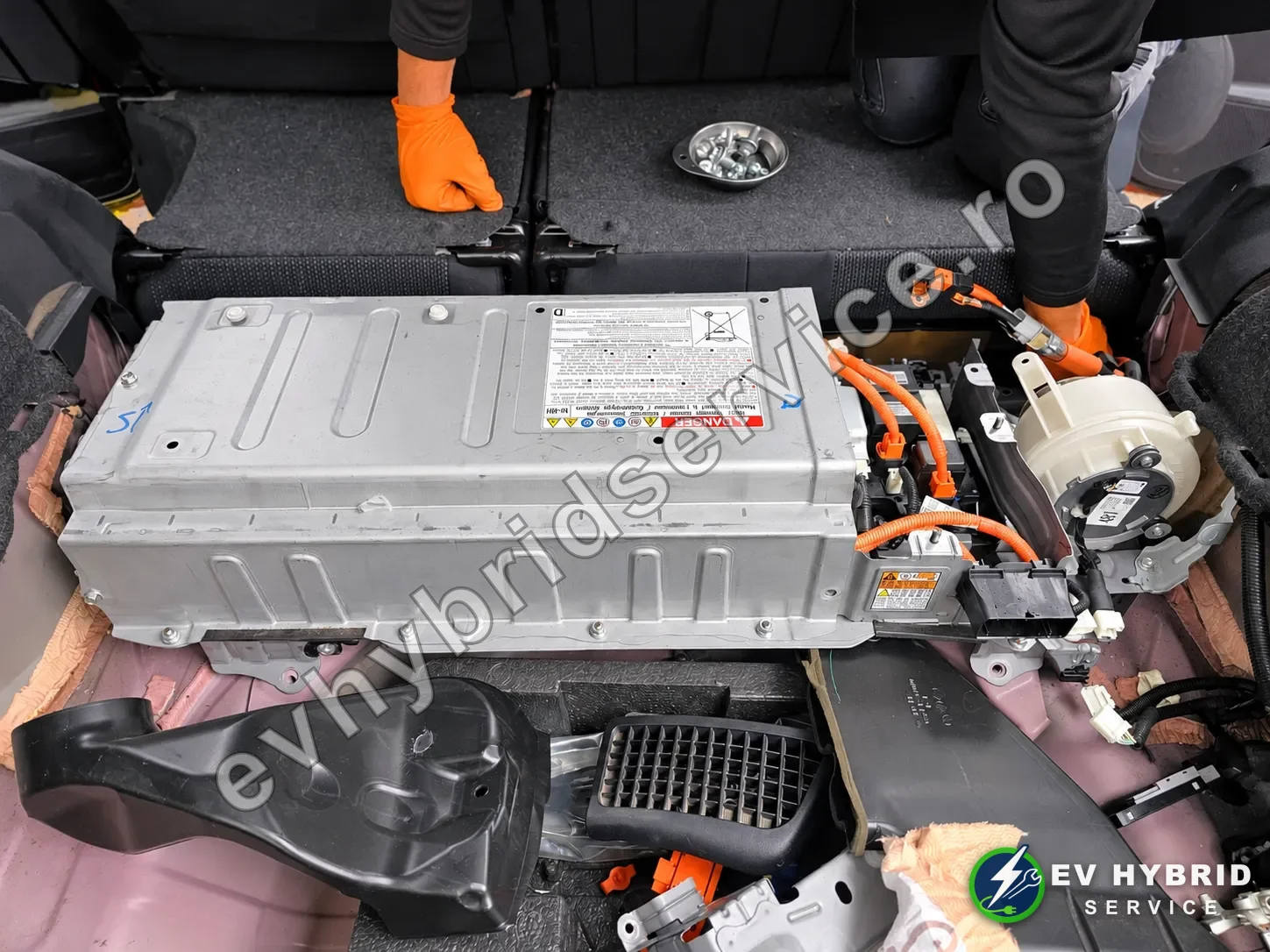
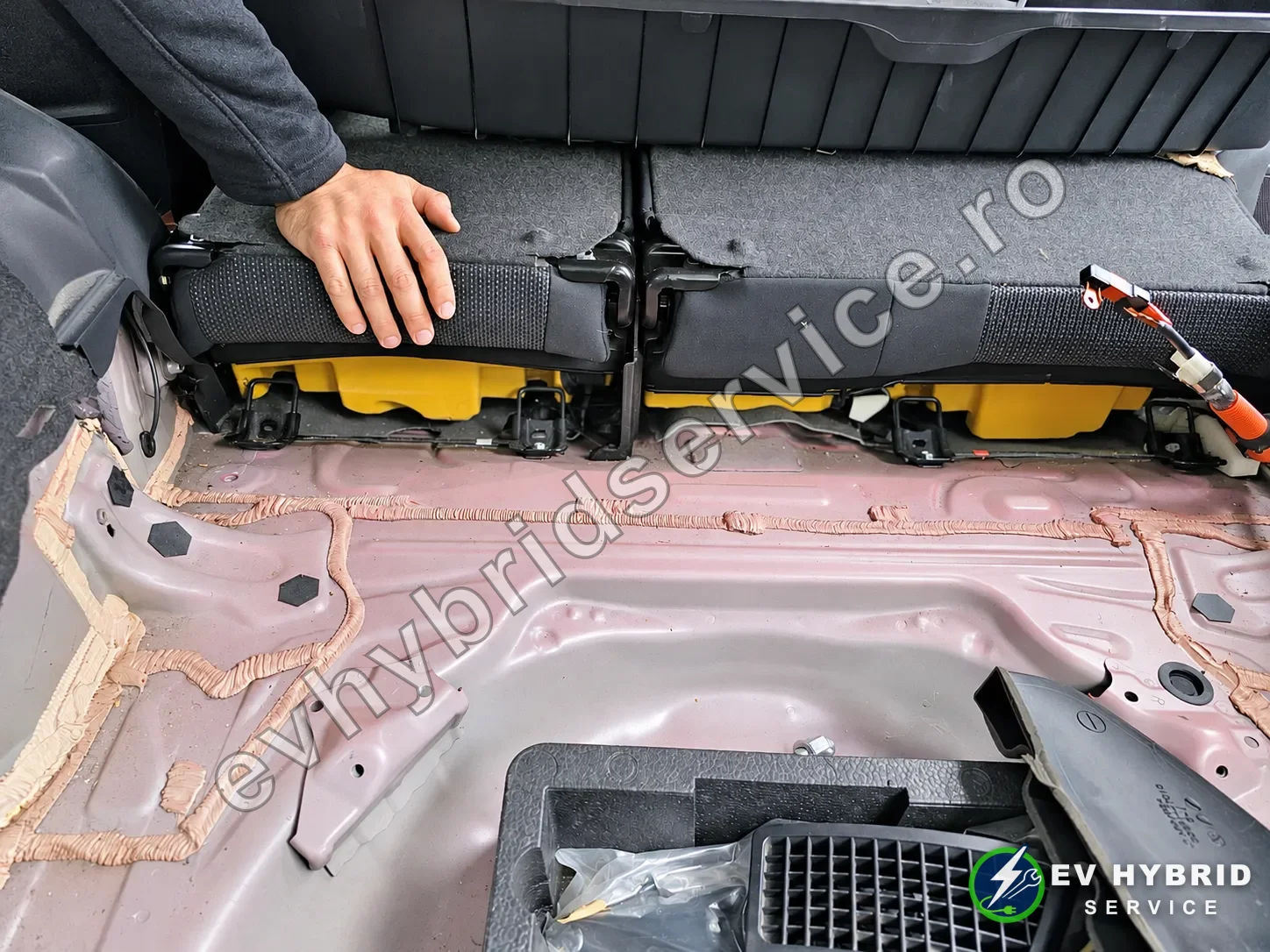
On the Auris the high-voltage battery sits under the rear seat. We shut down the system and removed the battery from the car.
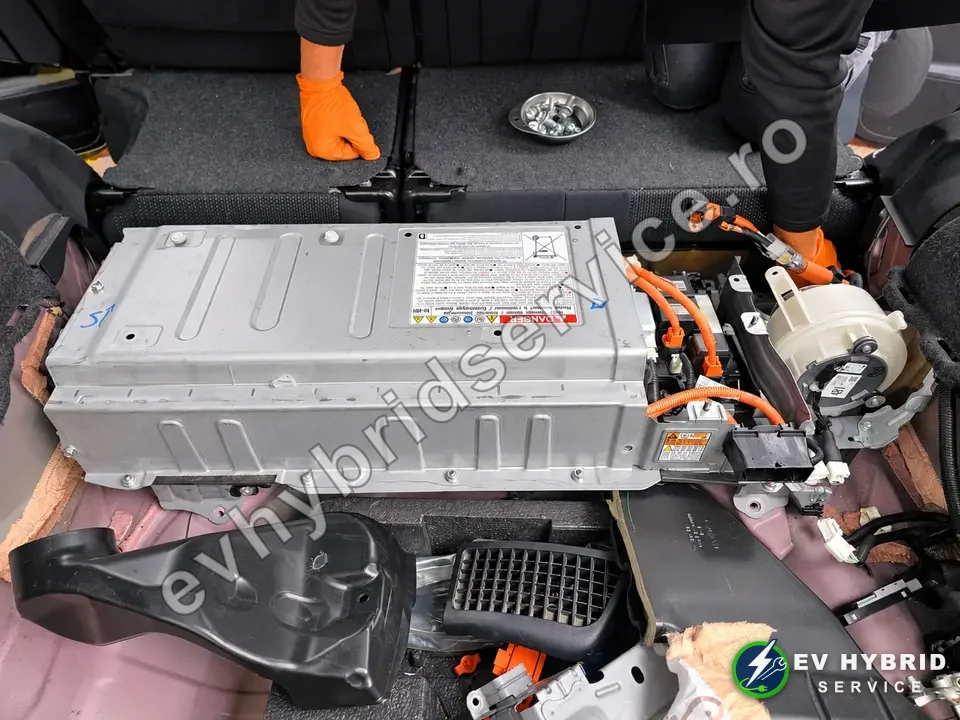
The high-voltage battery sits under the rear seat. 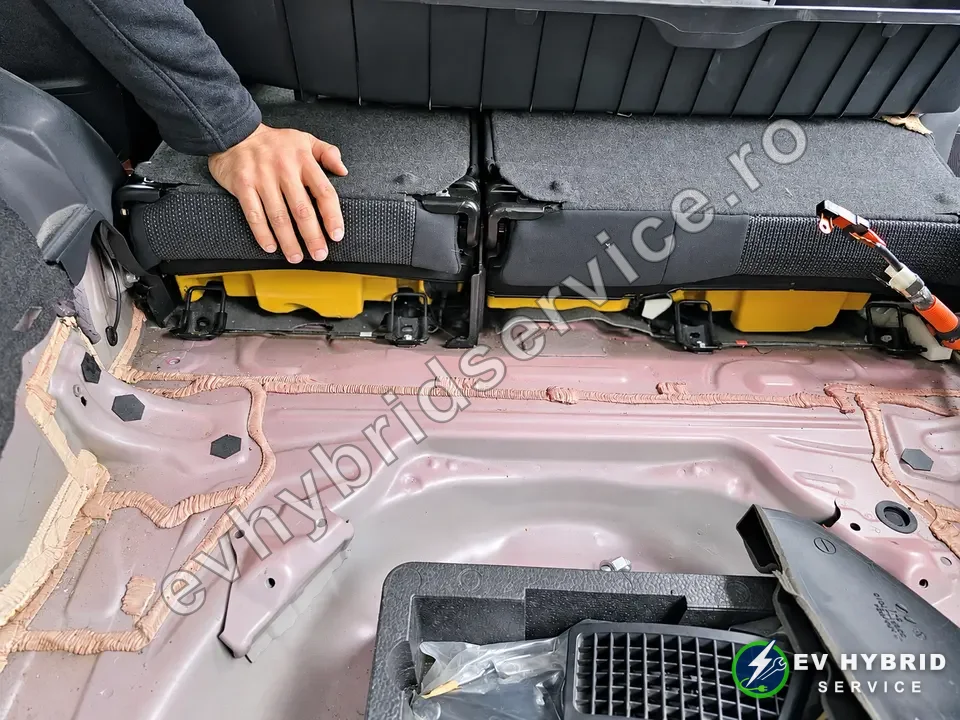
The battery’s place, empty, once we had taken it out. Step 2
The bench test
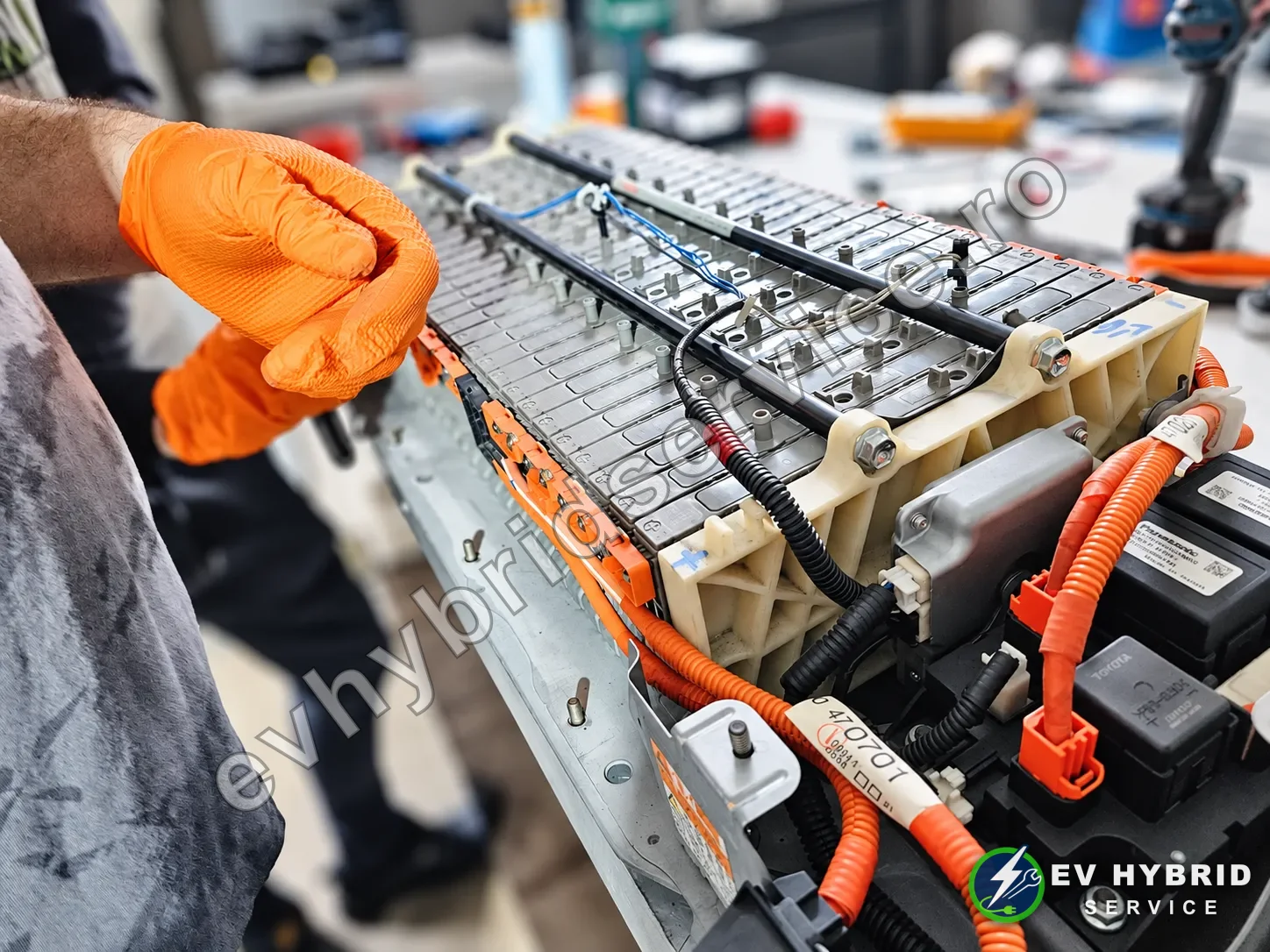
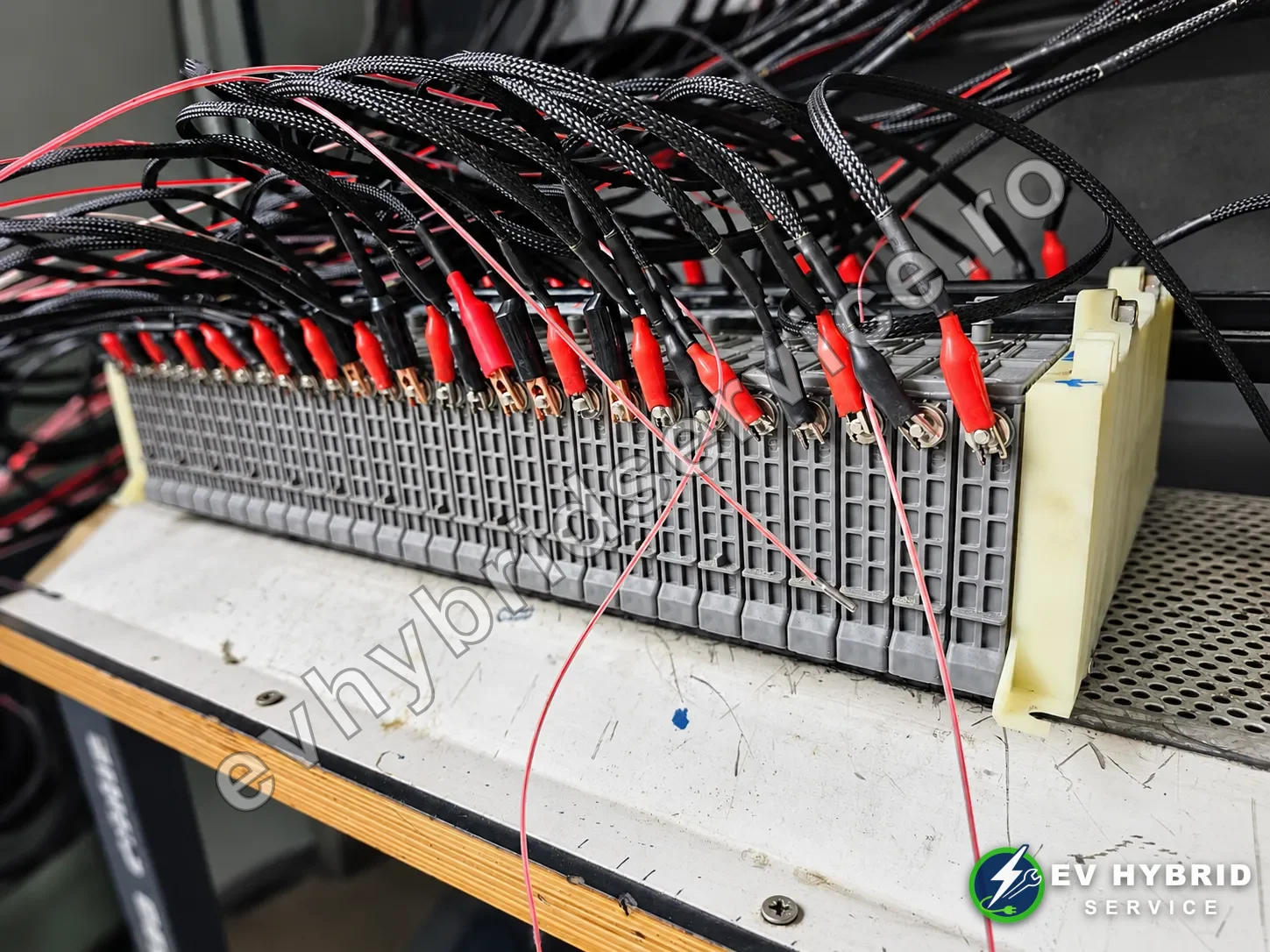
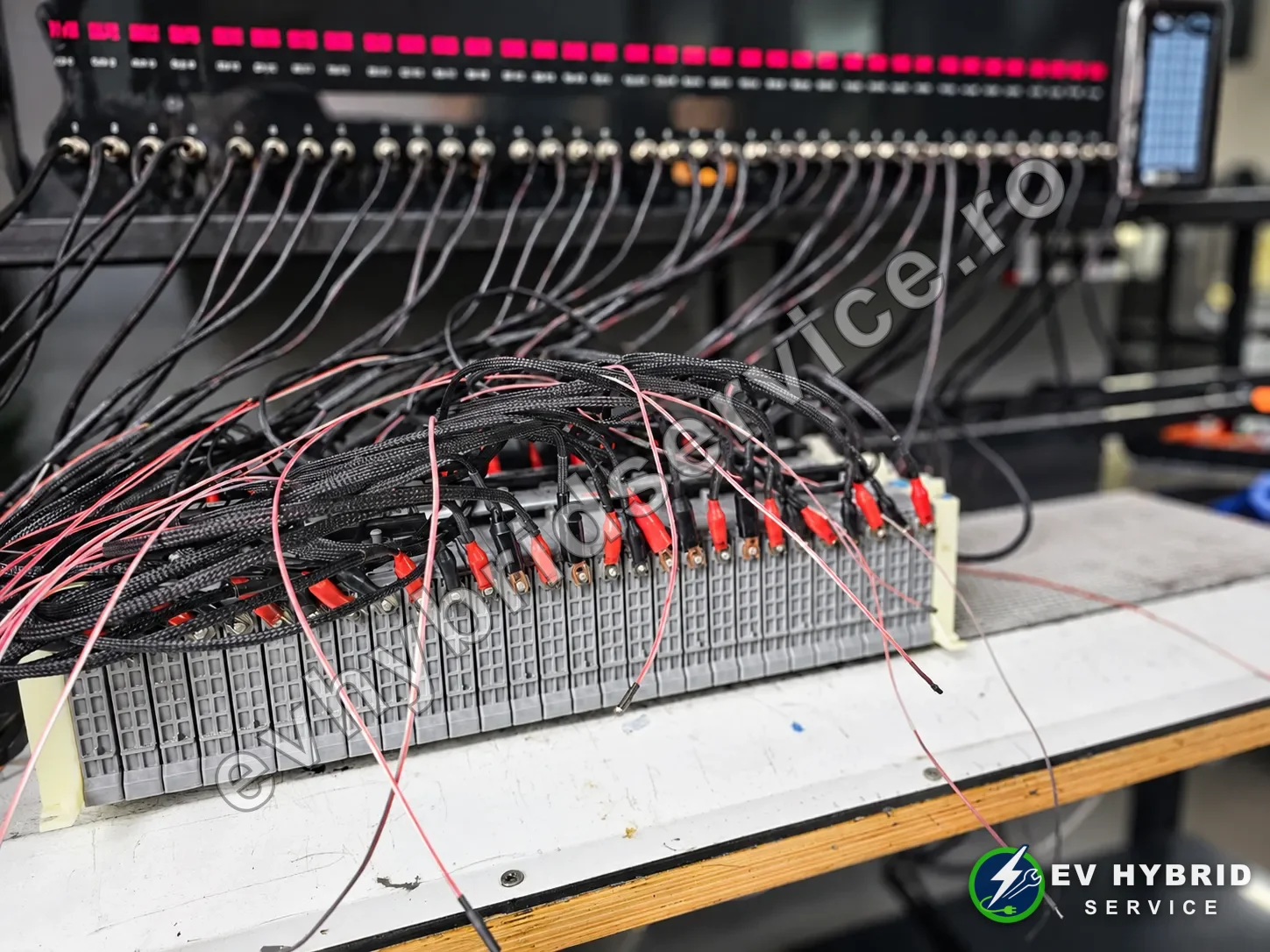
We opened the battery, wired every module to the test bench and ran a full charge and discharge cycle. The test showed every module was far below its rated capacity.
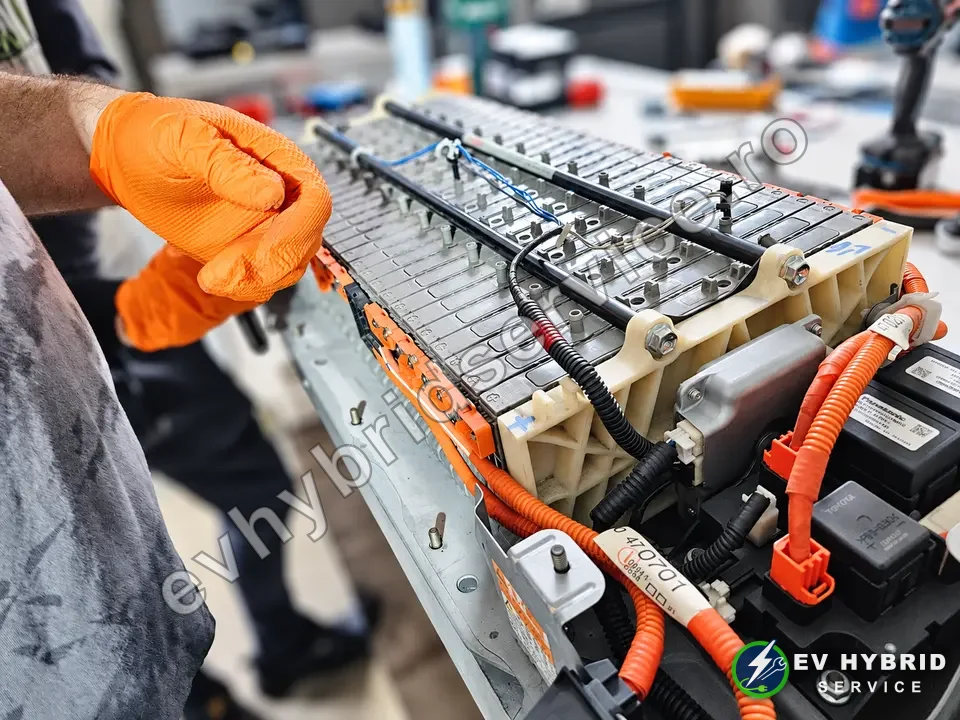
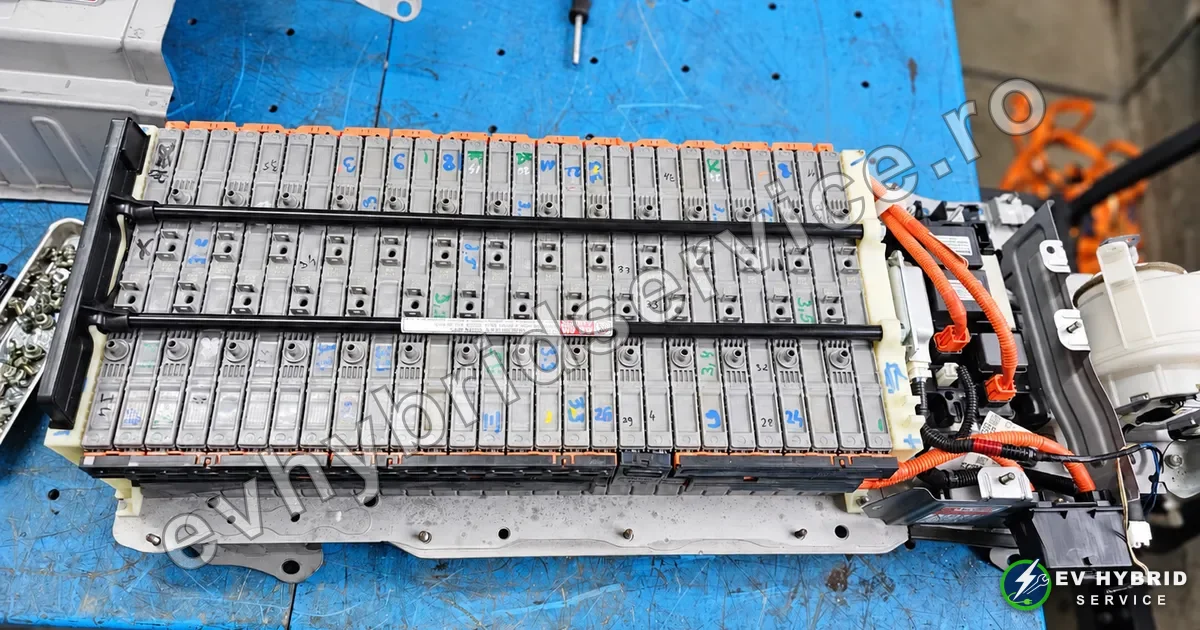
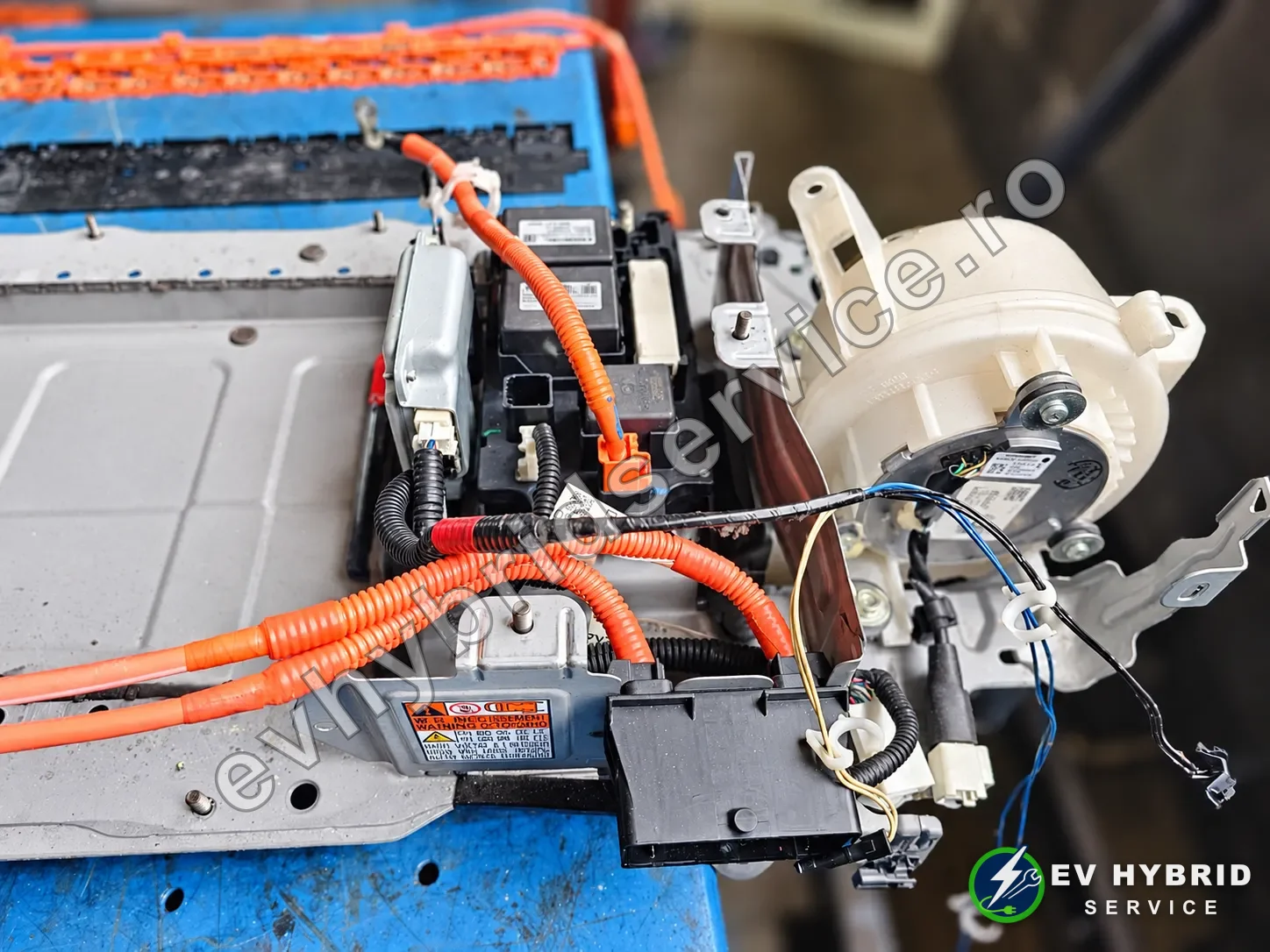
The battery opened on the bench: the NiMH modules, the wiring and the battery electronics. 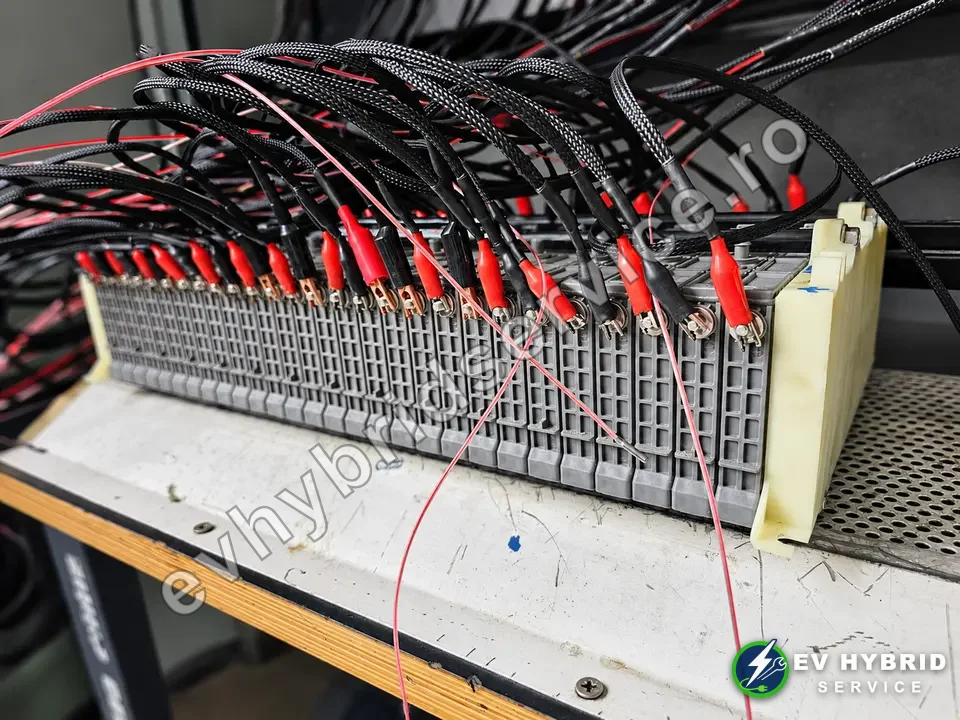
Every module wired to the test bench. 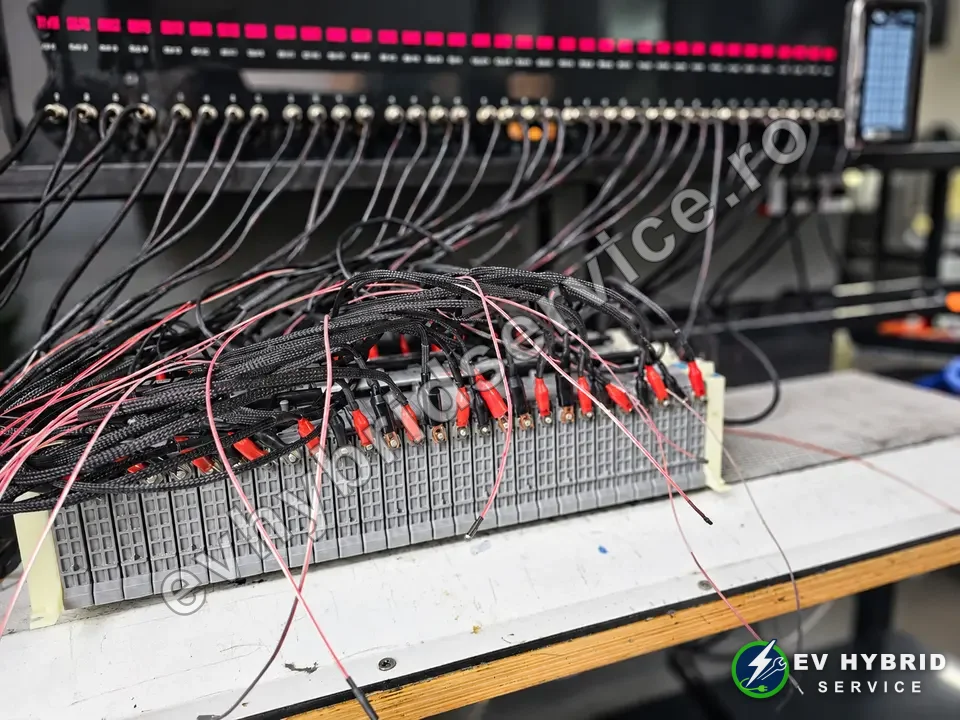
The controlled charge and discharge cycle, on every module. 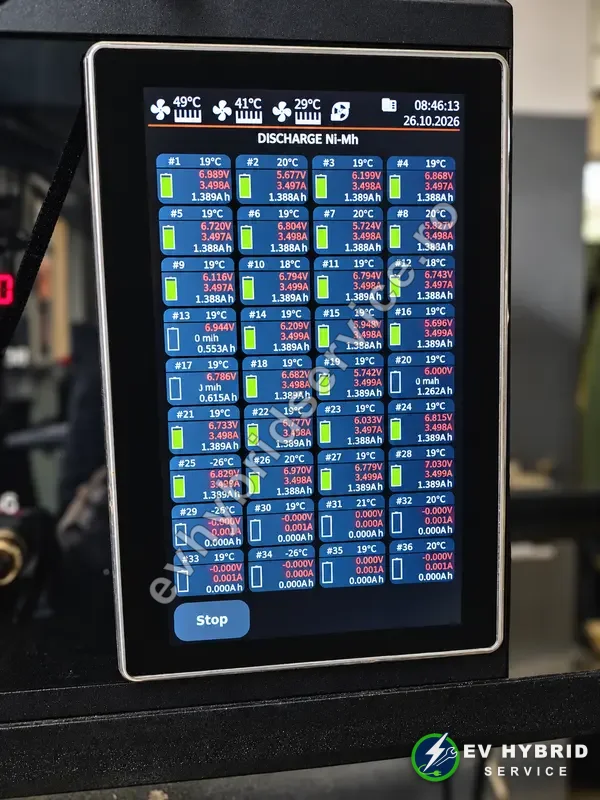
The tester screen, as the modules discharge. Step 3
The owner’s decision
We gave the owner the detailed technical report. They chose to avoid the very high cost of a new battery from the dealer and to go for reconditioning.
Step 4
Replace every module
We took out every worn module and fitted working modules in their place, thoroughly checked on the test bench for good capacity and minimal internal resistance.
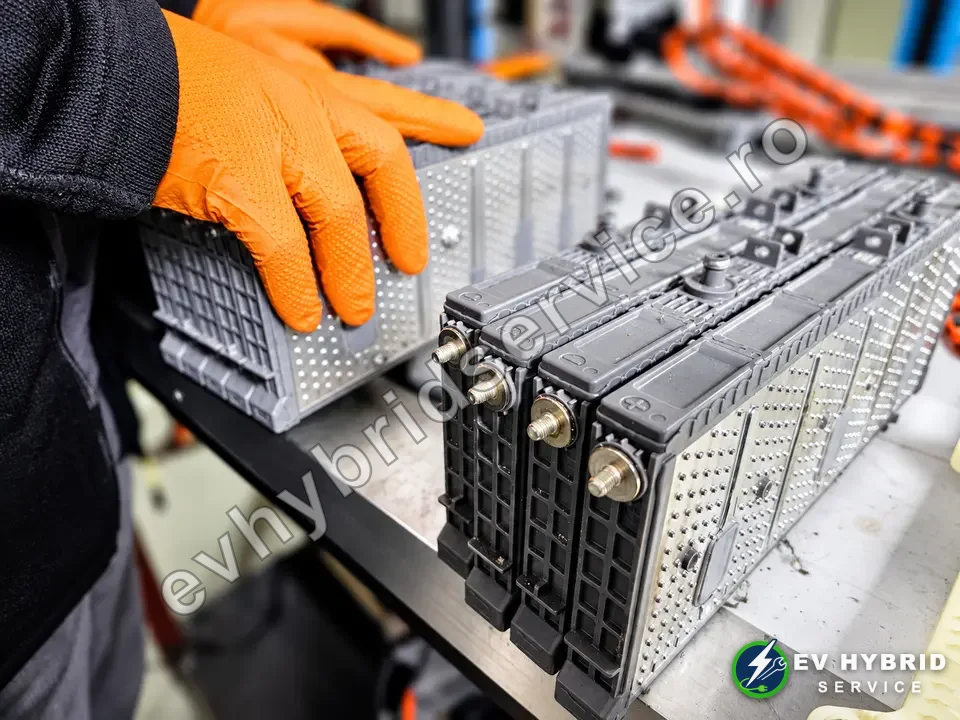
The modules, out of their housing. 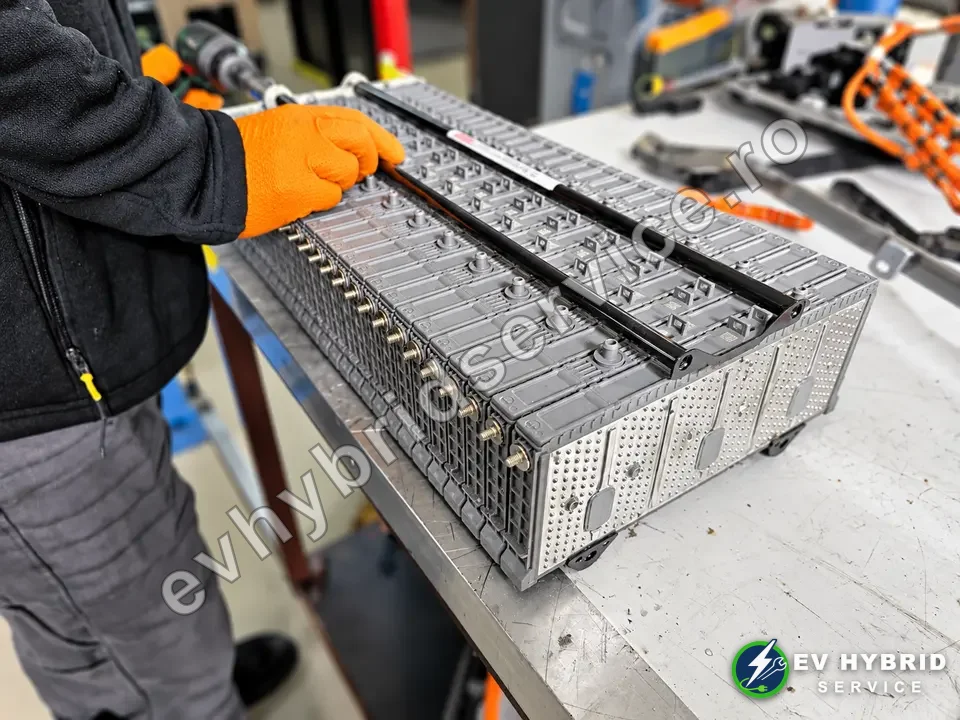
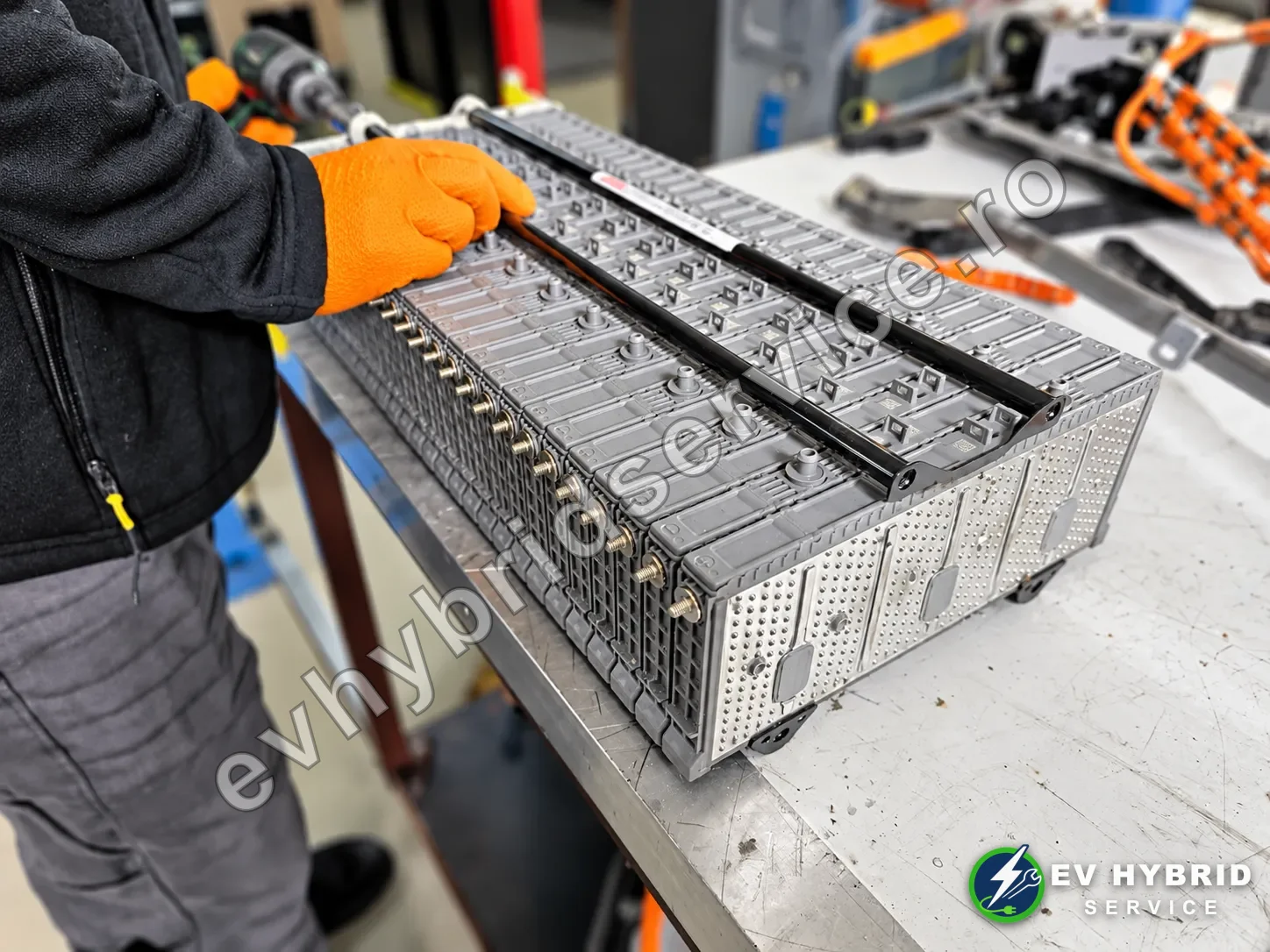
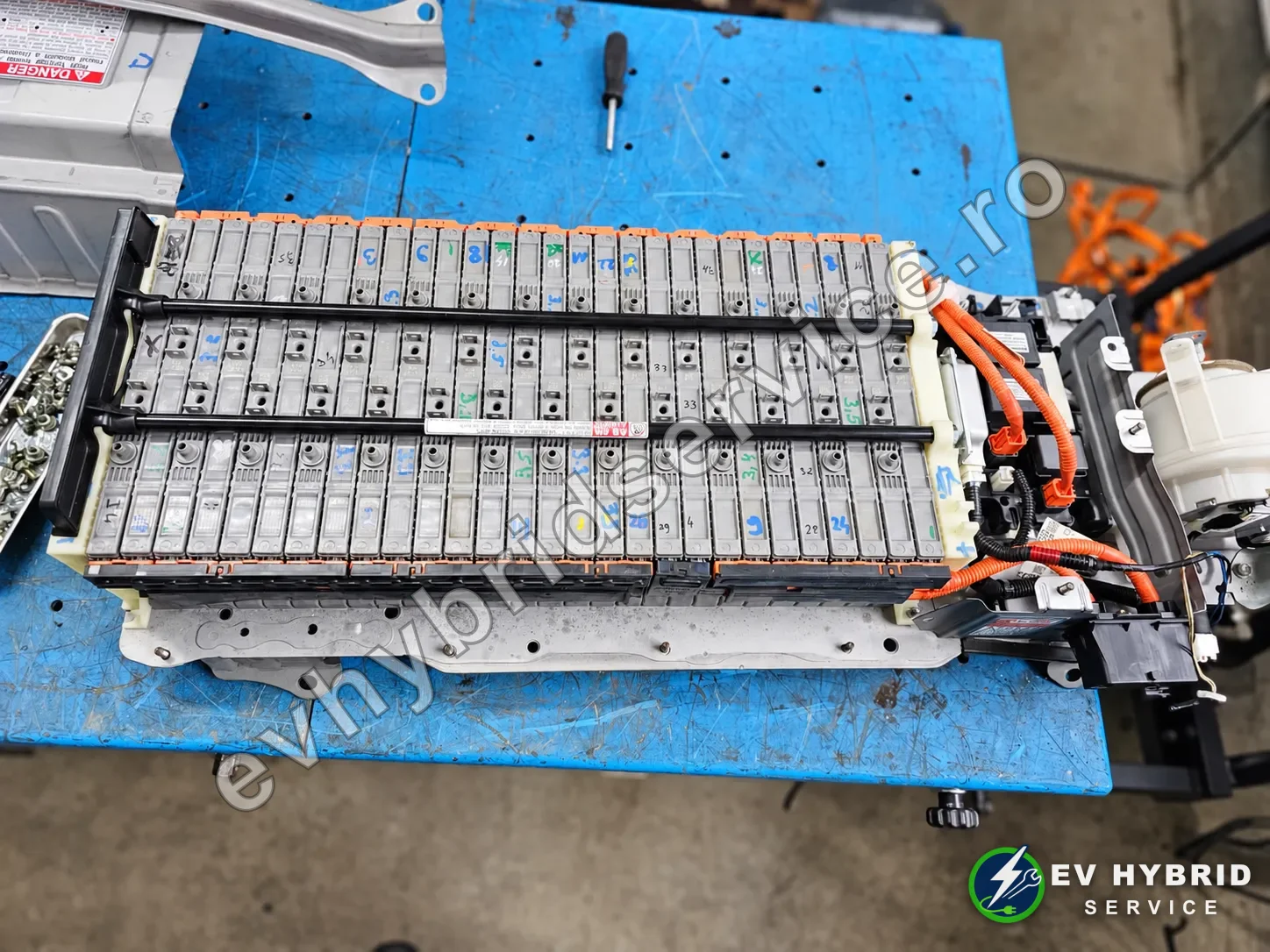
The module stack, on the bench. 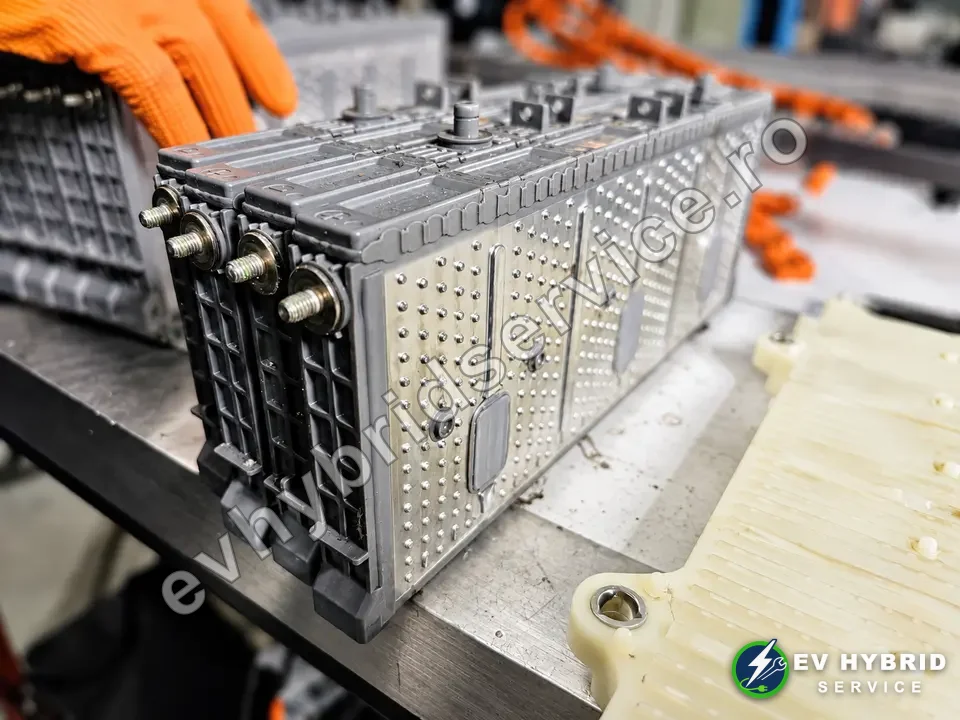
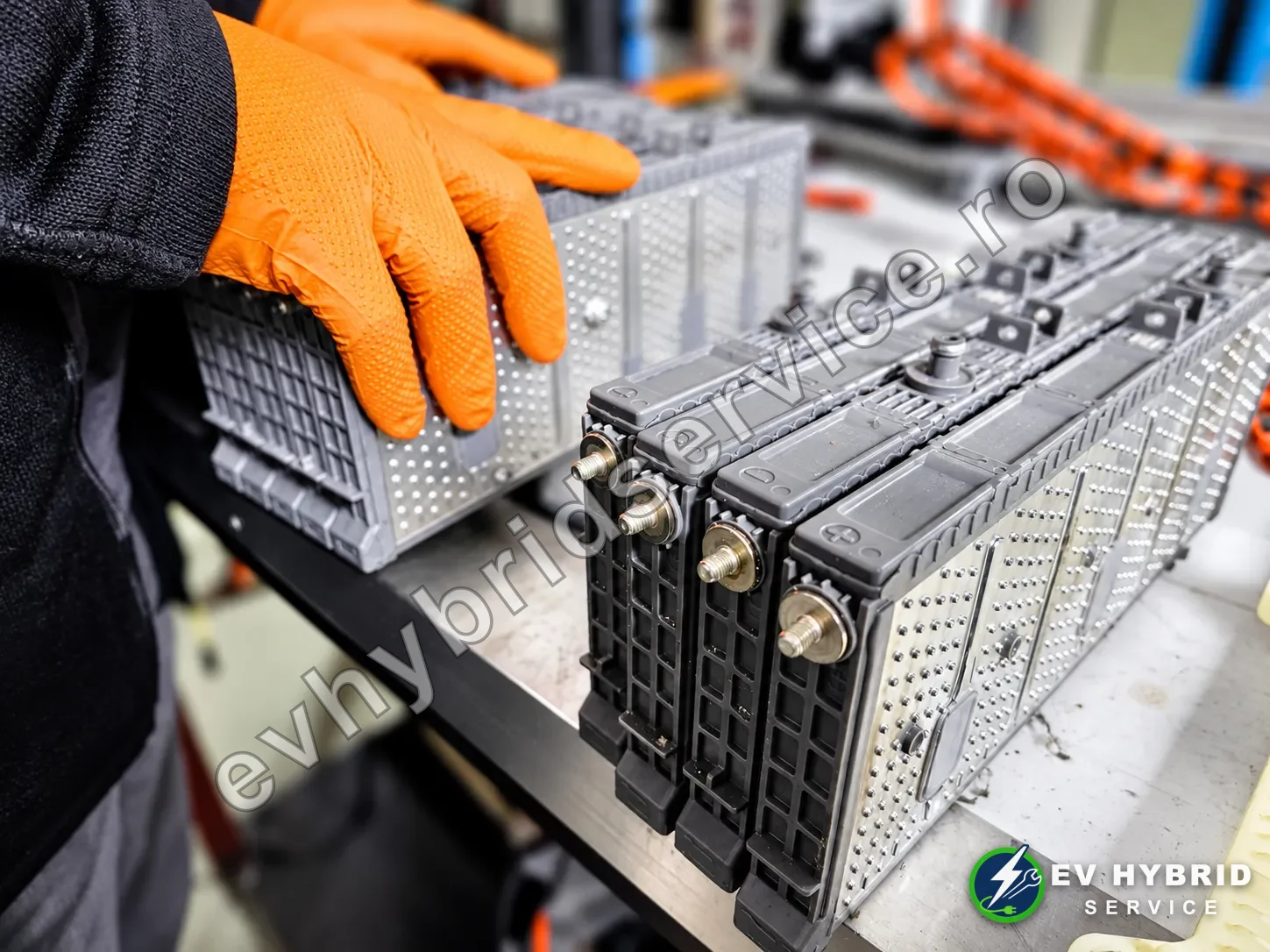
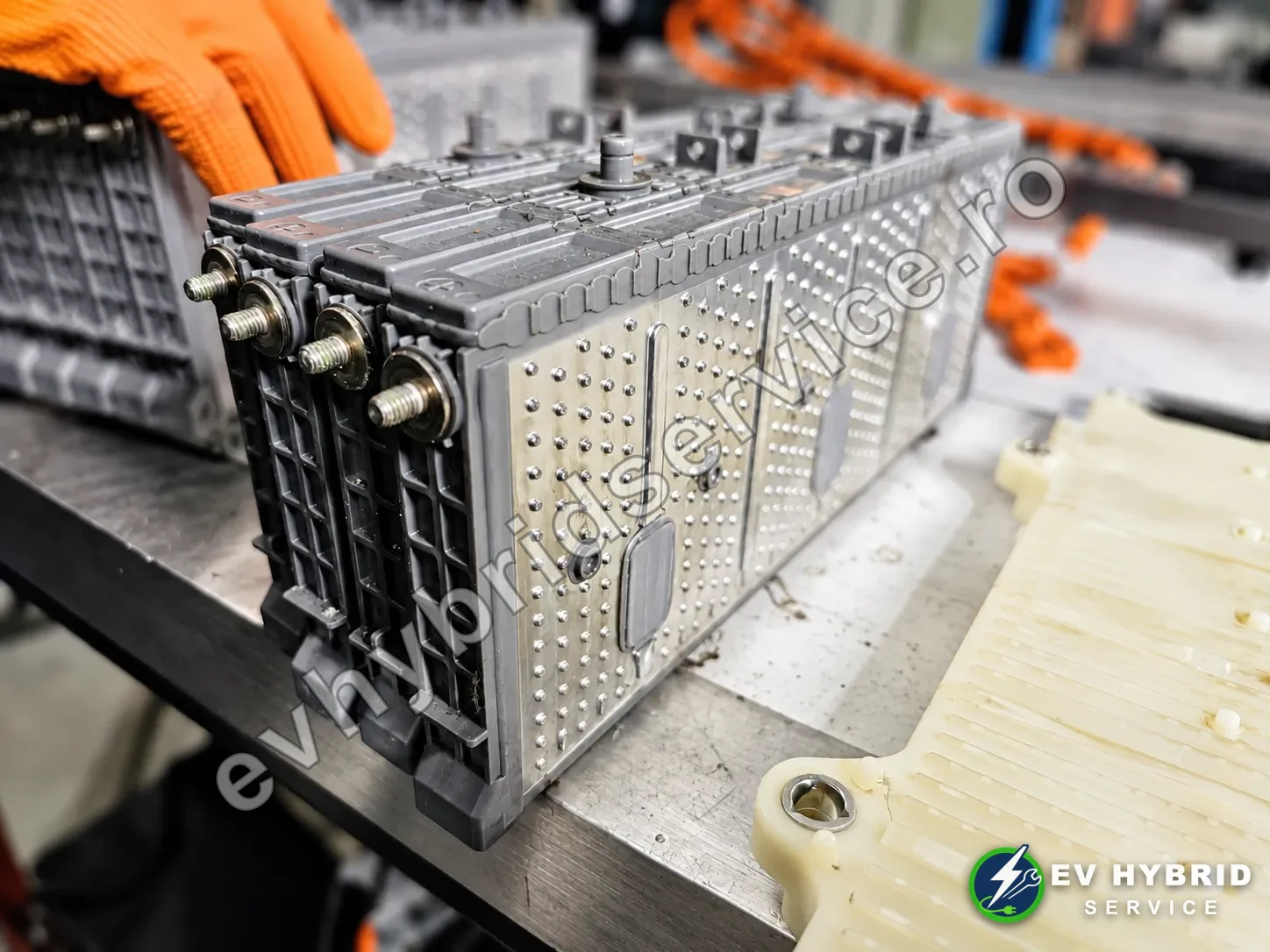
The modules up close, with their terminals. 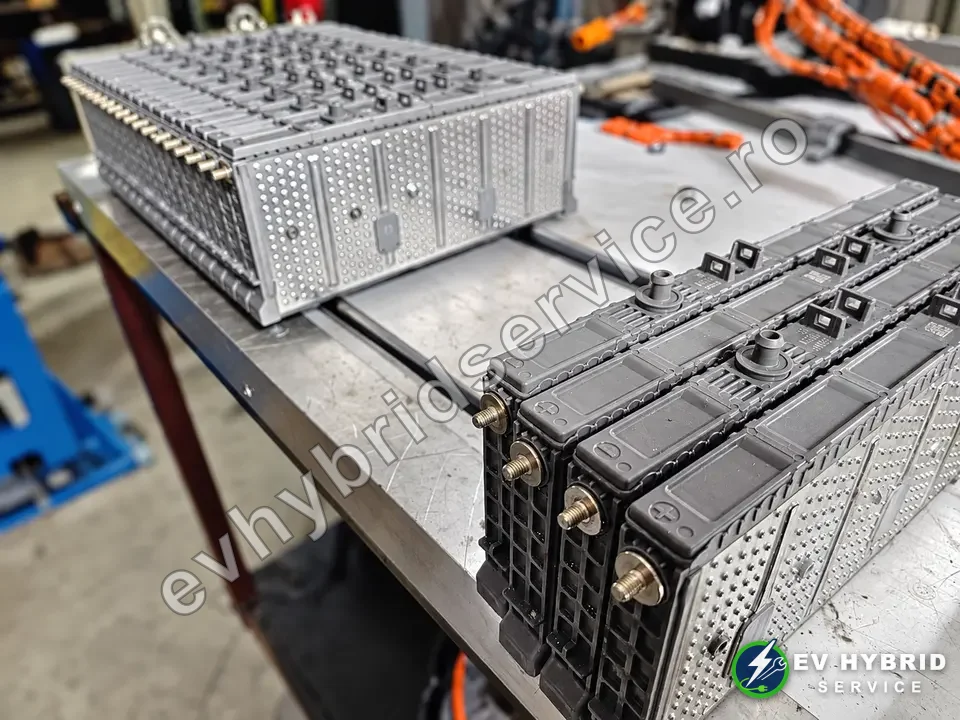
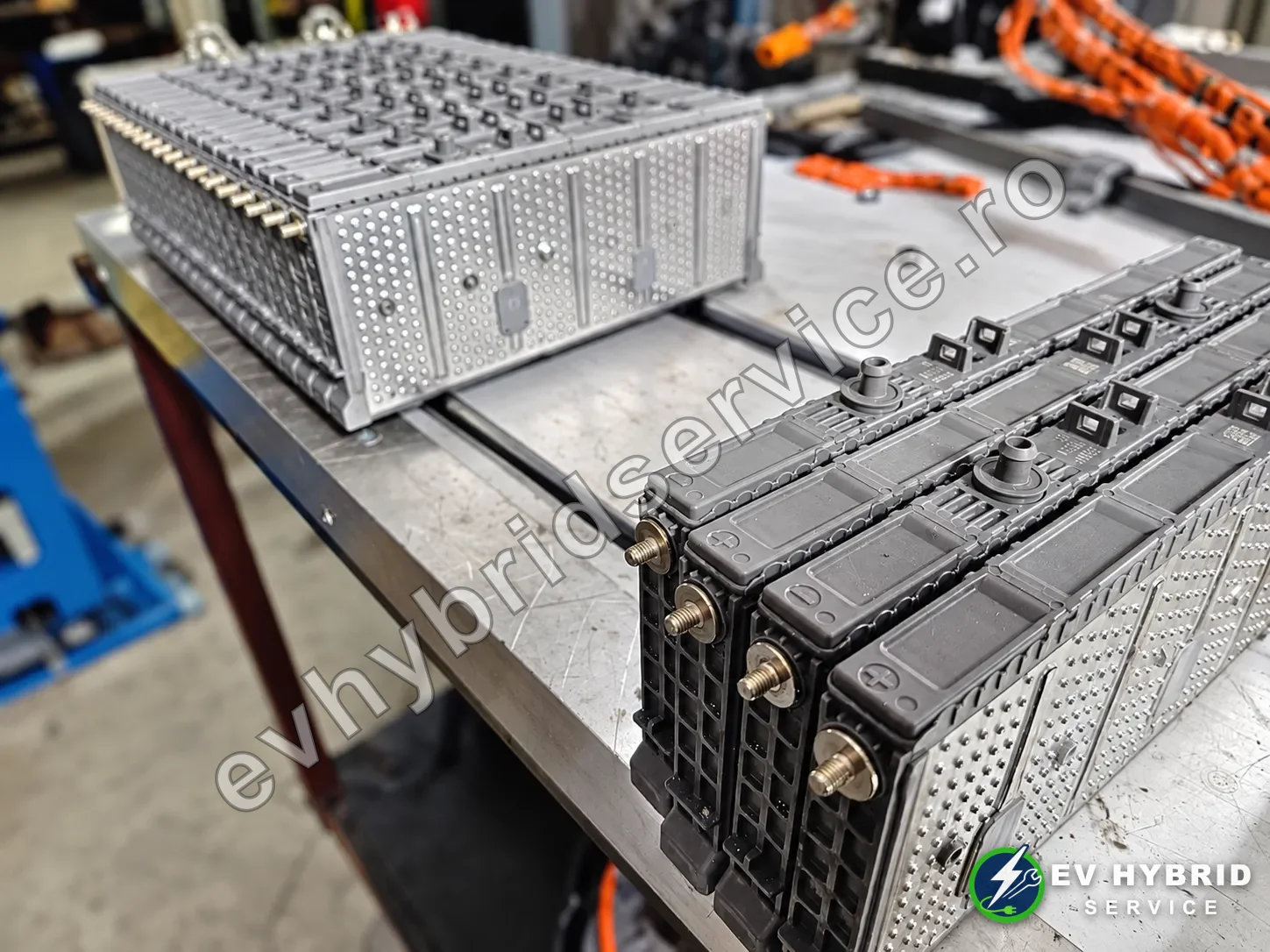
The modules ready to be fitted. Step 5
Bus bars and fan
We cleaned every copper bus bar to get rid of the oxidation and cleaned out the cooling fan, so the new modules will not overheat.
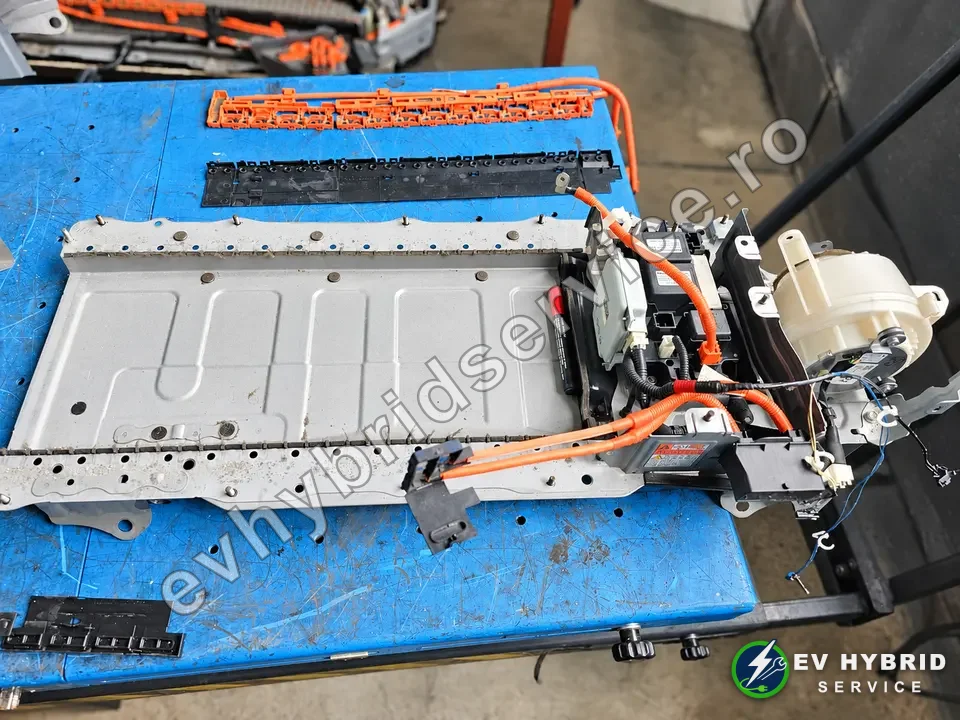
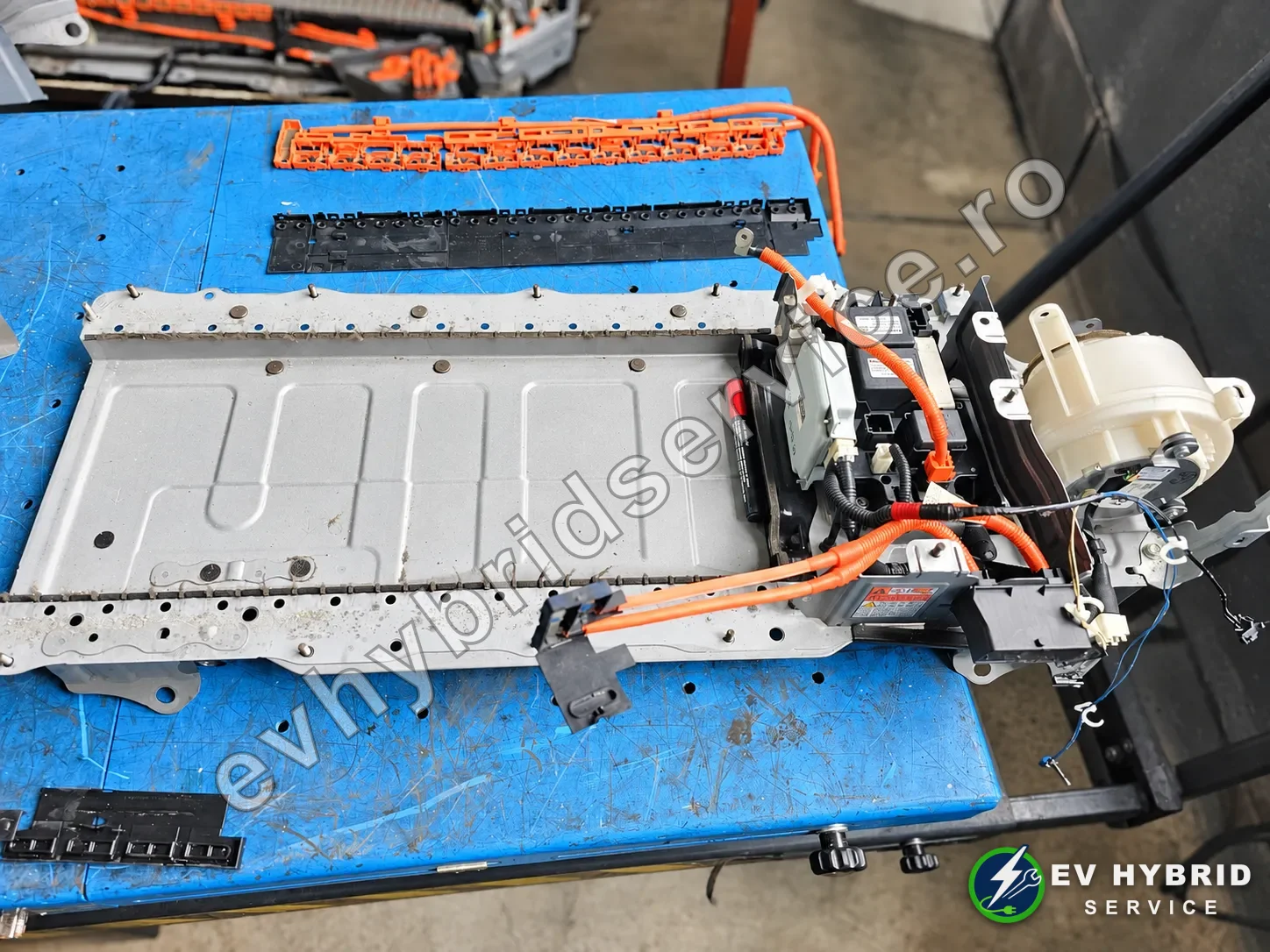
The battery housing, emptied of modules, with the fan at one end. 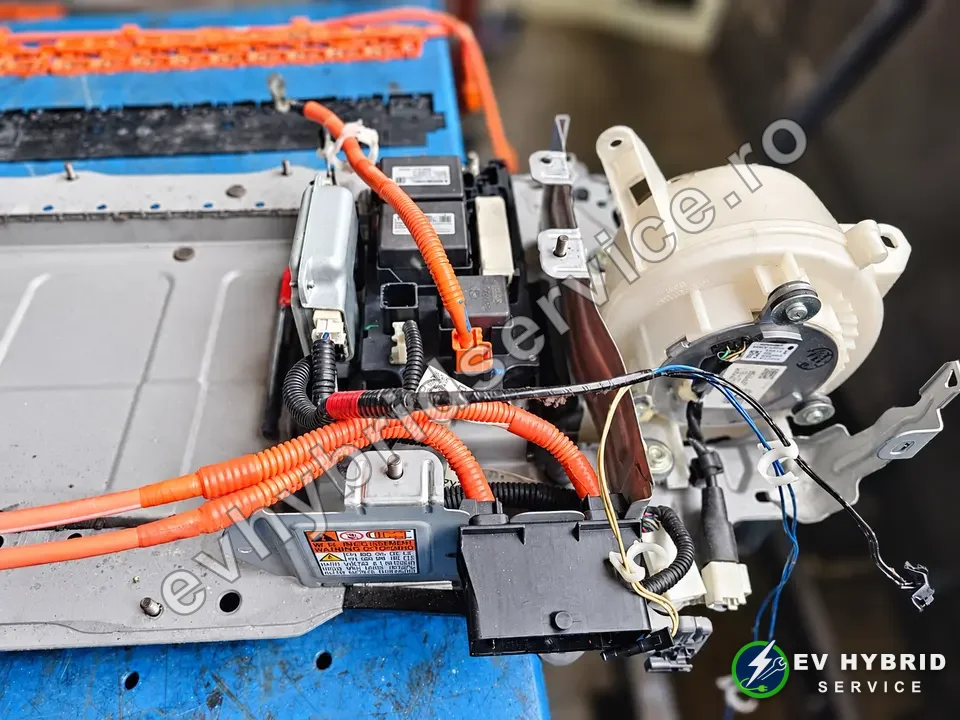
The cleaned cooling fan, at the end of the housing. Step 6
Refit and balance
We fitted the reconditioned battery back in the car, then ran the initialisation and voltage balancing procedure from the diagnostic software.
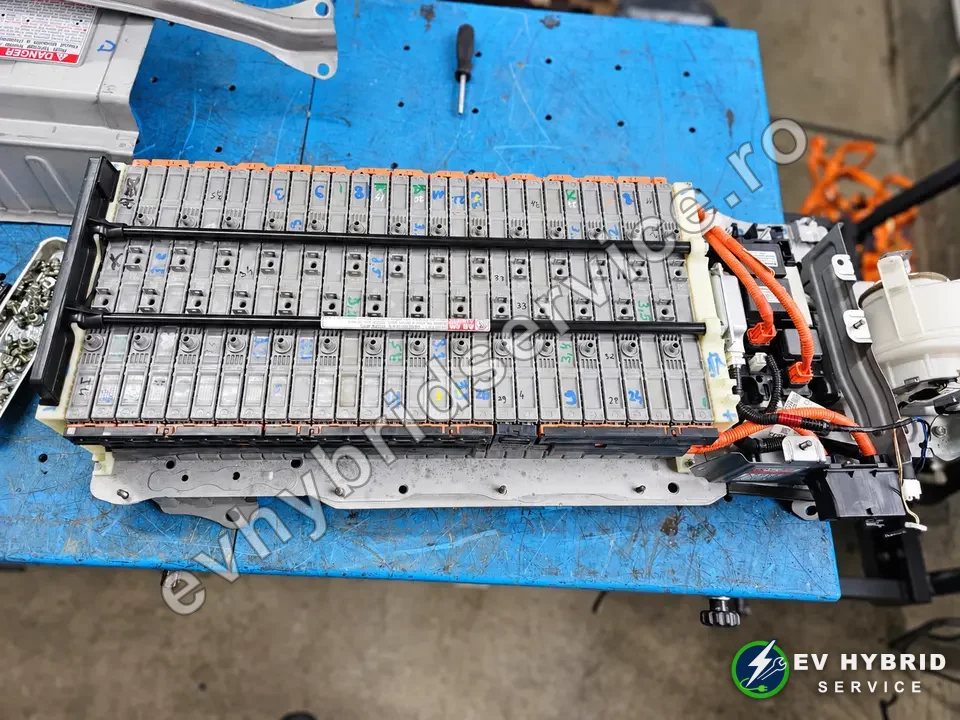
The battery reassembled, with the replaced modules. Step 7
Retest and road test
At the final retest and on the road tests the readings were excellent. P0A80 is gone, the car goes READY at once and the energy management works perfectly. The job took 24 hours.
Before and after
When it came in
- Brought in on a truck
- Would not start
- Code P0A80, real this time
- Every module far below capacity
At handover
- Every module replaced
- Bus bars and fan cleaned
- Battery balanced in software
- READY at once, no faults
Signs that a Toyota hybrid battery is tiring
- The petrol engine starts more and more often, even in town
- The battery charge gauge rises and falls very quickly
- Fuel use goes up for no other reason
- The hybrid system warning or code P0A80 appears
Does your hybrid Toyota show code P0A80, or will it no longer start? We test the battery module by module and tell you plainly whether it can be repaired, and how.
Book a battery test →Frequently asked questions
Is reconditioning worth it when every module is worn?
For many owners, yes: reconditioning costs far less than a new battery from the dealer. We show you the test report and the options, and the decision is yours, as it was here.
Why not replace just a few modules?
Because the test showed every module was far below its capacity. Replace only some, and the old modules left behind drag the whole pack down and the fault returns. When the wear is general, we replace every module.
What does software balancing do after fitting?
It brings every module to the same voltage and “introduces” the reconditioned battery to the car’s computer, so it manages it correctly from the very first drive.
Photos from the job
Tap a photo to see it full size; use the arrows to browse.
The high-voltage battery sits under the rear seat.
The battery’s place, empty, once we had taken it out.
The battery opened on the bench: the NiMH modules, the wiring and the battery electronics.
Every module wired to the test bench.
The controlled charge and discharge cycle, on every module.
The tester screen, as the modules discharge.
The modules, out of their housing.
The module stack, on the bench.
The modules up close, with their terminals.
The modules ready to be fitted.
The battery housing, emptied of modules, with the fan at one end.
The cleaned cooling fan, at the end of the housing.
The battery reassembled, with the replaced modules.
Read next
Battery repairs
Hyundai Kona Electric losing coolant with no error on the dashboard: how we repaired the cooling circuit of the high-voltage battery
A 2024 Hyundai Kona Electric was losing a lot of fluid from the battery cooling circuit, though the dashboard showed nothing. After a hard impact, a pipe had cracked. We replaced it, sealed the small cracks, and the battery stayed on the car.
3 min read
Battery repairs
Opel Combo Electric that would no longer charge from a socket: how we repaired the on-board charger without replacing it
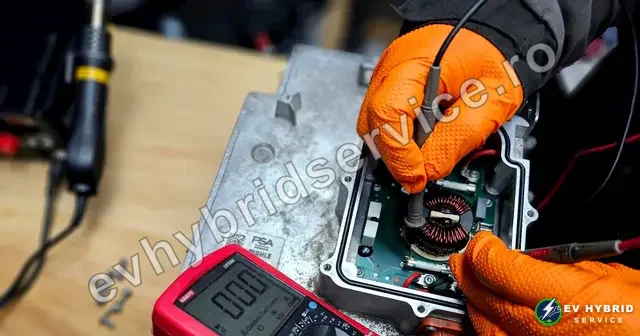
A 2024 Opel Combo Electric would no longer charge its battery from a socket. The culprit was the on-board charger, where one of the low-voltage electronic supplies had stopped working properly. We repaired it, and the original charger stayed on the car.
2 min read
Battery repairs
Nissan Leaf 40 kWh with communication errors and insulation faults: how we restored the 12 V supply and repaired the high-voltage insulation
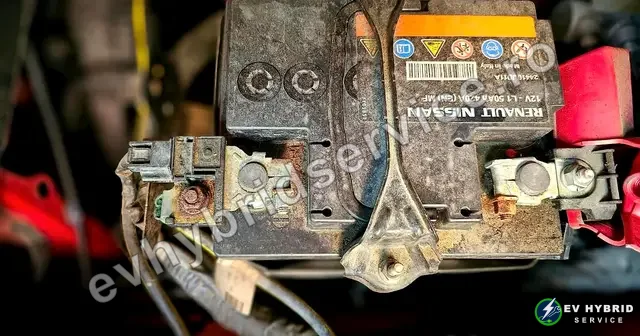
A Nissan Leaf 40 kWh had errors in a chain and no longer talked to its climate system. Where it all started: the oxidised terminals of the 12 V battery. Once we restored the supply, diagnosis also turned up high-voltage insulation faults, which we fixed.
2 min read