
Workshop job ·
Porsche Cayenne Hybrid stopped by a hybrid system fault: how we repaired the high-voltage battery circuit
A Cayenne 3.0 Hybrid came in on a recovery truck: it would not start or move. The cause was neither the battery nor the engine, but the air-conditioning compressor, which on a hybrid draws power straight from the high-voltage system.
- how the car arrived at the workshop
- On a truckhow the car arrived at the workshop
- high-voltage, the cause of the shutdown
- 1 compressorhigh-voltage, the cause of the shutdown
- compressor fitted once reconditioning was ruled out
- Newcompressor fitted once reconditioning was ruled out
- at the final diagnosis and road test
- 0 faultsat the final diagnosis and road test
The problem
The car came in on a recovery truck: it would neither start nor move.
The diagnosis
The air-conditioning compressor, powered by the high-voltage system, had failed and kept a safety fault active that locked the whole car.
The fix
We disabled it temporarily with the tester, removed it, tried to have it reconditioned by a partner, then fitted a new compressor.
The result
Full tests, diagnostics and a road test with no faults. The hybrid system works fully again.
Why the car would not start
The Cayenne came in on a recovery truck: it refused to start or move. Diagnosis with the dedicated tester quickly led to the source, the air-conditioning compressor. On hybrids and electric cars the compressor is no longer turned by the engine through a belt; it takes power straight from the high-voltage system. Its failure kept a permanent fault active in the safety system, and the car locked itself down completely.
The job, step by step
Step 1
Diagnosis
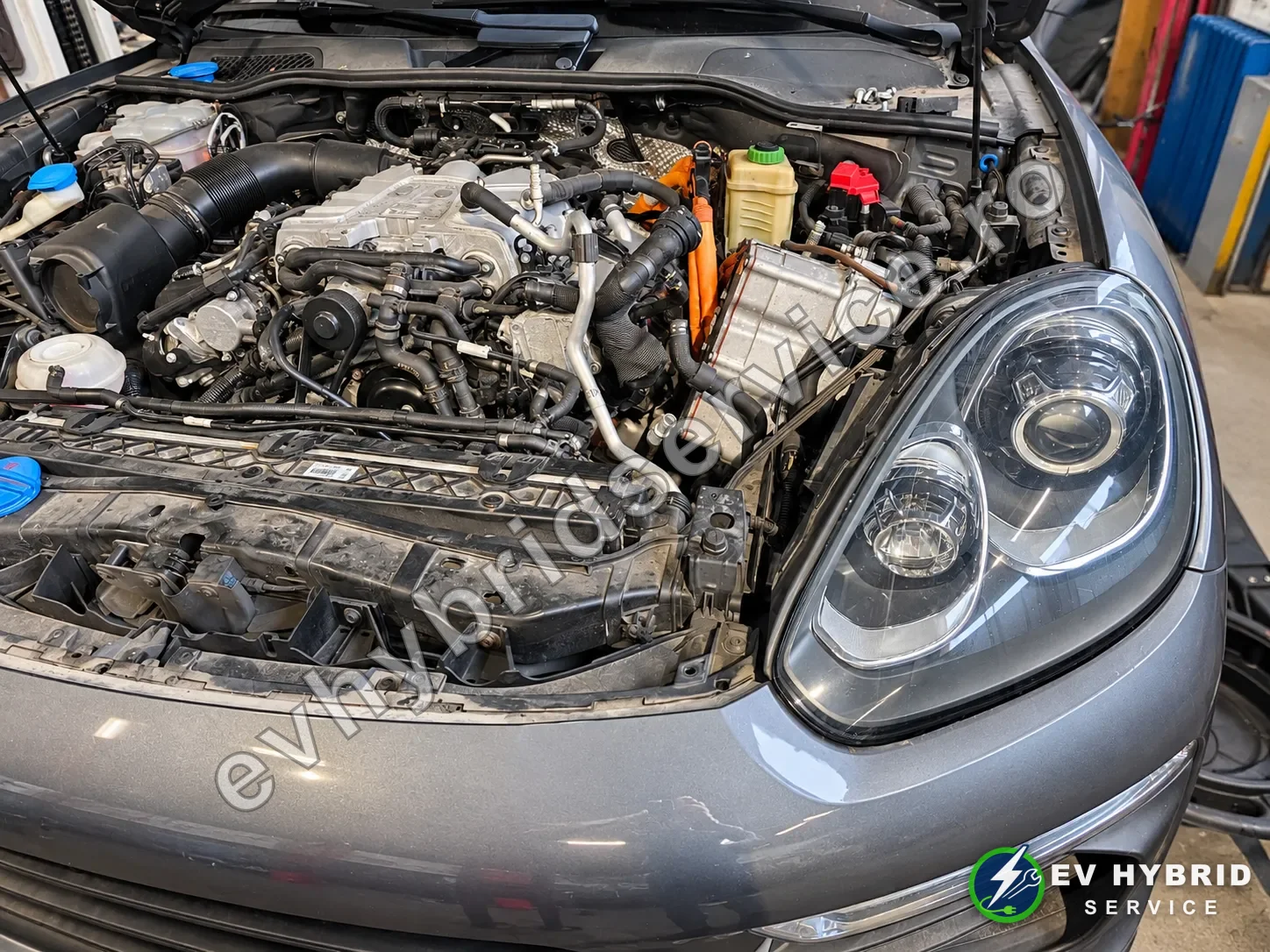
We read the fault codes with the dedicated tester and traced what was keeping the car locked. Every lead pointed to the air-conditioning compressor.
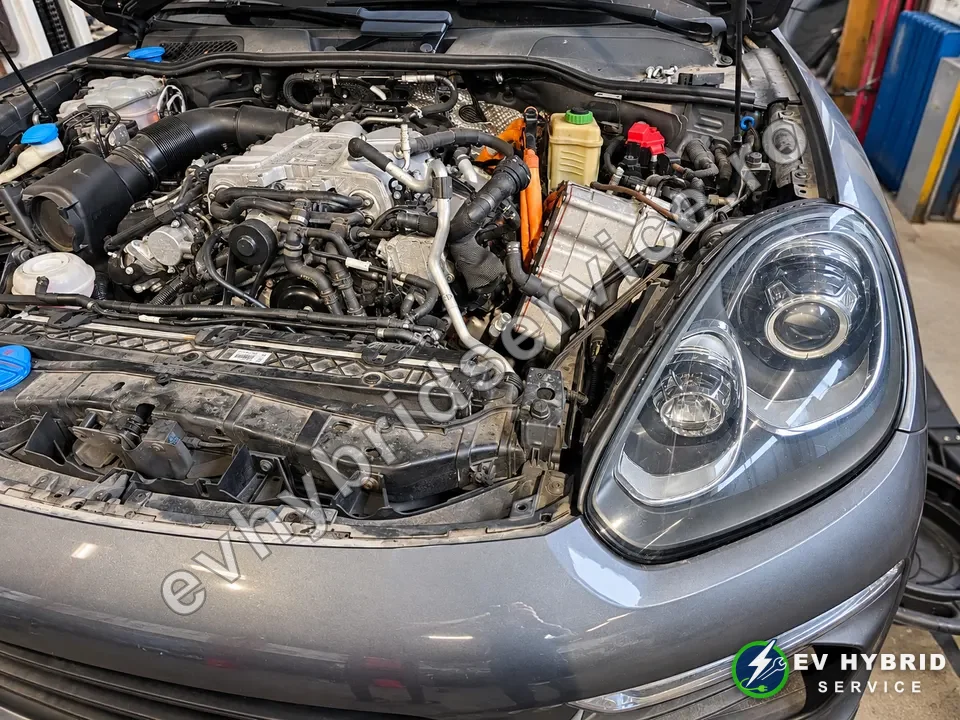
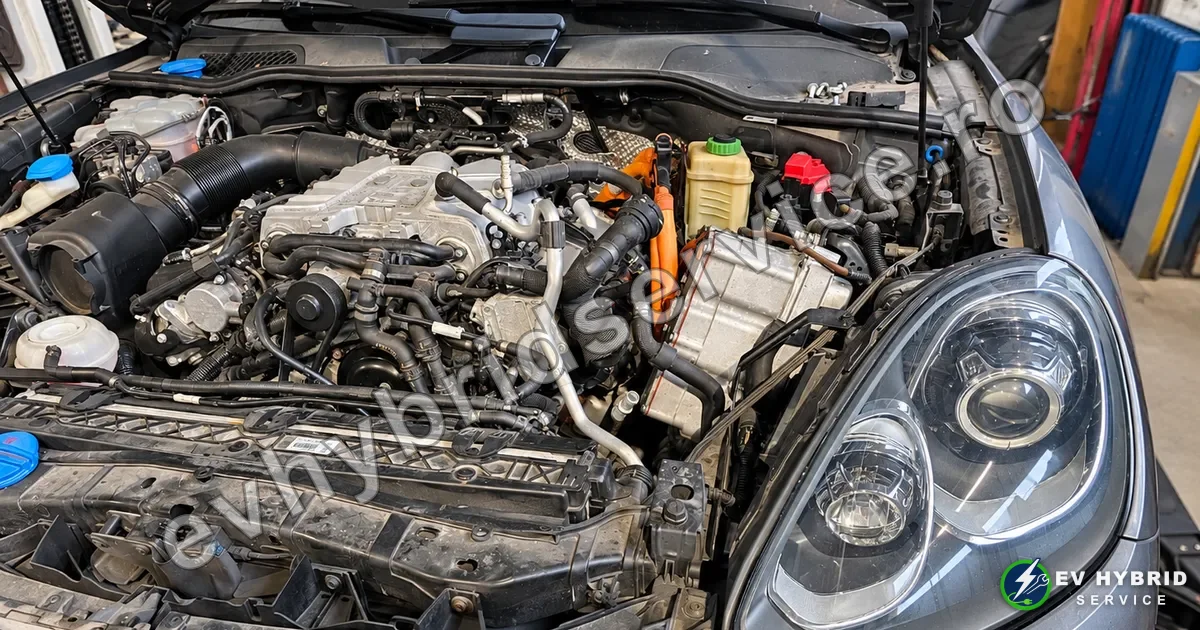
The Cayenne, bonnet up, at diagnosis. Step 2
Disable the compressor in software
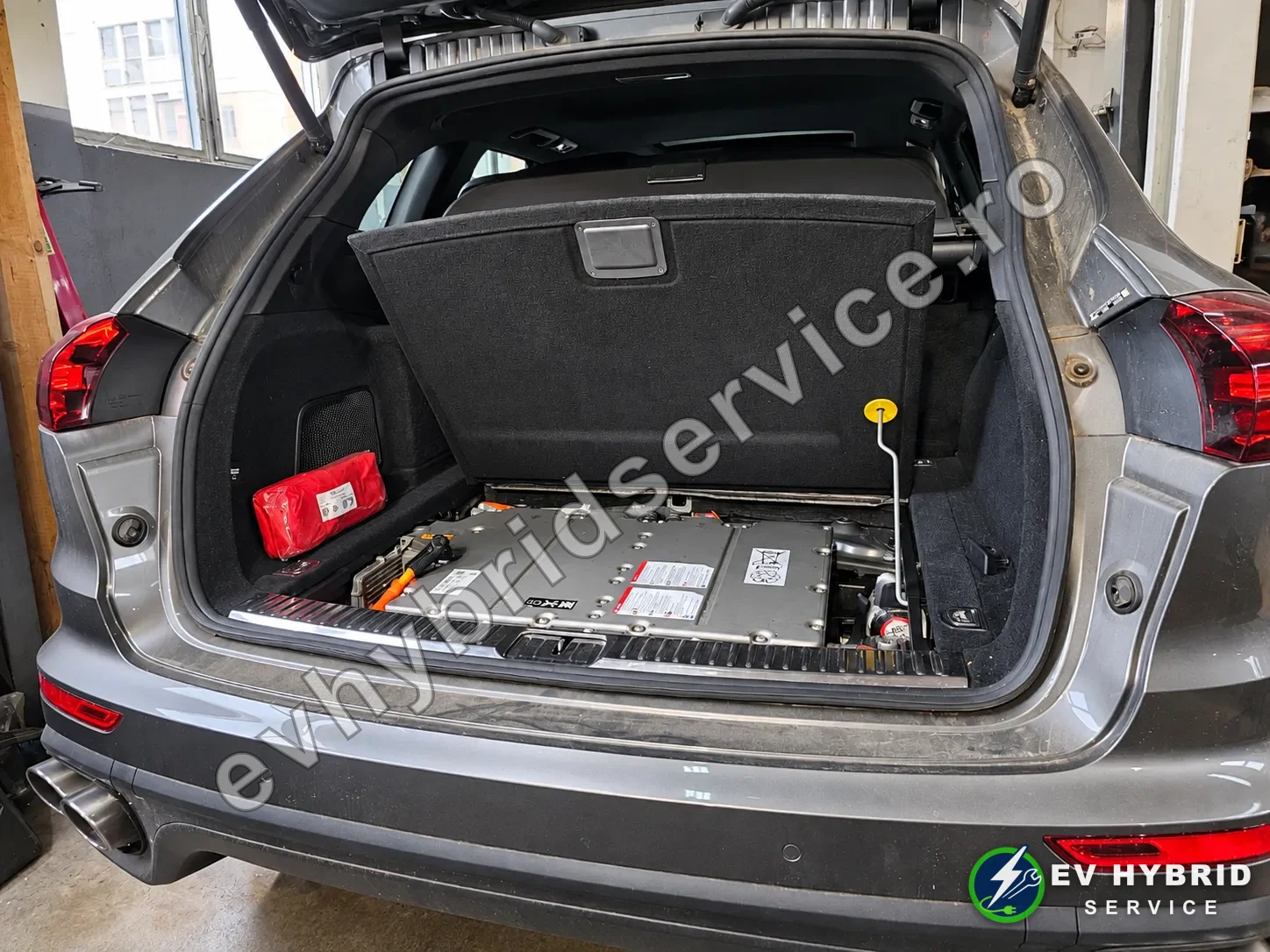
So that we could move the car safely around the workshop over short distances and finish the inspection, we temporarily disabled the faulty compressor with the tester. It is not a repair, just a step that lets us work.
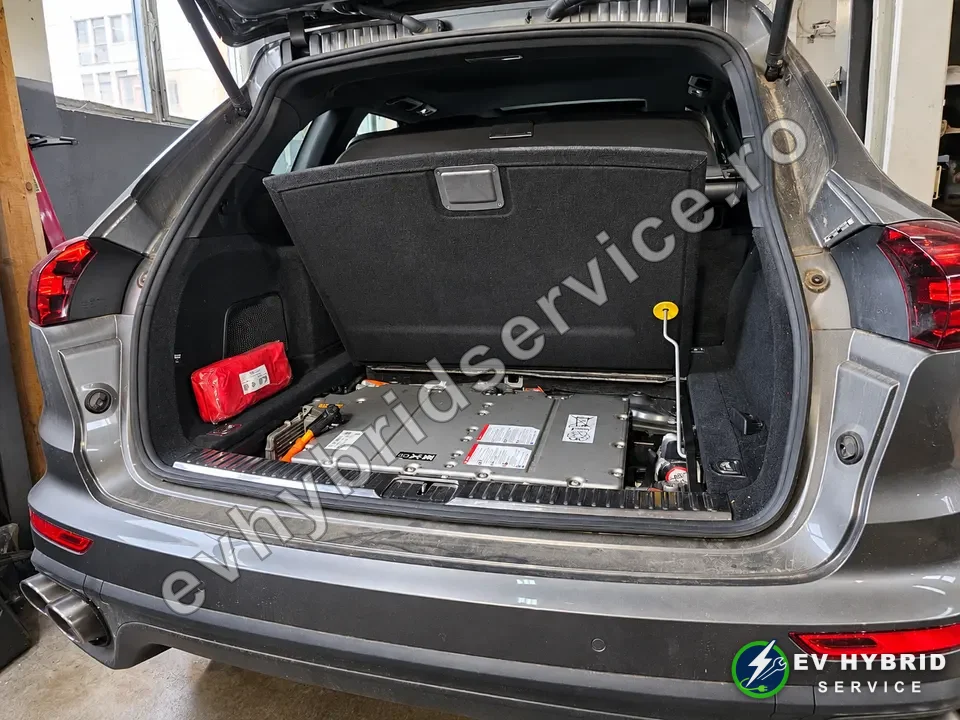
The high-voltage battery under the boot floor. It also powers the air-conditioning compressor. Step 3
Remove the compressor
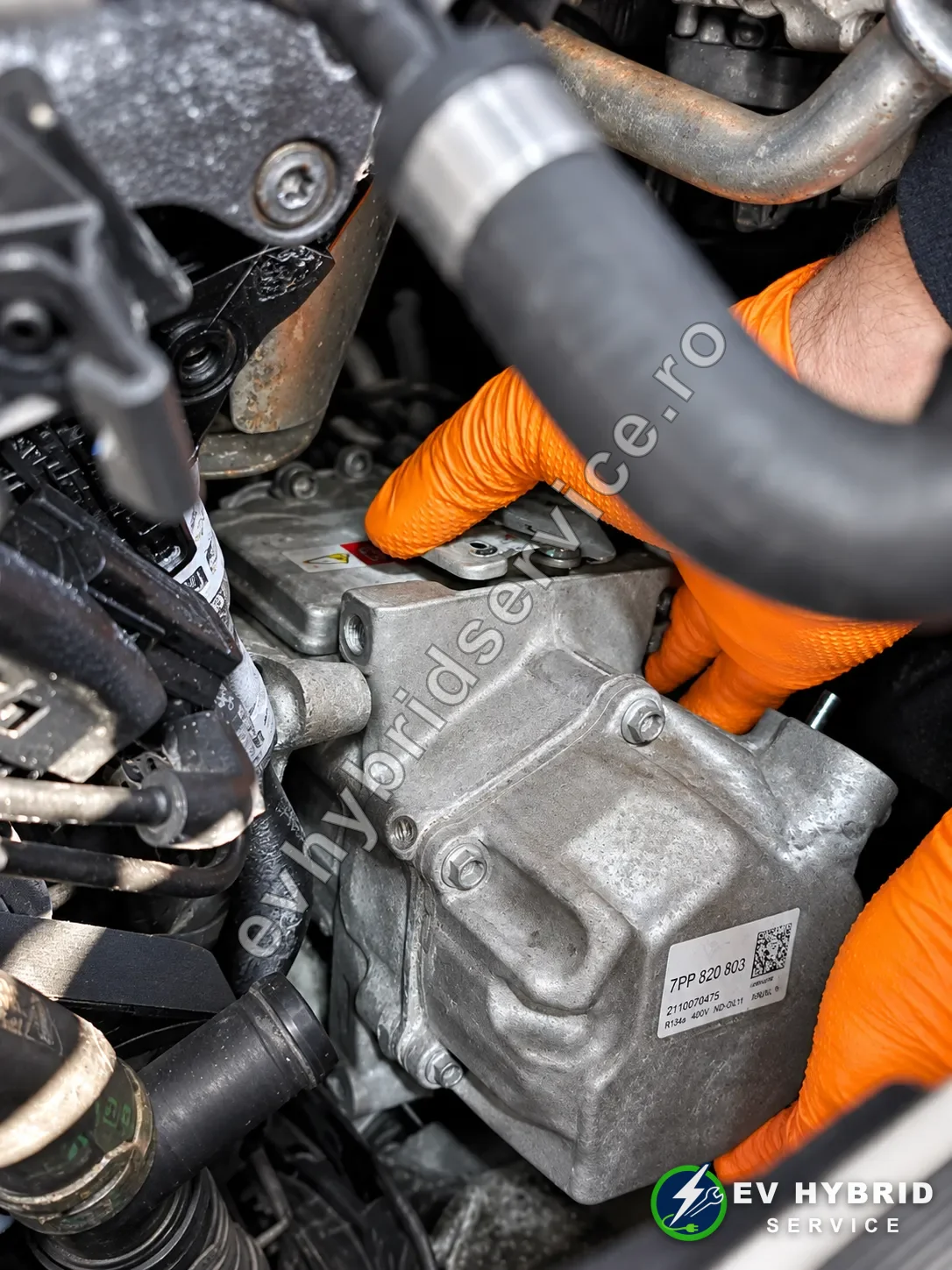
We took the compressor out of the engine bay with the high-voltage system shut down, as any work on a hybrid requires.
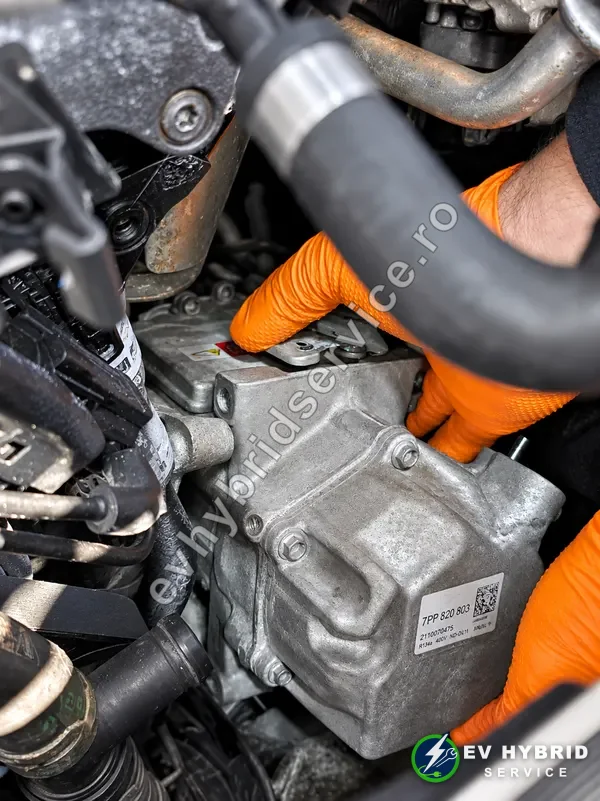
The compressor coming out of the engine bay. Step 4
Try to recondition it
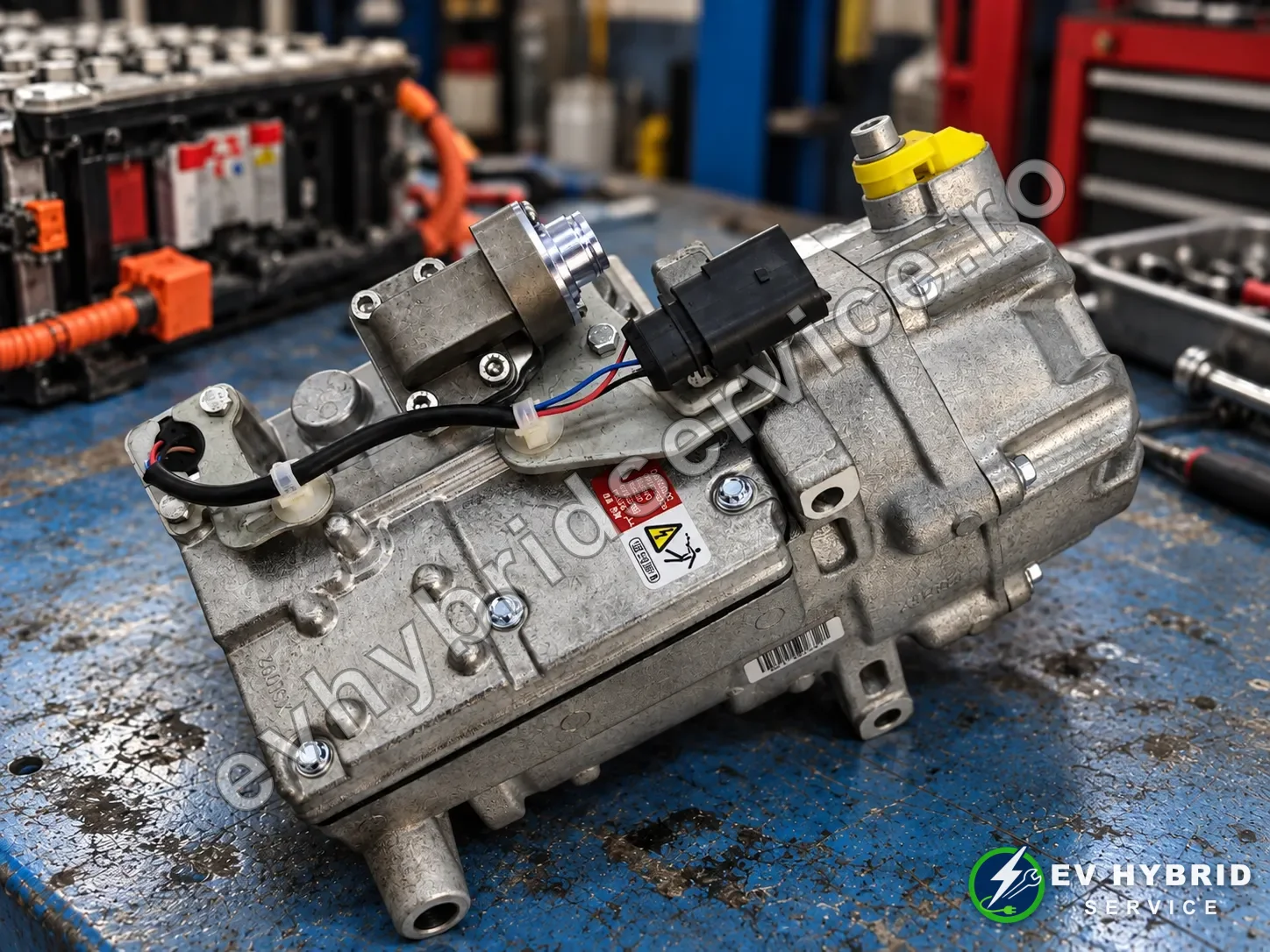
The first option was to save it: we sent it to a partner who specialises in reconditioning. Unfortunately the internal wear was far too great, and reconditioning was no longer possible.
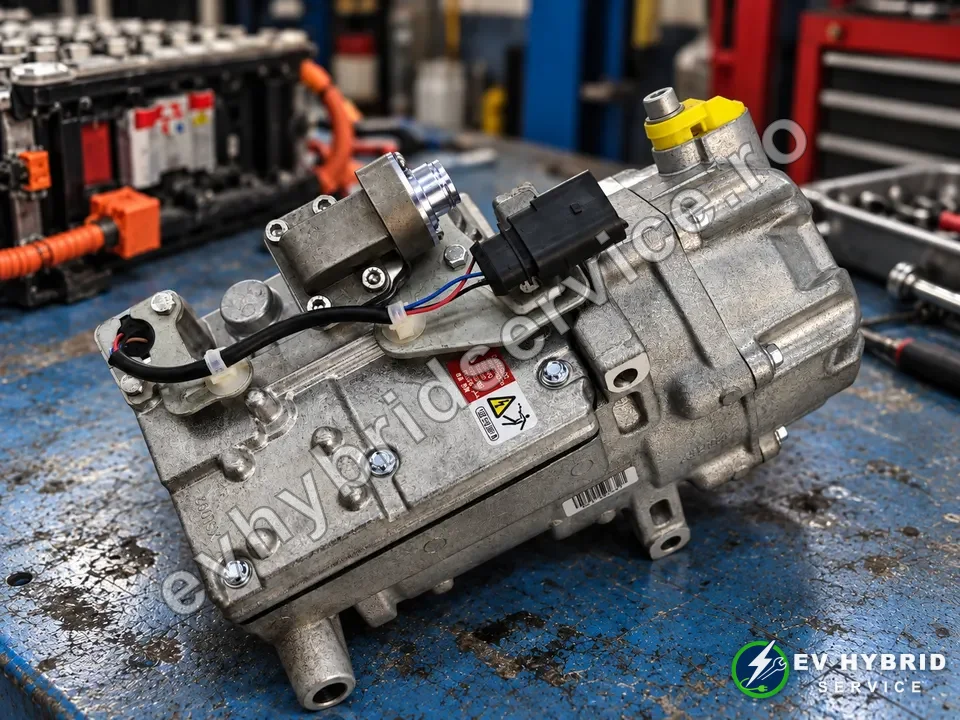
The old compressor on the bench. The wear inside was too far gone for it to be reconditioned. Step 5
Fit a new compressor
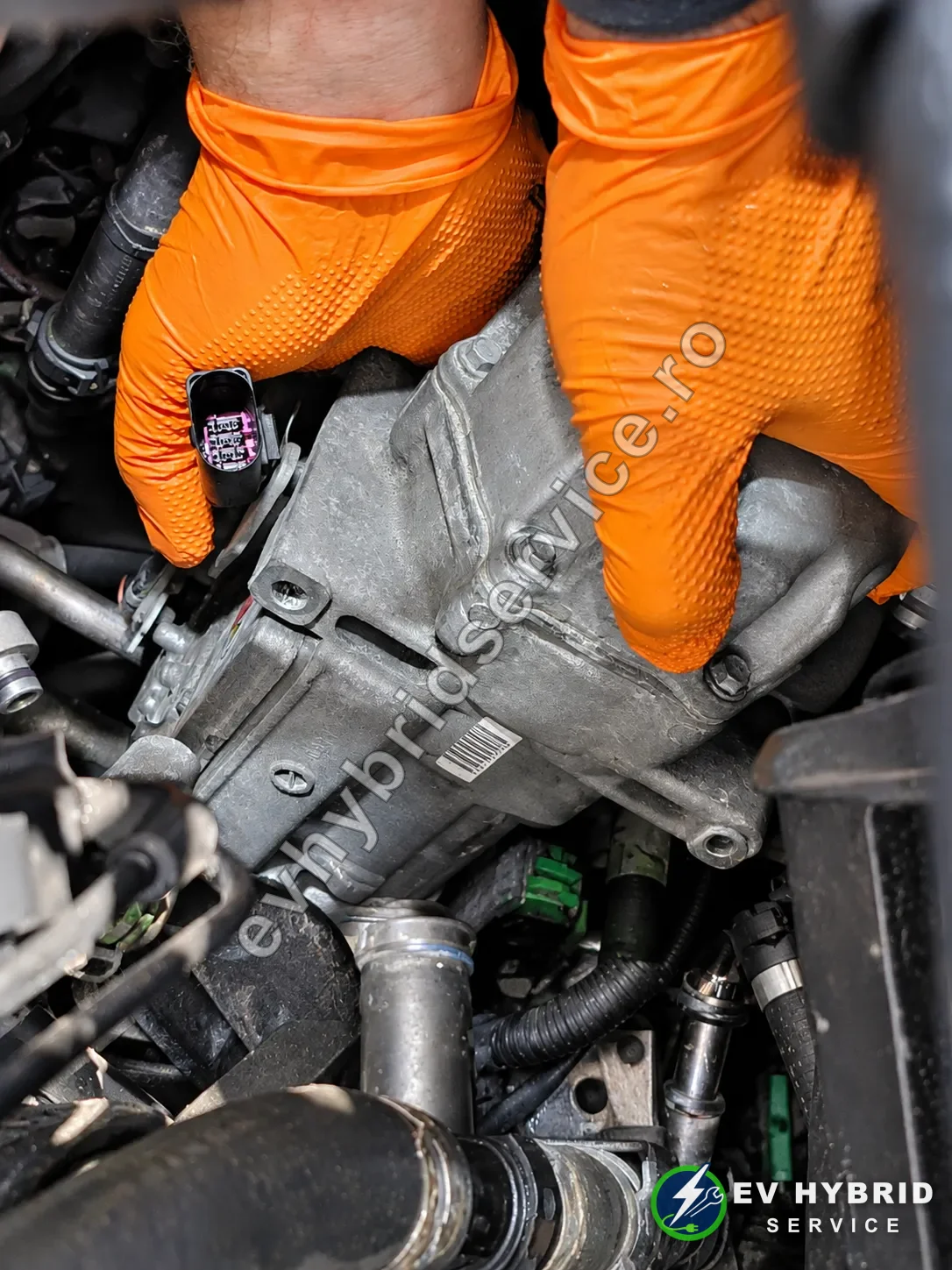
Safety and reliability counted for more than any saving, so we fitted a brand-new air-conditioning compressor.
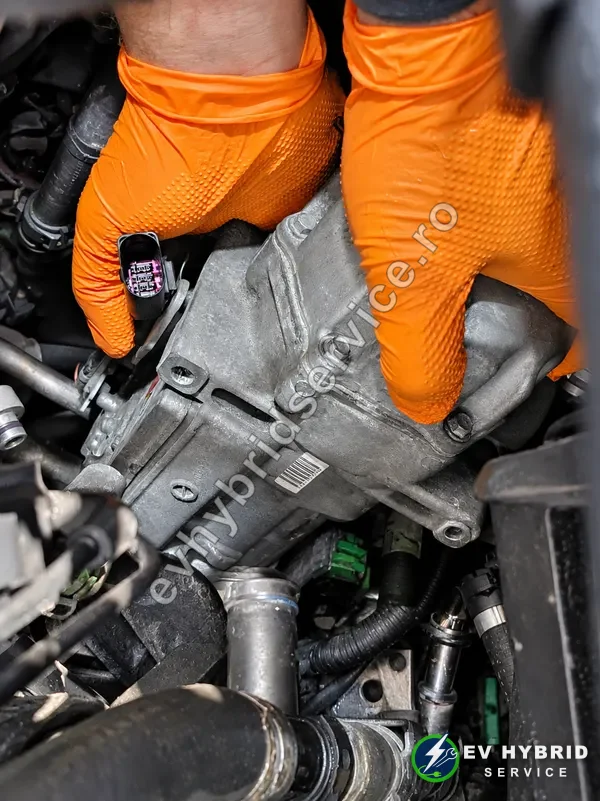
The new compressor going in. Step 6
Final checks
Once it was fitted, the car went through a full set of tests, diagnostics and a thorough road test. Everything now works as it should, the hybrid system is fully functional, and the Cayenne went back to its owner in a perfectly safe condition.
Before and after
When it came in
- The car would not start or move
- Permanent fault in the safety system
- Failed air-conditioning compressor
- Brought in on a recovery truck
At handover
- New air-conditioning compressor
- No faults at the final diagnosis
- Road test with no issues
- Hybrid system fully working
Signs that something is wrong with a hybrid’s air conditioning
- The air conditioning blows warm air even though the system has refrigerant
- A hybrid system warning appears when the air conditioning is switched on
- The car will not go into “Ready” mode or refuses to move off
- Unusual noise from around the compressor
Your hybrid will not start, or shows high-voltage system faults? We diagnose it and tell you plainly what is wrong.
Book a diagnosis →Frequently asked questions
Why does a hybrid have an electric air-conditioning compressor?
So that it can cool the cabin even when the engine is off, at traffic lights or while the car drives on electric power. Being electric, the compressor runs straight off the high-voltage system.
Can a high-voltage air-conditioning compressor be reconditioned?
Sometimes, yes. We remove it and assess it together with a specialist partner. If the internal wear is too great, as it was on this car, we recommend a new compressor.
Can I drive the car with the compressor disabled?
On the Cayenne in this article, disabling it with the tester only let us move the car around the workshop and finish the inspection. It is not a solution for the road. What can be done until the repair depends on the model and the fault, so we decide only after diagnosis.
Photos from the job
Tap a photo to see it full size; use the arrows to browse.
The Cayenne, bonnet up, at diagnosis.
The high-voltage battery under the boot floor. It also powers the air-conditioning compressor.
The compressor coming out of the engine bay.
The old compressor on the bench. The wear inside was too far gone for it to be reconditioned.
The new compressor going in.
Read next
Battery repairs
Hyundai Kona Electric losing coolant with no error on the dashboard: how we repaired the cooling circuit of the high-voltage battery
A 2024 Hyundai Kona Electric was losing a lot of fluid from the battery cooling circuit, though the dashboard showed nothing. After a hard impact, a pipe had cracked. We replaced it, sealed the small cracks, and the battery stayed on the car.
3 min read
Battery repairs
Opel Combo Electric that would no longer charge from a socket: how we repaired the on-board charger without replacing it
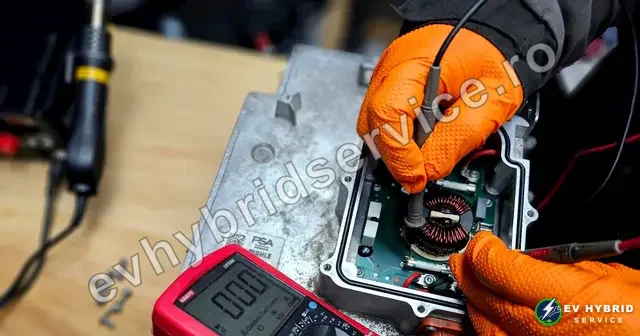
A 2024 Opel Combo Electric would no longer charge its battery from a socket. The culprit was the on-board charger, where one of the low-voltage electronic supplies had stopped working properly. We repaired it, and the original charger stayed on the car.
2 min read
Battery repairs
Nissan Leaf 40 kWh with communication errors and insulation faults: how we restored the 12 V supply and repaired the high-voltage insulation
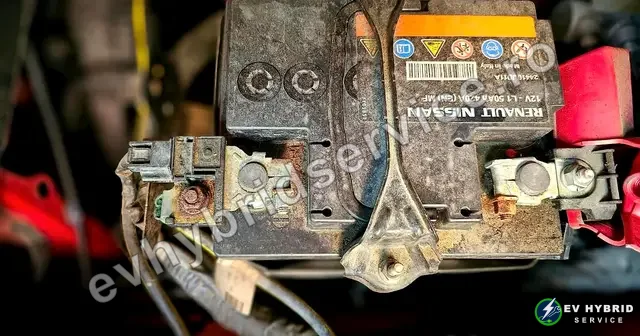
A Nissan Leaf 40 kWh had errors in a chain and no longer talked to its climate system. Where it all started: the oxidised terminals of the 12 V battery. Once we restored the supply, diagnosis also turned up high-voltage insulation faults, which we fixed.
2 min read