
Workshop job ·
Peugeot 508 Hybrid4 facelift that refused electric mode even at low speed: how we repaired the high-voltage battery by replacing six of its 42 modules
A 2015 facelift 508 Hybrid4 refused to run on electricity even at low speed. Inside the battery several modules were worn, with internal resistances of up to 110 mΩ. We replaced six of the 42 modules and balanced the battery, in 24 hours.
- the highest internal resistance we found
- 110 mΩthe highest internal resistance we found
- modules replaced
- 6 of 42modules replaced
- job duration
- 24 hjob duration
- warranty on the work
- 12 monthswarranty on the work
The problem
A 2015 facelift 508 Hybrid4 came in with a hybrid fault on the dash. The electric drive kept cutting out, and the car refused 100% electric mode even at low speed.
The diagnosis
Several modules of the NiMH battery were worn. The worst had internal resistances of 110 and 70 mΩ: under acceleration they heated up and their voltage sagged, and the hybrid system locked out.
The fix
We replaced the six high-resistance modules with modules tested and calibrated on the test bench, then balanced all 42 modules.
The result
Internal resistance is back to normal on every module, electric mode engages instantly and the hybrid system works faultlessly. 24 hours, 12-month warranty.
When a hybrid shies away from its own battery
The 508, a 2015 Hybrid4 from after the facelift, came into the workshop with the hybrid fault message on the dash and sudden cut-outs in the electric drive. The system refused to hold 100% electric mode even at low speed: the computer had gone into protection because the battery was overheating.
After a computer diagnosis and live monitoring of the parameters with the battery under load, we checked all 42 modules one by one. Several were worn. The two worst had huge internal resistances of 110 mΩ and 70 mΩ. Under acceleration they heated up and their voltage sagged, and the hybrid system locked out on the spot.
The job, step by step
Step 1
Take out and open the battery
We safely removed the high-voltage battery housing and isolated the electrical circuits.
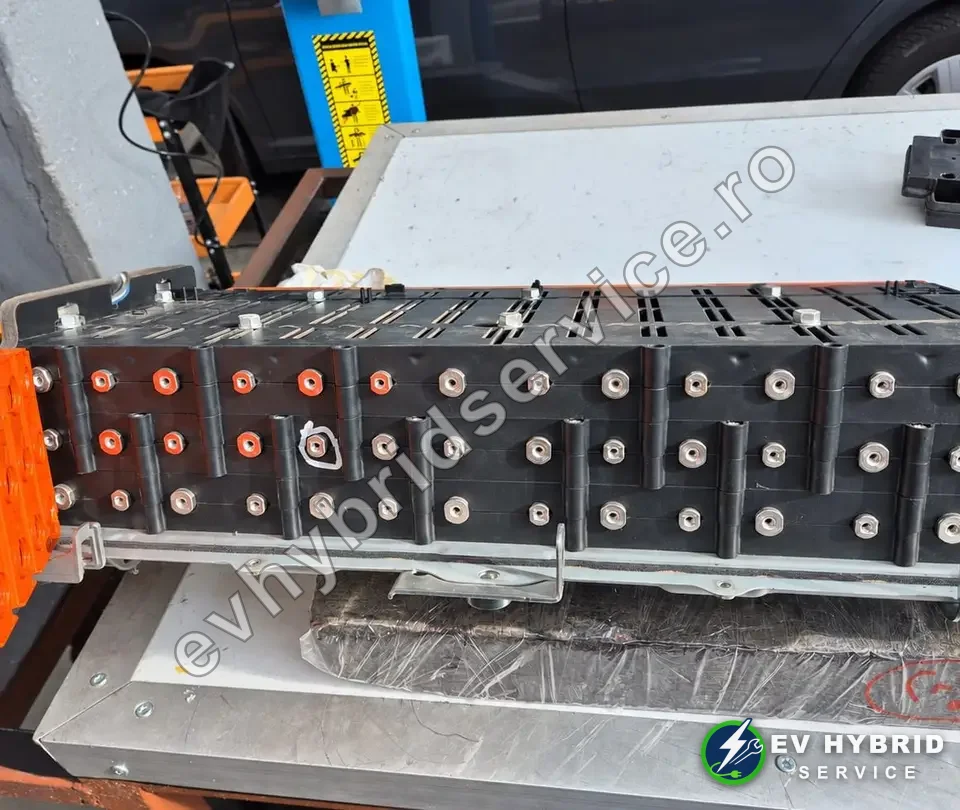
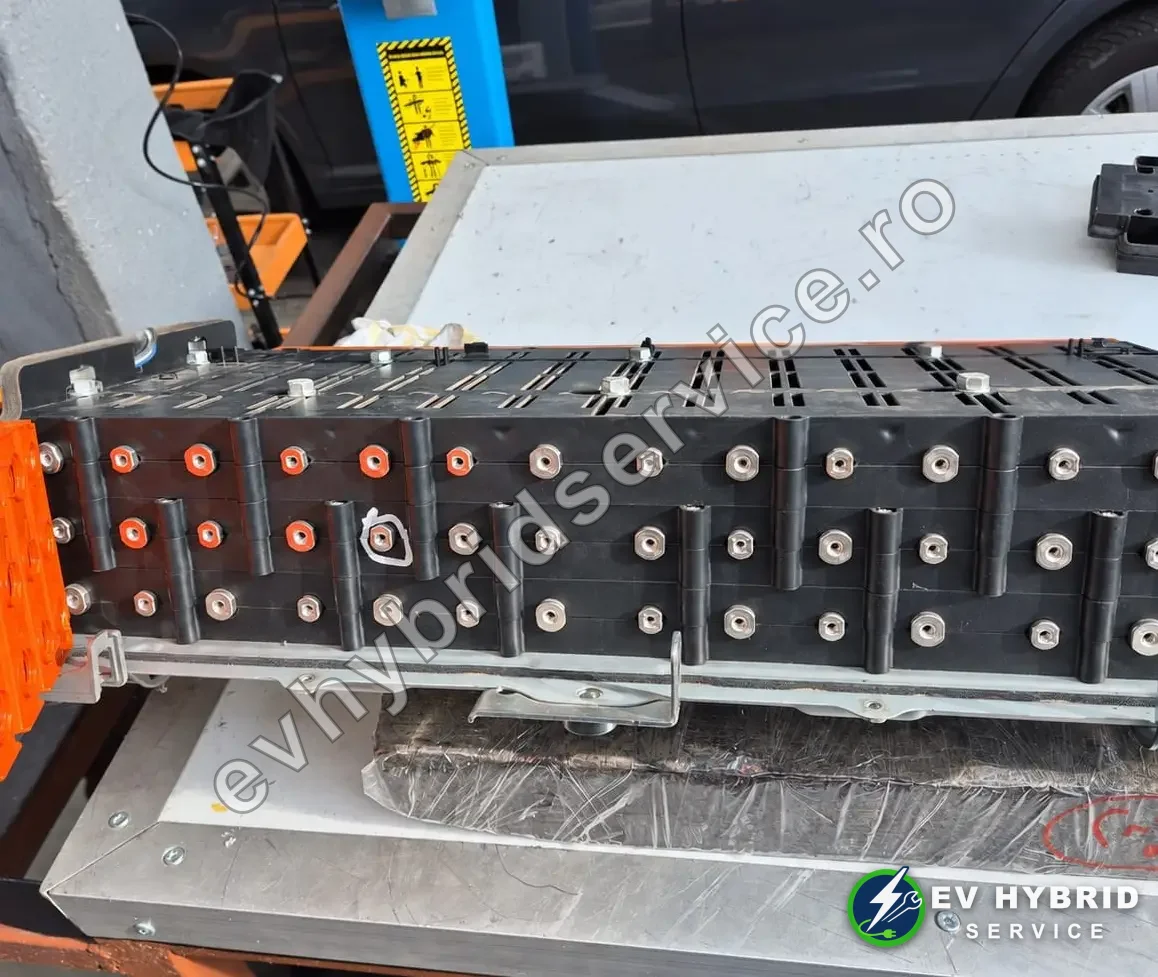
The battery out of the car, on the bench, ready for every module to be checked. Step 2
Measure every module
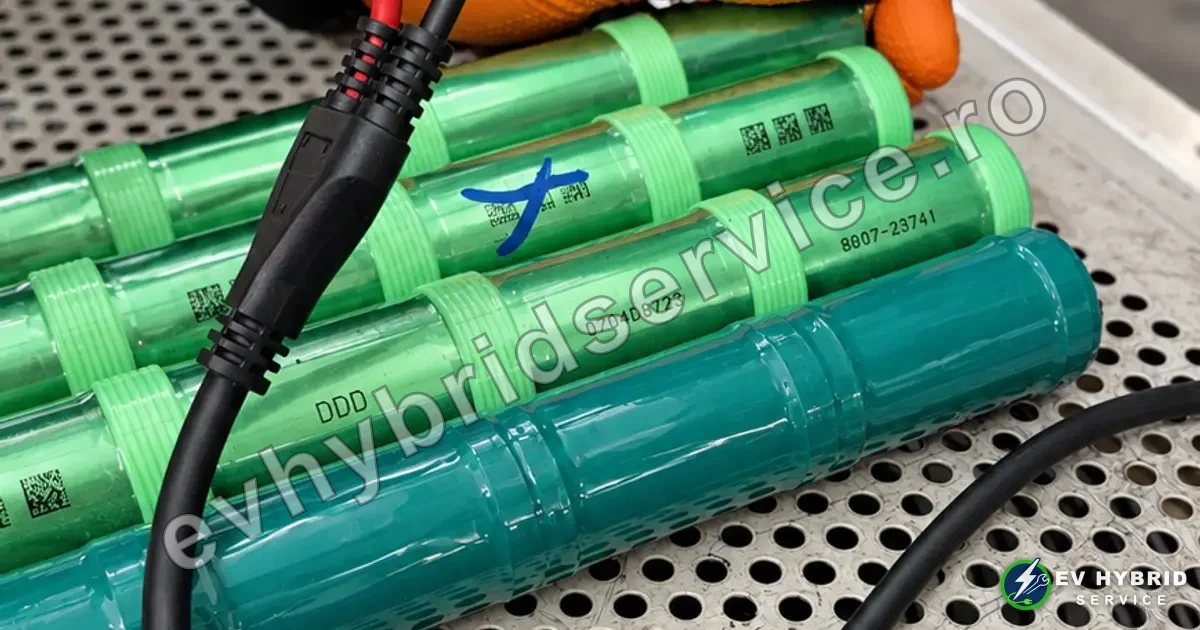
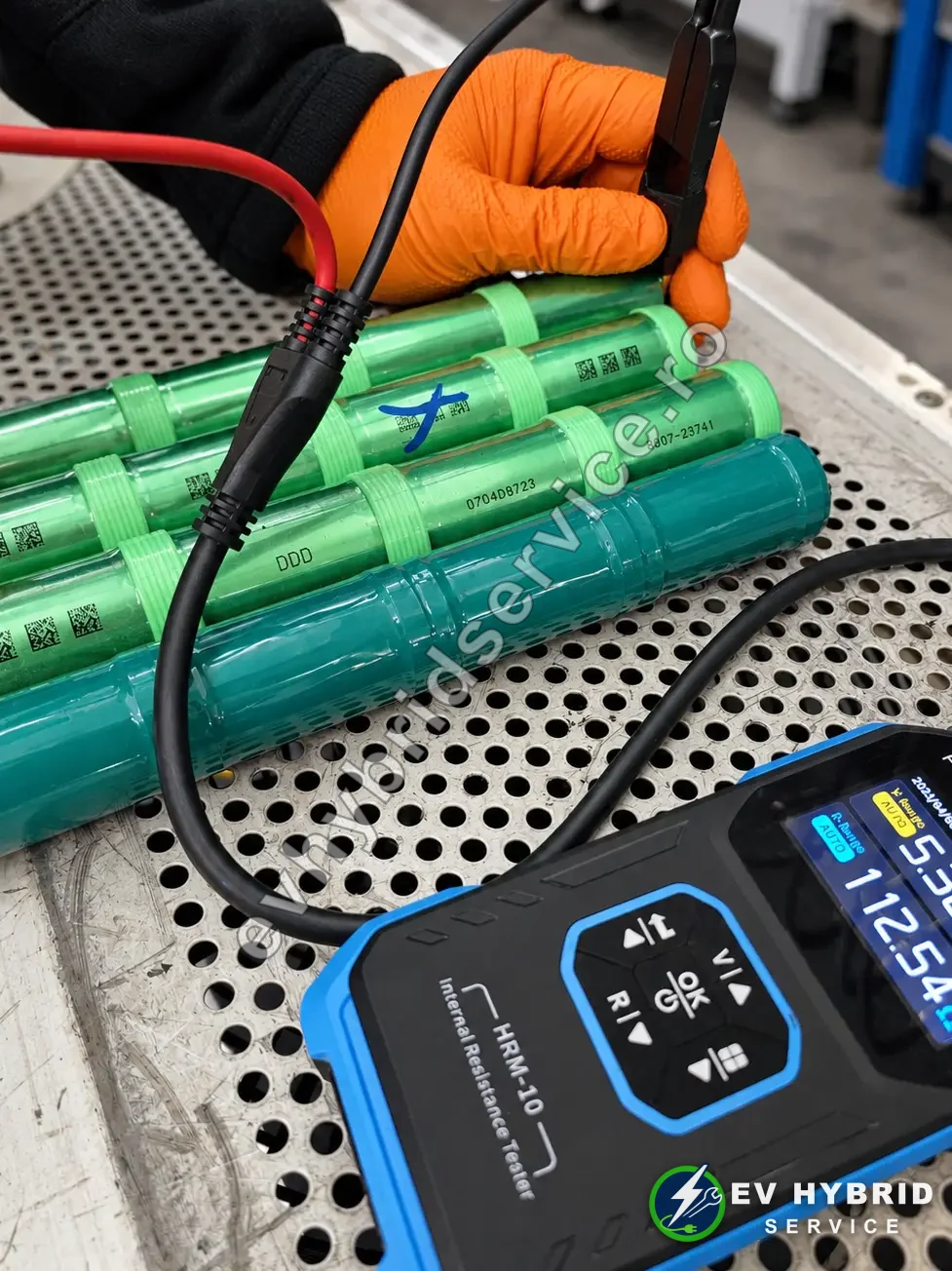
We measured the internal resistance of each of the 42 modules. The tester revealed something important: some modules showed an apparently normal voltage, yet an internal resistance of more than 100 mΩ.
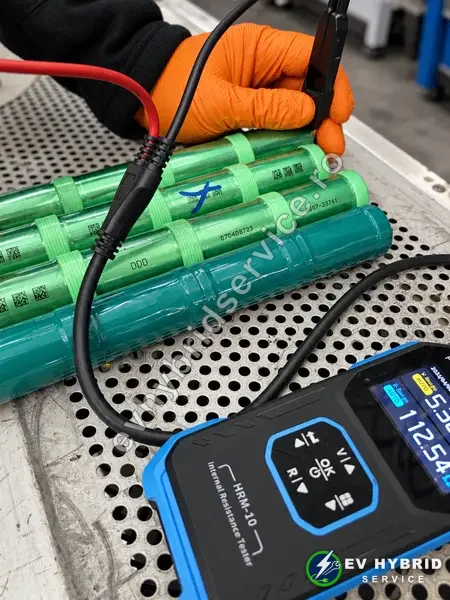
The tester on a module: the voltage looks normal, but the internal resistance is over 100 mΩ. Step 3
Replace the six modules
We took out the six high-resistance modules and fitted healthy modules in their place, tested and calibrated beforehand on the test bench.
Step 4
Balance the battery
All 42 modules went through a full charge and discharge cycle, with software alignment, so they work evenly again.
Step 5
Road test and handover
On the road test and the retest with the dedicated tester, internal resistance was back to normal on every module. Electric mode now engages instantly and the hybrid system works faultlessly. The job took 24 hours and carries a 12-month warranty.
Before and after
When it came in
- Hybrid fault on the dash
- Electric drive cutting out
- Electric mode refused even at low speed
- Six worn modules, up to 110 mΩ
At handover
- Six modules replaced
- All 42 modules balanced
- Electric mode engages at once
- 12-month warranty
Signs that a Hybrid4 battery has worn modules
- The car refuses to run on electricity even at low speed
- The electric assistance cuts out suddenly on the move
- The hybrid fault appears, especially after trips where the battery worked hard
- Fuel use rises with no other visible fault
Does your 508 Hybrid4 show a hybrid fault, or will it no longer run on electricity? We measure every module of the battery and replace only what is worn.
Book a battery test →Frequently asked questions
Why six modules and not the whole battery?
Because the other 36 modules were still within spec. We replace only the modules that fall outside normal values. If the test shows the whole battery is worn, we tell you plainly that a full replacement is the better choice.
How bad is a module at 110 mΩ?
Very bad. A healthy module on this battery has just a few milliohms. At 110 mΩ, much of the energy is lost as heat, and the voltage sags exactly when the car needs current.
Can a battery with worn modules overheat?
Yes. Modules with high internal resistance heat up more than the others. The battery computer heads off the danger by going into protection, as happened here. When the hybrid fault appears, it is best to have the battery tested as soon as possible.
Photos from the job
Tap a photo to see it full size; use the arrows to browse.
The battery out of the car, on the bench, ready for every module to be checked.
The tester on a module: the voltage looks normal, but the internal resistance is over 100 mΩ.
Read next
Battery repairs
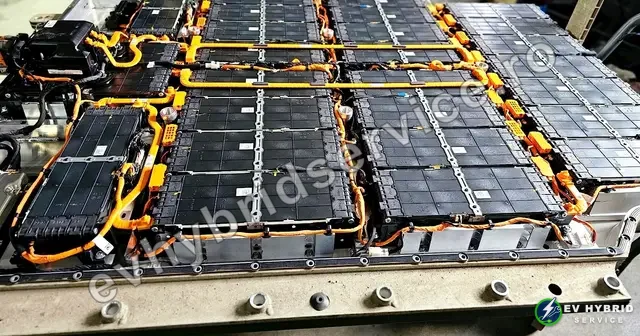
Hyundai Kona Electric losing coolant with no error on the dashboard: how we repaired the cooling circuit of the high-voltage battery
A 2024 Hyundai Kona Electric was losing a lot of fluid from the battery cooling circuit, though the dashboard showed nothing. After a hard impact, a pipe had cracked. We replaced it, sealed the small cracks, and the battery stayed on the car.
3 min read
Battery repairs
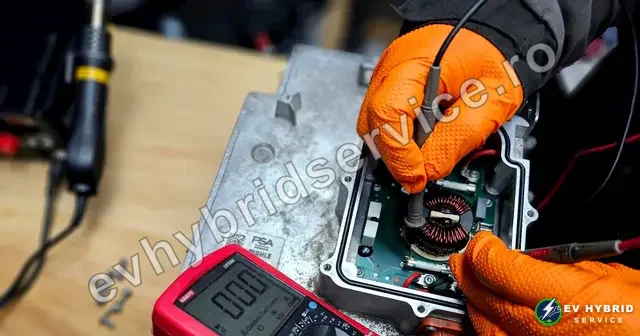
Opel Combo Electric that would no longer charge from a socket: how we repaired the on-board charger without replacing it
A 2024 Opel Combo Electric would no longer charge its battery from a socket. The culprit was the on-board charger, where one of the low-voltage electronic supplies had stopped working properly. We repaired it, and the original charger stayed on the car.
2 min read
Battery repairs
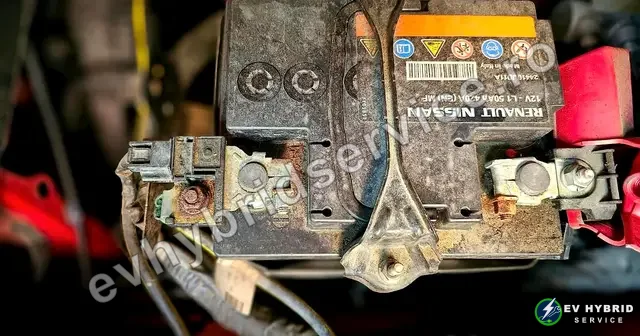
Nissan Leaf 40 kWh with communication errors and insulation faults: how we restored the 12 V supply and repaired the high-voltage insulation
A Nissan Leaf 40 kWh had errors in a chain and no longer talked to its climate system. Where it all started: the oxidised terminals of the 12 V battery. Once we restored the supply, diagnosis also turned up high-voltage insulation faults, which we fixed.
2 min read