
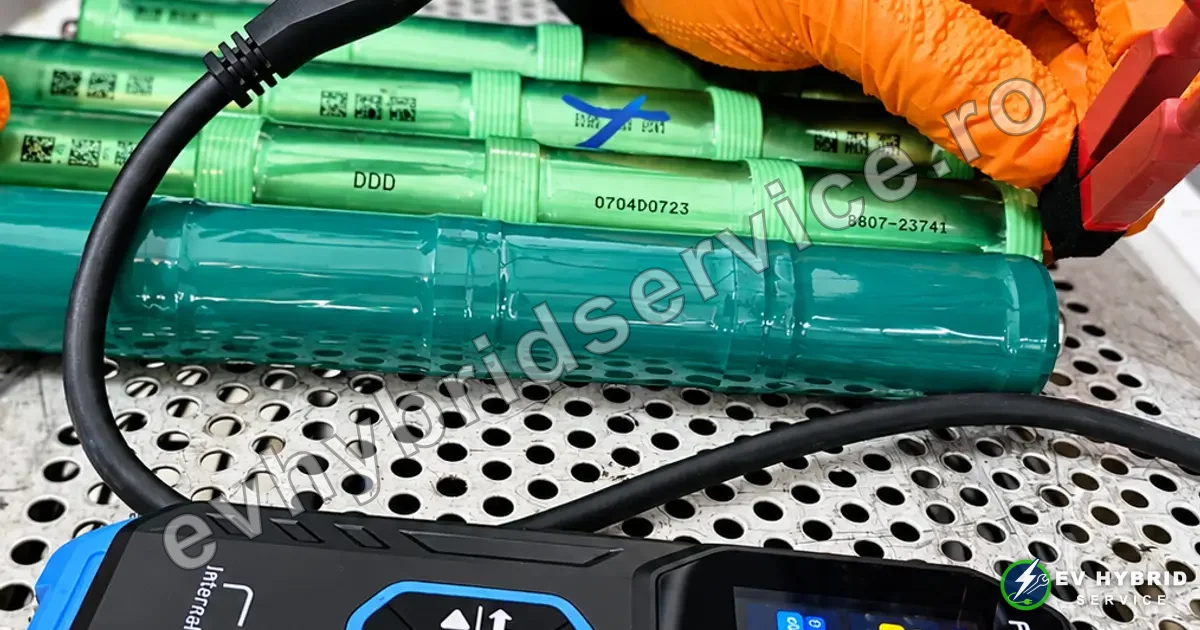
Workshop job ·
Peugeot 3008 Hybrid4 facelift that dropped out of electric mode under acceleration: how we repaired the high-voltage battery, down to a single faulty module
A 2015 facelift 3008 Hybrid4 dropped out of electric mode every time it accelerated firmly. The culprit was a single module out of the battery’s 42, with an internal resistance of 62 mΩ. We replaced it, balanced the battery, and the car left after 24 hours.
- internal resistance of the faulty module
- 62 mΩinternal resistance of the faulty module
- modules replaced, the rest of the battery kept
- 1 of 42modules replaced, the rest of the battery kept
- from diagnosis to handover
- 24 hfrom diagnosis to handover
- warranty on the work
- 12 monthswarranty on the work
The problem
A 2015 facelift 3008 Hybrid4 came in with a hybrid fault on the dash. Under any firmer acceleration the car dropped out of electric mode (ZEV) and forced the diesel on.
The diagnosis
Of the 42 modules in the NiMH battery, one had an internal resistance of 62 mΩ, against a few milliohms on the others. Under load its voltage sagged and it overheated.
The fix
We replaced the faulty module with a compatible one, chosen on the test bench, and balanced all 42 modules.
The result
Equal resistances on every module, the faults are gone and ZEV mode engages instantly again. 24 hours, 12-month warranty.
An electric mode that kept switching itself off
The 3008, a 2015 Hybrid4 from after the facelift, came into the workshop with the hybrid fault warning on the dash. Its behaviour could not have been clearer: under any firmer acceleration the system suddenly left 100% electric mode (ZEV) and forced the diesel engine on.
The battery computer had restricted operation to prevent overheating. We ran a computer diagnosis and followed the parameters live, with the battery under load. Of the 42 NiMH modules, a single one had a huge internal resistance of 62 milliohms (mΩ), while all the others had just a few milliohms. Every time the car accelerated, its voltage sagged badly and it heated up, so the hybrid system shut down for safety.
The job, step by step
Step 1
Open the battery
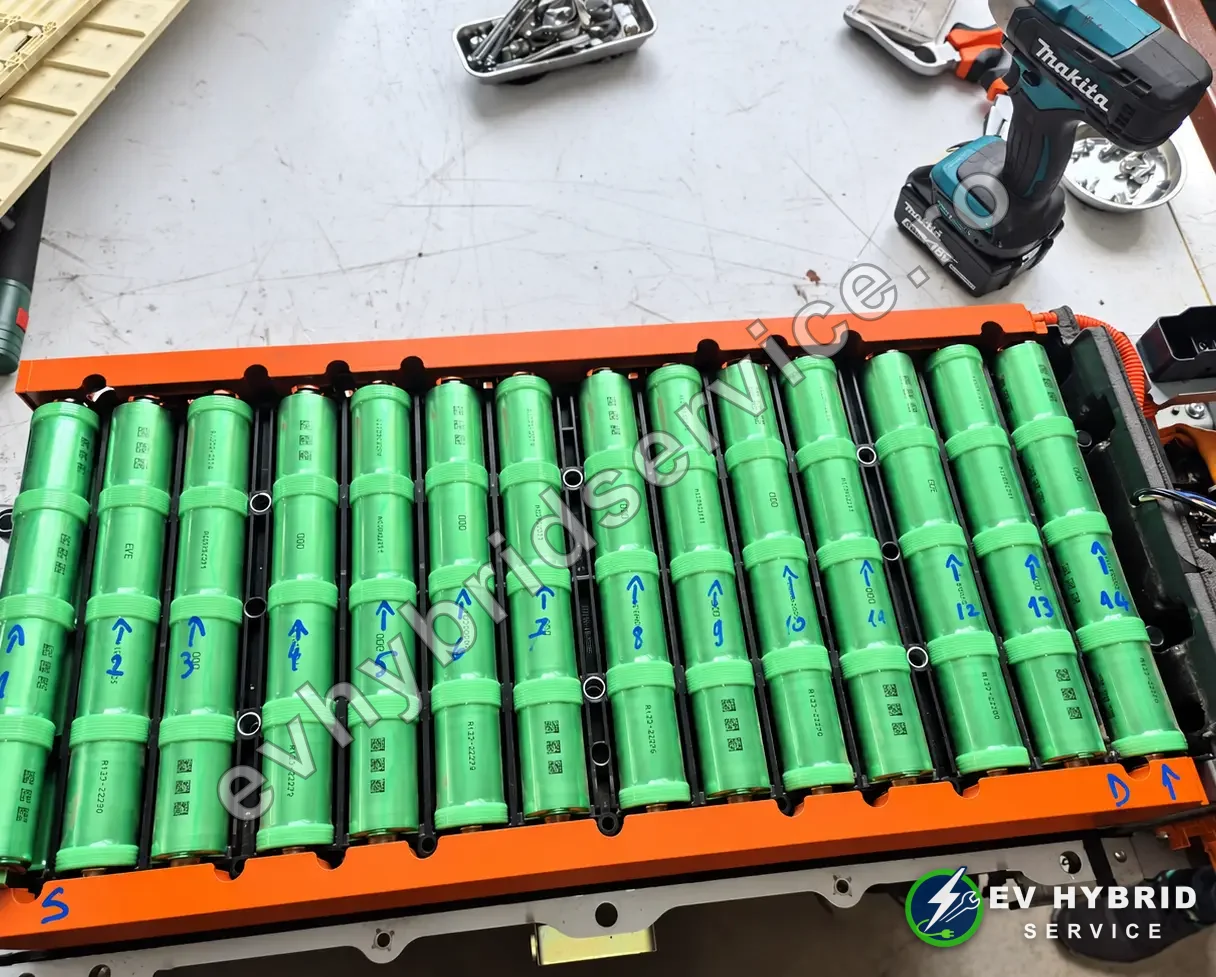
We safely removed the high-voltage battery housing and fully isolated the circuits. We numbered the modules so each one goes back exactly where it was.
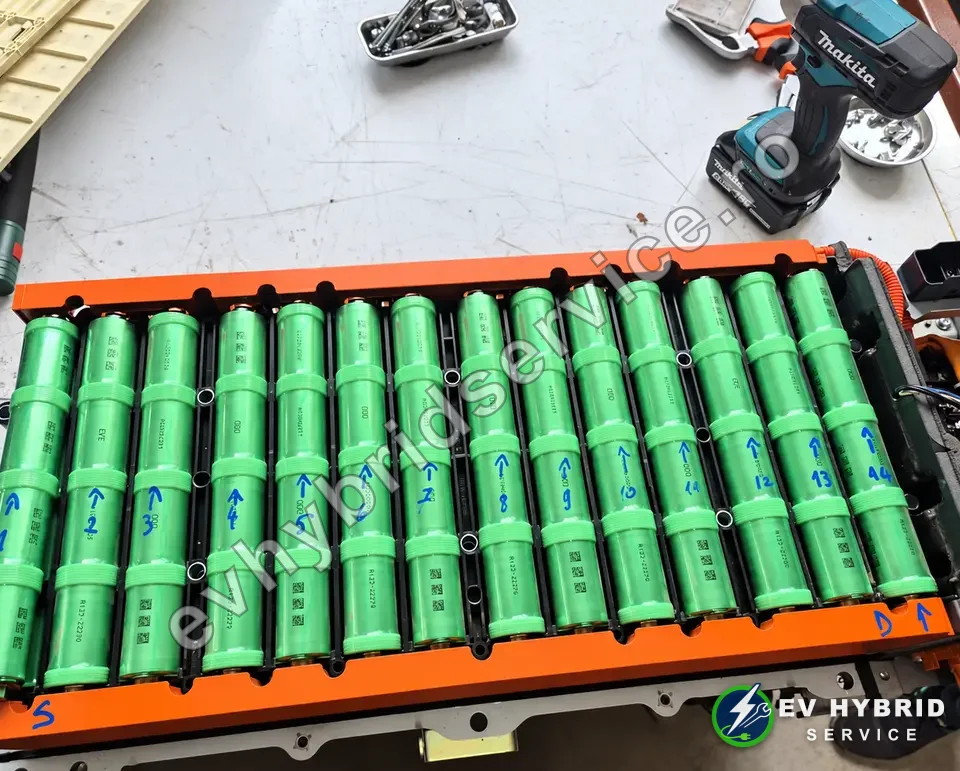
The battery opened, its modules numbered so each goes back in its own place. Step 2
Find the faulty module
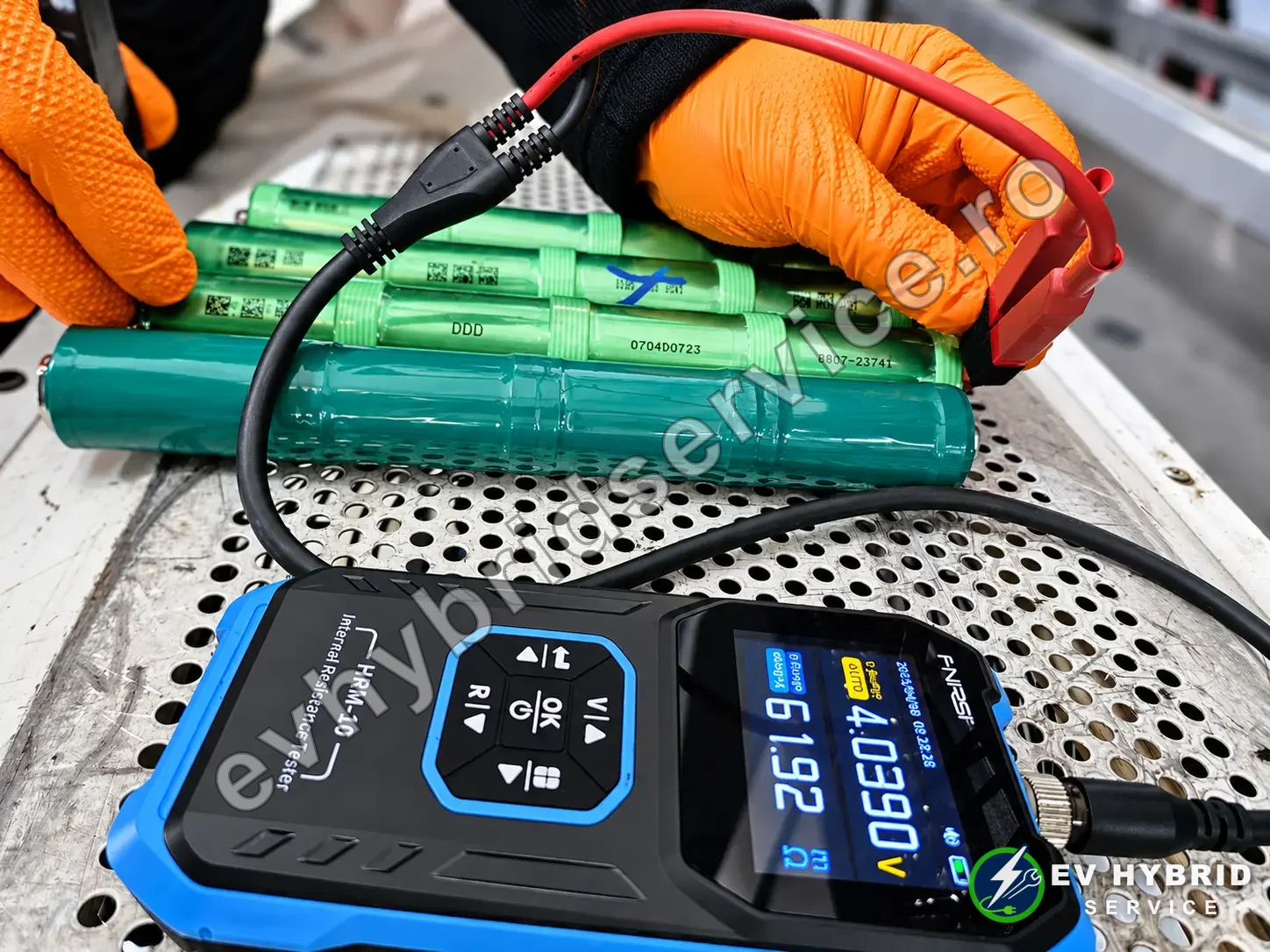
The internal resistance tester confirmed the 62 mΩ module. The rest of the battery was healthy, so there was no case for replacing the whole battery, an extremely expensive repair.
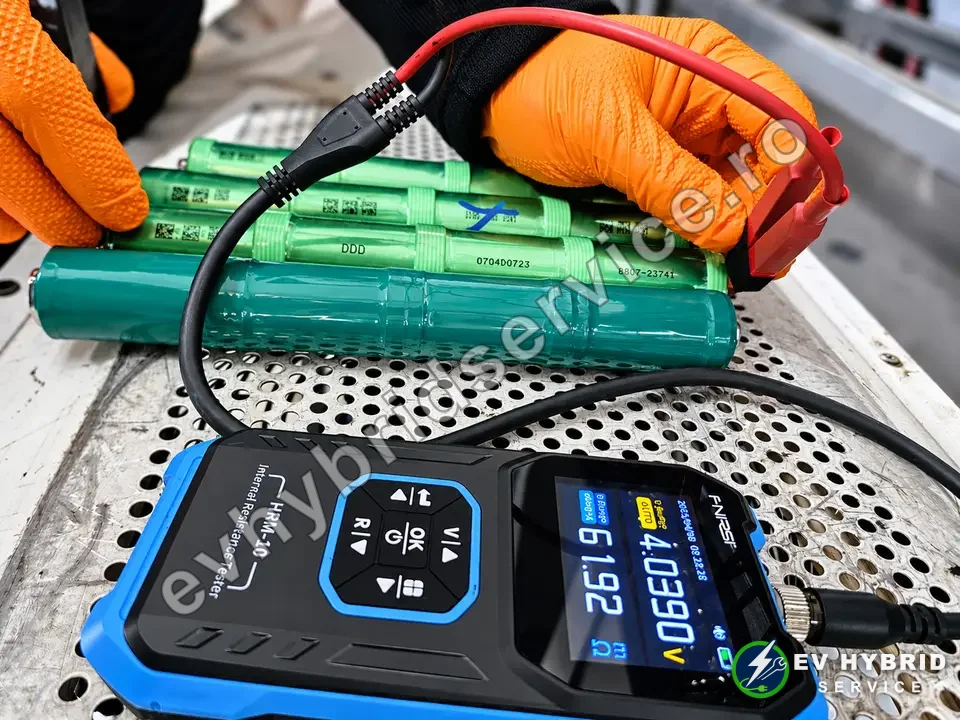
The internal resistance tester on the faulty module: almost 62 mΩ. Step 3
Choose the replacement on the bench
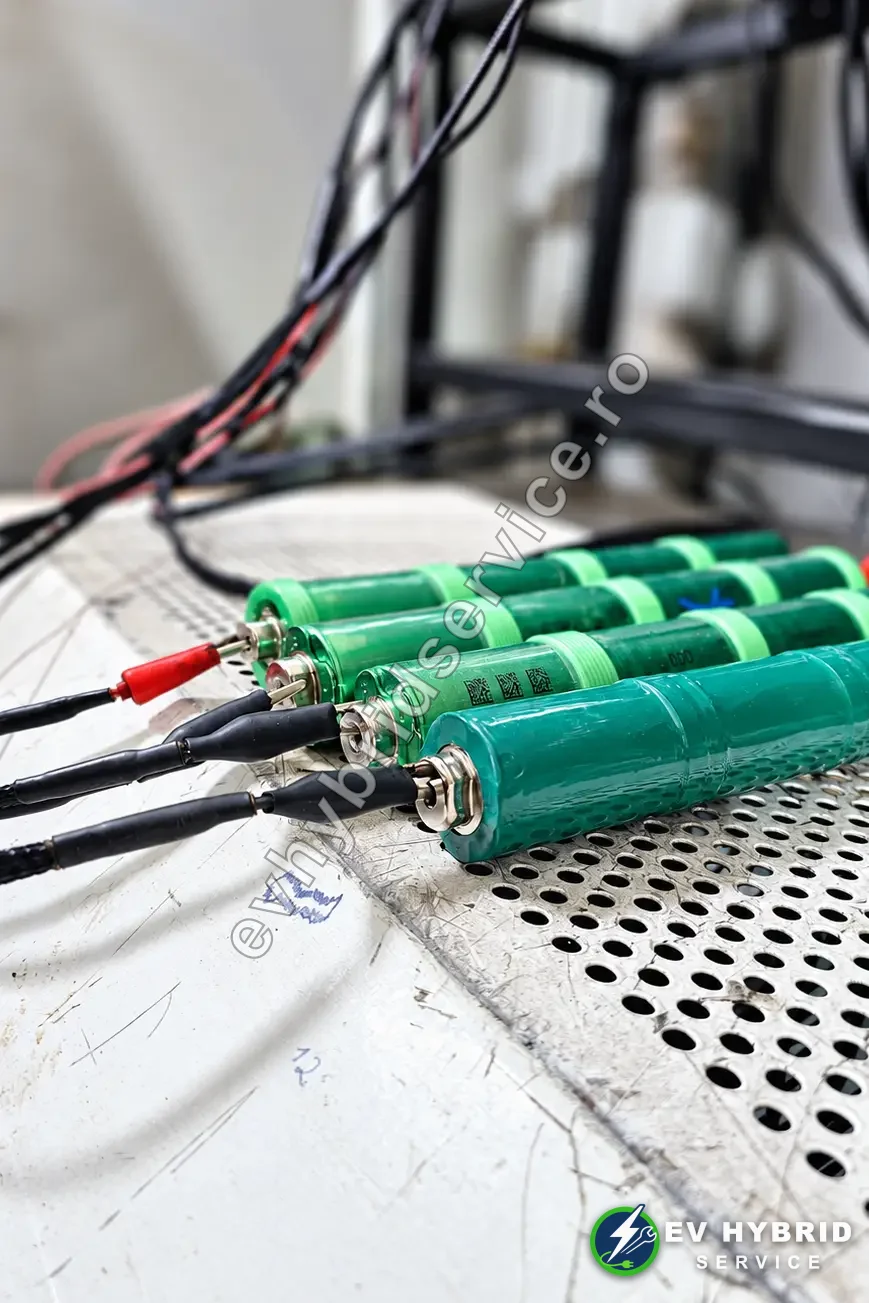
We took out the faulty module and fitted a compatible one in its place, carefully chosen on the test bench to match the healthy modules in performance and capacity.
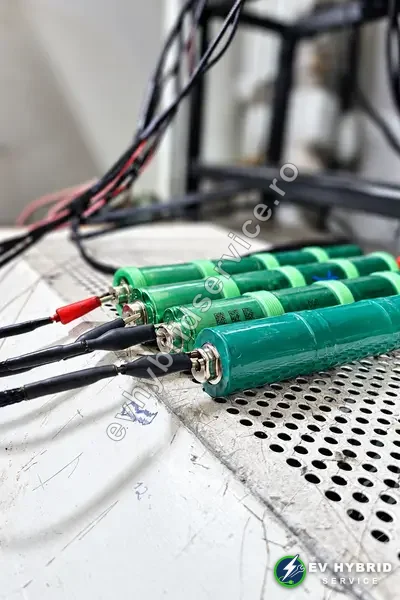
Modules wired to the test bench, where we choose the replacement. Step 4
Balance the battery
We ran the software calibration and a full balancing cycle, so all 42 modules work evenly again.
Step 5
Road test
On the road tests the resistance came back to equal values on every module, the faults were gone and ZEV mode engages instantly again. The job took 24 hours and carries a 12-month warranty.
Before and after
When it came in
- Hybrid fault on the dash
- Left ZEV under acceleration
- Diesel forced on
- One module at 62 mΩ, overheating
At handover
- Faulty module replaced
- All 42 modules balanced
- ZEV available at once
- 12-month warranty
Do these symptoms sound familiar?
- The car leaves electric mode as soon as you accelerate harder
- The hybrid warning comes on with no other obvious fault
- The diesel starts more and more often in town
- Fuel use goes up for no clear reason
Does your Hybrid4 drop out of electric mode when you accelerate? We measure the internal resistance of every module and replace only what is faulty.
Book a battery test →Frequently asked questions
How can a single module hold back the whole battery?
The modules are wired in series, so all the current also flows through the weak one. The battery computer goes by the weakest module: when it heats up and its voltage sags, the computer limits the electric side, even if the other 41 are in good health.
What does 62 mΩ mean for a module?
On this battery, healthy modules have just a few milliohms. 62 mΩ is many times more: the module turns part of the energy into heat and can no longer deliver the current asked of it under acceleration.
Is a 508 Hybrid4 battery repaired the same way?
Yes. The Hybrid4 system is the same on the 3008, 508 and DS5, and the battery is repaired the same way: we measure the voltage and internal resistance of every module, replace the faulty ones and balance the battery.
Photos from the job
Tap a photo to see it full size; use the arrows to browse.
The battery opened, its modules numbered so each goes back in its own place.
The internal resistance tester on the faulty module: almost 62 mΩ.
Modules wired to the test bench, where we choose the replacement.
Read next
Battery repairs
Hyundai Kona Electric losing coolant with no error on the dashboard: how we repaired the cooling circuit of the high-voltage battery
A 2024 Hyundai Kona Electric was losing a lot of fluid from the battery cooling circuit, though the dashboard showed nothing. After a hard impact, a pipe had cracked. We replaced it, sealed the small cracks, and the battery stayed on the car.
3 min read
Battery repairs
Opel Combo Electric that would no longer charge from a socket: how we repaired the on-board charger without replacing it
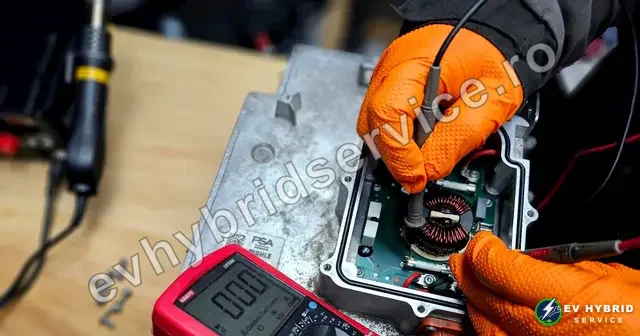
A 2024 Opel Combo Electric would no longer charge its battery from a socket. The culprit was the on-board charger, where one of the low-voltage electronic supplies had stopped working properly. We repaired it, and the original charger stayed on the car.
2 min read
Battery repairs
Nissan Leaf 40 kWh with communication errors and insulation faults: how we restored the 12 V supply and repaired the high-voltage insulation
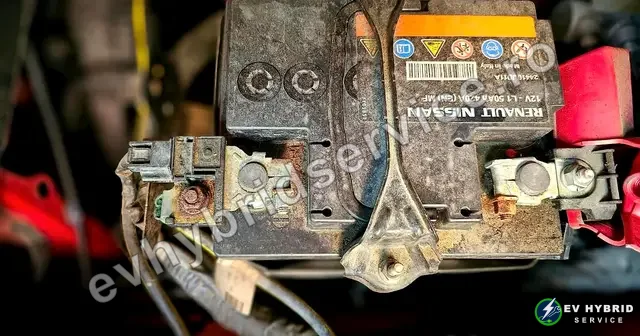
A Nissan Leaf 40 kWh had errors in a chain and no longer talked to its climate system. Where it all started: the oxidised terminals of the 12 V battery. Once we restored the supply, diagnosis also turned up high-voltage insulation faults, which we fixed.
2 min read