
Workshop job ·
Mitsubishi Outlander PHEV with an insulation fault: how we repaired the water-corroded high-voltage battery by replacing it outright
A 2015 Mitsubishi Outlander PHEV stood unused for almost nine months with water in its traction battery. The moisture corroded the electronics and connections, and the car had an insulation fault. We replaced the battery outright, together with its electronics.
- year of manufacture
- 2015year of manufacture
- standing unused, with moisture in the battery
- 9 monthsstanding unused, with moisture in the battery
- the high-voltage system fault
- Insulationthe high-voltage system fault
- traction battery replaced outright
- 1traction battery replaced outright
The problem
A 2015 Mitsubishi Outlander PHEV, unused for about nine months, had an insulation fault in its high-voltage system.
The diagnosis
Water had got into the traction battery, and the remaining moisture had corroded the electronic circuits, connections and battery management parts.
The fix
Saving the battery was no longer safe, so we replaced the traction battery outright, together with its electronics.
The result
The corroded battery is out of the system, with no internal parts reused whose reliability could no longer be guaranteed.
Nine months standing, with water in the battery
The Mitsubishi Outlander PHEV, built in 2015, reached us with a serious high-voltage system fault, caused by water that had got into the traction battery. The car had not been started for about nine months, and all that time the moisture left inside corroded the electronic circuits, connections and the parts that manage the battery.
The diagnosis showed an electrical insulation fault in the high-voltage system. After removing the battery we found widespread damage, with corrosion on the monitoring and control electronics, so saving it was no longer a safe option.
What faults water in an Outlander PHEV battery gives
In Mitsubishi’s documentation for this generation, insulation problems show as P0AA6 (Leak Detection) or P1A44 (Detecting Ground Fault), and problems with the circuit that measures insulation as P0AA7 and P1A46. When water reaches the battery electronics, P1A38 (lost communication with a CMU), P1AA8 (Local CAN Signal Timeout), P1A33 and P1A35 (cell measuring and balancing) or P1AE6 (EEPROM memory error) can also appear.
These are codes Mitsubishi documents for such faults, not a list confirmed on this car. The exact code and the control unit that logged it come from the diagnostic report.
The job, step by step
Step 1
Diagnosing the plug-in hybrid system
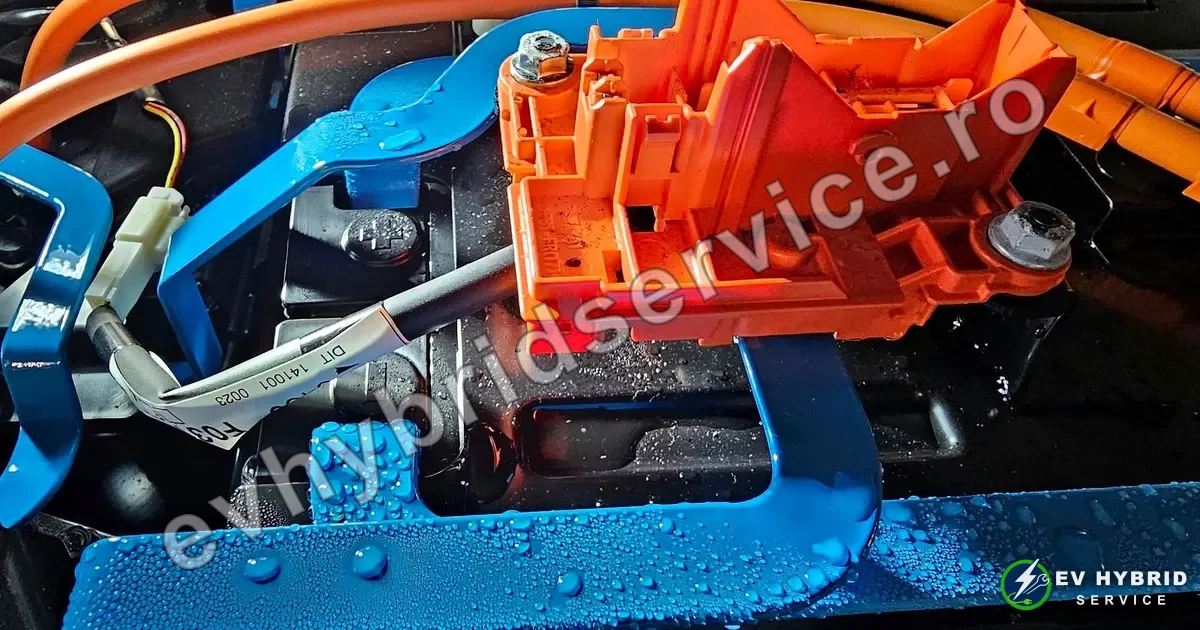
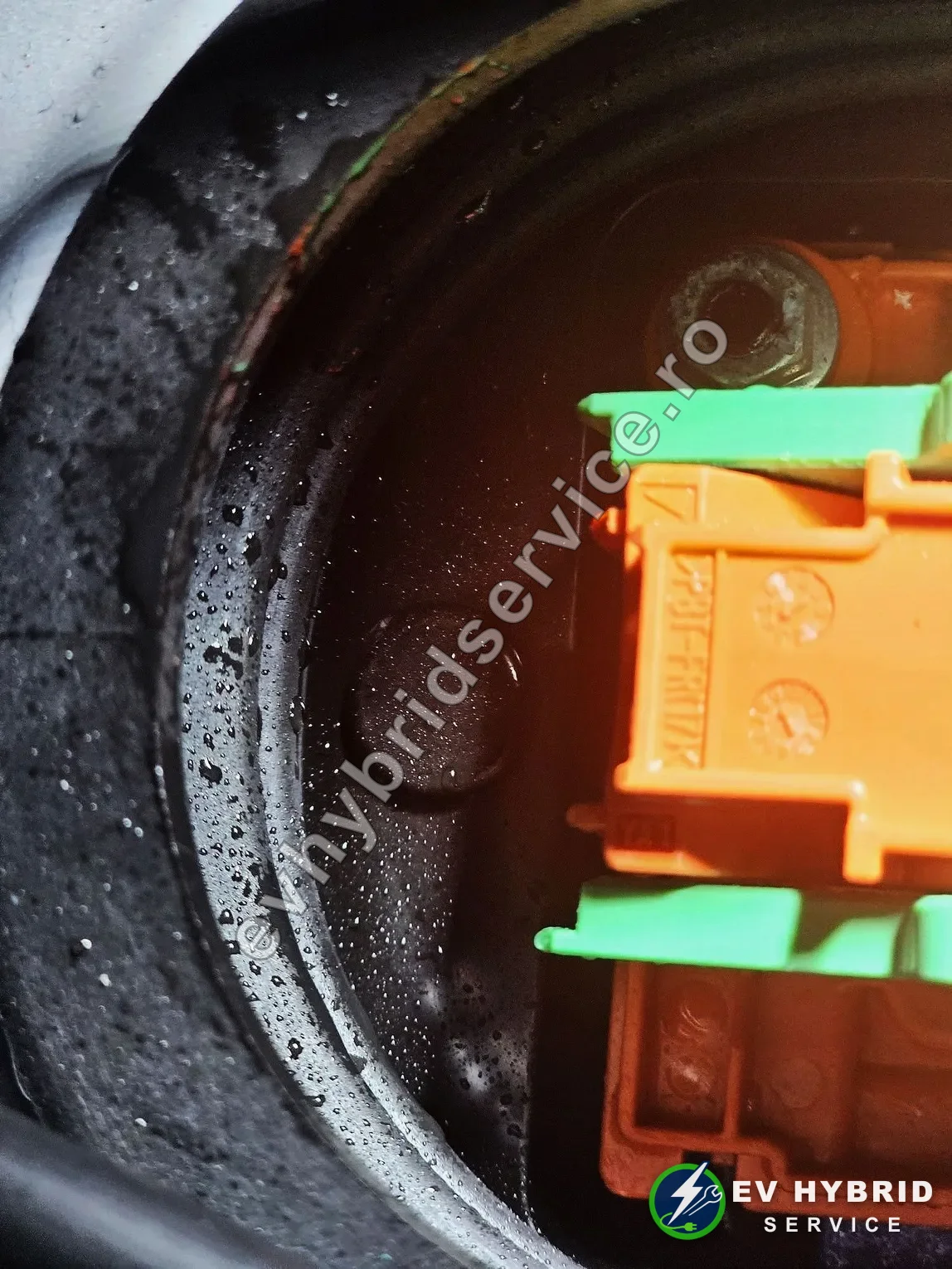
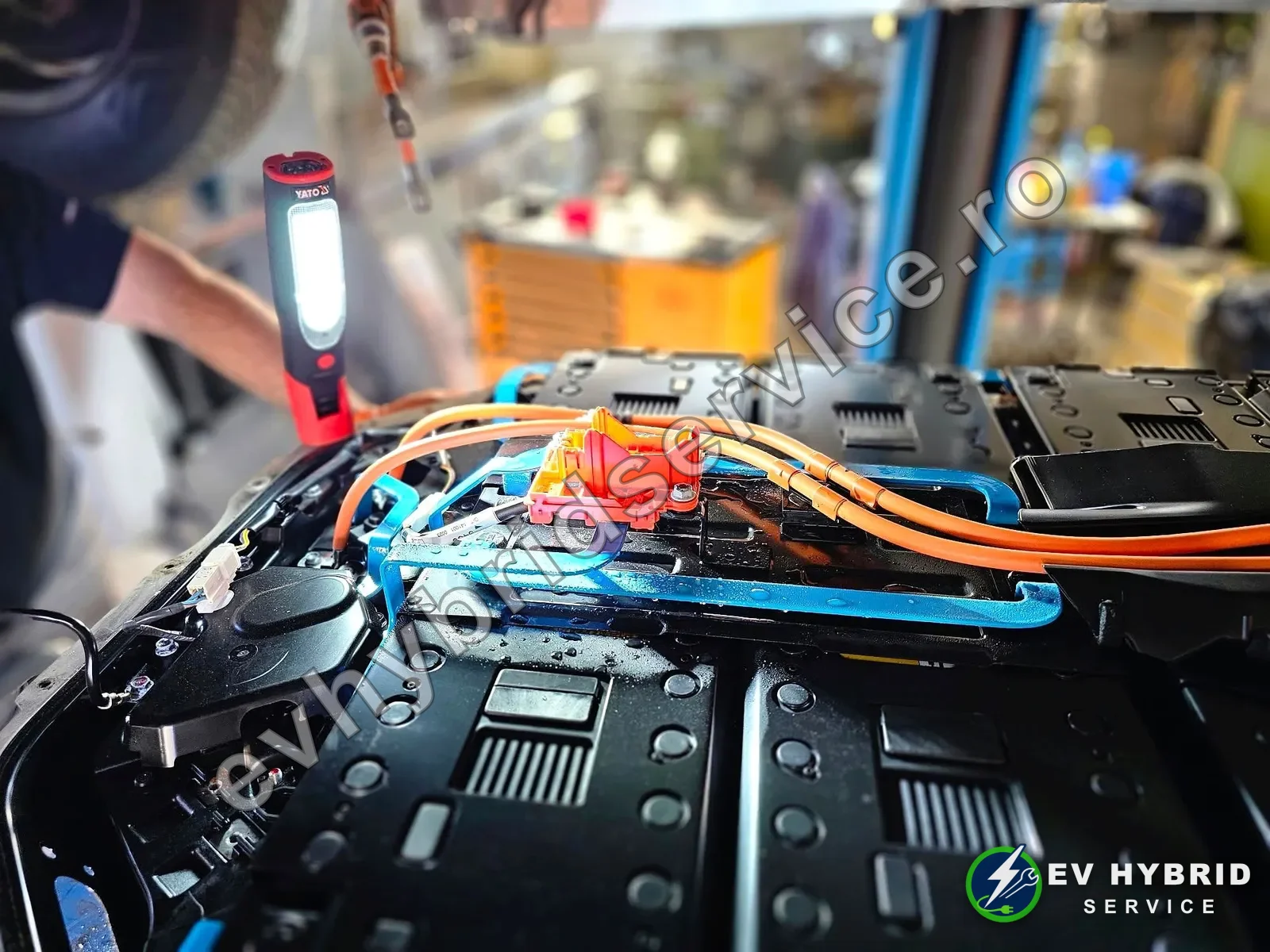
We investigated the high-voltage battery and its electronics and found an insulation fault. The moisture was visible right from the service plug bay.
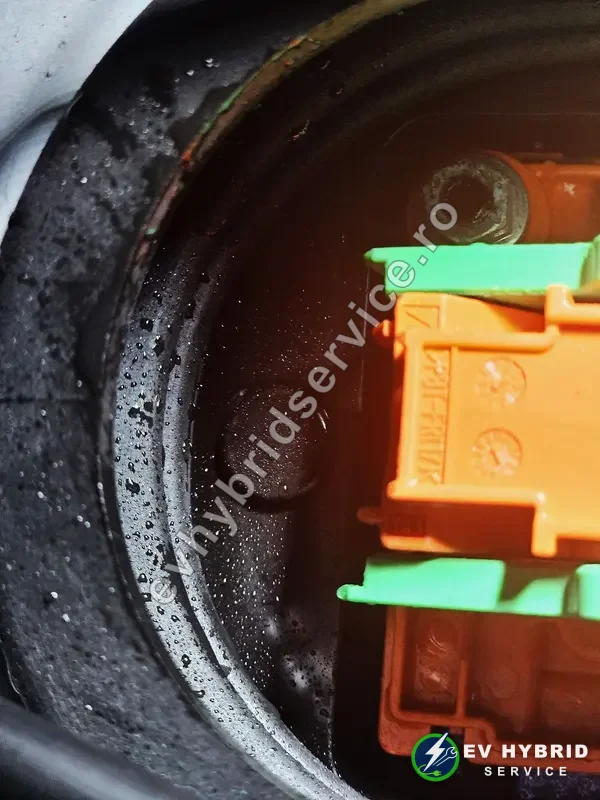
The service plug bay, with water droplets. 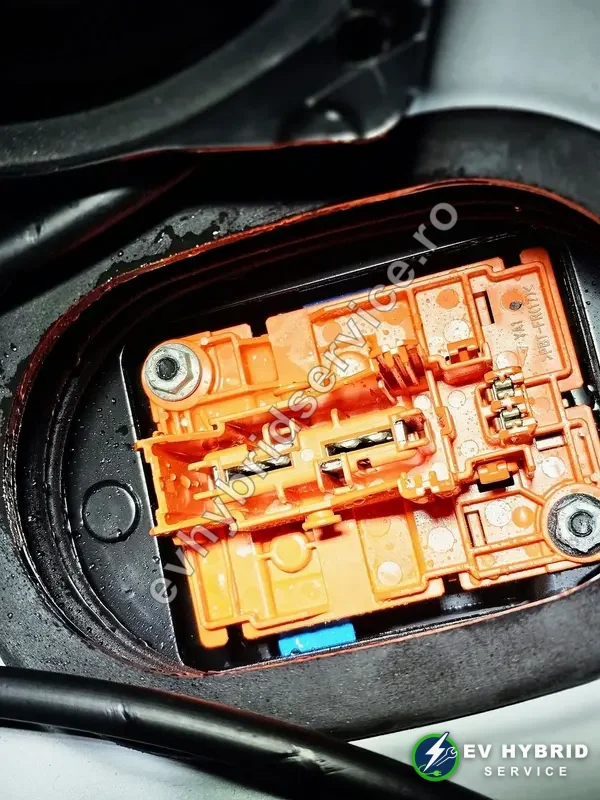
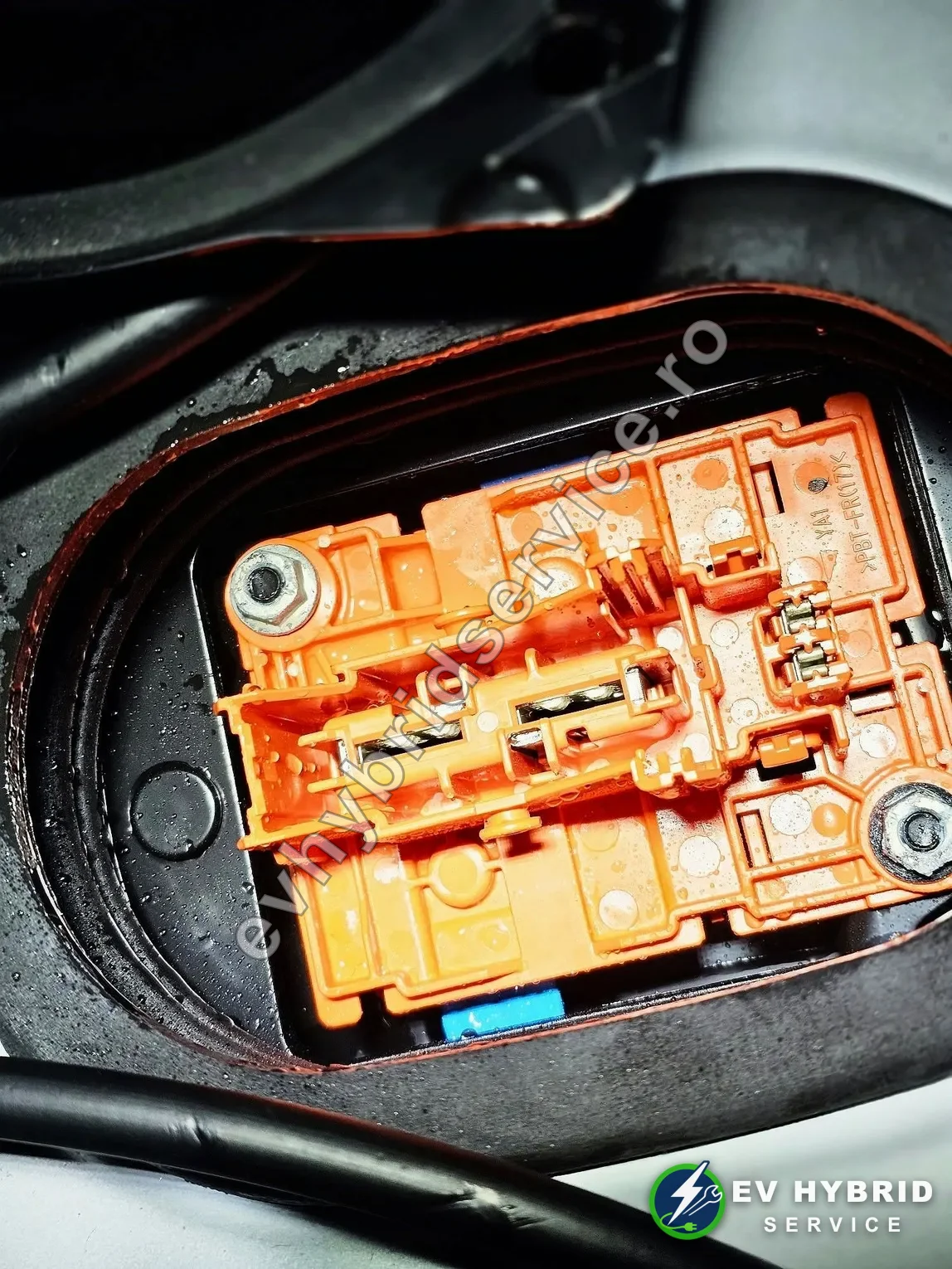
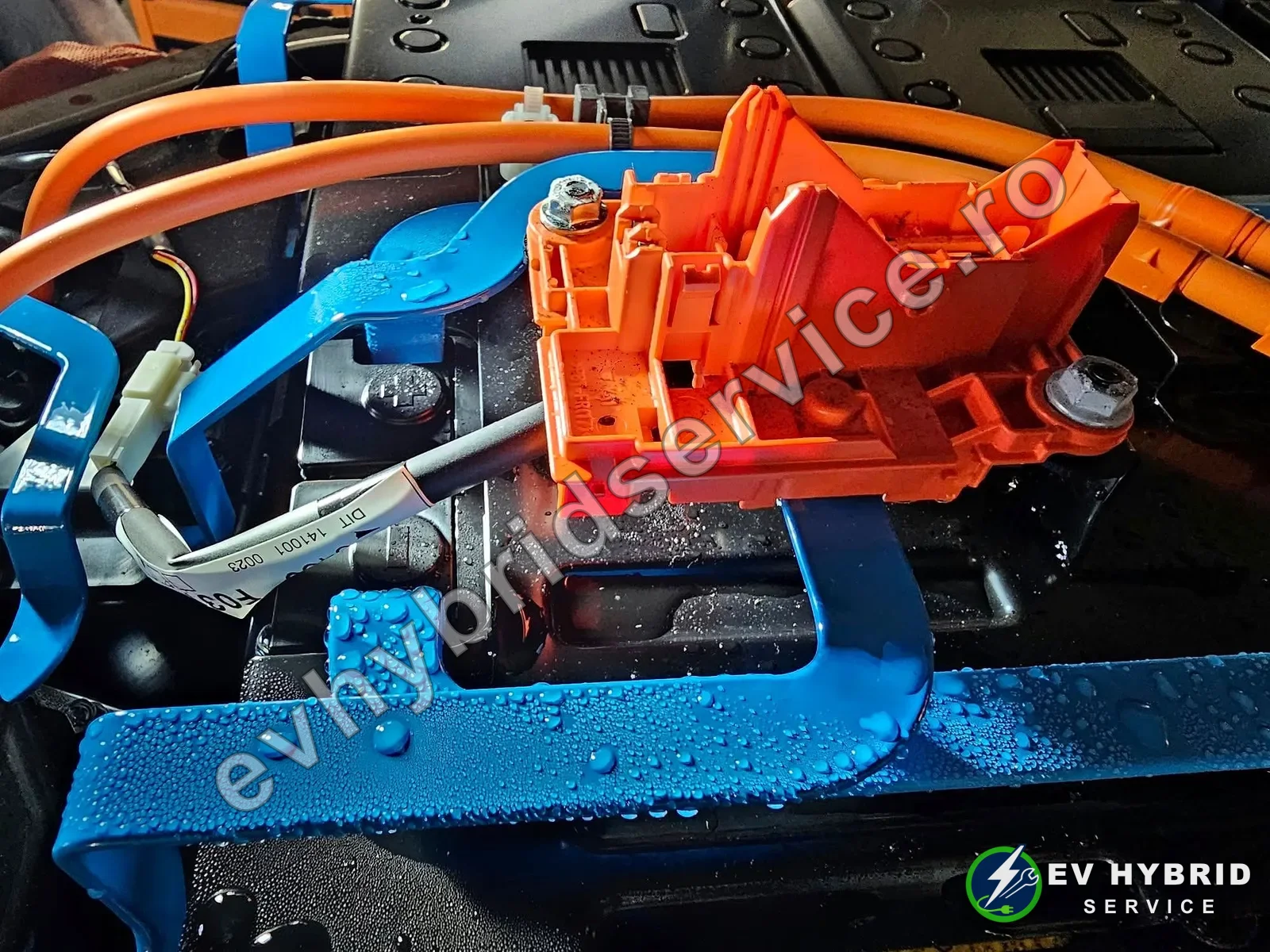
The orange connector, with traces of moisture. Step 2
Removing and opening the battery
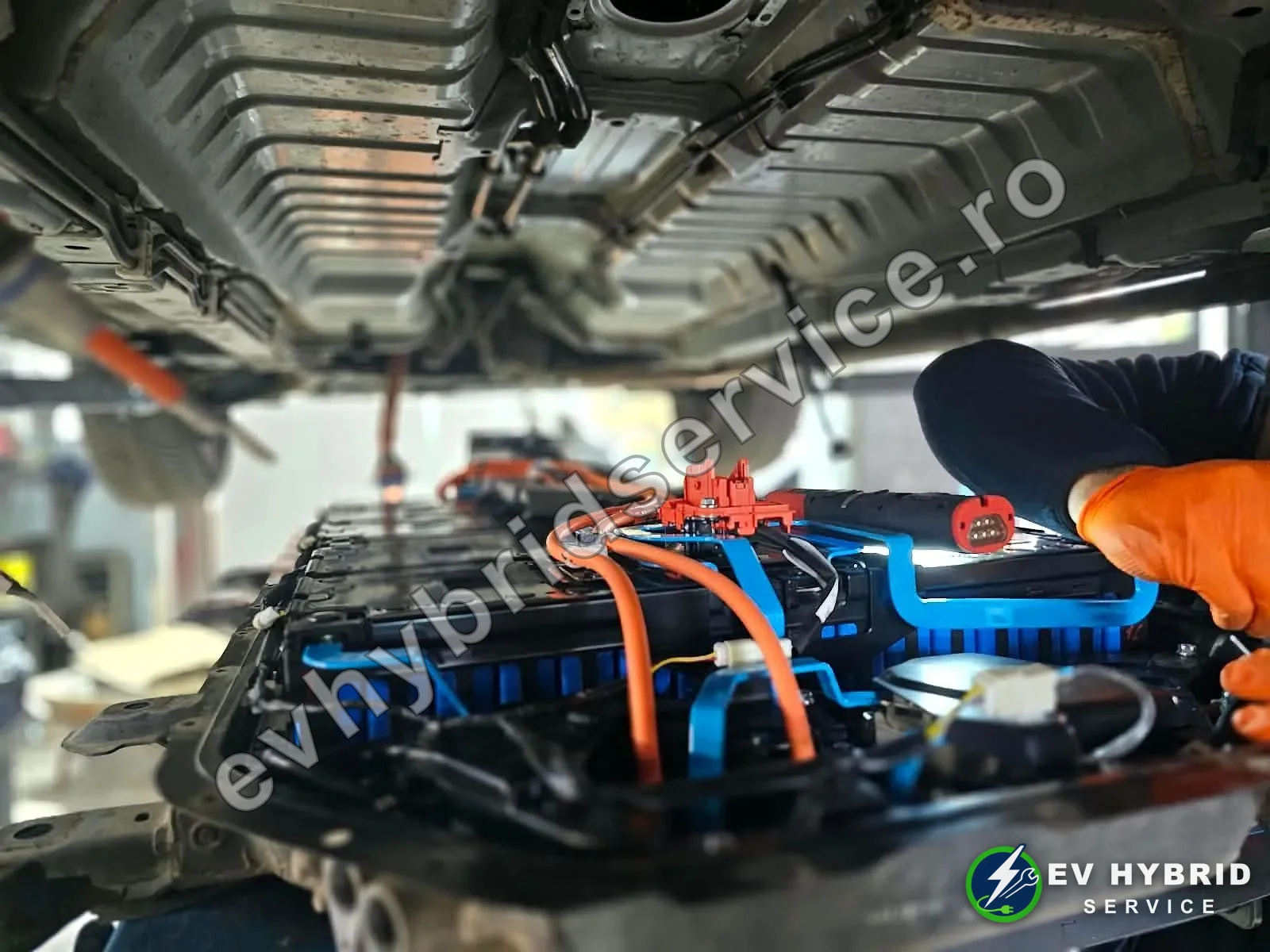
We took the battery out and inspected it: significant traces of water and advanced corrosion on the electronic parts and connections, not just in one module.
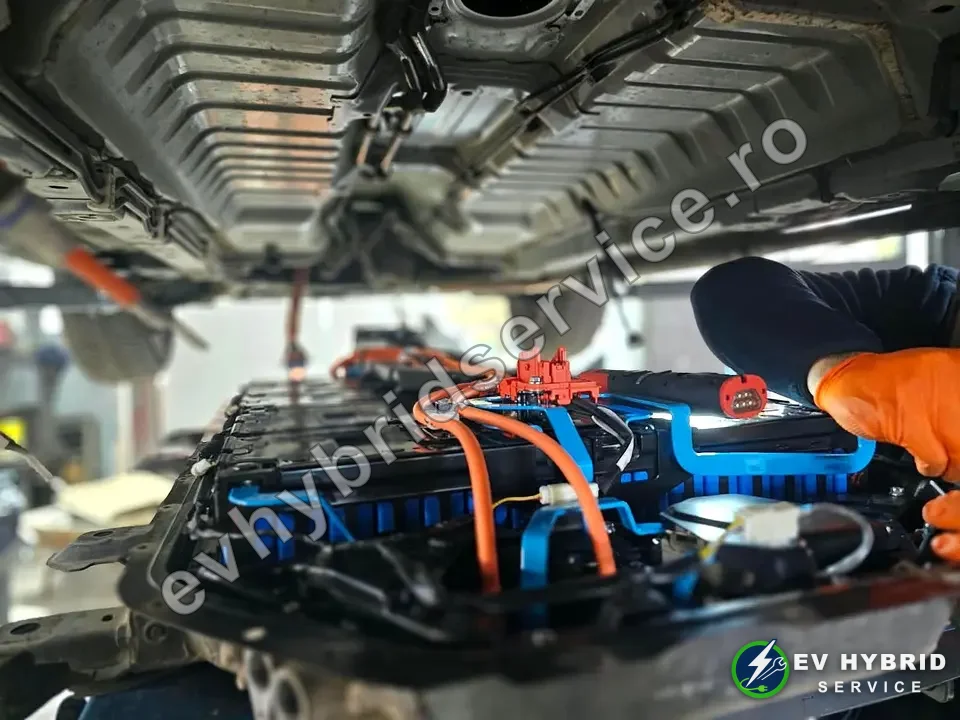
Working on the high-voltage battery. 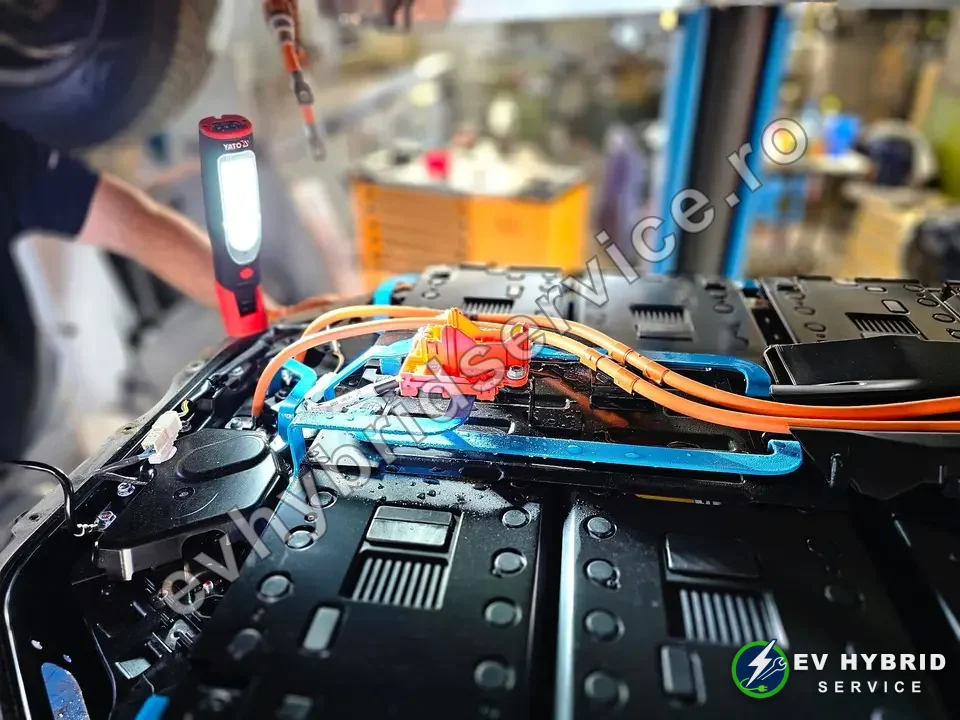
The battery opened, in the workshop. 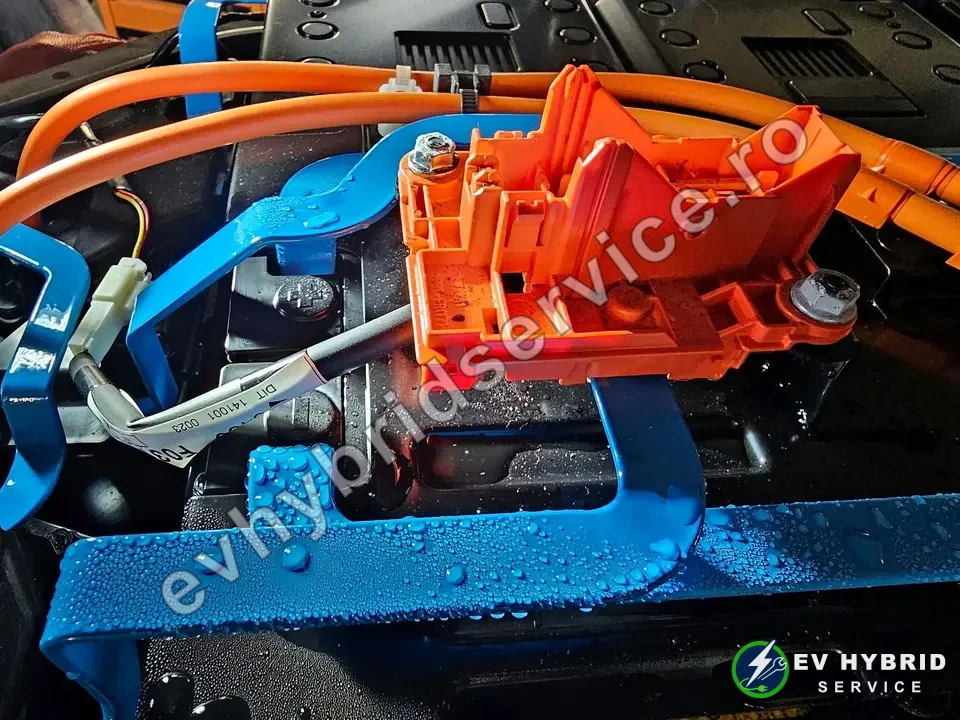
On the opened battery: the connector and bracket, with water droplets. 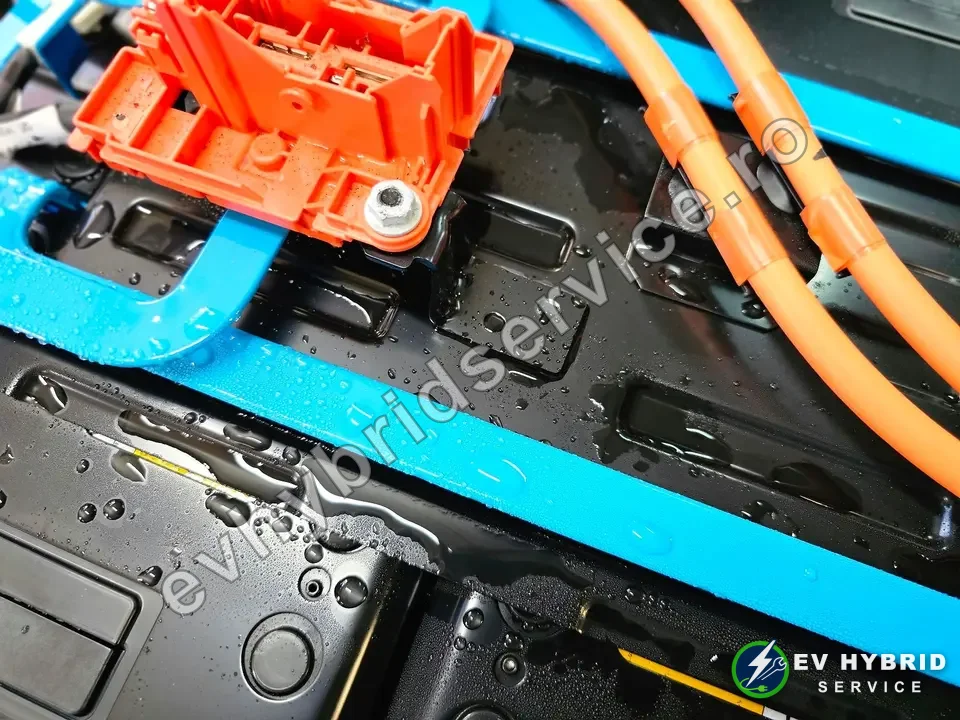
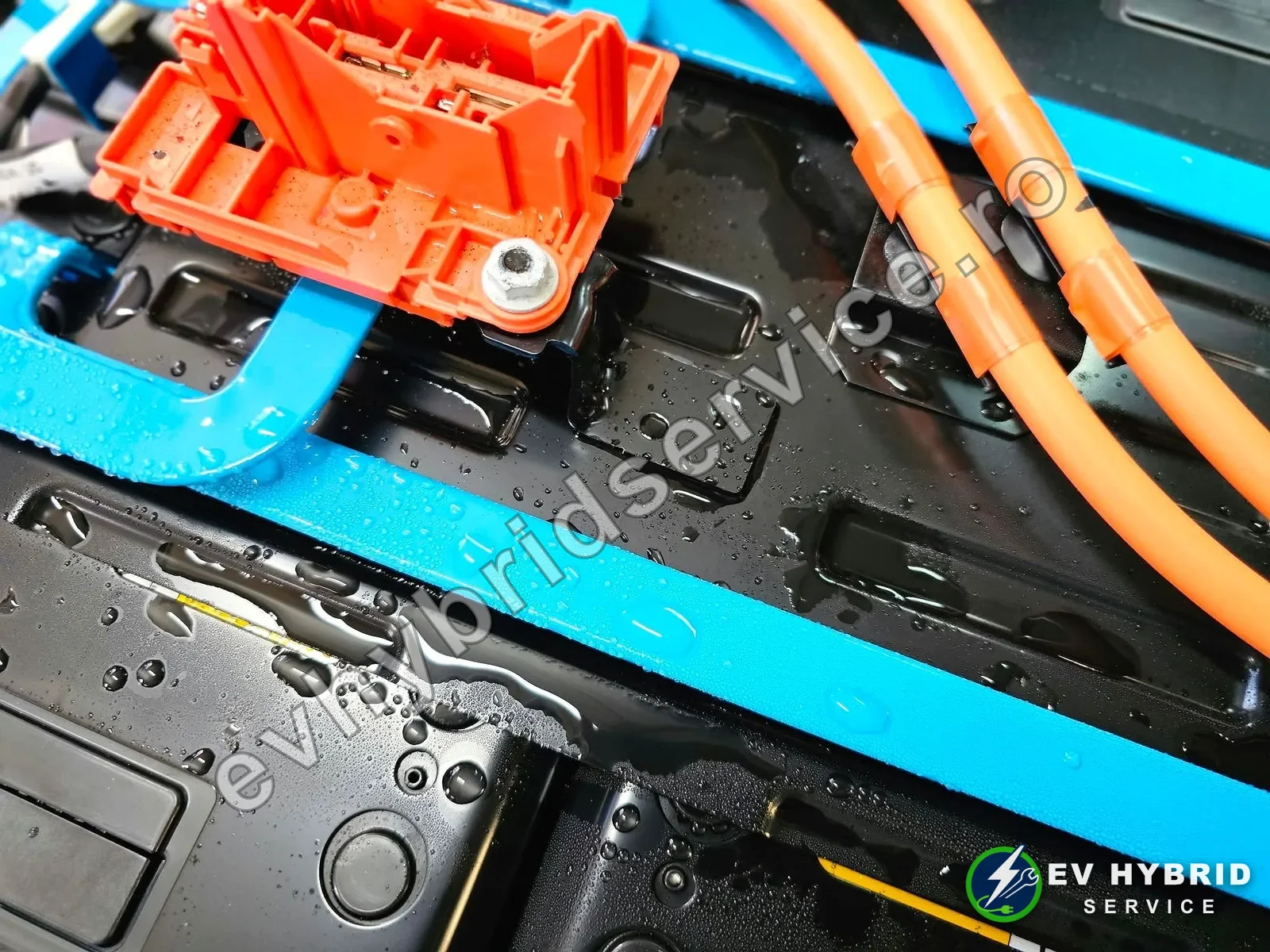
Water left inside the battery. 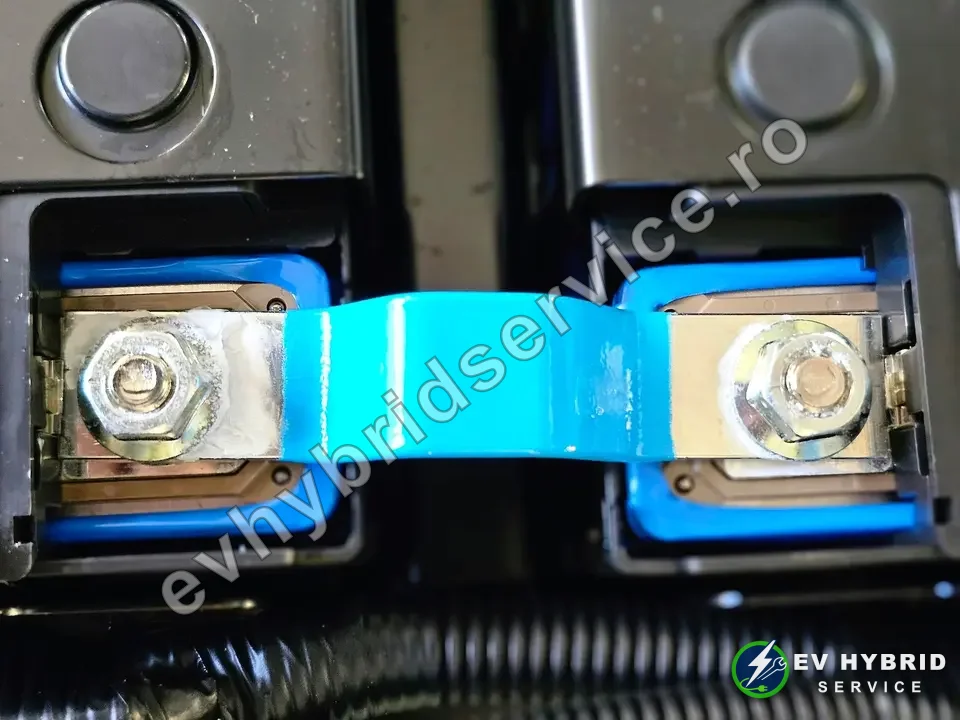
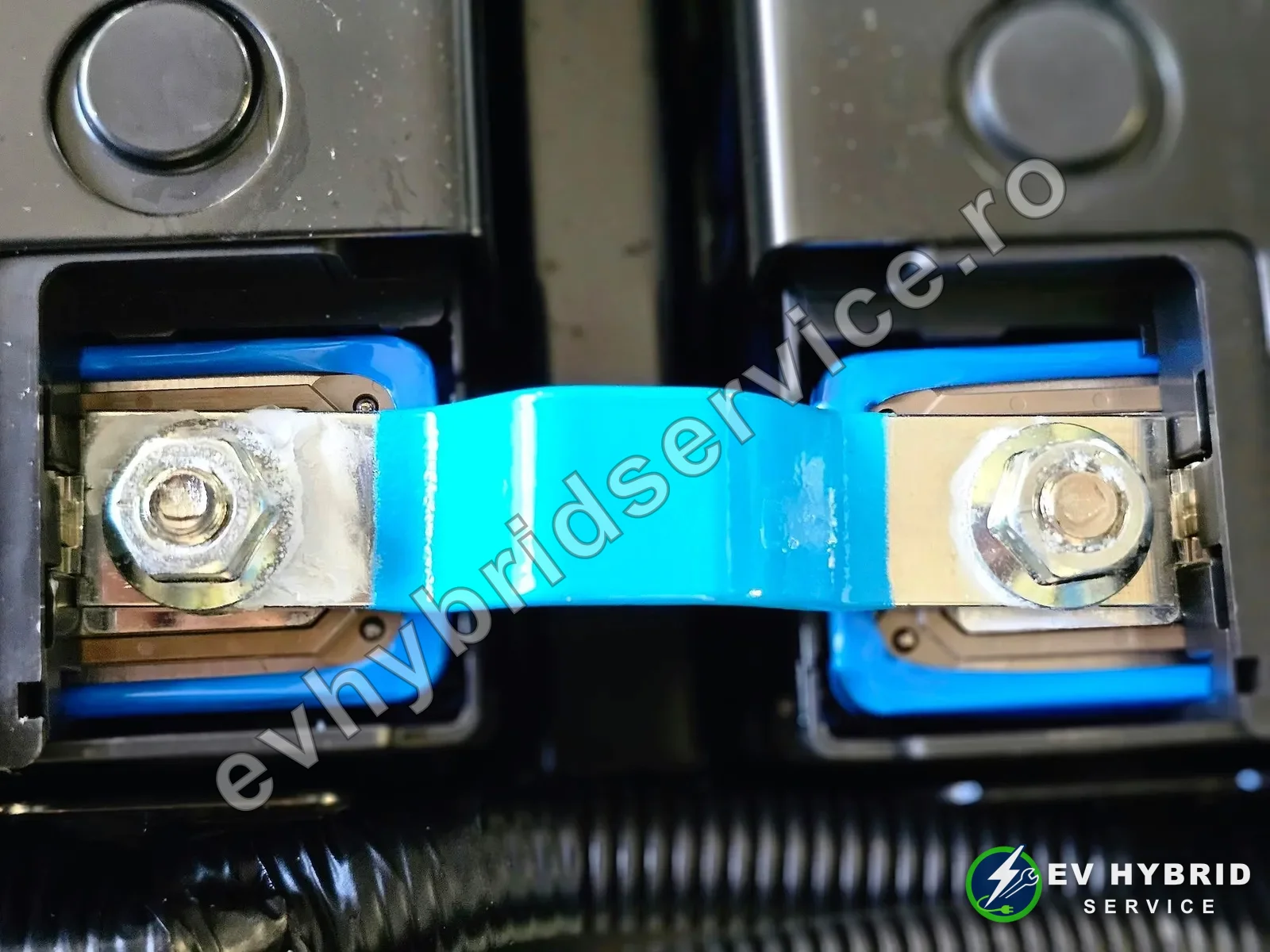
The bus bar between two modules. Step 3
Deciding: replacement, not reconditioning
The water had affected the electronics responsible for the battery’s operation and safety. A partial clean would not have stopped corrosion in hard-to-reach areas of the boards, so we chose to replace the whole assembly.
Step 4
Replacing the traction battery
We fitted another traction battery in place of the corroded one, without reusing internal parts whose reliability could no longer be guaranteed.
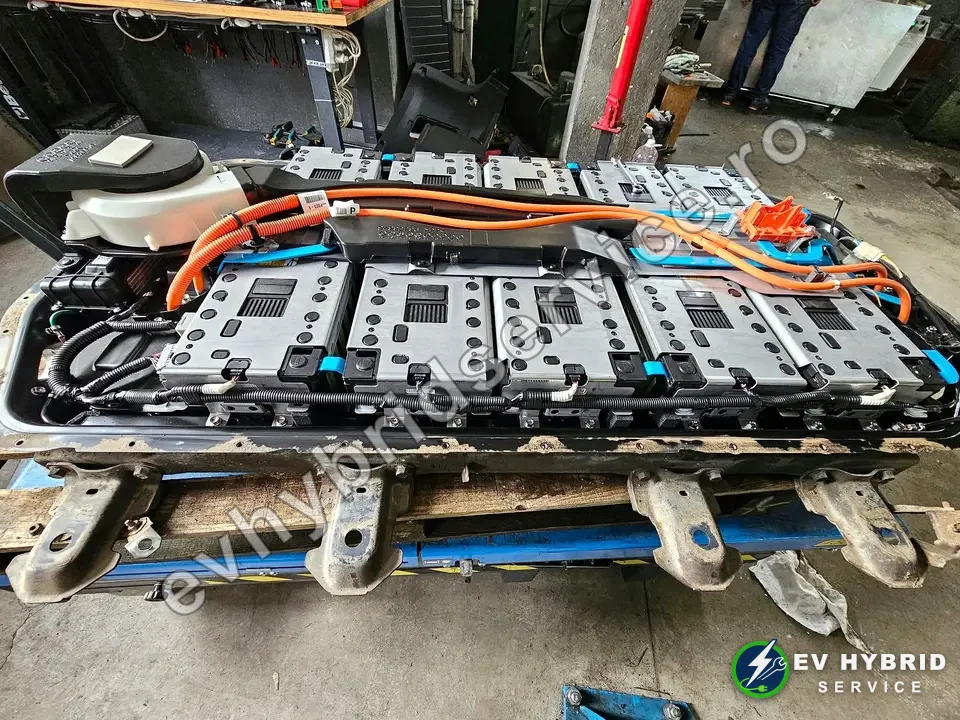
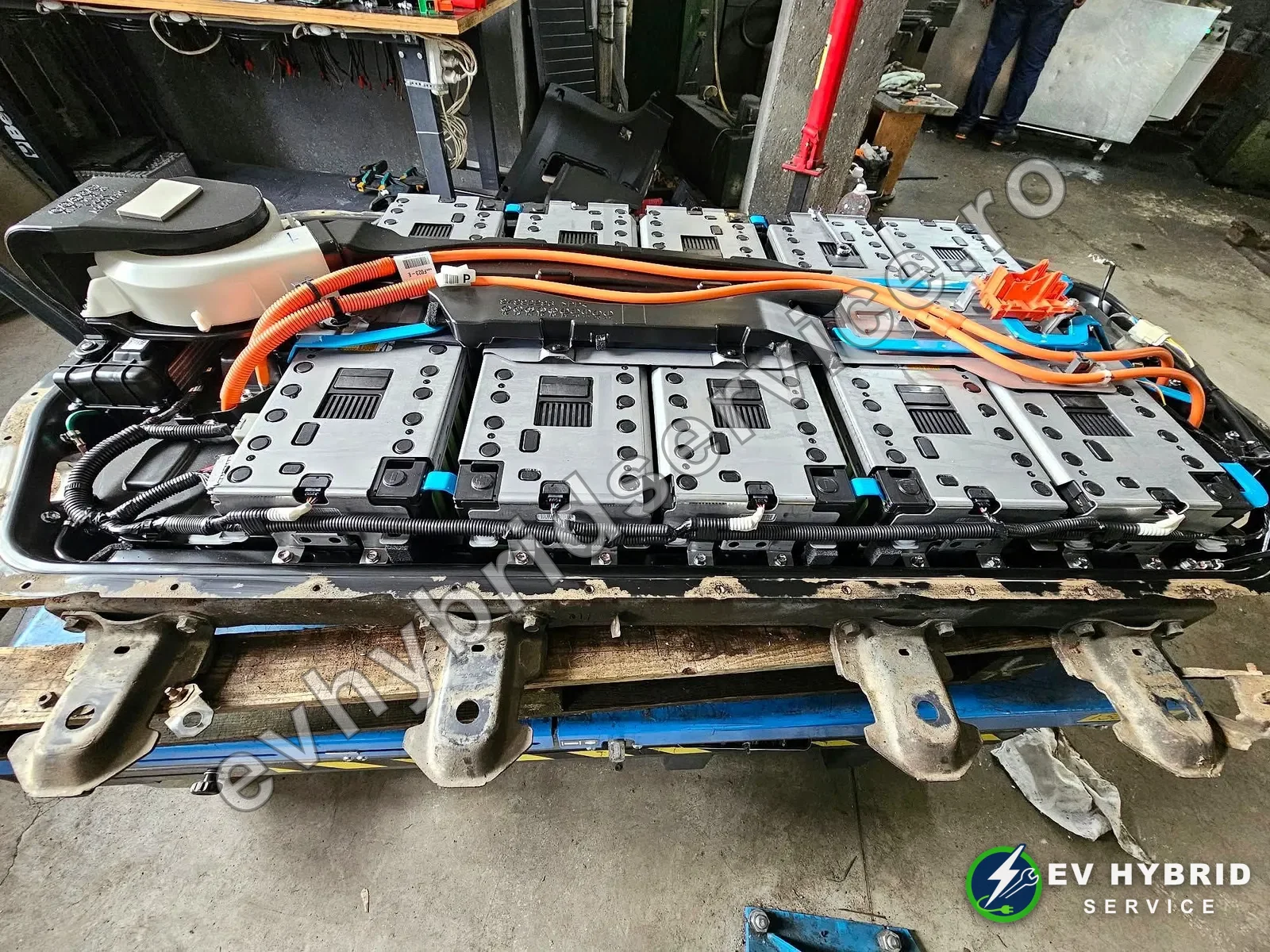
The traction battery, on a pallet. 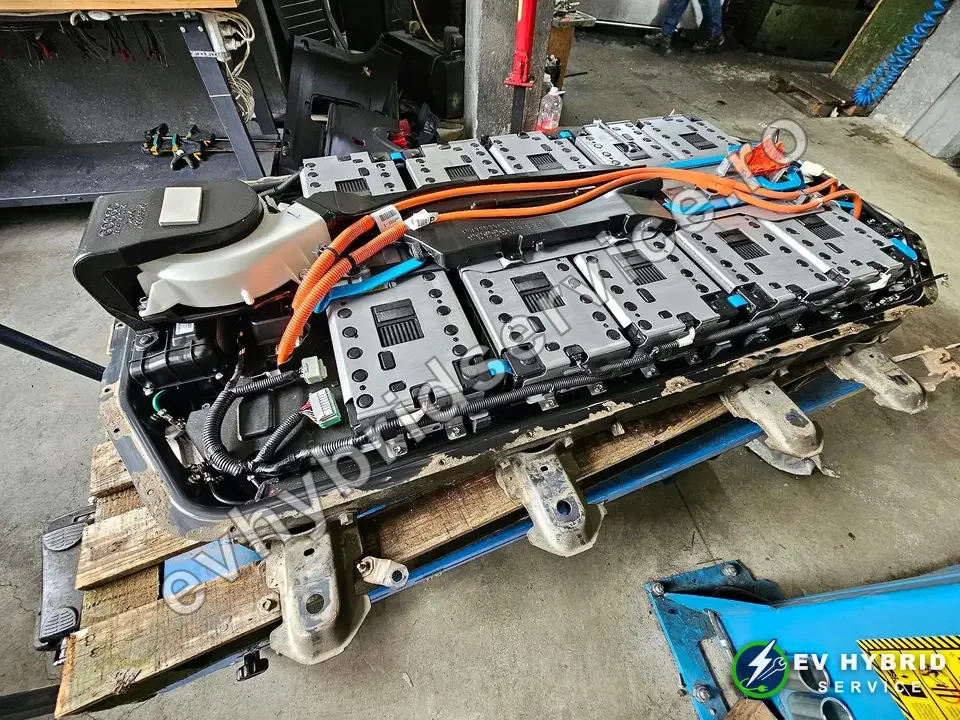
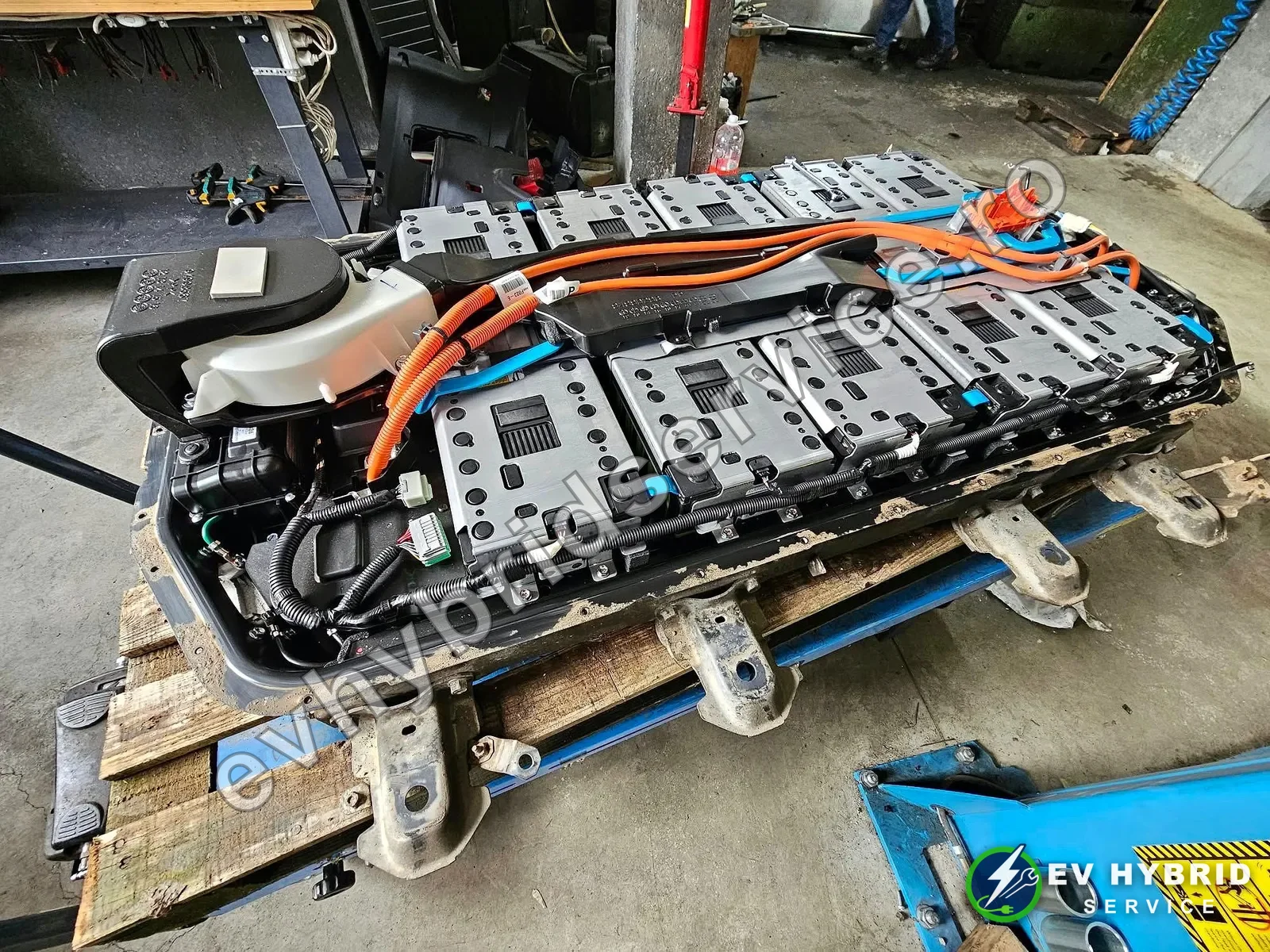
The same battery, from the side.
After a replacement like this, the final checks confirm the insulation resistance, BMU–CMU communication, cell values, contactor operation and READY mode. On the Outlander PHEV, diagnosis and adaptations are done with Mitsubishi-compatible equipment such as the M.U.T.-III.
Before and after
When it came in
- High-voltage system insulation fault
- Water and corrosion in the traction battery
- Management electronics affected
At handover
- Traction battery replaced outright
- Corroded electronics out of the system
- No internal parts reused
What to check on a plug-in hybrid that stood unused for long
- Traces of water or moisture around the battery or the service plug
- Insulation faults or lost communication with the battery modules
- The car will not enter READY mode or refuses to charge
- The traction battery discharged heavily while standing
Does your Outlander PHEV show an insulation fault, or has it stood unused for long? We check the battery before the corrosion gets worse.
Book a diagnosis →Frequently asked questions
What does fault P0AA6 mean on an Outlander PHEV?
That the system has detected a loss of insulation in the high-voltage circuit. It can appear when insulation resistance drops because of moisture, contamination or a damaged part.
Can a car ruin its battery just by standing unused?
Standing alone discharges the battery but does not corrode it. Here the problem was the water inside: the nine months standing let the moisture act and the corrosion spread.
Why not repair just the affected module?
Because the water had not affected a single module but the management electronics and connections in several places. In a high-voltage system, a partial repair would not have been safe enough.
What is checked after the battery is replaced?
Insulation resistance, communication between the battery computer and the modules, cell values, the contactors and starting in READY mode, with a Mitsubishi-compatible tester.
Photos from the job
Tap a photo to see it full size; use the arrows to browse.
The service plug bay, with water droplets.
The orange connector, with traces of moisture.
On the opened battery: the connector and bracket, with water droplets.
Water left inside the battery.
The bus bar between two modules.
The battery opened, in the workshop.
Working on the high-voltage battery.
The traction battery, on a pallet.
The same battery, from the side.
Read next
Battery repairs
Hyundai Kona Electric losing coolant with no error on the dashboard: how we repaired the cooling circuit of the high-voltage battery
A 2024 Hyundai Kona Electric was losing a lot of fluid from the battery cooling circuit, though the dashboard showed nothing. After a hard impact, a pipe had cracked. We replaced it, sealed the small cracks, and the battery stayed on the car.
3 min read
Battery repairs
Opel Combo Electric that would no longer charge from a socket: how we repaired the on-board charger without replacing it
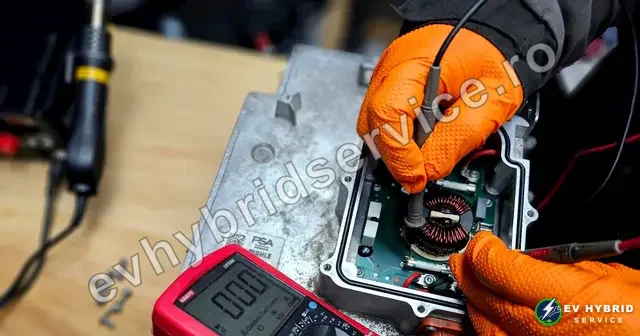
A 2024 Opel Combo Electric would no longer charge its battery from a socket. The culprit was the on-board charger, where one of the low-voltage electronic supplies had stopped working properly. We repaired it, and the original charger stayed on the car.
2 min read
Battery repairs
Nissan Leaf 40 kWh with communication errors and insulation faults: how we restored the 12 V supply and repaired the high-voltage insulation
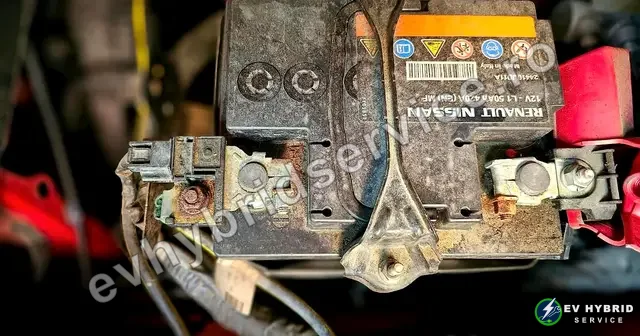
A Nissan Leaf 40 kWh had errors in a chain and no longer talked to its climate system. Where it all started: the oxidised terminals of the 12 V battery. Once we restored the supply, diagnosis also turned up high-voltage insulation faults, which we fixed.
2 min read