
Workshop job ·
Nissan Qashqai Mild Hybrid with a deeply discharged lithium-ion battery: how we repaired the mild hybrid battery, from cells at 0 V to zero faults
A 2021 Nissan Qashqai J12 came to us through a partner garage with a fault in the lithium-ion battery of its mild hybrid system. We found cells discharged down to 0 V. We recovered the battery, refitted it and integrated it again with genuine Renault–Nissan diagnostics.
- voltage of the most discharged cells
- ~0 Vvoltage of the most discharged cells
- stabilised voltage after the repair
- 12.6 Vstabilised voltage after the repair
- consecutive stop and restart cycles in testing
- 6consecutive stop and restart cycles in testing
- active faults at the end of testing
- 0active faults at the end of testing
The problem
A 2021 Nissan Qashqai J12 with the 1.3 DIG-T Mild Hybrid engine had a fault in the lithium-ion battery of its mild hybrid system.
The diagnosis
We removed the battery and measured the cells one by one: some were at about 0 V, others at about 2 V. A deep discharge, with a large imbalance between cells.
The fix
We recovered the battery on the bench with dedicated equipment, refitted it, then ran the software procedures and cleared the faults with genuine Renault–Nissan diagnostics.
The result
The battery resumed its charge and discharge cycles, the voltage settled at 12.6 V and no active fault was left at the end.
A small battery with a lot to do
The Qashqai, a 2021 J12 with the 1.3 DIG-T Mild Hybrid engine, was sent to us by a partner garage. The problem was the lithium-ion battery of the mild hybrid system, a low-voltage battery separate from the car’s ordinary battery.
When this battery fails, the mild hybrid system loses some or all of its functions: Start-Stop stops working, the acceleration assist disappears, and the dashboard can show messages such as “Battery Management Fault – Service Now” or “Stop/Start System Fault”.
What we found inside the battery
We removed the battery from the car and checked every cell on its own. The readings were very low: cells at about 0 V, others at about 2 V, with a large imbalance between them. In other words, a deep discharge, in which the mild hybrid system simply cannot work normally.
The job, step by step
Step 1
Getting to the battery
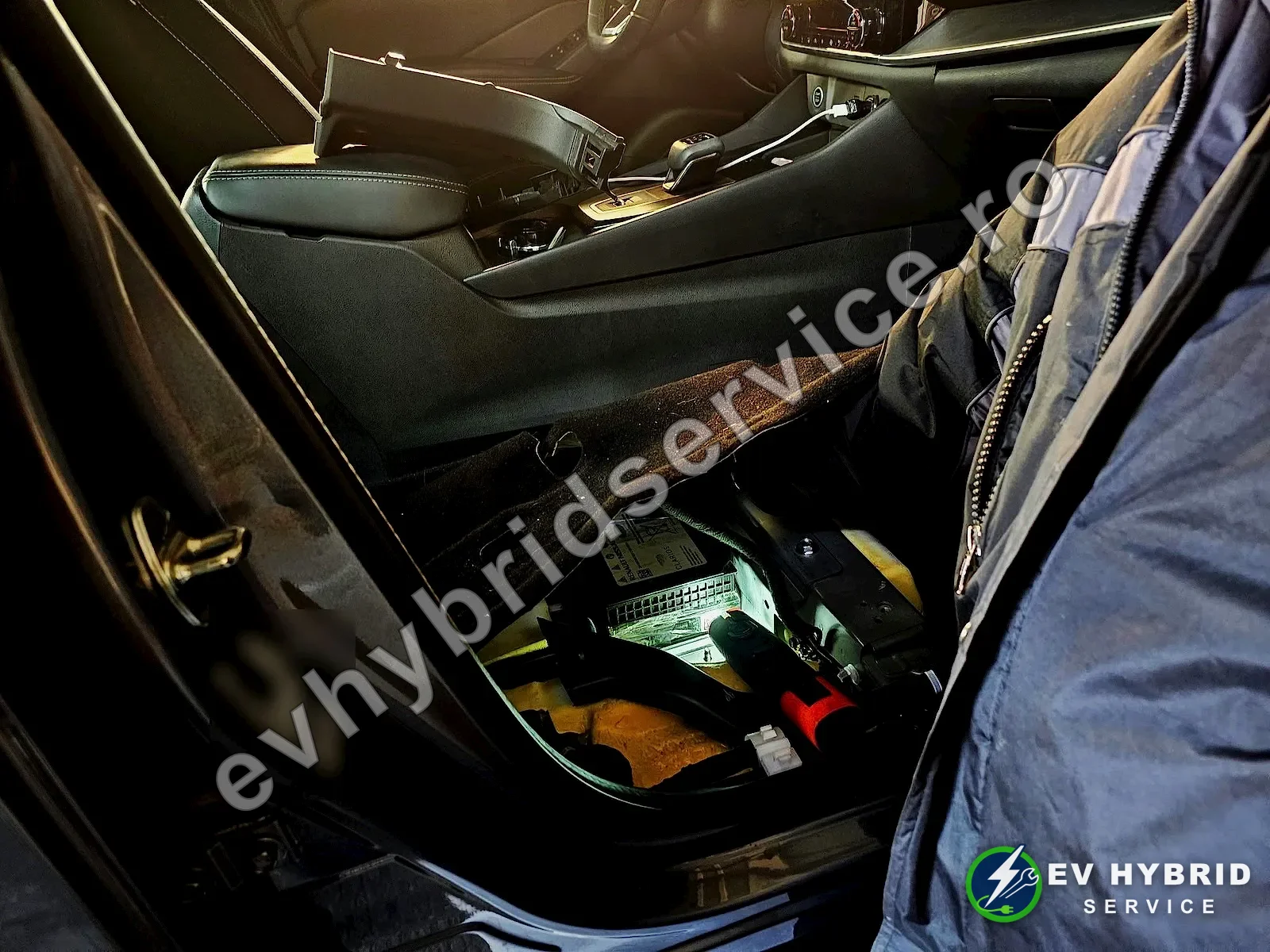
On the Qashqai the mild hybrid battery sits under the floor. We removed the driver’s seat and lifted the carpet to take it out.
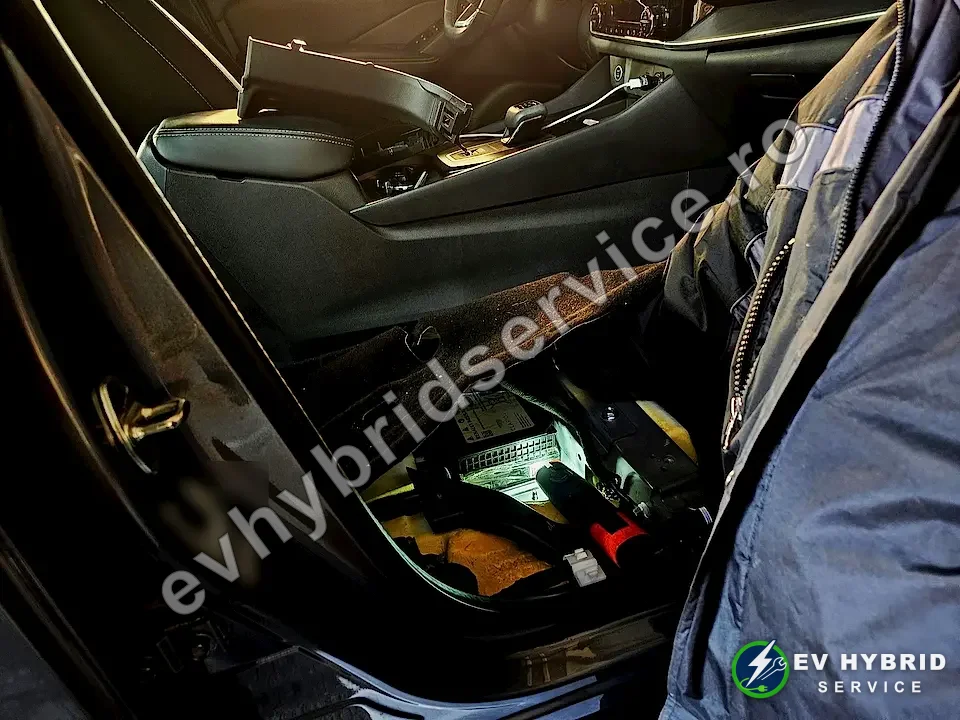
Driver’s seat out, carpet lifted: the mild hybrid battery sits under the floor. 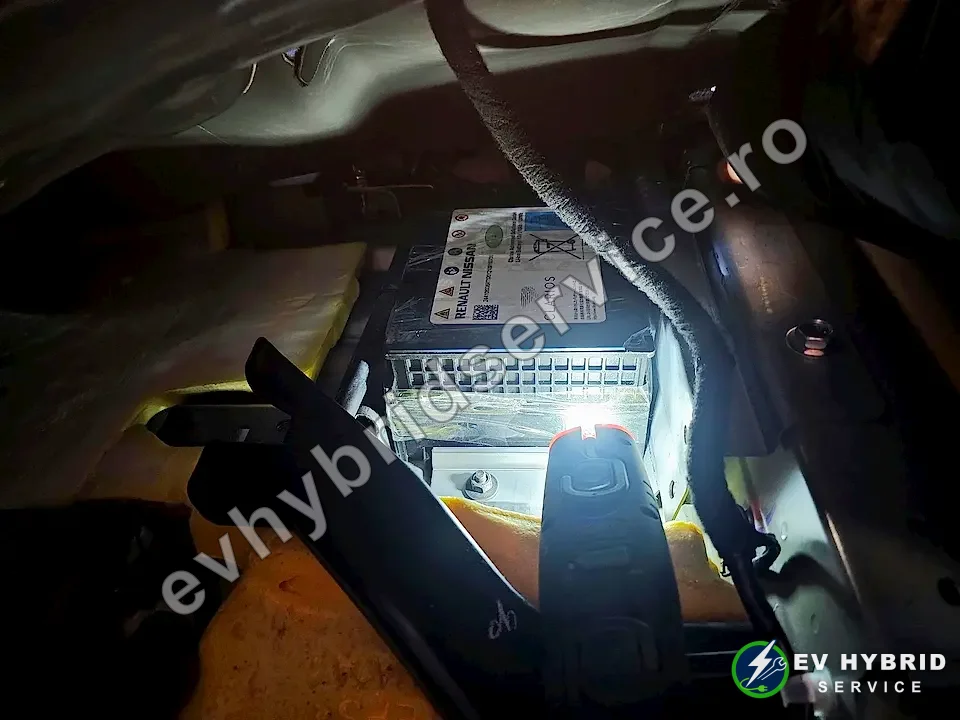
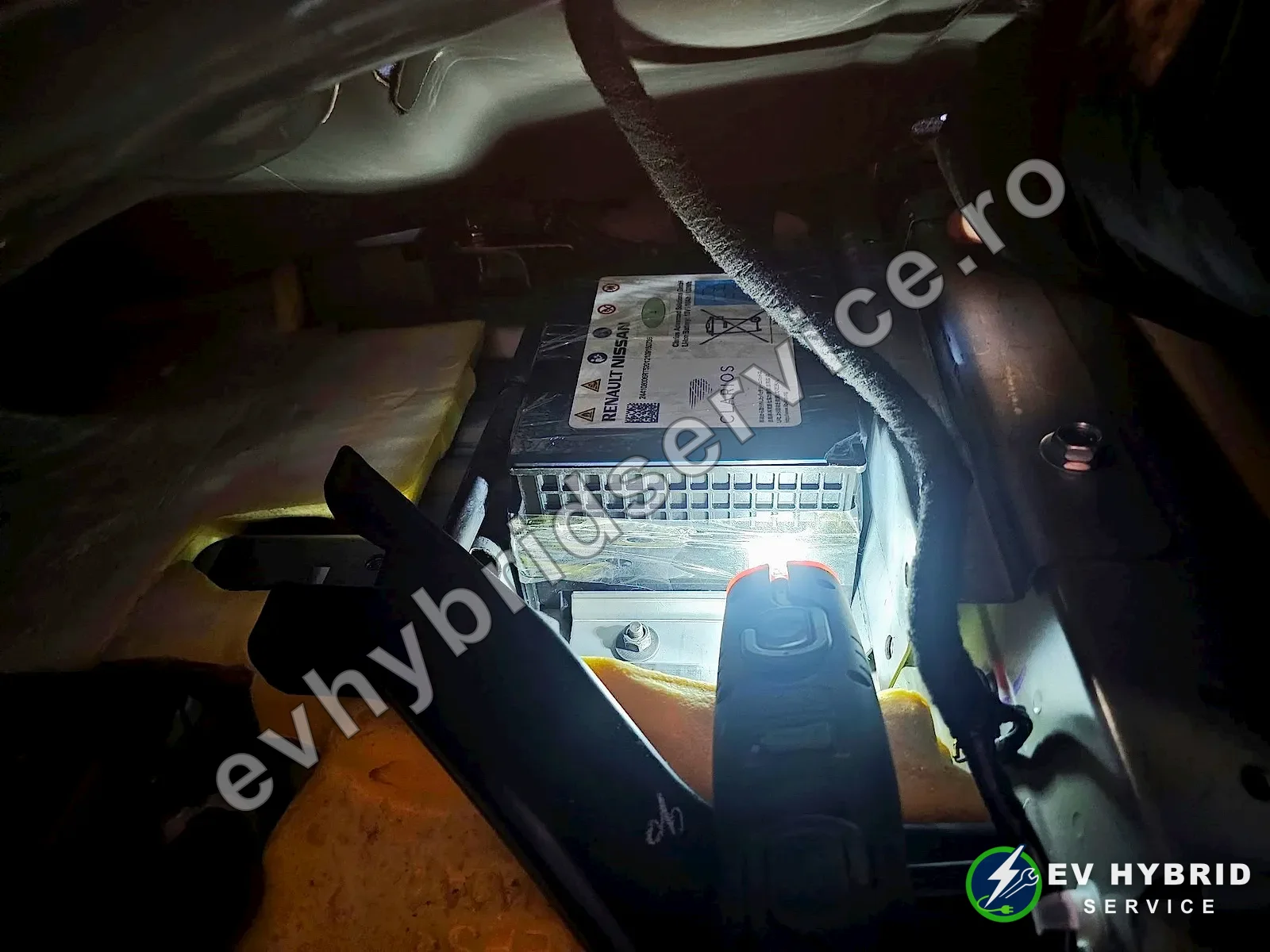
The lithium-ion battery in place, before removal. Step 2
Opening the battery and measuring the cells
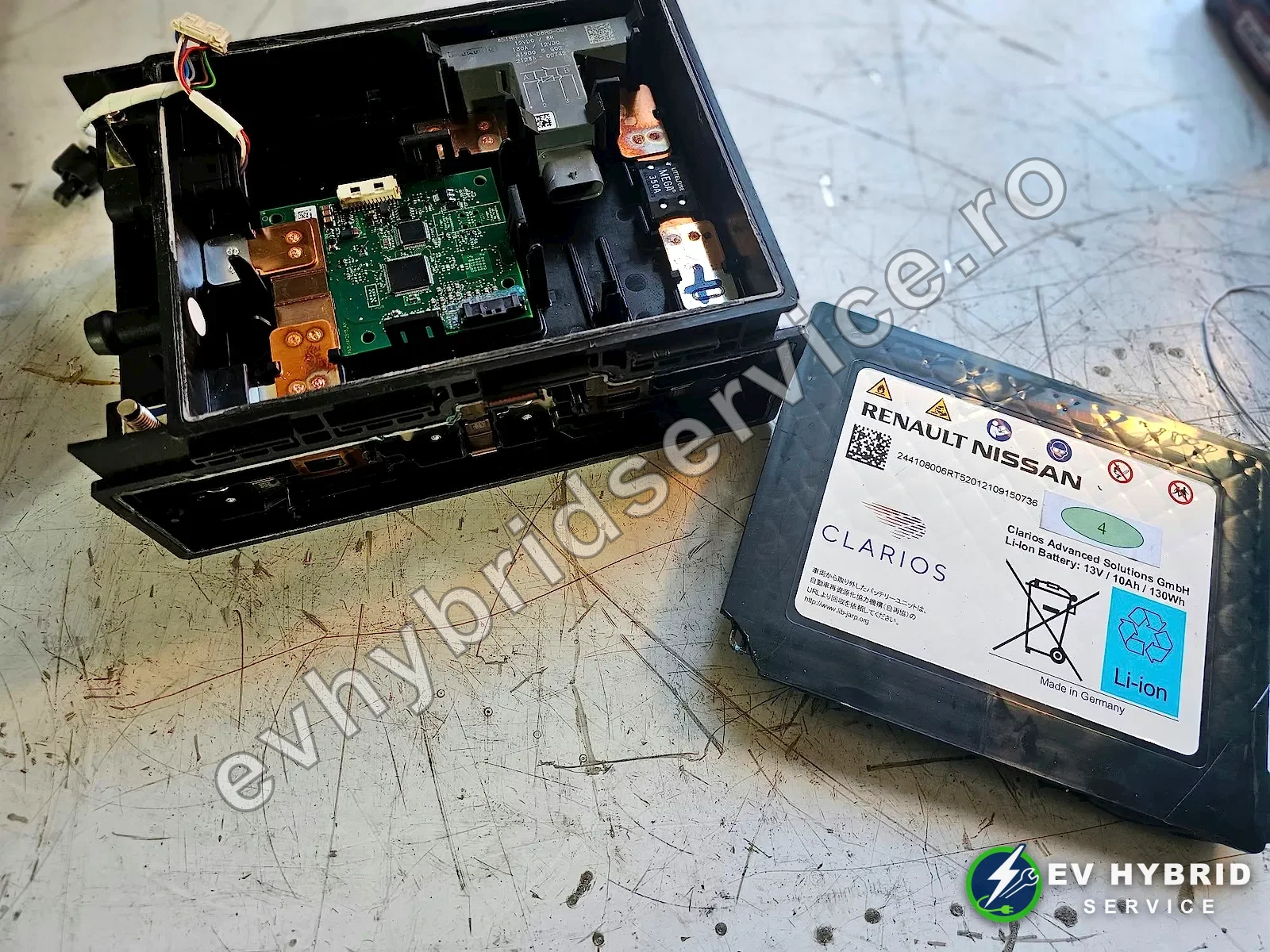
We took the battery out of the car and checked the cells individually. That is how we found the cells at about 0 V and 2 V and the imbalance between them.
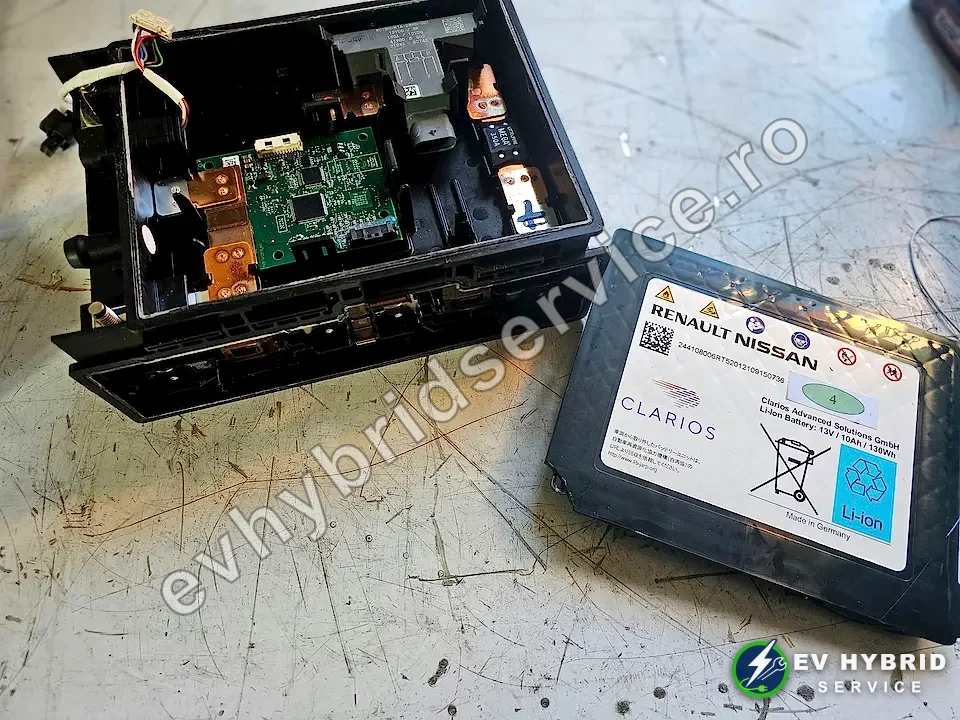
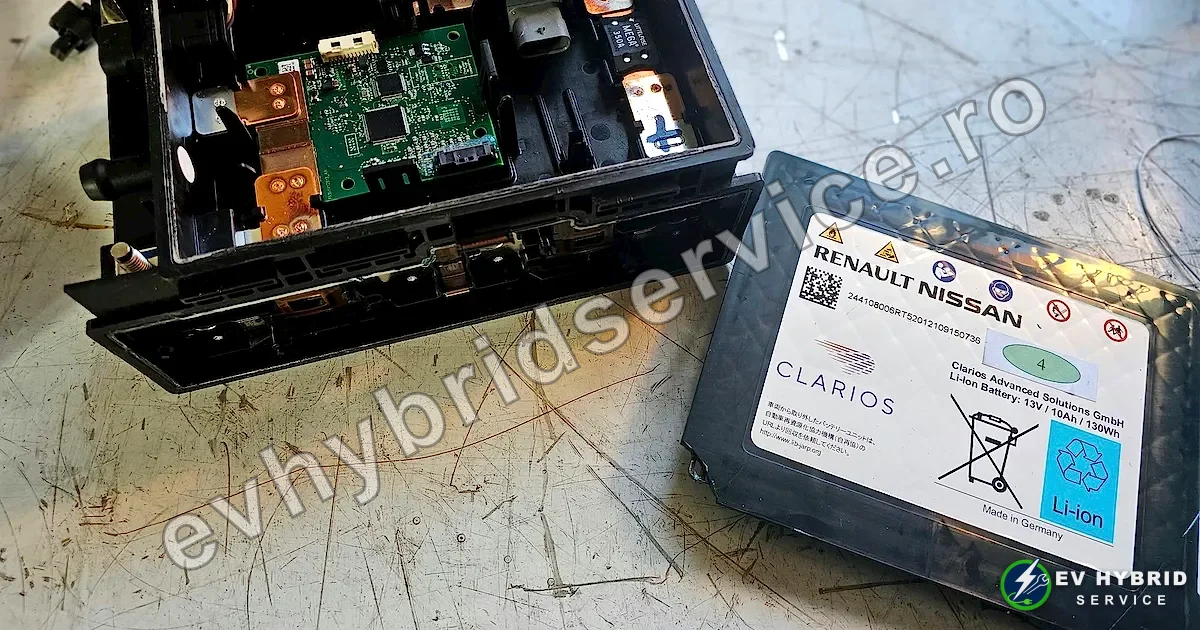
The battery out of the car and opened: Clarios Li-ion, 13 V, 10 Ah, 130 Wh. 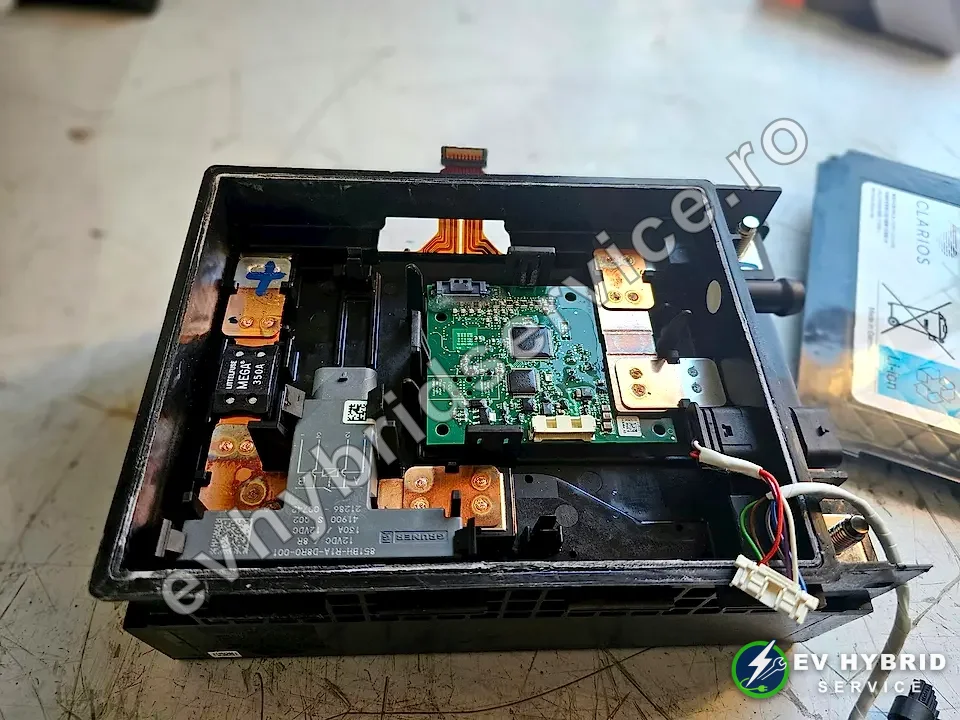
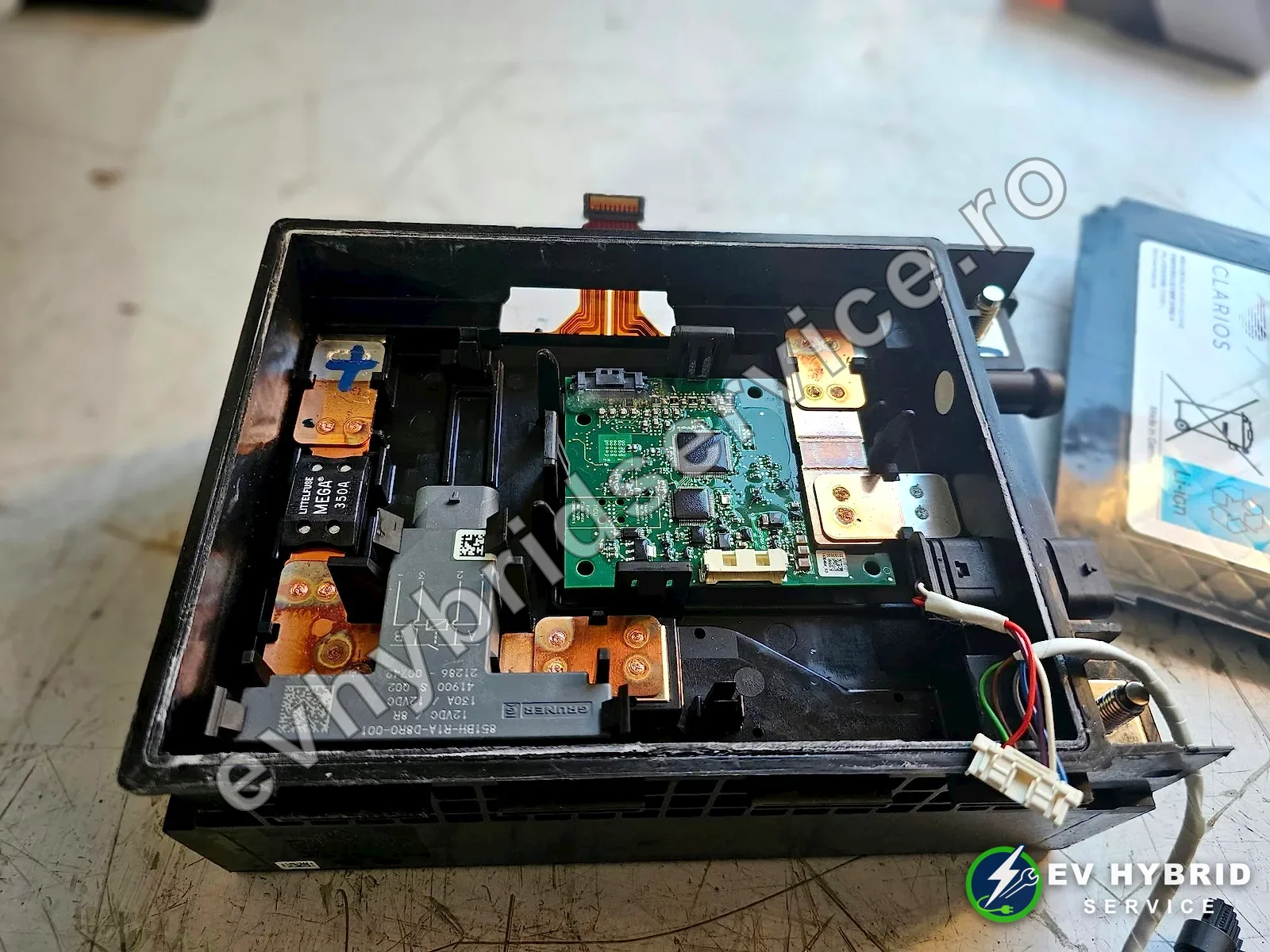
Inside the housing: the battery management board and the bus bars. Step 3
Recovering the battery on the bench
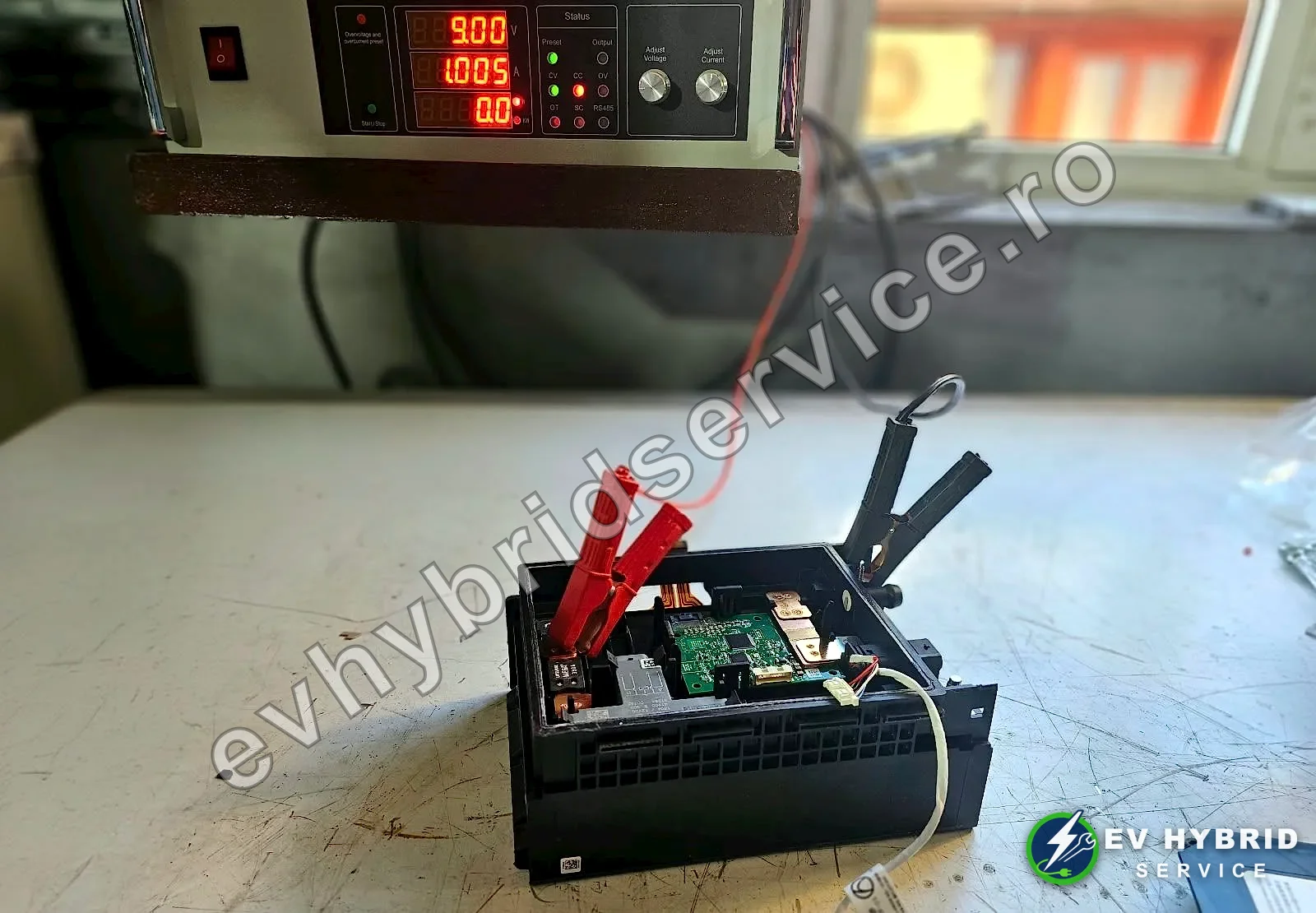
We worked on the battery with equipment made for energy storage systems until it was in a state where the car’s electronics would let it charge and discharge again.
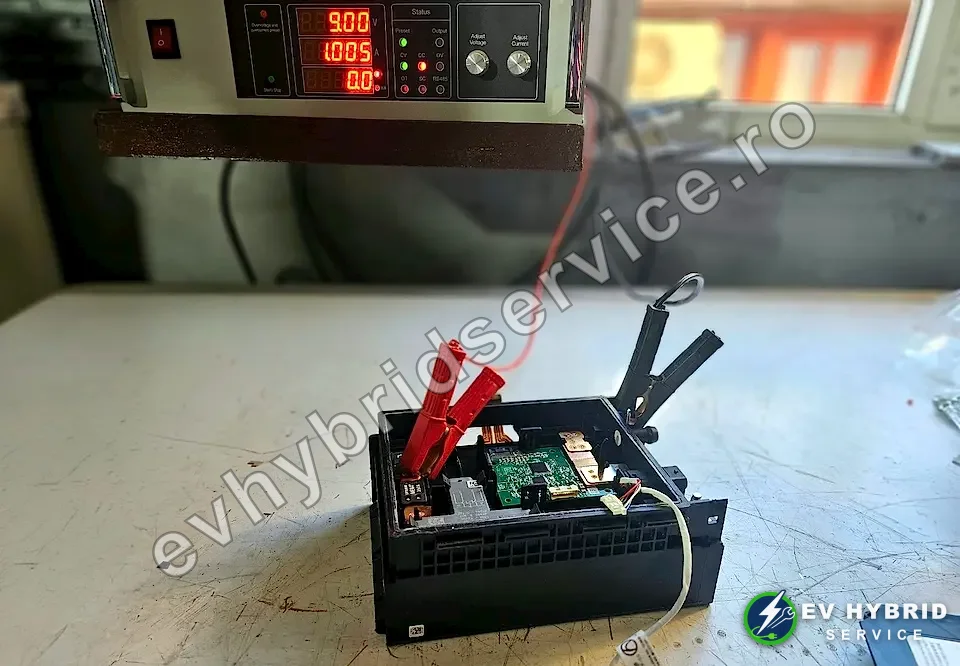
On the bench, connected to the lab power supply: 9.00 V, about 1 A, constant current. Step 4
Refitting and watching the voltages
We put the battery back and monitored it with the engine running: 12.2 V discharging, 12.8 V charging, 12.6 V settled, 6 consecutive stop and restart cycles, 0 active faults.
Step 5
Integrating the battery with genuine diagnostics
With genuine Renault–Nissan diagnostic equipment and an active licence, we ran the required software procedures, cleared the faults and checked the mild hybrid parameters.
Step 6
Final test
We brought the engine up to normal operating temperature and repeated the stop and restart cycles while watching the battery. The car accepted the battery, the voltage stayed stable and no fault came back.
Before and after
When it came in
- A fault in the mild hybrid battery
- Cells at about 0 V and 2 V
- Large imbalance between cells
- The mild hybrid system could not work normally
At handover
- The battery charges and discharges again
- Voltage settled at 12.6 V
- 6 stop and restart cycles without trouble
- 0 active faults after repeated tests
Signs that the mild hybrid battery has a problem
- The “Battery Management Fault – Service Now” message on the dashboard
- The “Stop/Start System Fault” message, or Start-Stop no longer switches the engine off
- No more electric assist when accelerating
- Energy management or battery communication faults on diagnosis
- Higher fuel consumption than before
Is your Qashqai showing Battery Management Fault, or has Start-Stop stopped working? We check the mild hybrid battery cell by cell and integrate it with genuine Renault–Nissan diagnostics.
Book a diagnosis →Frequently asked questions
What battery does the Nissan Qashqai 1.3 DIG-T Mild Hybrid have?
Besides the ordinary battery, it has a lithium-ion battery for the mild hybrid system, which Nissan calls ALiS. The car in this article had a Clarios battery made for Renault–Nissan, rated 13 V, 10 Ah and 130 Wh, fitted under the floor.
Can a deeply discharged mild hybrid battery be repaired?
Sometimes, yes. On this Qashqai the battery went from cells at about 0 V to a settled 12.6 V with no faults. Recovery does not rule out internal damage to the cells, though, so we assess the battery’s safety and replace it when it cannot be recovered safely.
Why are genuine Renault–Nissan diagnostics needed?
Because after refitting, the battery has to be accepted by the car’s electronics. With the genuine equipment we ran the manufacturer’s software procedures, cleared the faults and checked the mild hybrid parameters.
What does “Battery Management Fault – Service Now” mean?
That the system managing the car’s energy has found a problem. It can be the lithium-ion battery, its current sensor or the communication with the battery management. Only diagnosis and checking the parts one by one tell you the exact cause.
Photos from the job
Tap a photo to see it full size; use the arrows to browse.
Driver’s seat out, carpet lifted: the mild hybrid battery sits under the floor.
The lithium-ion battery in place, before removal.
The battery out of the car and opened: Clarios Li-ion, 13 V, 10 Ah, 130 Wh.
Inside the housing: the battery management board and the bus bars.
On the bench, connected to the lab power supply: 9.00 V, about 1 A, constant current.
Read next
Battery repairs
Hyundai Kona Electric losing coolant with no error on the dashboard: how we repaired the cooling circuit of the high-voltage battery
A 2024 Hyundai Kona Electric was losing a lot of fluid from the battery cooling circuit, though the dashboard showed nothing. After a hard impact, a pipe had cracked. We replaced it, sealed the small cracks, and the battery stayed on the car.
3 min read
Battery repairs
Opel Combo Electric that would no longer charge from a socket: how we repaired the on-board charger without replacing it
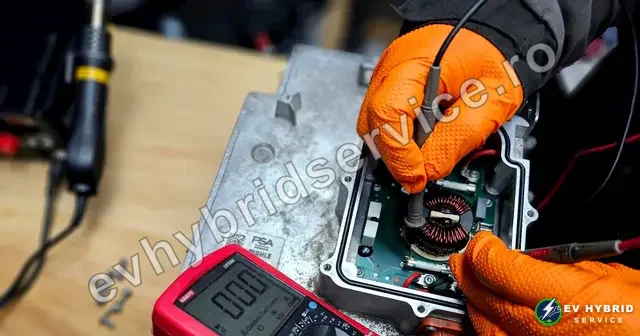
A 2024 Opel Combo Electric would no longer charge its battery from a socket. The culprit was the on-board charger, where one of the low-voltage electronic supplies had stopped working properly. We repaired it, and the original charger stayed on the car.
2 min read
Battery repairs
Nissan Leaf 40 kWh with communication errors and insulation faults: how we restored the 12 V supply and repaired the high-voltage insulation
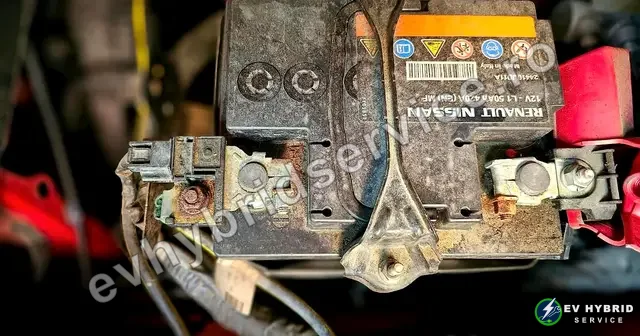
A Nissan Leaf 40 kWh had errors in a chain and no longer talked to its climate system. Where it all started: the oxidised terminals of the 12 V battery. Once we restored the supply, diagnosis also turned up high-voltage insulation faults, which we fixed.
2 min read