
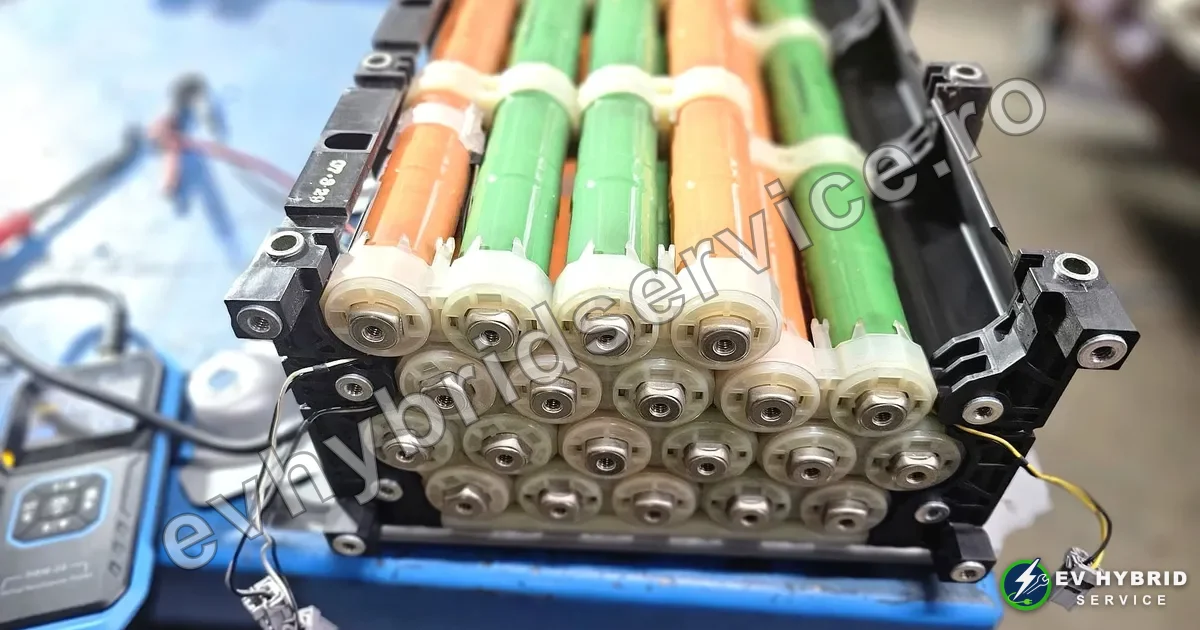
Workshop job ·
Honda Civic Hybrid with the IMA light on: how we repaired the high-voltage battery by replacing all of its NiMH modules
A 2007 Civic Hybrid came in with the IMA light on. With the battery out and every module tested, we saw that wear had spread through the whole pack, not just a few modules. We replaced them all, charged them on the bench and balanced the battery.
- year of manufacture
- 2007year of manufacture
- the warning light on the dash
- IMAthe warning light on the dash
- NiMH modules replaced
- AllNiMH modules replaced
- battery voltage, per Honda
- 158 Vbattery voltage, per Honda
The problem
A 2007 Honda Civic 1.3 IMA Hybrid came in with the IMA light on the dash: the electric assist system was no longer working as it should.
The diagnosis
Diagnosis of the IMA system and a test of every module, with the battery out of the car, showed NiMH modules that were unbalanced and worn throughout, not just a few.
The fix
We replaced every module, charged them one by one on the bench, balanced the battery, then reassembled it and refitted it.
The result
The IMA battery was reconditioned and refitted with new, balanced modules, and the car could go back on the road.
The IMA light and what lay behind it
The Civic, a 1.3 IMA Hybrid built in 2007, came in with the IMA light on the dash. IMA (Integrated Motor Assist) is the system in which the electric motor helps the petrol engine when pulling away and accelerating, and recovers energy under braking. When the light comes on, something in that chain is not working as it should, and most often the culprit is the high-voltage battery.
Diagnosis of the IMA system showed an imbalance between the modules of the NiMH (nickel-metal hydride) battery. Over the years the modules had worn and no longer behaved alike: some gave up sooner than others, and the battery could no longer deliver and take back energy normally. To see how far the wear had gone, we took the battery out of the car and tested every module on its own.
The job, step by step
Step 1
Take out the battery
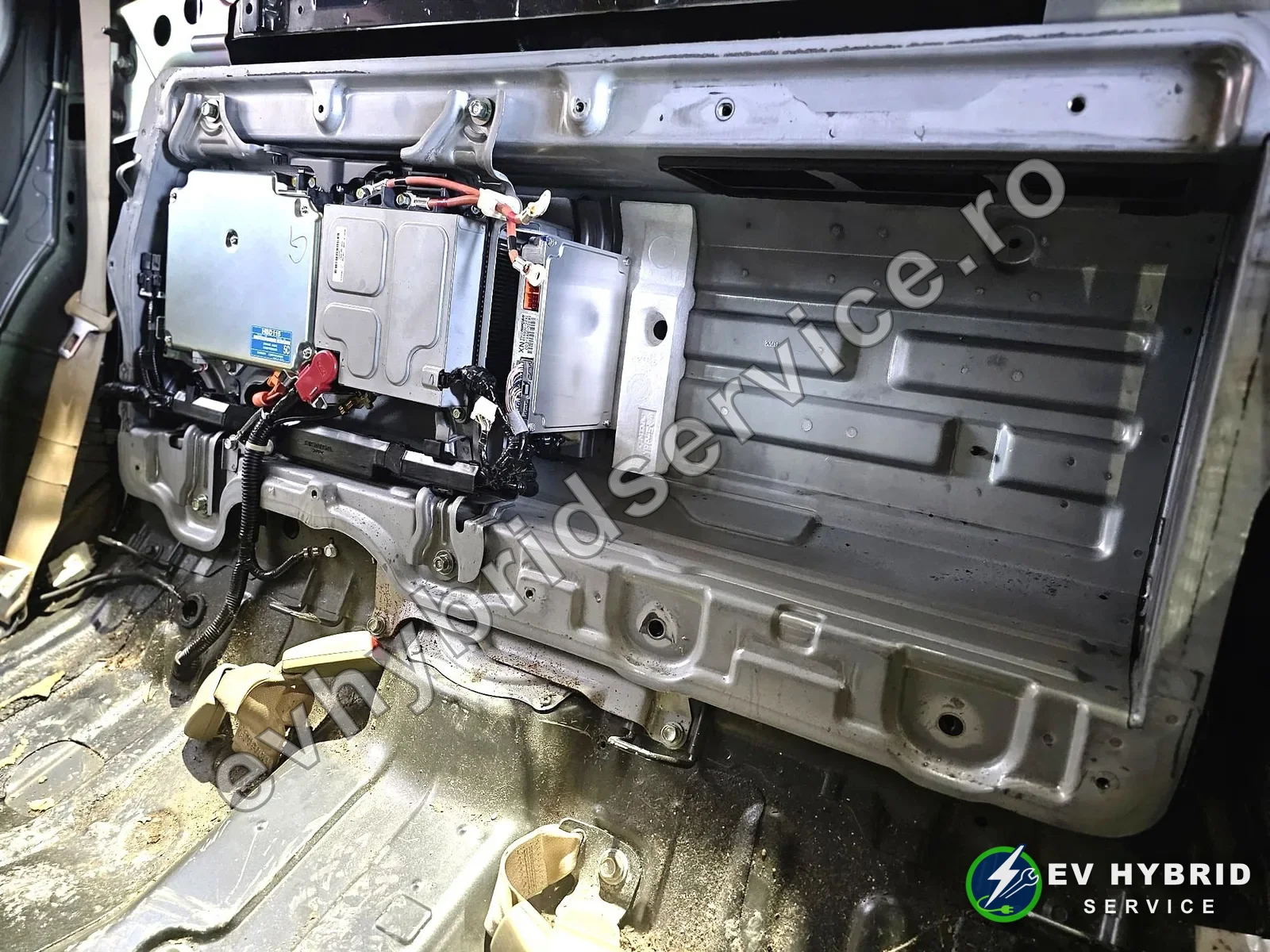
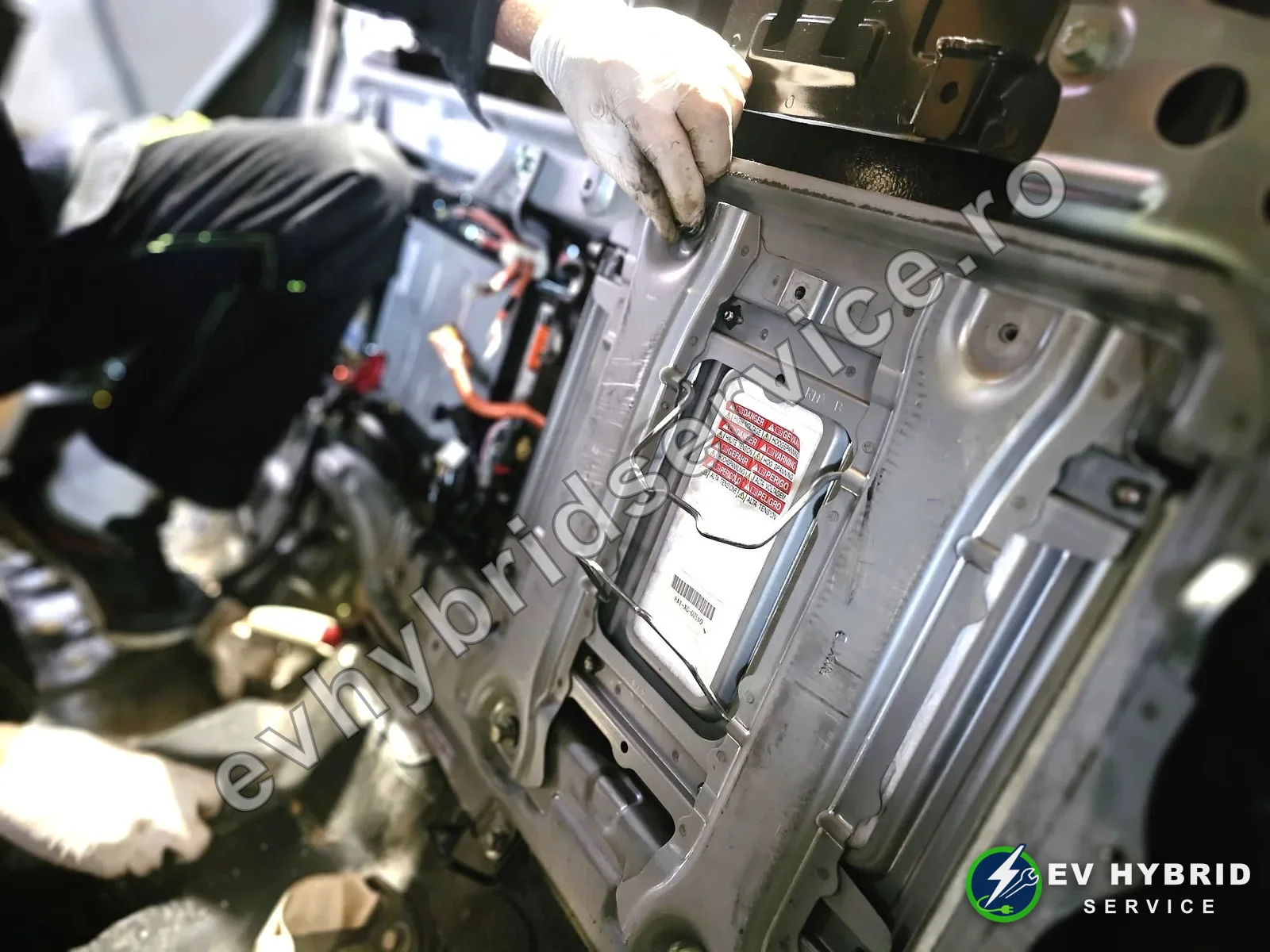
On the Civic Hybrid the IMA battery sits behind the rear seat. We removed it from the car and took the assembly apart to reach the NiMH modules.
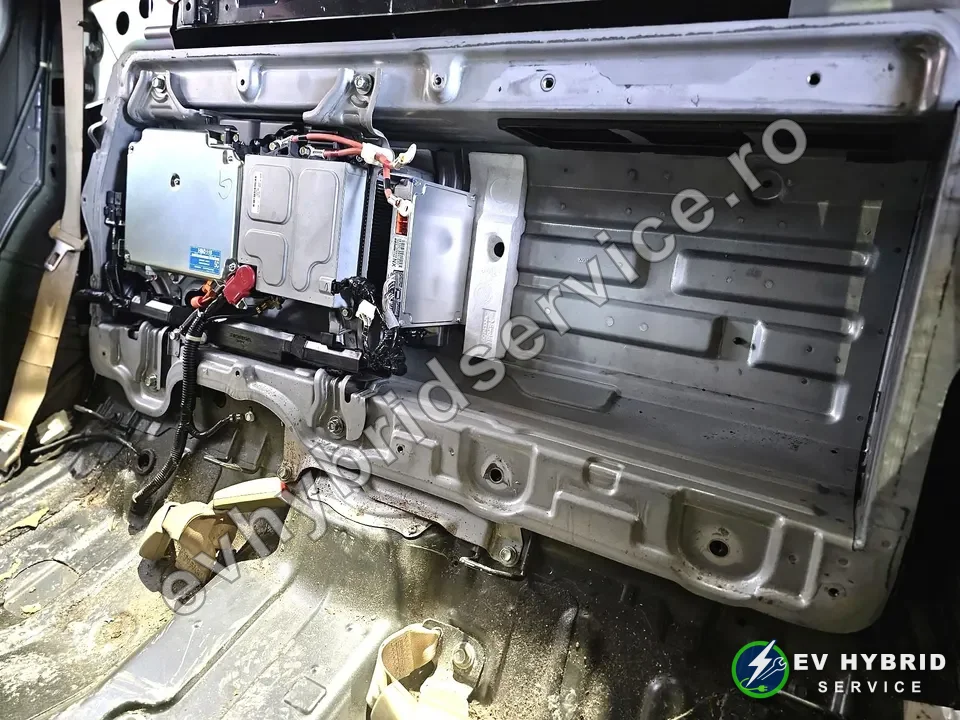
The IMA battery in its bay behind the rear seat. 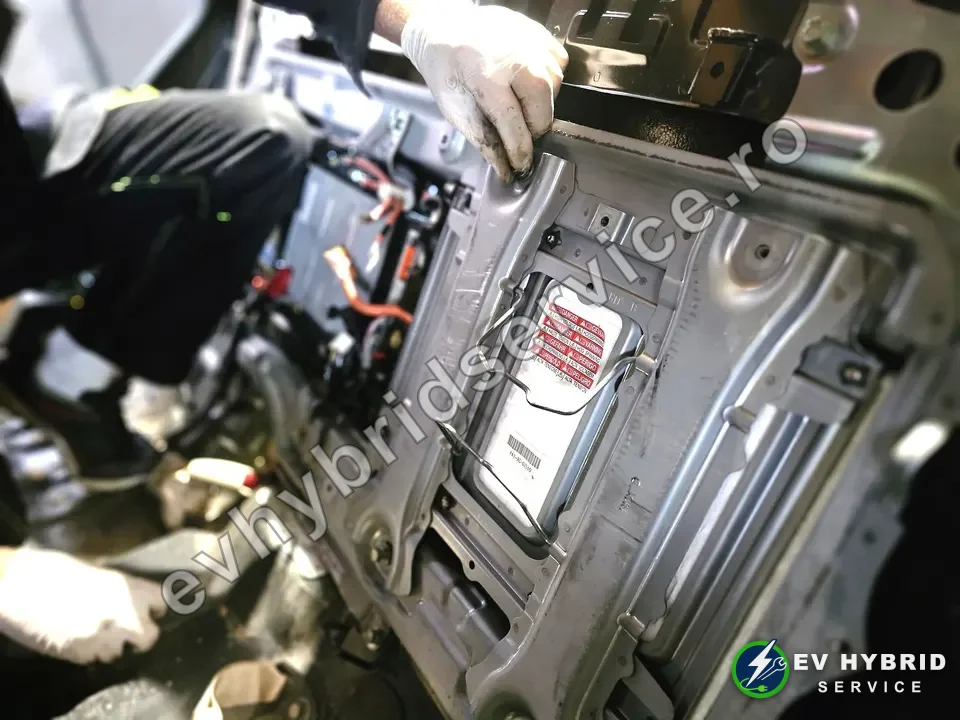
Undoing the battery’s mountings so it can come out of the car. Step 2
Test every module
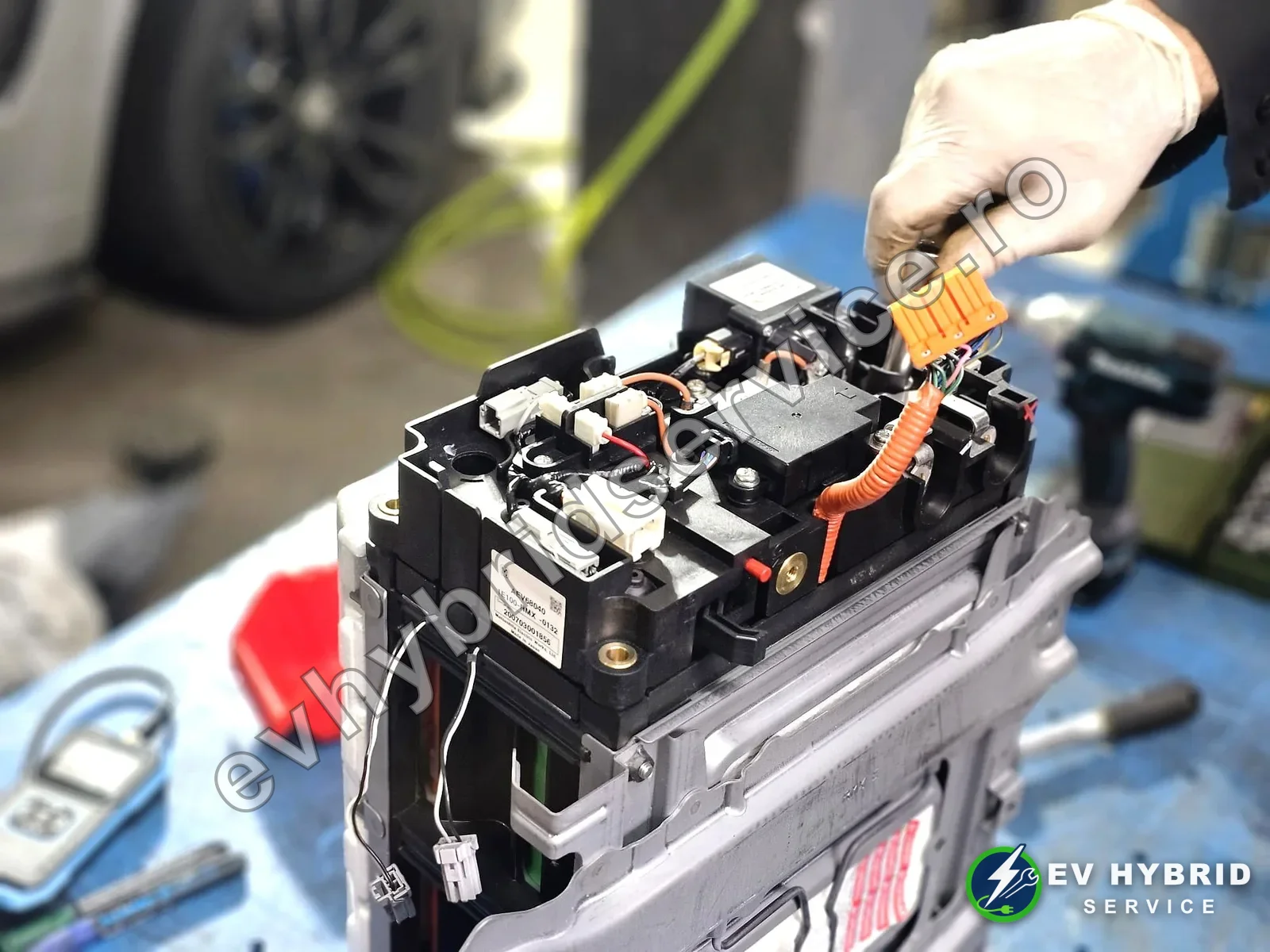
On the bench we checked the modules one by one. All of them showed advanced wear and behaved differently electrically, so a repair with a few modules was no longer an option.
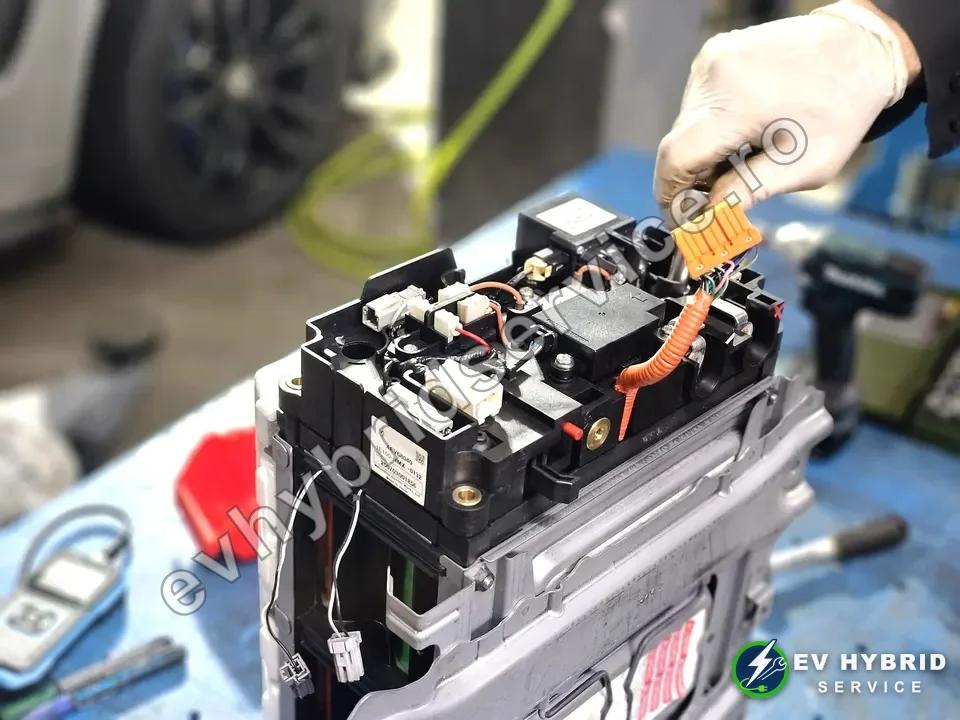
The battery on the bench: its connectors and electronics sit above the modules. 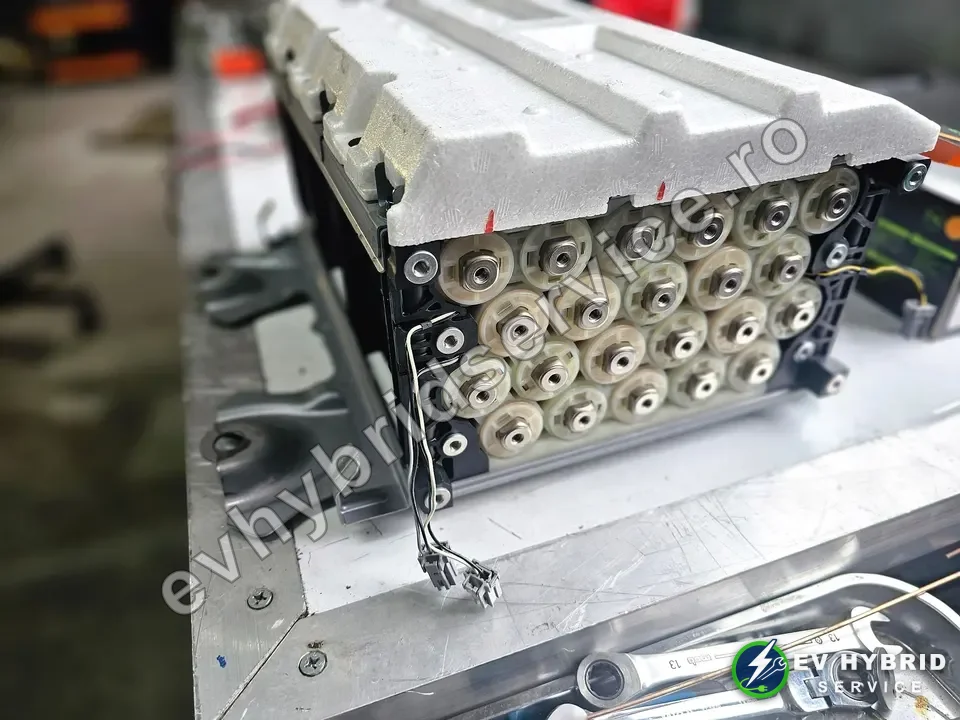
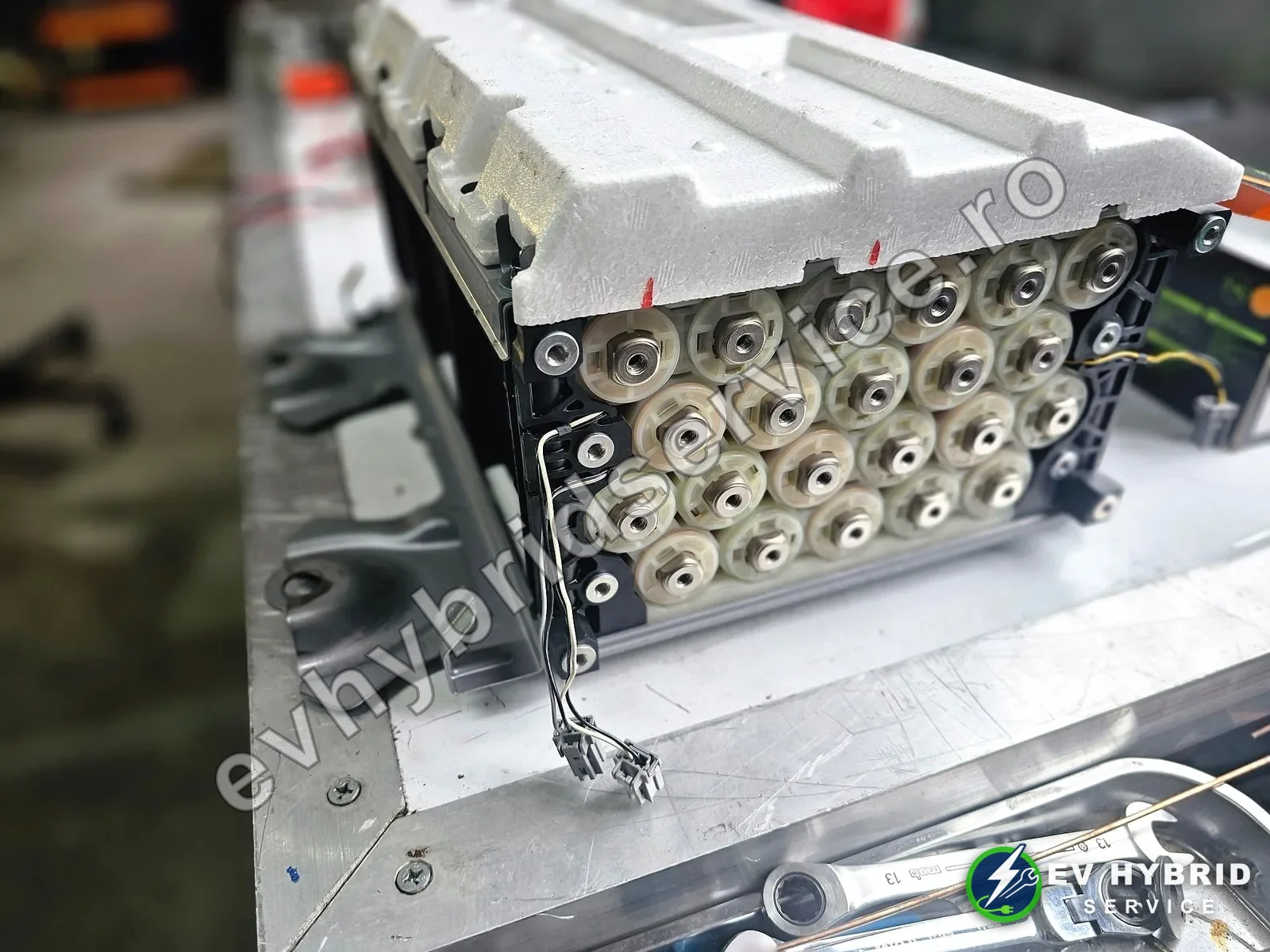
The cylindrical modules in their holder, with the foam cover lifted. Step 3
Replace every module
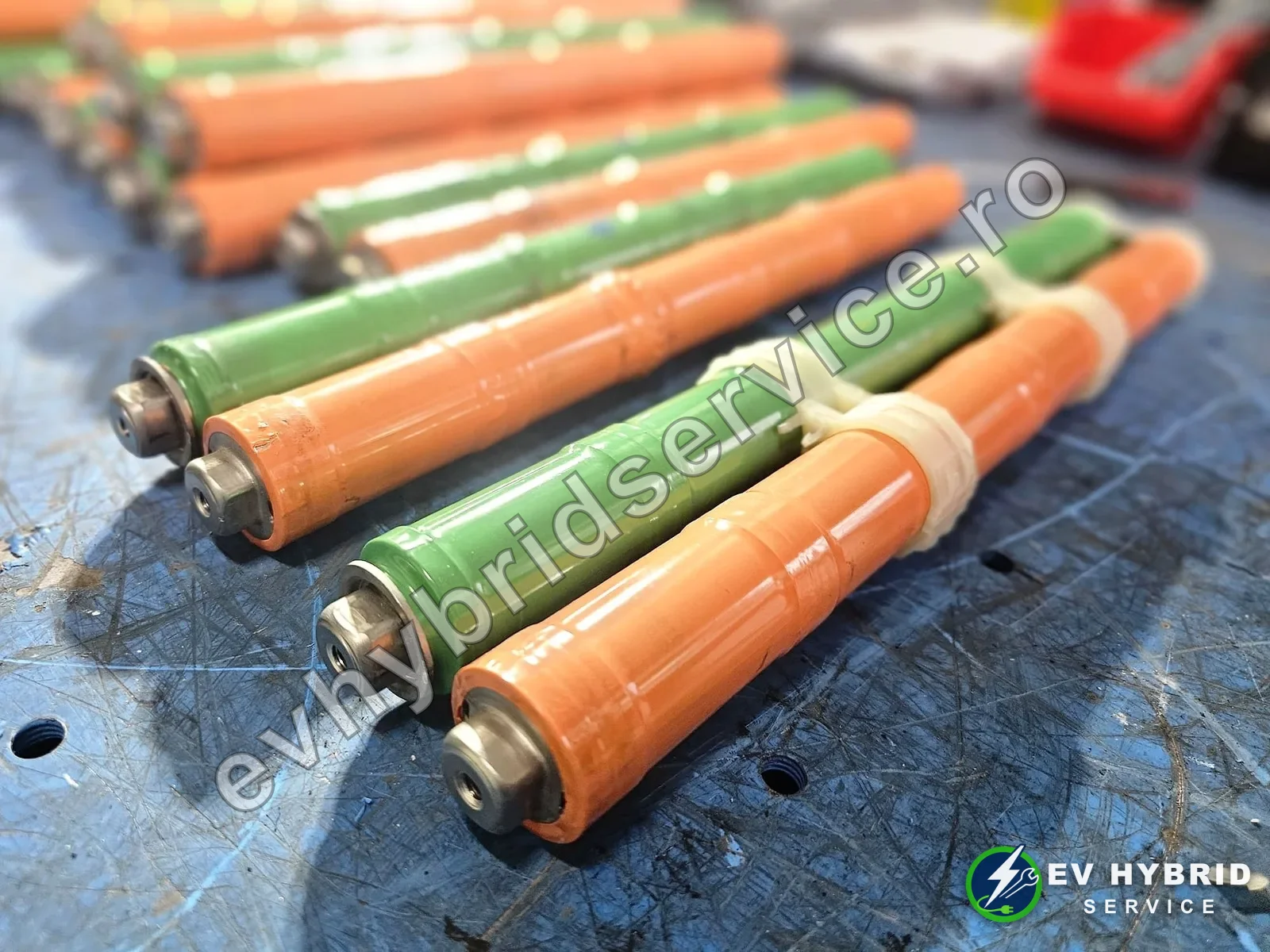
We removed all the worn modules and fitted NiMH modules made for the IMA hybrid system in their place.
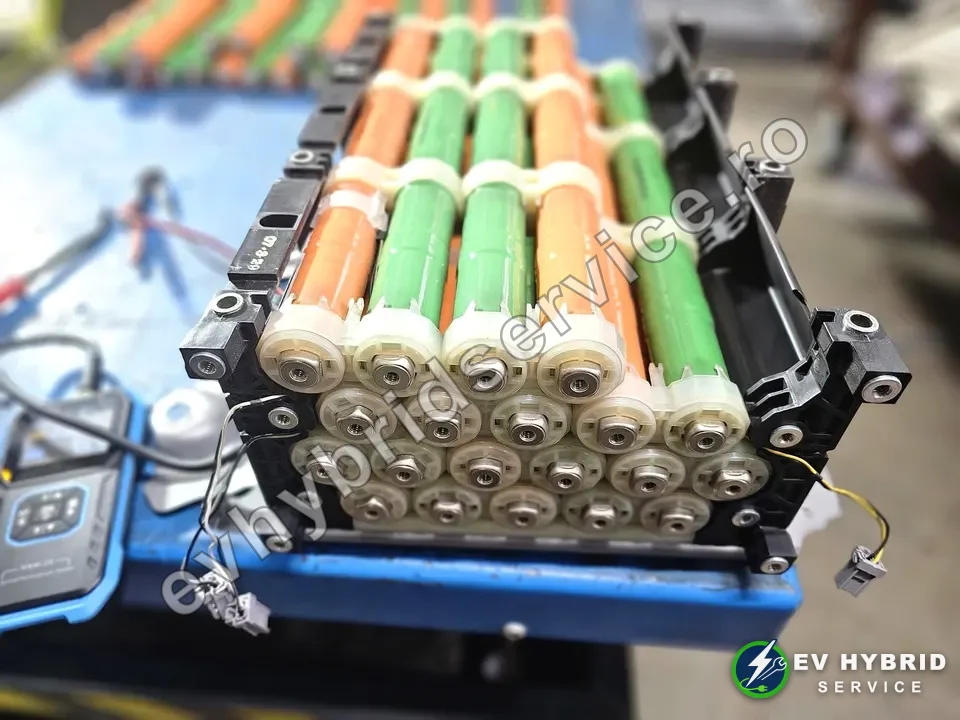
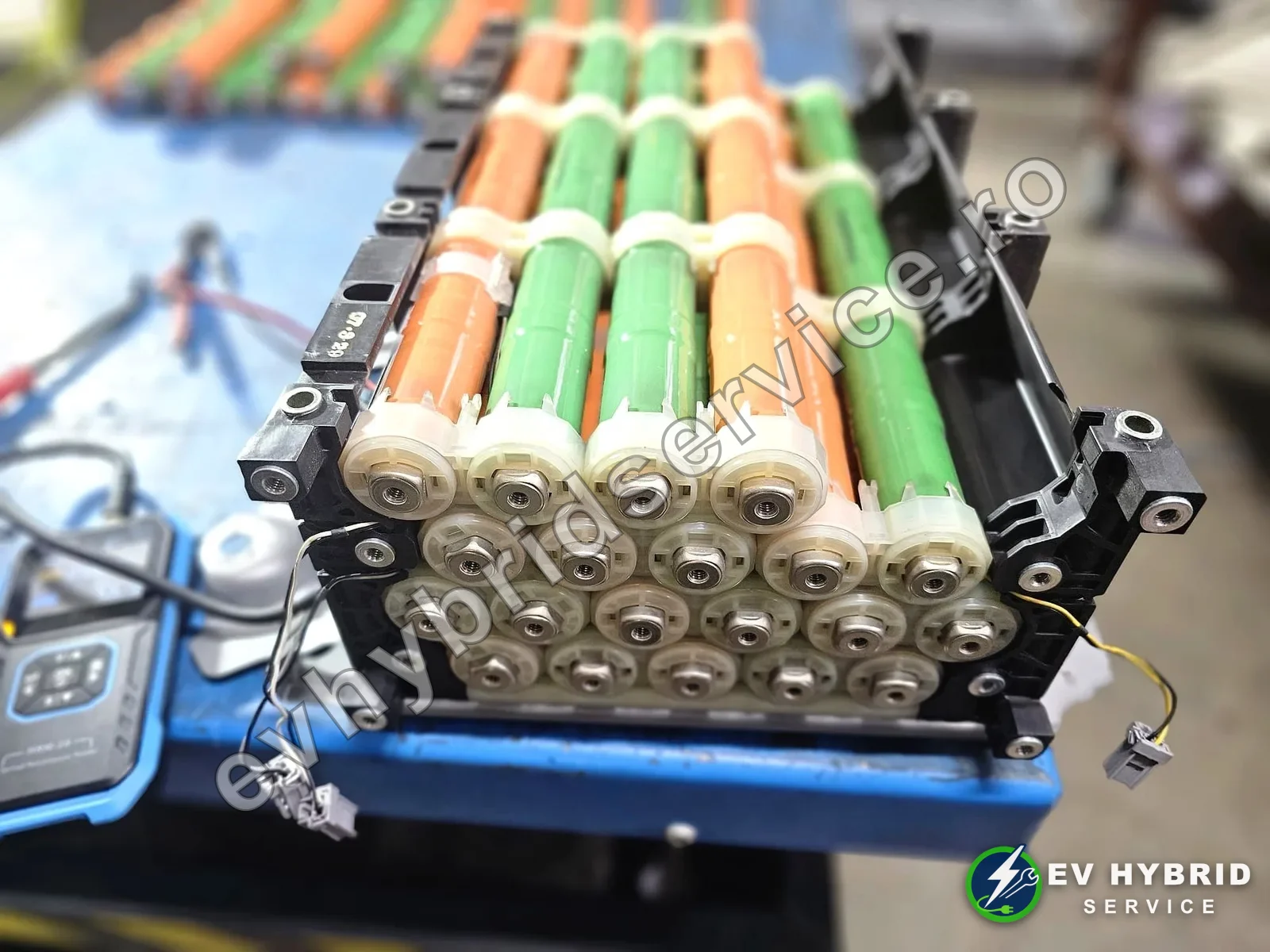
The NiMH modules in the holder, with the multimeter alongside. Step 4
Charging and balancing
We charged each module separately on the workbench, then balanced the battery so all modules start from the same level and work evenly. Balancing got the most attention: it is what keeps the imbalance from coming back.
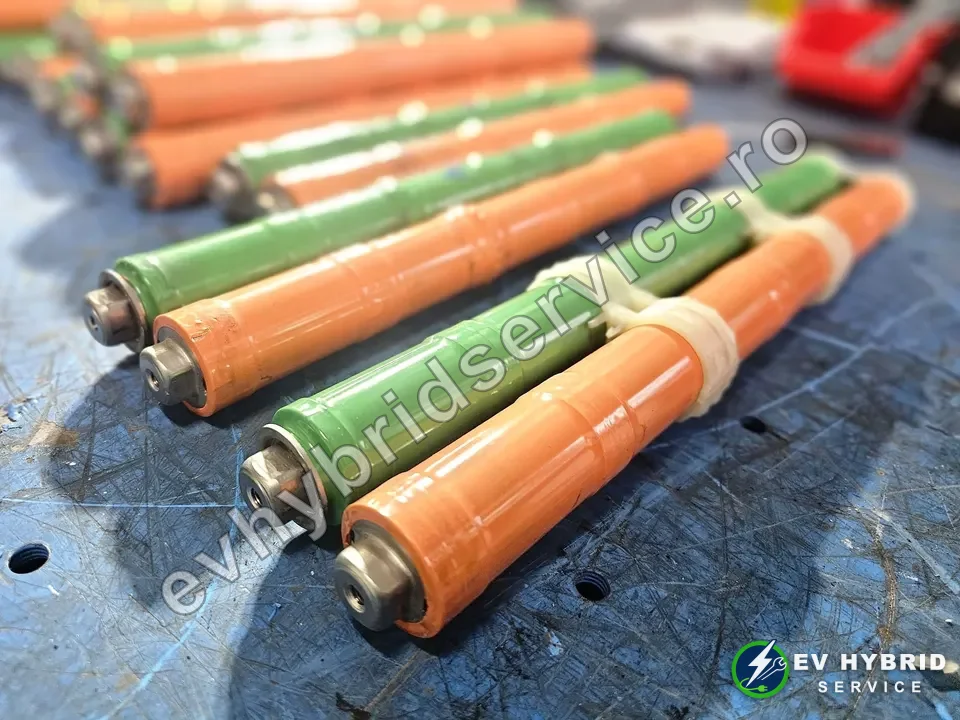
NiMH modules on the workbench. Step 5
Reassembly and refitting
We reassembled the high-voltage battery and fitted it back in the car, ready to support the IMA system again.
Before and after
When it came in
- IMA light on
- Unbalanced modules
- Advanced wear across the pack
- Electric assist not working properly
At handover
- Every NiMH module replaced
- Each module charged on the bench
- Battery balanced
- Battery refitted, car back on the road
Signs that a Civic Hybrid’s IMA battery is tiring
- The IMA light comes on, sometimes together with Check Engine
- Electric assist when accelerating weakens or disappears
- The battery charge gauge rises and falls very quickly
- Auto stop no longer switches the engine off at the lights
Does your Honda hybrid have the IMA light on? We test the battery module by module and tell you plainly whether a few modules will do or the whole pack needs rebuilding.
Book a battery test →Frequently asked questions
What does the IMA light mean on a Honda Civic Hybrid?
That the electric assist system has found a problem. Most often it is the high-voltage battery, but only a diagnosis shows for sure where the fault is.
Why did we replace every module, not just a few?
Because the test showed advanced wear across the whole pack. A few new modules next to tired ones would soon have rebuilt the imbalance.
Why does balancing matter after the replacement?
Because the modules are connected in series: if they start from different charge levels, the weakest run down first and the imbalance returns. Balancing brings them to the same level.
Photos from the job
Tap a photo to see it full size; use the arrows to browse.
The IMA battery in its bay behind the rear seat.
Undoing the battery’s mountings so it can come out of the car.
The battery on the bench: its connectors and electronics sit above the modules.
The cylindrical modules in their holder, with the foam cover lifted.
The NiMH modules in the holder, with the multimeter alongside.
NiMH modules on the workbench.
Read next
Battery repairs
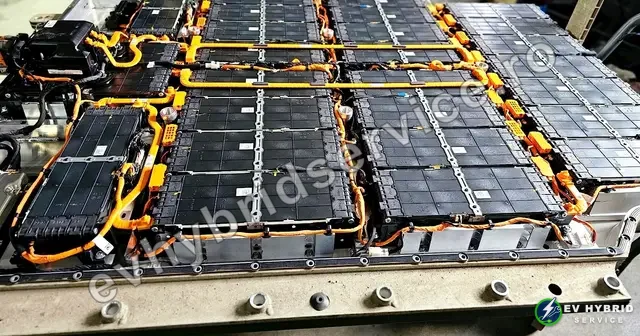
Hyundai Kona Electric losing coolant with no error on the dashboard: how we repaired the cooling circuit of the high-voltage battery
A 2024 Hyundai Kona Electric was losing a lot of fluid from the battery cooling circuit, though the dashboard showed nothing. After a hard impact, a pipe had cracked. We replaced it, sealed the small cracks, and the battery stayed on the car.
3 min read
Battery repairs
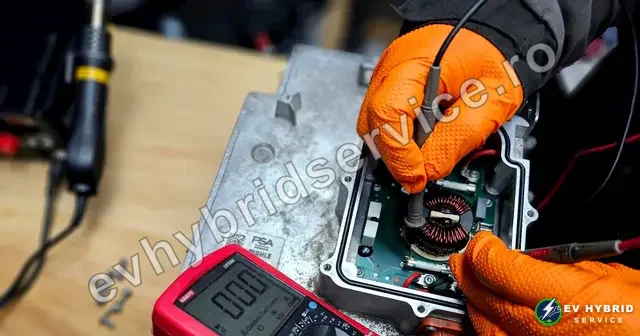
Opel Combo Electric that would no longer charge from a socket: how we repaired the on-board charger without replacing it
A 2024 Opel Combo Electric would no longer charge its battery from a socket. The culprit was the on-board charger, where one of the low-voltage electronic supplies had stopped working properly. We repaired it, and the original charger stayed on the car.
2 min read
Battery repairs
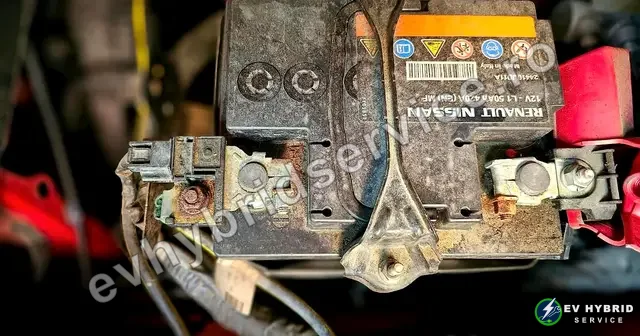
Nissan Leaf 40 kWh with communication errors and insulation faults: how we restored the 12 V supply and repaired the high-voltage insulation
A Nissan Leaf 40 kWh had errors in a chain and no longer talked to its climate system. Where it all started: the oxidised terminals of the 12 V battery. Once we restored the supply, diagnosis also turned up high-voltage insulation faults, which we fixed.
2 min read