
Workshop job ·
Citroën DS5 Hybrid4 whose diesel engine would not start: how we repaired the high-voltage battery charging circuit with a new generator
A 2013 DS5 Hybrid4 reached us running on electric power alone: the diesel engine would not start at all. The culprit was the generator that charges the high-voltage battery, ruined by a belt tensioned three times tighter than the maker prescribes.
- how the car reached the workshop
- 100% electrichow the car reached the workshop
- the belt tension against the maker’s value
- 3×the belt tension against the maker’s value
- motor-generator unit, once a repair was ruled out
- Newmotor-generator unit, once a repair was ruled out
- every parameter at the final diagnosis and road test
- Normalevery parameter at the final diagnosis and road test
The problem
The diesel engine would not start at all. The owner drove the car in on electric power alone, with a traction battery that could no longer be recharged.
The diagnosis
The generator (the reversible alternator) was ruined: the accessory belt had been tensioned to three times the prescribed frequency, and its internal bearings had given way.
The fix
We removed the generator, found it beyond repair and fitted a new motor-generator unit, with the belt tensioned to exactly the frequency in the technical manual.
The result
The engine starts first time, every parameter is back to normal, and the hybrid system runs its cycles correctly again.
A hybrid running on its battery alone
The DS5 came into the workshop with a serious problem: the diesel engine would not start at all. The owner managed to drive it to us on electric power alone, which is risky, because the traction battery had no way of recharging. Every kilometre drained it, with no way to win the energy back.
Computer diagnosis and a thorough inspection led to the motor-generator unit, the reversible alternator on the engine. On this model it does several jobs: it charges the traction battery and the 12 V battery, recovers energy under braking and starts the diesel engine, like a starter motor. When it fails, the car loses both starting and battery charging at once.
The job, step by step
Step 1
Diagnosis
We read the fault codes with the tester and checked, one by one, the parts that start the engine and charge the battery. Every lead pointed to the motor-generator unit.
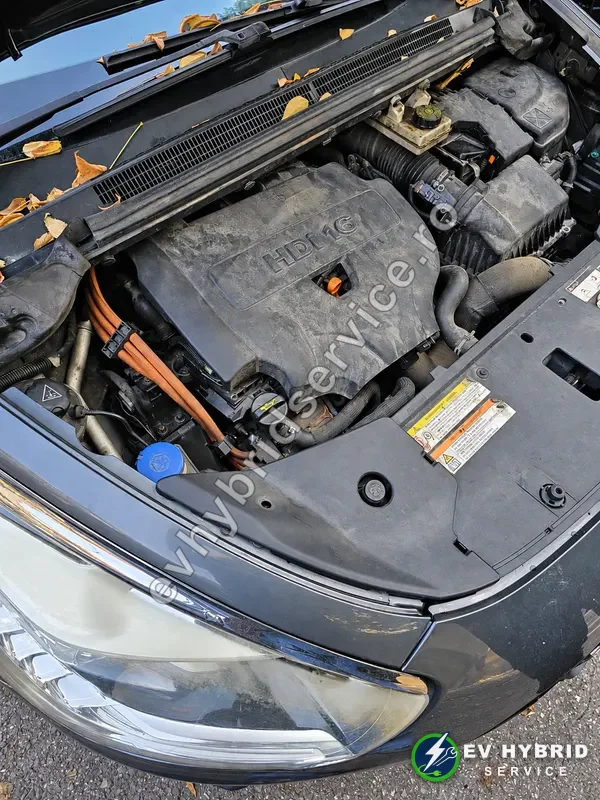
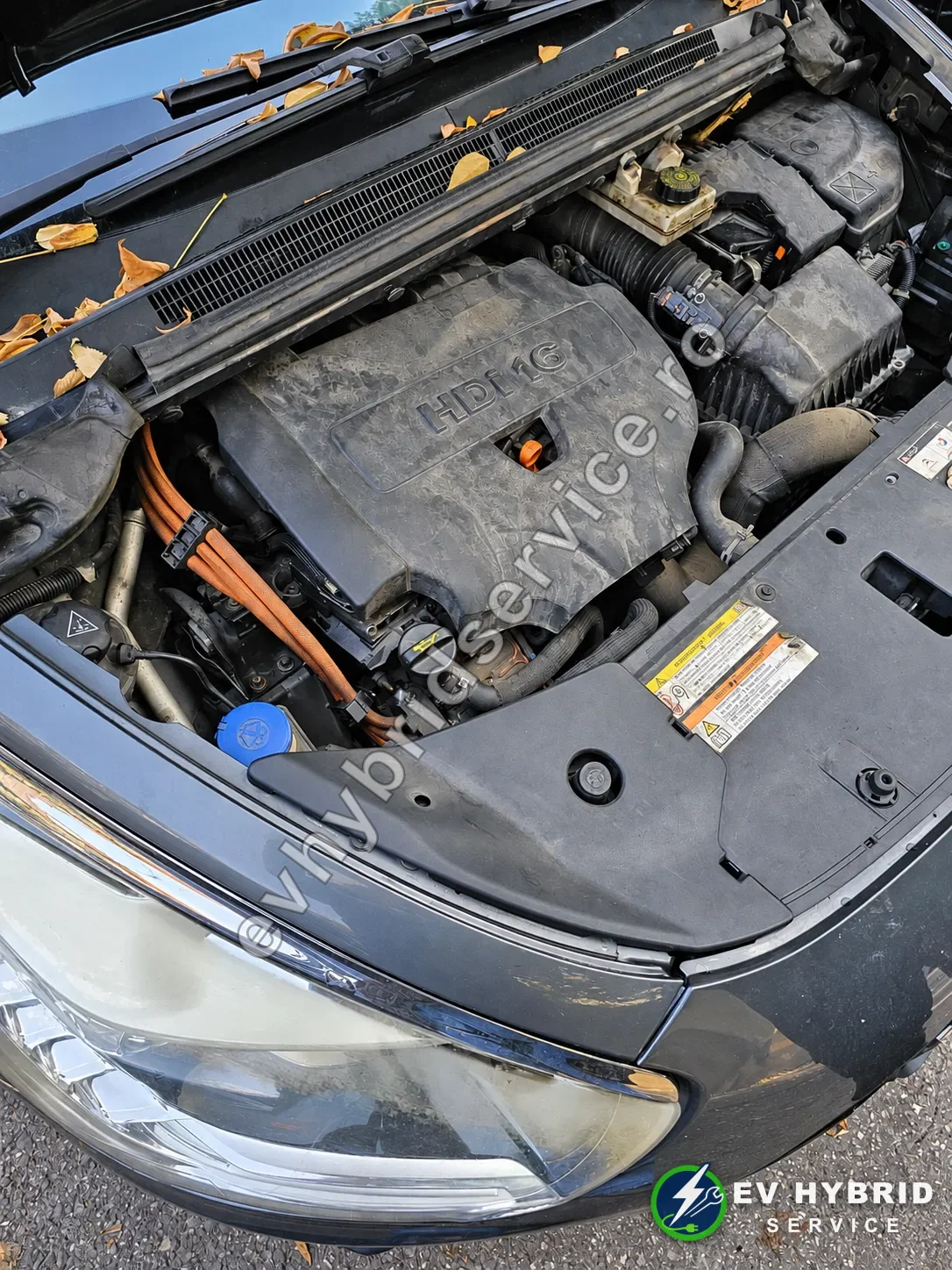
The DS5 with the bonnet open: the HDi diesel engine and, beside it, the orange high-voltage cables. 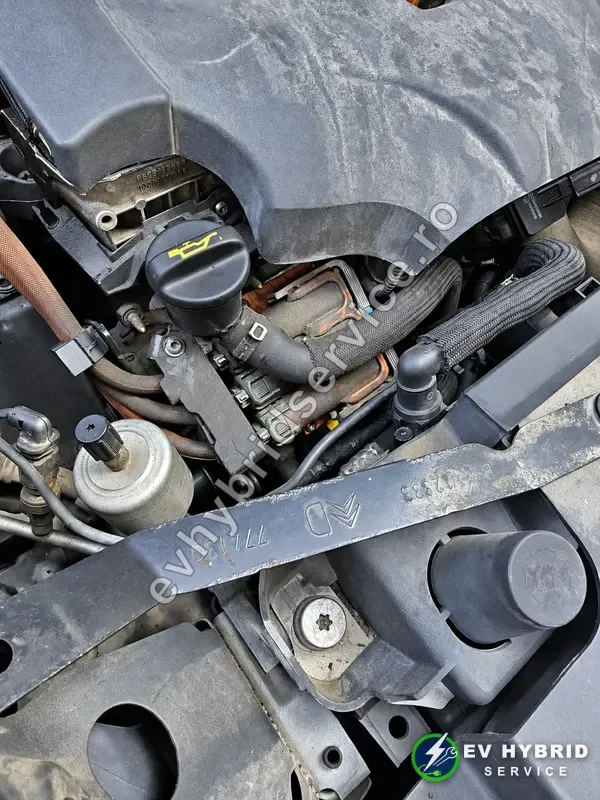
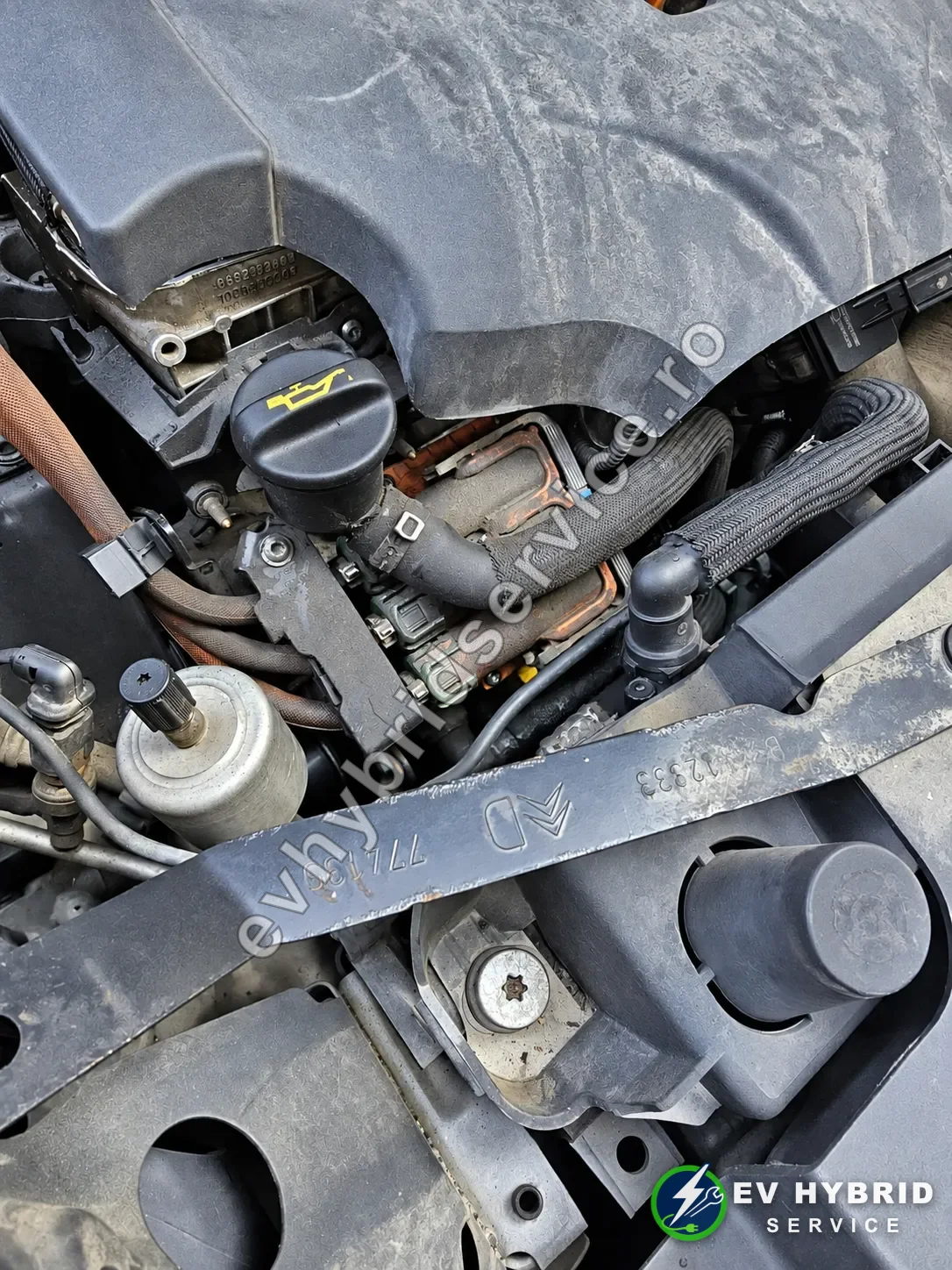
The engine bay, up close. Step 2
Find the cause
The accessory belt had been tensioned to three times the prescribed frequency. Under that load, the generator’s internal bearings had been completely destroyed.
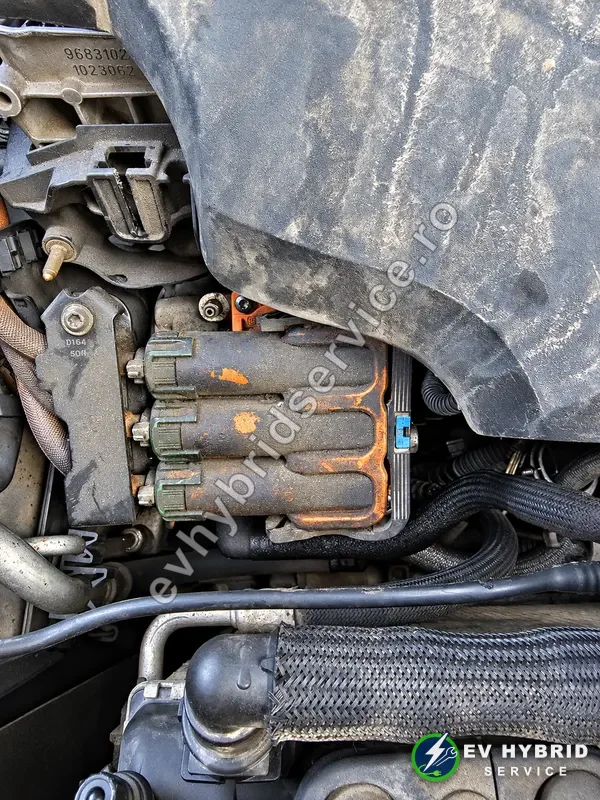
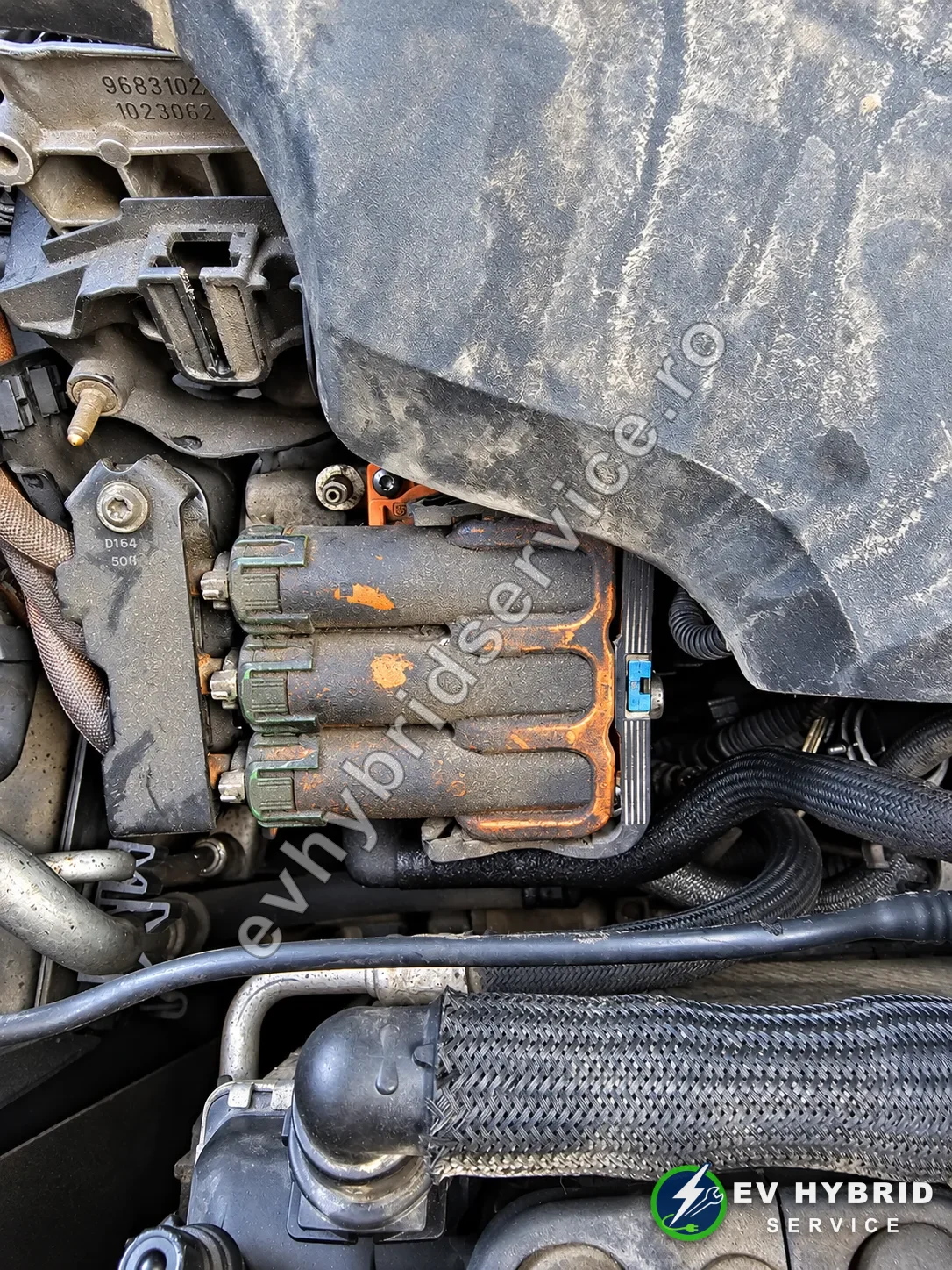
The old generator, still in place on the engine, with the three terminals of its high-voltage connection. 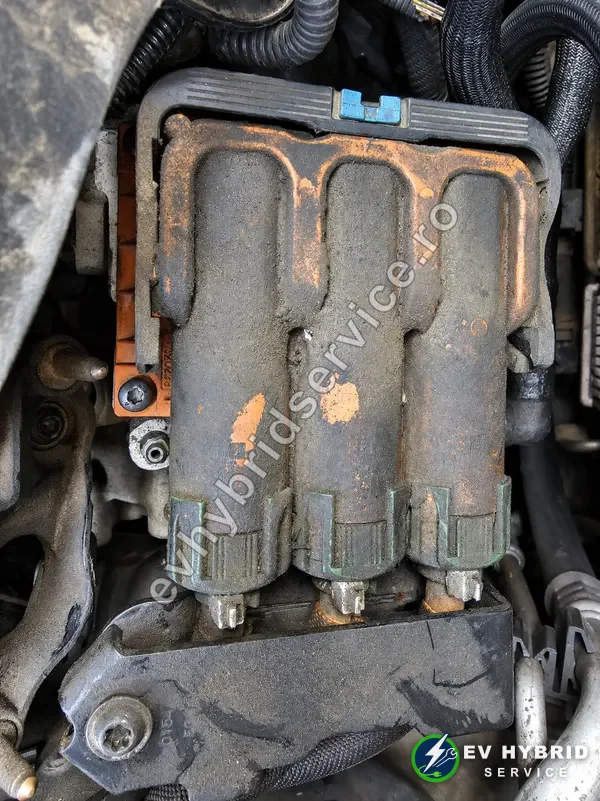
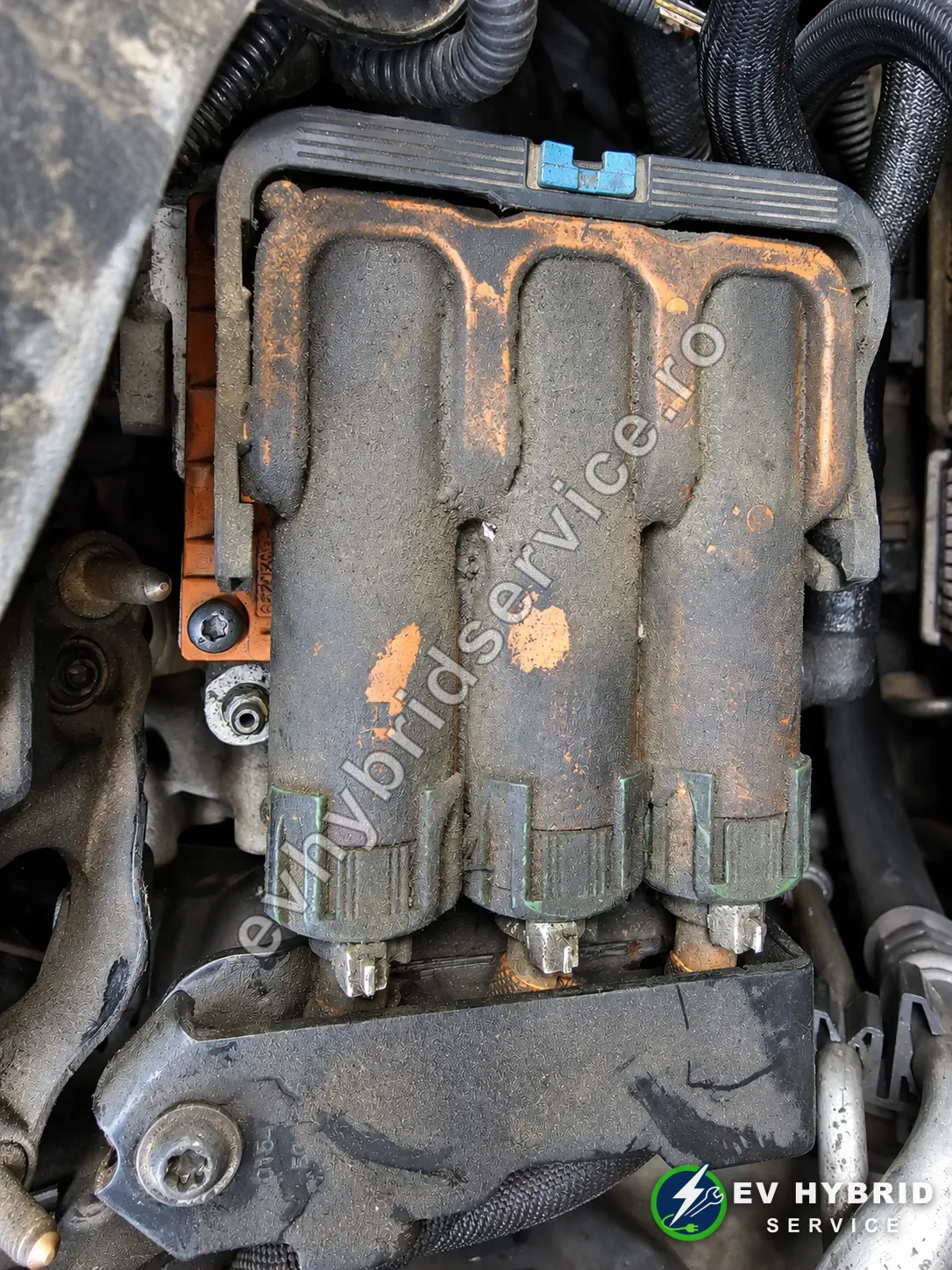
The generator’s high-voltage terminals, up close. Step 3
Remove the generator
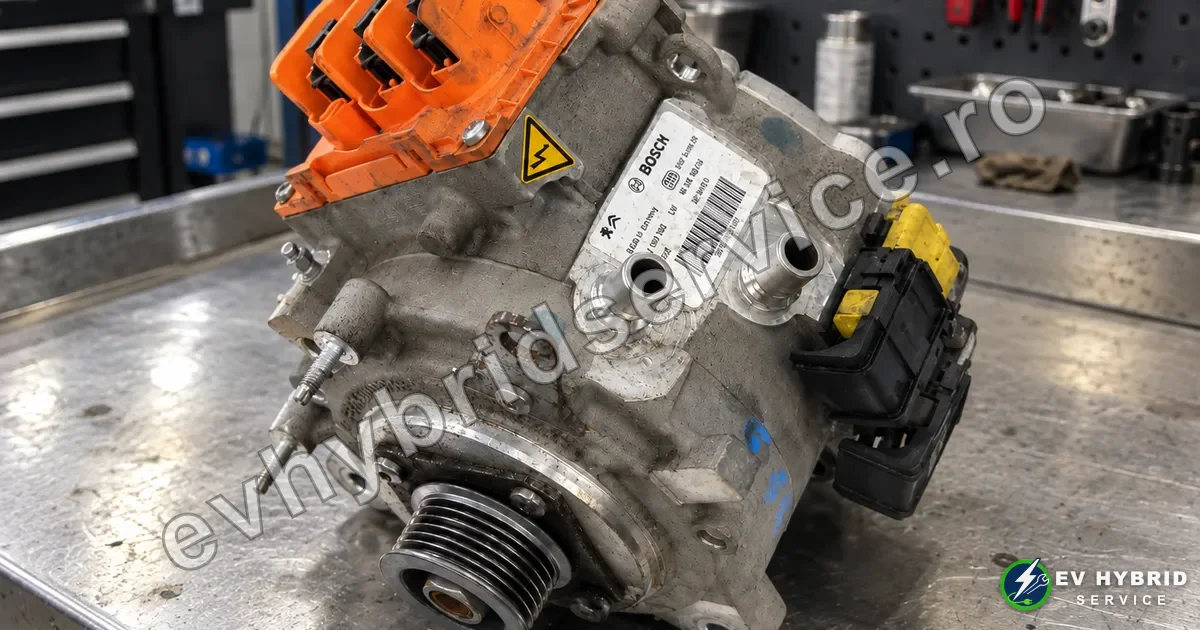
We took the generator off the engine with the high-voltage system shut down. On the bench it was clear the internal wear was far too advanced: the parts were structurally compromised, and a repair was no longer possible.
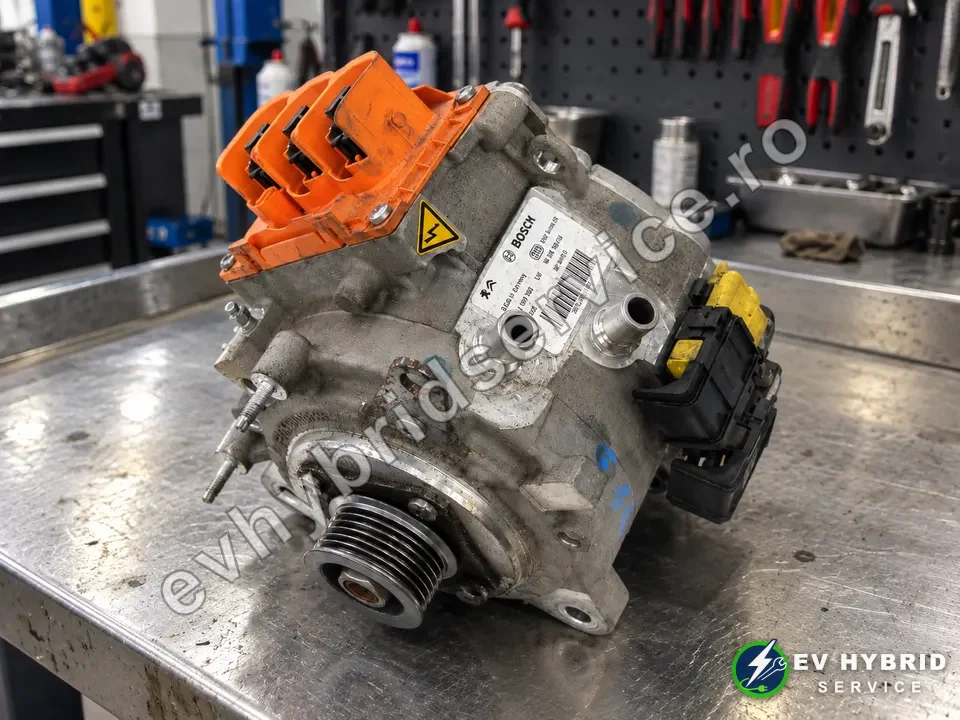
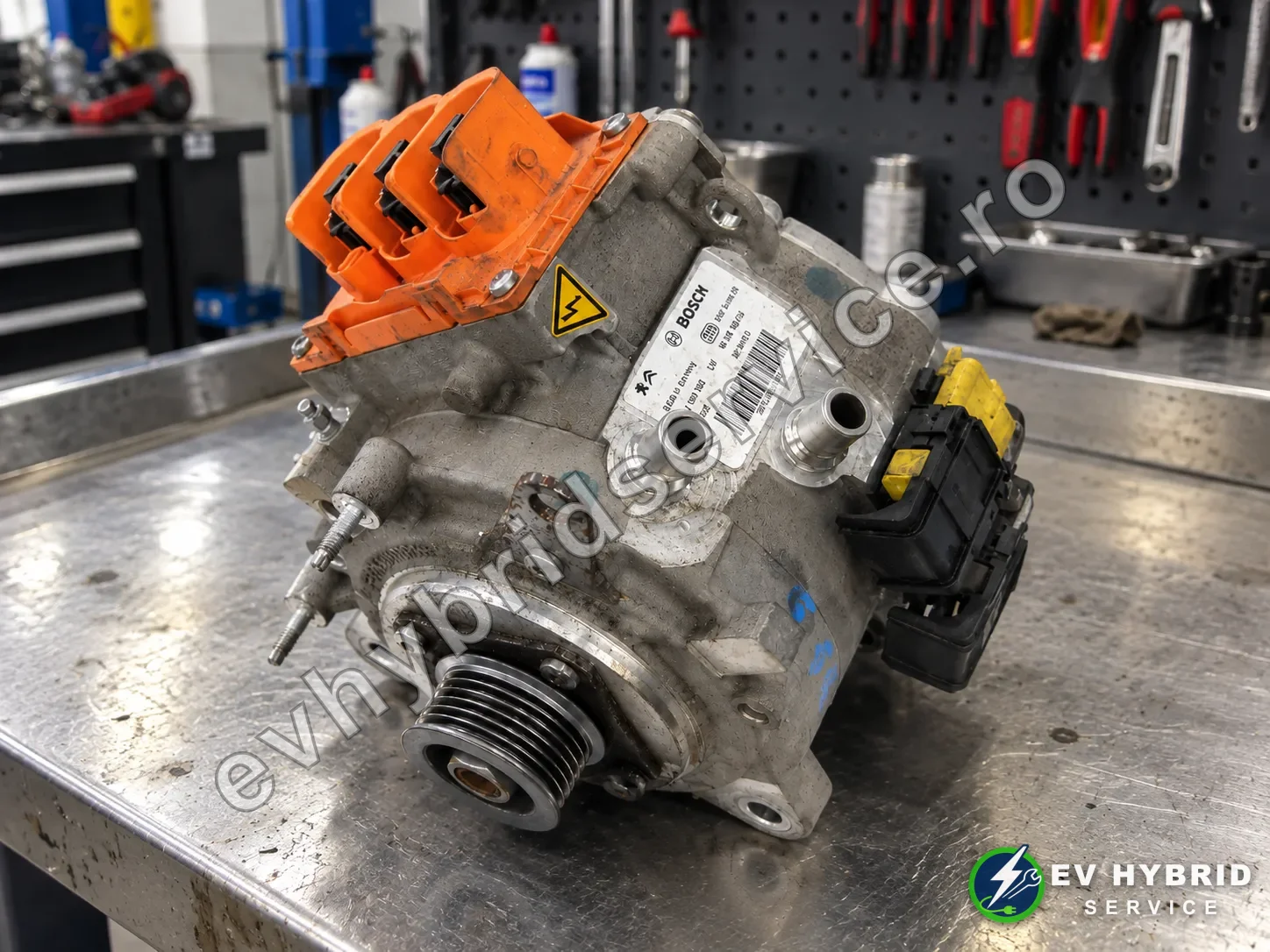
The generator off the engine, on the workbench: the belt pulley at the front, the orange high-voltage connector on top. Step 4
Fit a new unit
The only safe answer was a new motor-generator unit. We fitted it and tensioned the belt to exactly the frequency in the technical manual, so the new generator would not go the way of the old one.
Step 5
Final checks
A fresh specialist diagnosis and a road test followed. Every parameter is back to normal, the diesel engine starts first time, and the hybrid system runs its cycles correctly again.
Before and after
When it came in
- The diesel engine would not start
- The car ran on electric power only
- The traction battery was no longer charging
- Generator with destroyed bearings
At handover
- New motor-generator unit
- Belt tensioned to the prescribed frequency
- The engine starts first time
- The hybrid system runs its cycles correctly
Signs that a hybrid’s generator is in trouble
- The engine is slow to start, or will not start at all
- The car stays in electric mode and its electric range drops with every trip
- A hybrid system or battery charging warning appears
- A bearing noise comes from around the accessory belt
Your hybrid will not start its engine, or no longer charges its battery? We diagnose it and tell you plainly what is wrong.
Book a diagnosis →Frequently asked questions
Can I drive a DS5 Hybrid4 on electric power alone if the diesel engine will not start?
Only for a very short distance, and not without risk. With neither the engine nor the generator working, the traction battery cannot recharge, and sooner or later the car stops. If the engine will not start, we recommend bringing the car in on a recovery truck.
Why is the belt tensioned by frequency rather than torque?
Because that is what the maker prescribes for this model: the right tension is checked through the belt’s resonance frequency, measured with a dedicated meter. A belt tightened by eye, or to the torque used on other cars, can end up far too tight, as happened here, and destroy the generator’s bearings.
Can the generator be repaired instead of replaced?
Sometimes, yes. We remove it and assess it before deciding anything. On this car the internal wear was too advanced and the parts were structurally compromised, so the only safe answer was a new unit.
Photos from the job
Tap a photo to see it full size; use the arrows to browse.
The DS5 with the bonnet open: the HDi diesel engine and, beside it, the orange high-voltage cables.
The engine bay, up close.
The old generator, still in place on the engine, with the three terminals of its high-voltage connection.
The generator’s high-voltage terminals, up close.
The generator off the engine, on the workbench: the belt pulley at the front, the orange high-voltage connector on top.
Read next
Battery repairs
Hyundai Kona Electric losing coolant with no error on the dashboard: how we repaired the cooling circuit of the high-voltage battery
A 2024 Hyundai Kona Electric was losing a lot of fluid from the battery cooling circuit, though the dashboard showed nothing. After a hard impact, a pipe had cracked. We replaced it, sealed the small cracks, and the battery stayed on the car.
3 min read
Battery repairs
Opel Combo Electric that would no longer charge from a socket: how we repaired the on-board charger without replacing it
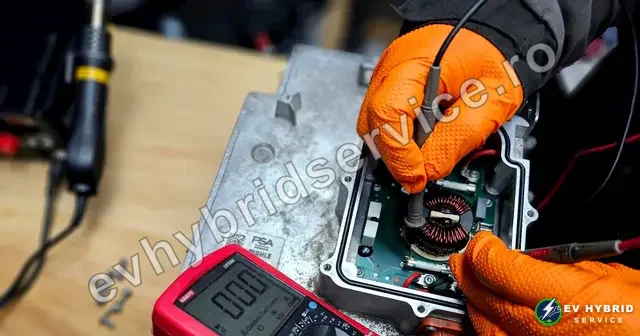
A 2024 Opel Combo Electric would no longer charge its battery from a socket. The culprit was the on-board charger, where one of the low-voltage electronic supplies had stopped working properly. We repaired it, and the original charger stayed on the car.
2 min read
Battery repairs
Nissan Leaf 40 kWh with communication errors and insulation faults: how we restored the 12 V supply and repaired the high-voltage insulation
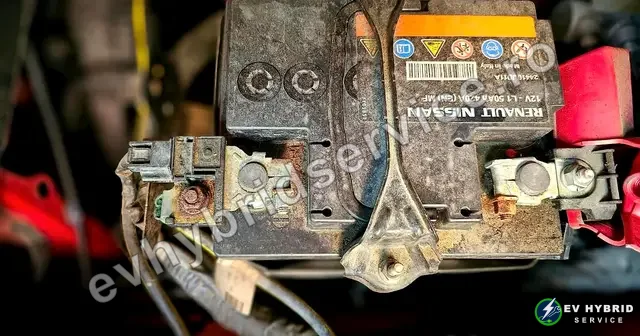
A Nissan Leaf 40 kWh had errors in a chain and no longer talked to its climate system. Where it all started: the oxidised terminals of the 12 V battery. Once we restored the supply, diagnosis also turned up high-voltage insulation faults, which we fixed.
2 min read