
Workshop job ·
BMW X5 xDrive40e with its hybrid system locked out by a cell at 0 V: how we repaired the high-voltage battery by replacing a single module
A 2017 X5 xDrive40e came in on a recovery truck, its hybrid system locked out by the battery computer. A single cell had dropped to 0 V. We replaced its module, balanced the battery and recommissioned it to BMW procedure, without a new battery.
- the voltage of one cell in the battery
- 0 Vthe voltage of one cell in the battery
- module replaced, the rest of the battery kept
- 1module replaced, the rest of the battery kept
- reprogramming and recommissioning to BMW procedure
- ISTA + EoSreprogramming and recommissioning to BMW procedure
- warranty on the work
- 12 monthswarranty on the work
The problem
A 2017 BMW X5 xDrive40e arrived on a recovery truck in a permanent fault state: the high-voltage battery computer (SME) had locked out the hybrid system.
The diagnosis
One Li-ion cell in the battery had dropped to 0 V. The large voltage difference had tripped the battery’s protections, and the SME had stored permanent faults that the tester could not clear.
The fix
We replaced the module holding the dead cell with a checked module, charged and balanced the battery under control, then reprogrammed the SME with ISTA and recommissioned the battery through BMW’s EoS procedure.
The result
The plug-in hybrid system works normally again, without a new battery. The work carries a 12-month warranty.
An X5 that no longer wanted to be a hybrid
The X5, an xDrive40e built in 2017, reached us on a recovery truck. The plug-in hybrid system had gone into a permanent fault: the computer that manages the high-voltage battery, the SME, had locked out the hybrid to stop other parts being damaged. The car could no longer be used normally.
The computer diagnosis and the checks inside the battery led to a single cell. This X5’s battery uses 26 Ah Li-ion cells, and one of them had dropped to 0 V, the sign of a serious internal fault. The huge voltage difference against the others had tripped the battery’s protections, and the SME had stored permanent faults the tester could no longer clear.
The job, step by step
Step 1
Diagnosis
We read the faults and analysed every cell’s voltage. We found the 0 V cell and the permanent faults in the SME.
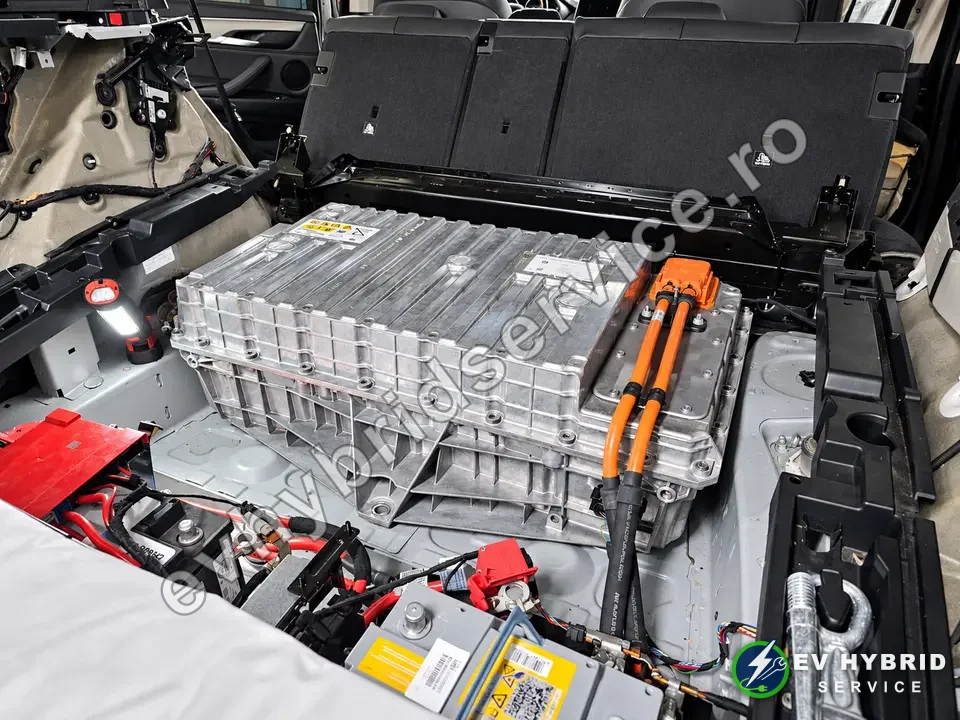
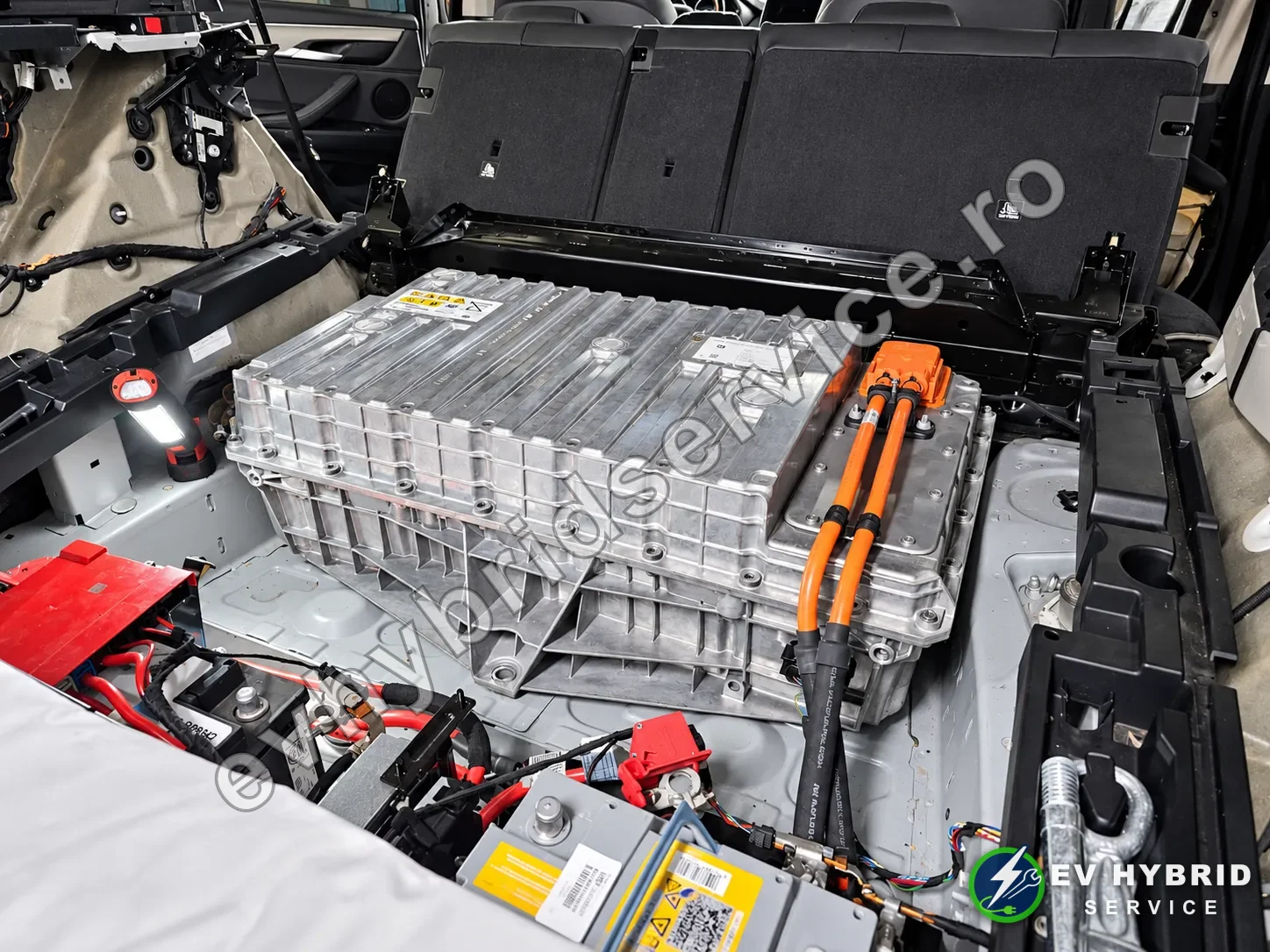
The high-voltage battery sits under the boot floor. 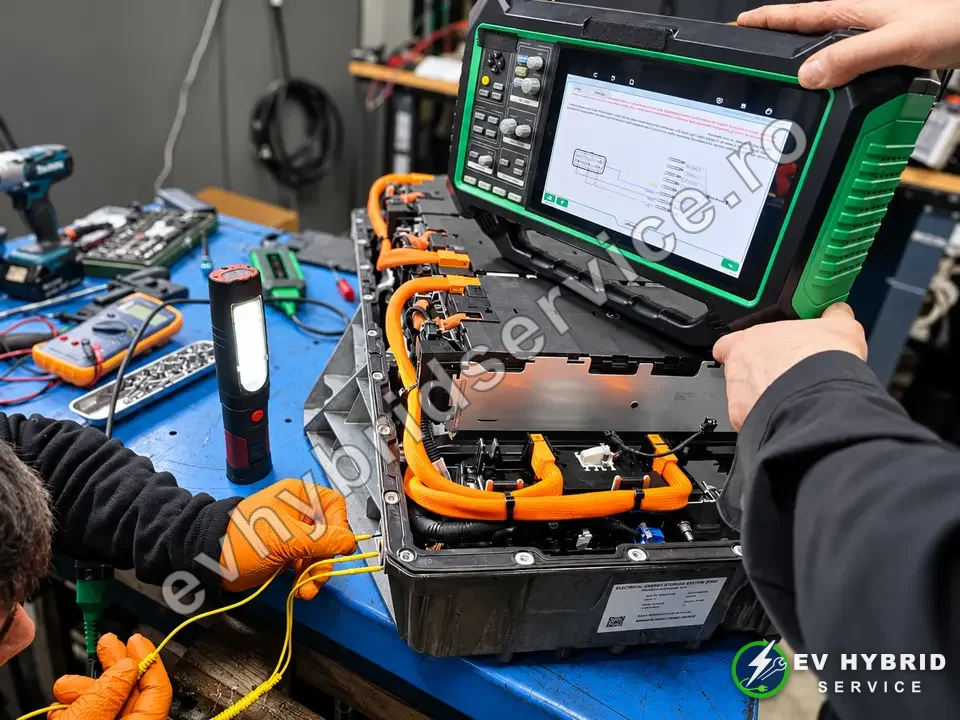
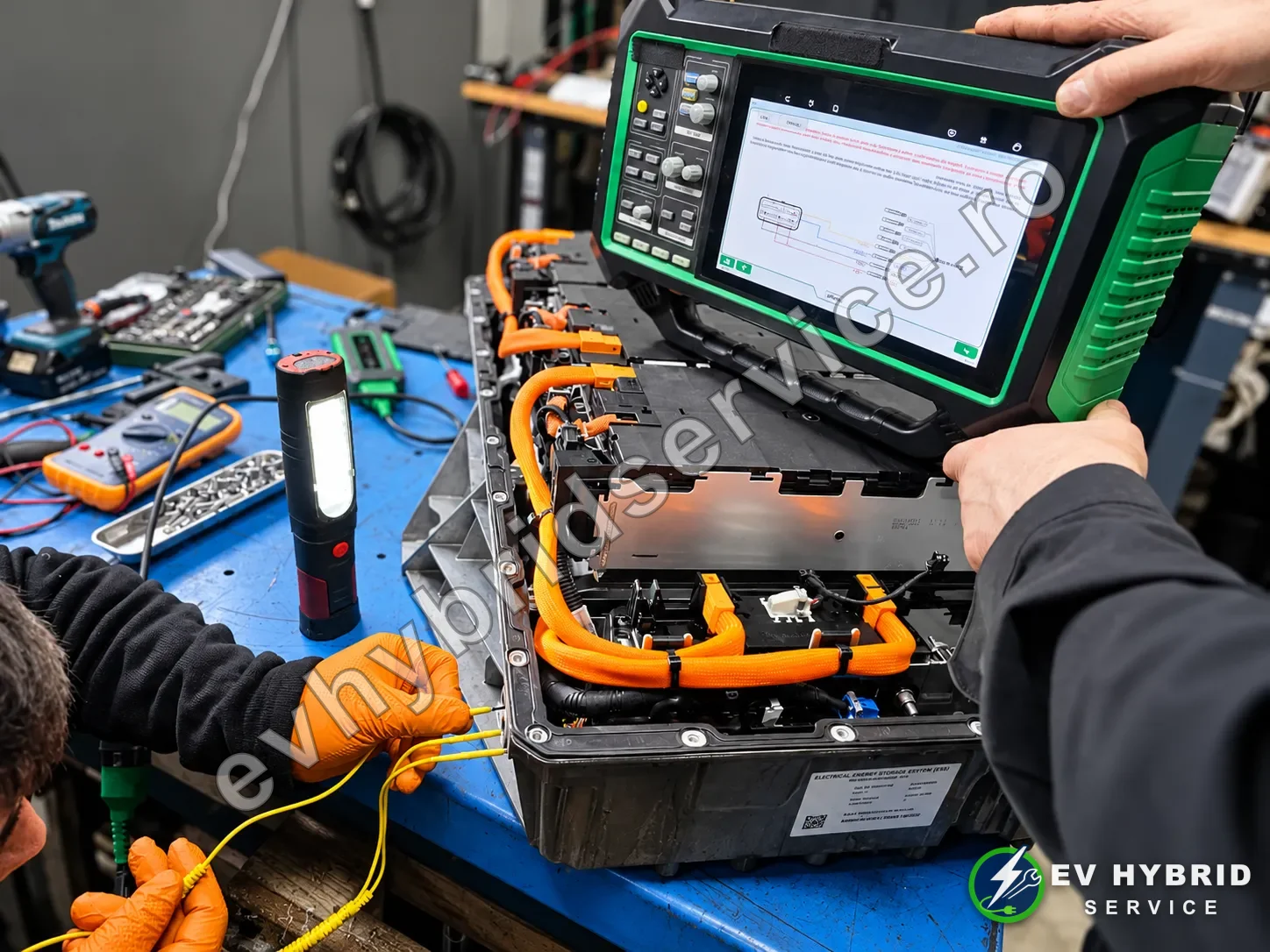
The battery on the bench, with the diagnostic tester connected. Step 2
Remove and open the battery
We took the high-voltage battery out of the car and opened its housing under control to reach the modules.
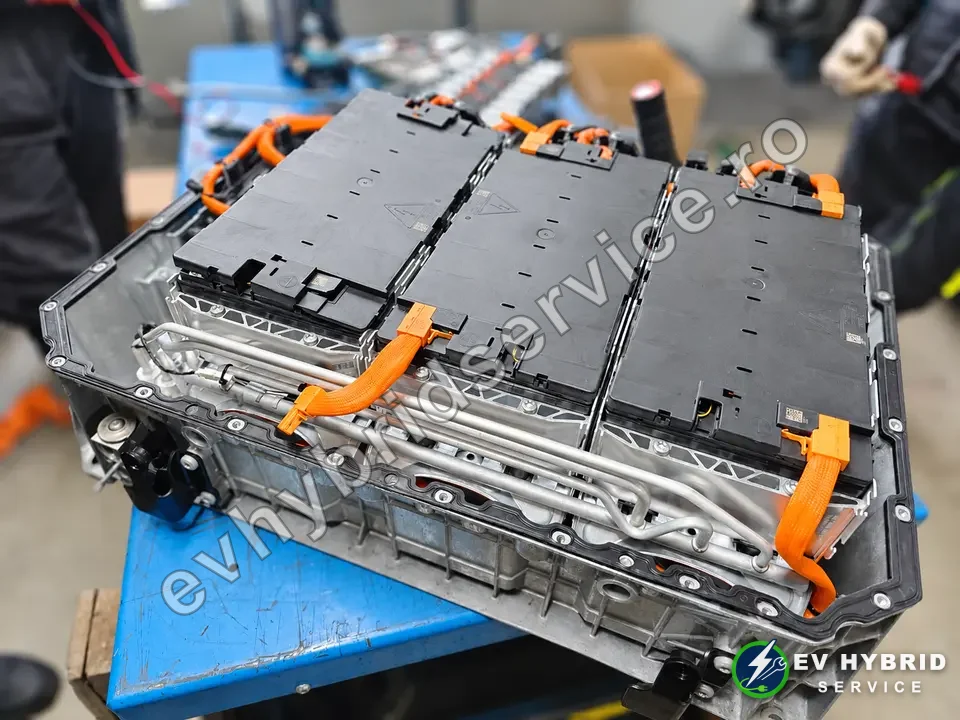
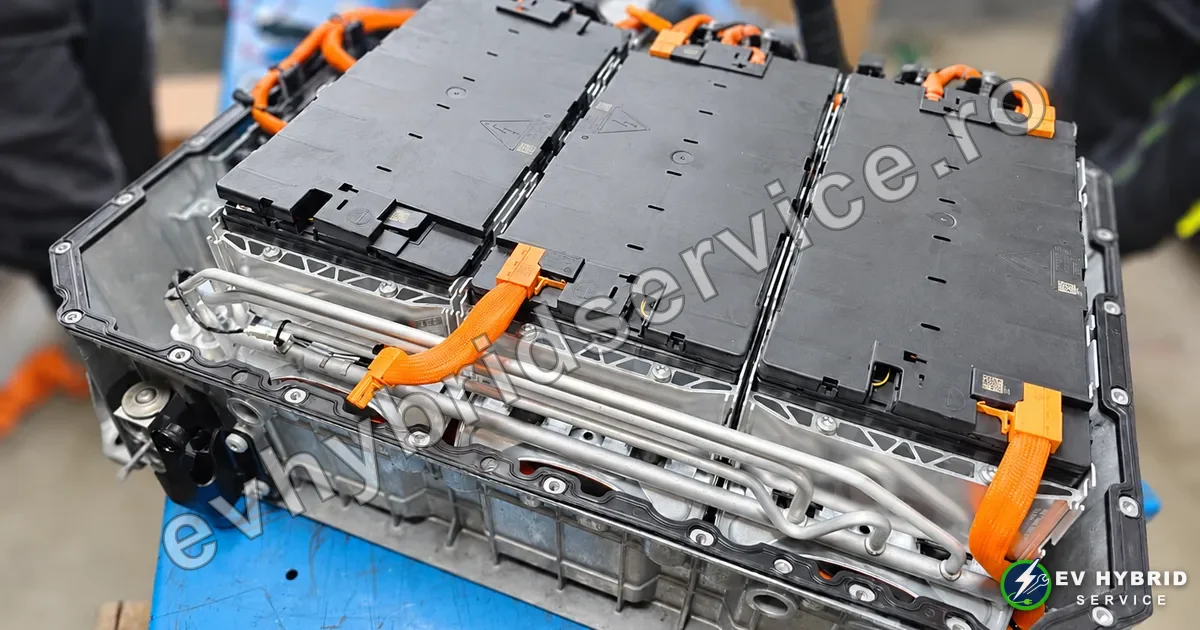
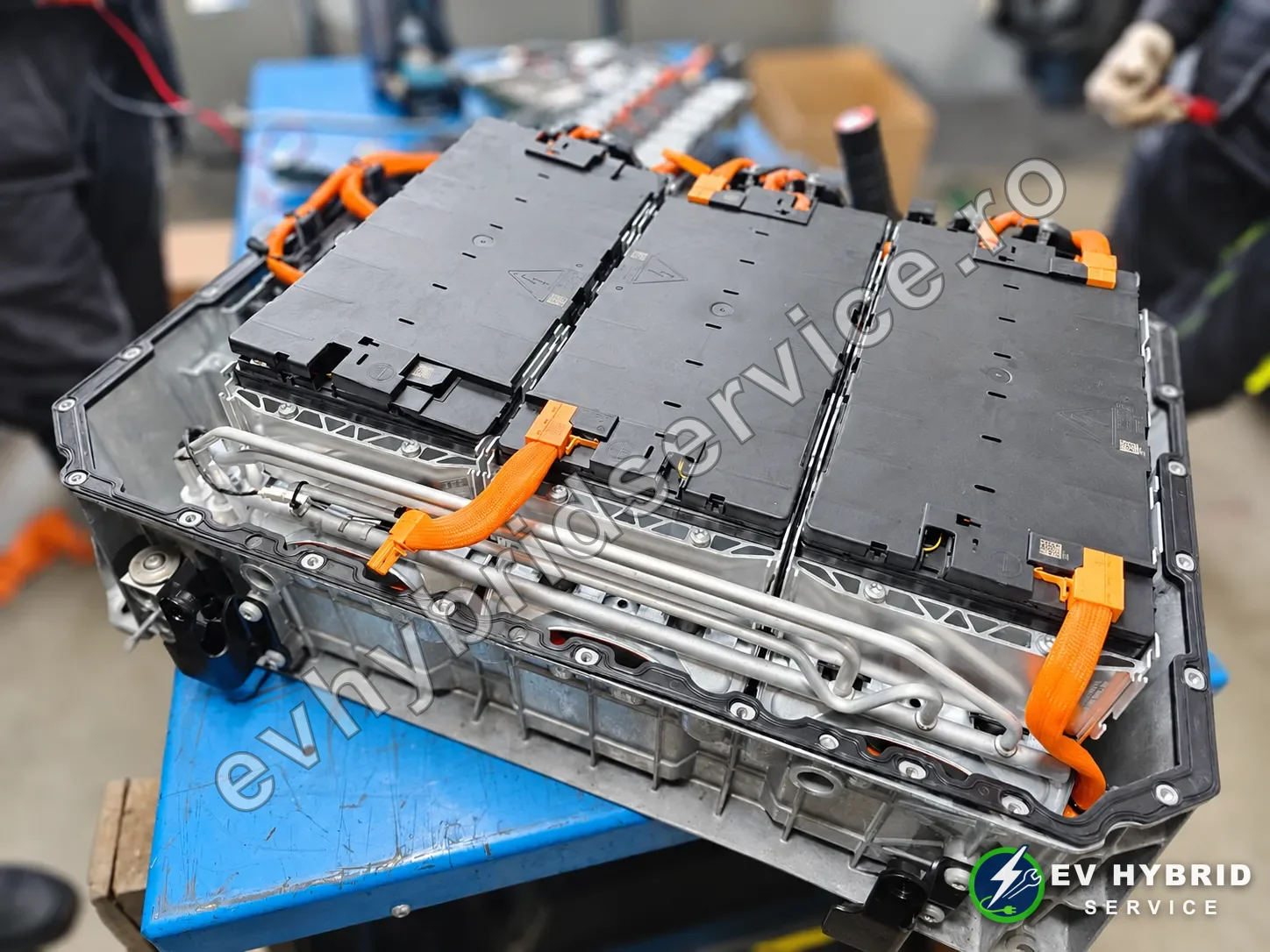
The battery out of the car, on the workbench. 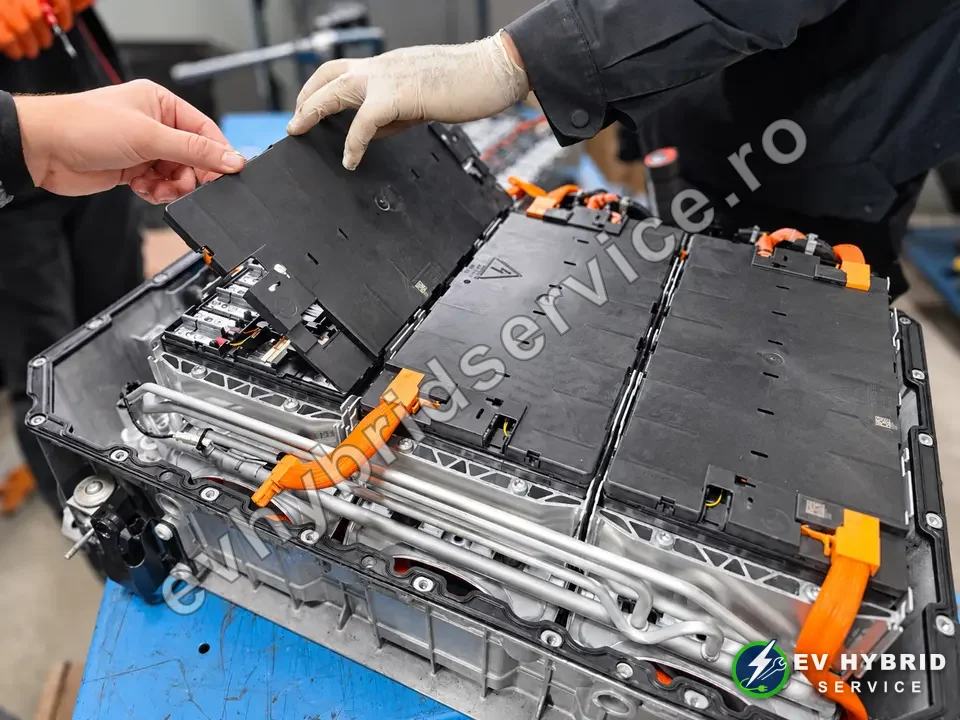
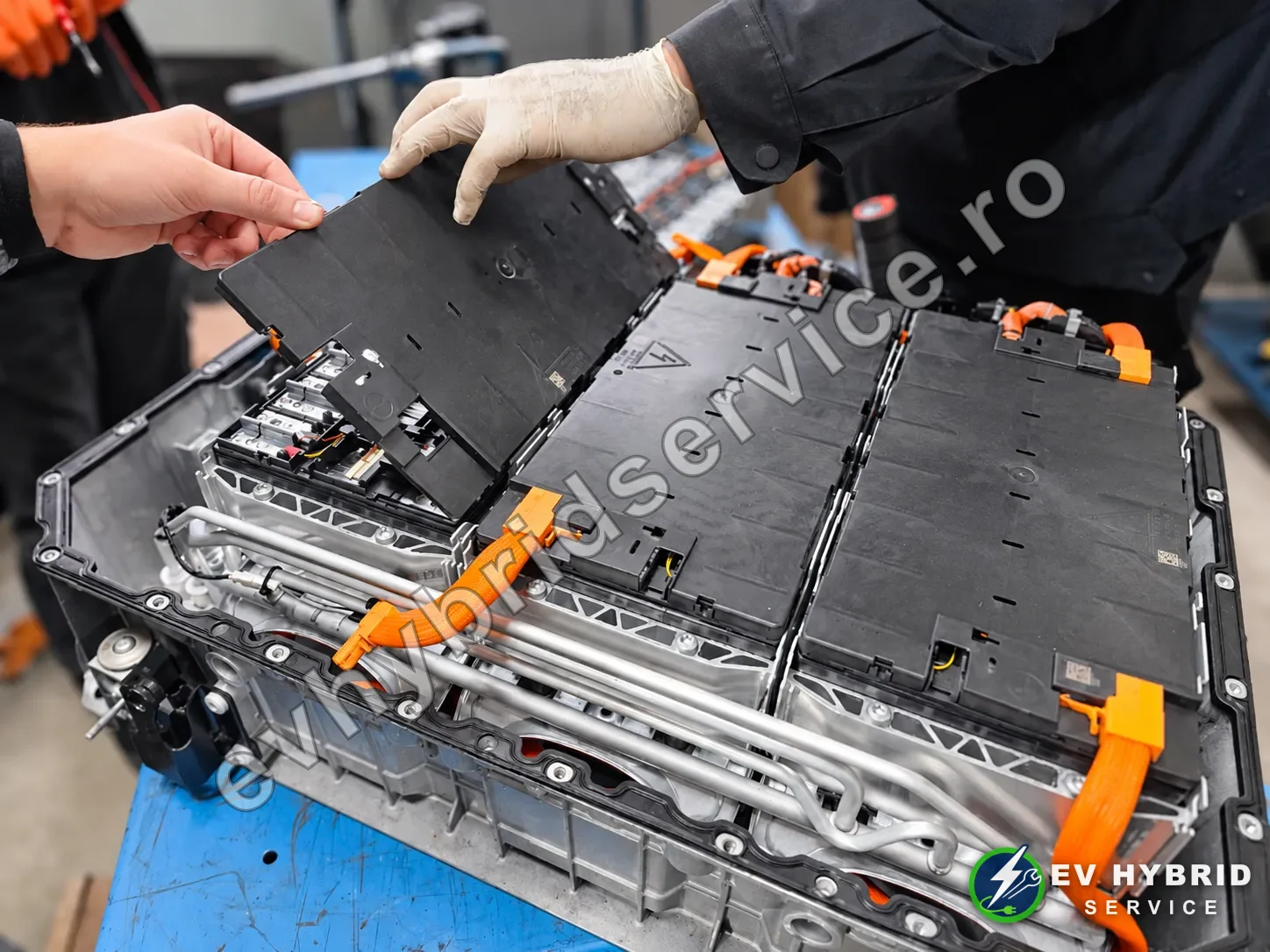
Lifting the covers to reach the modules. 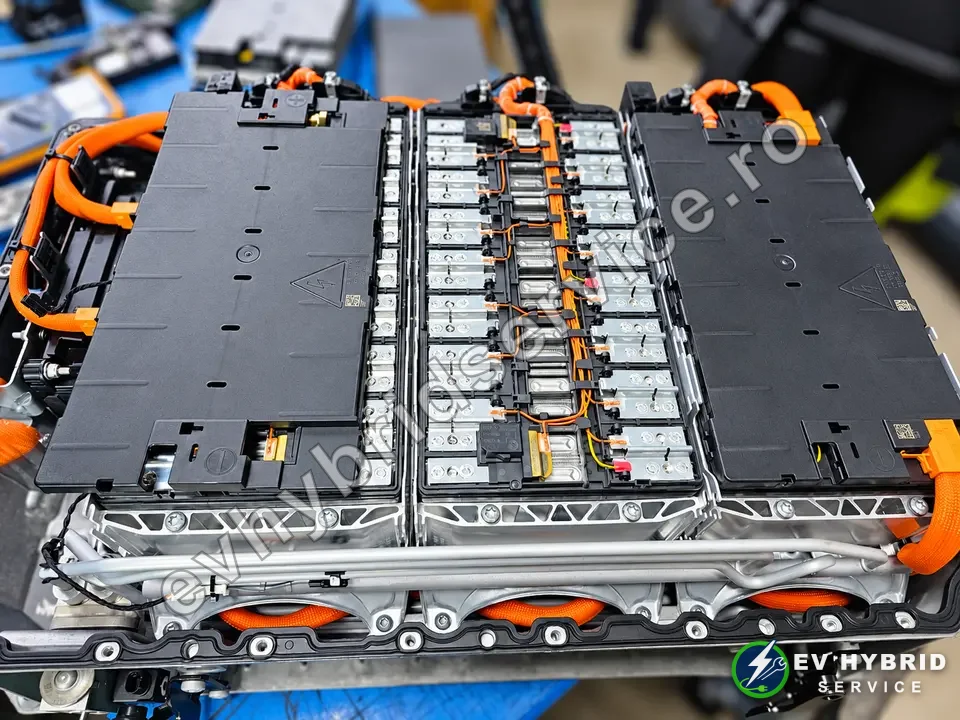
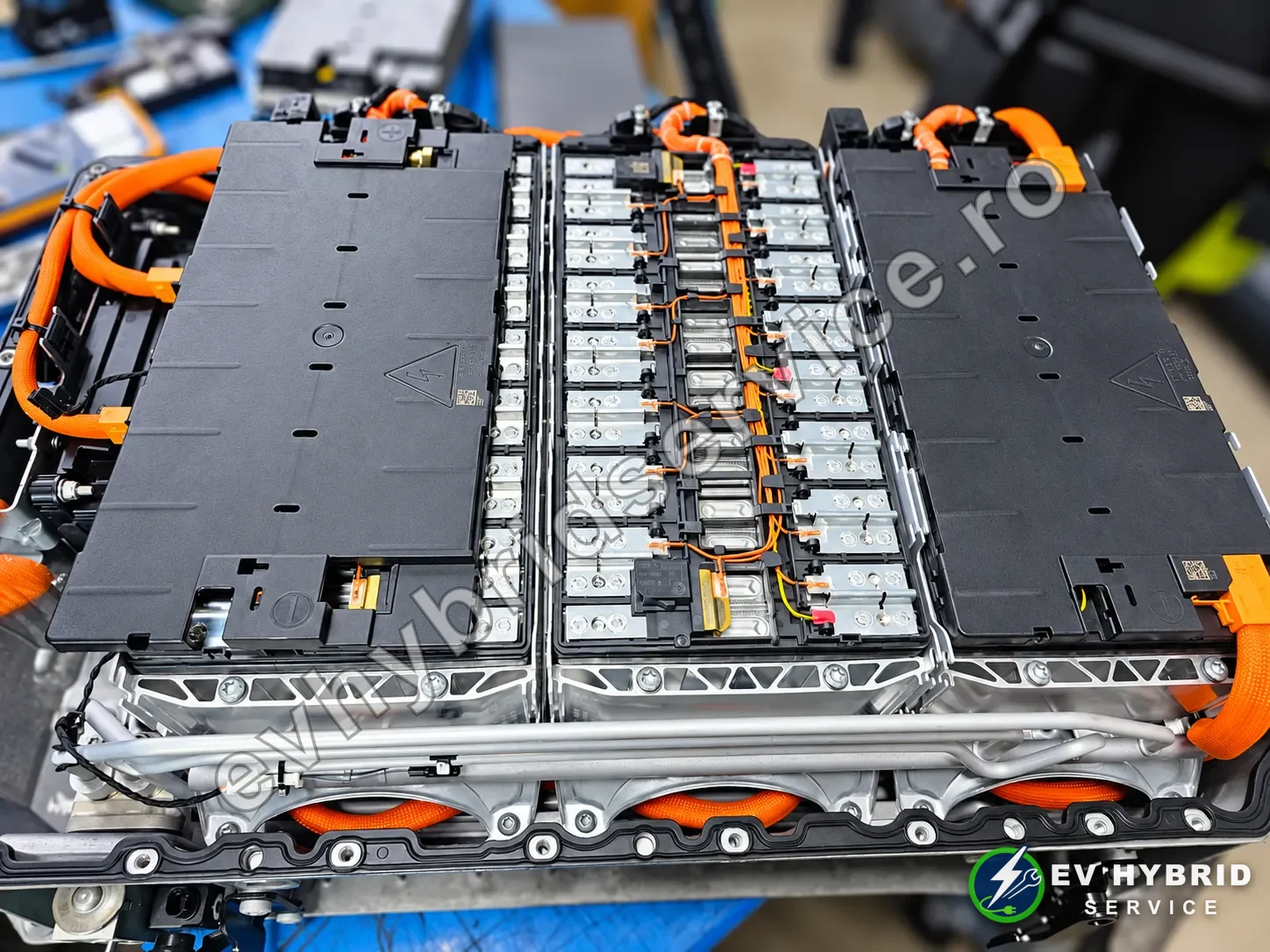
The modules exposed, covers off. Step 3
Replace the faulty module
We found the module holding the 0 V cell and replaced it with a working module, checked beforehand.
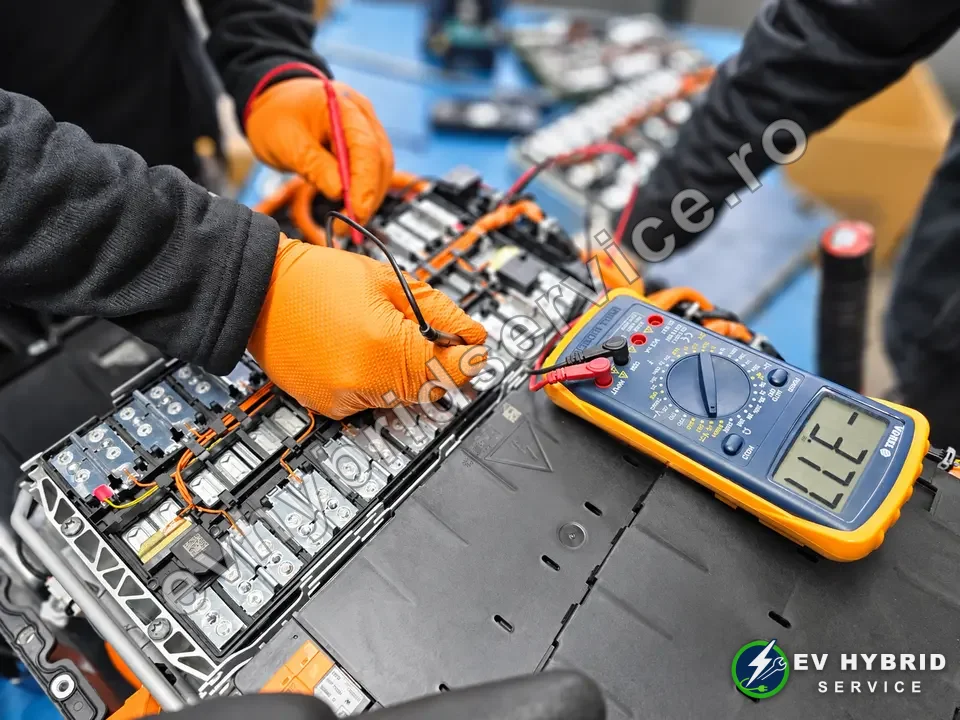
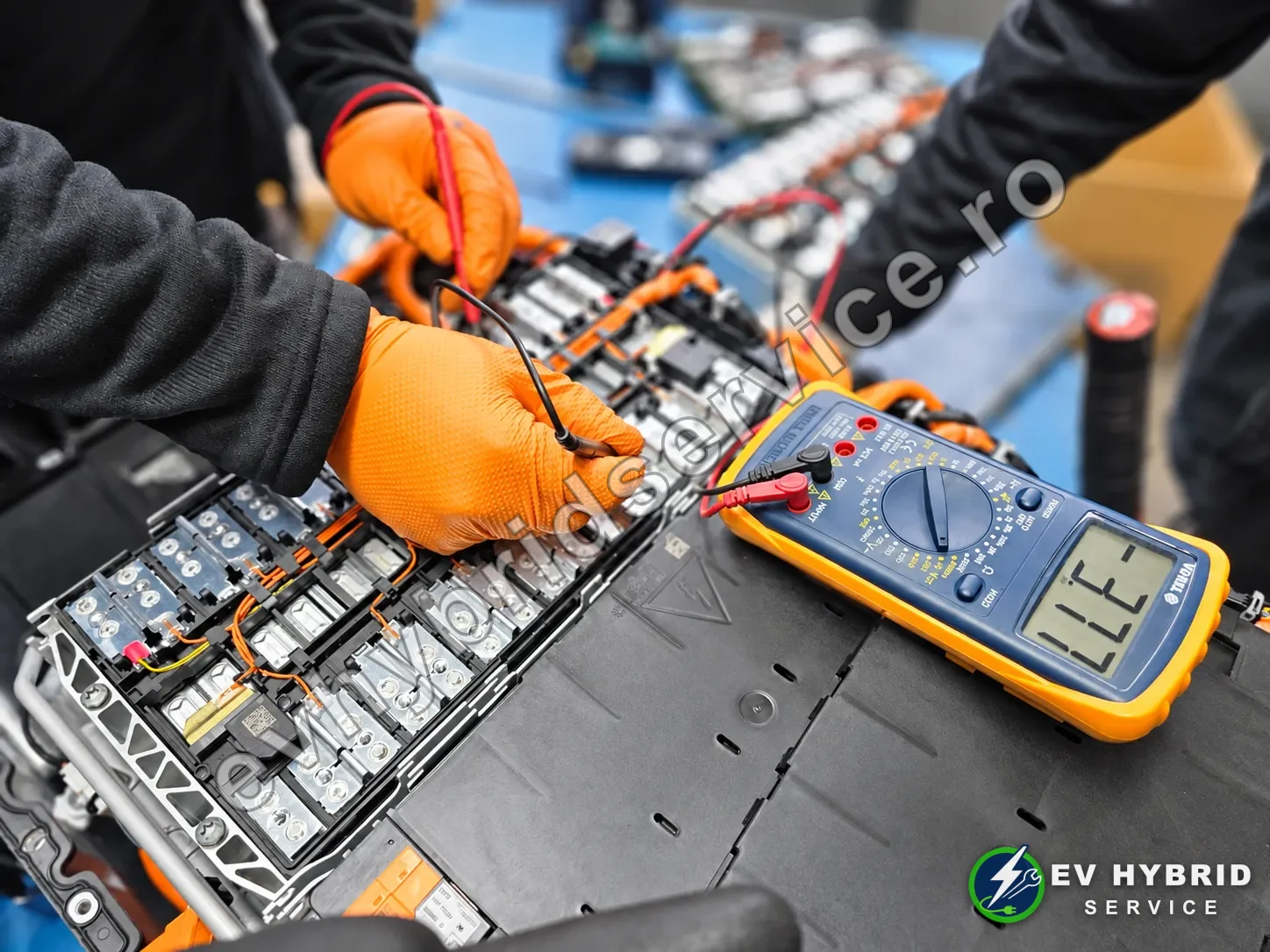
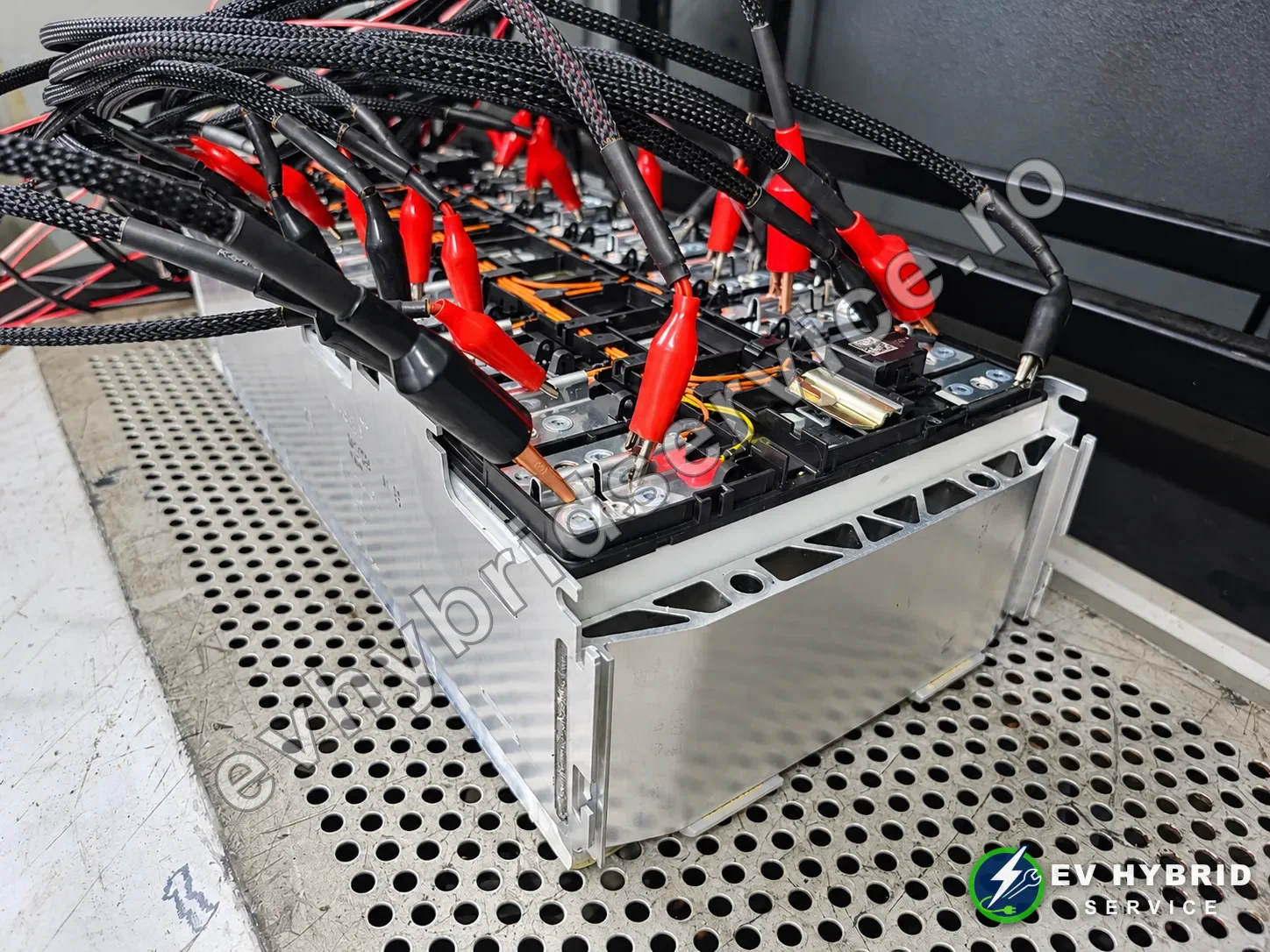
Measuring the cell voltages, one by one. 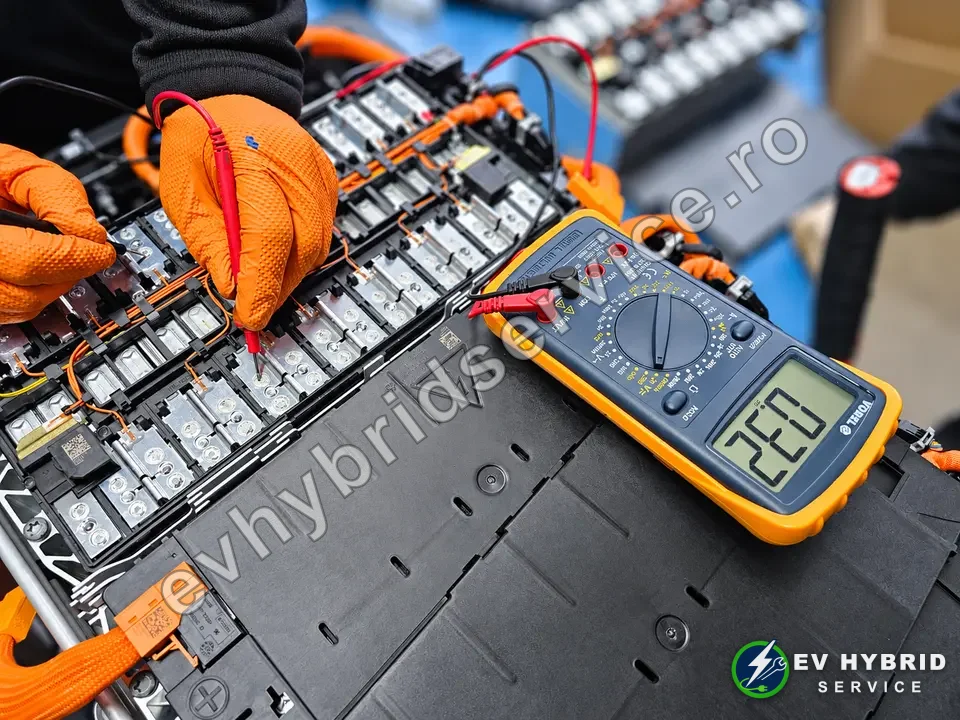
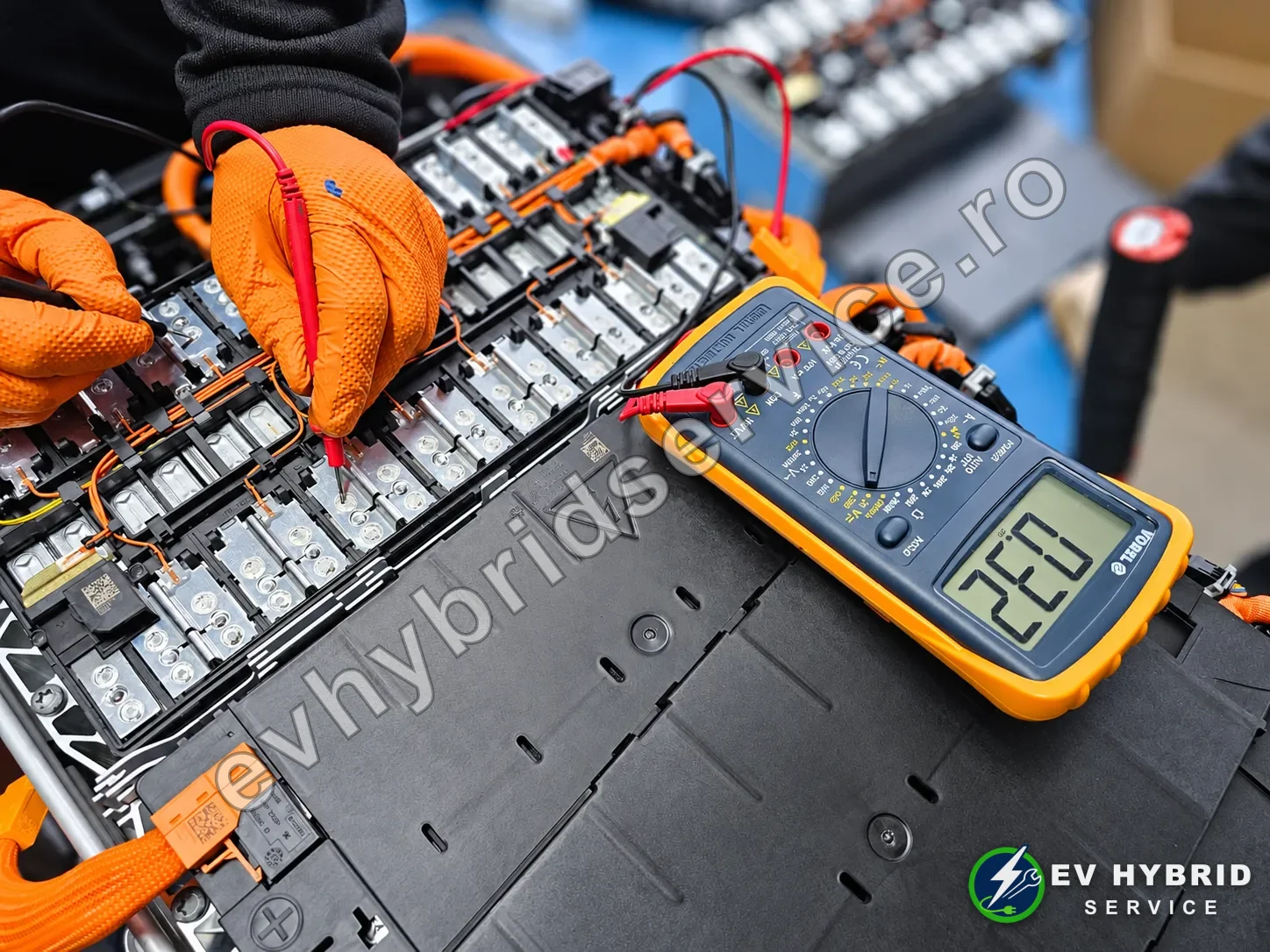
Another multimeter reading, on another module. 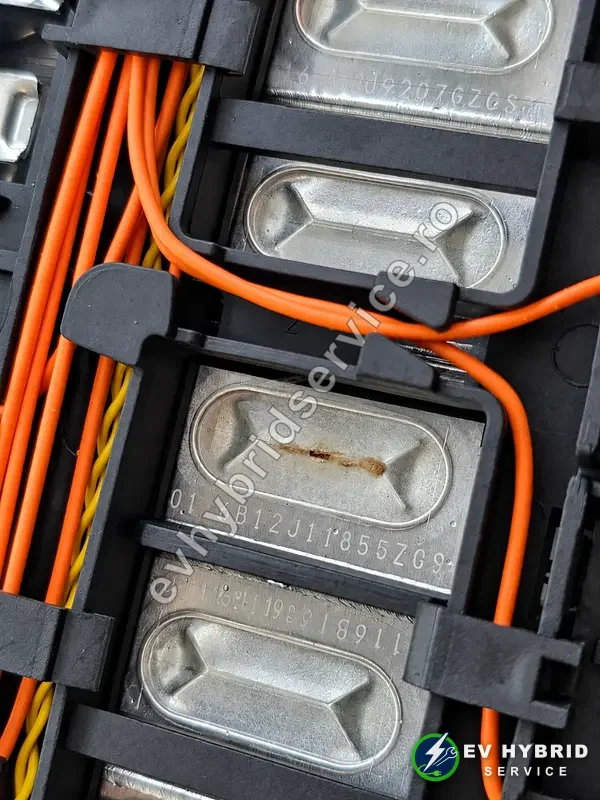
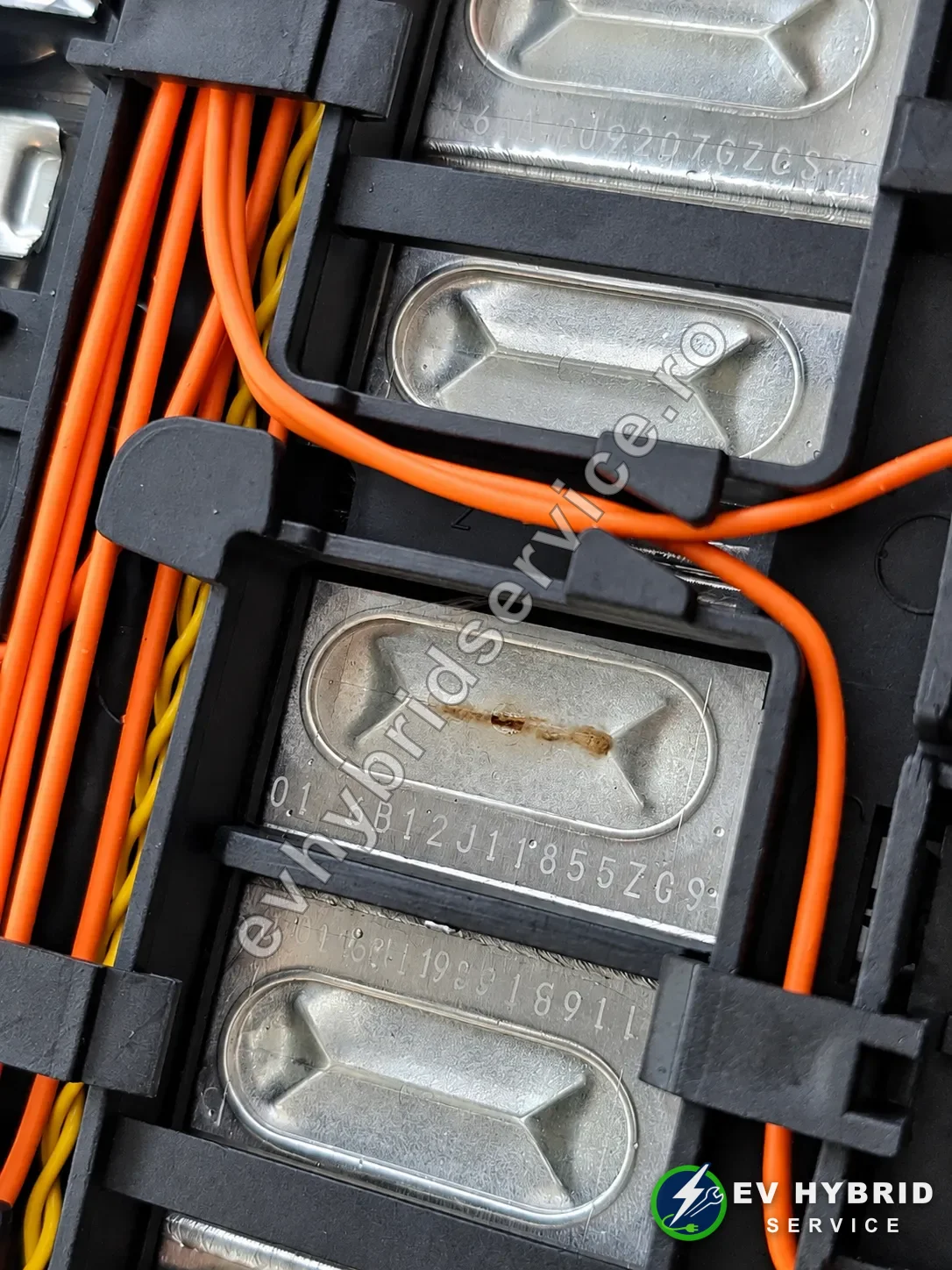
A module’s cells up close: a rust stain shows on one cell’s lid. Step 4
Charging and balancing
With professional charging equipment we brought the modules to the required state of charge, then checked and balanced the voltages so the whole battery works evenly.
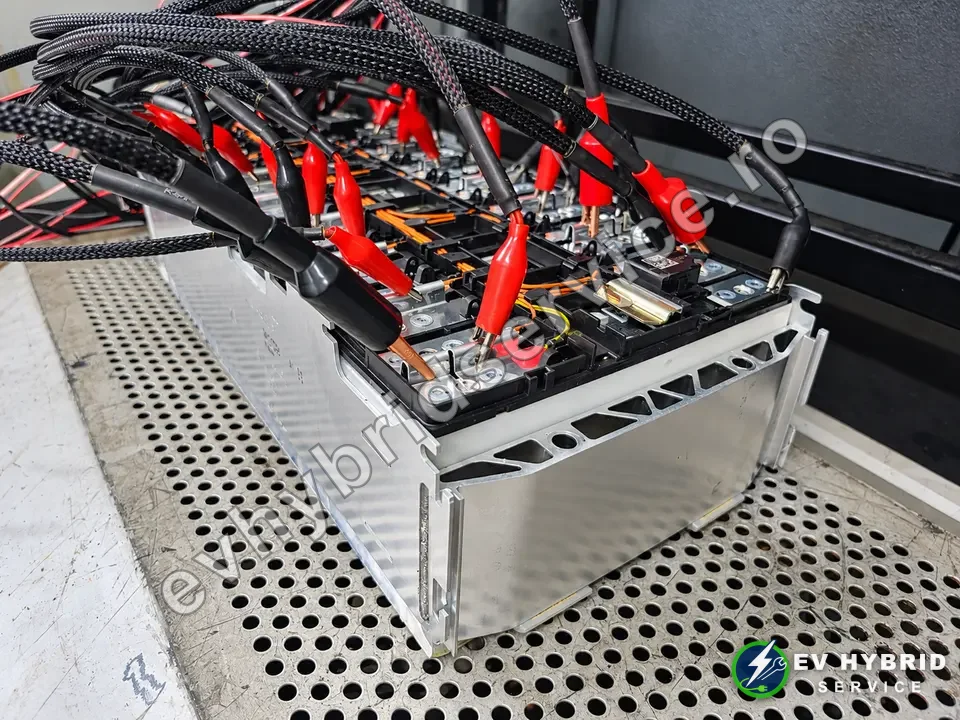
The modules connected for controlled charging. 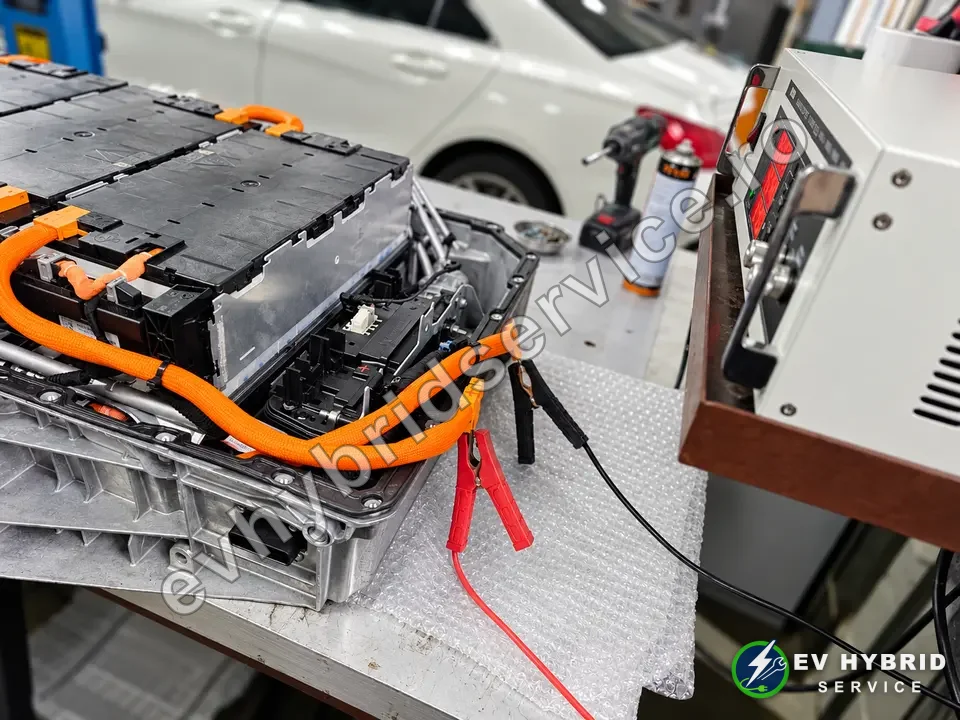
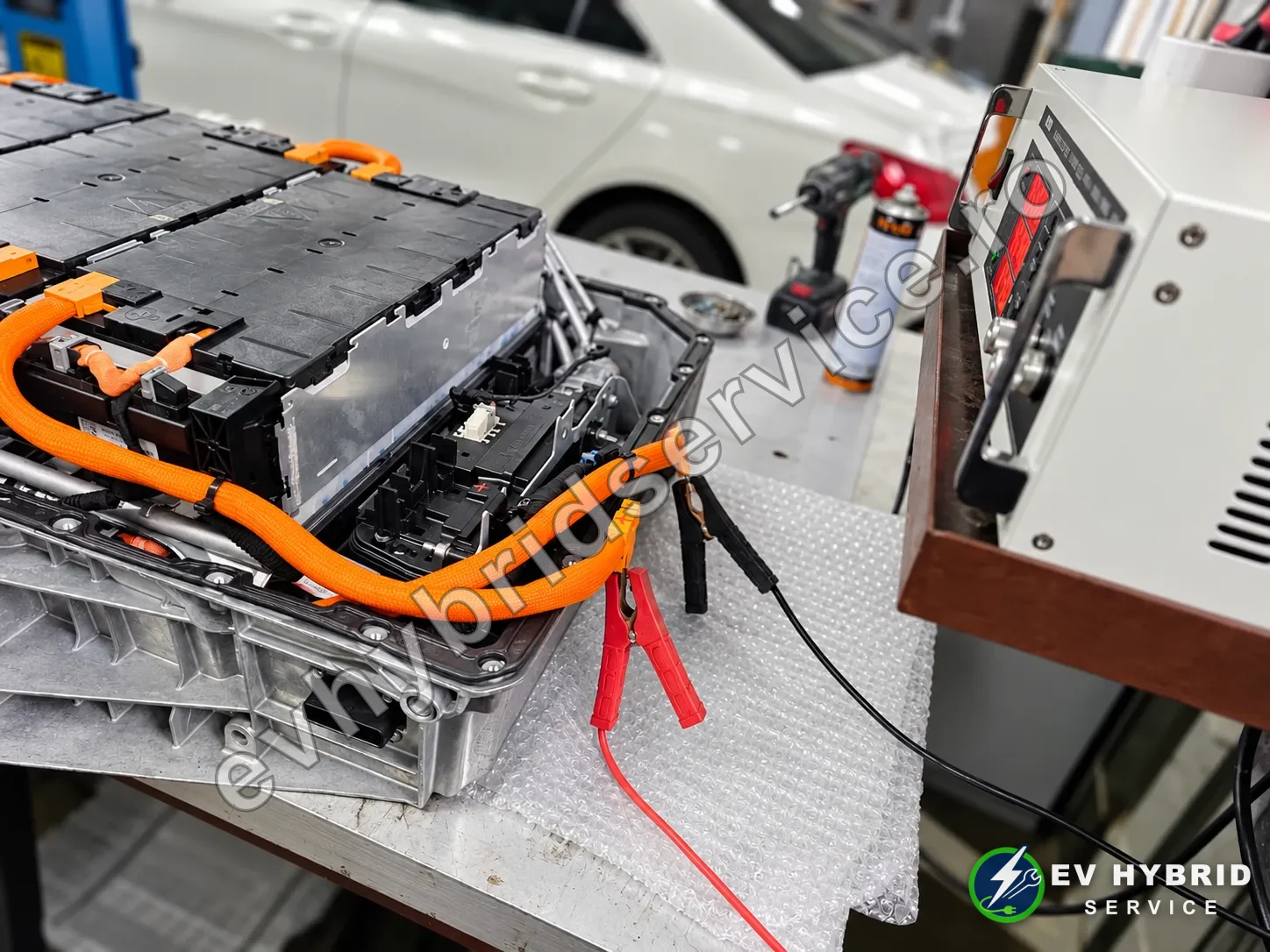
The battery connected to the charging equipment. 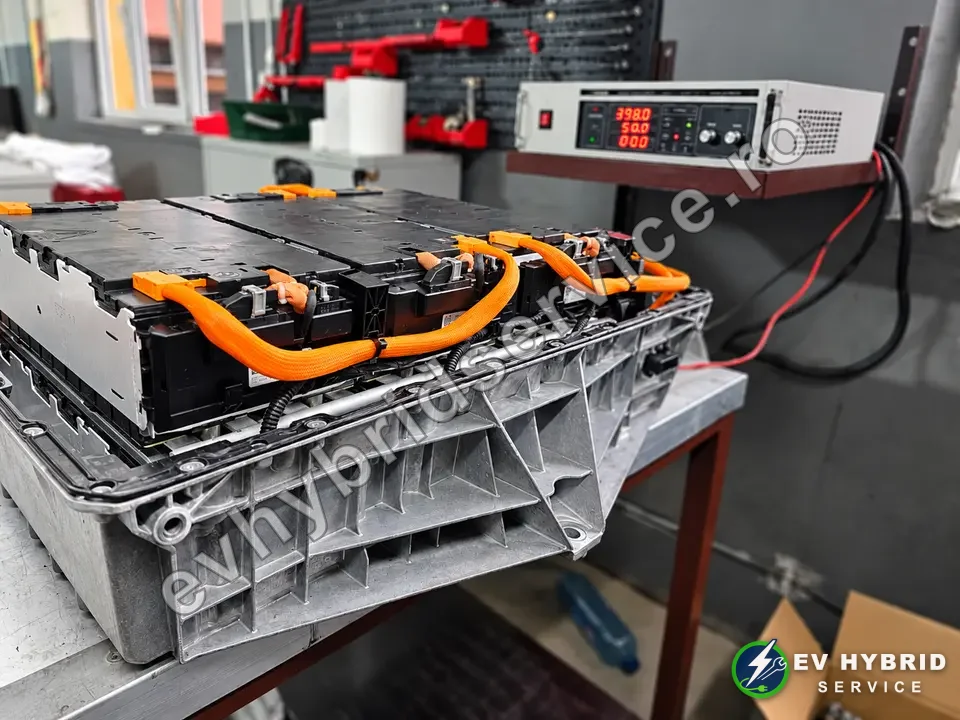
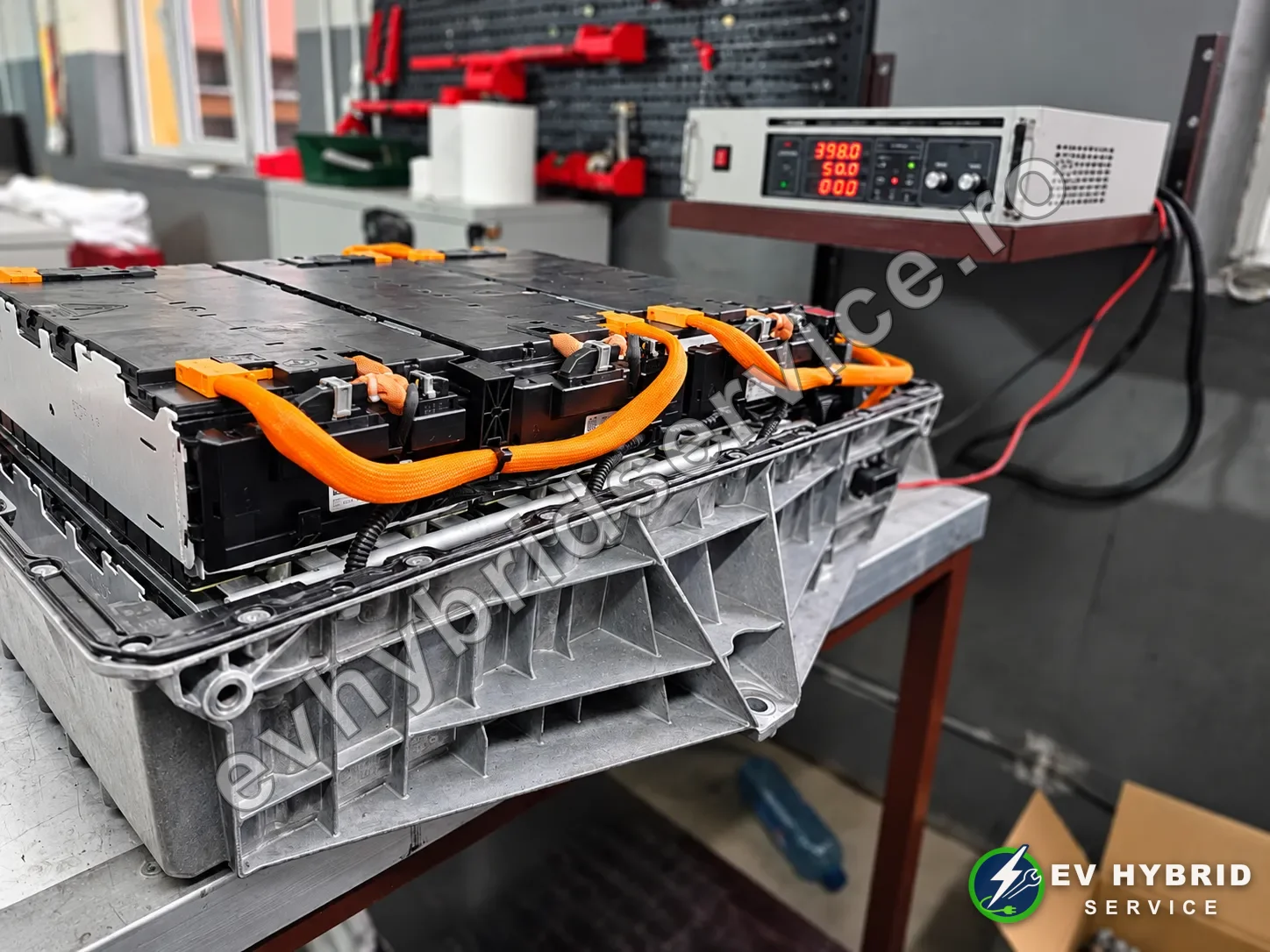
The battery on the bench, during controlled charging. Step 5
Reprogramming and recommissioning
We reprogrammed and adapted the SME with BMW’s original ISTA software, then ran the required tests and recommissioned the battery through BMW’s EoS procedure, with its code, as the maker requires.
Step 6
The result
The battery was reassembled, checked and refitted, and the plug-in hybrid system was reactivated. The car works normally again, without a new battery. The work carries a 12-month warranty.
Before and after
When it came in
- Brought in on a truck
- Permanent hybrid system fault
- One cell at 0 V
- Permanent faults in the SME
At handover
- Faulty module replaced
- Battery charged and balanced
- SME reprogrammed, EoS procedure done
- 12-month warranty
Signs that a BMW plug-in hybrid’s battery is in trouble
- A drivetrain or high-voltage battery fault appears
- Electric mode can no longer be selected
- The battery no longer charges from the plug
- The faults come back as soon as you clear them
Is your BMW plug-in hybrid locked out by its battery computer? We diagnose it with BMW software and tell you plainly what is wrong.
Book a diagnosis →Frequently asked questions
Can an X5 xDrive40e battery be repaired without replacing all of it?
Yes, when the fault is local. Here a single cell had failed: we replaced its module, balanced the battery and recommissioned it to BMW procedure.
What is the SME?
It is the computer that manages the high-voltage battery: it watches the cells’ voltage and temperature and can lock out the hybrid system to protect the battery.
Why are ISTA and the EoS procedure needed?
Because after work inside the battery, BMW requires the computer to be reprogrammed and the battery validated with the maker’s software and procedure. Without them, the permanent faults remain and the hybrid will not start.
Photos from the job
Tap a photo to see it full size; use the arrows to browse.
The high-voltage battery sits under the boot floor.
The battery on the bench, with the diagnostic tester connected.
The battery out of the car, on the workbench.
Lifting the covers to reach the modules.
The modules exposed, covers off.
Measuring the cell voltages, one by one.
Another multimeter reading, on another module.
A module’s cells up close: a rust stain shows on one cell’s lid.
The modules connected for controlled charging.
The battery connected to the charging equipment.
The battery on the bench, during controlled charging.
Read next
Battery repairs
Hyundai Kona Electric losing coolant with no error on the dashboard: how we repaired the cooling circuit of the high-voltage battery
A 2024 Hyundai Kona Electric was losing a lot of fluid from the battery cooling circuit, though the dashboard showed nothing. After a hard impact, a pipe had cracked. We replaced it, sealed the small cracks, and the battery stayed on the car.
3 min read
Battery repairs
Opel Combo Electric that would no longer charge from a socket: how we repaired the on-board charger without replacing it
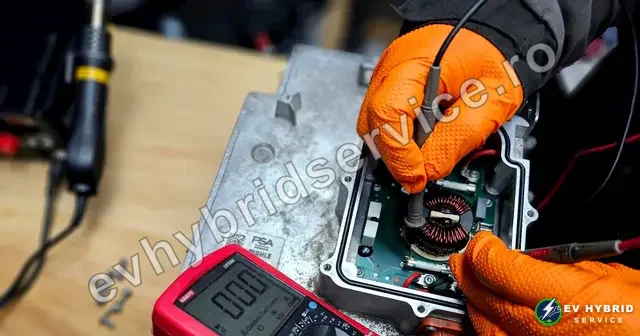
A 2024 Opel Combo Electric would no longer charge its battery from a socket. The culprit was the on-board charger, where one of the low-voltage electronic supplies had stopped working properly. We repaired it, and the original charger stayed on the car.
2 min read
Battery repairs
Nissan Leaf 40 kWh with communication errors and insulation faults: how we restored the 12 V supply and repaired the high-voltage insulation
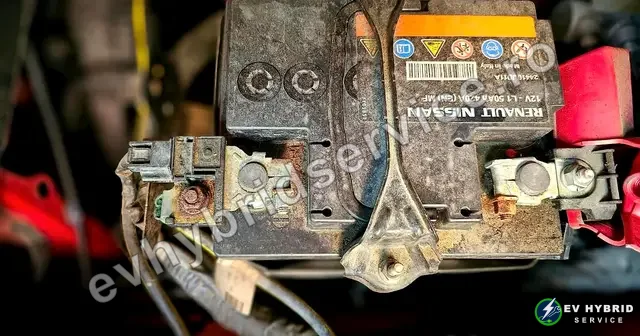
A Nissan Leaf 40 kWh had errors in a chain and no longer talked to its climate system. Where it all started: the oxidised terminals of the 12 V battery. Once we restored the supply, diagnosis also turned up high-voltage insulation faults, which we fixed.
2 min read