
Workshop job ·
BMW X3 xDrive30e plug-in hybrid with no fault codes but cells sagging under load: how we repaired the high-voltage battery by replacing modules 1 and 6
A 2021 X3 xDrive30e had no stored faults, but load tests showed cells sagging in voltage in modules 1 and 6. We checked the battery electronics, replaced the two modules and validated the repair with BMW software, without a new battery.
- fault codes stored in the computers
- 0fault codes stored in the computers
- modules replaced, no. 1 and no. 6
- 2modules replaced, no. 1 and no. 6
- management electronics and balancers within spec
- SME OKmanagement electronics and balancers within spec
- re-adaptation and validation to BMW procedure
- ISTA + EoSre-adaptation and validation to BMW procedure
The problem
A 2021 BMW X3 xDrive30e had no stored fault codes, but checks on its high-voltage battery showed trouble in some cells.
The diagnosis
Under load, cells in modules 1 and 6 dropped far lower in voltage than the rest. The SME and the active balancers were working normally, so the fault was in the cells, not the electronics.
The fix
We removed the battery, replaced modules 1 and 6, checked that the voltages matched and reassembled the battery, then ran the re-adaptations with BMW ISTA and the EoS procedure.
The result
The battery works properly again without being replaced as a whole. The customer received a warranty on the work.
A battery that looked fine
The X3, an xDrive30e built in 2021, had no fault codes stored in its computers. To an ordinary tester, the car was fine. Our checks on the high-voltage battery said otherwise: some cells were no longer working as they should.
We analysed the live data and put the battery through tests under load. That is where the problem showed: cells in module 1 and module 6 dropped much further in voltage than the others. They were degraded cells that could no longer cope with the car’s electrical demands.
The job, step by step
Step 1
Diagnosis
We ran a full diagnosis of the battery and the electronics that watch over it. With no faults stored, we followed the cell voltages live and under load, and found modules 1 and 6.
Step 2
Check the battery electronics
Before changing anything, we checked the SME (the battery computer), the monitoring and balancing circuits including the active balancers, the individual cell voltages and the differences between modules. The electronics were within spec, so the fault was in the cells.
Step 3
Remove and open the battery
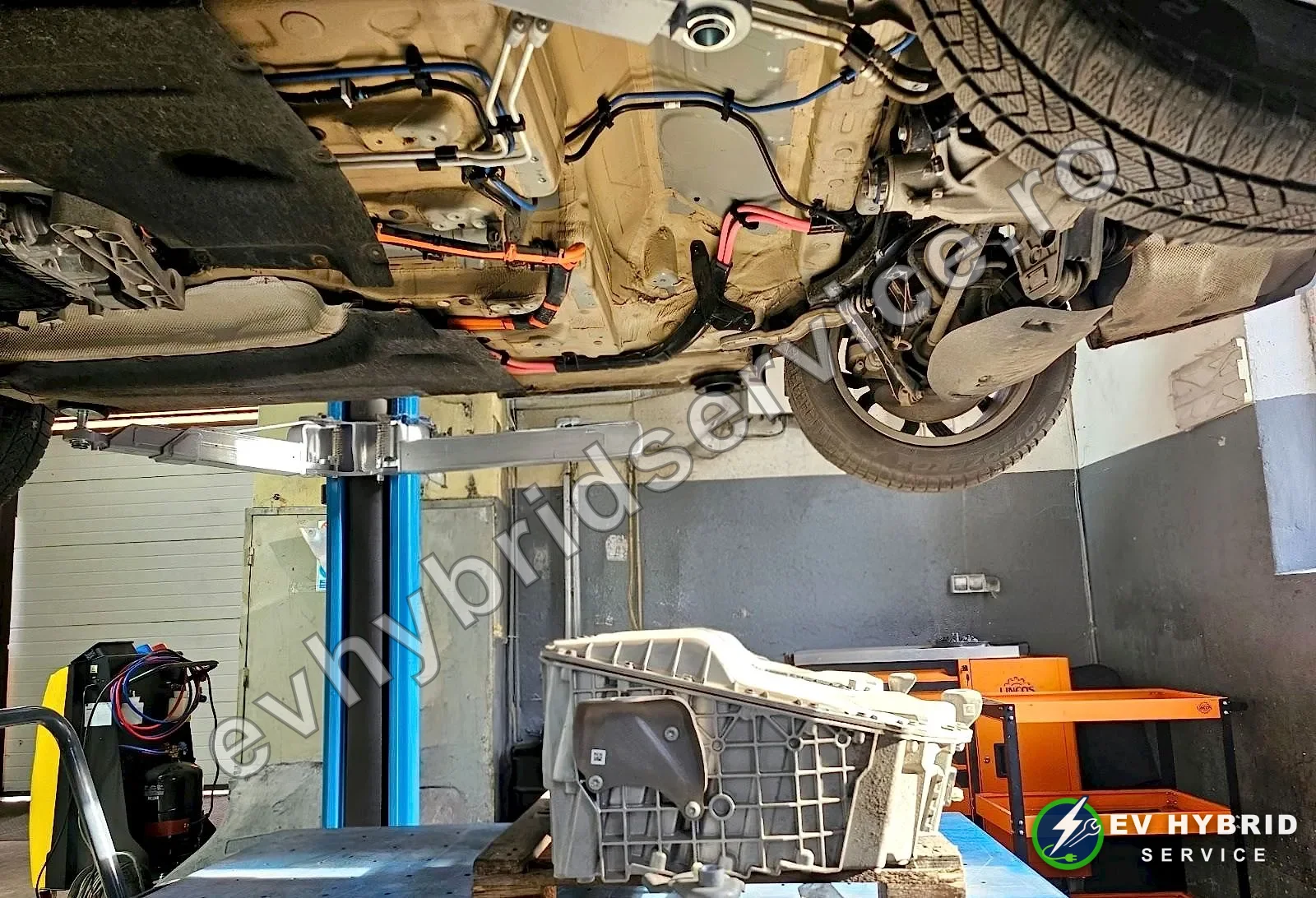
We shut down the high-voltage system to BMW’s safety procedure, lowered the battery from under the car and opened it to reach the modules.
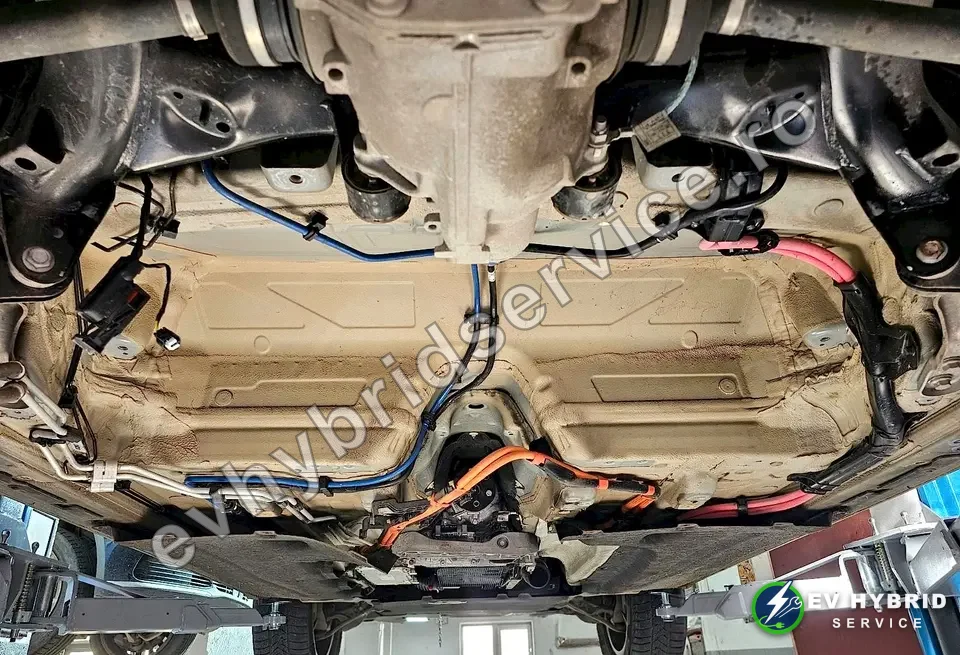
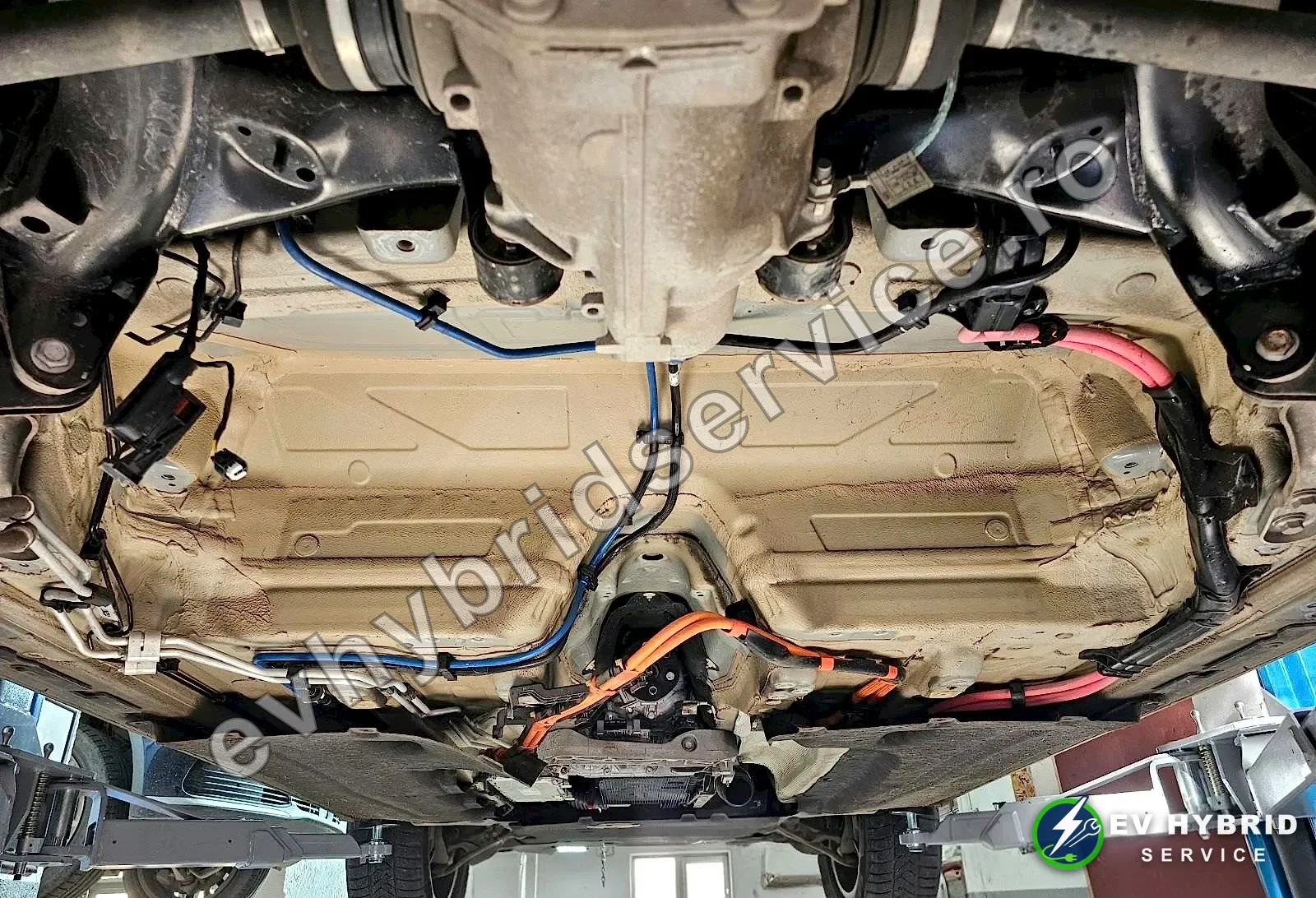
The X3 on the lift, seen from below, around the battery. 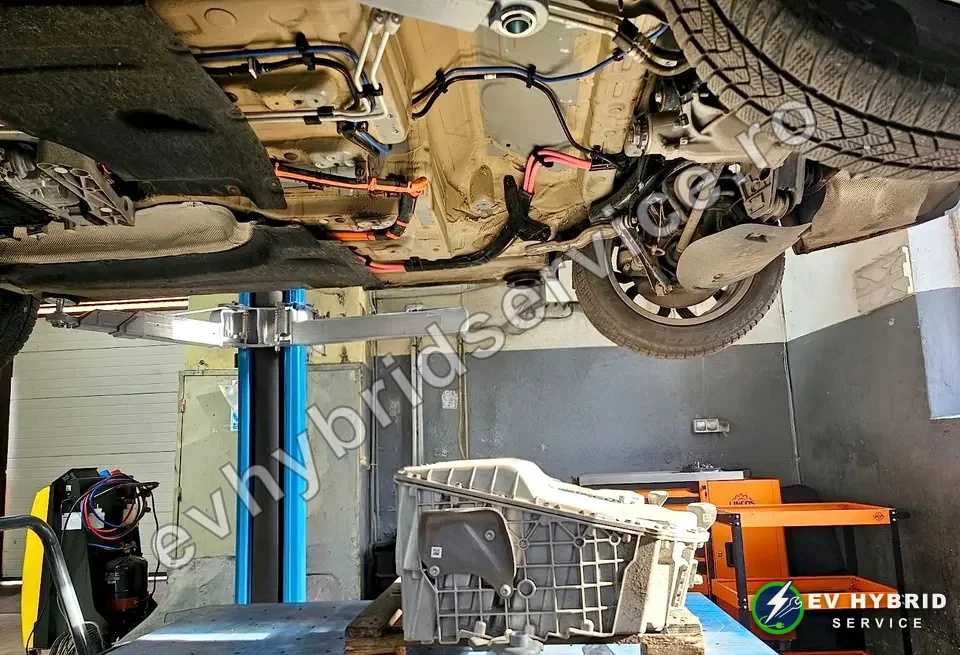
The battery lowered from under the car onto the lifting table. 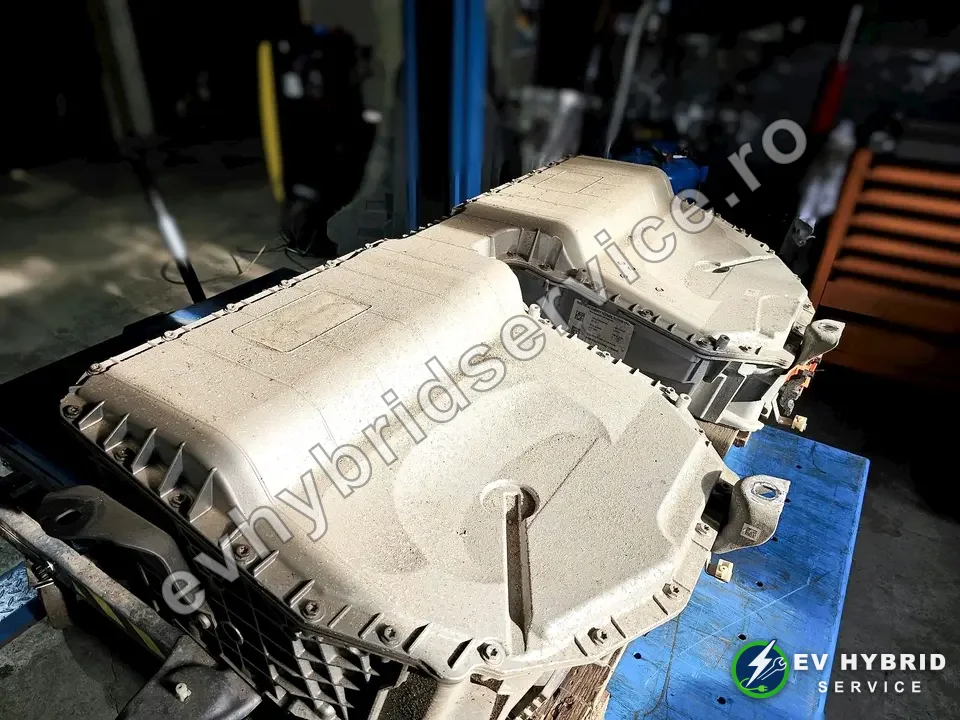
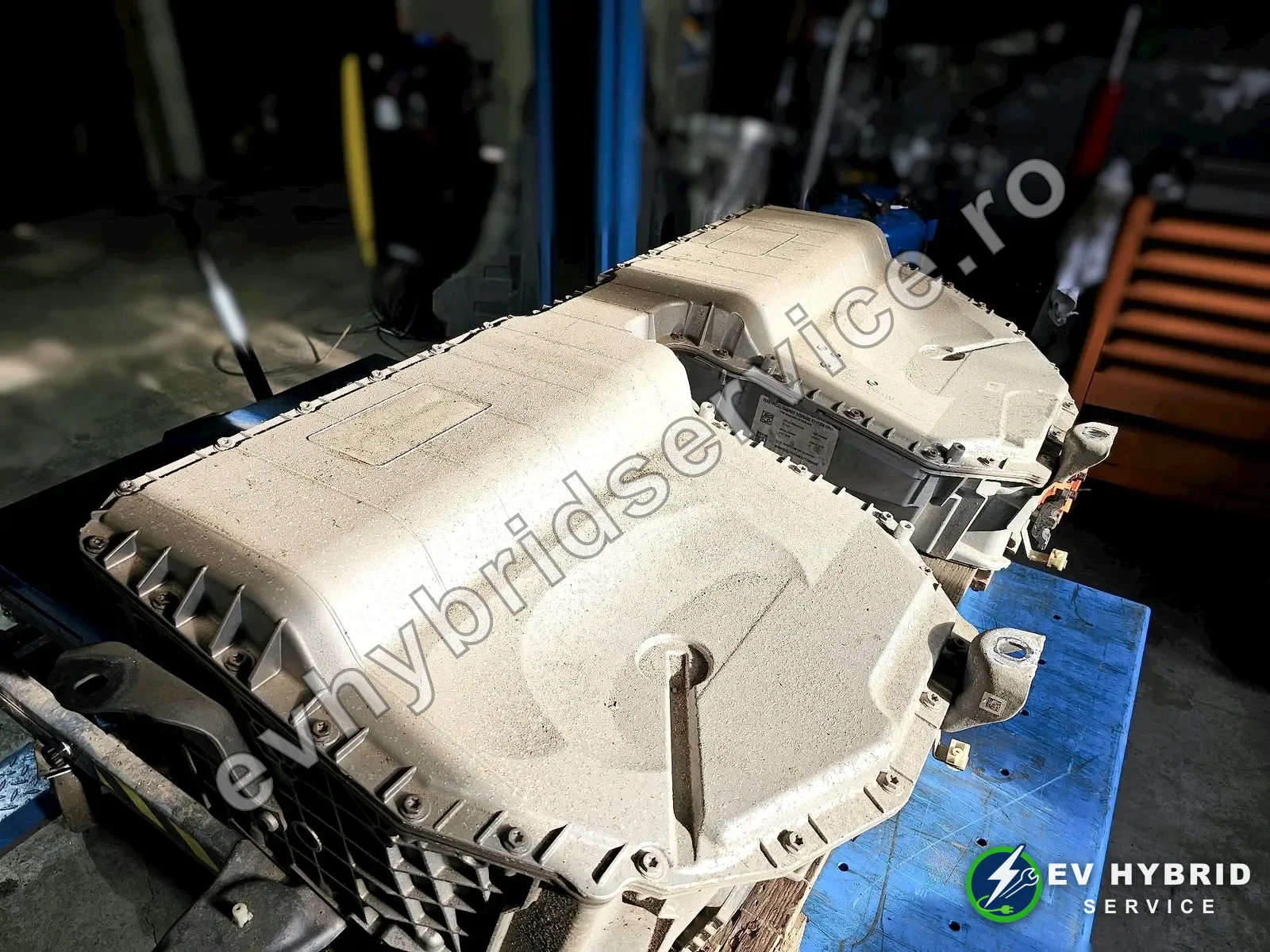
The battery out of the car, still closed. 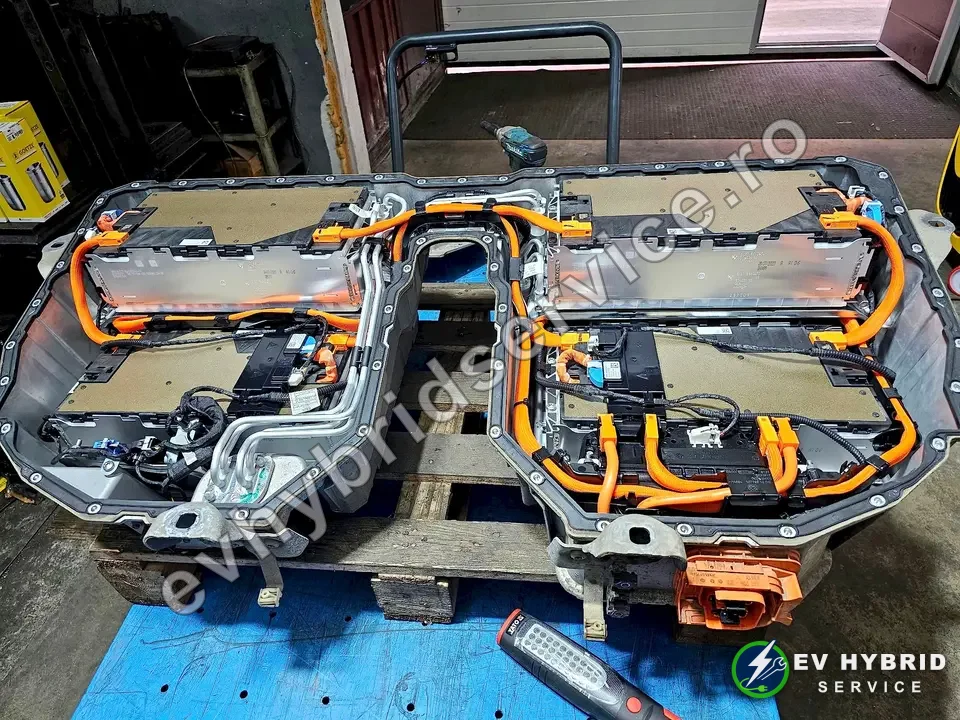
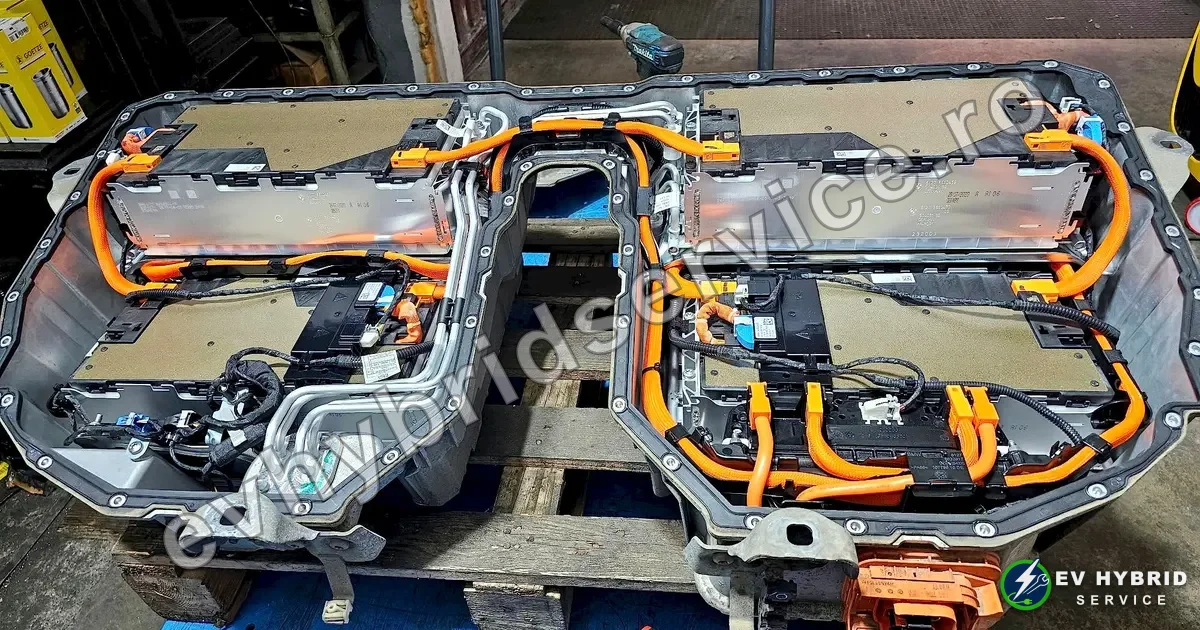
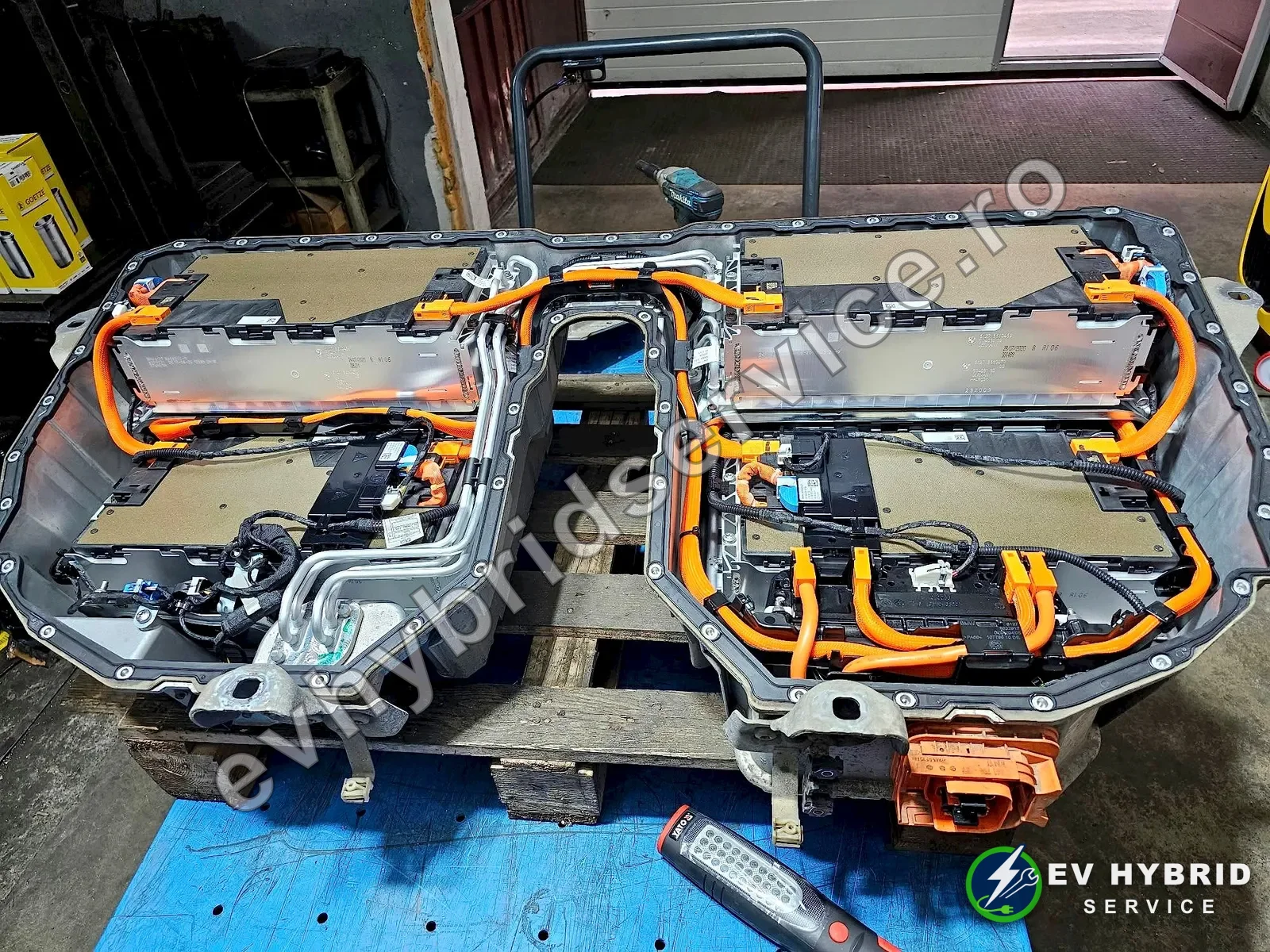
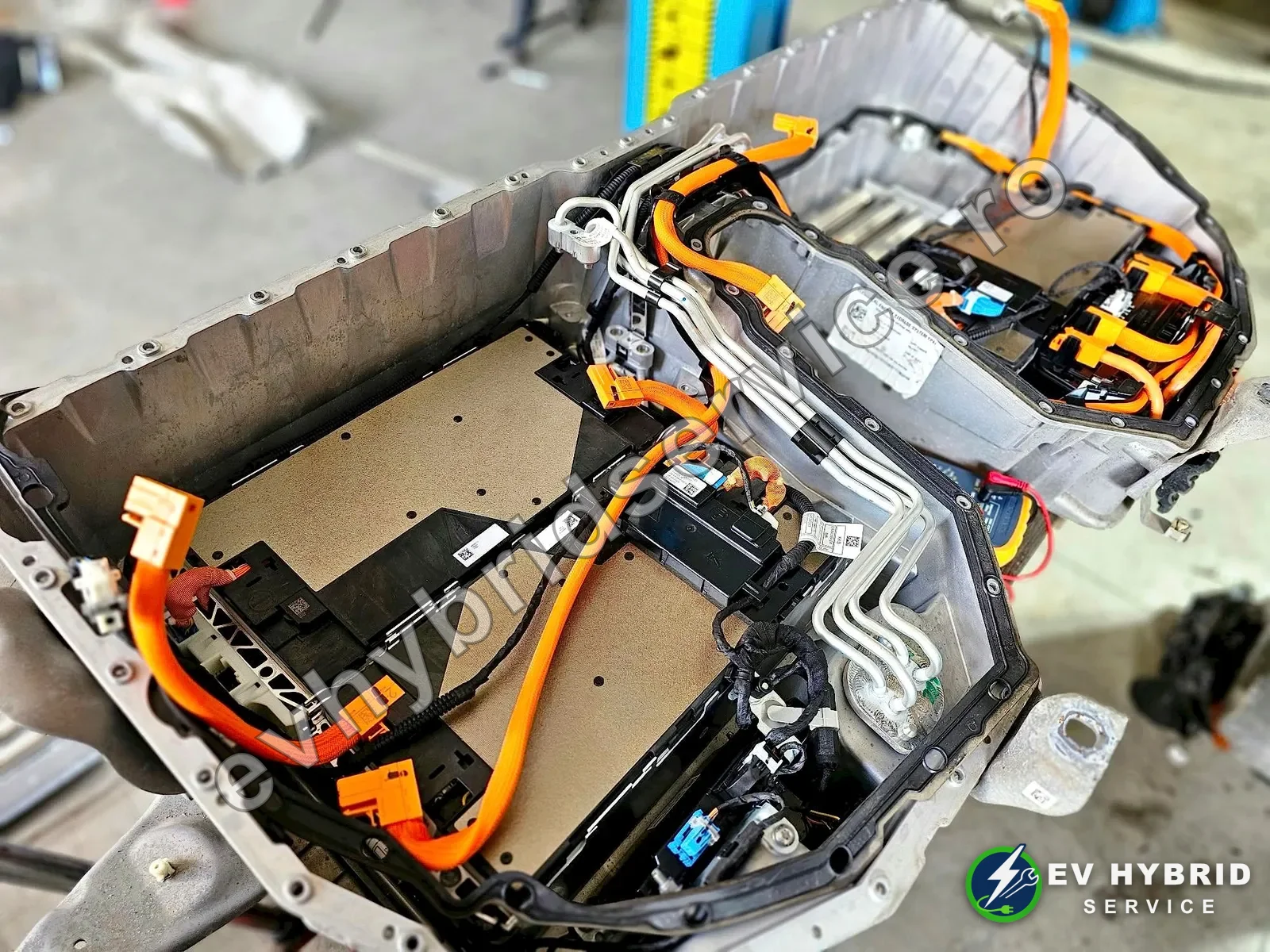
The housing open: the modules and the orange high-voltage wiring. Step 4
Replace modules 1 and 6
We took out the two modules with weak cells and replaced them. We checked the modules’ parameters and that the voltages matched, so they fit correctly into the rest of the battery.
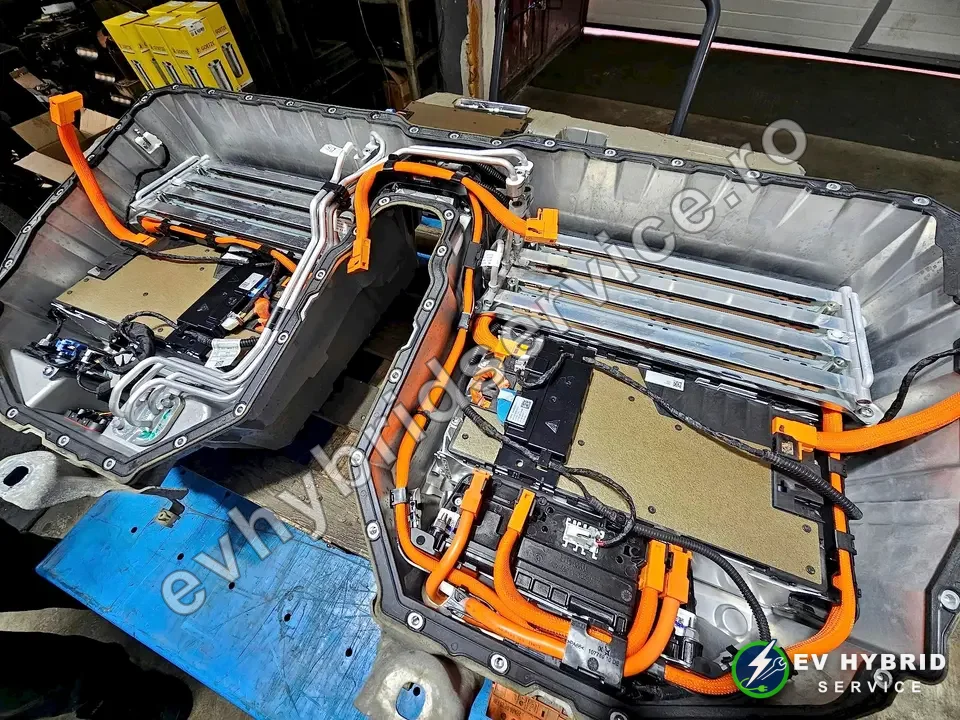
The modules and the battery electronics, from another angle. 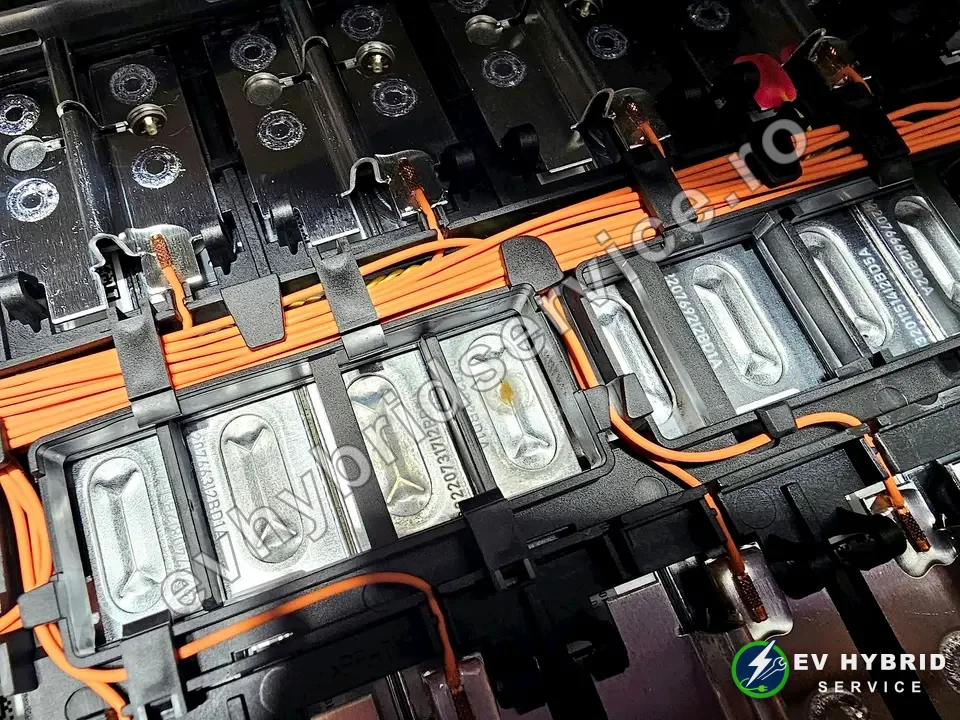
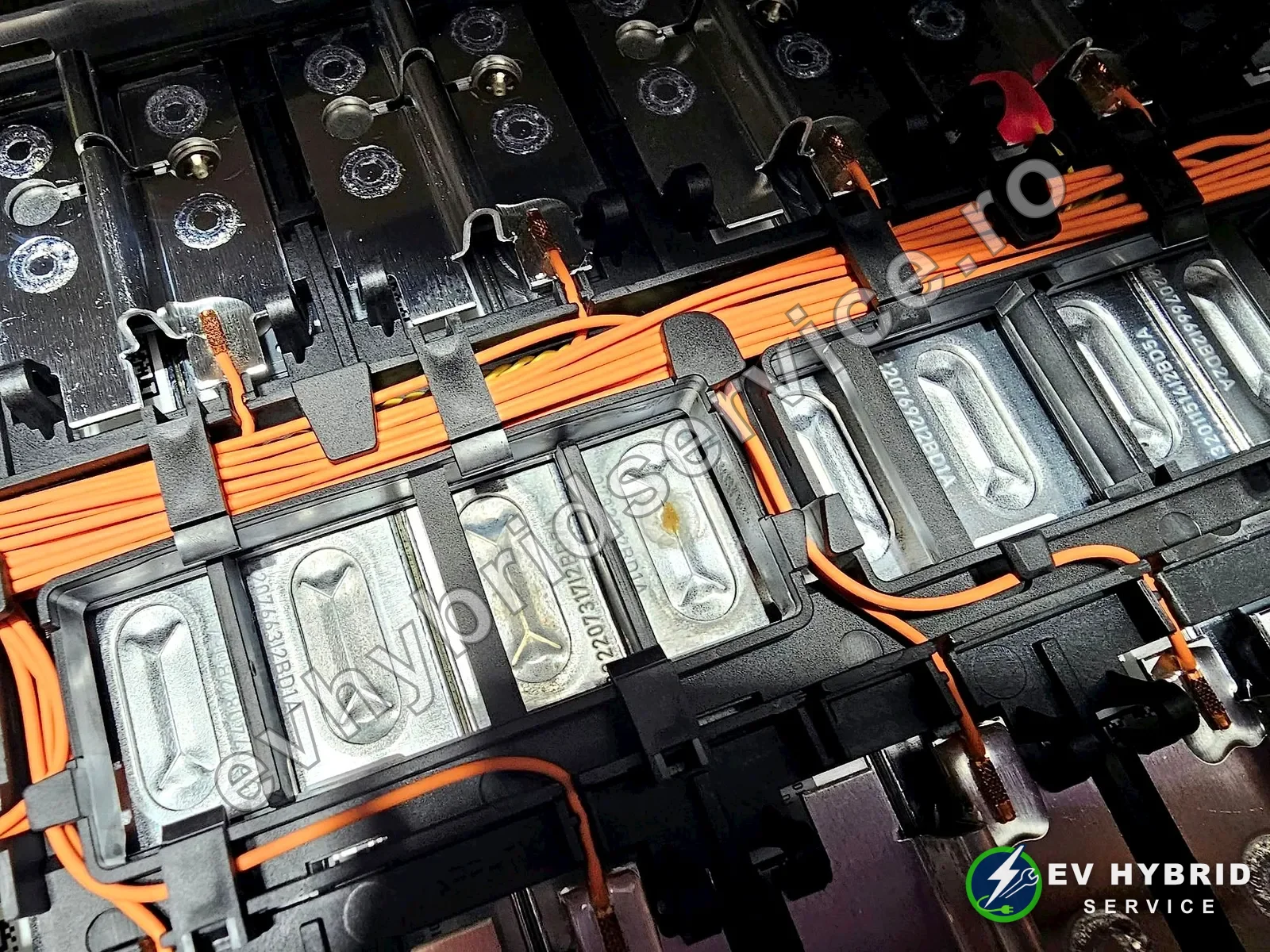
A module’s cells up close, with the monitoring wires. 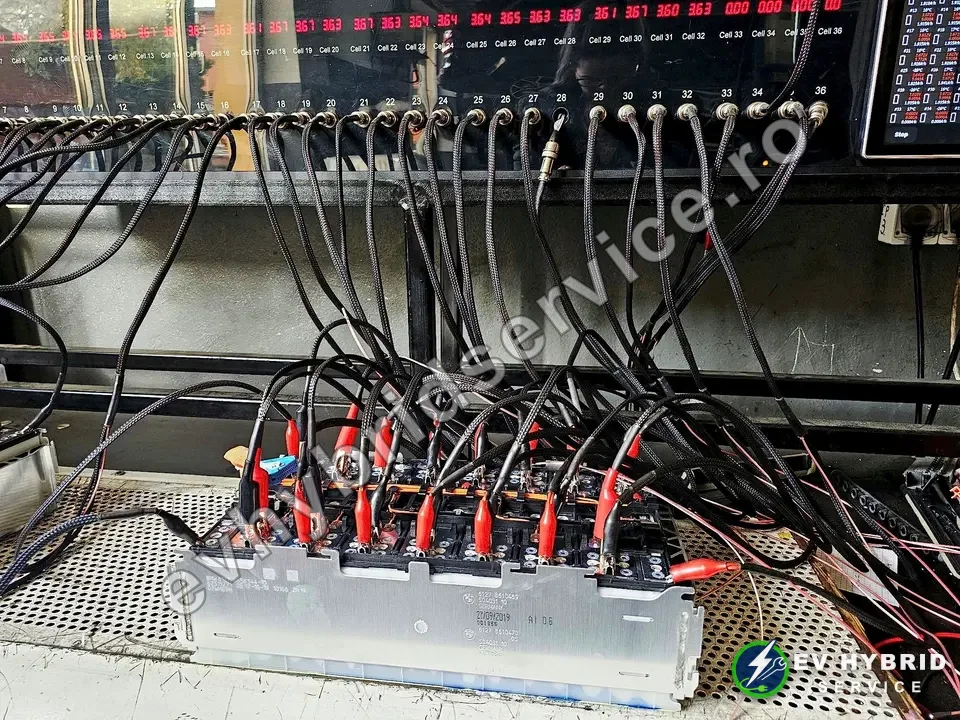
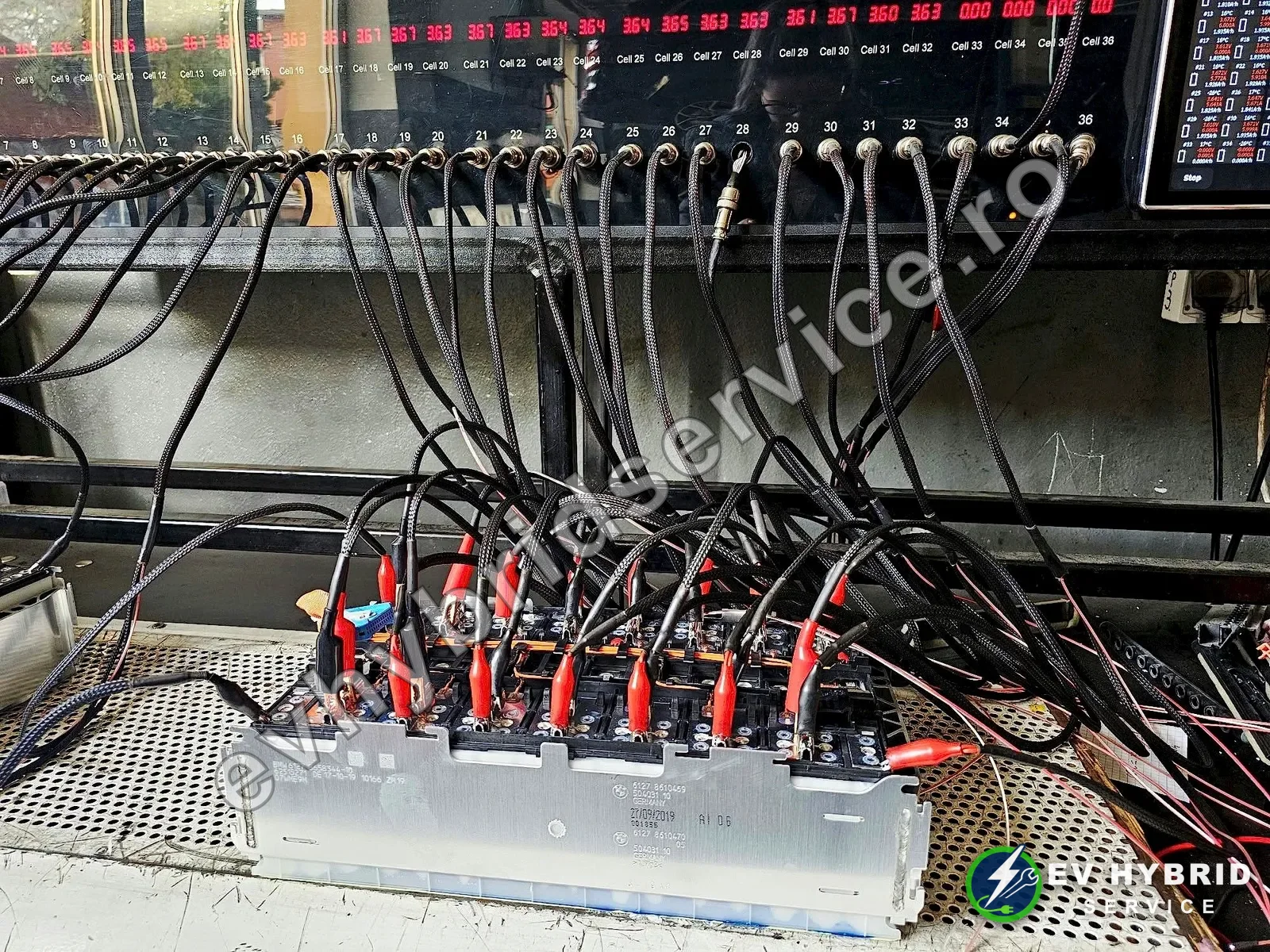
A module on the test bench, cell by cell. 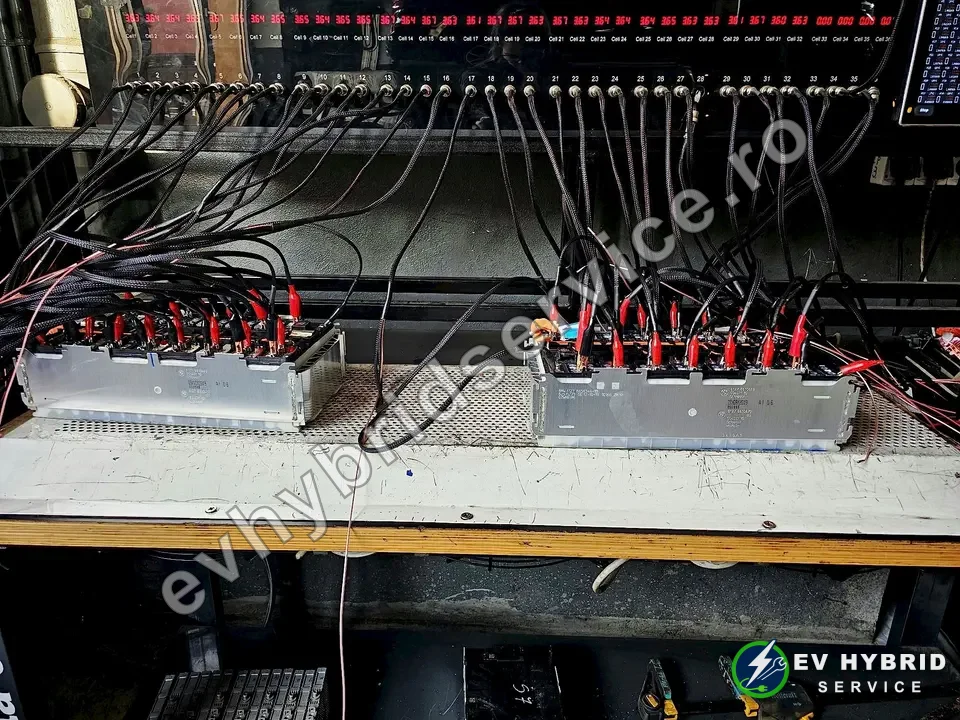
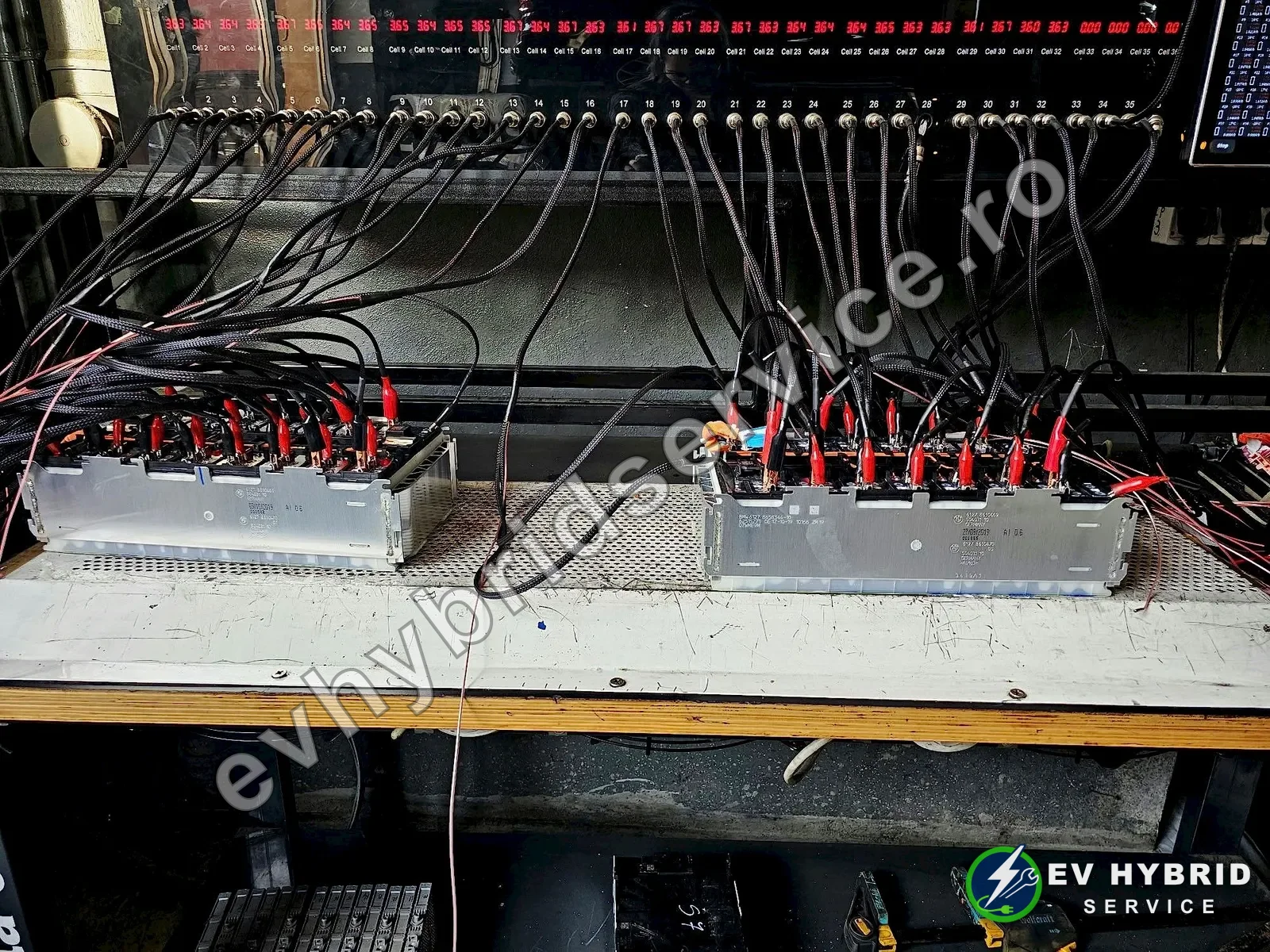
Two modules on the test bench. 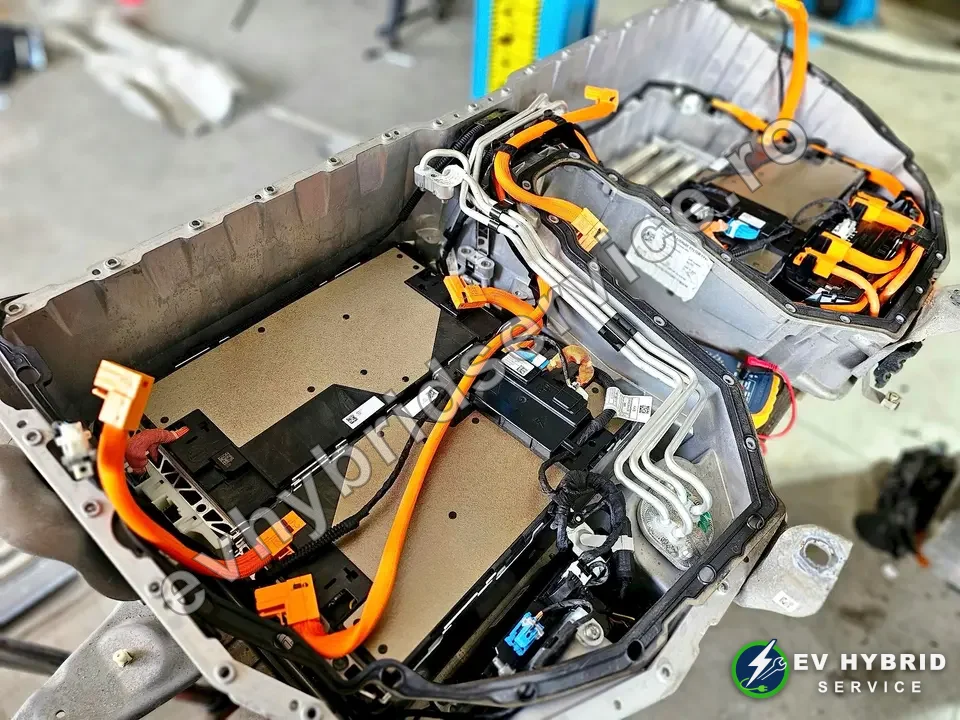
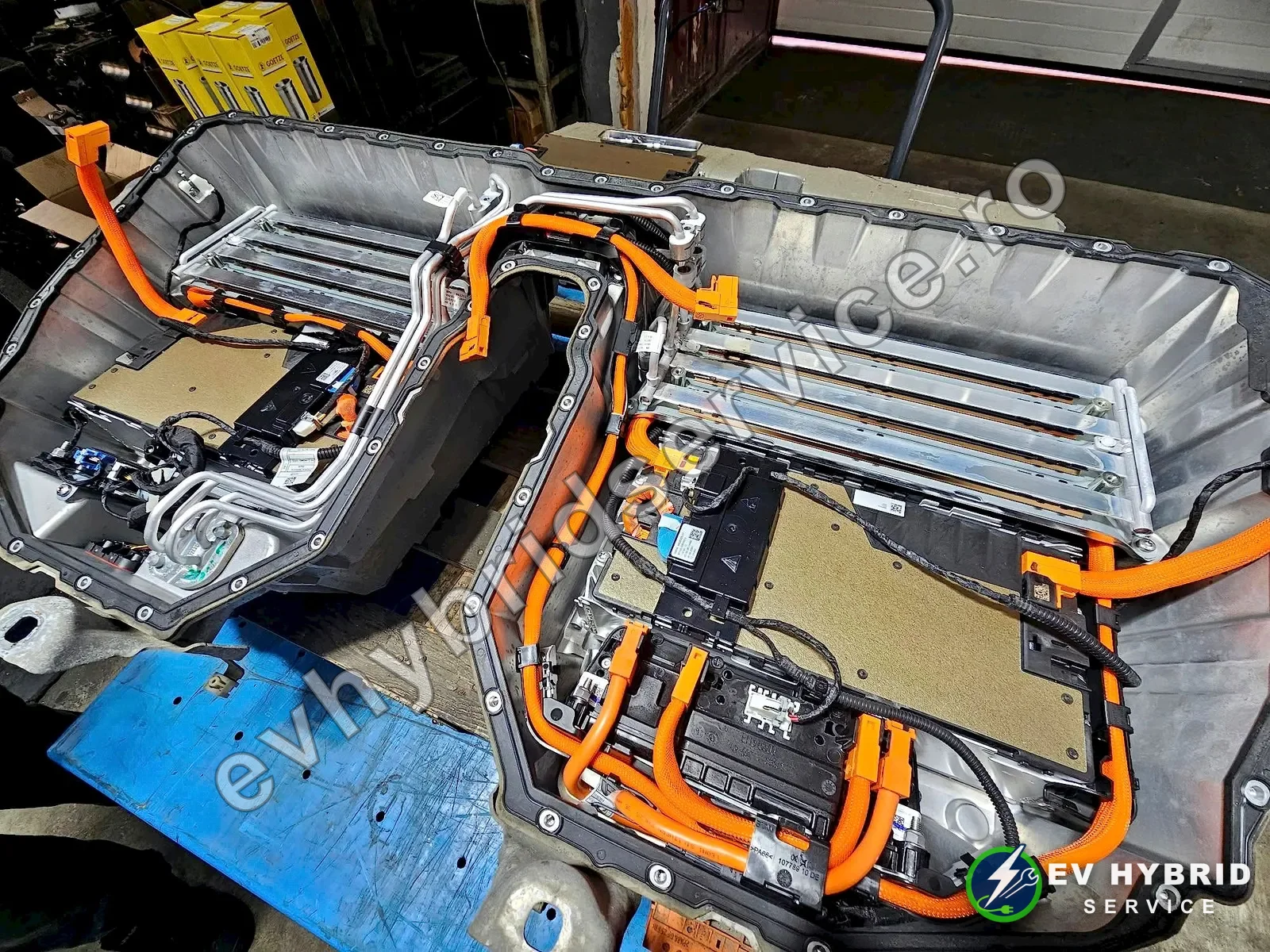
The battery open, the bay of the removed modules empty. Step 5
Reassembly
We closed the battery following BMW’s technical procedures and refitted it to the car.
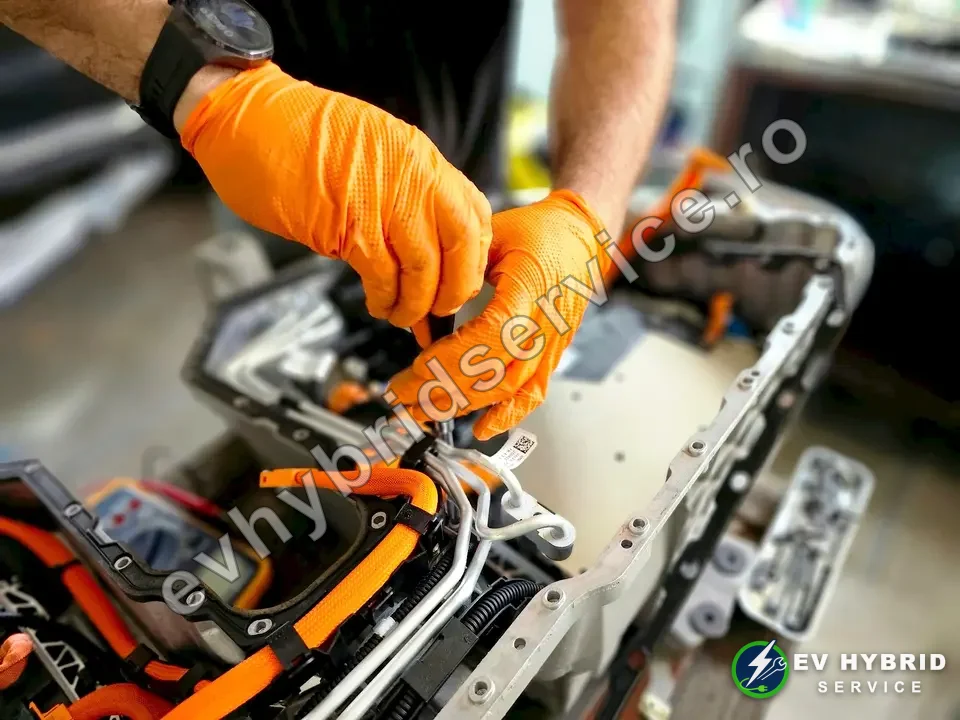
Refitting the connections before the housing is closed. Step 6
Re-adaptation and validation
With the BMW ISTA tester we ran the re-adaptations and service routines for battery management, then the EoS (End of Service) procedure, which checks and validates the work. Swapping the modules is only part of the repair: the electronics have to accept the rebuilt battery.
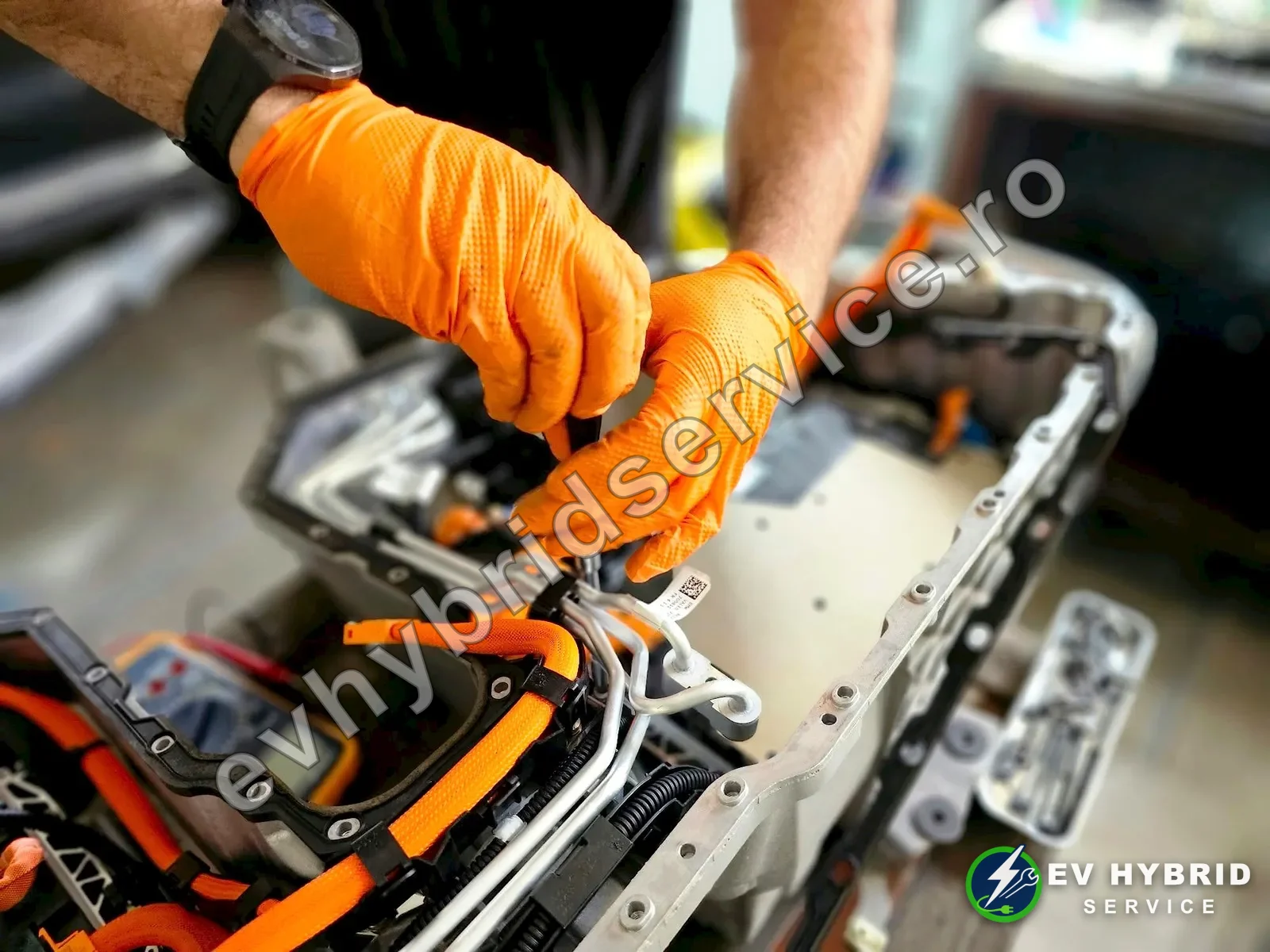
Before and after
When it came in
- No fault codes
- Cells sagging in voltage under load
- Modules 1 and 6 degraded
At handover
- Modules 1 and 6 replaced
- Voltages checked across the battery
- ISTA re-adaptation and EoS done
- Warranty on the work
When a BMW plug-in hybrid’s battery is worth testing, even with no faults
- The electric range has dropped noticeably
- The car switches to the petrol engine sooner than it used to
- You bought the car second-hand and want to know the battery’s condition
- The battery has not been checked for a few years
Do you drive a BMW plug-in hybrid and want to know how its battery is doing, cell by cell? We test it under load, not just read the faults.
Book a battery test →Frequently asked questions
Can the battery be faulty if the car shows no errors?
Yes. This X3 had no codes stored, but under load the cells in modules 1 and 6 sagged far in voltage. Such problems only show if you measure every cell while the battery is working.
Does the whole battery need replacing when a few cells fail?
Not necessarily. Here we replaced only the two modules with degraded cells, after checking that the battery electronics were working properly.
What are the SME and the active balancers?
The SME (Storage Management Electronics) is the computer that manages the high-voltage battery. The active balancers keep the cells at similar voltages. We check them before the repair, so we do not replace modules for nothing.
Why are ISTA and EoS needed after the repair?
Because BMW requires the system to be re-adapted and validated with the maker’s software and procedure after work inside the battery. That way the electronics recognise the rebuilt battery and manage it properly.
Photos from the job
Tap a photo to see it full size; use the arrows to browse.
The X3 on the lift, seen from below, around the battery.
The battery lowered from under the car onto the lifting table.
The battery out of the car, still closed.
The housing open: the modules and the orange high-voltage wiring.
The modules and the battery electronics, from another angle.
A module’s cells up close, with the monitoring wires.
A module on the test bench, cell by cell.
Two modules on the test bench.
The battery open, the bay of the removed modules empty.
Refitting the connections before the housing is closed.
Read next
Battery repairs
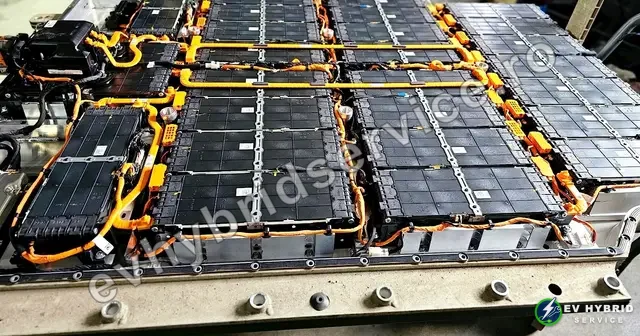
Hyundai Kona Electric losing coolant with no error on the dashboard: how we repaired the cooling circuit of the high-voltage battery
A 2024 Hyundai Kona Electric was losing a lot of fluid from the battery cooling circuit, though the dashboard showed nothing. After a hard impact, a pipe had cracked. We replaced it, sealed the small cracks, and the battery stayed on the car.
3 min read
Battery repairs
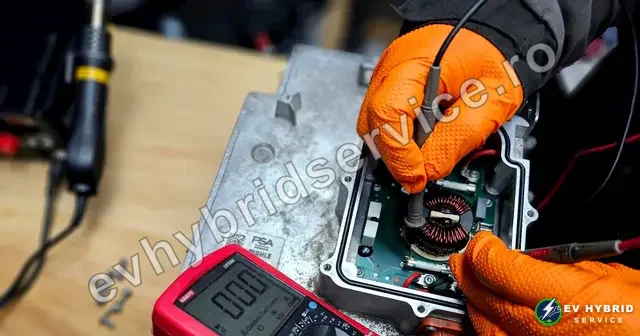
Opel Combo Electric that would no longer charge from a socket: how we repaired the on-board charger without replacing it
A 2024 Opel Combo Electric would no longer charge its battery from a socket. The culprit was the on-board charger, where one of the low-voltage electronic supplies had stopped working properly. We repaired it, and the original charger stayed on the car.
2 min read
Battery repairs
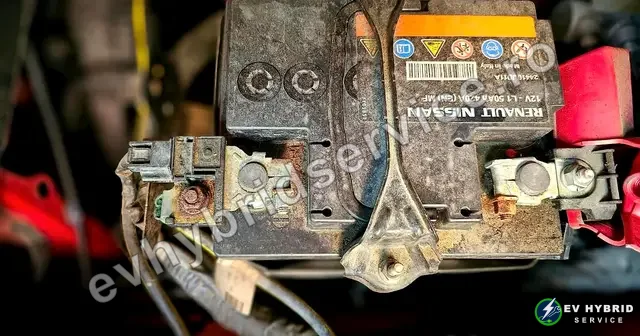
Nissan Leaf 40 kWh with communication errors and insulation faults: how we restored the 12 V supply and repaired the high-voltage insulation
A Nissan Leaf 40 kWh had errors in a chain and no longer talked to its climate system. Where it all started: the oxidised terminals of the 12 V battery. Once we restored the supply, diagnosis also turned up high-voltage insulation faults, which we fixed.
2 min read