
Workshop job ·
BMW 740e iPerformance plug-in hybrid with an overvoltage fault on module 4: how we repaired the high-voltage battery by replacing a single module
A BMW 740e iPerformance came in with hybrid system trouble. The battery computer reported overvoltage on cell supervision circuit no. 4 and had opened the contactors. We replaced module 4, brought the battery to BMW’s voltages and recommissioned it, without a new battery.
- fault codes in the battery computer (SME)
- 2fault codes in the battery computer (SME)
- the only module replaced
- No. 4the only module replaced
- modules checked and brought to BMW’s set voltage
- Allmodules checked and brought to BMW’s set voltage
- re-adaptation and commissioning to BMW procedure
- ISTA + EoSre-adaptation and commissioning to BMW procedure
The problem
A BMW 740e iPerformance had trouble with its hybrid drive system, caused by a fault in the high-voltage battery.
The diagnosis
The SME had stored two faults: overvoltage on cell supervision circuit no. 4 and the contactors switching off after a fault. The battery’s protections had tripped, and the source was module no. 4.
The fix
We removed and opened the battery, replaced module 4, checked the other modules, brought the battery to BMW’s set voltages by controlled charging and equalising, then ran the re-adaptations with ISTA and the EoS procedure.
The result
The car was recommissioned and is back on the road, without replacing the whole battery.
A 740e protecting its battery
The BMW 740e iPerformance reached us with trouble in its hybrid drive system. The cause was in the high-voltage battery: a fault in module no. 4 was disturbing the hybrid and tripping the battery’s electronic protections.
In the memory of the battery computer, the SME (Storage Management Electronics), we found two faults: 21F125, overvoltage on at least one cell of cell supervision circuit no. 4, and 21F1F6, the battery contactors switched off after a fault. In short, the SME had seen too high a voltage around module 4 and disconnected the battery to protect it.
The job, step by step
Step 1
Diagnosis
We diagnosed the whole high-voltage system and the units that manage the battery. The faults in the SME led to module 4.
Step 2
Remove and open the battery
We shut down the high-voltage system to BMW’s safety procedure, removed the battery from the car and opened its housing to reach the modules.
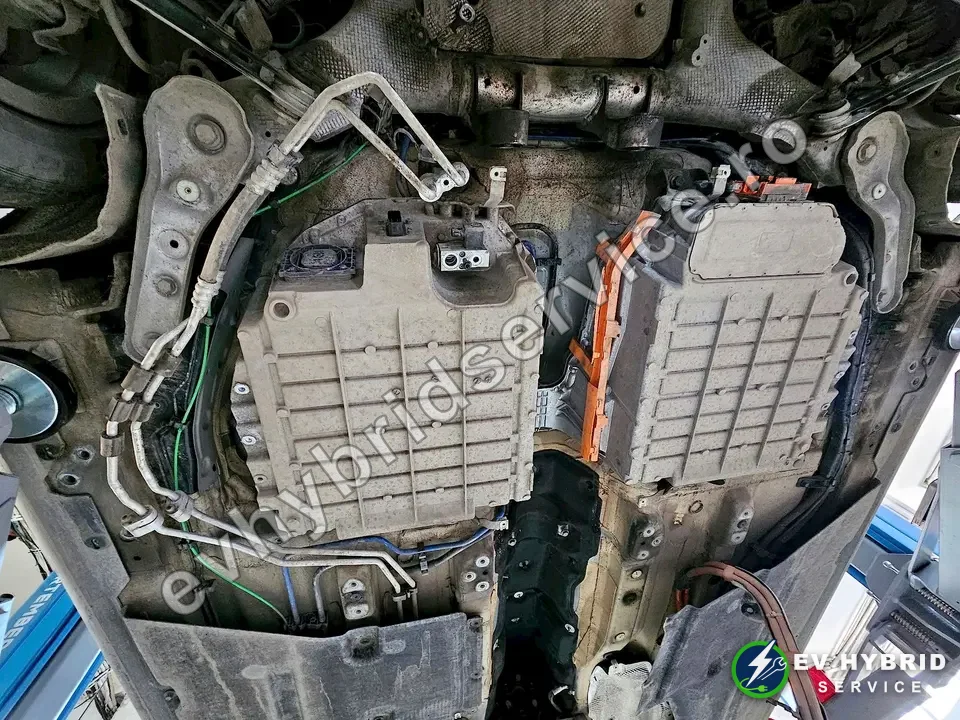
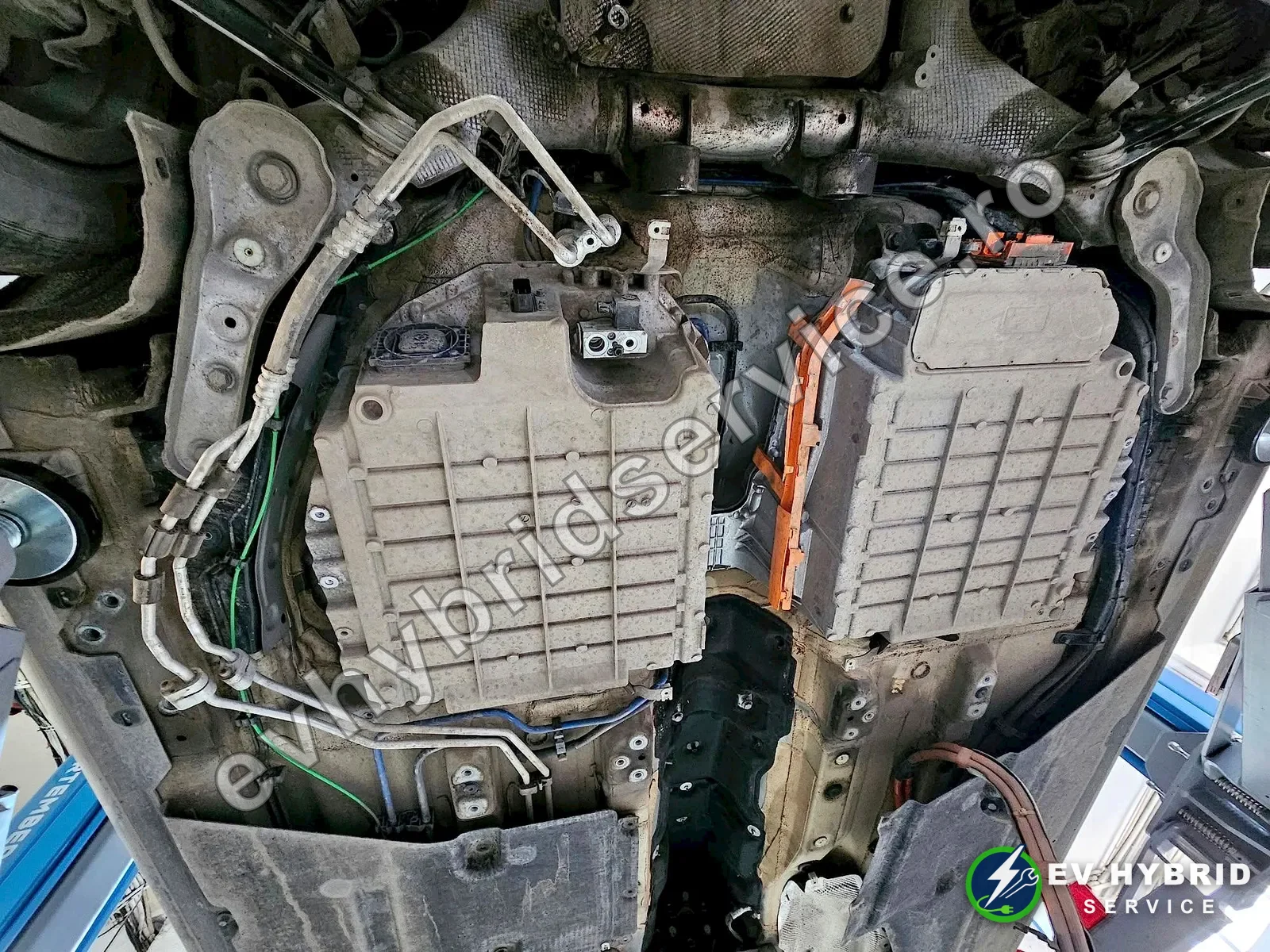
The high-voltage battery, seen from under the car, before removal. 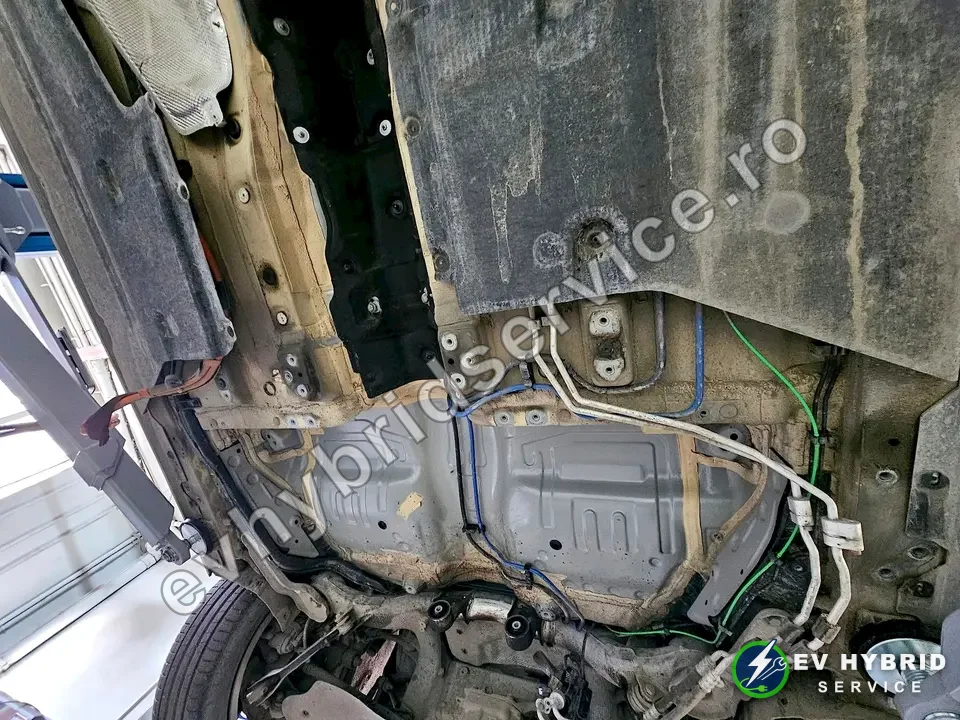
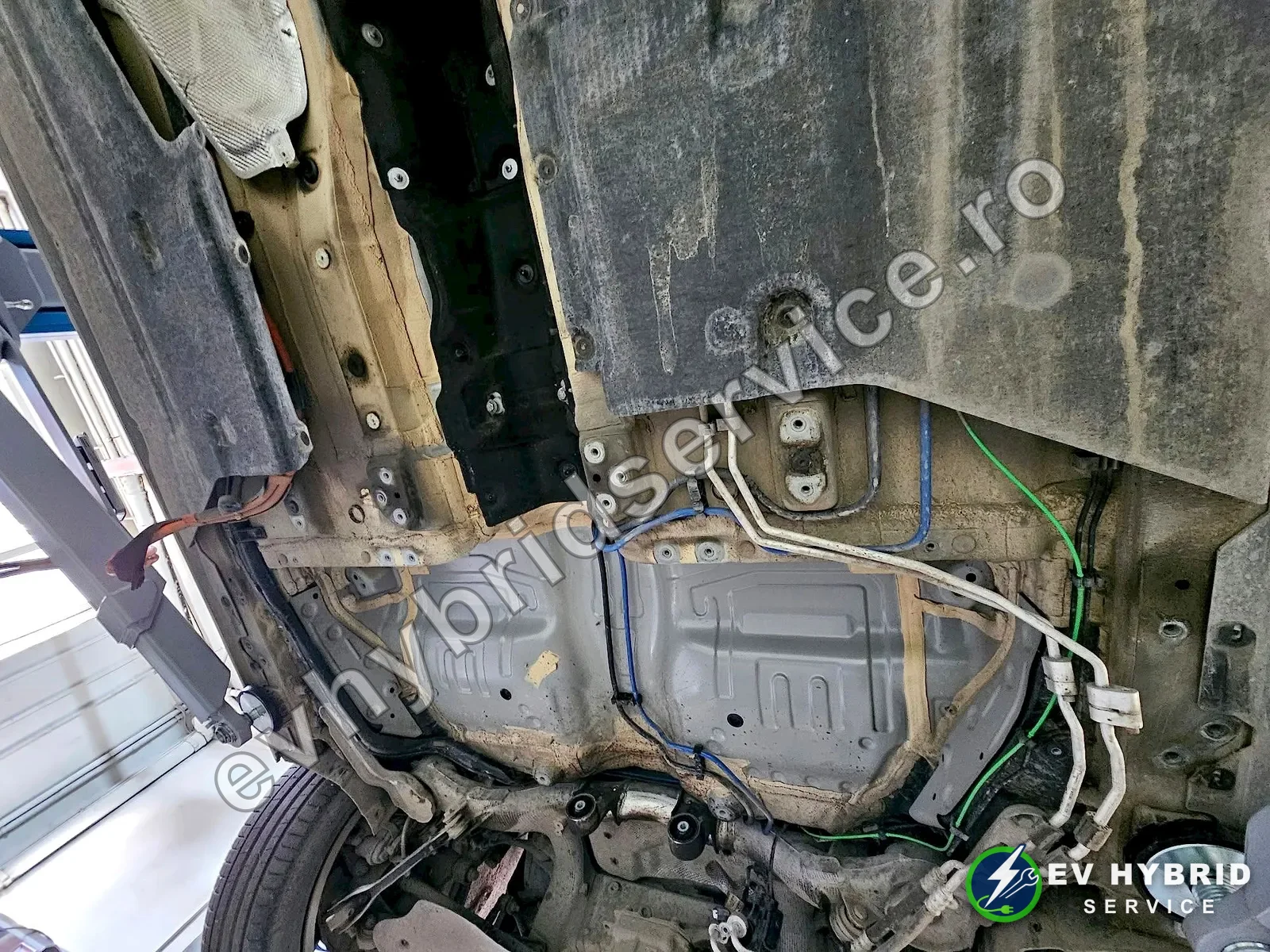
The empty bay once the battery was lowered. 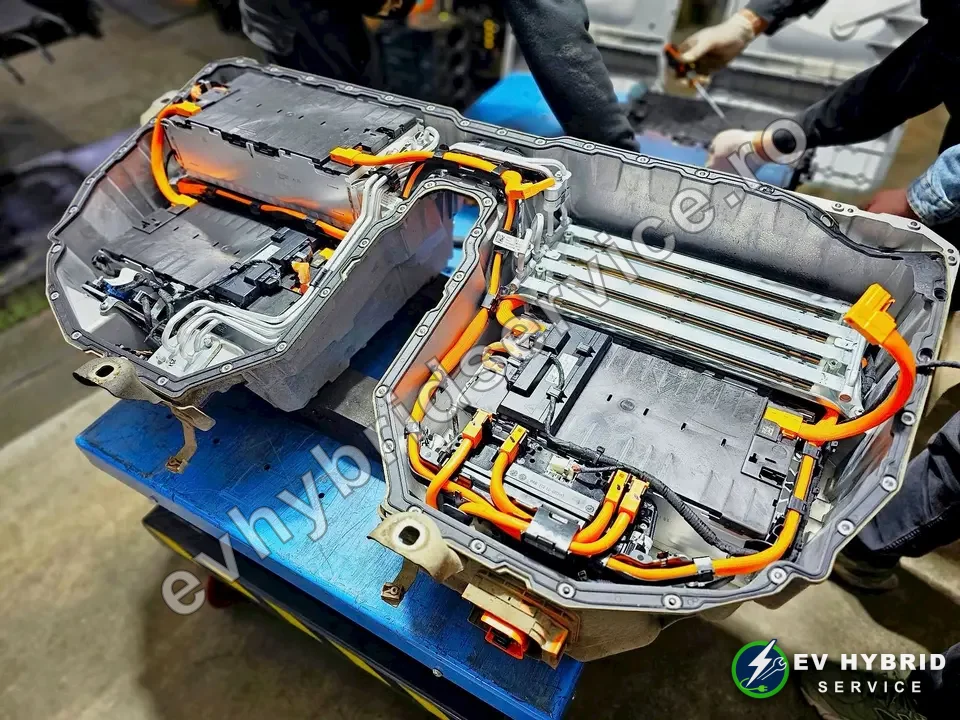
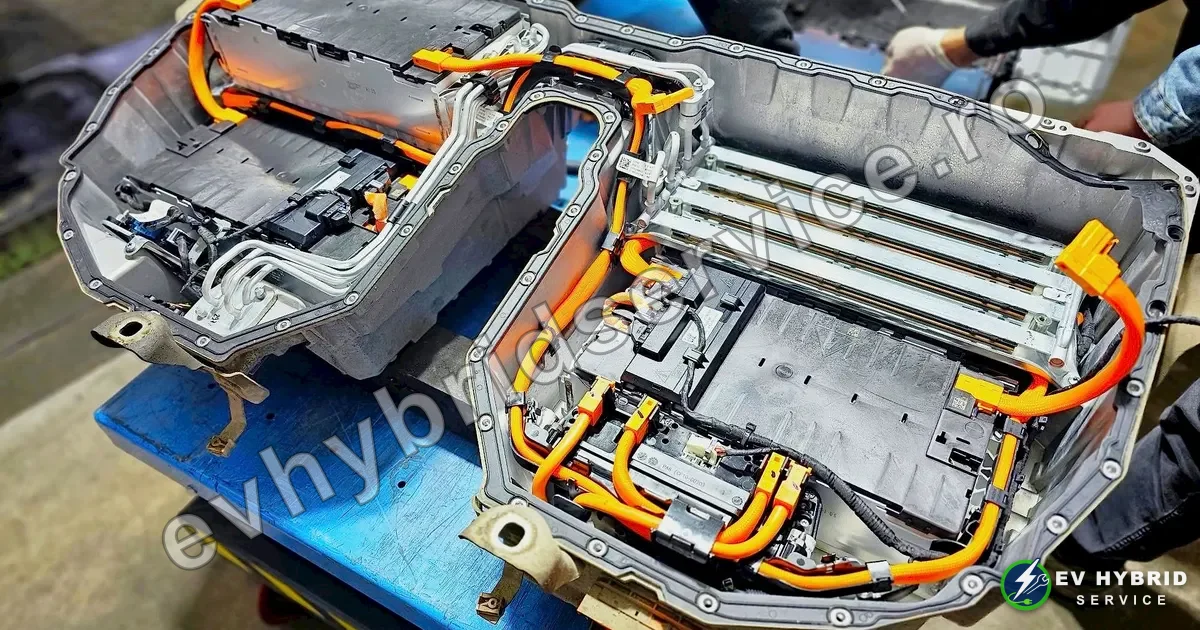
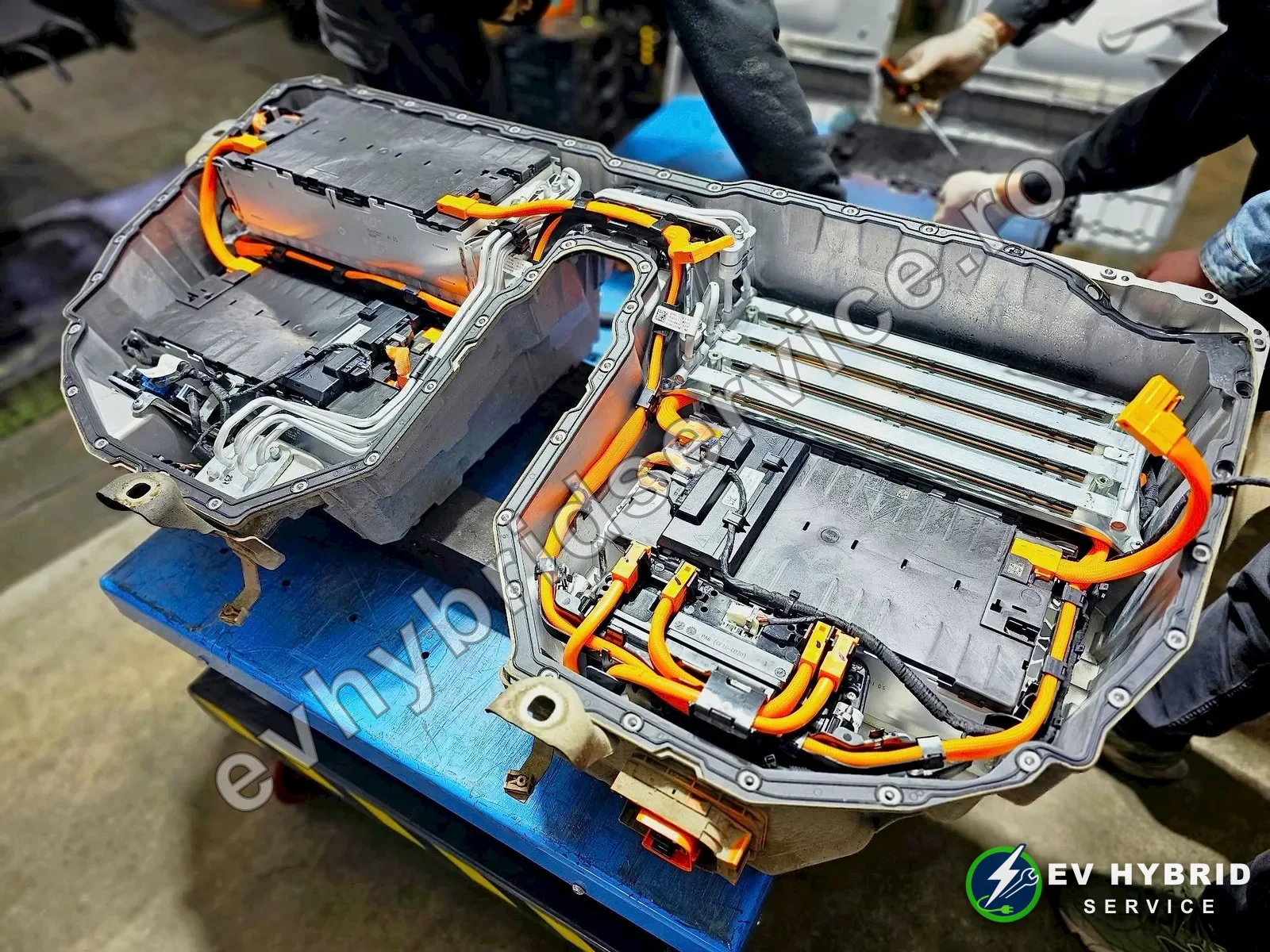
The battery open on the bench, the modules exposed. Step 3
Replace module 4 and check the rest
We replaced module 4, the source of the fault. We also checked the other modules: their individual voltages and the differences between cells, so there would be no surprises after refitting.
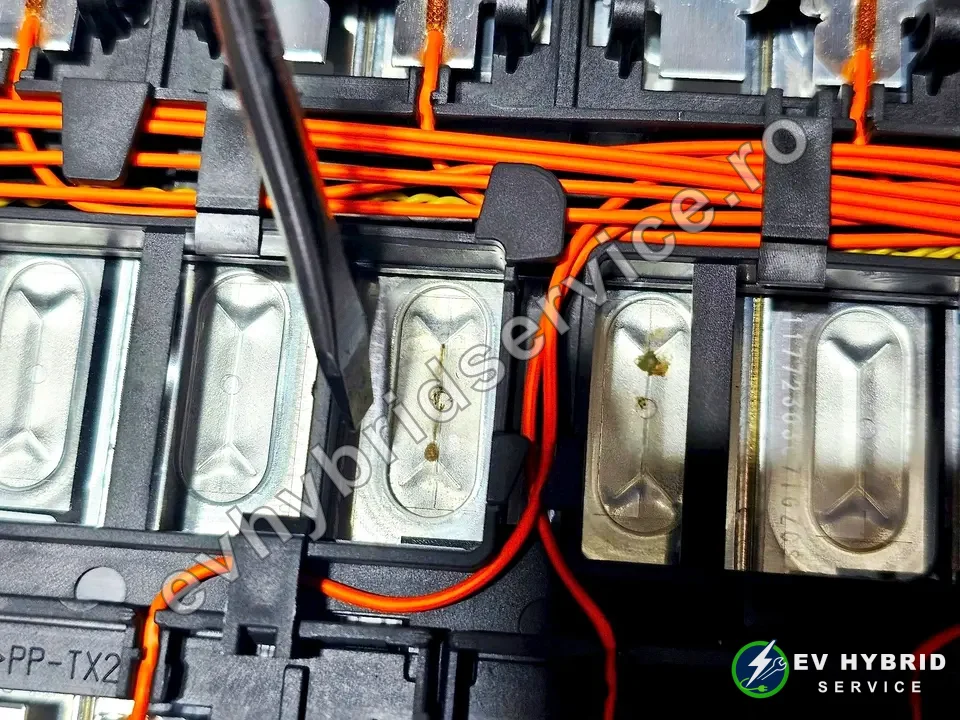
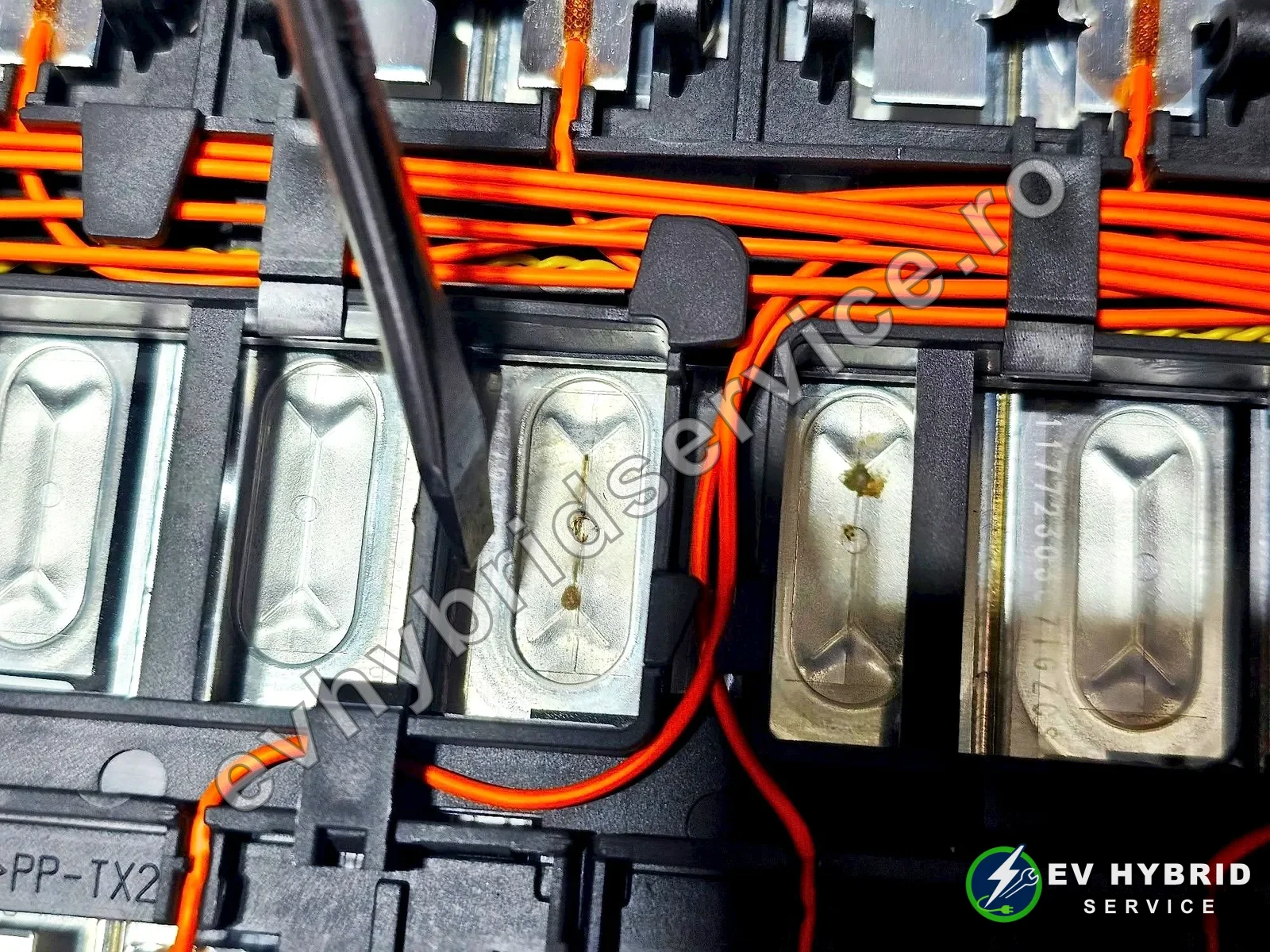
A module’s cells up close: marks show on some of the lids. 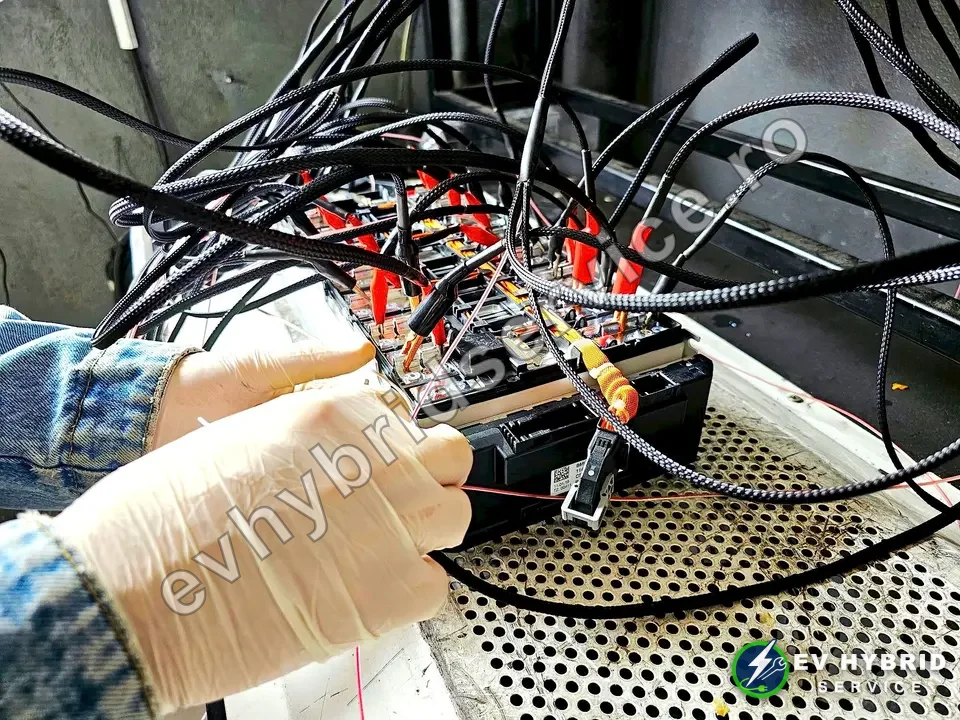
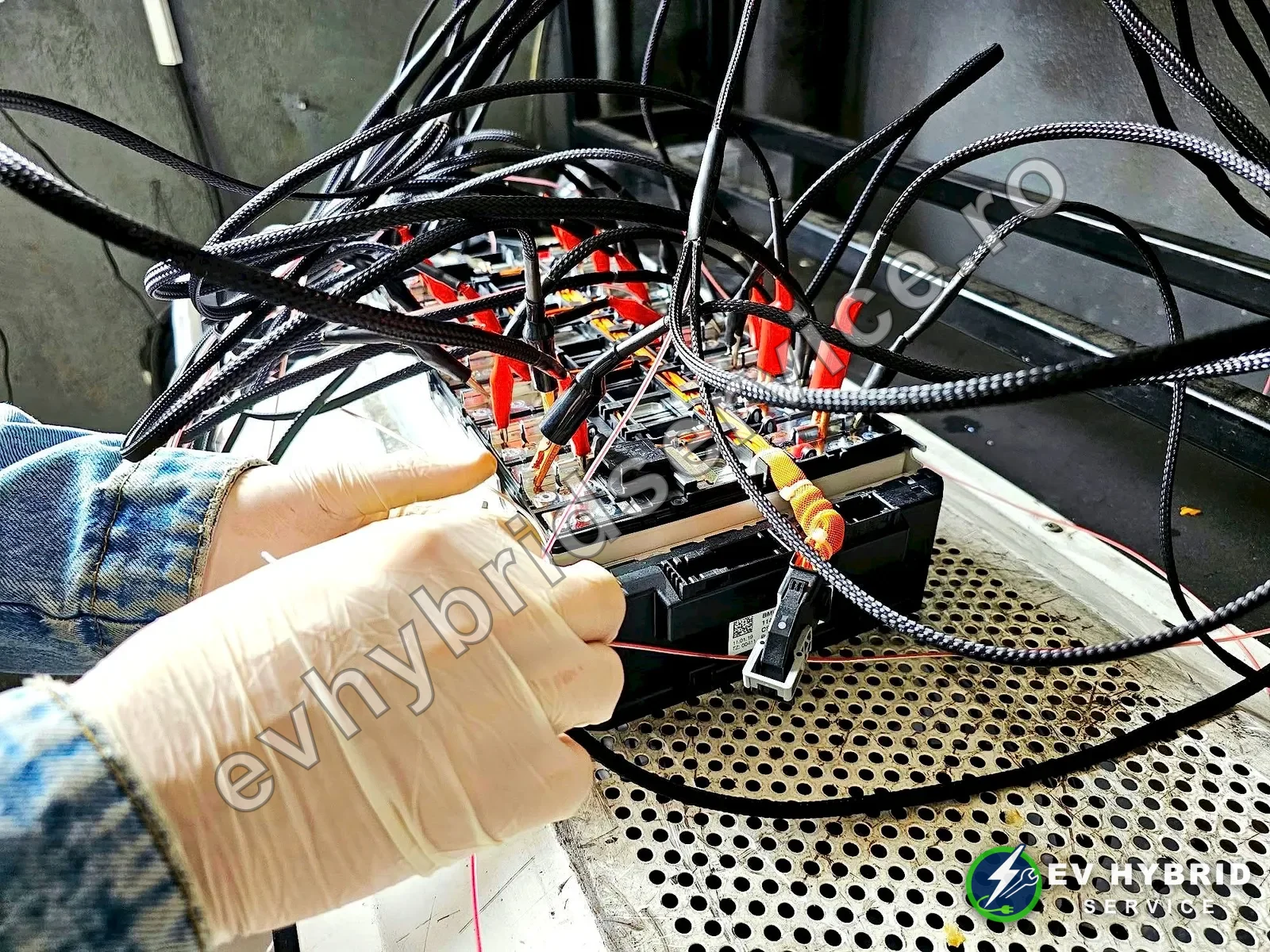
Connecting a module to the test equipment. 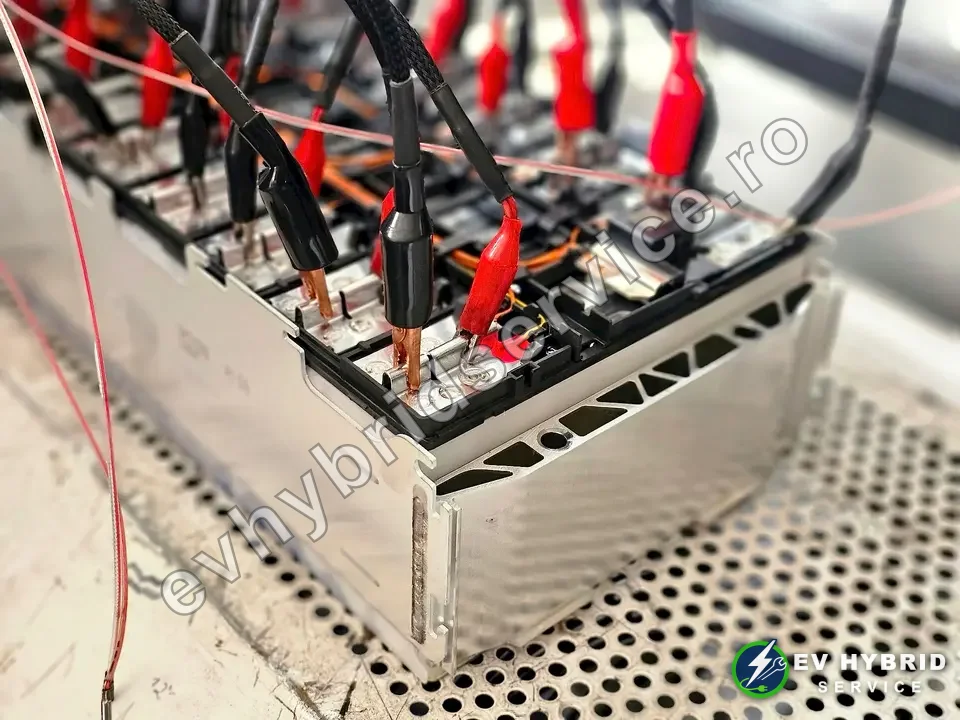
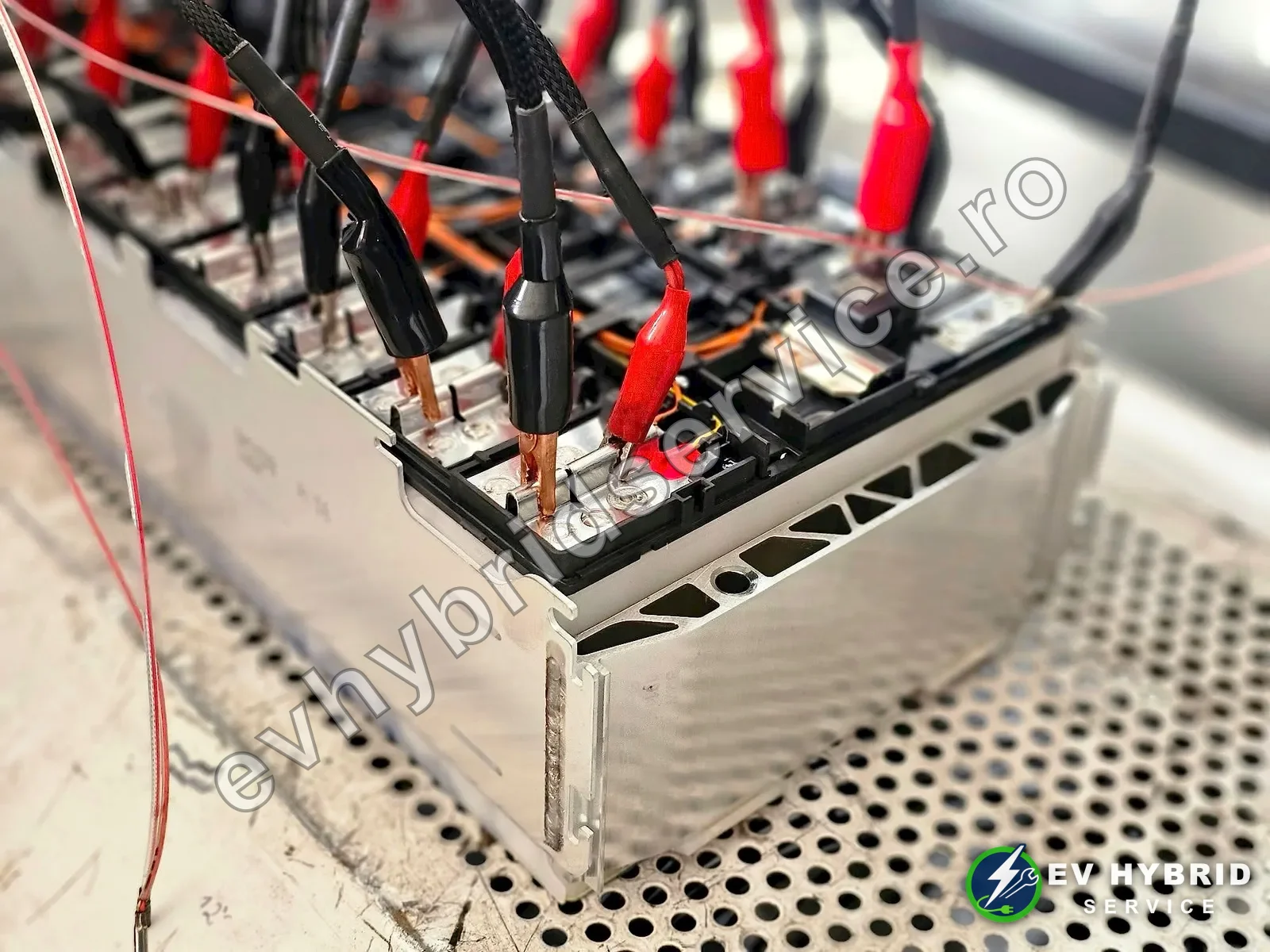
A clip on every cell of the module. Step 4
Charging and equalising
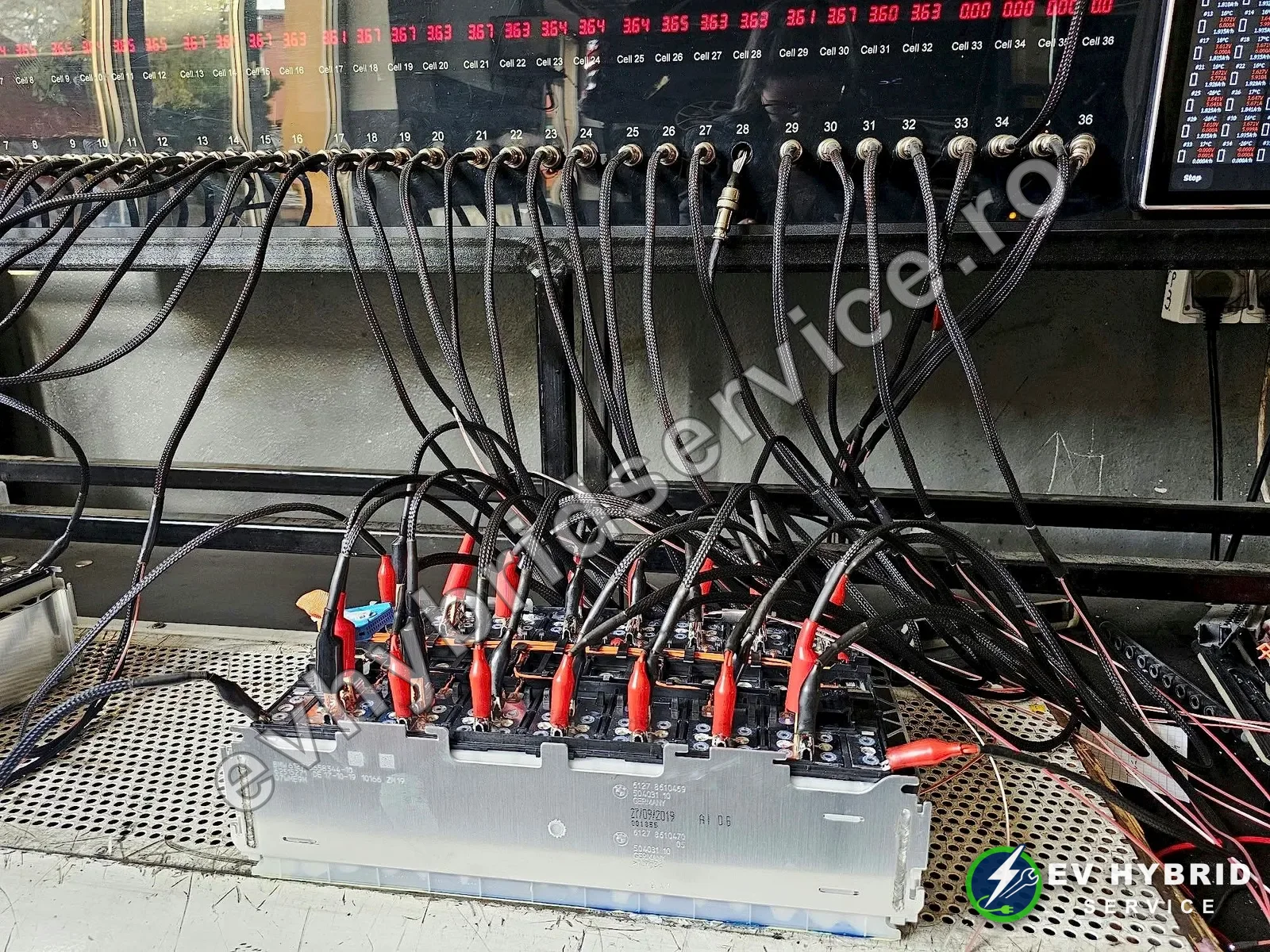
We brought the battery to BMW’s set voltage values by controlled charging and equalising, so the new module works in step with the others.
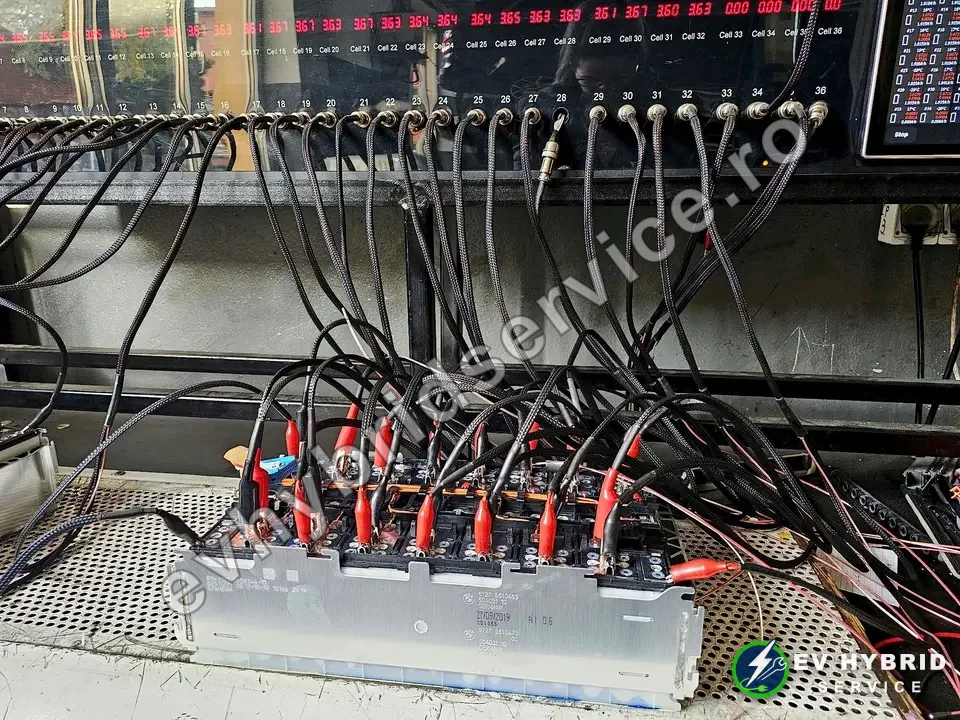
The module on the test and equalising bench. Step 5
Reassembly
We reassembled the battery to the technical fitting and checking procedures and refitted it to the car.
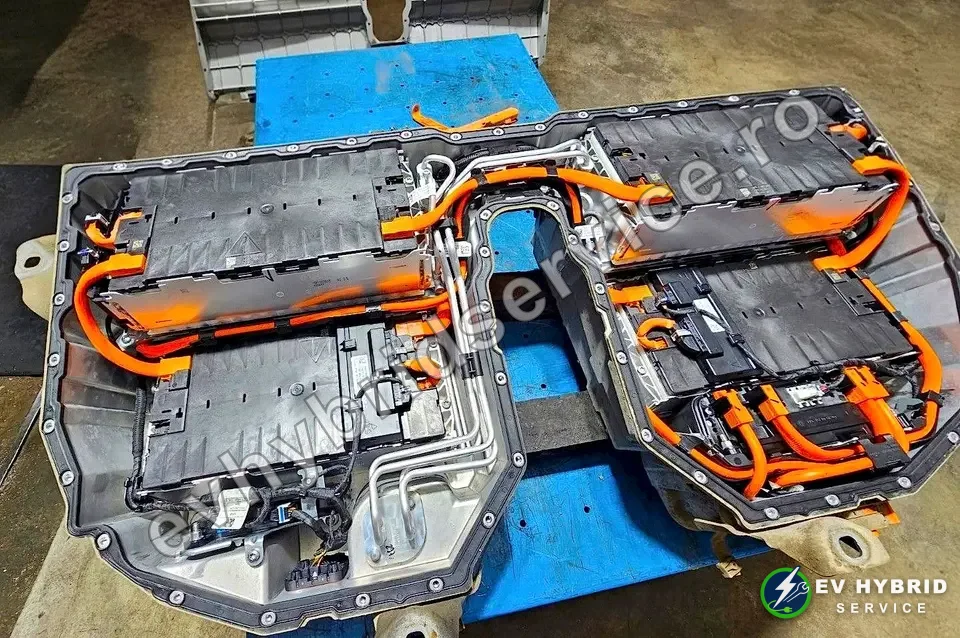
The modules back in place, before the housing is closed. Step 6
Re-adaptation and commissioning
With the BMW ISTA dealer tester we ran the re-adaptations of the battery management system, then the EoS (End of Service) procedure, which checks and validates the work. We finished with diagnosis and testing of the hybrid system: the car is back on the road.
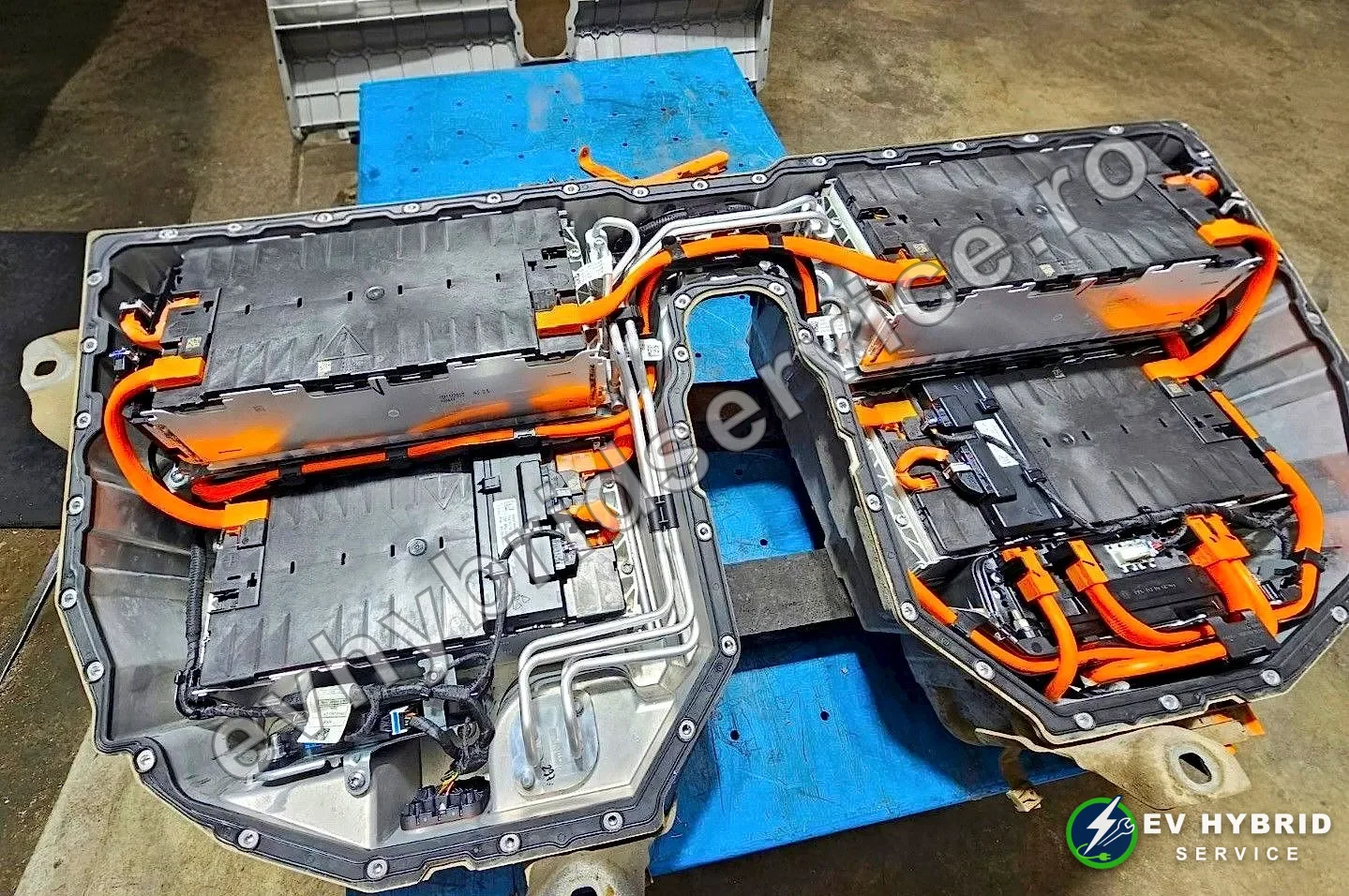
Before and after
When it came in
- Hybrid drive problems
- Faults 21F125 and 21F1F6 in the SME
- Battery protections tripped
At handover
- Module 4 replaced
- The other modules checked
- Battery at BMW’s voltages
- ISTA re-adaptation and EoS done
Signs that a BMW plug-in hybrid’s battery is in trouble
- A drivetrain or high-voltage battery fault appears
- Electric mode can no longer be selected
- The battery no longer charges from the plug
- The faults come back as soon as you clear them
Does your BMW plug-in hybrid show high-voltage battery faults? We find the module at fault and repair it, without replacing the whole battery.
Book a repair →Frequently asked questions
What does fault 21F125 mean on a BMW plug-in hybrid?
That cell supervision circuit no. 4 saw overvoltage on at least one cell. On this 740e the cause was module 4, which we replaced.
And fault 21F1F6?
It shows the battery switched off its contactors after a fault, taking itself out of circuit to stay safe. It clears once the cause is repaired and the system validated.
Does the whole battery need replacing?
Not here. The fault was in a single module: we replaced it, checked the other modules and brought the battery to the voltages BMW requires.
Why are ISTA and EoS needed?
Because BMW’s electronics have to recognise and validate the battery after the work. Without re-adaptation and the EoS procedure, the repair is not complete.
Photos from the job
Tap a photo to see it full size; use the arrows to browse.
The high-voltage battery, seen from under the car, before removal.
The empty bay once the battery was lowered.
The battery open on the bench, the modules exposed.
A module’s cells up close: marks show on some of the lids.
Connecting a module to the test equipment.
A clip on every cell of the module.
The module on the test and equalising bench.
The modules back in place, before the housing is closed.
Read next
Battery repairs
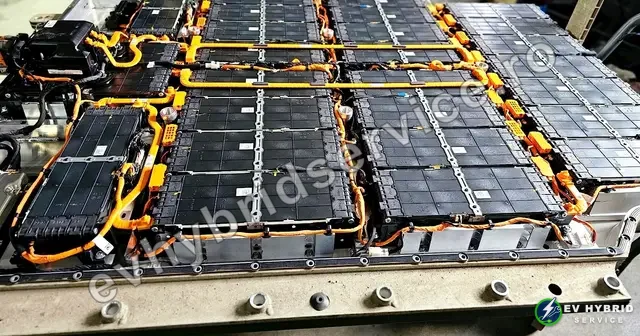
Hyundai Kona Electric losing coolant with no error on the dashboard: how we repaired the cooling circuit of the high-voltage battery
A 2024 Hyundai Kona Electric was losing a lot of fluid from the battery cooling circuit, though the dashboard showed nothing. After a hard impact, a pipe had cracked. We replaced it, sealed the small cracks, and the battery stayed on the car.
3 min read
Battery repairs
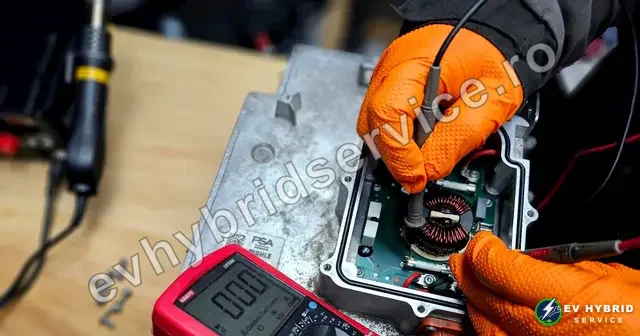
Opel Combo Electric that would no longer charge from a socket: how we repaired the on-board charger without replacing it
A 2024 Opel Combo Electric would no longer charge its battery from a socket. The culprit was the on-board charger, where one of the low-voltage electronic supplies had stopped working properly. We repaired it, and the original charger stayed on the car.
2 min read
Battery repairs
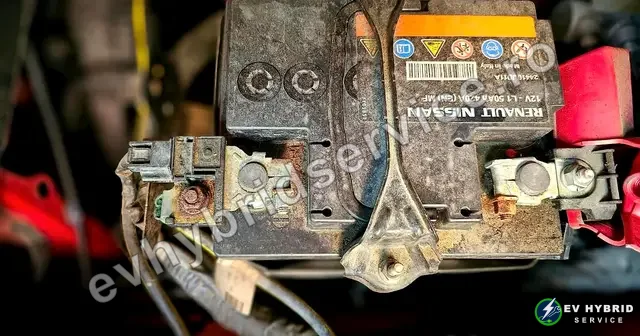
Nissan Leaf 40 kWh with communication errors and insulation faults: how we restored the 12 V supply and repaired the high-voltage insulation
A Nissan Leaf 40 kWh had errors in a chain and no longer talked to its climate system. Where it all started: the oxidised terminals of the 12 V battery. Once we restored the supply, diagnosis also turned up high-voltage insulation faults, which we fixed.
2 min read