
Workshop job ·
Audi A6 Plug-in Hybrid with no inverter communication: how we repaired it on the board by replacing a single Schottky diode
A 2020 Audi A6 Plug-in Hybrid came in with an inverter that had no proper power supply and no communication on diagnosis. A full replacement would have cost a lot, so we searched the board. We found a faulty double Schottky diode and replaced it, and the original inverter stayed on the car.
- year of manufacture
- 2020year of manufacture
- communication with the inverter on diagnosis
- Nonecommunication with the inverter on diagnosis
- the double Schottky diode found faulty
- 150 V / 40 Athe double Schottky diode found faulty
- component replaced on the board
- 1component replaced on the board
The problem
A 2020 Audi A6 Plug-in Hybrid had an inverter without a proper power supply, and the scan tool could not talk to it.
The diagnosis
We checked the inverter board step by step: grounds, capacitors, diodes, resistors. The culprit was a 150 V, 40 A double Schottky diode.
The fix
We replaced the diode right on the board and soldered it with a professional hot-air station, without changing the inverter.
The result
The original inverter stayed on the car, repaired at component level, instead of a far more expensive new unit.
An inverter that no longer answered
The Audi A6 Plug-in Hybrid, built in 2020, reached us with an electronic fault in the inverter, one of the core parts of the hybrid drive. The inverter was not getting a proper power supply, and the scan tool could not communicate with it at all.
In a case like this the first thought is a new inverter, which means an expensive repair. We chose to open the unit and look for the exact part that had failed.
Power supply first, then the rest
Any electronic board needs the right supply before its processors, memory and communication circuits can work. No communication, together with signs of a missing supply, sent us straight to the board’s power supply circuit.
Our electrician checked the board in a logical order: the grounds, to rule out a broken contact, then the capacitors, diodes, resistors and finally the thyristors and other control parts. That is how you find the real cause, without assuming from the start that the processor or the whole board is lost.
The job, step by step
Step 1
Opening the inverter
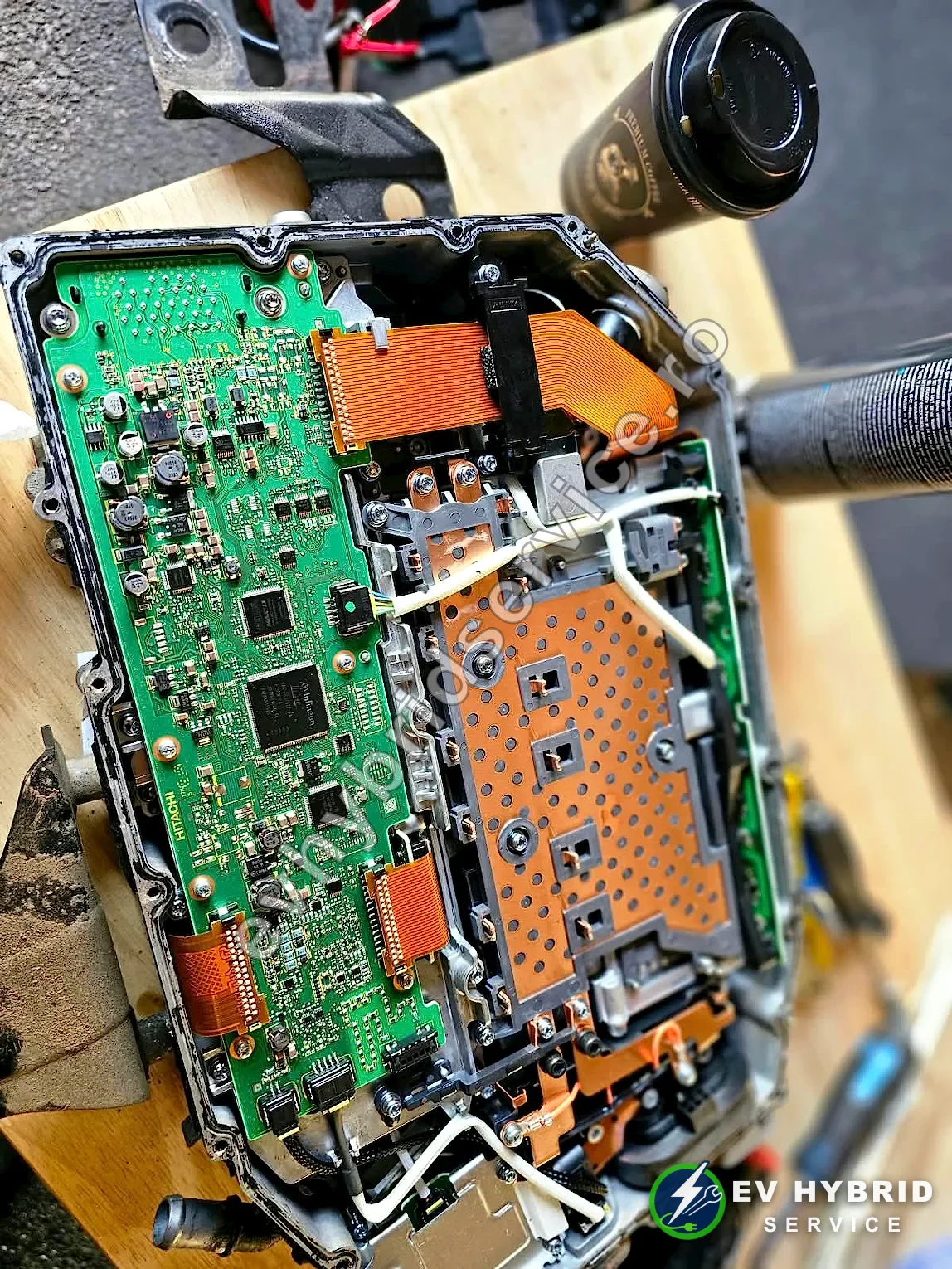
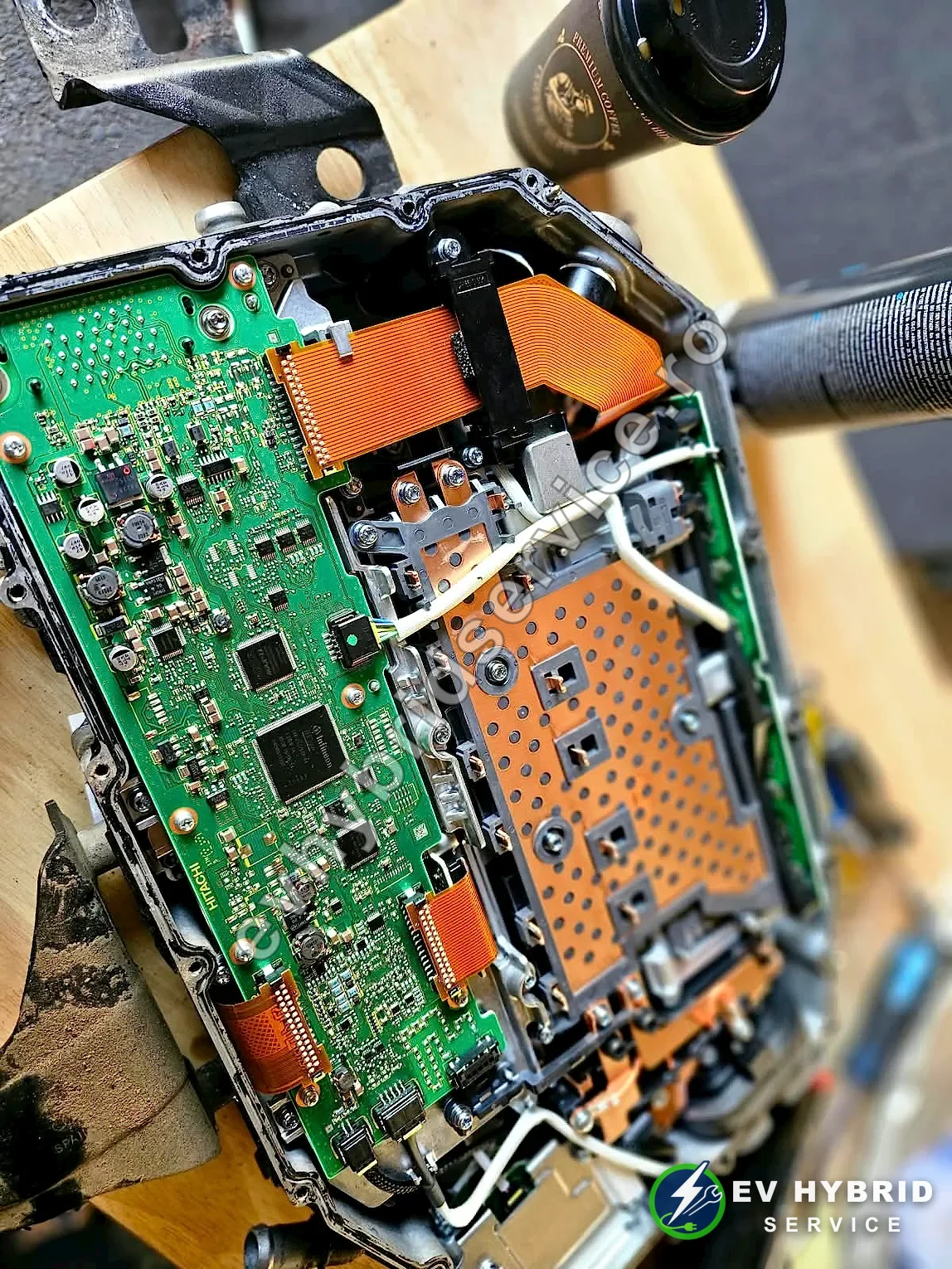
We removed the inverter, clamped it on the workbench and opened it to reach the electronic control board.
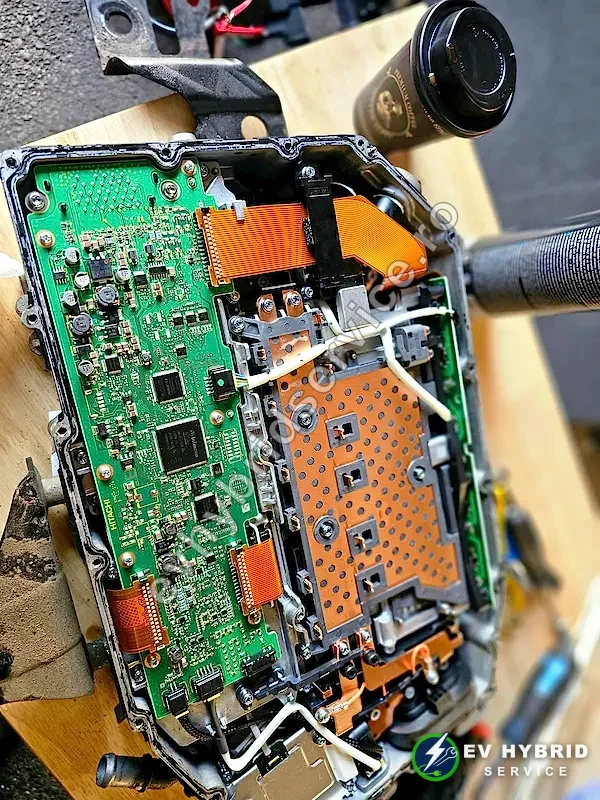
The inverter housing, clamped on the bench for work on the board. 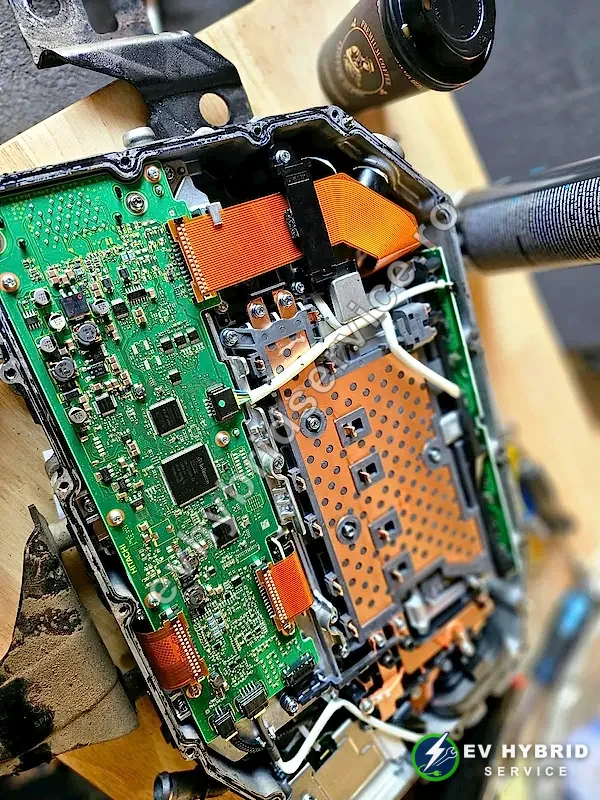
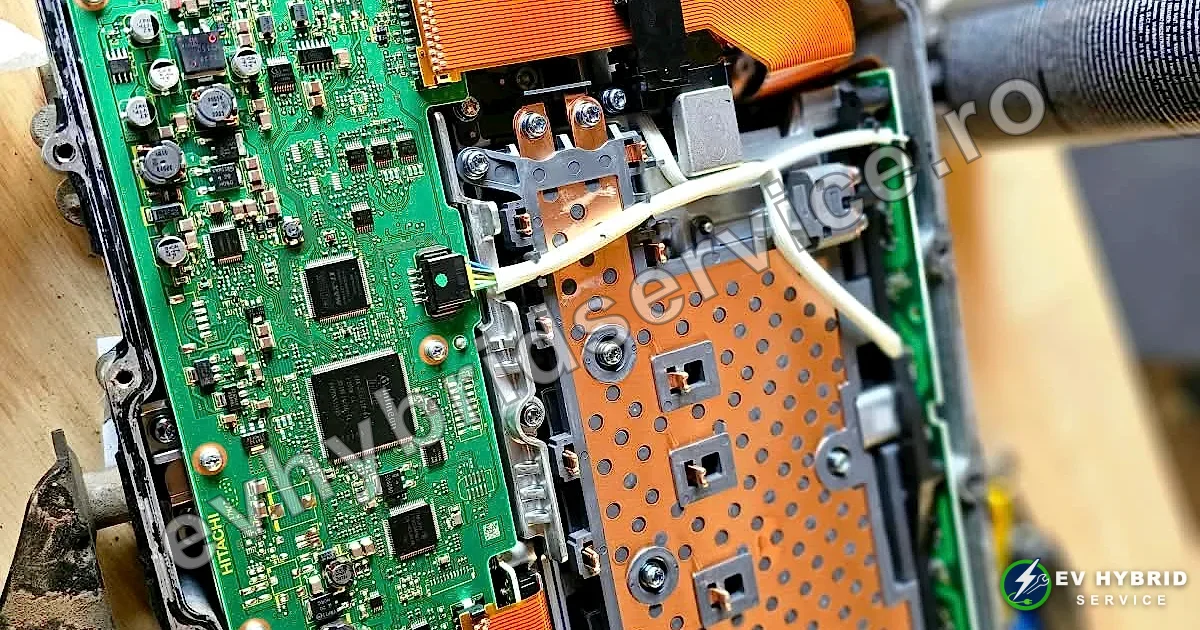
The inverter opened: the control board on the left, the power module on the right. Step 2
Checking the supply circuit
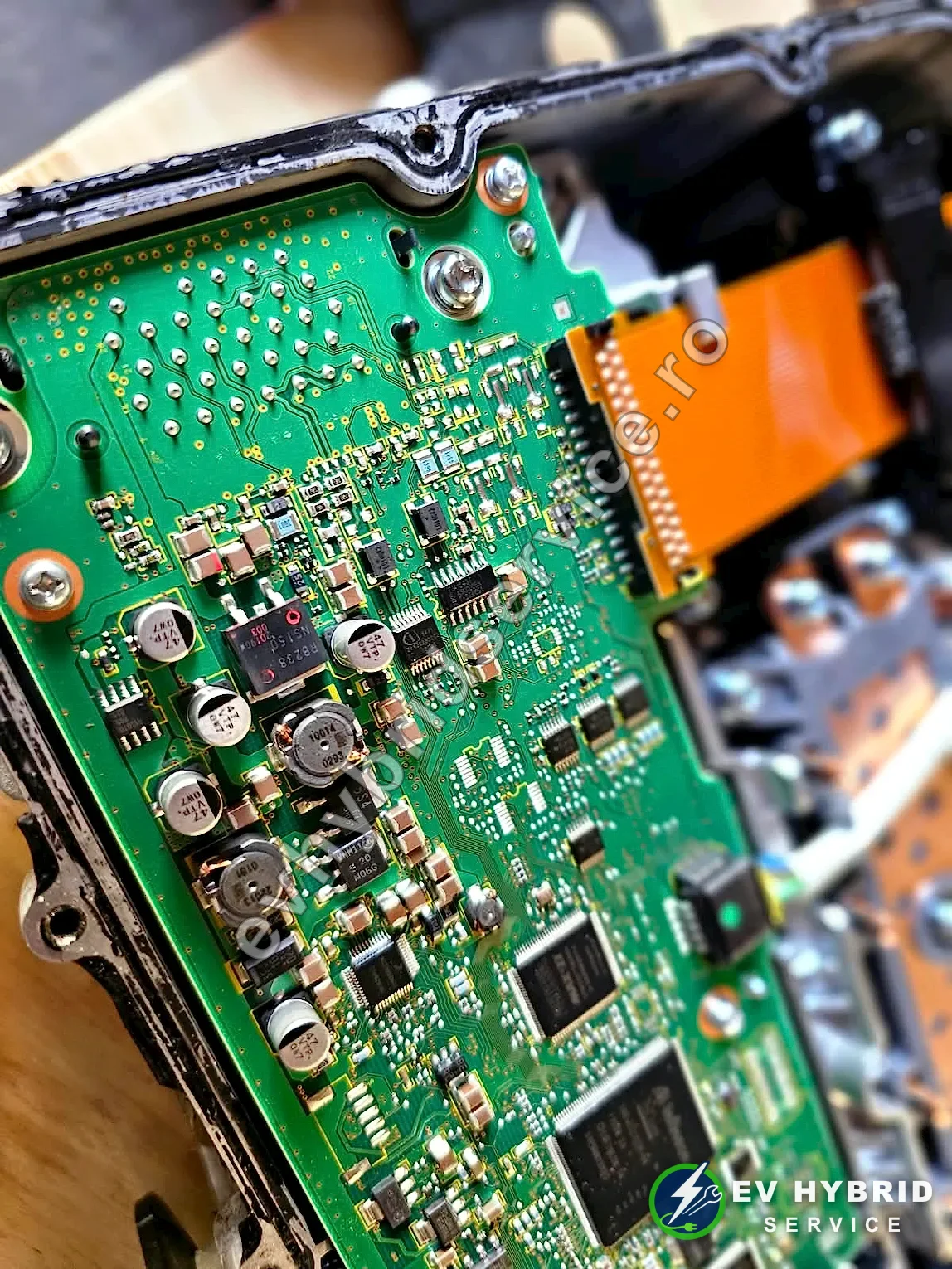
We measured the grounds, capacitors, diodes, resistors and control parts in the board’s supply area one by one.
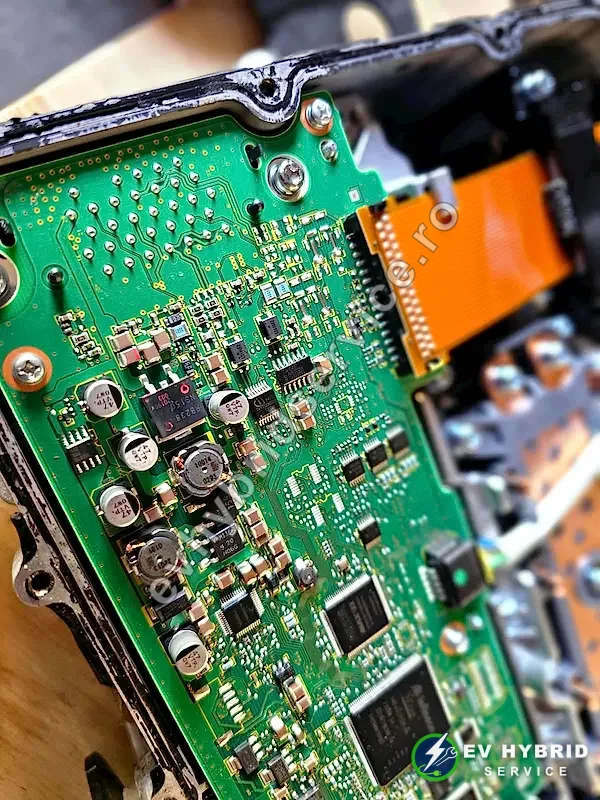
The supply circuits on the inverter board. Step 3
Finding the faulty diode
The culprit was a 150 V, 40 A double Schottky diode. When a diode like this fails, the circuits on the board lose the supply they need, and the inverter never starts communicating.
Step 4
Replacing the diode with a hot-air station
We removed the damaged part, prepared the contacts and soldered in a new diode with the same electrical ratings, using a professional hot-air soldering station. We then remade the solder joints of its connections.
Before and after
When it came in
- Inverter without a proper power supply
- No communication with the inverter on diagnosis
- The prospect of an expensive new inverter
At handover
- The faulty Schottky diode replaced
- Solder joints remade with the hot-air station
- The original inverter kept on the car
Not every inverter fault can be repaired safely or is worth repairing: sometimes the board is too damaged and replacement remains the right call. That is why we assess every inverter on its own before recommending anything.
Signs that a plug-in hybrid’s inverter has a problem
- The scan tool cannot communicate with the inverter
- The electric drive will not activate
- Plug-in hybrid system warnings on the dashboard
- Electric driving is limited or not available at all
Does your Audi plug-in hybrid show inverter faults or no electric driving? We diagnose it and see whether it can be repaired before you pay for a new one.
Book a diagnosis →Frequently asked questions
Can an Audi A6 plug-in hybrid inverter be repaired, or must it be replaced?
Quite often it can be repaired. Many faults come from a single part on the board: a diode, a capacitor, a resistor. If we find it and the rest of the board is sound, we replace just that part.
Why could the scan tool not talk to the inverter?
Because its control board was not getting the right supply. Without it the processor and communication circuits do not start, and to the scan tool the inverter simply is not there.
What is a Schottky diode and why does it matter?
A diode with a low voltage drop and fast switching, widely used in power supply circuits. When it fails, it can leave the parts that depend on it without power.
Can every inverter fault be fixed at component level?
No. If the board has burnt tracks or several damaged parts, a repair may not be safe or worth it. That only shows once we open and check the unit.
Photos from the job
Tap a photo to see it full size; use the arrows to browse.
The inverter opened: the control board on the left, the power module on the right.
The inverter housing, clamped on the bench for work on the board.
The supply circuits on the inverter board.
Read next
Battery repairs
Hyundai Kona Electric losing coolant with no error on the dashboard: how we repaired the cooling circuit of the high-voltage battery
A 2024 Hyundai Kona Electric was losing a lot of fluid from the battery cooling circuit, though the dashboard showed nothing. After a hard impact, a pipe had cracked. We replaced it, sealed the small cracks, and the battery stayed on the car.
3 min read
Battery repairs
Opel Combo Electric that would no longer charge from a socket: how we repaired the on-board charger without replacing it
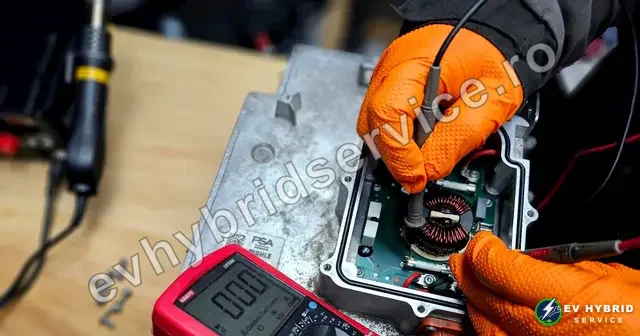
A 2024 Opel Combo Electric would no longer charge its battery from a socket. The culprit was the on-board charger, where one of the low-voltage electronic supplies had stopped working properly. We repaired it, and the original charger stayed on the car.
2 min read
Battery repairs
Nissan Leaf 40 kWh with communication errors and insulation faults: how we restored the 12 V supply and repaired the high-voltage insulation
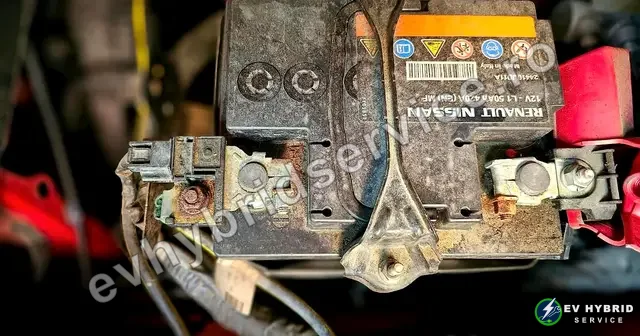
A Nissan Leaf 40 kWh had errors in a chain and no longer talked to its climate system. Where it all started: the oxidised terminals of the 12 V battery. Once we restored the supply, diagnosis also turned up high-voltage insulation faults, which we fixed.
2 min read