
Workshop job ·
Audi A6 Mild Hybrid with its 48 V battery fully drained after standing for a long time: how we brought the battery back on the bench, without replacing it
The owner of a 2021 Audi A6 Mild Hybrid brought us only its 48 V battery, without the car. After a long time standing, it had drained so far that its computer had locked it. We brought it back to life on the bench in a few hours, with no need for a new one.
- lithium-ion battery, brought in on its own, without the car
- 48 Vlithium-ion battery, brought in on its own, without the car
- on the workbench
- A few hourson the workbench
- battery, brought back to life, no new one needed
- Samebattery, brought back to life, no new one needed
- recognised by the car once refitted
- At oncerecognised by the car once refitted
The problem
The owner of a 2021 Audi A6 Mild Hybrid brought us only its 48 V battery. After standing for a long time the car would not start, and its computer could no longer “see” the battery.
The diagnosis
The battery had gone into deep discharge: its voltage had dropped below the maker’s minimum threshold, and the battery computer (BMS) had gone into full protection and stopped talking to the car.
The fix
We connected the battery to our equipment and charged it slowly and under control, watching the temperature and stability of every cell group, up to the level at which the BMS unlocks it.
The result
After a few hours on the bench the battery went back to its owner. Refitted, it was recognised by the car at once, and the mild hybrid system came fully back to life.
A battery that came without its car
This time it was not a car that came through the gate but a single part: the 48 V lithium-ion battery of a 2021 Audi A6 Mild Hybrid, removed by its owner. The car had stood unused for a long time, and the battery had ended up locked in a state it could not get out of by itself.
The explanation is simple. Even switched off, a mild hybrid keeps its electronics awake and goes on using a little energy. After enough weeks, the battery’s voltage fell below the minimum safety threshold set by the maker. At that point the battery computer (BMS) went into full protection. The car could no longer talk to the 48 V battery or even “see” it, so it could neither start nor charge it through the belt starter-generator (BSG).
The job, step by step
Step 1
Connect on the bench
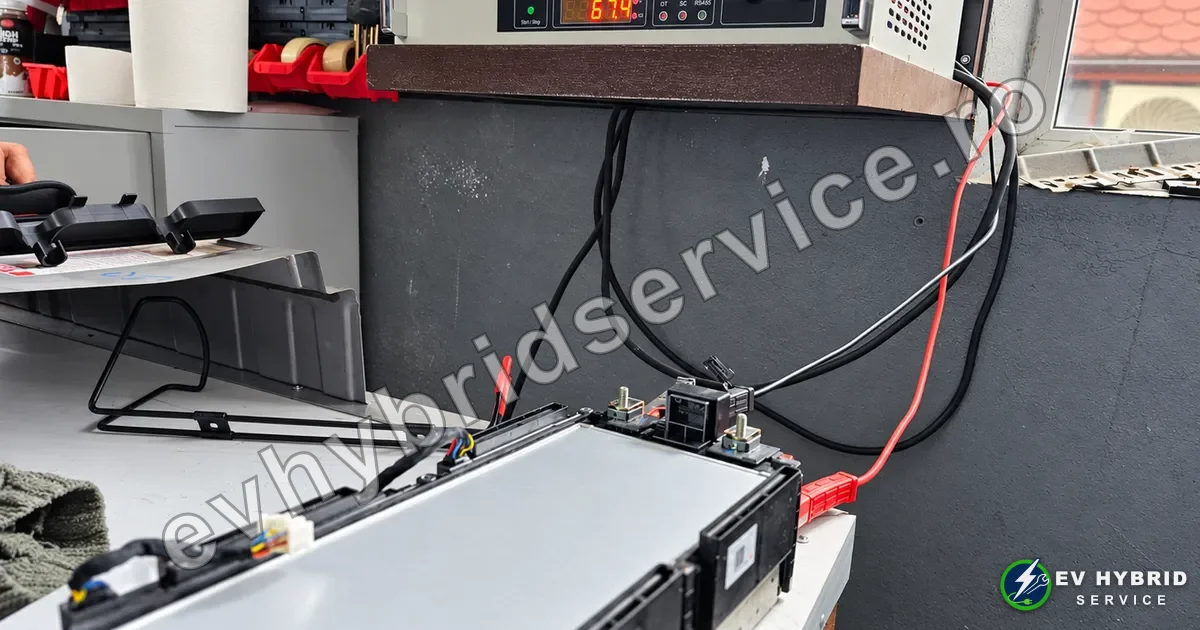
We connected the battery directly to our charging and diagnostic equipment for hybrid and electric cars.
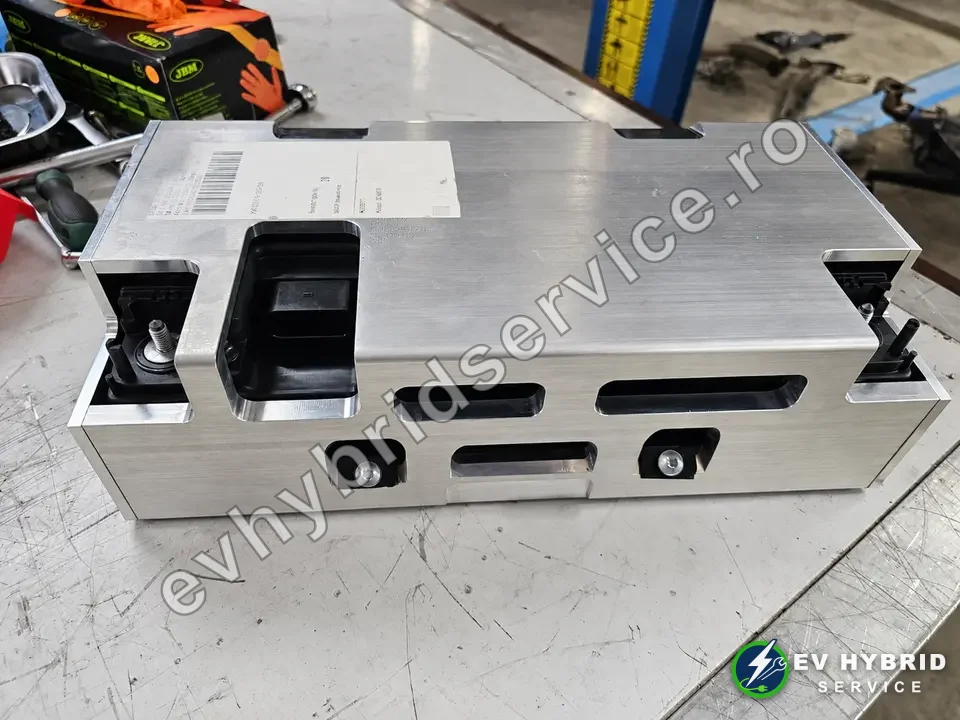
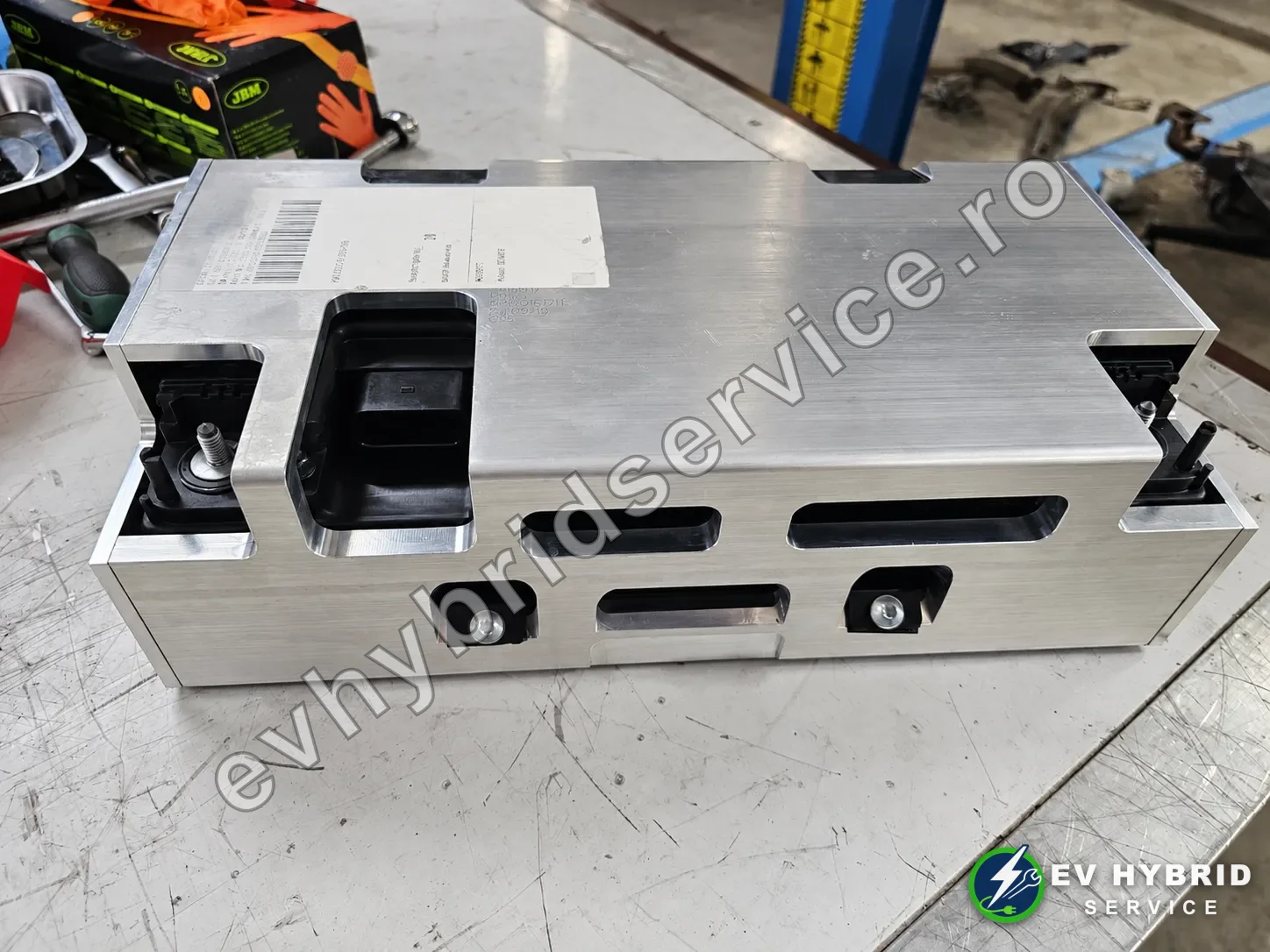
The 48 V battery, in its aluminium housing, on the workbench. 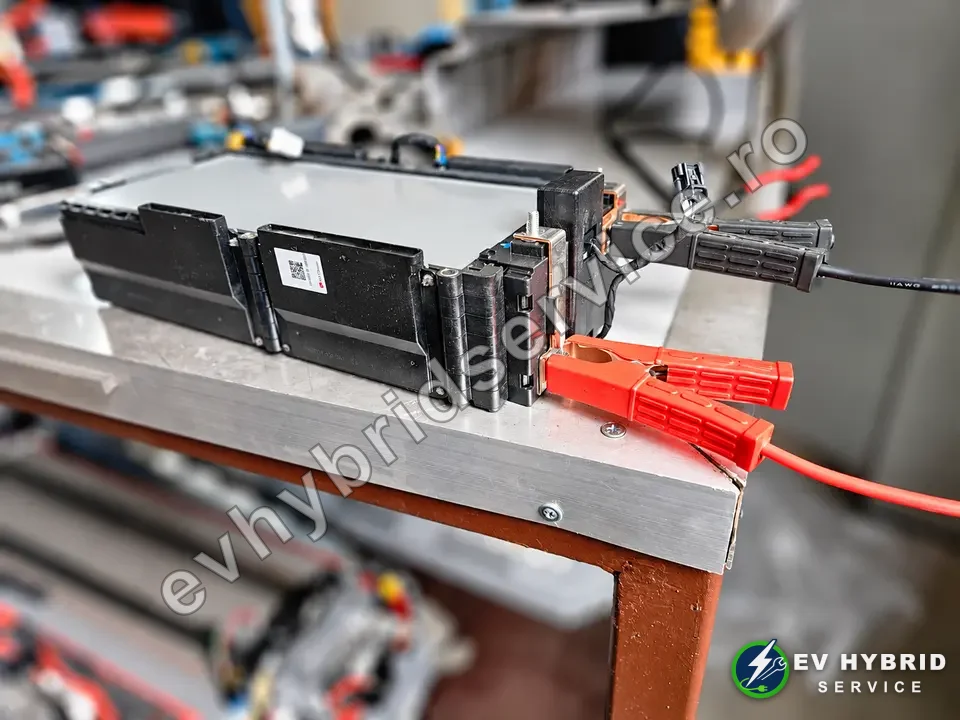
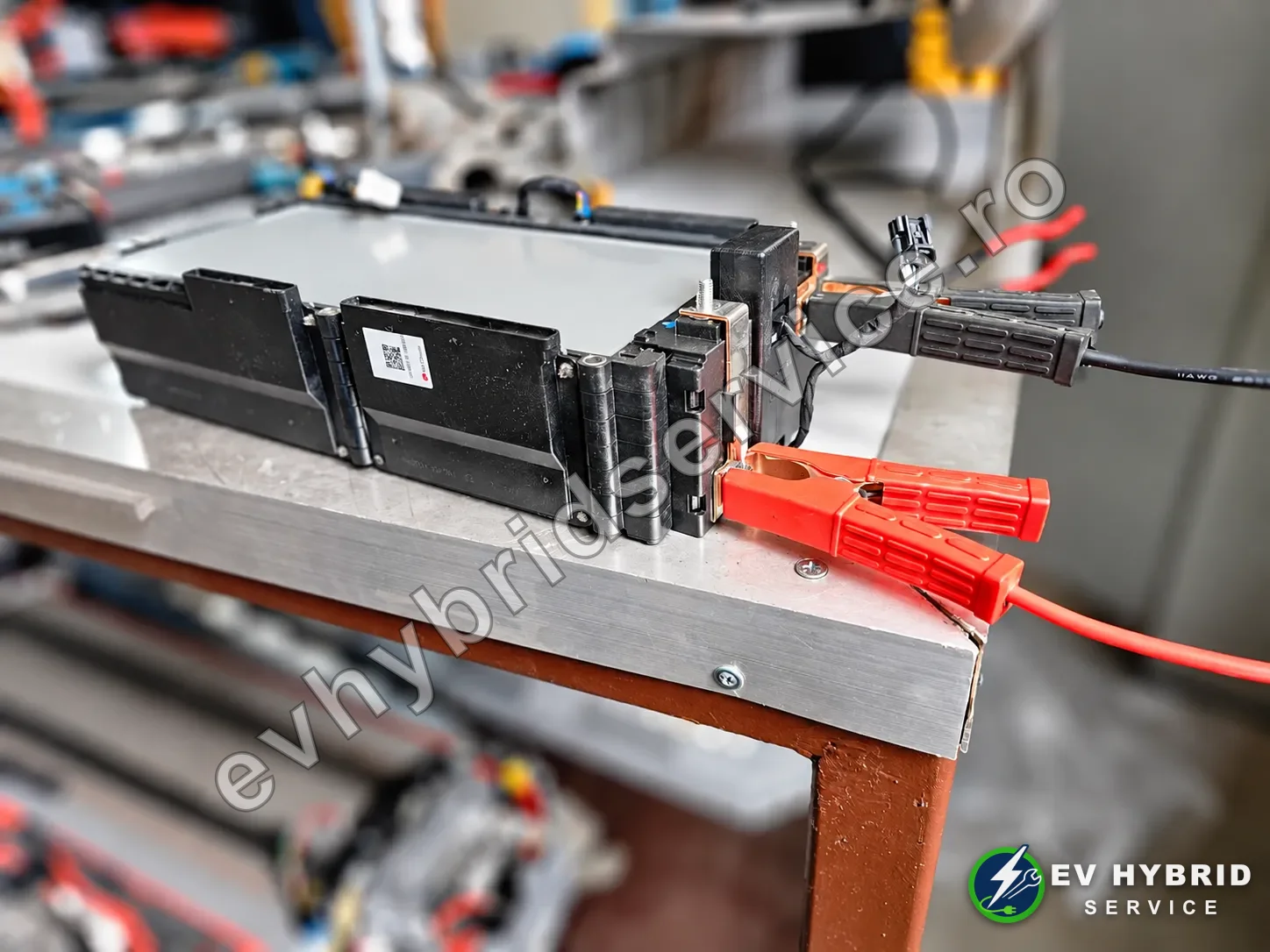
The charging clamps on the battery terminals. Step 2
The revival charge
We applied a slow, precise charging protocol, watching the temperature and stability of every cell group throughout, to raise the voltage safely above the fault threshold.
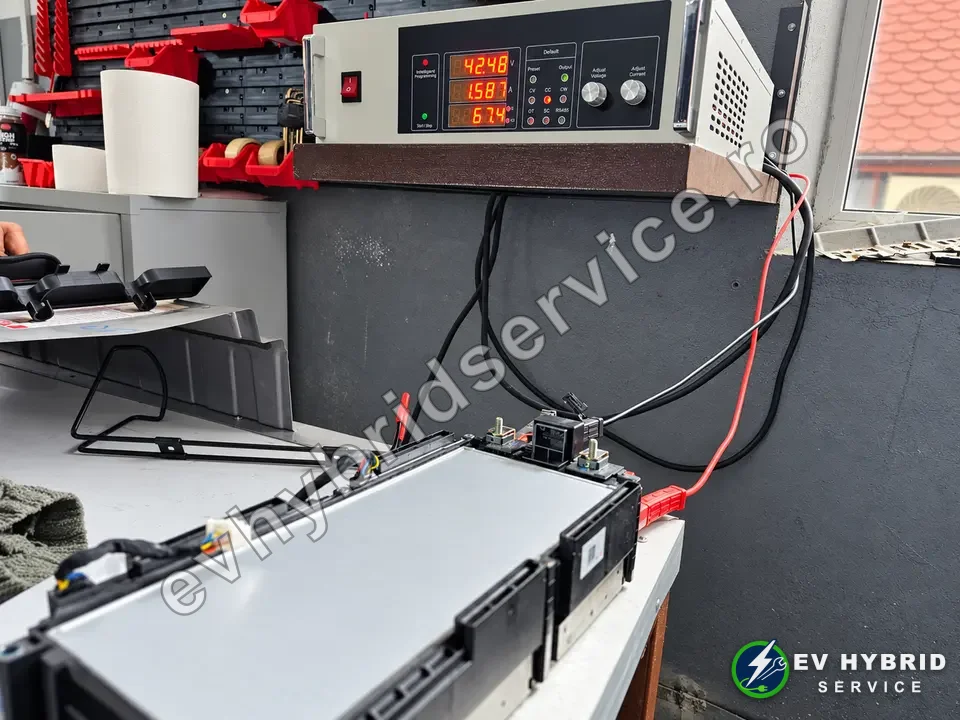
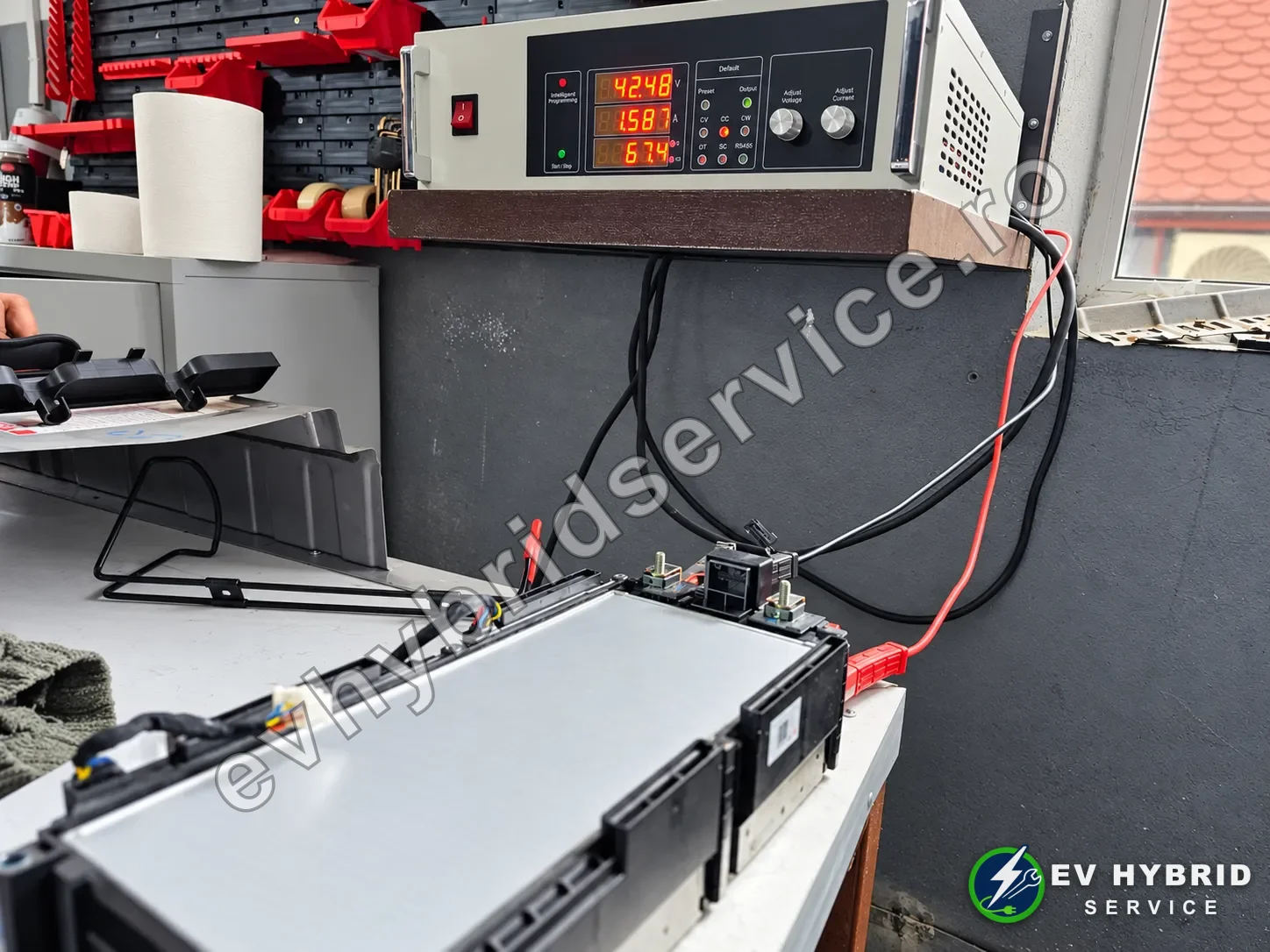
The battery on the laboratory charging supply, with voltage and current on the display. Step 3
Back to the rated value
We charged the cells exactly to the level the BMS needs in order to unlock the battery and let it talk to the car again.
Step 4
Refitting to the car
It all took a few hours on the workbench. The owner collected the battery, fitted it back and told us the car recognised it at once, the mild hybrid system came fully back on, and the Audi now runs faultlessly.
Before and after
On arrival
- 48 V battery brought in on its own
- Deep discharge after a long time standing
- BMS in full protection
- The car would not start or see the battery
At handover
- Battery charged under control
- BMS unlocked
- Recognised by the car at once
- Mild hybrid system back on
Signs that a mild hybrid’s 48 V battery is in trouble
- The car will not start after standing for a long time
- An electrical system or mild hybrid warning appears
- Start-stop no longer works
- The car no longer coasts with the engine off
Will your mild hybrid not start after standing for a long time? We check the 48 V battery and tell you whether it can be brought back to life.
Book a battery test →Frequently asked questions
Why does the 48 V battery drain if the car is not used?
Because the car’s electronics never switch off completely, even when parked: a few systems go on using a little energy. After a long enough time standing, the battery’s voltage can fall below the minimum threshold, and the BMS locks it.
Can I charge the 48 V battery myself with an ordinary charger?
We do not recommend it. A deeply discharged lithium-ion battery has to be charged slowly, with its temperature and every cell group watched, on equipment made for the job. The wrong charge can damage it for good or make it dangerous.
Do I need to bring the car, or is the battery enough?
The battery alone will do, as here. If you are not sure the problem lies with the battery, it is better to bring the car so we can run a full diagnosis before doing anything.
Photos from the job
Tap a photo to see it full size; use the arrows to browse.
The battery on the laboratory charging supply, with voltage and current on the display.
The 48 V battery, in its aluminium housing, on the workbench.
The charging clamps on the battery terminals.
Read next
Battery repairs
Hyundai Kona Electric losing coolant with no error on the dashboard: how we repaired the cooling circuit of the high-voltage battery
A 2024 Hyundai Kona Electric was losing a lot of fluid from the battery cooling circuit, though the dashboard showed nothing. After a hard impact, a pipe had cracked. We replaced it, sealed the small cracks, and the battery stayed on the car.
3 min read
Battery repairs
Opel Combo Electric that would no longer charge from a socket: how we repaired the on-board charger without replacing it
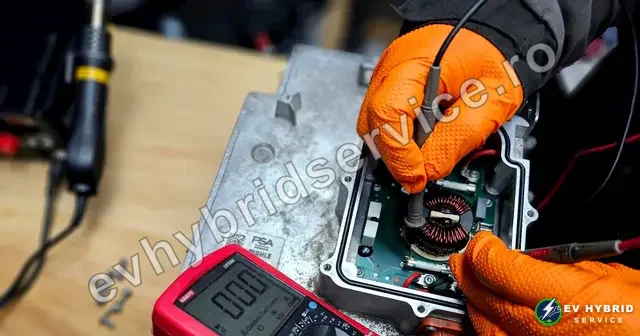
A 2024 Opel Combo Electric would no longer charge its battery from a socket. The culprit was the on-board charger, where one of the low-voltage electronic supplies had stopped working properly. We repaired it, and the original charger stayed on the car.
2 min read
Battery repairs
Nissan Leaf 40 kWh with communication errors and insulation faults: how we restored the 12 V supply and repaired the high-voltage insulation
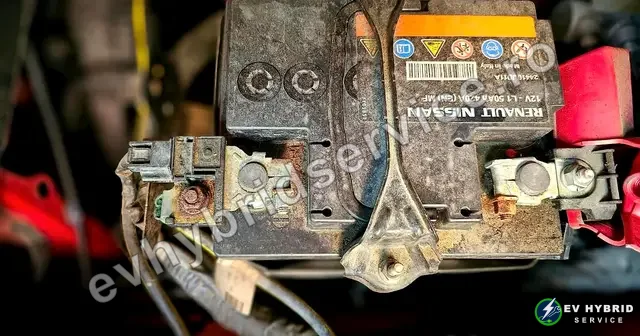
A Nissan Leaf 40 kWh had errors in a chain and no longer talked to its climate system. Where it all started: the oxidised terminals of the 12 V battery. Once we restored the supply, diagnosis also turned up high-voltage insulation faults, which we fixed.
2 min read