
Workshop job ·
Audi A3 e-tron plug-in hybrid with insulation faults: how we repaired the flooded high-voltage battery by replacing it outright
A 2016 Audi A3 e-tron had insulation and battery management faults. When we opened the battery, we found it full of water, with corrosion on the cells and electronics. We replaced it outright, together with the 12V battery, and redid the adaptations and cooling.
- year of manufacture
- 2016year of manufacture
- inside the traction battery casing
- Waterinside the traction battery casing
- high-voltage battery replaced outright
- 1high-voltage battery replaced outright
- auxiliary battery, replaced and registered
- 12Vauxiliary battery, replaced and registered
The problem
A 2016 Audi A3 e-tron plug-in hybrid had permanent and intermittent insulation and high-voltage battery management faults.
The diagnosis
After diagnosis we opened the battery: it was flooded, with water reaching the cell electronics, the module connections and the connectors.
The fix
We replaced the traction battery and the 12V battery outright, ran the adaptations with the VAS tester and refilled the coolant circuits.
The result
The car runs again, with the water-damaged battery out of the system and the cooling and electronics set up properly.
Electronic faults, a physical cause
The Audi A3 e-tron Plug-in Hybrid, built in 2016, came in with serious high-voltage system problems: several faults, permanent and intermittent, in the hybrid battery management. The electronic diagnosis showed electrical insulation faults and problems in the system that manages the battery, and the hybrid drive could no longer be used properly.
The cause was not electronic. The traction battery was flooded: water had reached the cell electronics, the connections between modules and the high-voltage connectors. The damage was too widespread for the battery to be repaired safely, so it had to be replaced outright.
What faults an insulation problem gives on the A3 e-tron
For this kind of fault, codes documented for the Audi A3 e-tron family include P0AA600 (Hybrid/EV Battery Voltage System Isolation Fault), low insulation between the high-voltage circuit and the car’s ground, and P0E7400 (Hybrid/EV Battery Voltage Internal Isolation Fault), an insulation problem inside the battery itself. They are documented examples for the model, not a transcript of the faults read on this car.
The insulation faults, together with the battery management faults, sent us to check the high-voltage assembly physically. When we opened the casing, we found significant amounts of water inside.
The job, step by step
Step 1
Diagnosis with VW-Audi group equipment
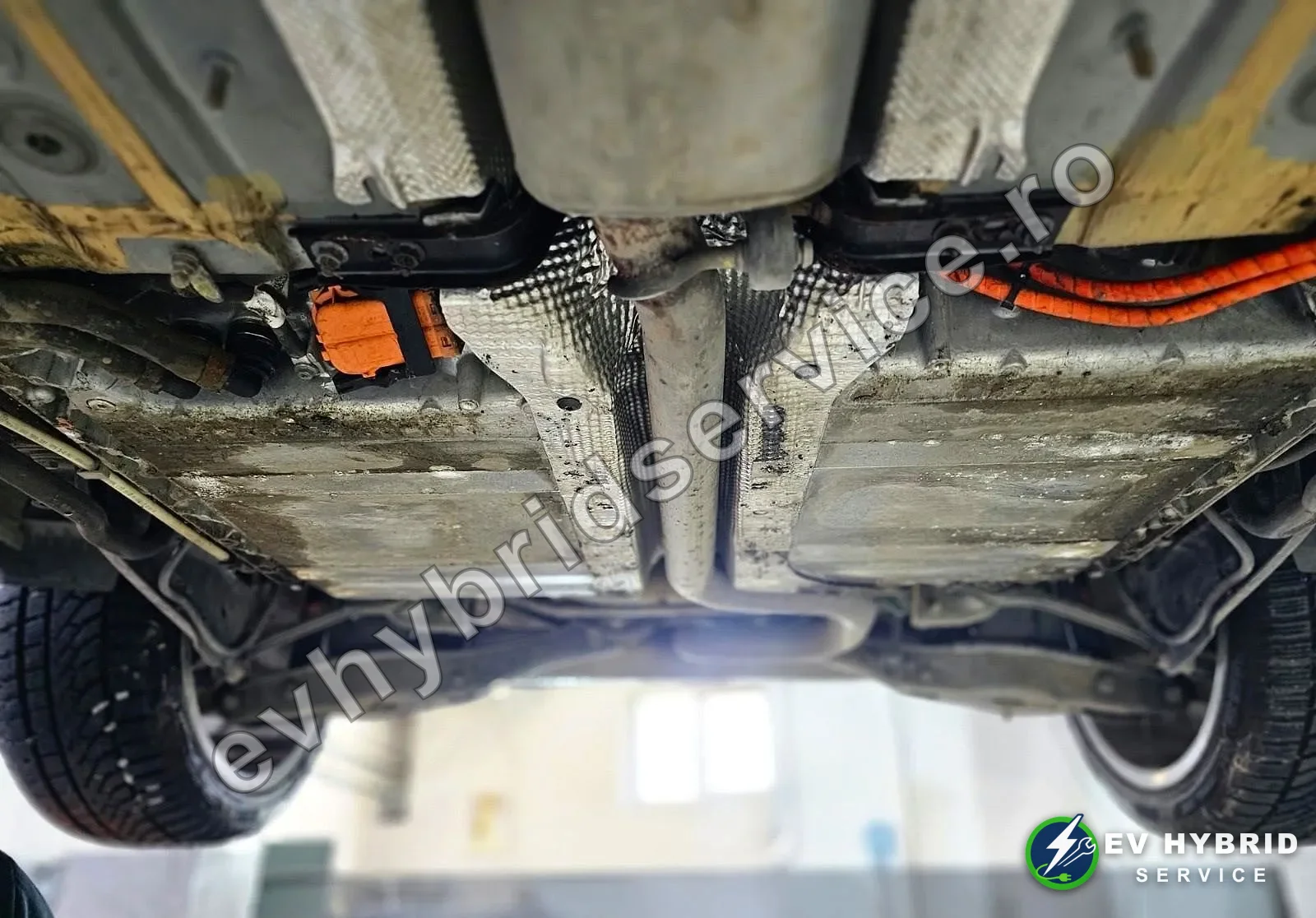
We read the permanent and intermittent faults of the high-voltage battery and its management, then removed the battery from under the car.
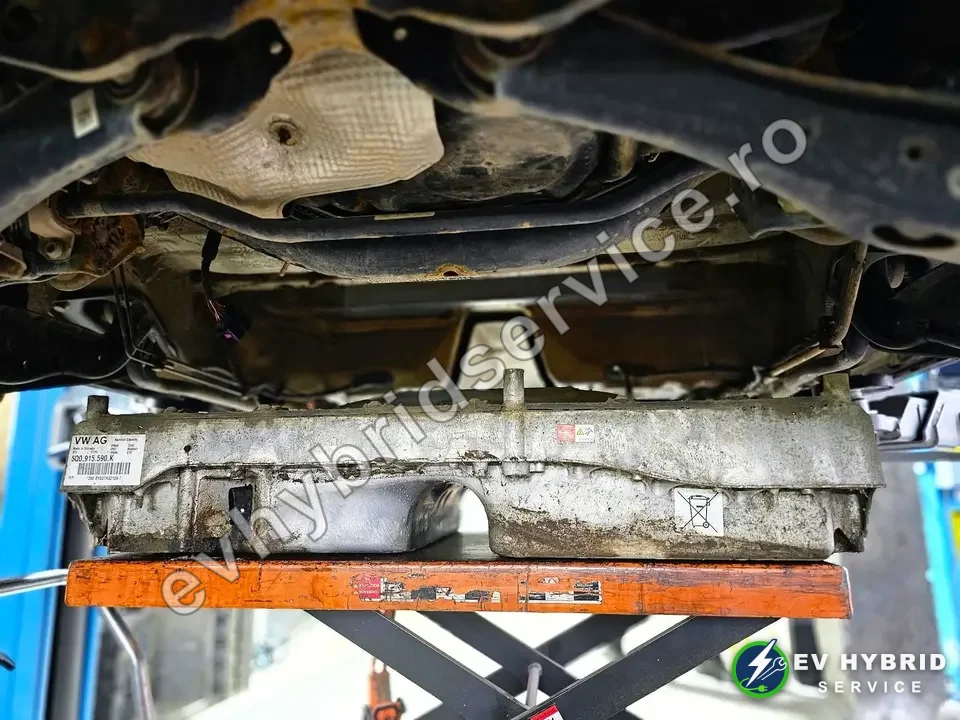
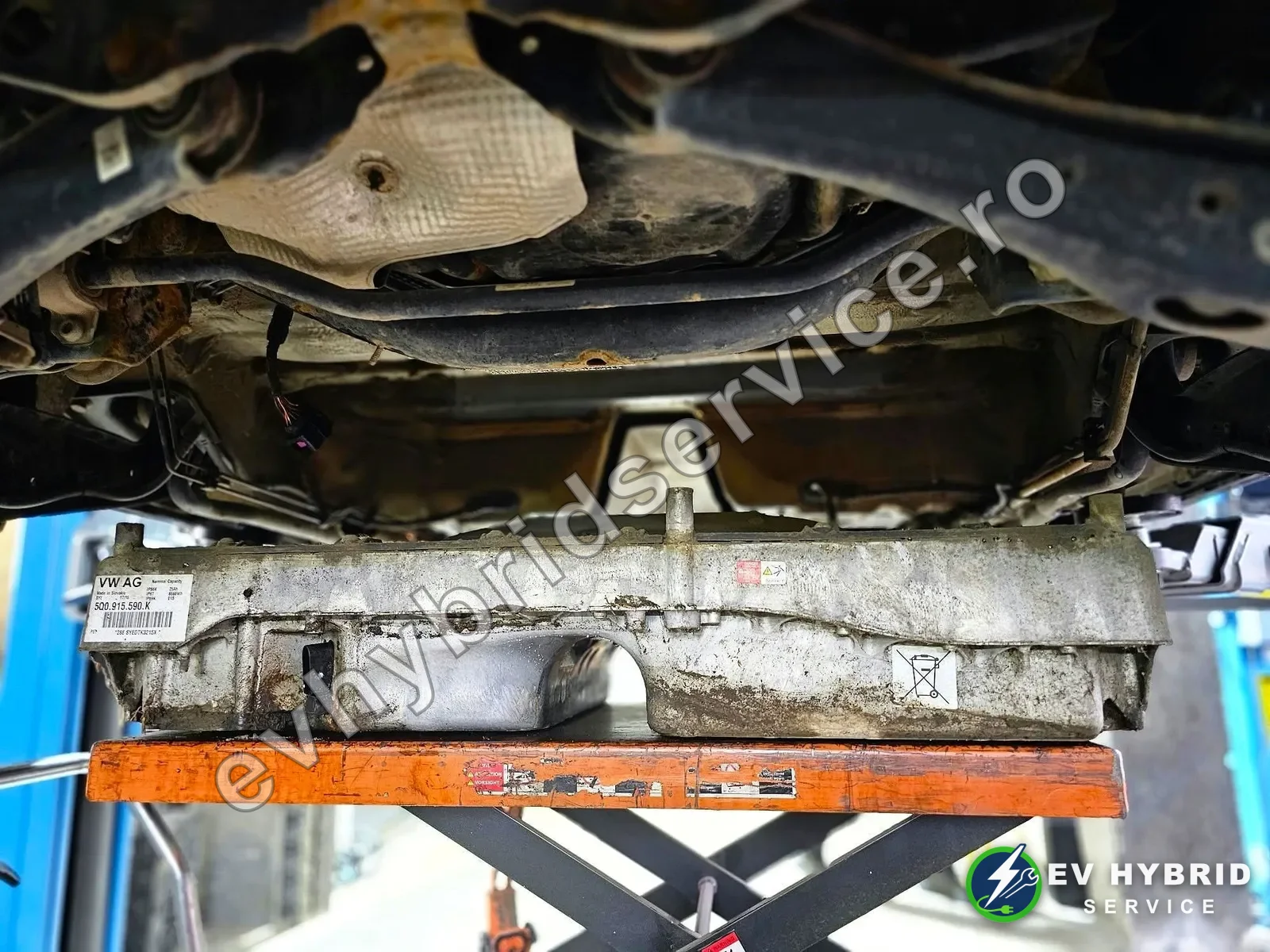
The battery, released from under the car onto the lift table. 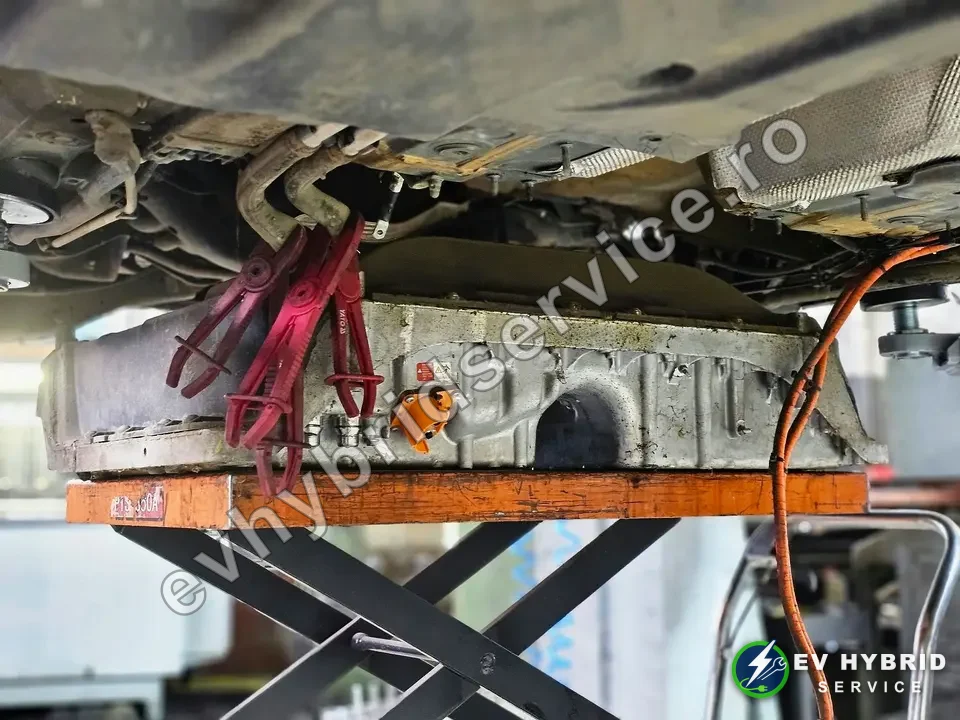
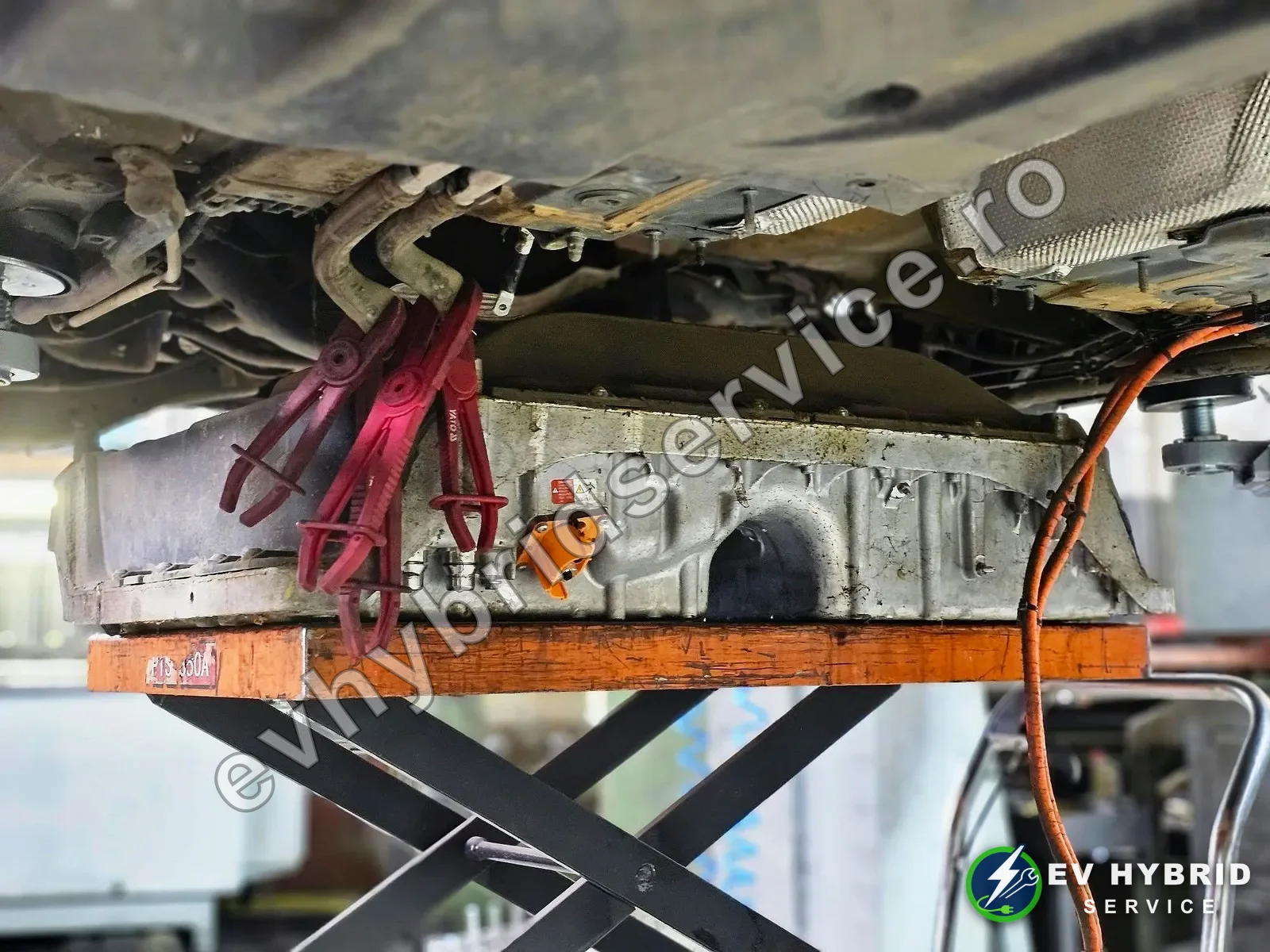
Lowering the battery on the lift table. Step 2
Opening the battery and finding the water
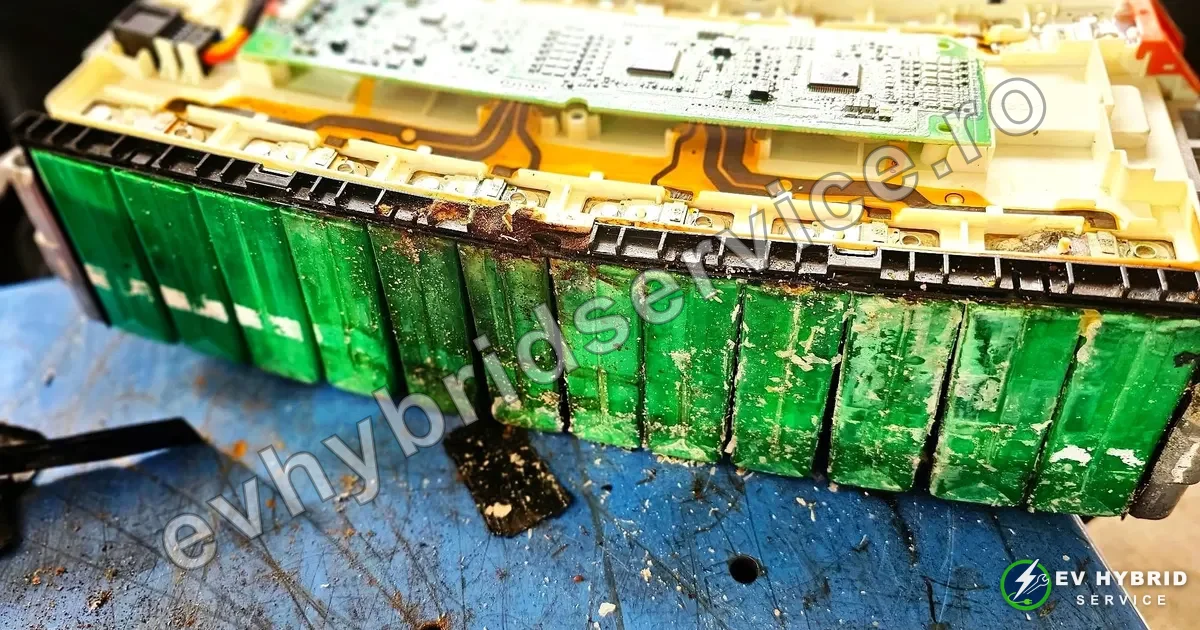
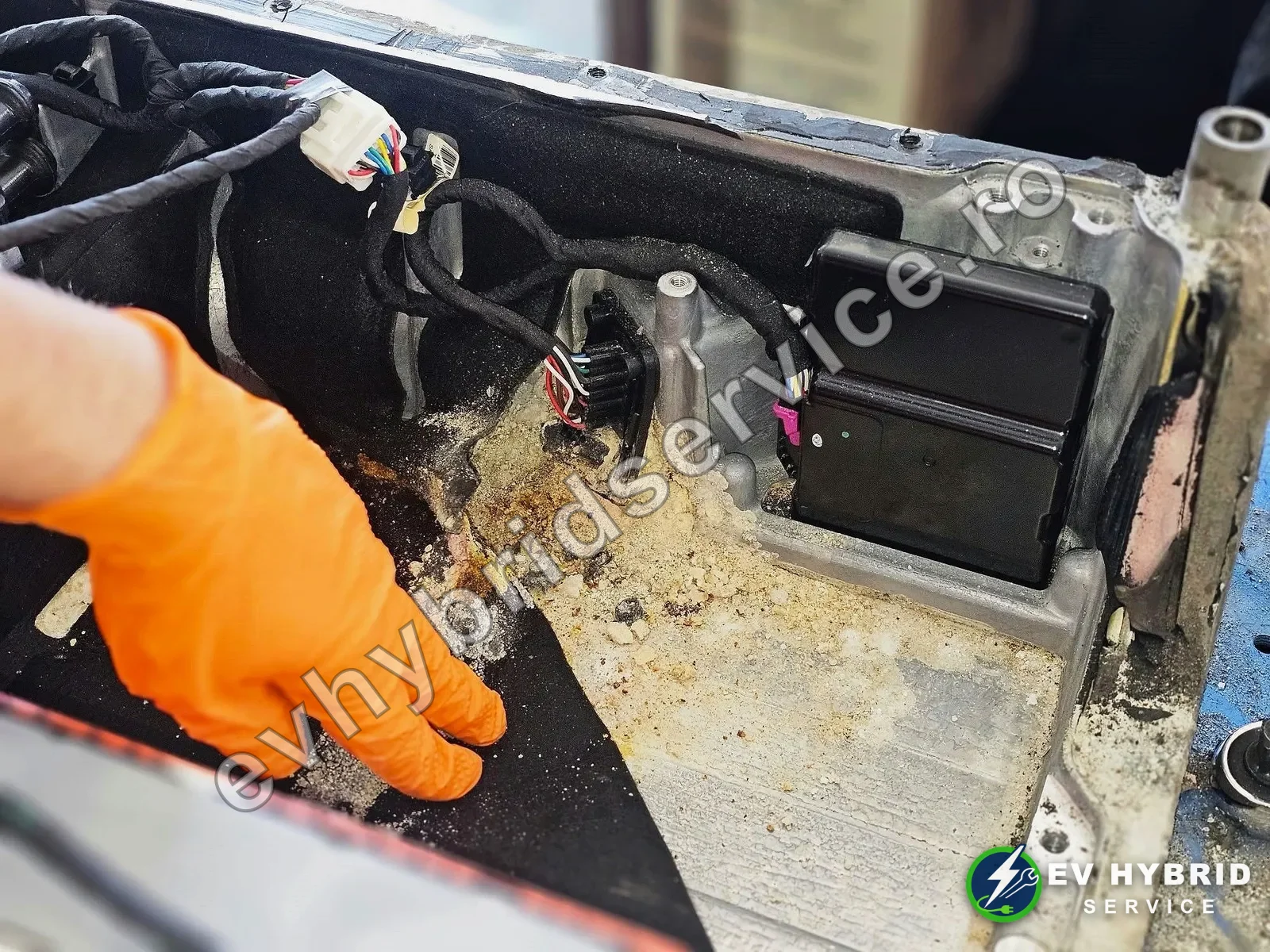
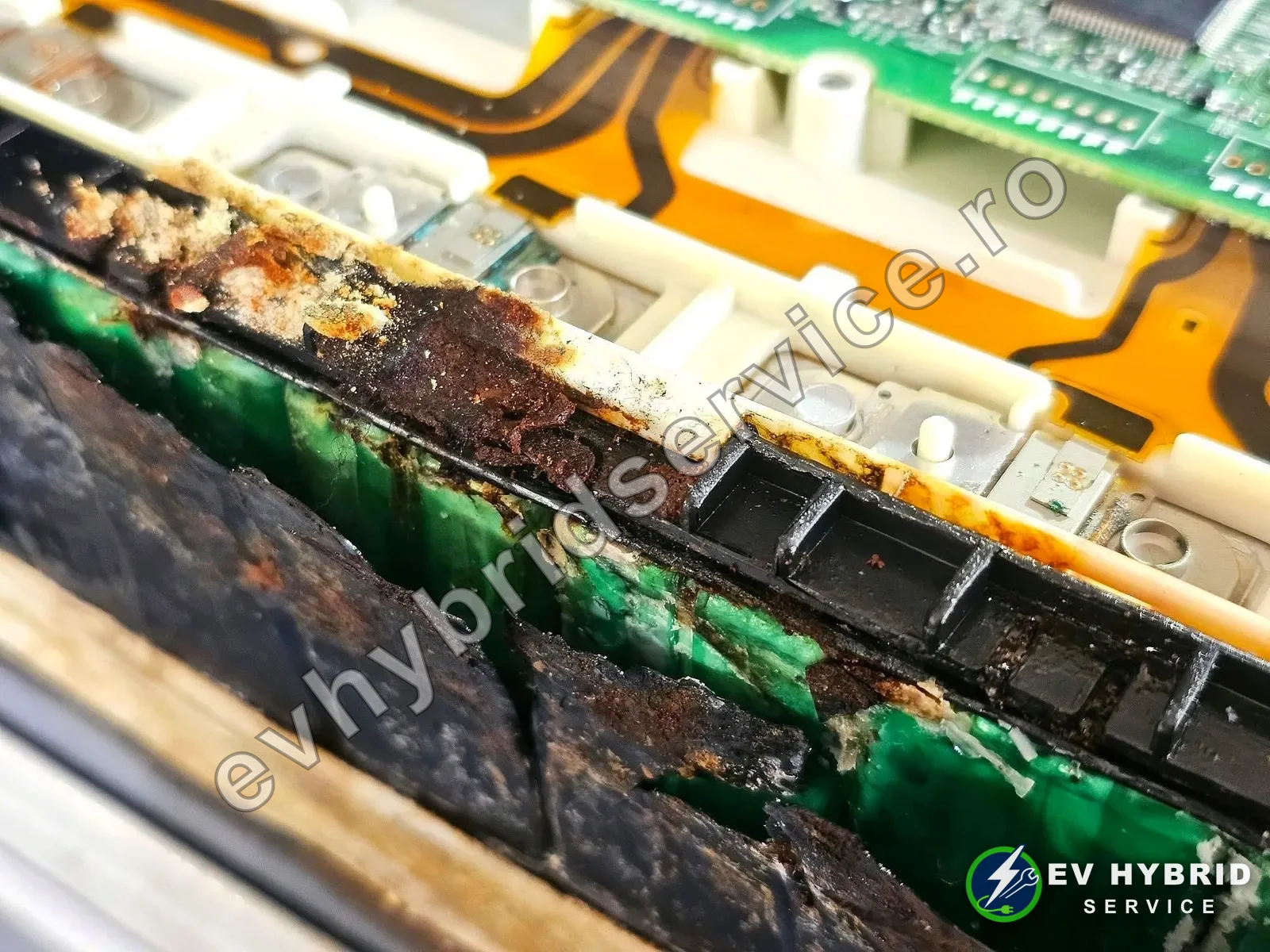
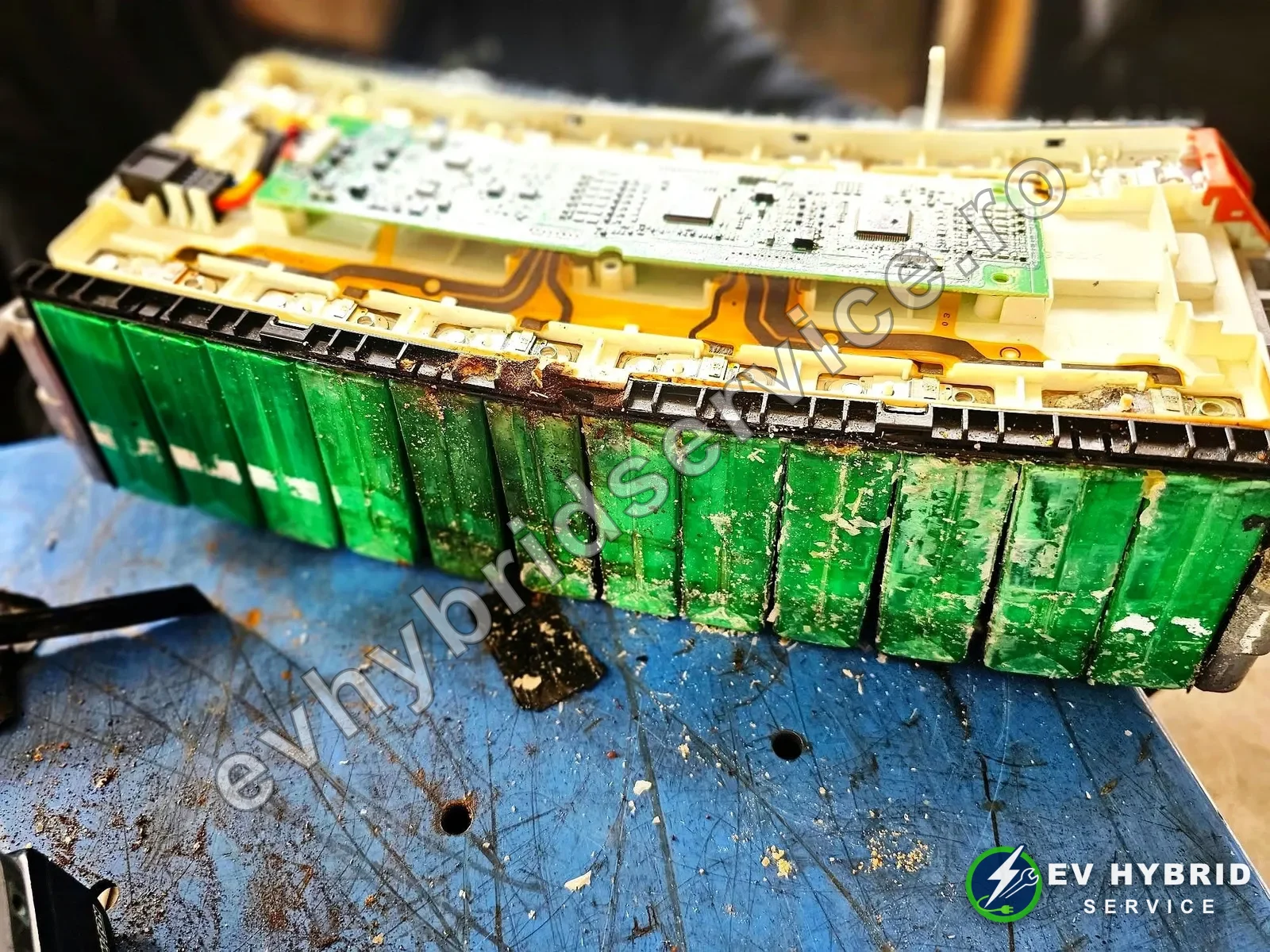
In the casing we found water and deposits, and on the modules corrosion on the cell electronics, the connections between modules and the connectors.
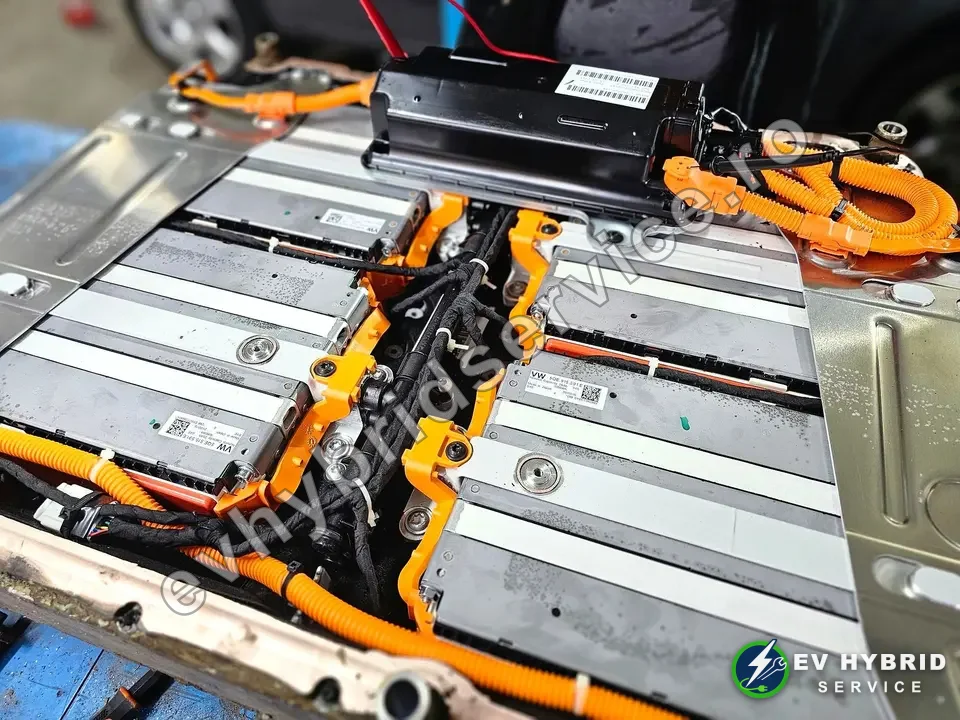
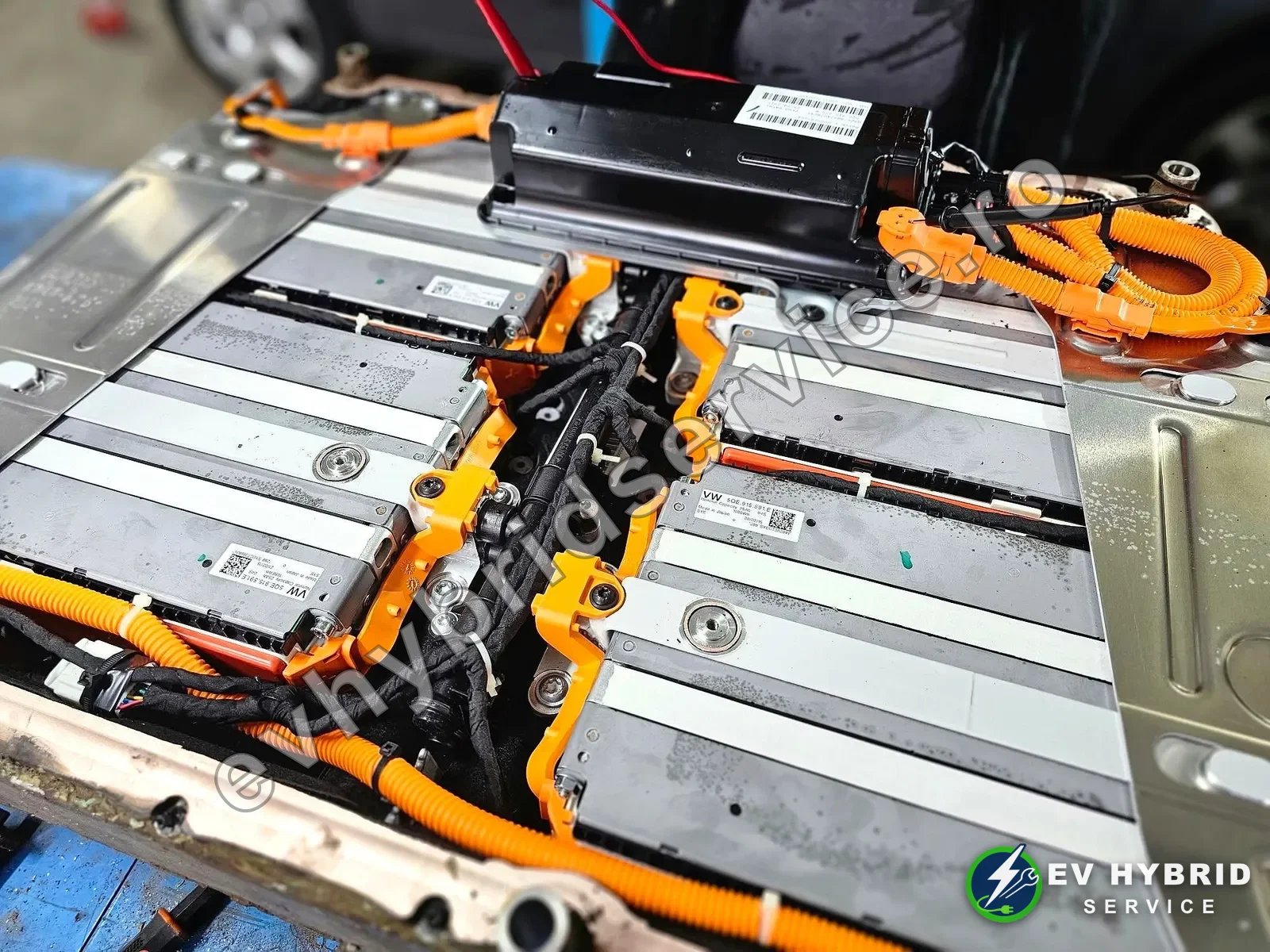
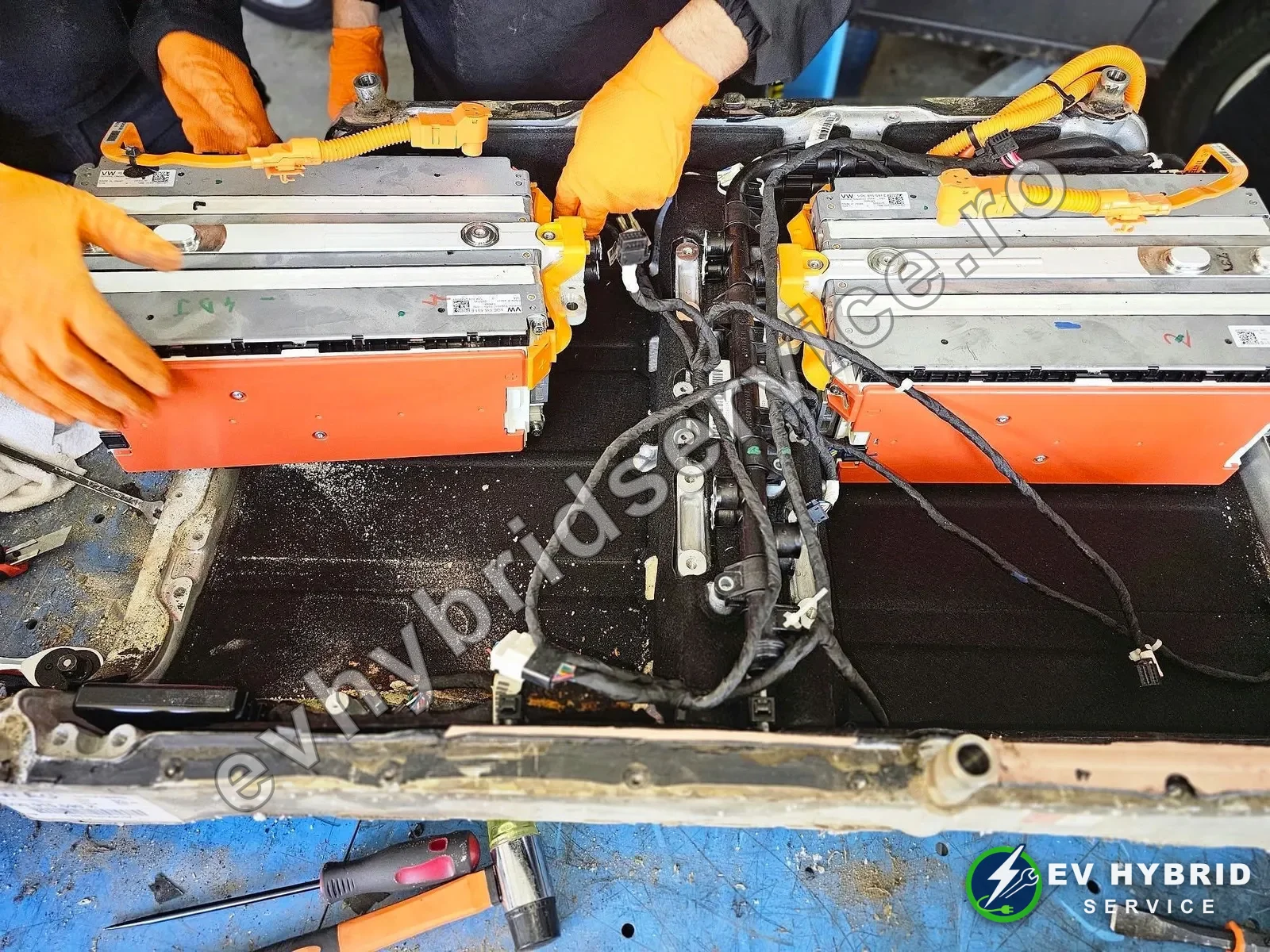
The battery opened: the modules, high-voltage wiring and junction box. 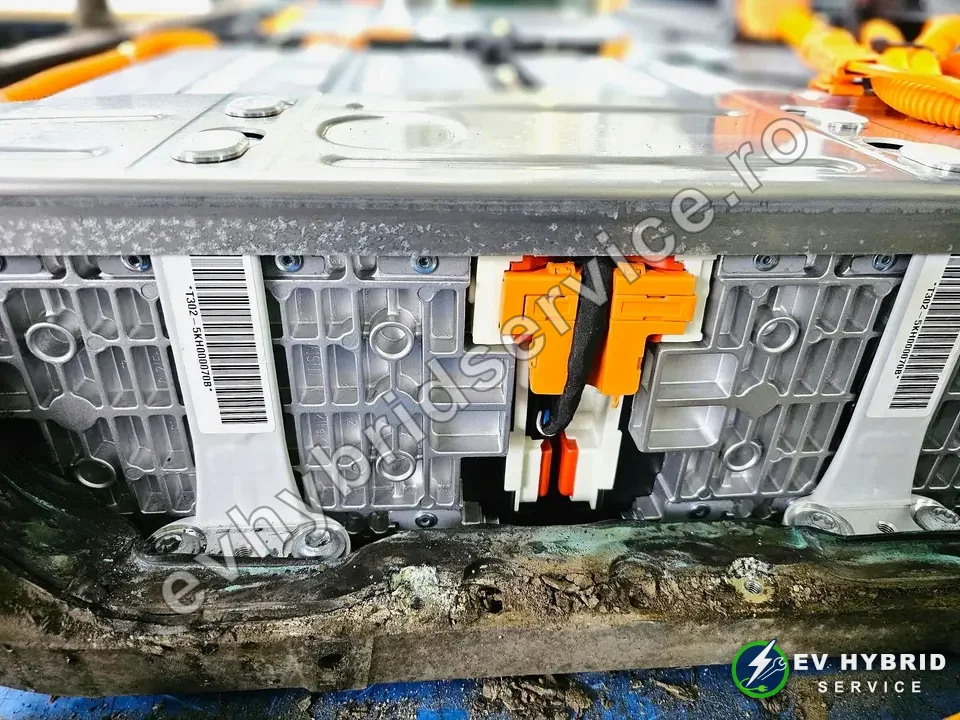
Under the modules, the casing floor is full of deposits. 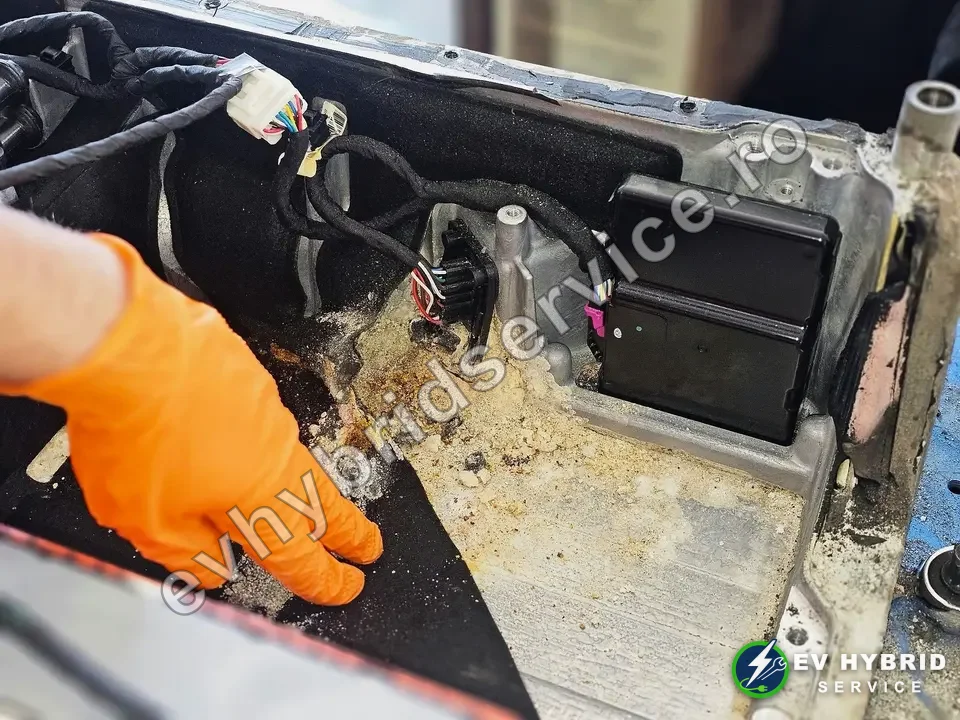
The marks left by water in the battery casing. 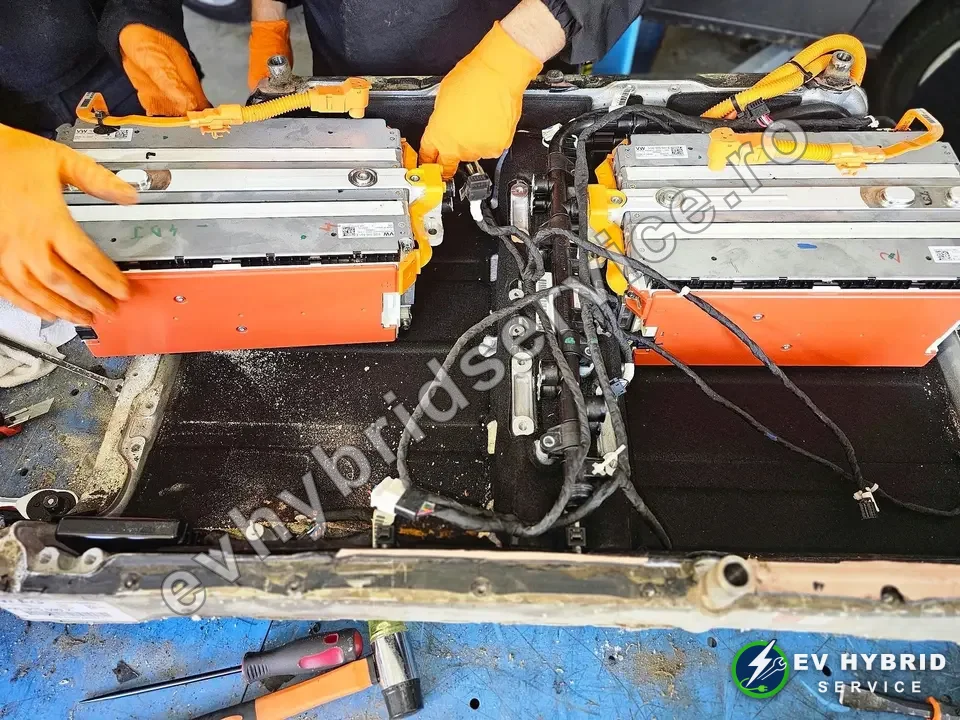
Lifting the modules out of the casing. 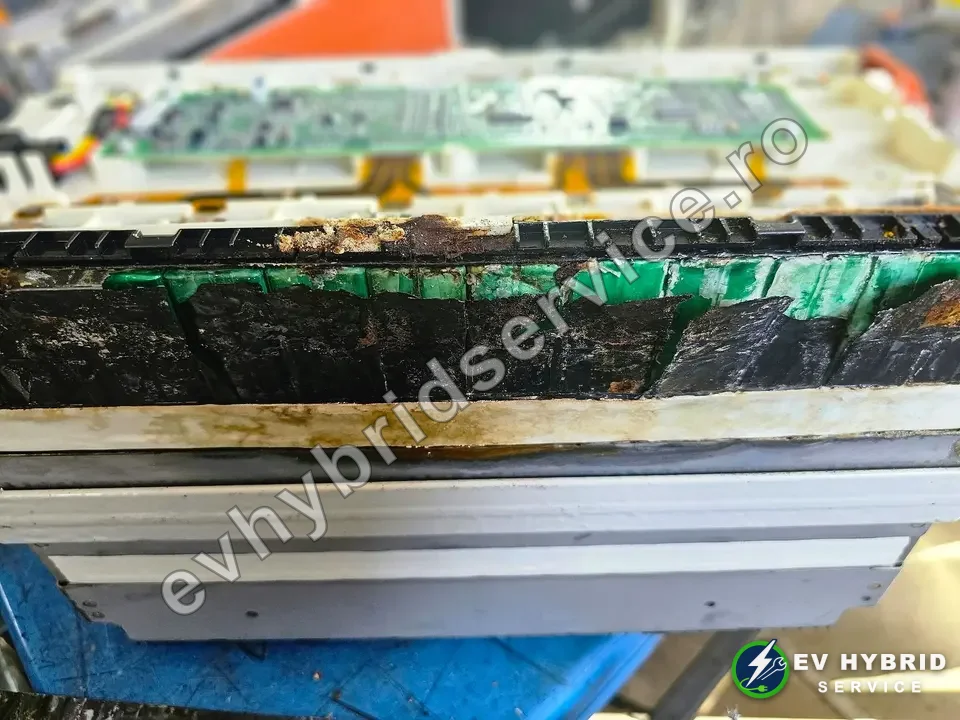
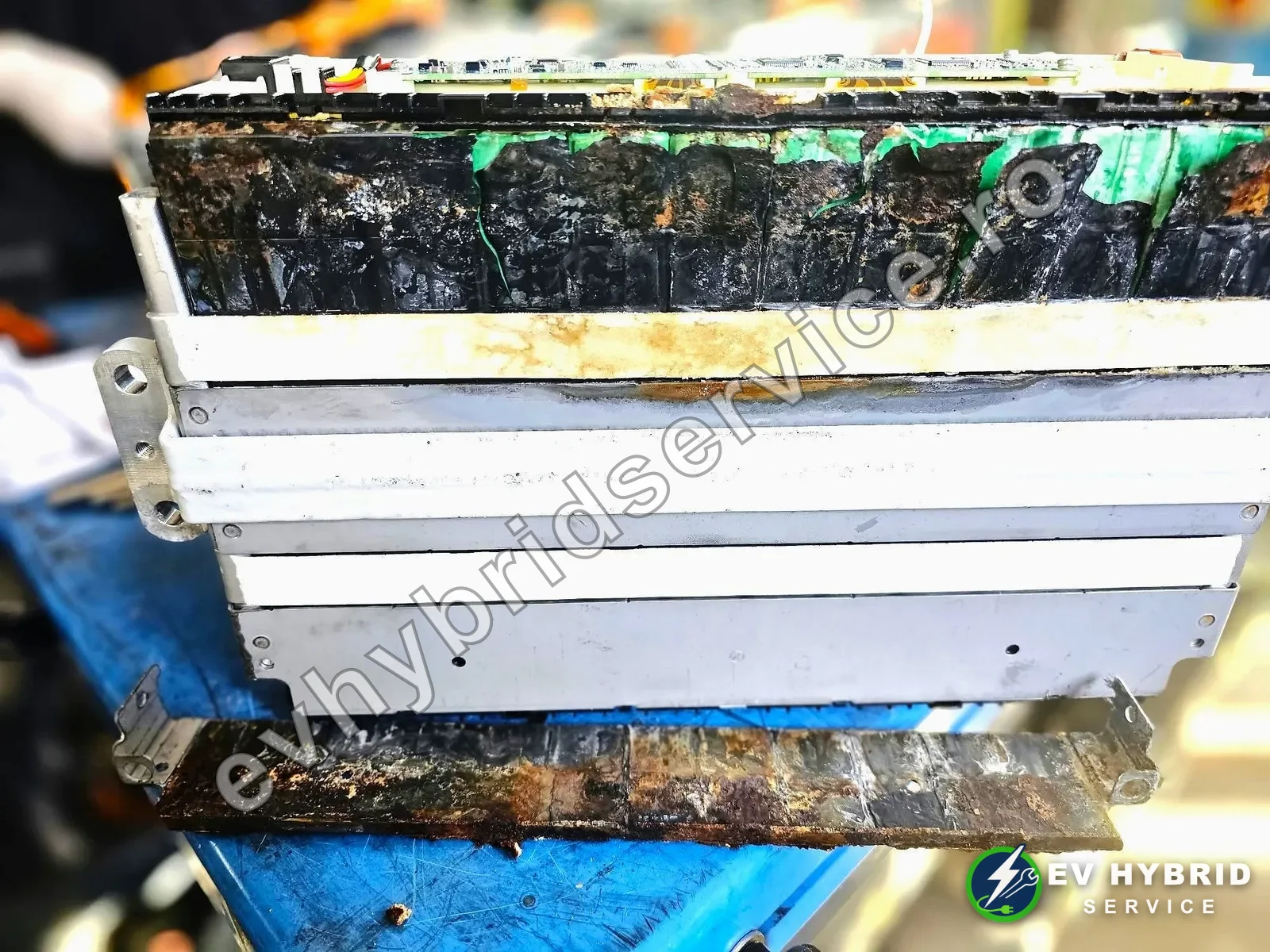
A module out of the battery: the cells, covered in corrosion. 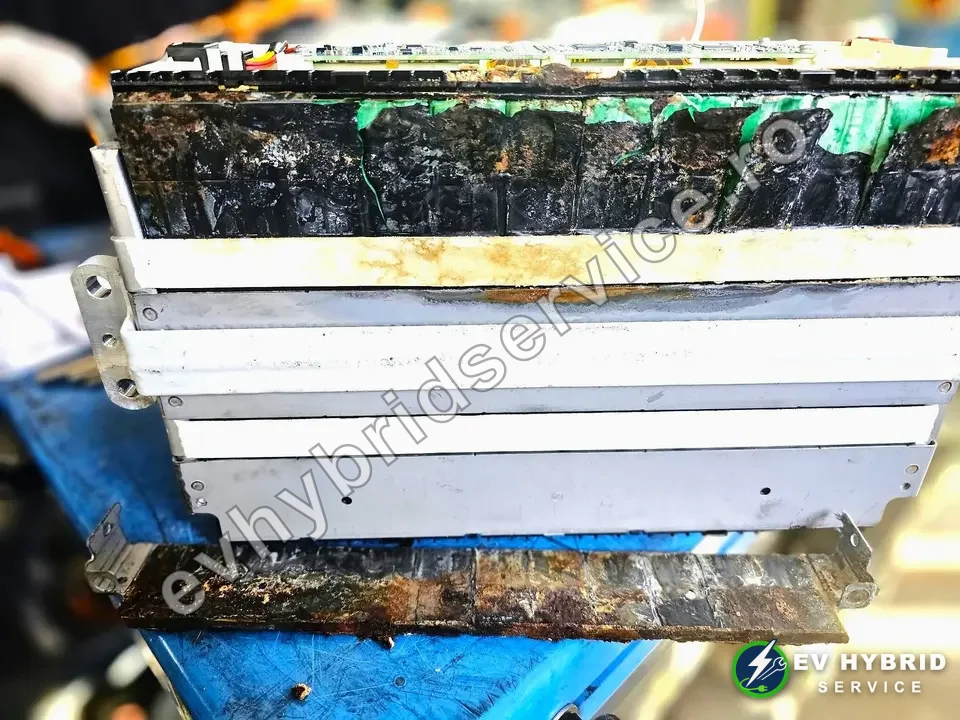
The side of the module, with black deposits and corrosion. 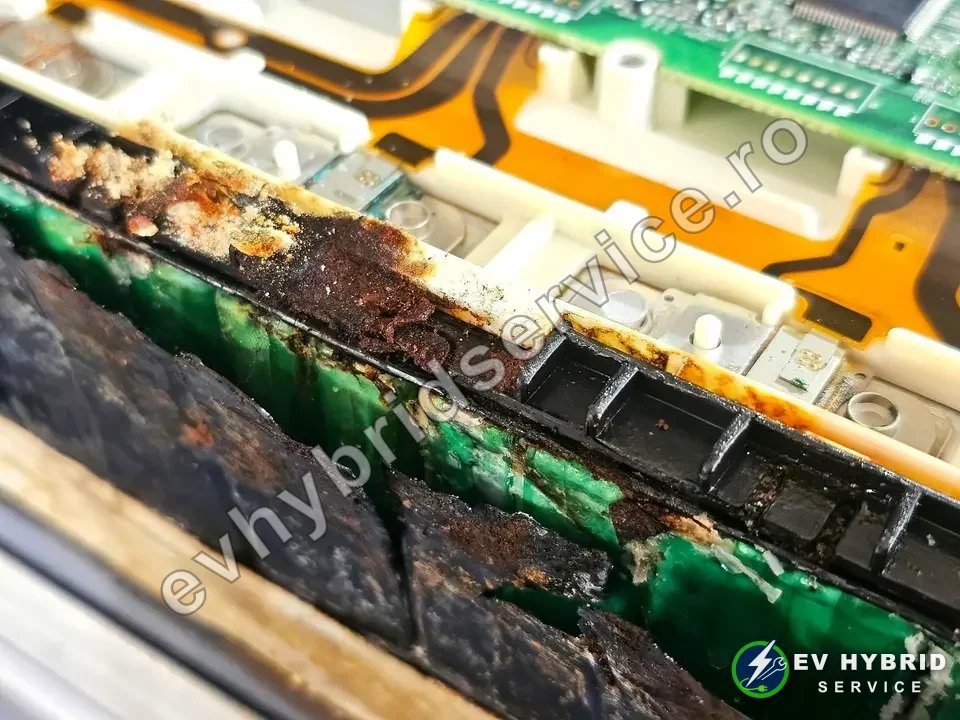
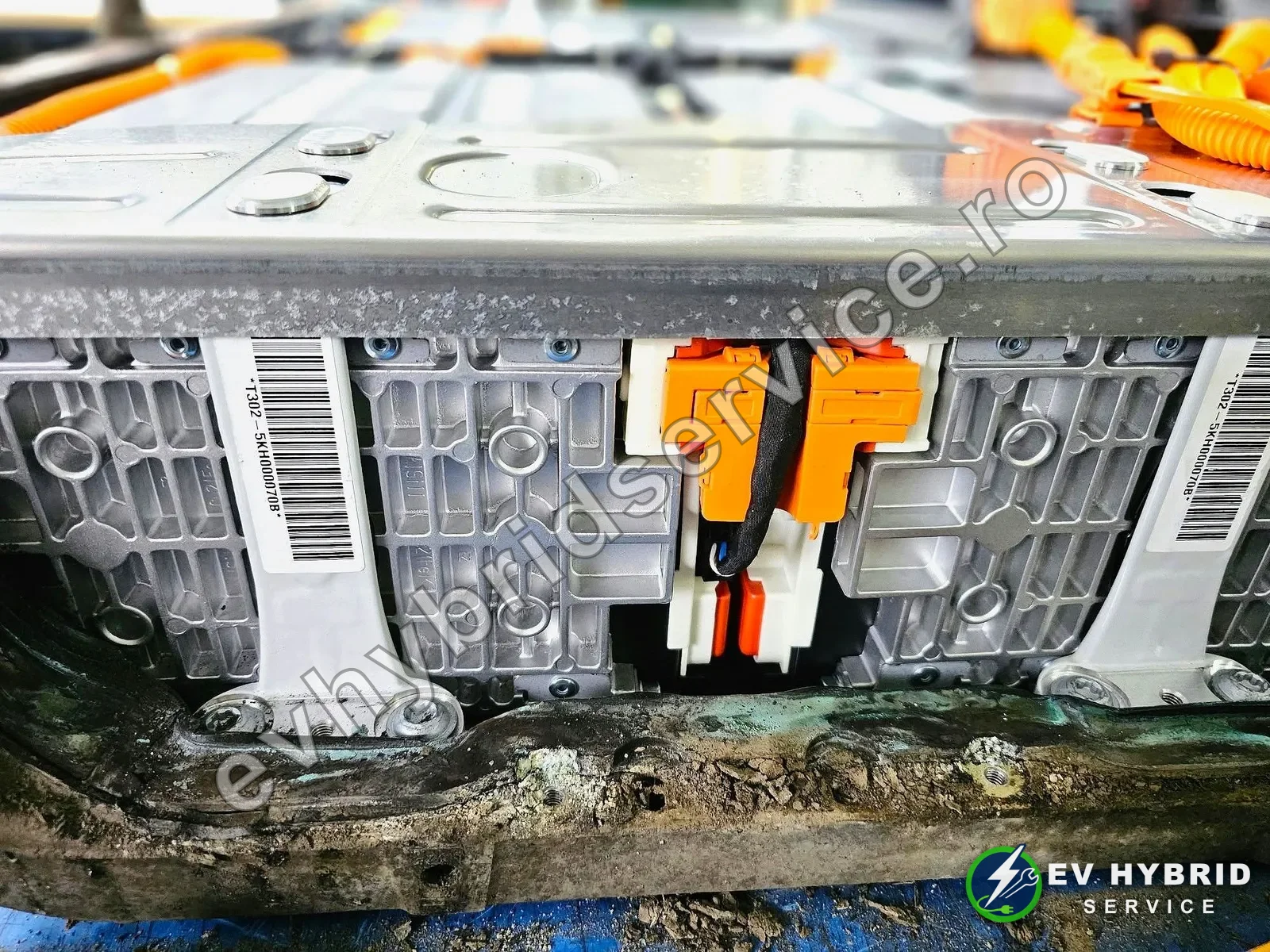
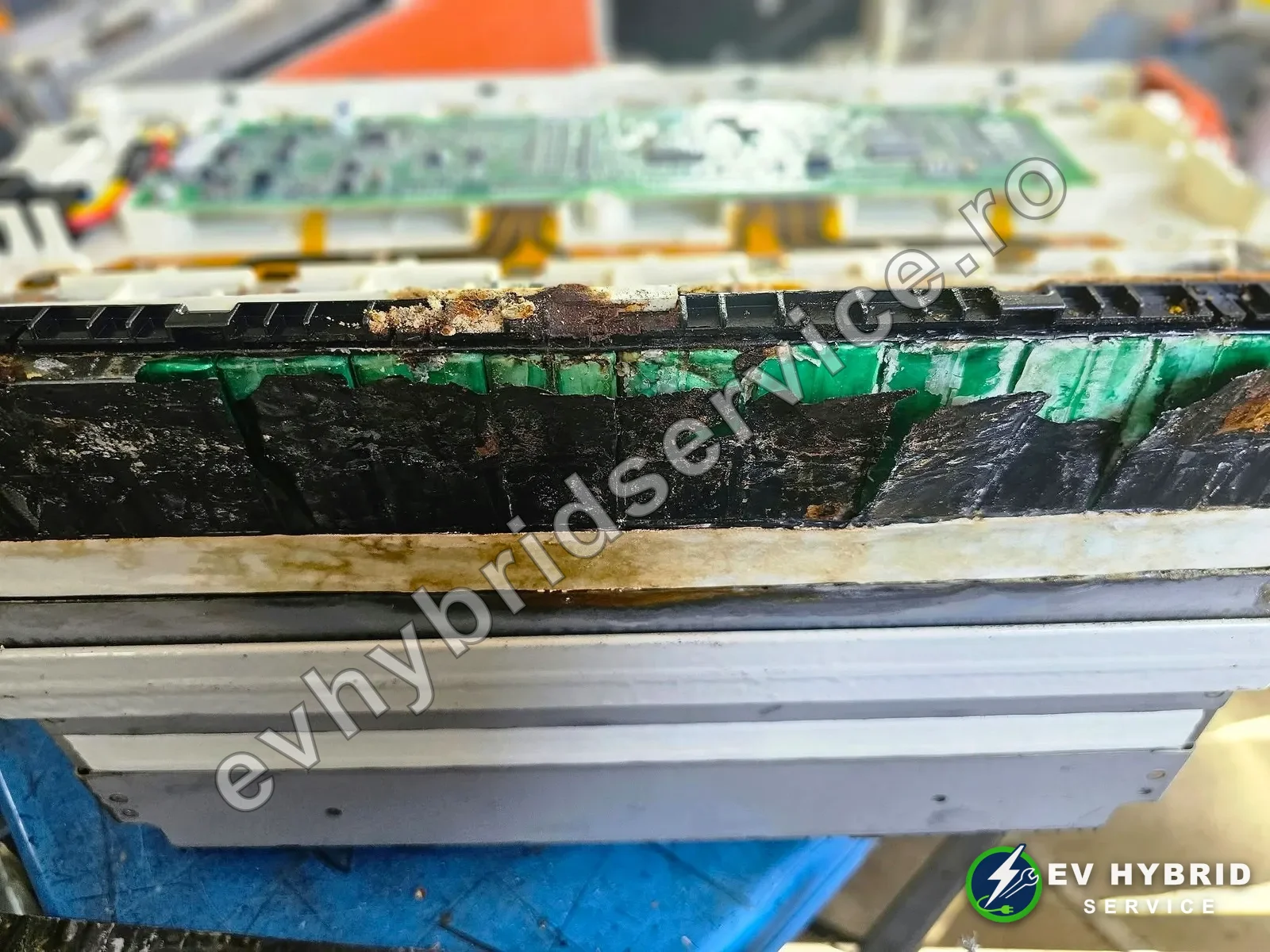
Close up: corrosion on the connections, right next to the module electronics. 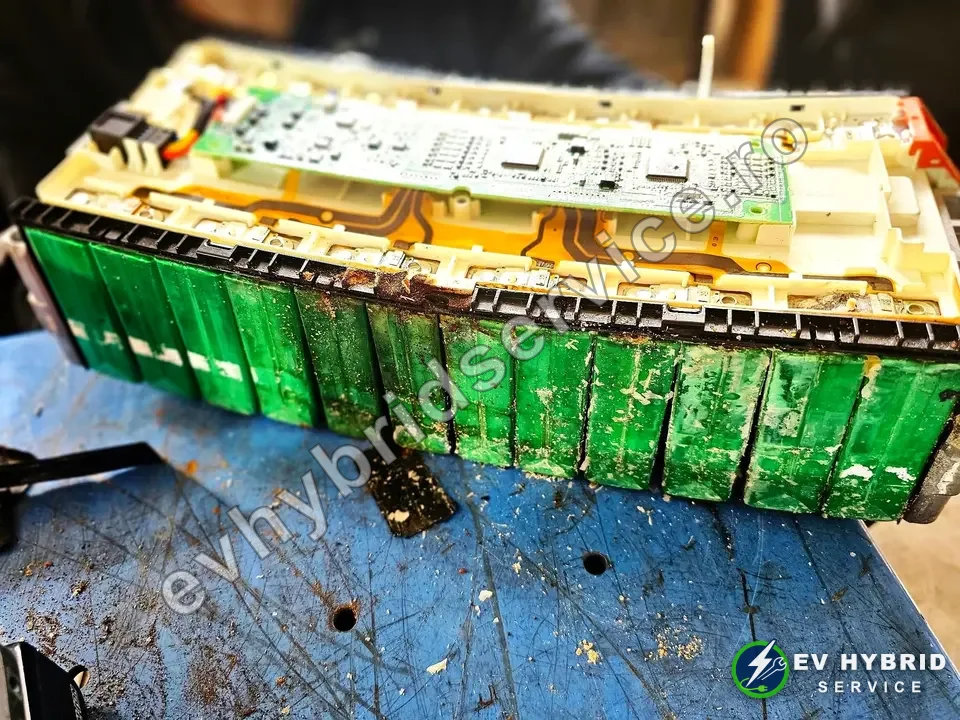
The module on the bench: the circuit board on top, corroded cells below. Step 3
Replacing the high-voltage battery
The damage was too widespread for a safe repair, so we replaced the traction battery outright with another battery.
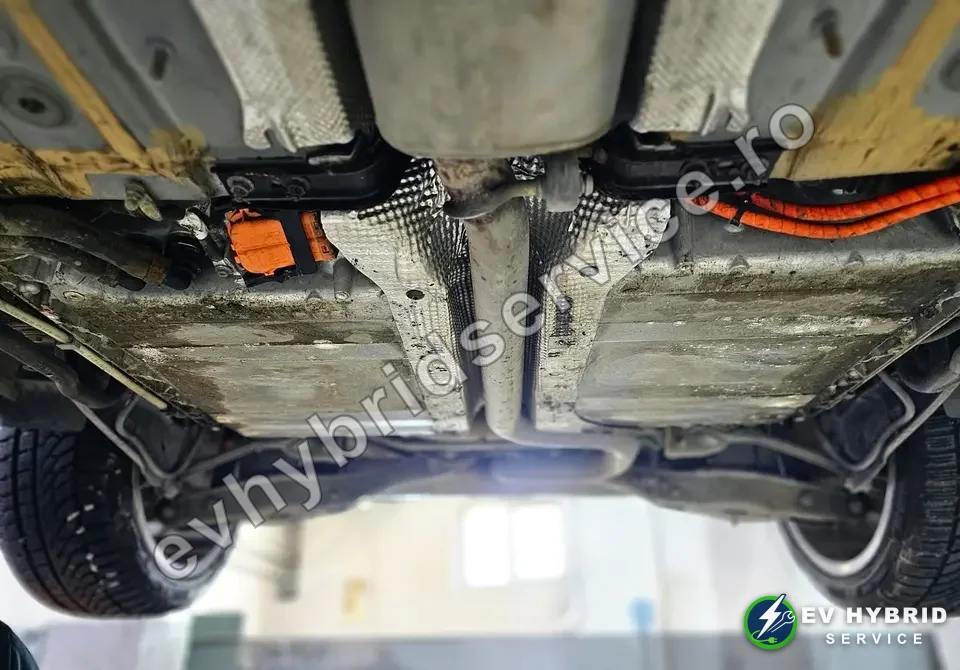
The replacement battery, fitted back under the car. Step 4
Replacing and registering the 12V battery
We also changed the 12V auxiliary battery, which powers the control units and the start-up of the hybrid system, and registered it electronically so the energy management recognises the replacement.
Step 5
Adapting the system with the VAS tester
We went into the high-voltage battery management, reset the basic settings, re-initialised the hybrid system’s parameters and checked operation after the replacement.
Step 6
Refilling the coolant
Coolant was missing from both the battery circuit and the engine circuit. We topped up both and bled them with the electronic procedures in VAS and VCDS, which run the battery’s electric coolant pump (V590) and control the circuit’s valve (N688).
When coolant is almost entirely missing, it is worth finding out where it went and checking the system is sealed, especially when water has also got into the battery.
Before and after
When it came in
- Insulation and battery management faults
- Water and corrosion in the traction battery
- Coolant missing from both circuits
At handover
- High-voltage battery replaced outright
- New 12V battery, registered
- VAS adaptations done, cooling topped up and bled
Signs a plug-in hybrid battery may have water inside
- Insulation faults that come and go, then return
- Warning messages for the hybrid system or the high-voltage battery
- The car refuses electric mode or charging
- The coolant level drops with no visible leak
Does your Audi or VW plug-in hybrid show insulation faults? We find the real cause before deciding what gets replaced.
Book a diagnosis →Frequently asked questions
What does fault P0AA600 mean on an Audi A3 e-tron?
That the insulation resistance between the high-voltage circuit and the car’s ground has dropped. The cause can be water, a damaged cable or connector or another high-voltage part, so the affected part is found first.
Can a flooded A3 e-tron battery be repaired?
It depends how far the water got. On this car corrosion had reached the cell electronics, the connections and the connectors, so the only safe solution was replacing the whole battery.
Why does the 12V battery need registering?
So the car’s energy management knows the battery is new and charges it correctly. Without registration, the battery may be managed by the old one’s parameters.
Why isn’t it enough to pour coolant into the battery circuit?
Because the circuit has to be bled with the electronic procedures that run the pumps and valves. Trapped air means poor circulation, weak cooling and new thermal management faults.
Photos from the job
Tap a photo to see it full size; use the arrows to browse.
The battery, released from under the car onto the lift table.
Lowering the battery on the lift table.
The battery opened: the modules, high-voltage wiring and junction box.
Under the modules, the casing floor is full of deposits.
The marks left by water in the battery casing.
Lifting the modules out of the casing.
A module out of the battery: the cells, covered in corrosion.
The side of the module, with black deposits and corrosion.
Close up: corrosion on the connections, right next to the module electronics.
The module on the bench: the circuit board on top, corroded cells below.
The replacement battery, fitted back under the car.
Read next
Battery repairs
Hyundai Kona Electric losing coolant with no error on the dashboard: how we repaired the cooling circuit of the high-voltage battery
A 2024 Hyundai Kona Electric was losing a lot of fluid from the battery cooling circuit, though the dashboard showed nothing. After a hard impact, a pipe had cracked. We replaced it, sealed the small cracks, and the battery stayed on the car.
3 min read
Battery repairs
Opel Combo Electric that would no longer charge from a socket: how we repaired the on-board charger without replacing it
A 2024 Opel Combo Electric would no longer charge its battery from a socket. The culprit was the on-board charger, where one of the low-voltage electronic supplies had stopped working properly. We repaired it, and the original charger stayed on the car.
2 min read
Battery repairs
Nissan Leaf 40 kWh with communication errors and insulation faults: how we restored the 12 V supply and repaired the high-voltage insulation
A Nissan Leaf 40 kWh had errors in a chain and no longer talked to its climate system. Where it all started: the oxidised terminals of the 12 V battery. Once we restored the supply, diagnosis also turned up high-voltage insulation faults, which we fixed.
2 min read