
Battery Repair Toyota Prius III (ZVW30) Hybrid 1.8 VVT-i (136 hp) e-CVT, 1.3 kWh
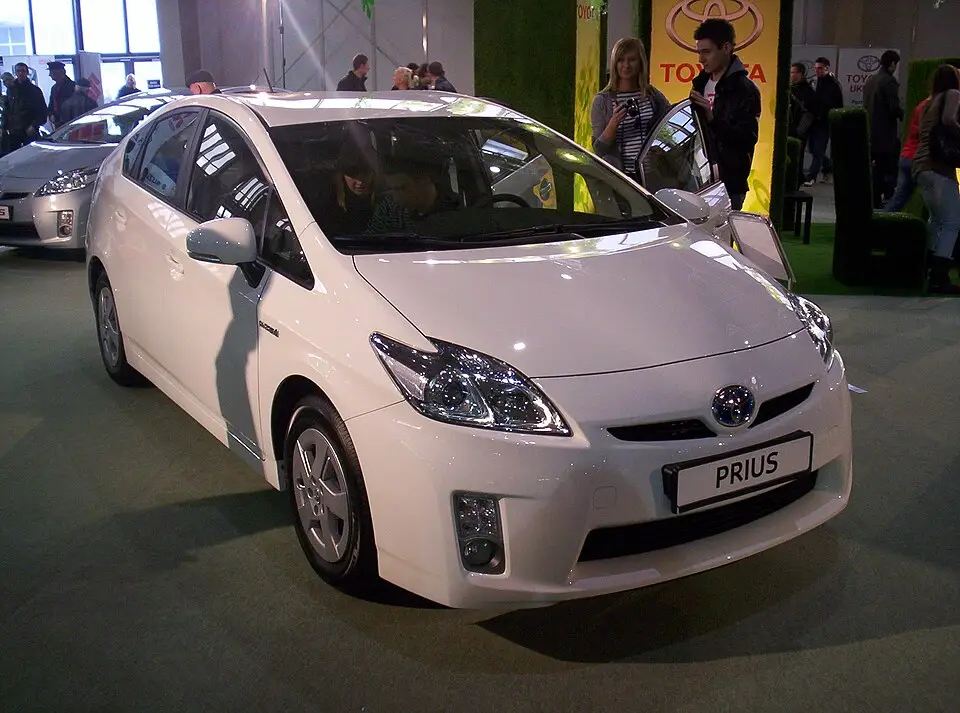
The Toyota Prius III (ZVW30) 1.8 VVT-i (136 hp) Hybrid e-CVT is a full hybrid built 2009–2012, with 136 hp. Its battery holds 1.3 kWh, with NiMH (nickel-metal hydride) cells at 202 V.
What we repair
We repair the battery and replace it only when we have to
Most hybrid batteries reach us with a few weak modules, not all of them. And for many of them, the real cause lies in the cooling or the connections.
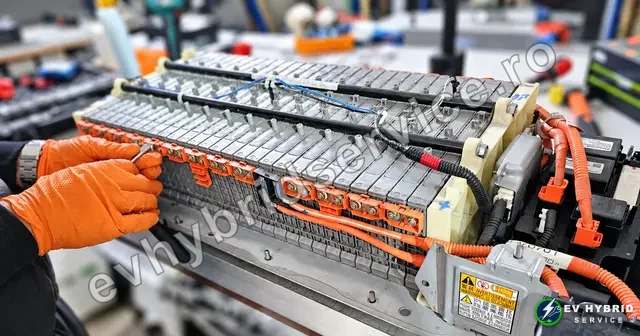
Module and cell replacement
When only a few modules have weakened, we replace just those, with modules of the same type, tested and matched for capacity and internal resistance. You pay for what has failed, not for a whole battery.
- Every module tested, before and after
- Modules matched to the ones that remain
- Written guarantee on the work
Balancing and reconditioning
An unbalanced battery loses range even when its modules are still sound. We bring every module and cell to the same level, whether the battery is NiMH or Li-ion. On NiMH we run controlled charge and discharge cycles that can recover part of the lost capacity, and on Li-ion we balance the cells one by one, within the safe limits of their chemistry.
- Balancing of the whole battery, NiMH or Li-ion
- NiMH reconditioning, Li-ion cell balancing
- Capacity test at the end
Cooling, BMS and connections
Not every battery fault comes from the modules. A clogged fan, a temperature sensor, a contactor or a corroded bus bar can stop the car just as surely. We check and repair them before we touch the modules.
- Cooling cleaned and repaired
- Sensors, contactors, wiring
- Bus bars and connectors
Battery catalogue
Which battery your car has
215 makes · 1241 models · 5928 versions
Choose the make, model, generation and version. For each version you will find the battery, charging, range and powertrain and, where we have them, the cell chemistry, voltage, European warranty and recalls.
Toyota Prius III (ZVW30) 1.8 VVT-i (136 hp) Hybrid e-CVT
Battery Repair at EV Hybrid Service, See the repair on our Blog
Specifications
Toyota Prius III (ZVW30) 1.8 VVT-i (136 hp) Hybrid e-CVT
Hybrid · 2009–2012 · NiMH
Battery
1.3kWh
Total power
136hp
Battery
- Total capacity
- 1.3 kWh
- Cell chemistry
- NiMH (nickel-metal hydride)
- Nominal voltage
- 202 V
- Modules
- 28
- Cooling
- Air, through ducts and fans
- Construction
- 28 modules of 7.2 V in series, behind the rear seat; 41 kg
Powertrain
- Type
- Hybrid
- Combustion engine
- 1,798 cm³, 99 hp, code 2ZR-FXE, Front, Transverse
- Electric motor
- 82 hp, 207 Nm, Integrated into the transmission
- Total power
- 136 hp
Range and consumption · Production
- Years built
- 2009–2012
EV Hybrid Service
How we repair this battery
The NiMH batteries of hybrids are made of modules connected in series, and they rarely wear evenly: usually a few modules fail first and drag the whole battery down.
This battery has 28 modules. We test every module, replace the weak ones with modules of the same type matched to the ones that remain, and balance the battery. We also check the fan and the cooling ducts, because a NiMH battery that runs hot wears faster.
Battery warranty in Europe
5 years or 100,000 km, whichever comes first
Through Toyota Hybrid Service, each passed Hybrid Health Check extends cover by 1 year or 15,000 km, up to 10 years from purchase.
This is the factory warranty for the hybrid battery in Romania.
Official source:toyota.ro
Battery-related recalls (NHTSA, USA)
The recalls below concern the high-voltage battery, charging, electric propulsion or overheating on cars that use this battery. They were issued in the USA through NHTSA (the US road safety authority); for cars sold in Europe, manufacturers run their own campaigns, and a dealer can tell you from the chassis number (VIN) whether your car is included. Each recall names the model it was filed against; the description gives the model years covered.
20V369000HYBRID PROPULSION SYSTEM · INVERTER
Toyota Motor Engineering & Manufacturing (Toyota) is recalling certain 2013-2015 Prius and 2014-2017 Prius V vehicles not included in recall 18V-684. Excessive voltage in the Intelligent Power Module (IPM) within the inverter may cause the hybrid system to shut down, causing the vehicle to stall while being driven.
Risk: An unexpected hybrid power system shut down may increase the risk of a crash.
Filed against: Toyota Prius 2010–2015
18V684000HYBRID PROPULSION SYSTEM
Toyota Motor Engineering & Manufacturing (Toyota) is recalling certain 2010-2014 Toyota Prius and 2012-2014 Toyota Prius V vehicles. Excessive voltage in the Intelligent Power Module (IPM) within the inverter may cause the hybrid system to shut down, causing the vehicle to stall while being driven.
Risk: If the hybrid system shuts down unexpectedly, it can increase the risk of a crash.
Filed against: Toyota Prius 2010–2015
17V718000HYBRID PROPULSION SYSTEM
Toyota Motor Engineering & Manufacturing (Toyota) is recalling certain 2012-2015 Prius Plug-in Hybrid vehicles. The hybrid battery contains an Electric Vehicle (EV) fuse that may fracture after repeated high-load driving conditions such as climbing long hills.
Risk: The failed fuse may cause the hybrid system to shut down resulting in the loss of power. Loss of power while driving at higher speeds can increase the risk of a crash.
Filed against: Toyota Prius 2010–2015
15V449000HYBRID PROPULSION SYSTEM · INVERTER
Toyota Motor Engineering & Manufacturing (Toyota) is recalling certain model year 2012-2014 Prius V vehicles manufactured August 22, 2011, to June 30, 2014. A component within the hybrid inverter assembly may overheat, causing the hybrid system to reduce output power allowing the vehicle to only drive a short distance. In some circumstances, the hybrid system may shut down causing the vehicle to stop while being driven.
Risk: The vehicle may enter a fail-safe/limp-home mode that limits the drivability of the vehicle. The hybrid system could also shut down completely resulting in a vehicle stall, increasing the risk of a crash.
Filed against: Toyota Prius 2010–2015
Other versions of the Toyota Prius III (ZVW30)
Photos: Toyota Prius III (ZVW30)
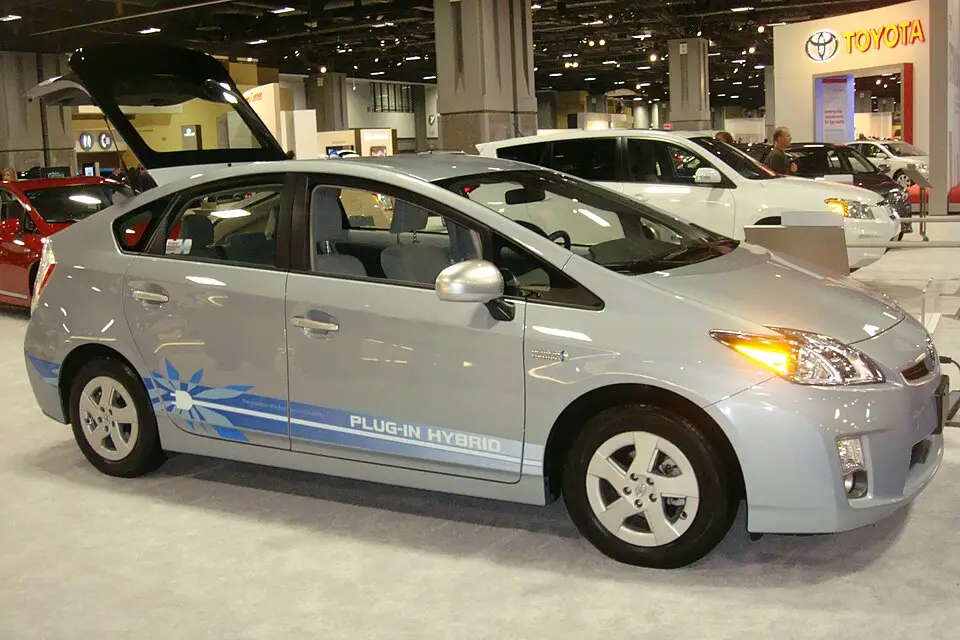
Freely licensed photos from Wikimedia Commons; the author and licence are given for each image.
- 1. Toyota Prius 2010–2015 · Photo: Peżot, CC0
- 2. Toyota Prius 2010–2015 · Photo: Mariordo Mario Roberto Durán Ortiz, CC BY-SA 3.0
Questions about the Toyota Prius III (ZVW30) battery
How big is the battery of the Toyota Prius III (ZVW30) 1.8 VVT-i (136 hp) Hybrid e-CVT?
The battery holds 1.3 kWh. It uses NiMH (nickel-metal hydride) cells, at 202 V nominal. How much of that capacity is left on a used car can only be known by testing it.
Can the battery of the Toyota Prius III (ZVW30) 1.8 VVT-i (136 hp) Hybrid e-CVT be repaired?
Often, yes: a battery rarely fails all at once; usually a few modules or cells weaken first, or the fault is in the cooling, sensors or contactors. We test it first and tell you whether a repair makes sense, before anything is taken apart.
What warranty does the battery have in Europe?
In Europe the battery is covered for 5 years or 100,000 km, whichever comes first. Through Toyota Hybrid Service, each passed Hybrid Health Check extends cover by 1 year or 15,000 km, up to 10 years from purchase. This is the factory warranty for the hybrid battery in Romania. The exact terms are the ones in your car's warranty booklet.
Find out whether your battery is worth repairing
Book a test. We will tell you whether a repair, a replacement or something else is the right call, before you spend money on the wrong part.