
Workshop job ·
Mitsubishi Outlander PHEV with a hybrid system fault: how we repaired the battery, cell by cell
An Outlander PHEV came in with a permanent hybrid system fault. The culprit was more than half a volt of imbalance between the battery cells. Here is how we found it and how we brought the battery back to excellent health.
- spread between cells, found at diagnosis
- 0.5 V+spread between cells, found at diagnosis
- cells measured and tested one by one
- 80cells measured and tested one by one
- battery state of health (SOH) after the repair
- 80–90%battery state of health (SOH) after the repair
- warranty on the work
- 12 monthswarranty on the work
The problem
A permanent hybrid system fault that shut the car down whenever it was put under load.
The diagnosis
More than 0.5 volts of difference between the traction battery cells: an unbalanced pack.
The fix
We removed the battery, tested each of its 80 cells, replaced the faulty ones and rebalanced the pack.
The result
SOH between 80% and 90%, a fully working hybrid system and a 12-month warranty on the work.
What we found at diagnosis
The car came in with a permanent hybrid system fault. At the first diagnosis we read the cell voltages of the traction battery and found a difference of more than 0.5 volts between them. An imbalance that large shut the car down every time it was asked for power.
The job, step by step
Step 1
Empty the air-conditioning system
Before anything else, we recovered the refrigerant from the air-conditioning system. This is not a formality: on the Outlander PHEV the same system also cools the traction battery, so the pack is tied into the refrigerant circuit.
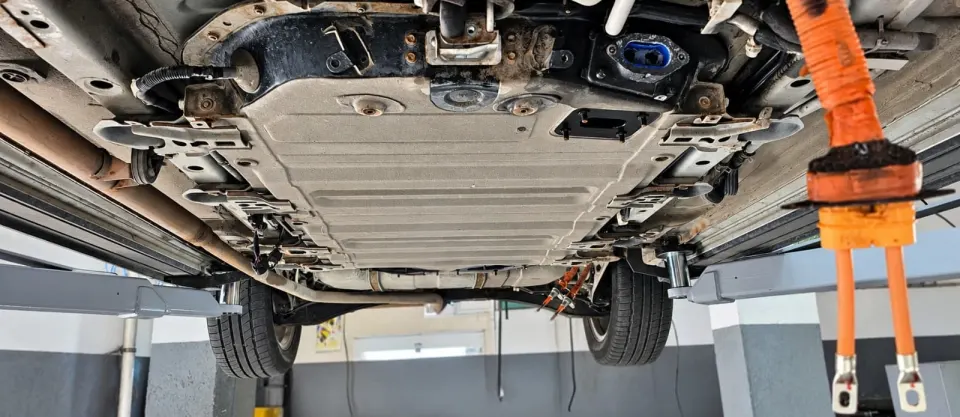
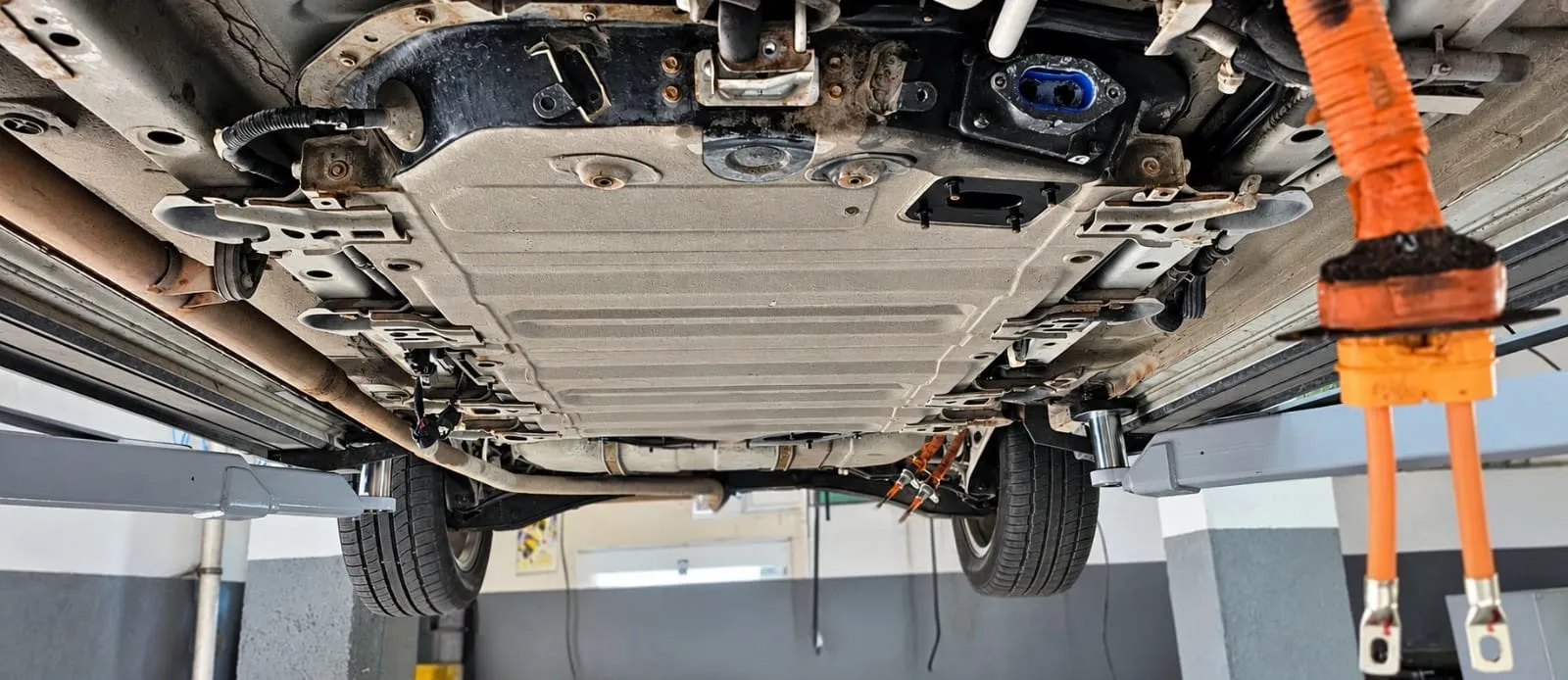
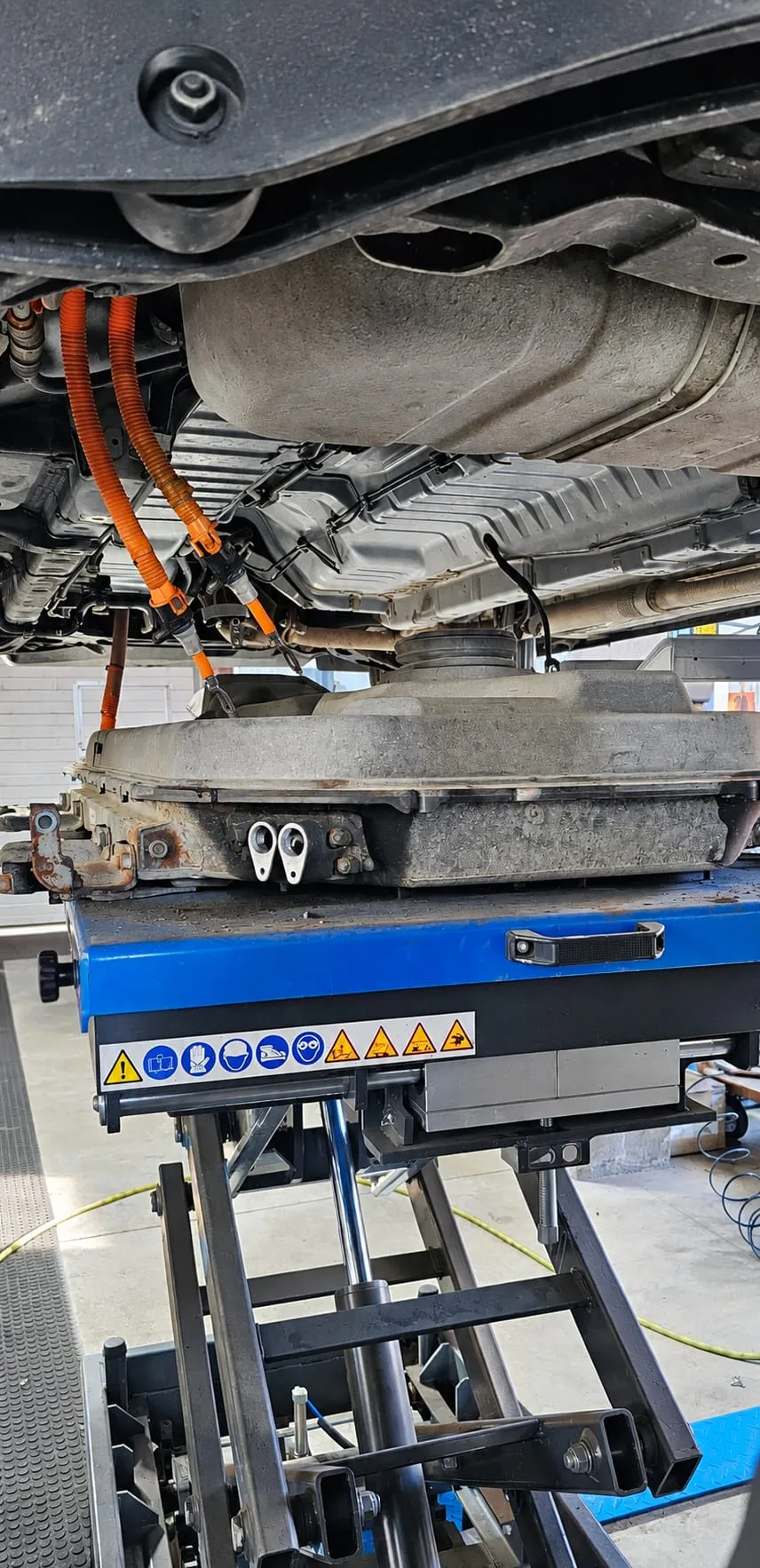
The battery still in place under the floor. The orange high-voltage cables are already disconnected. Step 2
Lower the battery from under the car
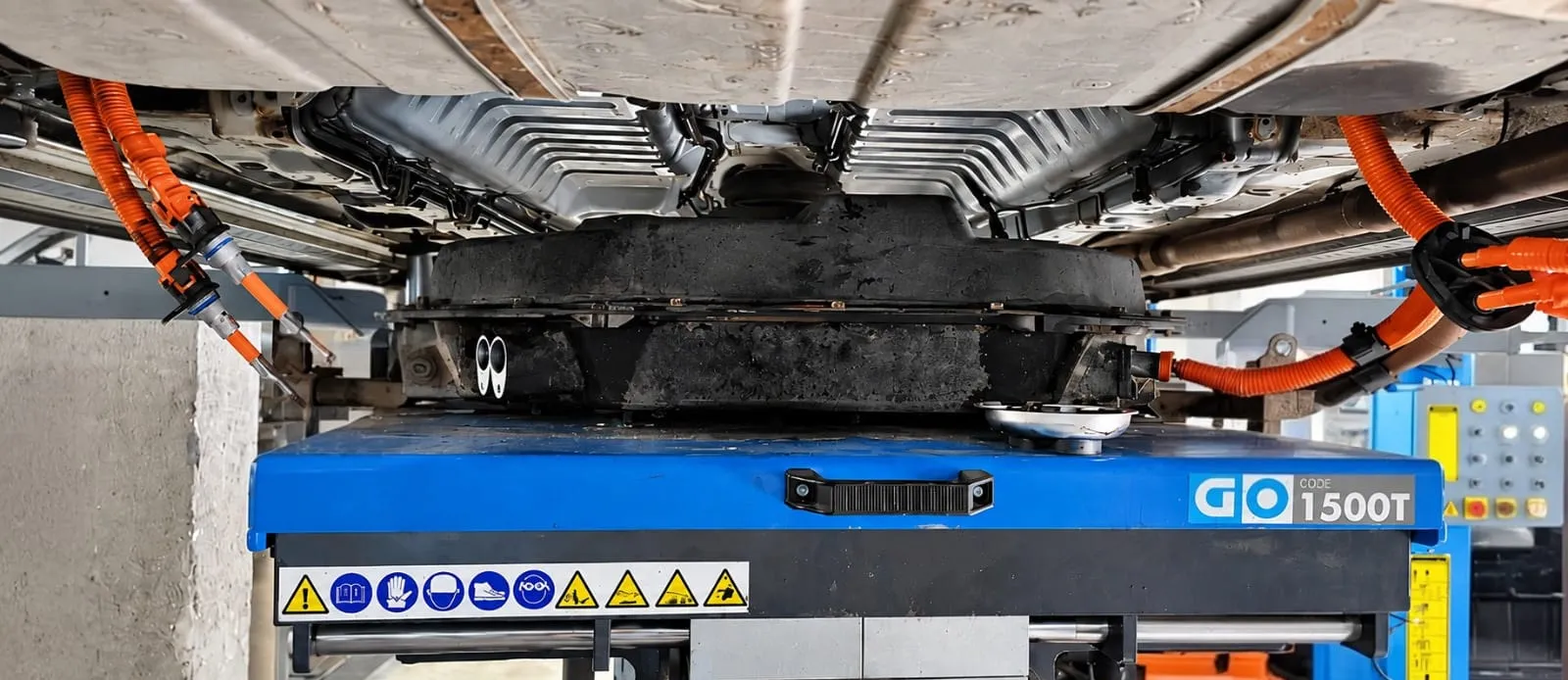
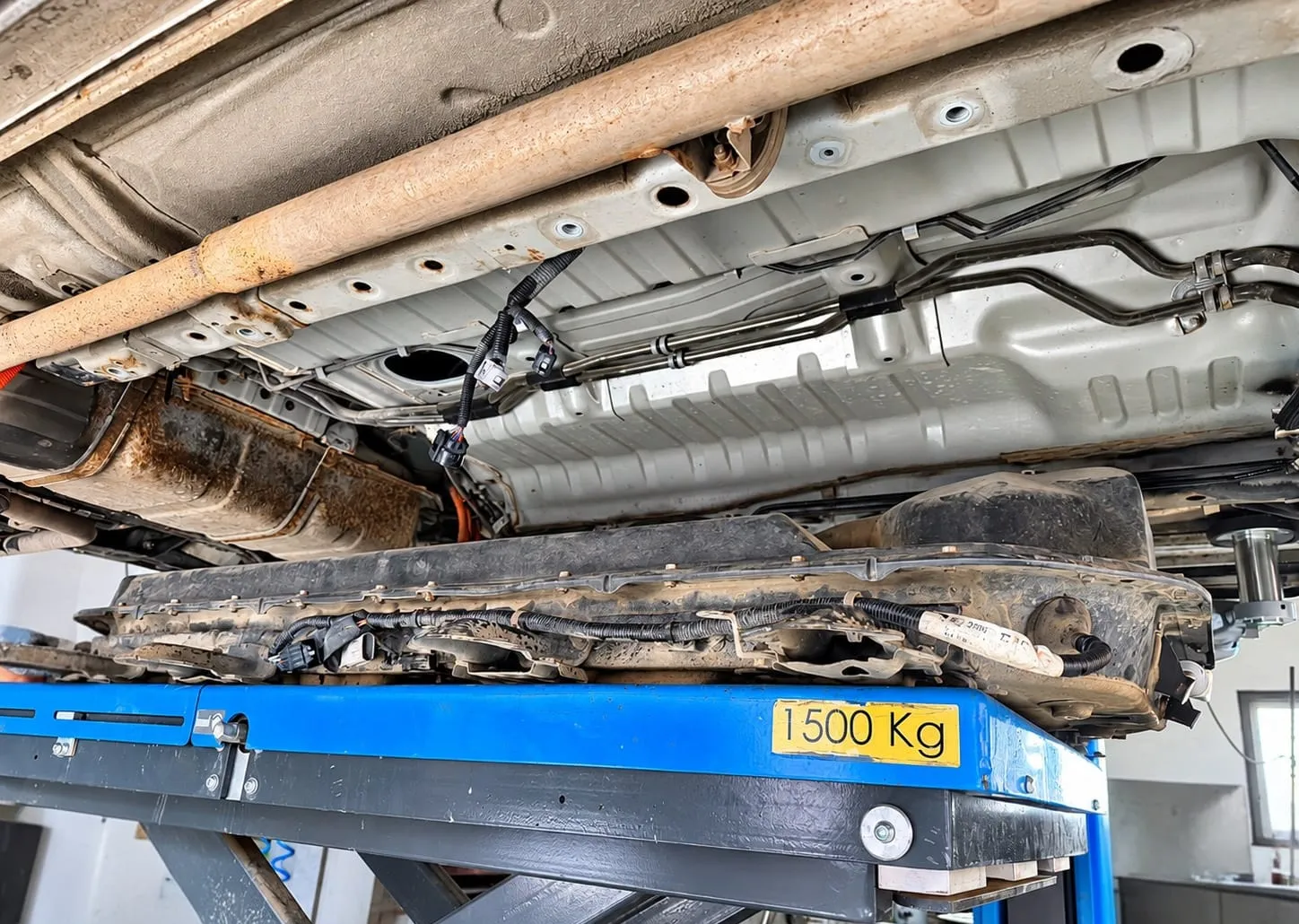
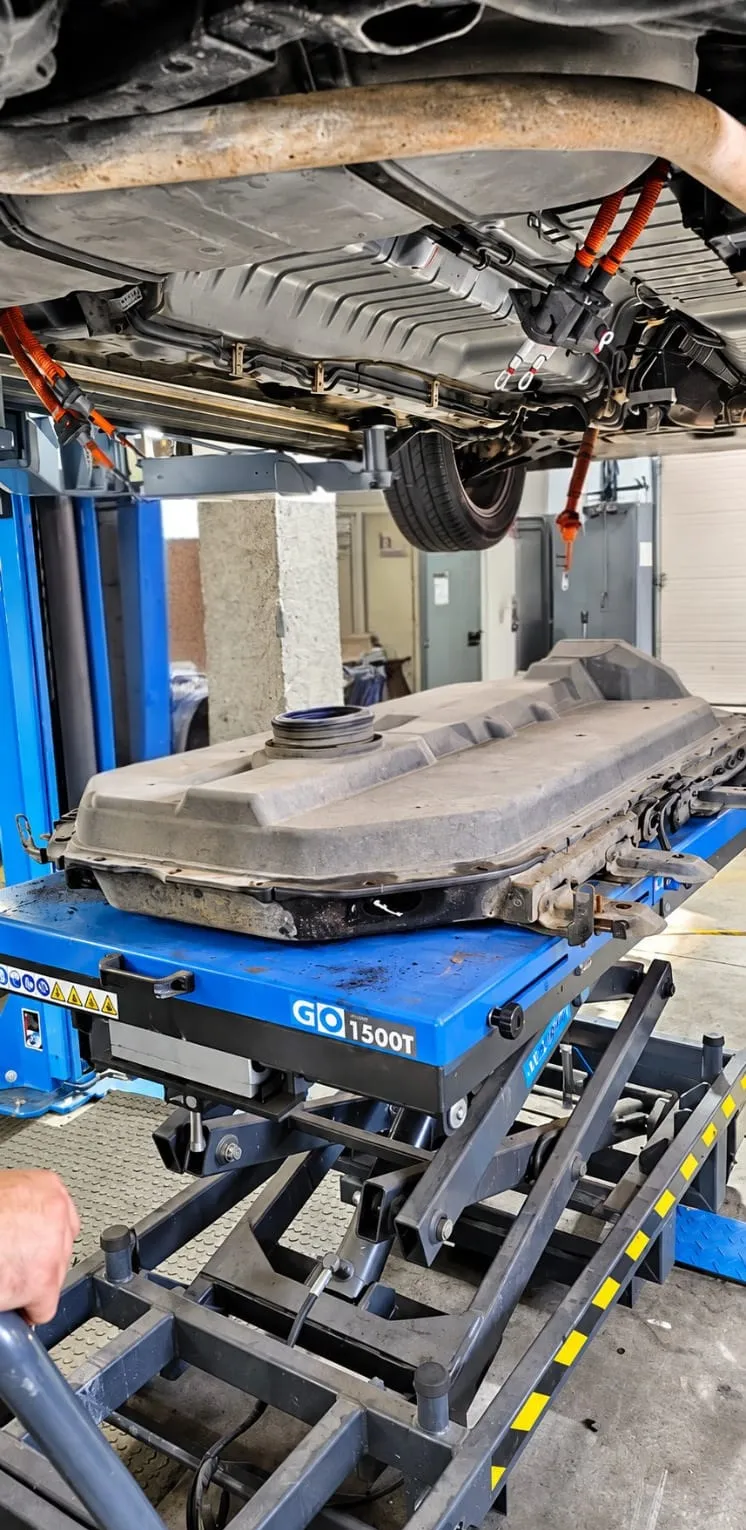
The battery sits under the floor, bolted to the body and connected through high-voltage cables. Taking it out tested our patience: the bolts and connections were heavily corroded, so we undid them carefully without forcing the threads. Then we lowered the pack onto the hydraulic table.
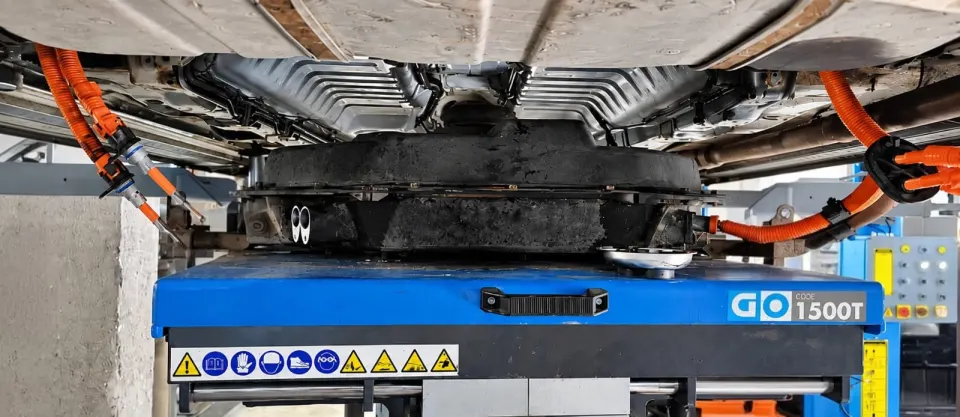
The pack coming down onto the hydraulic table. 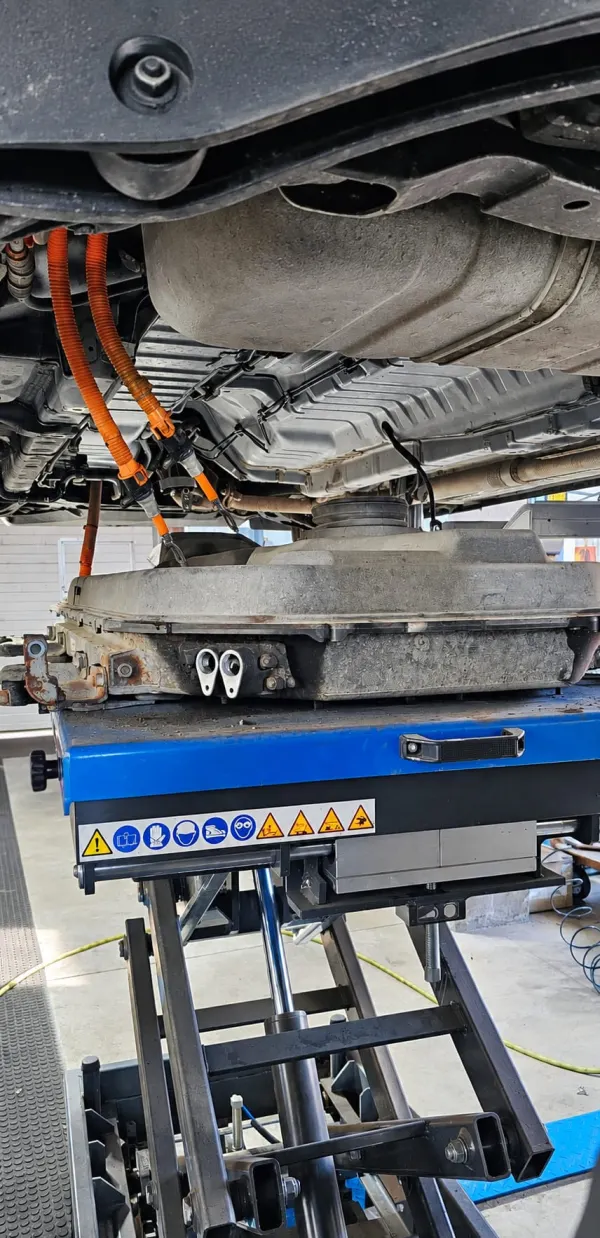
Corrosion on the mountings and connections made the removal harder. Step 3
Open the pack and measure everything
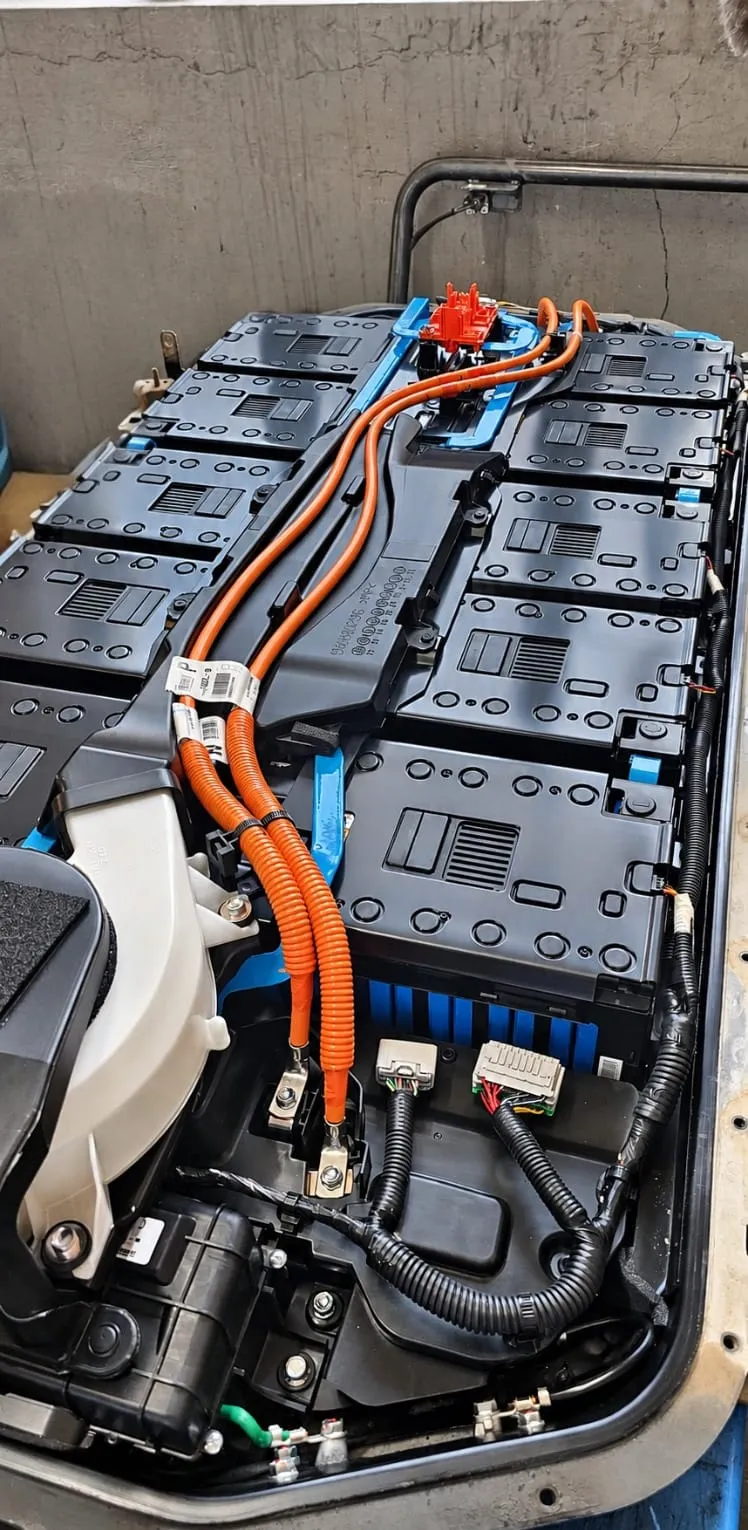
With the battery on the table, we first measured each pack section, then each of the 80 cells. We backed the measurements up with a thorough visual inspection of the cells, connections and wiring.
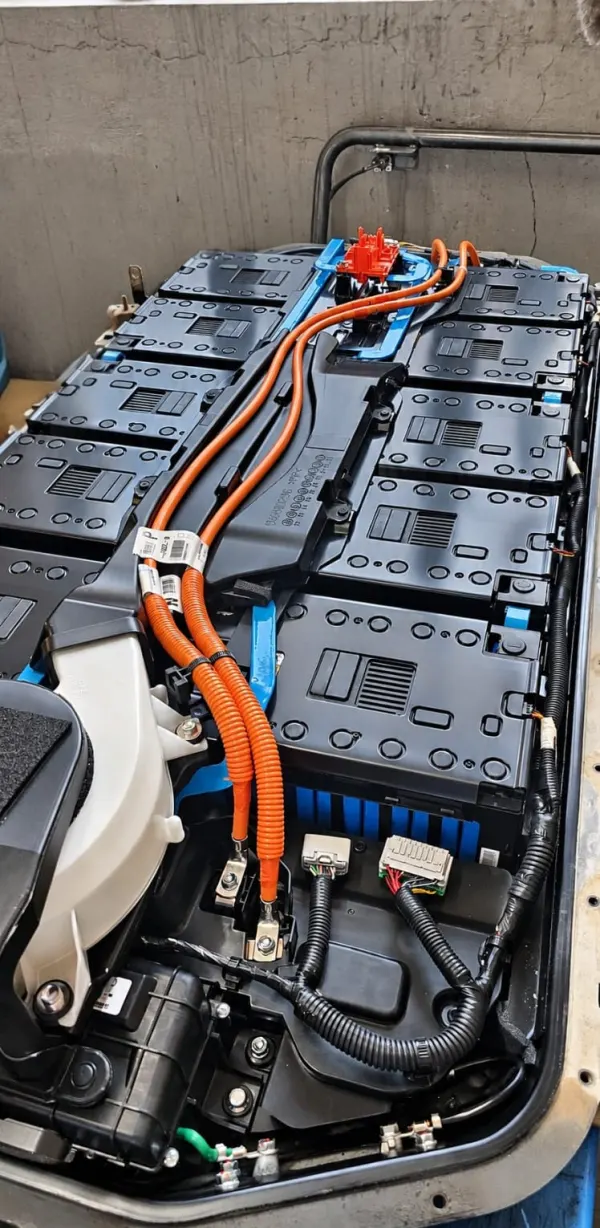
The open battery: cell modules, high-voltage cables and measurement connectors. Step 4
Test every cell on the analyser
We connected the cells one by one to the test equipment. It first charged them close to full, then discharged them down to a safe threshold. We used conservative settings to protect the cell chemistry.
Step 5
Replace the faulty cells
The test showed exactly which cells could no longer keep up with the rest. We replaced them with matching cells from our stock.
Step 6
Rebalance the pack
We connected the cells to the equipment again for a full charge and rebalancing cycle, until they all reached the same voltage. Only then did we take control measurements across the whole battery and put it back together.
Step 7
Refit the battery and recharge the air conditioning
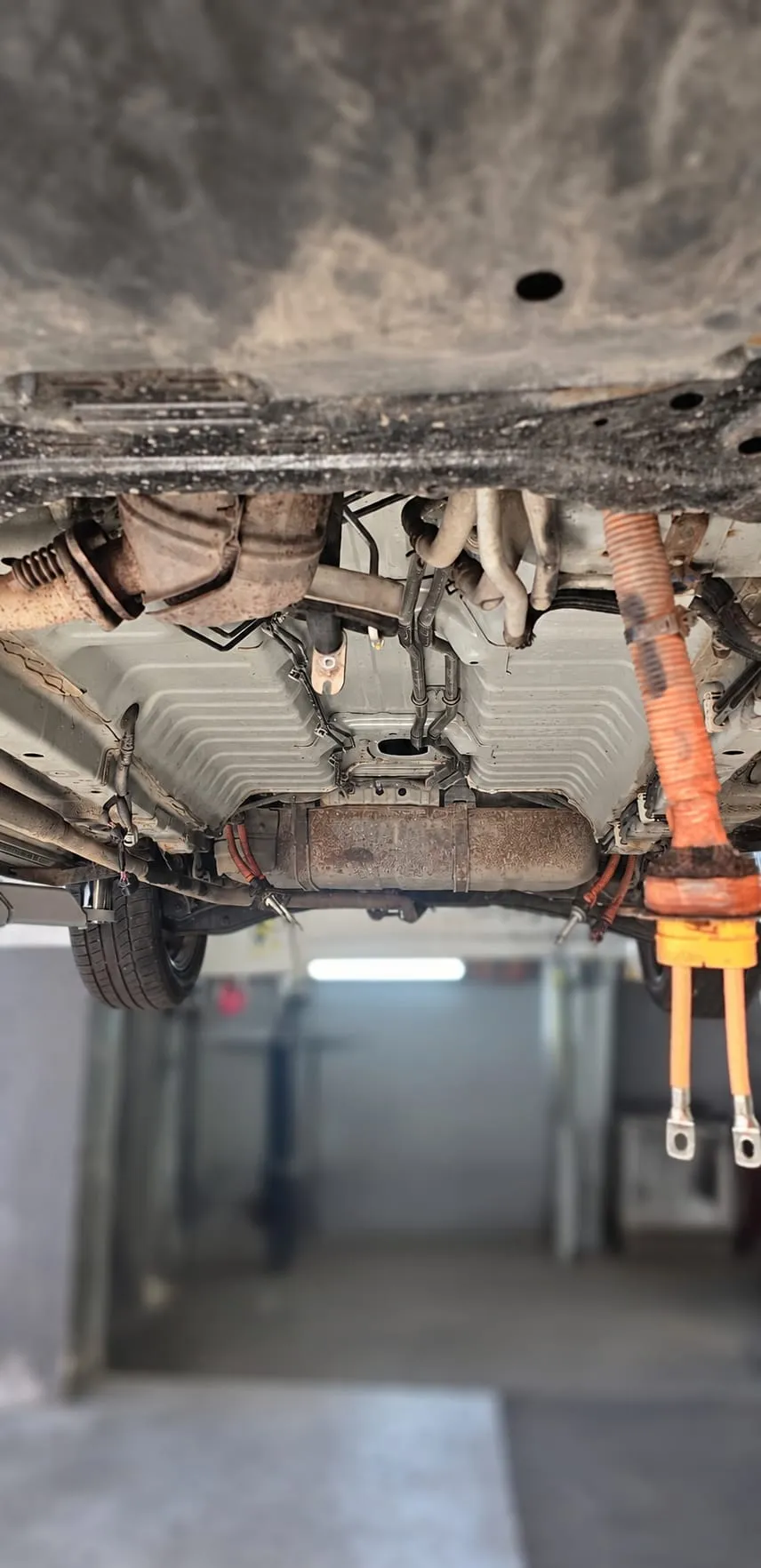
We fitted the pack back under the car, remade the connections and recharged the air-conditioning system with refrigerant, so the battery is cooled properly from now on.
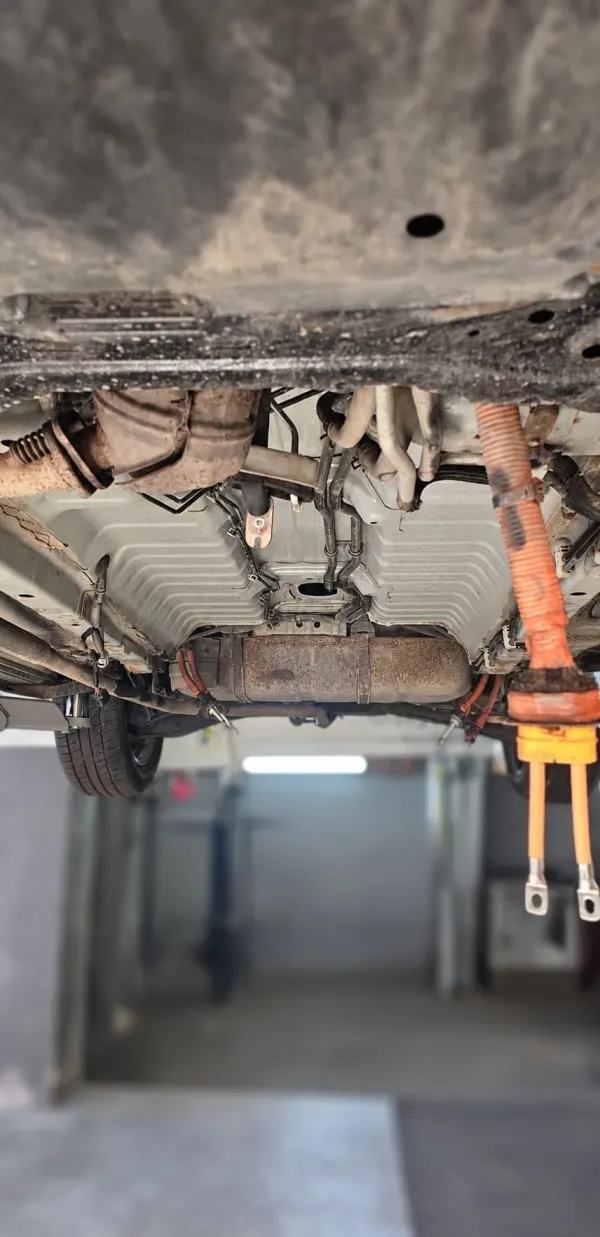
The battery bay, with the high-voltage cables ready to be reconnected. Step 8
Final checks
After the repair, the readings showed a battery state of health (SOH) between 80% and 90%, an excellent figure for long-term use. We finished with a full road test and a plug-in charge. The hybrid system now works 100%, and the owner drove off reassured, with a 12-month warranty on the work.
Before and after
When it came in
- Permanent hybrid system fault
- More than 0.5 V between cells
- The car shut down when put under load
- Faulty cells in the pack
At handover
- All cells at the same voltage
- SOH between 80% and 90%
- Road test and plug-in charge with no faults
- 12-month warranty on the work
Do you recognise any of these signs on your plug-in hybrid?
- A hybrid system warning that comes back after it is cleared
- Electric range noticeably lower than it used to be
- The petrol engine starts more often, or the car will not drive on electric power
- The car loses power when accelerating or climbing
Got a hybrid system fault? We test the battery cell by cell and tell you plainly whether it can be repaired.
Book a diagnosis →Frequently asked questions
Can an Outlander PHEV battery be repaired instead of replaced?
Yes, when the problem comes from a few faulty cells or from imbalance between them, as with this car. We test every cell, replace only the ones that no longer measure up and rebalance the pack. If the tests show the battery is worn out overall, we will tell you openly that replacement is the better option.
What does an SOH between 80% and 90% mean?
SOH (state of health) shows how much of its original capacity the battery still has. Between 80% and 90% means the battery has kept most of its original capacity and can be used with confidence for a long time yet.
Why does the air conditioning have to be emptied to remove the battery?
Because on the Outlander PHEV the same system also cools the traction battery. The refrigerant is recovered before removal and recharged after refitting, so the battery is cooled correctly.
What warranty do you get after the battery repair?
We give a 12-month warranty on the battery work.
Photos from the job
Tap a photo to see it full size; use the arrows to browse.
The battery still in place under the floor. The orange high-voltage cables are already disconnected.
The pack coming down onto the hydraulic table.
Corrosion on the mountings and connections made the removal harder.
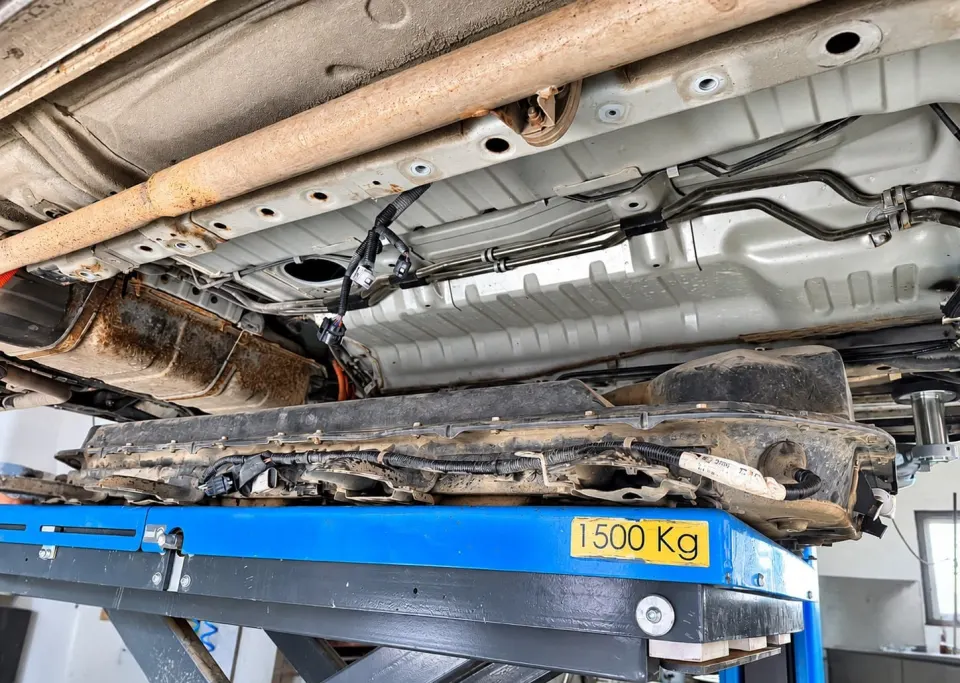
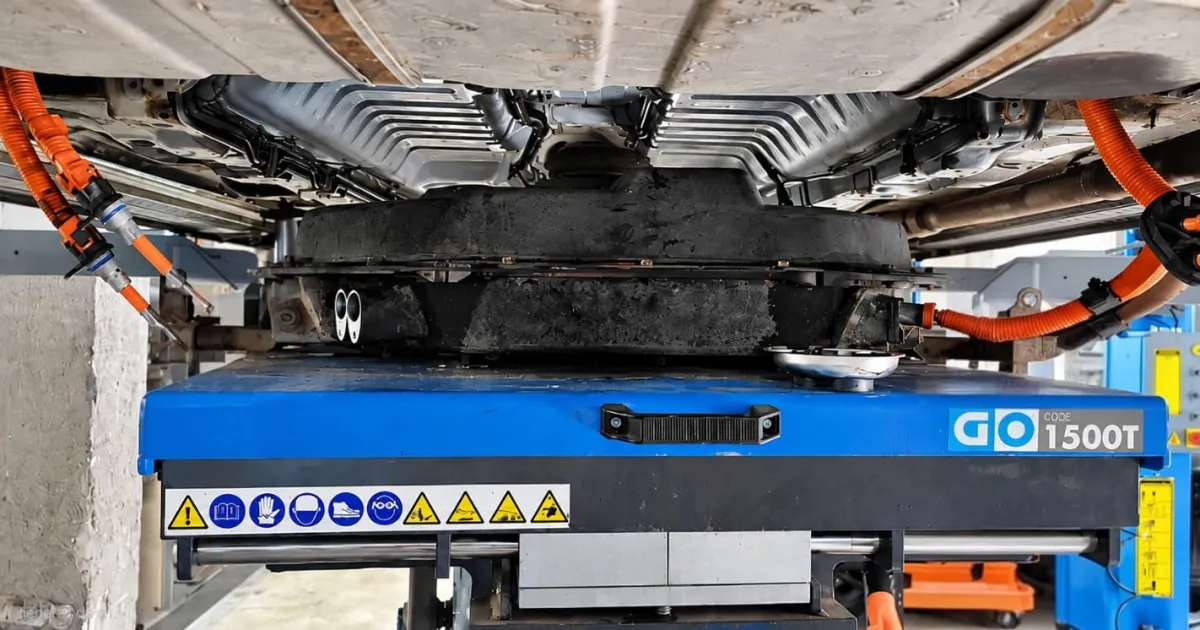
The battery, ready to come out from under the car.
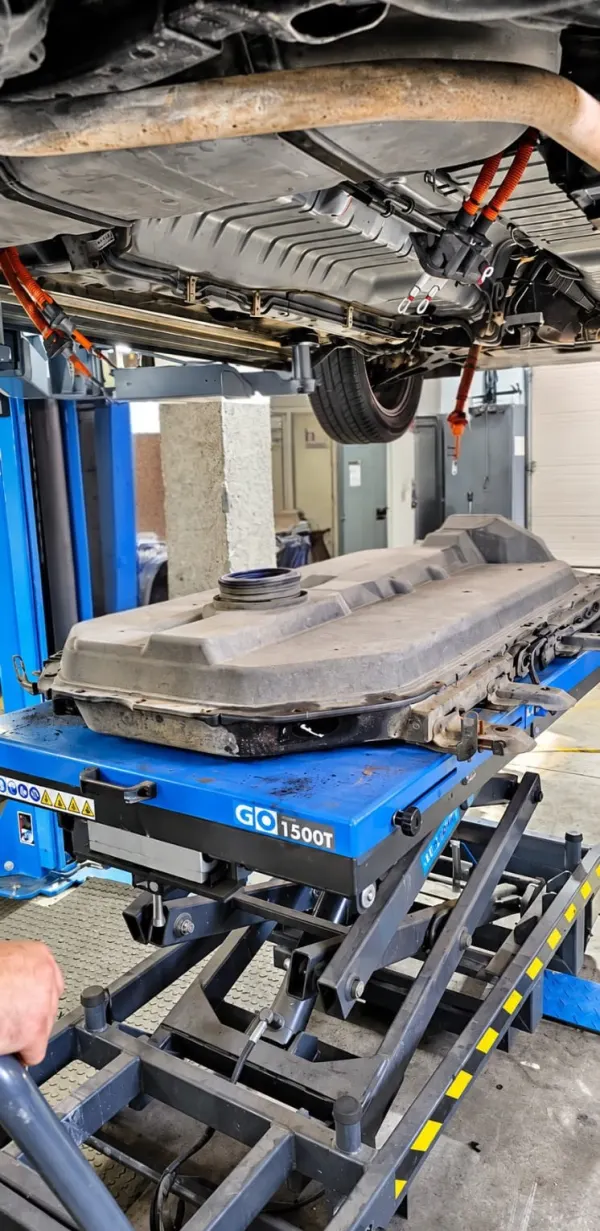
The battery out from under the car.
The open battery: cell modules, high-voltage cables and measurement connectors.
The battery bay, with the high-voltage cables ready to be reconnected.
Read next
Myths and misconceptions
Hybrid car misconceptions, and what they mean for repairs
The battery that “must” be replaced whole, the “maintenance-free” hybrid and other ideas that can cost you.
2 min read
Buying used
Inspecting a used electric car: the complete checklist
What you can check yourself at the viewing and what needs measuring in a workshop, step by step.
2 min read
Buying used
Buying a used electric car? What to consider
The range you actually need, remaining warranty, leased batteries and other things to check early.
2 min read